
Save to...
It’s All in the Details: How Caracole Creates Extraordinary Furniture Pieces
After so many weeks at home, the mantra “fewer, better things” has become more meaningful to us than ever before. We’ve always leaned toward drilling into understanding the things and experiences that surround us, but now … with the confluence of sustainability and a strong pull to understanding who we are and what we stand for, we’ve become ever more discerning.
From the pencils we write with to the content we’re watching (fascinating to see how Ken Burns crafts his documentaries or to dive deeper into the work being done by the Gates foundation!), down to the candles we burn at night, we’re thinking about experiences in a whole new way. Is this the best we can do? And are we surrounding ourselves with the best partners in our work at Gracious Style?
Caracole, a company we started working with recently, helped me answer this question. I first became familiar with them several years ago while touring a large home in Los Angeles. It had been staged by Meridith Baer, one of the top staging firms in the city. While walking through, I noticed an extraordinary desk in one of the bedrooms, and it was obviously on a completely different level than anything else in that room. It looked fresh, but the details pointed to a more thoughtful design, so I leaned in to take a closer look: it was made by Caracole.
I dug around and learned more about the company. It was a fairly young line (founded in 2009), and I loved that their approach was modern. Modern in that they understood that furniture no longer gets purchased in sets. Modern in that details matter, from the lining of a drawer to the hardware on a cabinet to the legs on a dining chair. And modern in that anyone who owned one of these pieces would do so knowing that they’d enjoy it for years to come.
Seeing these kinds of details made me realize that Caracole would be a perfect partner for Gracious Style. Their designs are modern classics … confident but not too flashy; just a quiet attention to quality and detail at every stage, from the development, to the construction, to the presentation of a piece.
Let’s take a closer look. Beyond the choice of appropriately durable raw materials and a consistency in design – which really should go without saying with well-constructed furniture – what are the things the production team thought about when they conceived each piece?
At Caracole, so many minute details come into play. For example, take a look at “At Water’s Edge,” one of their consoles tables.
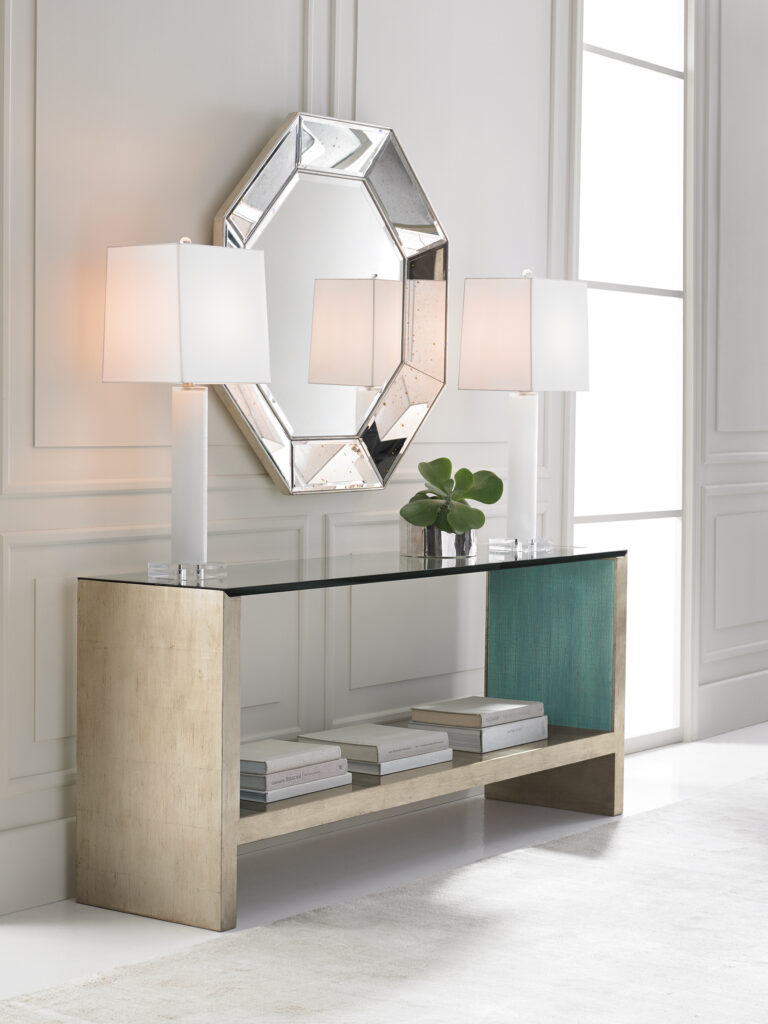
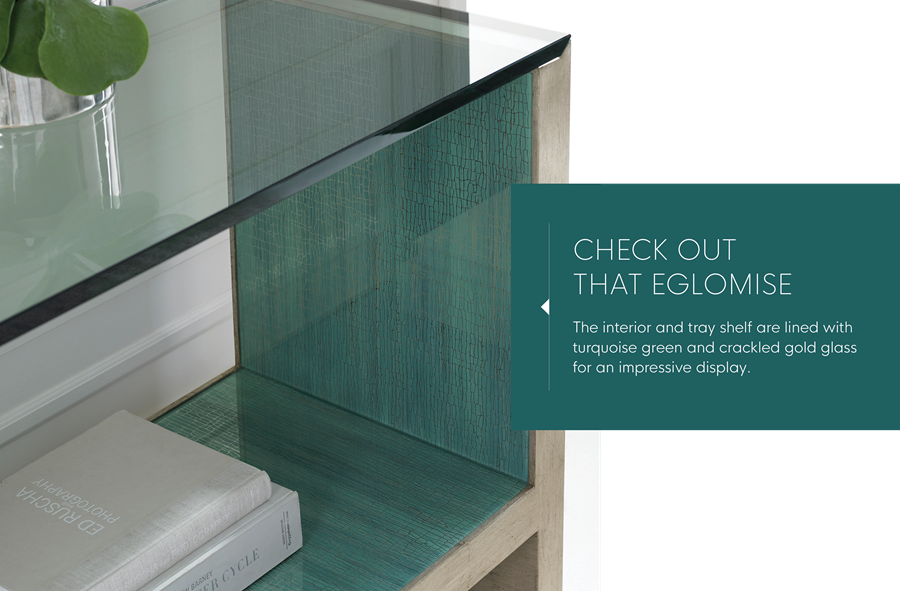
Now take a closer peek at how the interior is lined with turquoise green and crackled gold gloss:
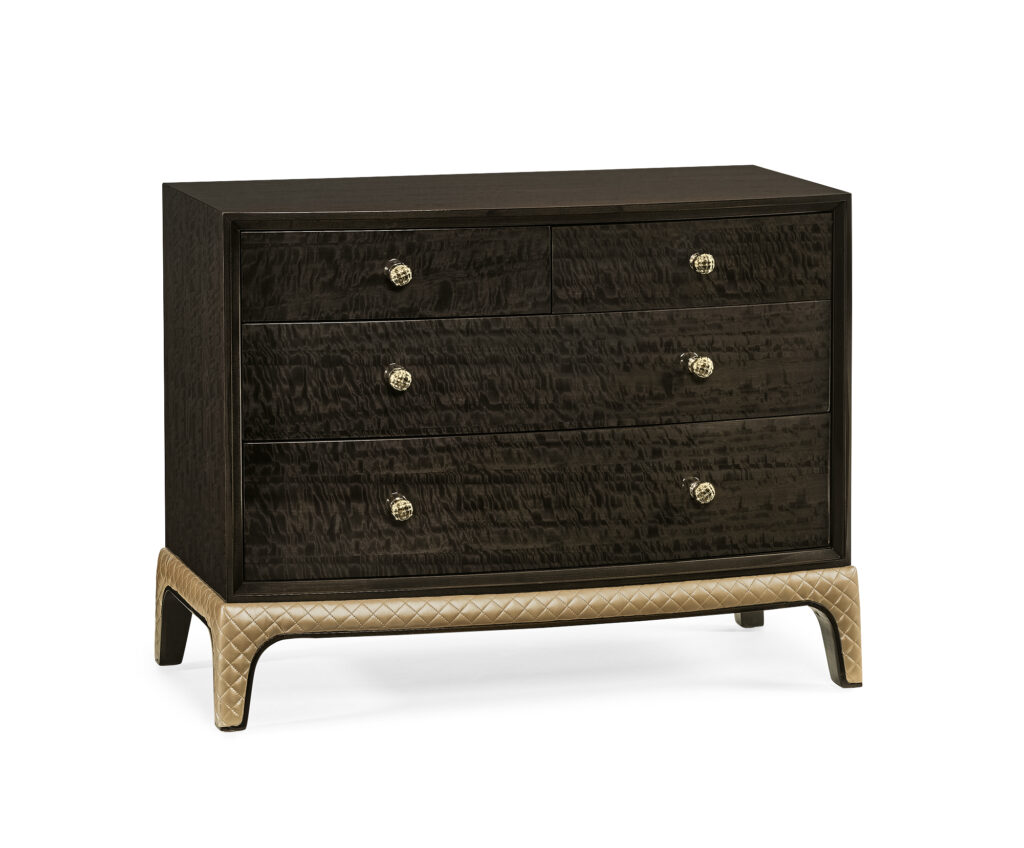
Here’s the Aristocrat nightstand. Notice the supple quilted leather base:
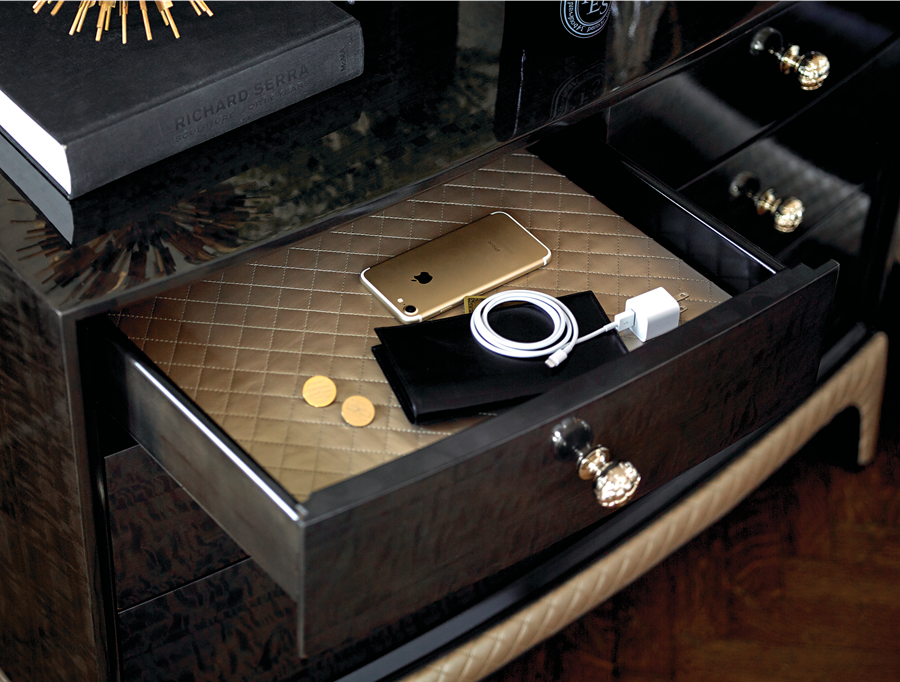
And see how this same detail is echoed inside the drawers, with a quilted fabric-lined drawer.
And take a look at the Skyline Credenza, an extraordinarily gorgeous piece on its own right:
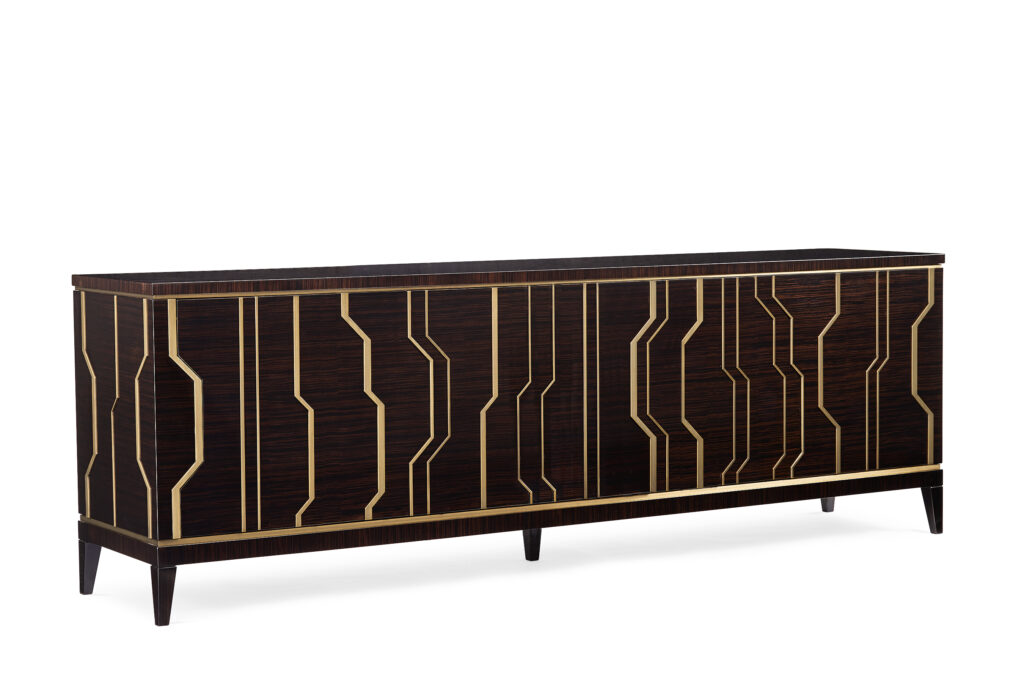
See how the doors are cut asymmetrically so they fit together like a puzzle?
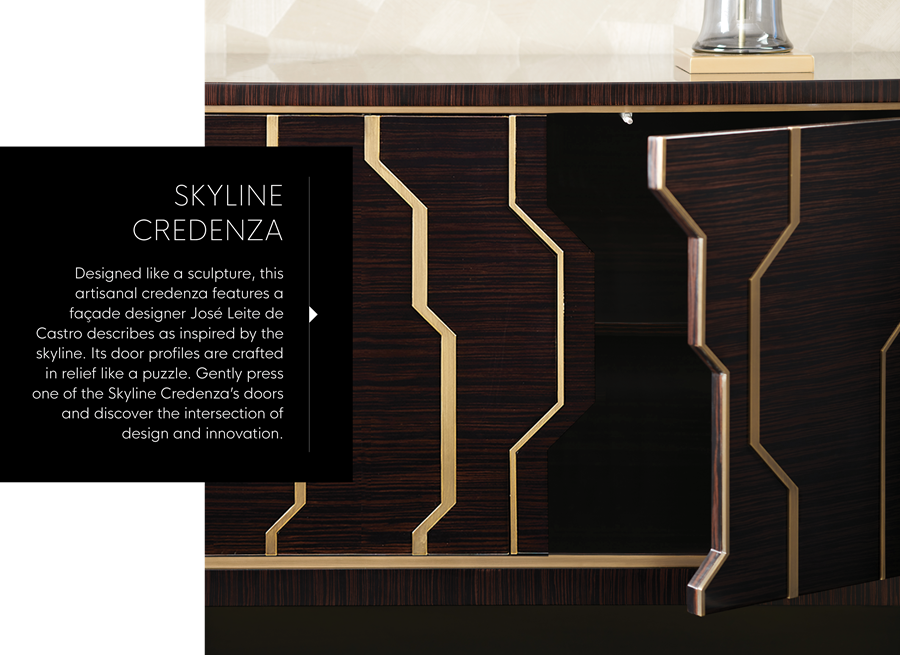
These are the meaningful touches that set Caracole apart, and that you’ll truly appreciate for years to come. So you can live with fewer, but better things.
Love this collection? See the entire Caracole range here.
The Details: Everything You Need for a Seaside Escape at Home
We hear you … it takes effort to cook meal after meal while quarantining, so why not take the whole family outdoors and do a seaside escape?
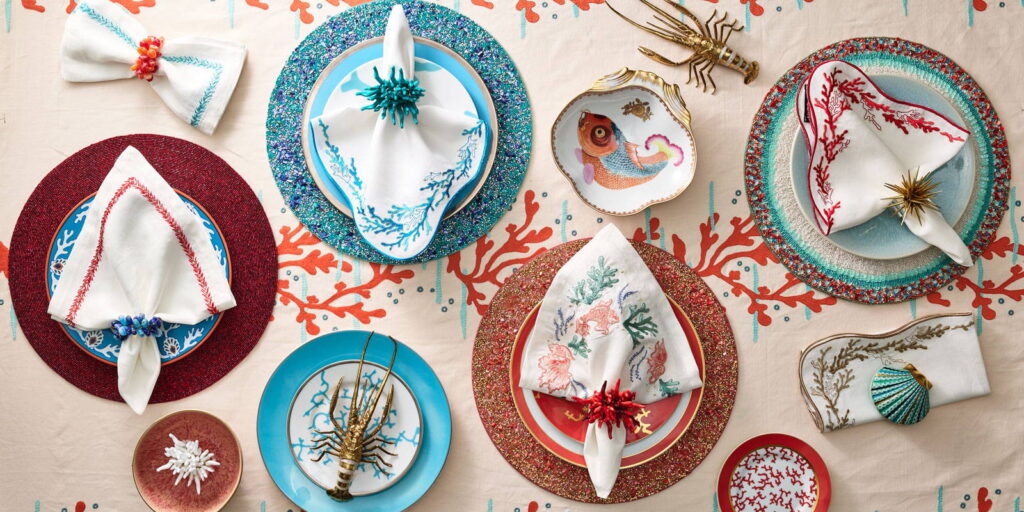
Let everyone pitch in … the kids can set the tables, the adults can help carry the plates and the drinks, and uberEats can bring the food. So now all you have to do is choose the music and wear that gorgeous straw hat with your biggest shades.
To see more Seaside Escape pieces, click here.
Bordallo Pinheiro: Why this 19th Century Portuguese Artist is More Relevant Than Ever Today
In our entire time at Gracious Style, we’ve never really come across a line that resonated quite like the one we’re about to share with you. On the surface, this Portuguese company produces charming pieces reminiscent of a simpler time, but wait until you hear how it all started, and you’ll see why it’s more relevant now than ever before.
Rafael Bordallo Pinheiro was a Portuguese cartoonist in the 19th century. He created a character called “Ze Povinho,” who personified the average Portuguese man: a rustic farm laborer who was kind to his friends and utterly disrespectful of the rich and powerful who took advantage of him. Pinheiro was also an artist who widely drew inspiration from nature.

His characters – like his animals – were common folk, the kind who are usually forgotten. So it is astounding to think how, almost 135 years later, the same themes are now at the forefront of our lives. Before, they were caricatures; now, they are also perfect teaching tools for our current conversations around nature and politics. What happens when we don’t listen to those with no voice? Can we survive if we don’t care about those around us? How do we maintain the integrity of our environment? How can we leave our world in a better place for future generations? Can we change enough to make a difference?
|
|
|
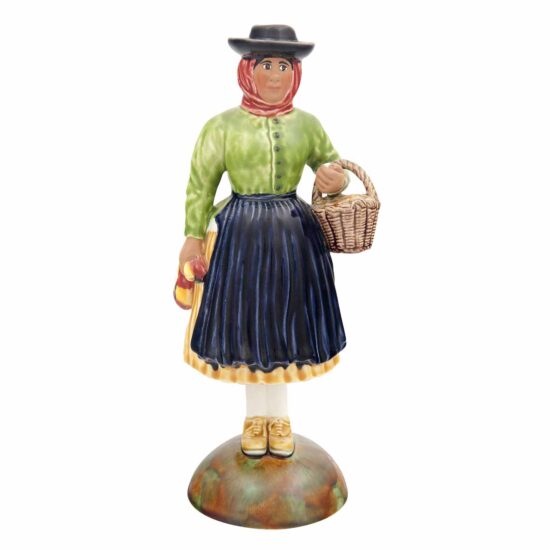

Bordallo was highly trained, but his artistic language was generally more whimsical and caricature-like. He was part of the Arts and Crafts movement of the mid- to late-19th century that rejected industrial manufacturing and fanciful Victorian designs that appealed to aristocratic tastes. Rather, he and his fellow Arts and Crafts artists proposed a return to the folk art traditions and using art to celebrate the common people. His art is similar to Staffordshire figurines, but more exaggerated in a way that reminds us of the dramatic, even grotesque, features of Goya’s earlier paintings.
Surprisingly, the factory that still makes Bordallo’s pieces today was established by the artist himself in 1884 in Caldas da Rainha (the Queen’s Baths), a town on the west coast of Portugal known as the capital of Portuguese pottery. It is rich in a special clay that gave rise to the town’s fame as a spa town dating back to 1484, when Queen Leonor of Portugal found some peasants bathing in a smelly pond. When asked why, they told her that the water cured them. She tried it herself, felt much better, and ordered baths to be built on the site. The minerals of the baths and the clay are probably related, giving the clay special properties for making the faience pottery that the factory uses.
Every piece of Bordallo Pinheiro pottery is still crafted by hand in Portugal. And now, they are enjoying a resurgence in popularity given how much more we understand about the role of nature and fair treatment in our world.
To those who follow his work, Bordallo Pinheiro’s pieces are best known for:
– Naturalistic pottery shaped like fruits and vegetables (the cabbage-shaped pottery is a staple of the Portuguese table)
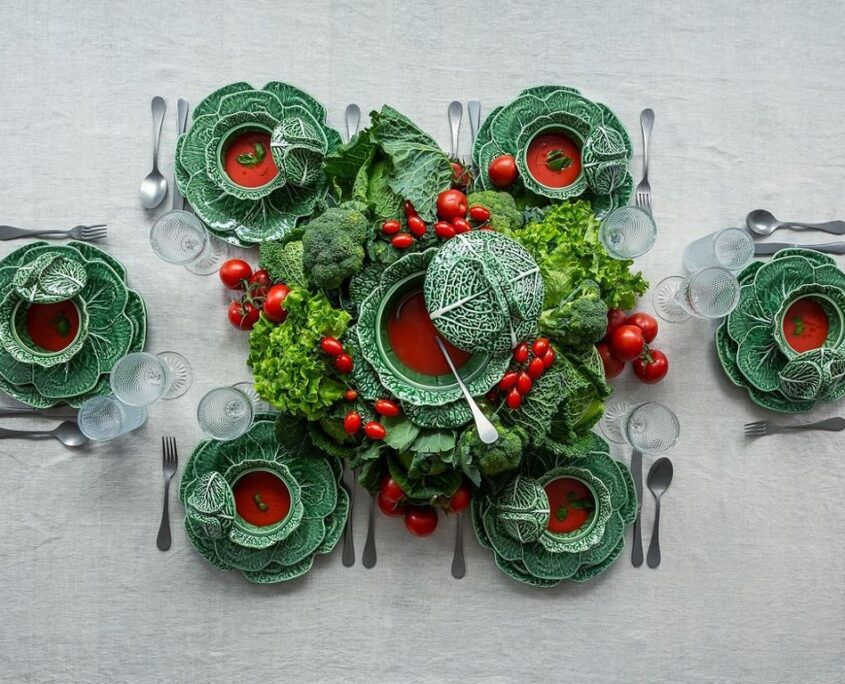



There is an active collector’s community around these works, with some vintage pieces going into the thousands of euros at auctions. So whether you’re looking for something more rustic or more contemporary, you should know about Bordallo Pinheiro. And next time you’re in Portugal, visit the Museo Bordalo Pinheiro, a hidden gem in Lisbon.
To see more Bordallo Pinheiro pieces, click here. And after you’re done, we’d love to hear about your favorites! Obrigado!
What Makes Graccioza Bath Linens So Extraordinary?
Based in Porto, near the heart of the Portuguese textiles industry, Graccioza is one of the best kept secrets in linens. Traditionally, they specialized in private-label products for other luxury vendors, but now they’ve finally made their own collection of bath linens available directly to us. The result is a line like none other on the market today: one that uses ultra high-end raw materials, layers in technology to create some truly innovative bath products, and does so while staying away from harmful substances.
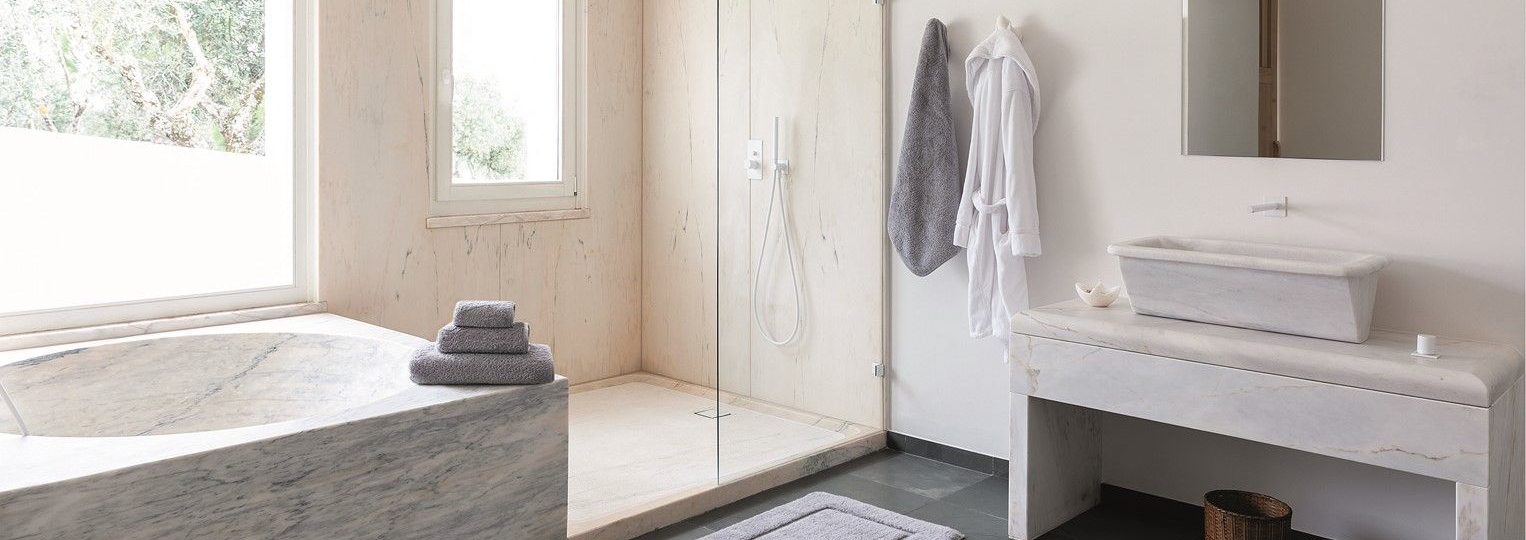
Here’s what sets Graccioza luxury bath linens apart:
1) All their towels are woven using the extra long loops of the finest Egyptian cotton . This produces towels with longer, denser threads, so the they are plusher, softer, and have more surface area to dry you off. If you are looking for the ultimate in bath linens, take a look at their Egoist and Milano collections, which feature Egyptian Cotton Giza. Traditionally, Giza is only reserved for ultrapremium shirts and bedding (like Sferra’s renowned Giza 45 percale and Giza 45 sateen), so it is extraordinary to find it in bath towels.
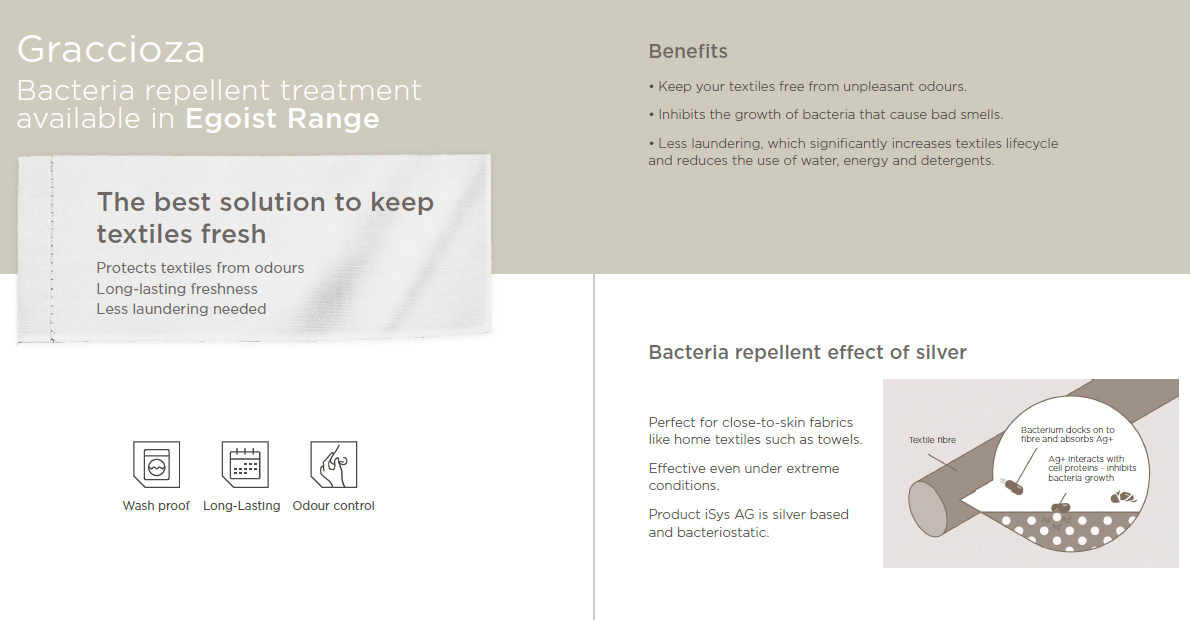
2) Bacteria Repellent Treatment. For their signature Egoist line, Graccioza devised a method to attach microscopic silver particles to the fiber of the towels. Why? Because this inhibits the growth of bacteria which causes musty smells when the towels are not fully dried. Given that the Egoist towels weigh in at a hefty 800 gsm, this is a game changer which allows these extra fluffy, luxurious towels to feel fresh and require less frequent laundering.
3) Lint-Free Finishes. If you’ve ever run towels through a dryer, you know they leave lots of lint behind. By treating their rugs and towels with a lint-free finish, you’ll see a noticeable reduction (up to 50%) in lint, so that means less time doing laundry. This treatment also improves the absorption of dye and softens fibers, so you get towels that look brighter and feel softer.
4) All towels are prewashed, preshrunk, and treated to resist pilling. This means they are fully absorbent from the first use, and you’ll have a towel that keeps its size wash after wash.
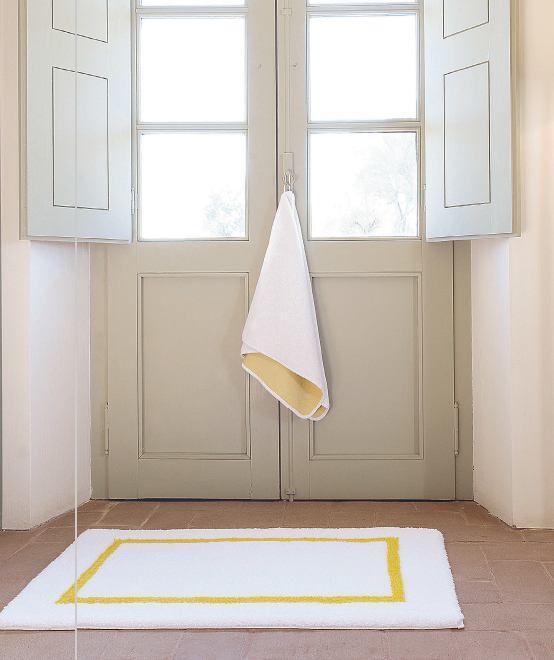
5) All towels are finished with rounded corners, bias binding, and double stitching for added durability. Some, like the Double Tone collection pictured below, are even reversible … with terry on one side and fabric on the back.
6) Standard 100 certification by OEKO-TEX on every product, which means it is free of harmful substances and therefore safe for use with peace of mind.
7) GOTS (Global Organic Textile Standard) certification on their organic cotton products. This is the leading textile certification available, and it limits the uses of toxic bleaches, dyes, and other chemical inputs while ensuring that the materials are sourced in the most ethical and sustainable ways. For Graccioza, this covered a large number of processes, including spinning, trading, dyeing, finishing, weaving, manufacturing, and washing.

8) The Clean Ocean Collection. Made by mixing high-grade cotton with Seaqual, Graccioza has produced a groundbreaking collection of bath towels that looks and feels like premium towels, but draws attention to the plastic pollution in the ocean. For this line, plastic is collected from the ocean and turned into recycled polyester yarn, which is then mixed with cotton and finished with ecological dyes to minimize the consumption of water and energy at the plant.
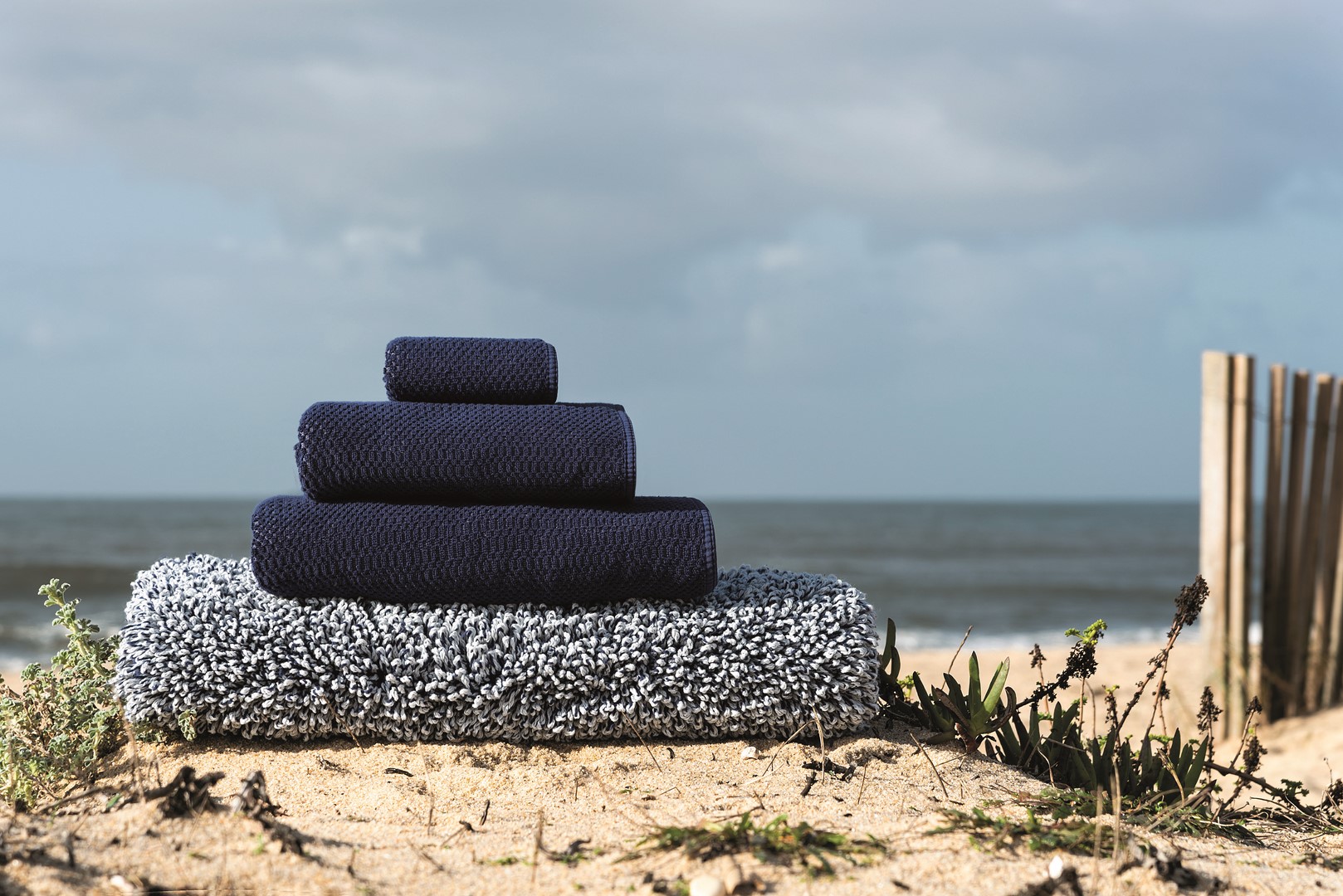
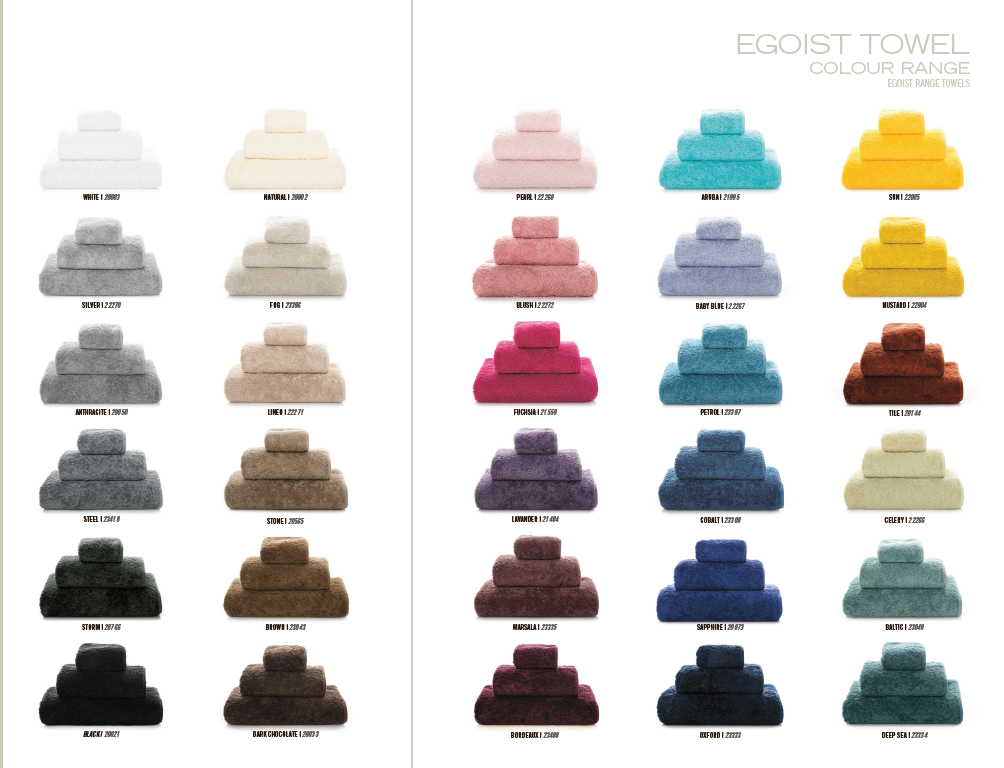
9) Their signature line: Egoist bath towel collection. You will simply not find a plusher, thicker towel. Woven using Egyptian long-staple Giza cotton, these towels are prewashed, preshrunk, and treated with their innovative antibacterial process. If you like your towels to be plush, these come in at a hefty 800 gsm (whereas most towels in the market are a more common 500 – 650 gsm), so you’d be forgiven for spending a few extra minutes in the shower each day. They are also available in a stunning collection of colors, so you’ll find something to match that custom tile in your master shower. For the kids, get each of them a set of towels in their favorite color, and watch how much easier it will be to get them to take their showers.
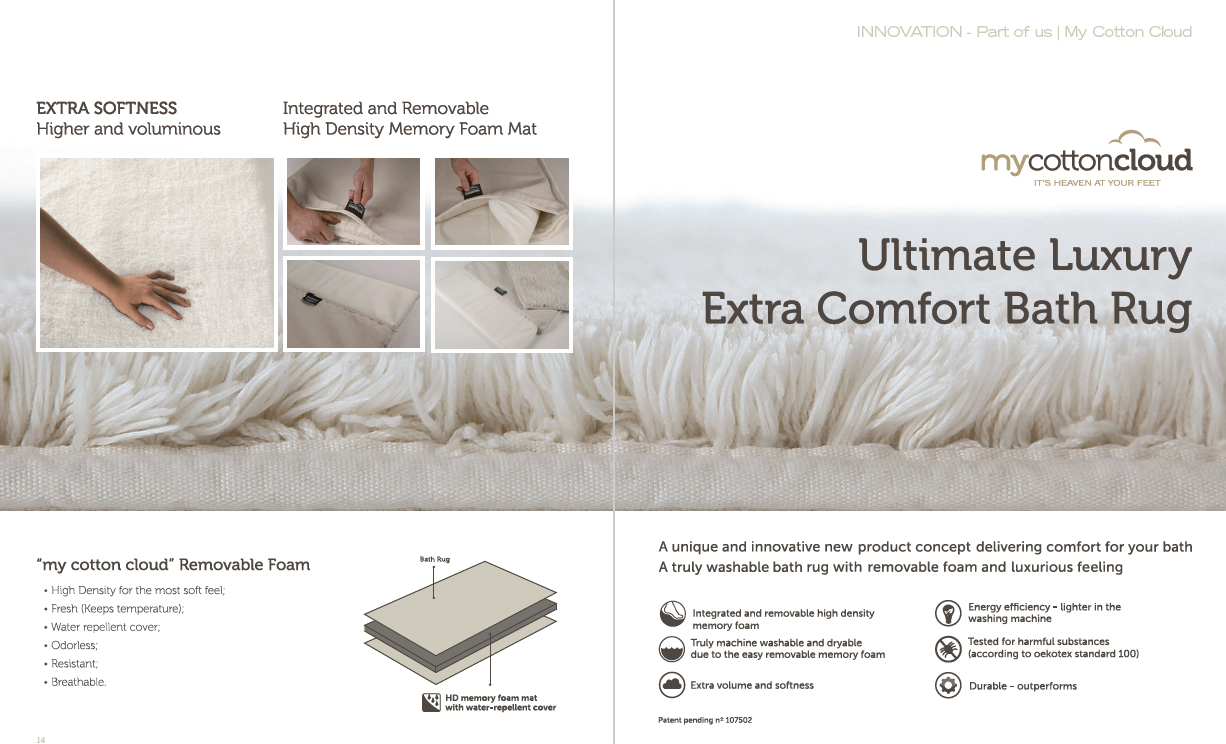
10) The Spa Sponge Memory Foam Bath rug, the ultimate luxury for your feet. Available in white, natural, and silver, this innovative collection features a super soft rug with memory foam. On the outside, the bath rug has a very plush cotton surface, so it feels very soft. But on the inside, it has a removable memory foam core with a water-repellent cover, so it will feel plusher than anything you’ve ever stepped on.
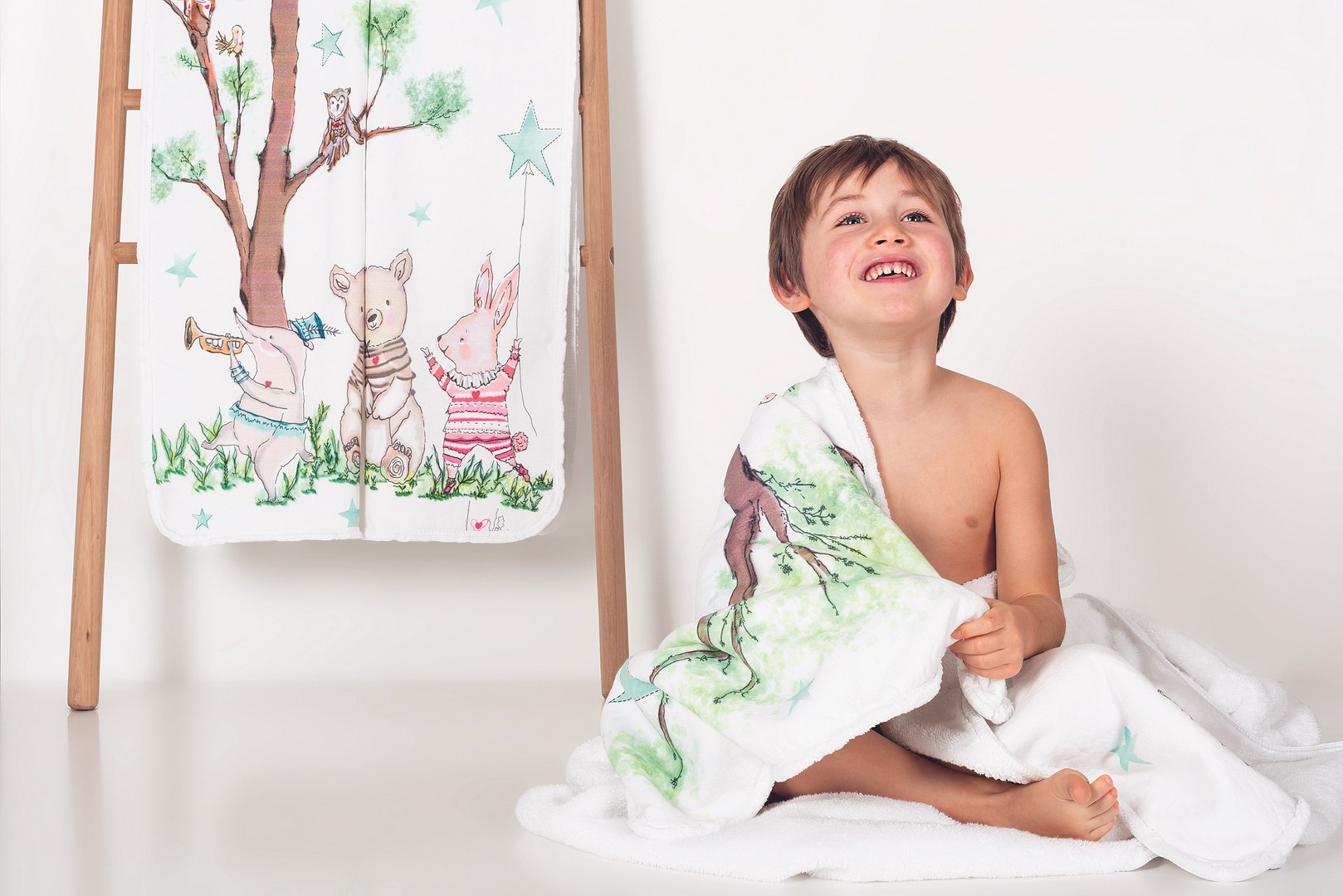
11) A charming line of bath robes and towels for the kids!
Are you ready to learn more about Graccioza? Click here to see the entire Graccioza luxury bath linen collection.
7 Tips for Turning #Stayhome into #ResortLiving
Like so many of you, we’ve been staying home for the past few weeks. And gradually, we’re regaining our footing: from confusion and disbelief, we quickly moved on to (over)educating ourselves, to finding out what we had to do and how we could help, to finally deciding to stop letting the news bring so much unnecessary anxiety. It’s a change, to be sure, but what a gift to be able to meditate, clear our minds, and reconnect.
We’ve become deeply grateful. For the folks who are on the front lines working to contain this virus to the restaurant workers to the supermarket employees, to the thousands of people working at utilities and sanitation and all the other services that make our cities work. And during this time, we’re also seeing lots of resiliency and optimism and learning from so many others who are dealing with their crises, and yet still go full speed ahead focused on finding solutions.
For us, here are a few ideas that have helped us remain grounded:
1. Don’t Over-News
There’s a lot of sensationalism out there today, trying to claim your eyeballs and sell advertising. Unfortunately, it’s confusing and depressing. So I’ve made it a goal to only read what I absolutely need to know, and then disconnect.
2. Connect with People
Instead of watching the news, I’ve tried to connect with the real people I know. Sometimes it’s just a text to ask how they’re doing, and sometimes I’ve video called and spoken with people I haven’t seen in a while. I was glad to have been able to make them feel better and also happy to know they cared about me too.
3. Order a Meal for a Loved One
Since I can’t go see the people I normally do, I’ve been ordering them meals through doordash or ubereats instead. It makes me feel good to be doing something for them and it helps out a local restaurant.
4. Exercise and Meditate Remotely
Even if you can’t go to your favorite gym or yoga studio, keeping up your exercise routine will give you positive energy and make you feel better. Check if your gym or instructor is doing the same. If so, join in remotely and stay healthy and in touch.
5. Watch Something Soothing
Put something soothing on your screen. Watch and relax. Find an album with old pictures and show them to your kids. Remember that the world is still a beautiful place.
6. Maintain Calm in Your Home
When everybody is together at home more than expected, set some rules for TV, noises, and just general calm. Children can learn to be respectful. So can adults. Now is a good time for us to all do so.
7. A Word about Online Shopping
Believe me, we appreciate your business and support, and so do the artisans and factories who depend on online retailers to keep their businesses open and employees paid. But if you’re worried about your job or income, don’t shop online to relieve stress, even if you see a sale or notice your neighbors stocking up. Our goal is to help make your home a soothing and calming place so you can ride out storms like this one, and there are plenty of ways to help without your buying something you don’t need.
That being said, home and travel have always been what centered us. So if you’re like us, take some time to look around your own home and see what you can do to make it better. Move things around, and rediscover a piece of art you already had. Layer in some scent. Light candles at night. Bring out a new set of sheets. Take a long bath, or curl up with a good book. We promise you will come out ahead.
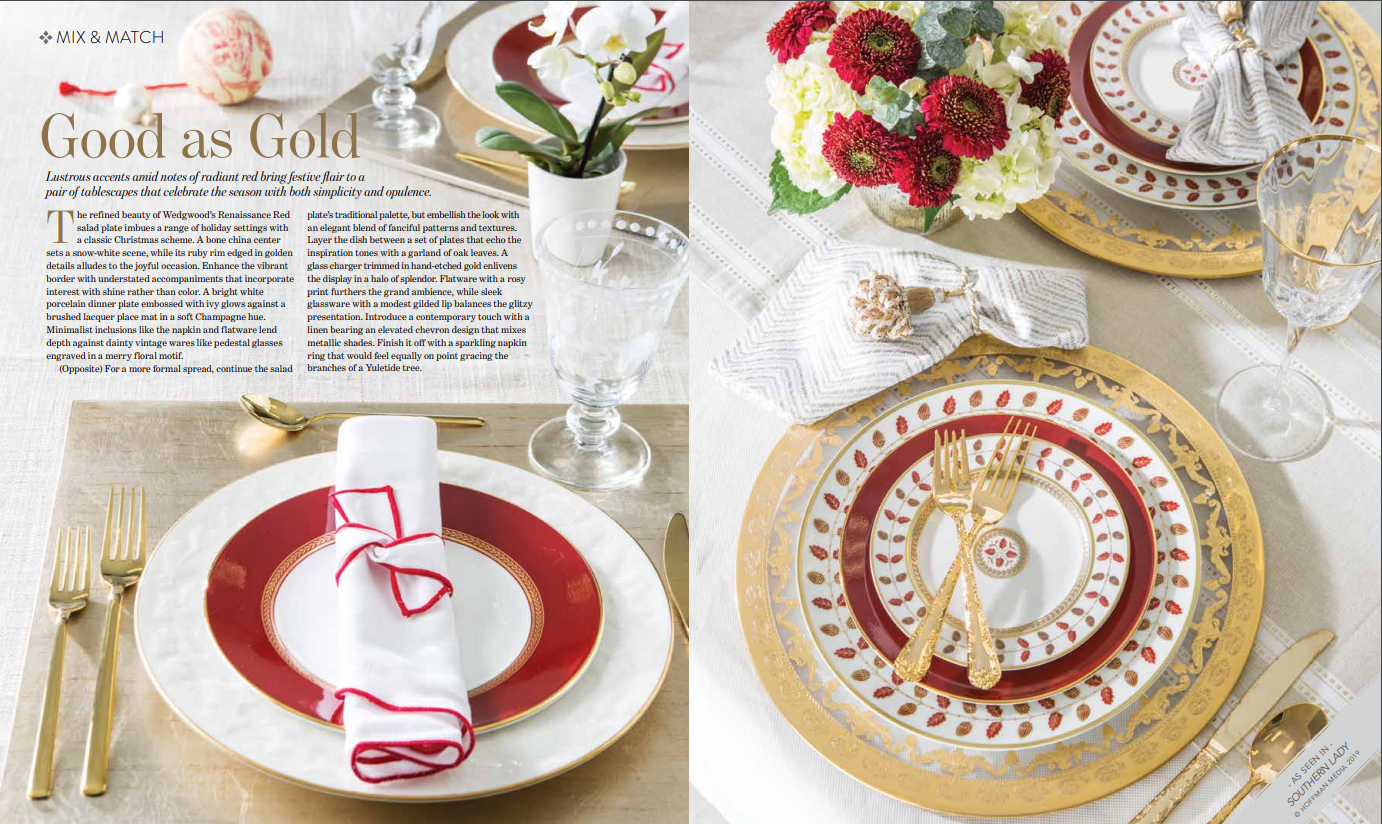
As Seen in Southern Lady: Good as Gold” Table Setting
We love the “Good as Gold” feature put together by Mary Beth Jones in the Dec 2019 issue of Southern Lady. Whether you decide to go modern or traditional, gold is a great way to bring warmth to the table. And during the holidays, mixed with red and persimmon, it’s a look you can enjoy from Thanksgiving through Christmas.
Don’t Ever Grow Old: A Charming Nursery Collection from Instagram Darling Gray Malin
One of the happiest things you can do is create a room for a little one. And whether you have kids or are just constantly surrounded by them (ahem … you’re a grandparent, so you’re doing the school run again), it’s important to create an environment that is cheerful but also timeless. Too often, kids’ rooms have to be redone after a few years, but with a little planning, it’s easy to avoid this by just sticking with classic patterns and colors.
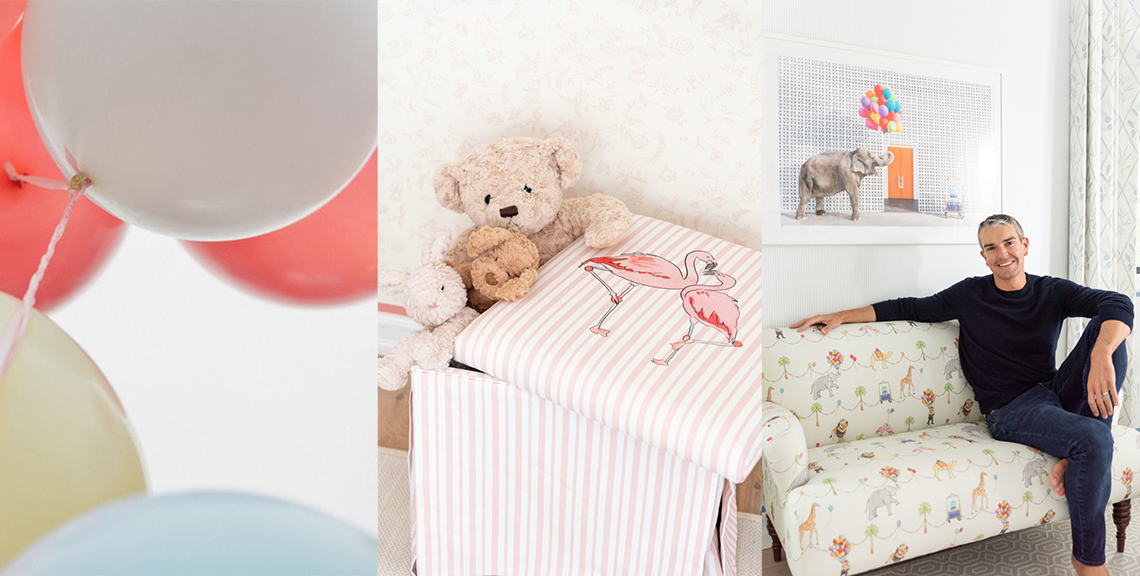
Instagram darling Gray Malin, who first shot to fame with his pictures of pools and beaches around the world, has hit it out of the park with his new collection of furnishings based on his shots of animals prancing around his favorite hotel, the Parker Palm Springs. Malin, who recently had twins with his husband Jeff, knows what it’s like to think like a child and truly create magic.
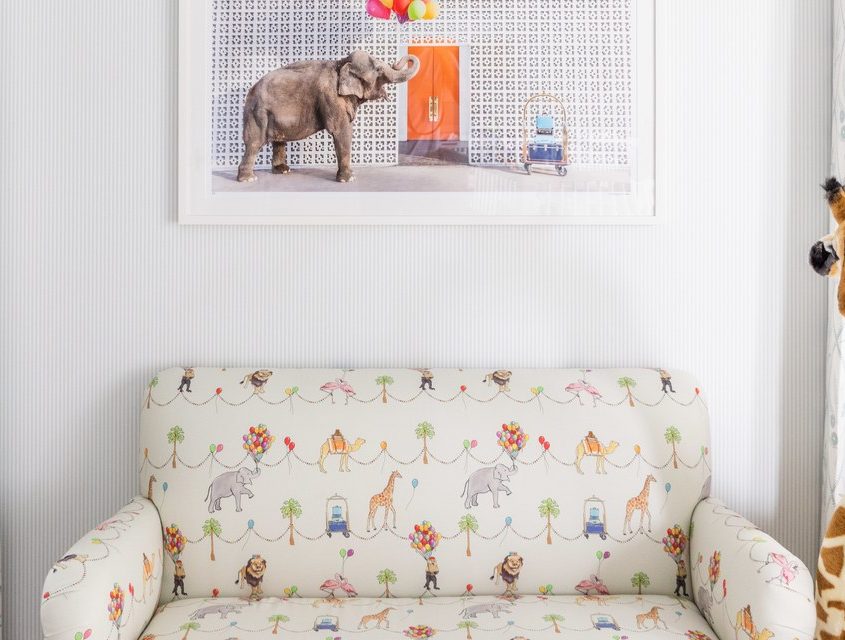
Take a look at how these beautiful shots were transformed (by the way, did you know that this gentle elephant is also the star of the movie Water for Elephants with Reese Witherspoon?). Here’s the original photograph, Always Welcome at the Parker II:

And see the charming print it inspired:
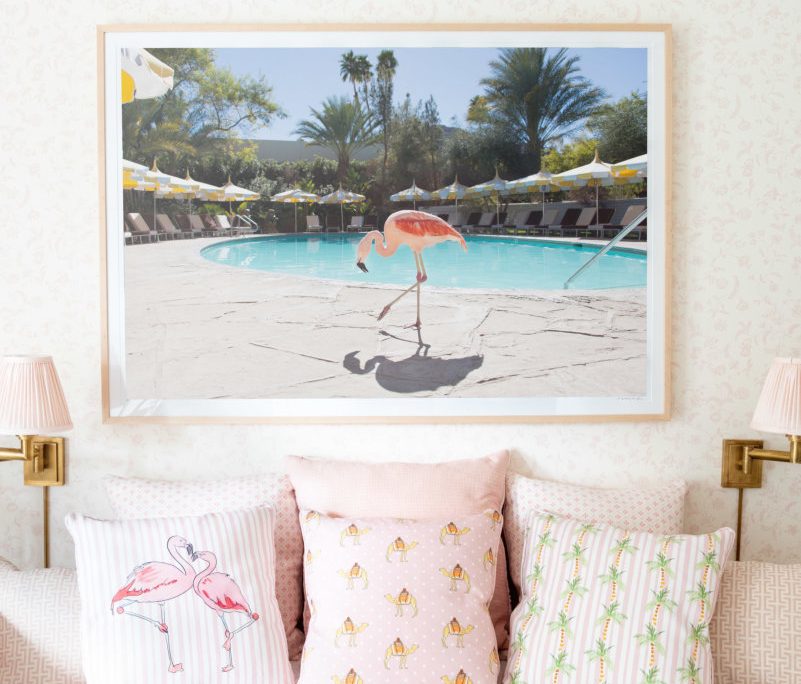
Here’s another. This one’s called Love Birds:

And see what it became:
The best part about it? This collection of pillows and nursery furniture were conceived by the brilliant team at Cloth & Company just outside of Chicago. Led by Meganne Wecker, who with her dad Ted runs the family-owned furniture maker founded by her grandfather, Cloth & Company is all about marrying traditional construction with state-of-the-art technology.
By utilizing digital textile design and 3D rendering technology, they can print just what is needed for production, so their waste and carbon footprint is minimized. And as soon as this is done, the folks at the plant rush to handcraft each piece. It’s a brilliant process, and so streamlined that these pieces can be finished in under three weeks. Imagine that for custom furniture!

The collection is available in five classic colors to go with any decor: blue, pink, tan, grey, and multi.
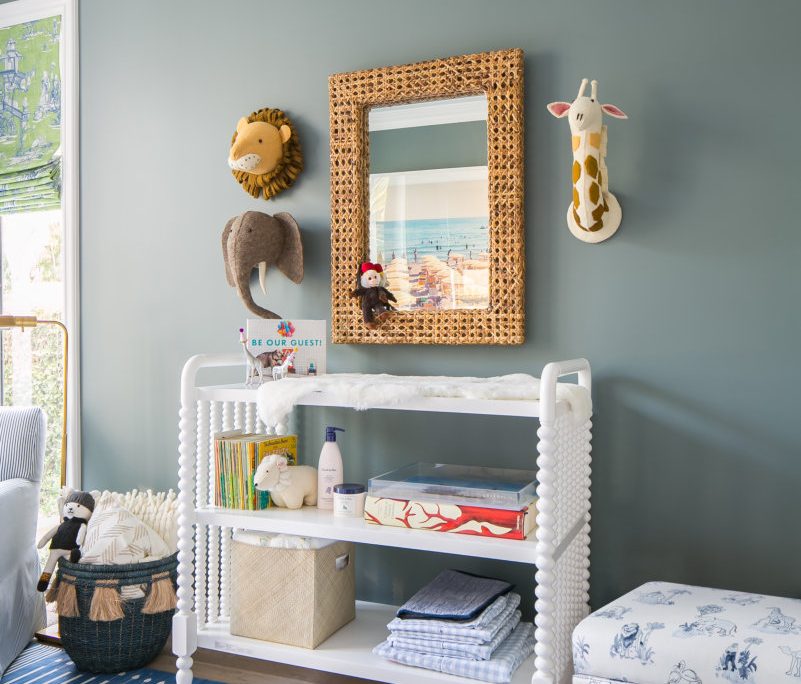
Here’s a peek into Gray’s son’s nursery, with the Toile Blue Oga Skirted Storage Bench:
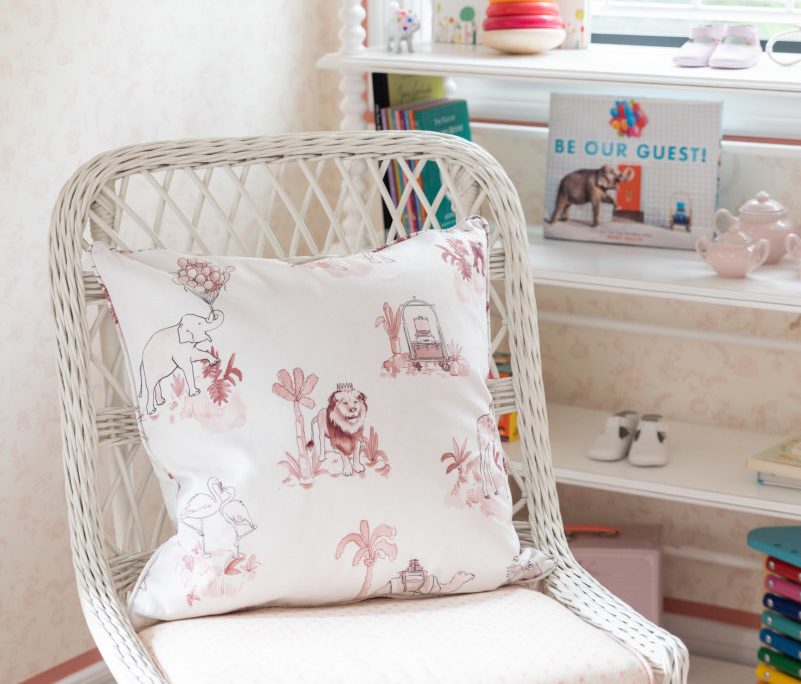
While across the hall, here’s his daughter’s room, with the Toile Pink Oga Pillow:
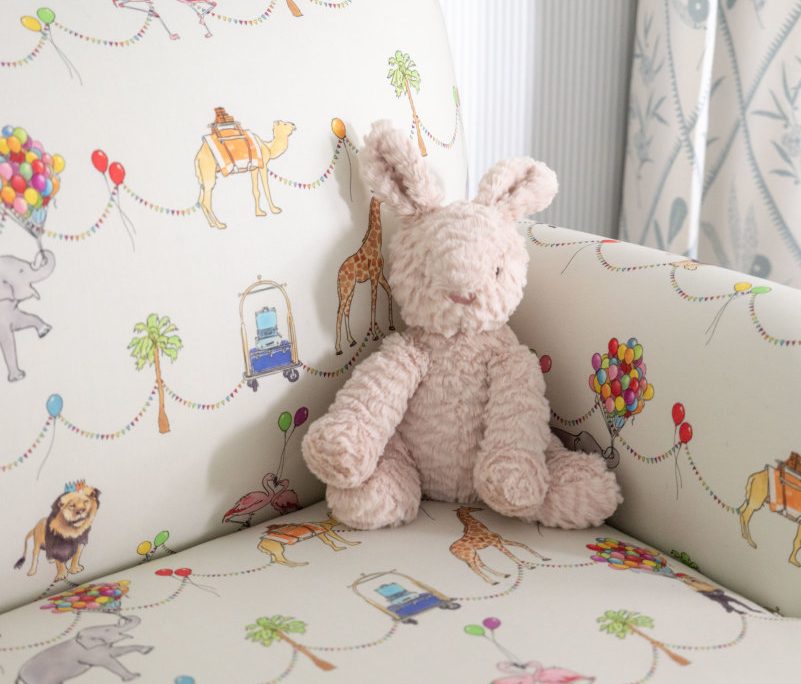
And who’s this friendly bunny sitting on the Parker Parade Multi Oga Settee?
There’s lots to love in the new line! Headboards and beds in twin, full, and queen sizes:
There are chairs and settees (for little ones and adults):
Lots of storage benches (to keep everything neat):
And a whimsical assortment of pillows:
Like what you see? Click here to see the entire Gray Malin x Cloth & Company collection!
All images courtesy of Gray Malin/Cloth & Company
Which One’s Your Favorite? Two Takes on Kim Seybert’s Bouquet Runner
We always look forward to Kim Seybert’s spring collections. One of the more gorgeous reminders of the changing of the seasons, her new Bouquet runner and placemat create a spectacular floral backdrop for entertaining.
Take a look at how quickly you can change the look just by editing the accessories around it.
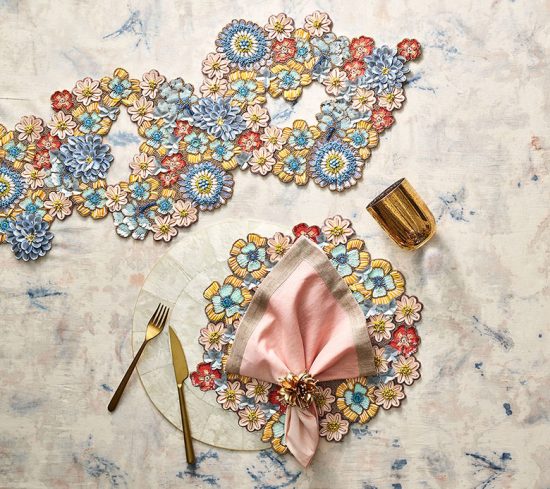
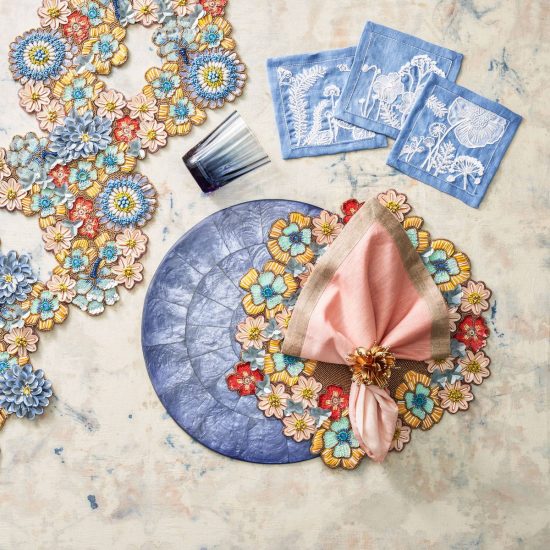
Here are some other ideas for accessorizing these amazing runners:
Sustainable Design: Chic Bathroom Accessories in Natural Materials
There’s nothing more timeless than a space which goes back to nature and blends into the surrounding environment. Think back to your days spent at your grandparents’ lakeside lodge or those nights roasting S’mores in a open fire pit on the beach. Wasn’t it glorious to spend time outdoors?
Now, after hours spent in front of screens or sitting in traffic, we need to do the same at home: get ourselves closer to nature, so we can take a deep breath and relax.

Luckily, if you’re the sort who appreciates true craftsmanship and the perfect imperfections created by nature, there are lots of materials found in both land and sea that are being used to produce exquisite pieces to connect you back to where it all began.
Here’s a look at some of our favorites.
MATERIAL: PLANT
BALI, made from organic water hyacinth. A free-floating aquatic plant, water hyacinth is used for making textiles, paper, and fish traps.
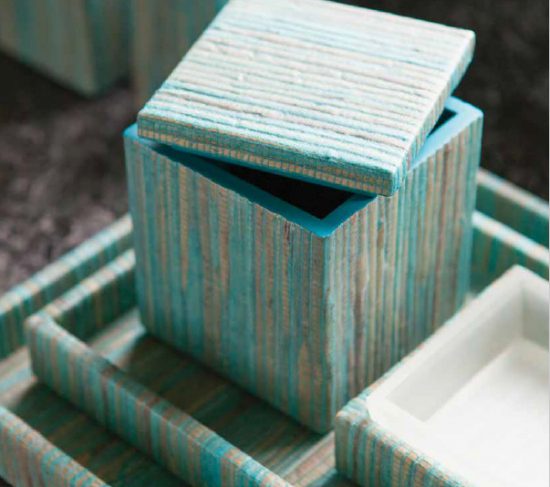
To see more bath accessories using plant materials, click here.
MATERIAL: EGGSHELL
CALLAS, featuring gold lacquered eggshell. Made using a technique originating in Asia, this mosaic-like finish is the result of delicately cracked eggshell, meticulously placed and lacquered over.

MATERIAL: BONE
MARRAKESH, made using hand-placed bone. Inspired by traditional Moroccan design, these pieces add an exotic appeal to the bath.

MATERIAL: SHELL
ADANA, in marbleized young pen (saltwater clam) shell. Notice the subtle iridescence in these pieces; look for this next time you’re out eating shellfish.

To see more bath accessories using shell, click here.
MATERIAL: ROCK
RHODES NERO MARBLE WITH BRASS. In classic black and white, this marble – a material that harkens back to the 1930’s – has gorgeous veining throughout and creates distinctive abstract patterns.

To see more bath accessories using rock, click here.
Freshen Up Your Home with These Boho Chic Essentials
As you plan your summer travels to Bali, India, and Morocco, here are some easy ways to update your home with a relaxed vibe.
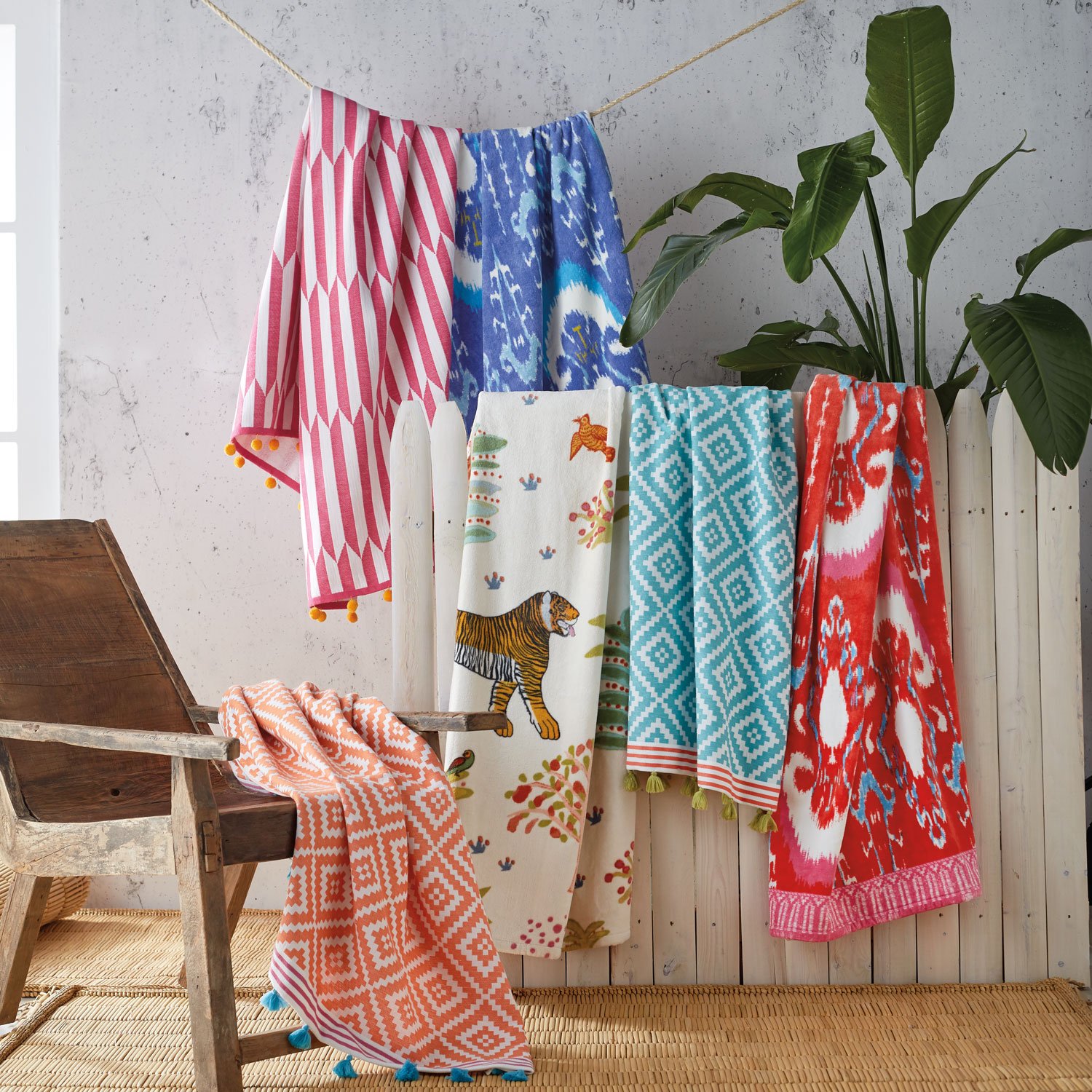
To see more Boho Chic Essentials, click here.
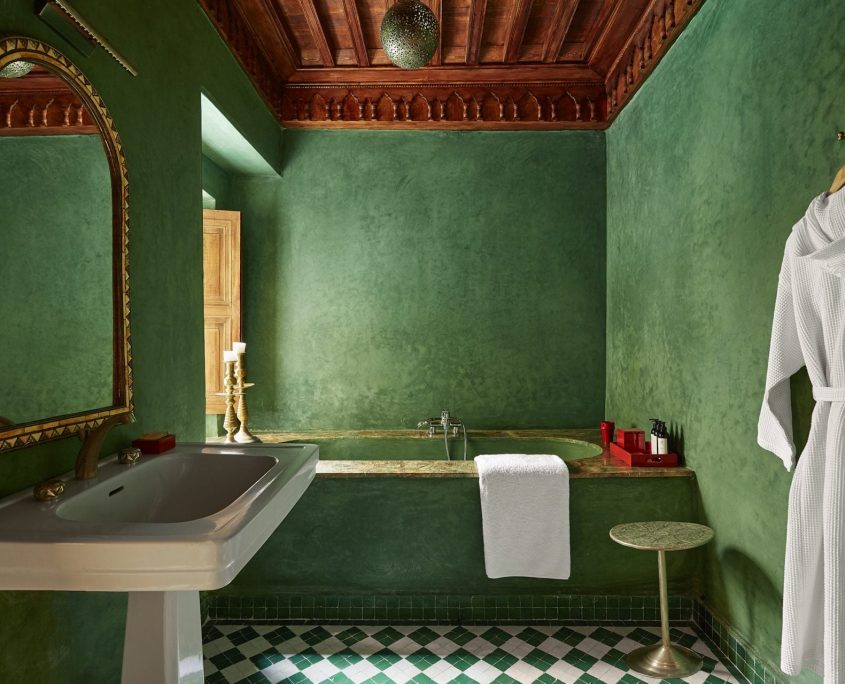
10 Design Ideas to Steal from Luxury Hotel Bathrooms
What do you do before you plan your trips? For me, I always look to see what hotels are available first. It’s probably because I generally already know what the must-sees are, but at the end of the day, if I can’t come home to a great room, then it’s not really a vacation. I’m probably crazy to admit this, but once I realized this, everything started falling into place.
So of course there’s a ton of information out there, but the good places generally stand out pretty easily: they’re across parks or near major embassies, and almost always near the major museums and shopping areas. But here’s my twist: while I’m checking out the properties online, I always look closely at pictures of the bathrooms. Why? One, because I don’t unwind in the lobby. And two, because in a bath you can really tell how much attention the designers paid to creating the perfect experience for their guests.
I look at everything — the light fixtures, the tiles, the towels, the bath accessories, and the soaps and lotions — and then I take it all in. Does everything belong there? Are there surprises along the way? Is there enough space for toiletries? I keep asking these questions until I can finally imagine myself there. Then I’m ready to look for flights.
Here’s a list of some of the hotels that have most inspired me, and ten great ideas on how to take a little of these special places home with you.
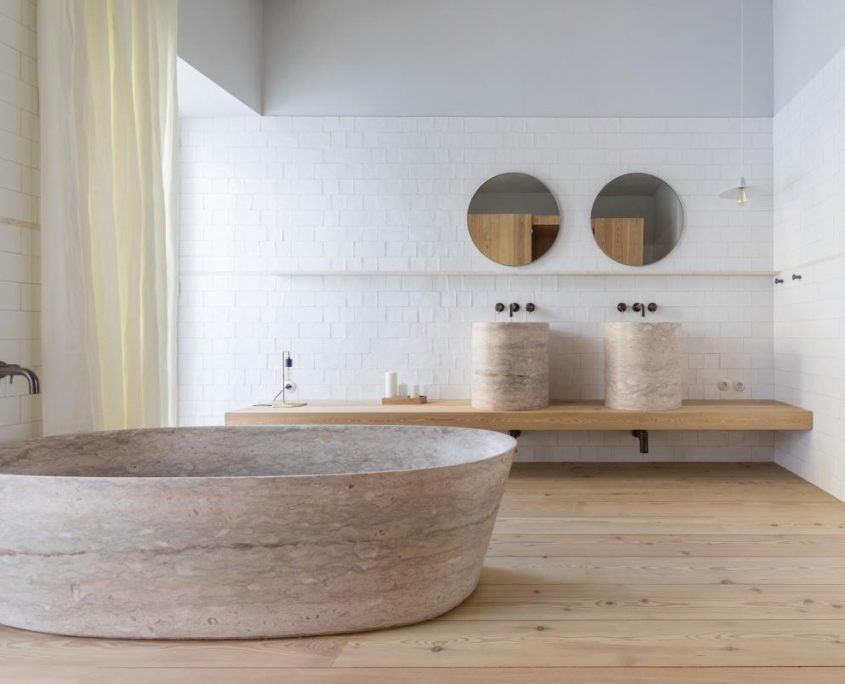
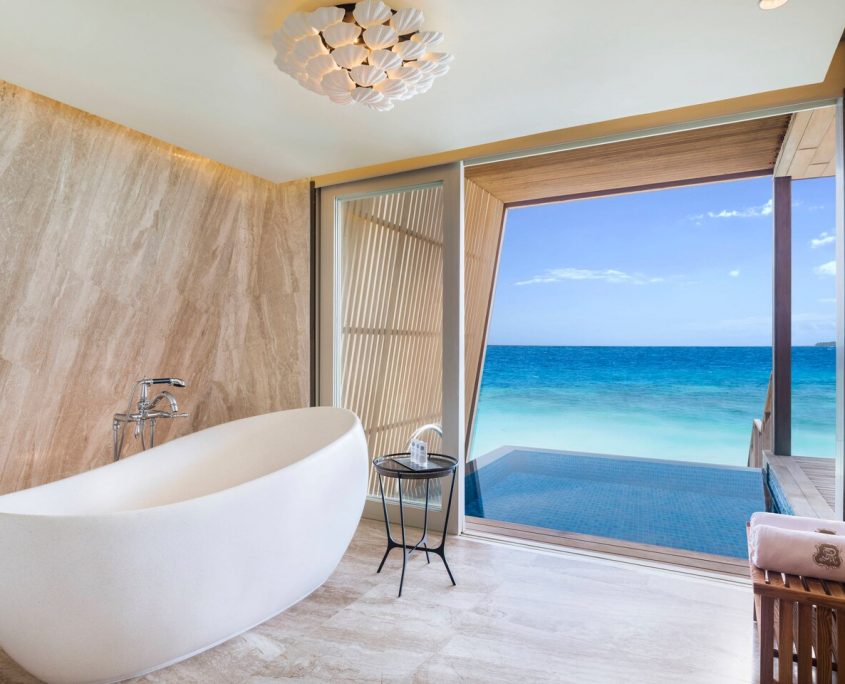
1. If you have a view, keep things airy and minimal.
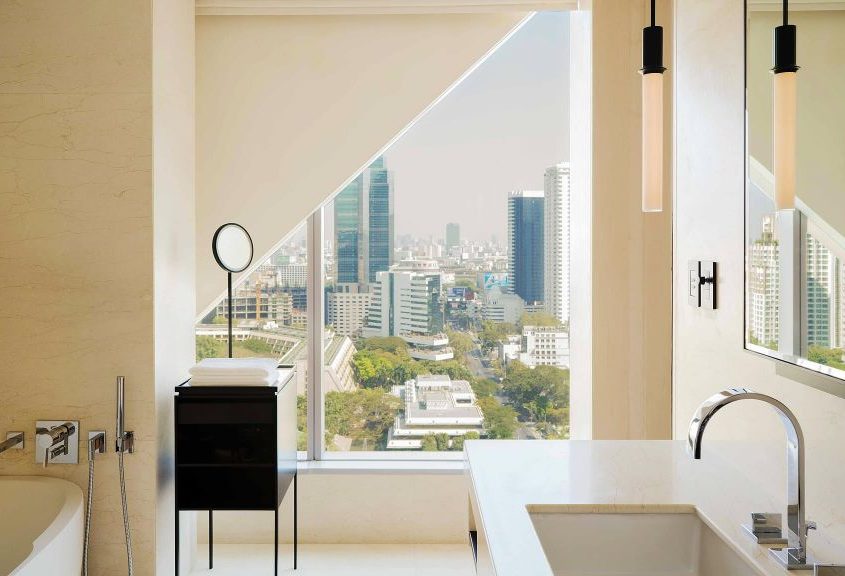
2. Highlight handmade details with natural materials.
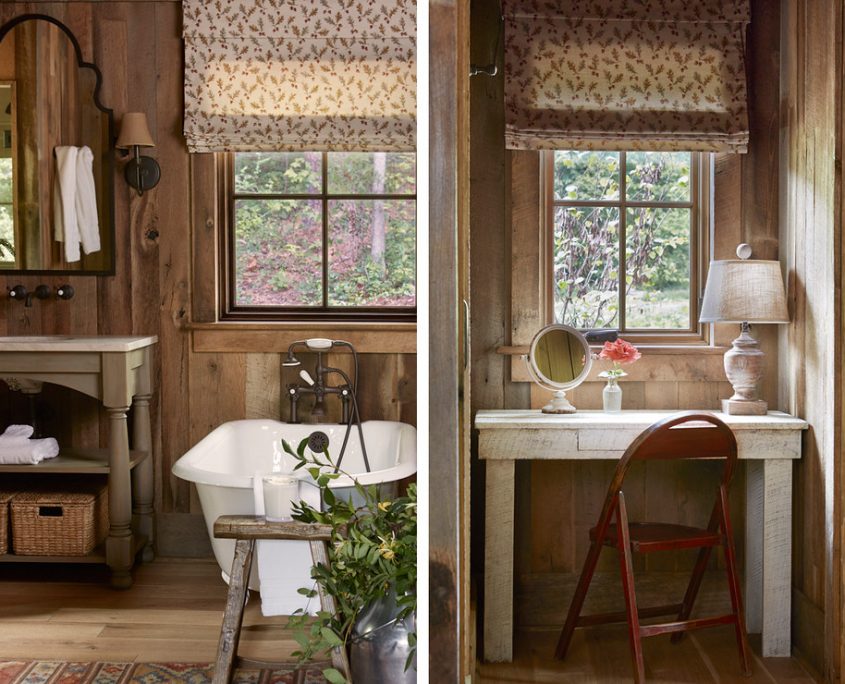
3. In the countryside, embrace honest creature comforts.
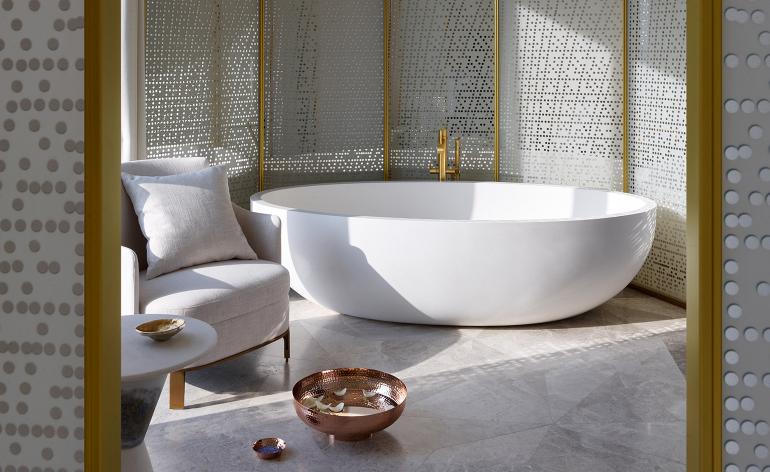
4. Add a touch of bling with warm metal accents.
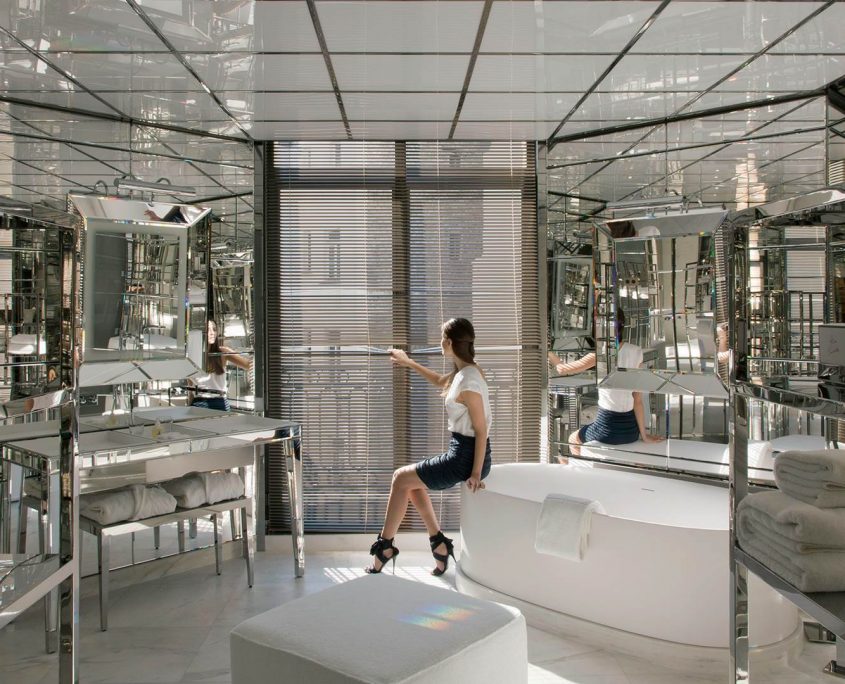
5. Up the glam factor (and make the room feel larger) by incorporating mirrors everywhere.
6. If you lean toward more urban, contemporary settings, slate, graphite, or black accents are timeless.
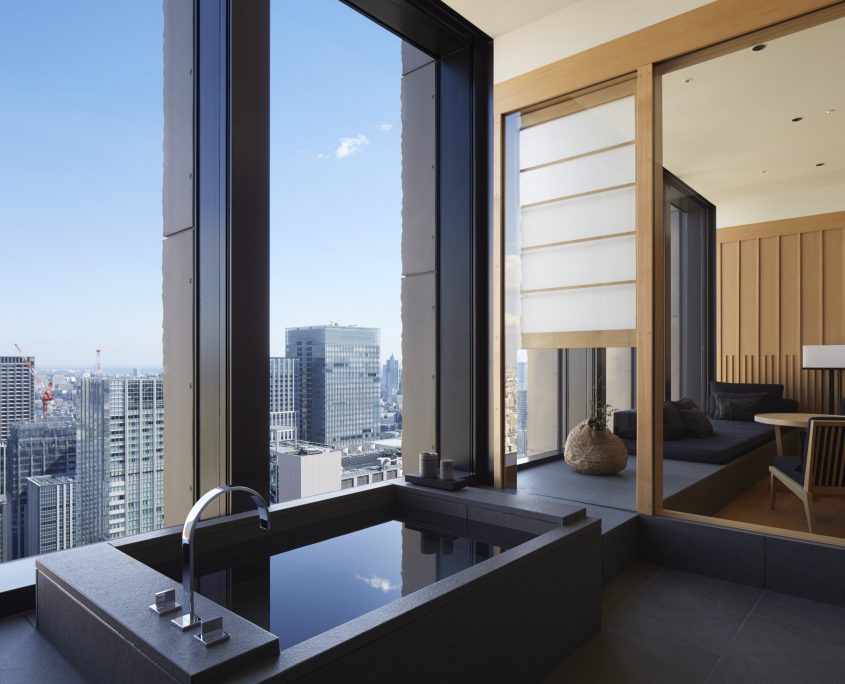
7. If you’re near the water, embrace traditional motifs but stay within colors found in nature.
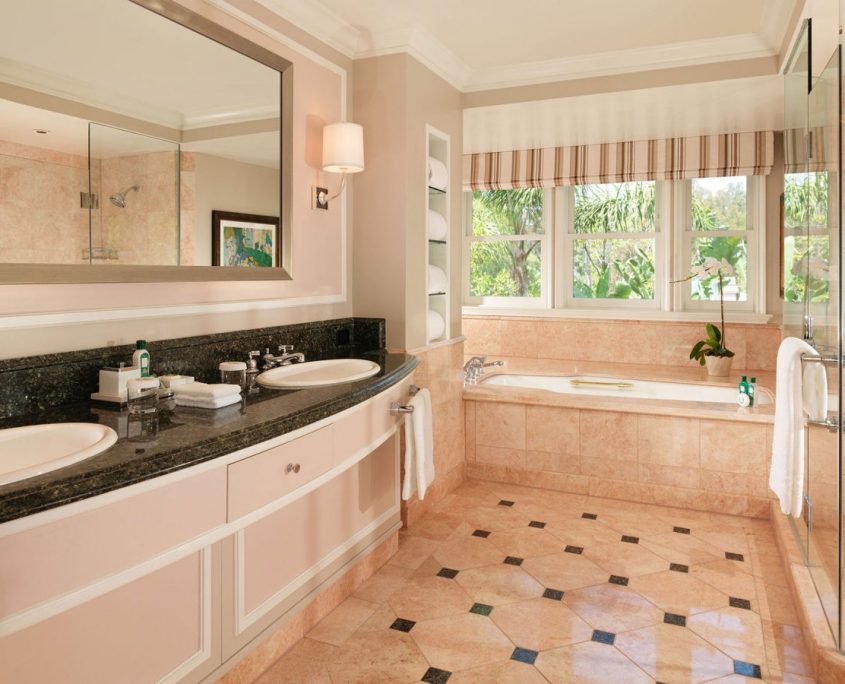
8. Channel old-time Hollywood glamour.
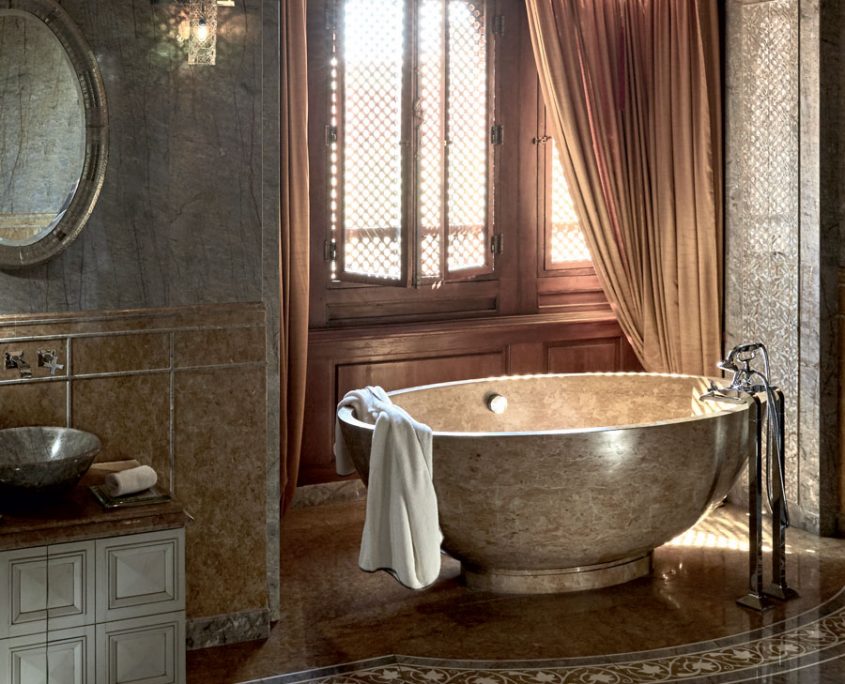
9. Embrace the exotic.
10. Experiment with color.
As Seen in New York Magazine: The Best Hotel Sheets
As we all know, high-end hotels are the best at choosing sheets that are luxurious, soft, and durable, so they look good wash after wash.
New York Magazine’s The Strategist recently set out to find the sheets that hotel insiders loved in a column “The Best Sheets, According to Hotel Insiders.” Featured was the Garnier-Thiebaut’s Nice bedding collection:
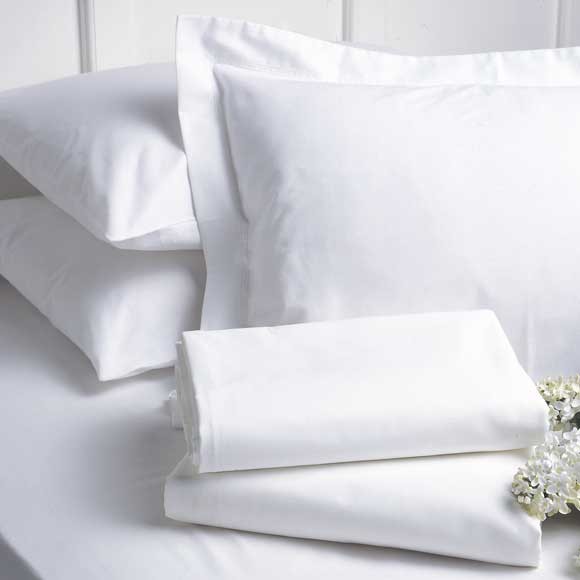
It seems they tracked down some of the insiders at the Four Seasons Hotel, New York, Mandarin Oriental, Washington DC, Park Hyatt, Chicago, Ritz Carlton, Key Biscayne, The Inn at Palmetto Bluff, Cheval Blanc, Courchevel, not to mention Per Se in New York, Qatar Airways, and the Chateau Restaurant Joel Robuchon in Tokyo. One of the most respected names in the hospitality industry, Garnier-Thiebaut supplies linens to some of the finest hotels and restaurants in the world, so it was probably inevitable they would make it on such a list.
Just take a look at their linens:
See the entire Garnier-Thiebaut selection online here.
How to Choose the Perfect Coffee Table
We love working with coffee tables, as they are both beautiful and infinitely practical. Here are some of our best design tips.
1. Generally, your coffee table should be about two-thirds the length of your sofa.
2. A coffee table should either align with the seat of the sofa or be about one to two inches lower.
3. Place your coffee table 18 inches away from your sofa, or any other seating in the room. If it faces a TV stand or fireplace, leave at least 30 inches from the edge of the coffee table for walking around.
4. In oversized rooms, you can often combine coffee tables to create what you need. For a large square, place two rectangular ones side by side. Or get creative and join three triangular ones to form a neat whimsical shape.
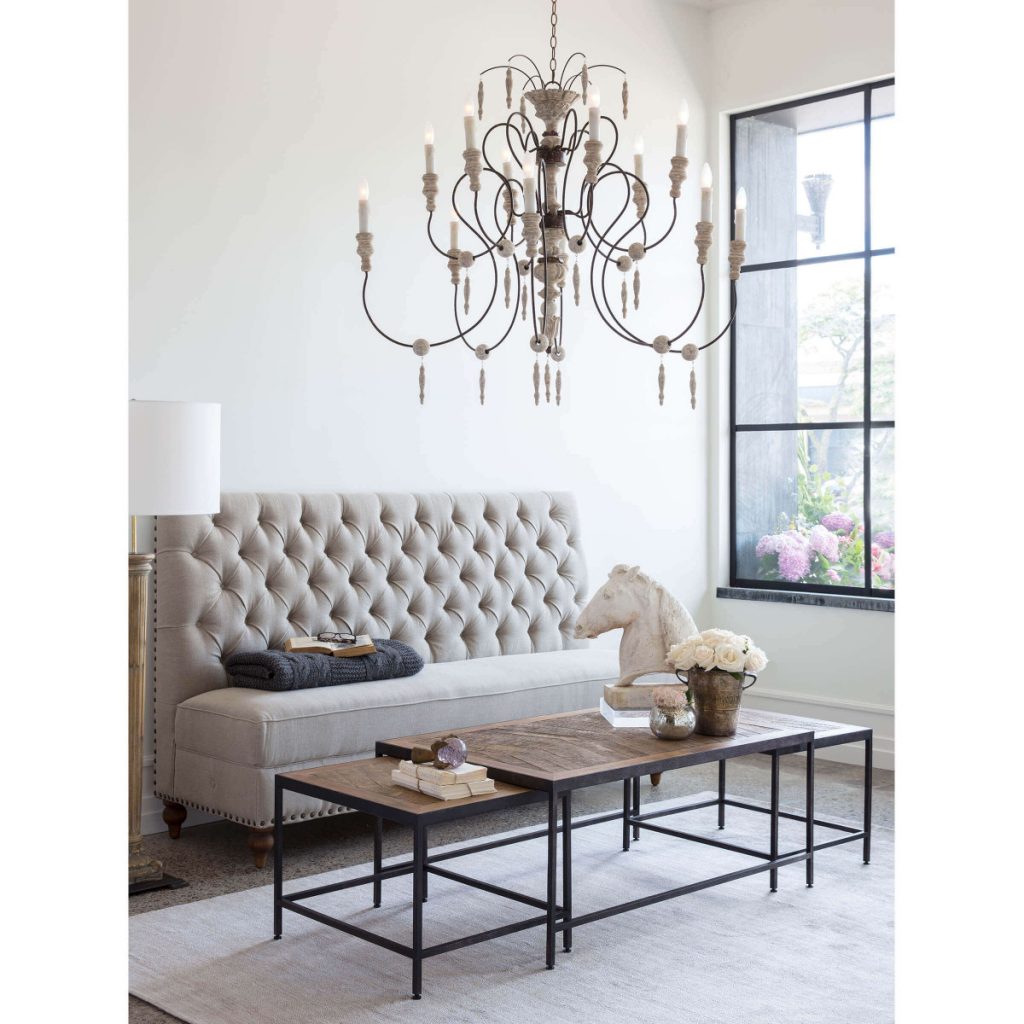
5. For a more relaxed feel, an ottoman is a practical option, beloved by kids of all sizes. For drinks and snacks, you can always add a tray on top.
6. If you have small children, avoid sharp corners by either choosing an ottoman or an oval or round table. Waterfall edges are also a great choice. Also, you may want to stay away from glass until the tots are a bit older.
7. In a small space, glass or acrylic coffee tables almost virtually disappear, so they’ll make the room feel lighter. Plus, you can easily wipe them down, so they’re great for drinks.

8. Mirrored and metal coffee tables are a great way to bring glamour and light to a room.
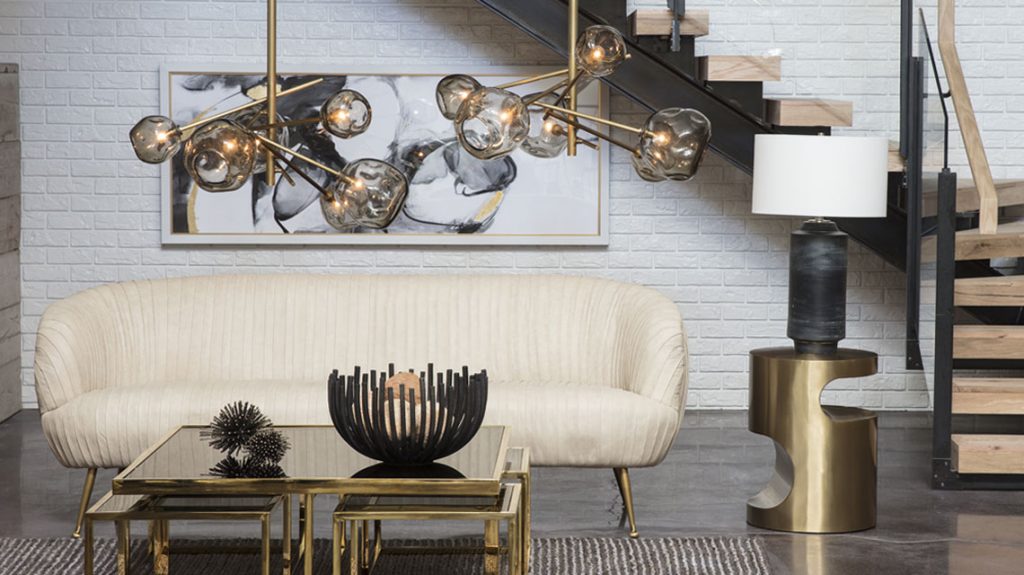
9. If you have rounded or curved seating, a circular or oval coffee table usually work best.
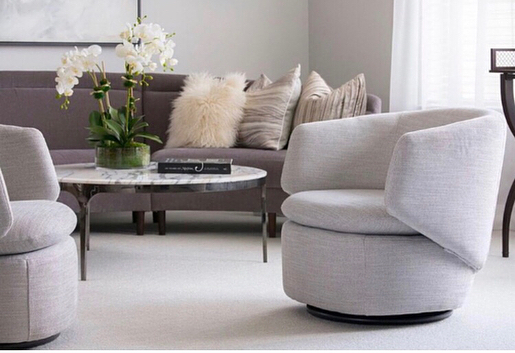
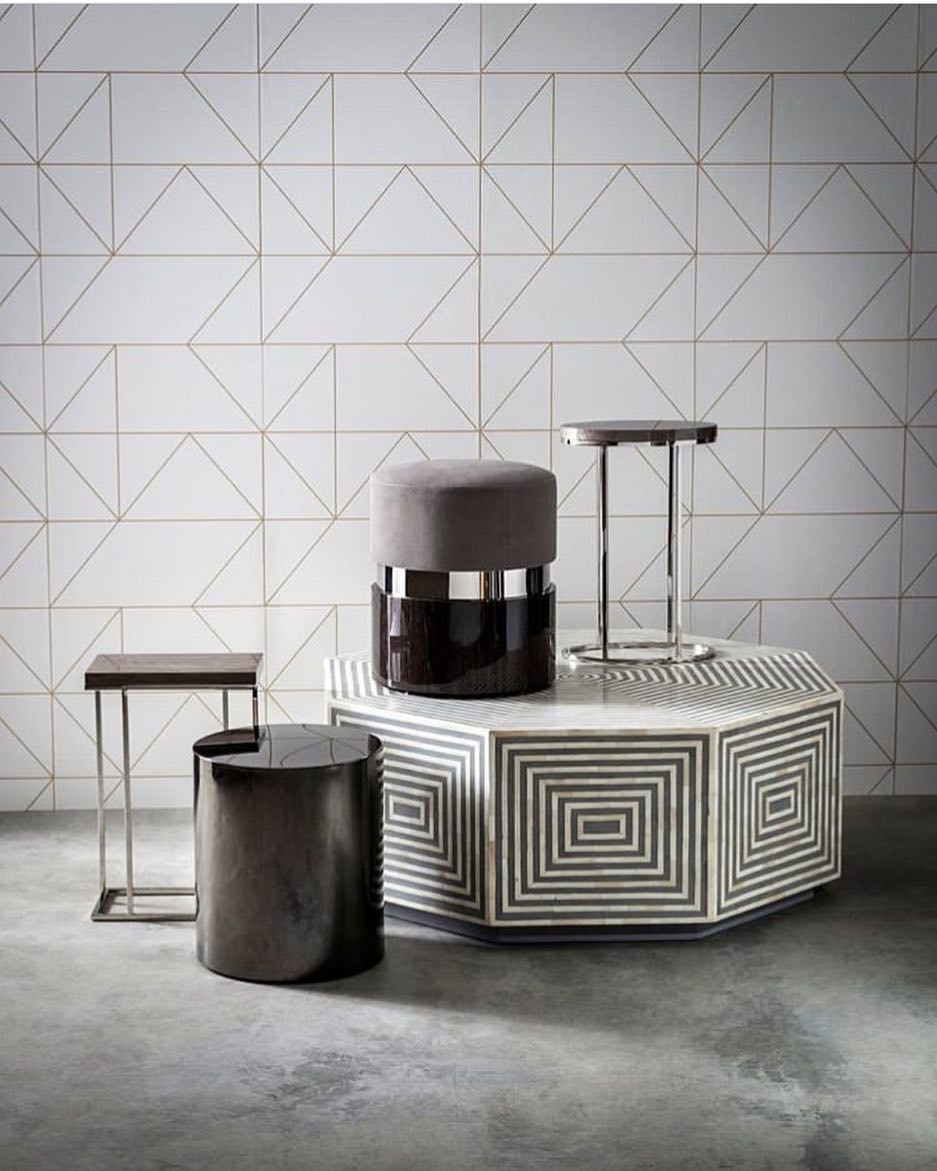
10. Unusual geometric shapes are appropriate in rooms inspired by foreign travels.
11. “If the room is neutral, a pop of color in your coffee table can serve as the art in the space. (Nicole Fuller of Nicole Fuller Interiors via The Wall Street Journal)
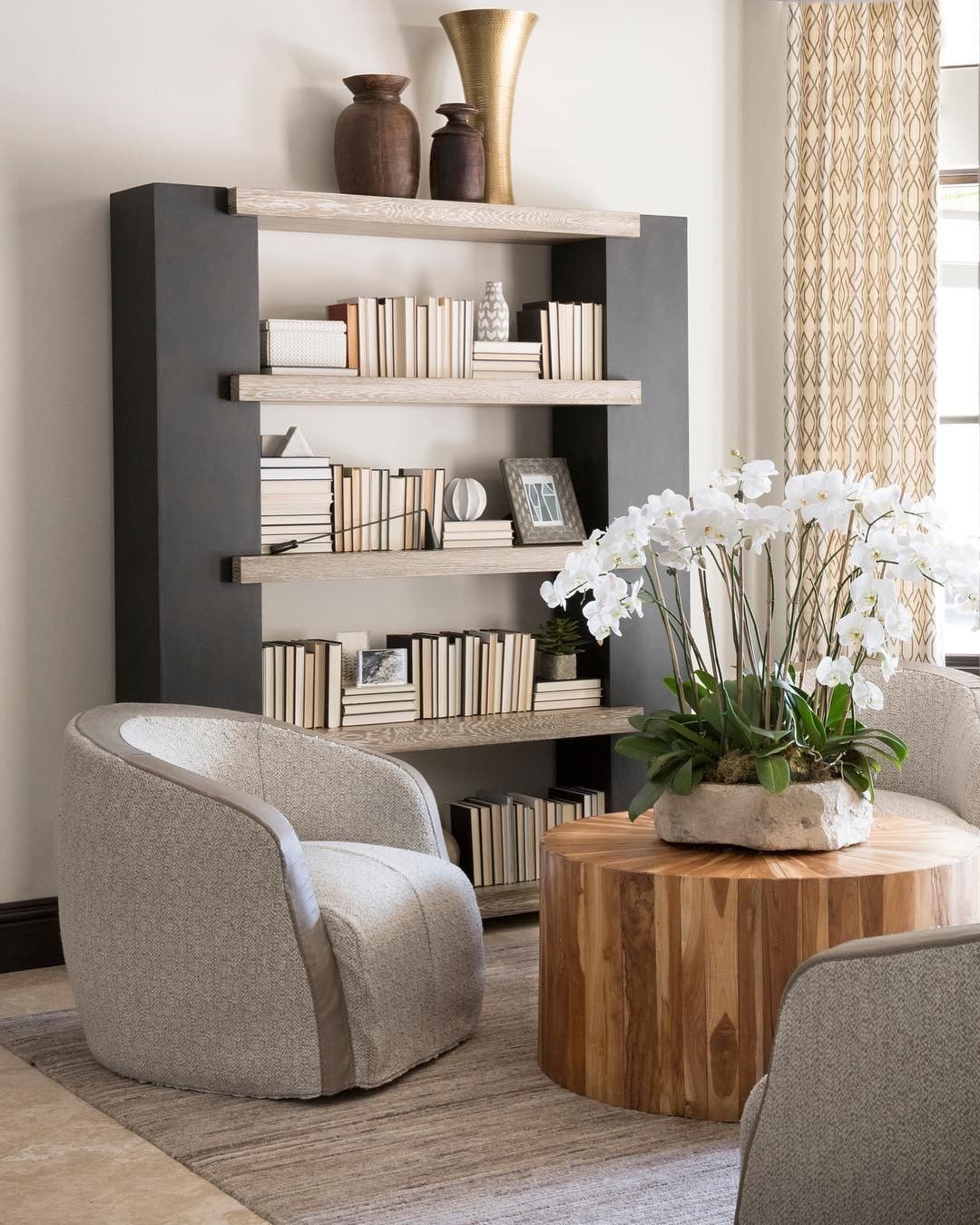
12. Bring the outdoors in with a beautiful wood coffee table. “We love to offset straight lines of furniture with a natural, organically shaped tree stump coffee table. The irregular, natural shape is a great contrast to furniture and straight lines within the room and is a great way to bring in natural elements inside. (Holly Waterfield, designer for The Brooklyn Home Company via The Wall Street Journal)
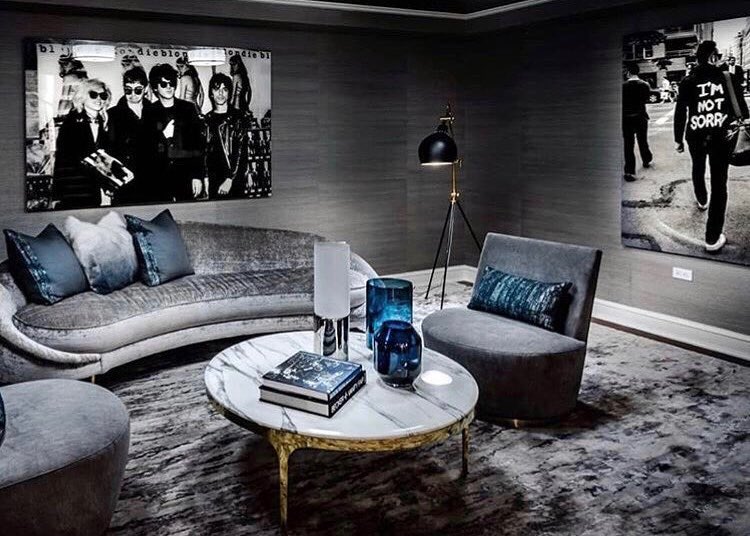
13. A stone coffee table can elevate any space.
Ready to pick out your favorites? Check out some of our most popular coffee tables:
Want to see more? See our entire selection of coffee tables here.
Born in Detroit: Grit and Grace from Regina Andrew
What do you get when you combine a stylish artist with a musician in a city full of soul and manufacturing prowess? Regina Andrew!

Founded in south Detroit (the Paris of the Midwest, as they love to say) over twenty years ago, this talented couple has created a very personal collection full of classics with a an edge (modern, rock and roll, funk), so you can use them over and over again, no matter how often you move.
Their first product – a designer doghouse for a charity fundraiser – speaks volumes to their commitment to living a well-lived life and to supporting the local community. They’re also super passionate about the environment. Regina Andrew’s headquarters and warehouses are 100% solar powered, they use as much recycled cardboard as possible, and they transform reclaimed objects into beautiful things.
Here are some of our favorite looks:
THE CLASSICS
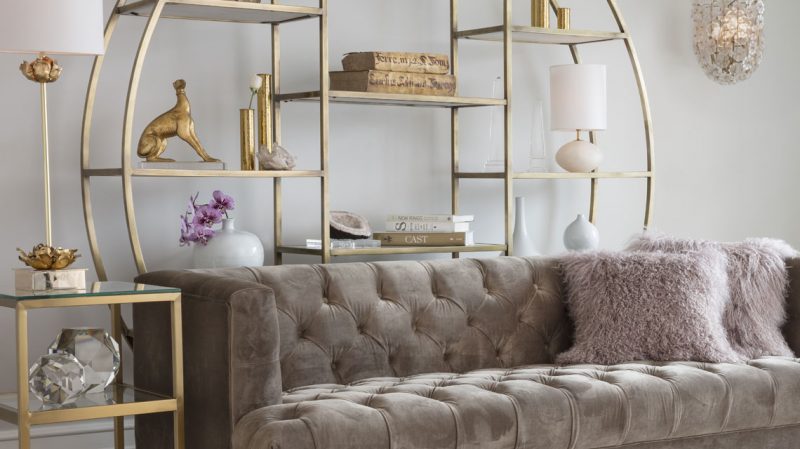
L.A. MODERN
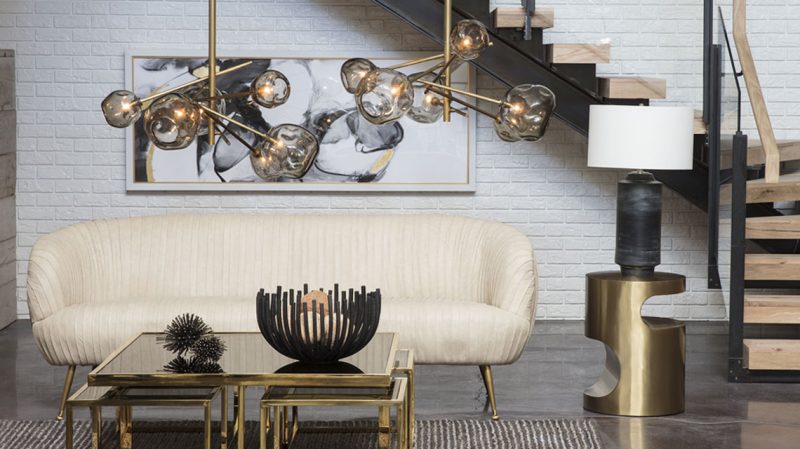
THE NEW SOUTH
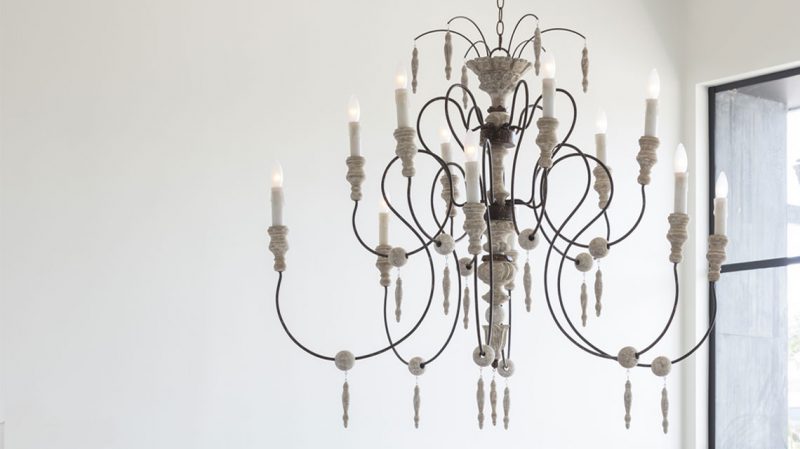
MODERN GLAM
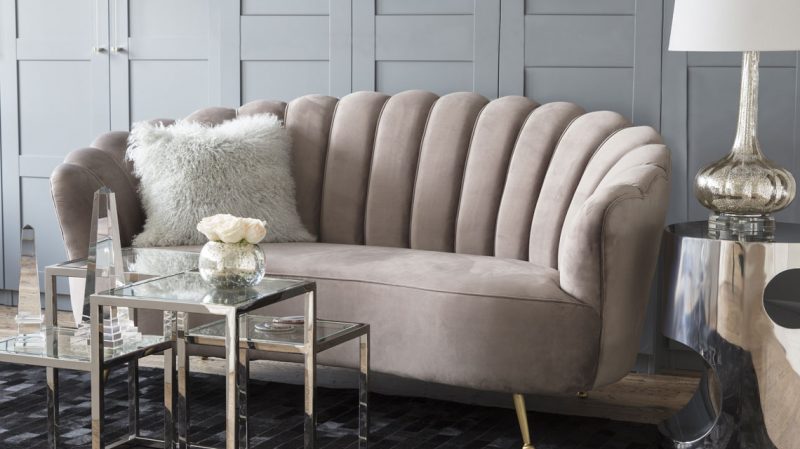
Explore the entire Regina Andrew collection here, and enjoy free shipping on all orders over $75!
Always On Vacation: Fine Art Photographer Gray Malin
Living in Los Angeles, we can’t help being drawn to anything that reminds us to spend more time outdoors. And whether it’s in Beverly Hills or Lake Como, images of folks on vacation always make us smile.
Gray Malin and his fine art photographs will do the same for you. The series which shot him to fame, Prada Marfa, is Marfa, Texas (known for its modern art installations) like you’ve never seen it:

Let’s dismount and go shopping:

Aerial photography is his strength.

Often starting work at 6 a.m. to shoot these, Gray stumbled upon his now-signature aerial pieces on a road trip to Las Vegas in 2011, where on a Saturday morning, he got up early to photograph the pool below his hotel room. The pictures went viral and the rest, as they say, is history.
Here’s what he saw flying above a beach in East Hampton … perfect in a pool house.

And here he is in Lake Como … #vacationgoals:

Closer to home, we love his series at the Parker in Palm Springs:

And here’s a retro look at the Beverly Hills Hotel:

And for all those days when you need to get away? Sometimes this is all it takes:

Hope we got you smiling! Here’s a selection of Gray Malin art that you could take home:
The Editors’ Favorite: 6 Ways to Use Clear Acrylic Furniture
With streamlined silhouettes, acrylic furnishings are functional and add no visual weight. Also known as Lucite or Plexiglass, these pieces are clearer than glass and quite a bit lighter. Cleaning is a breeze: just use a soft cleaning cloth and warm soapy water, rinse with clean water, and allow to air dry.
Here in L.A., you see them used at a lot of homes in the Hollywood Hills, Malibu, and in more traditional settings to help lighten the overall scheme or create contrast against more vintage pieces. In New York, almost every new high-end development has them in their model units. And editors at design magazines like Elle Decor and Architectural Digest love them.
What we know for sure: if you stick with well-made pieces, they’ll give any space an instant boost of glamour. Here are some of our favorite ways to use them:
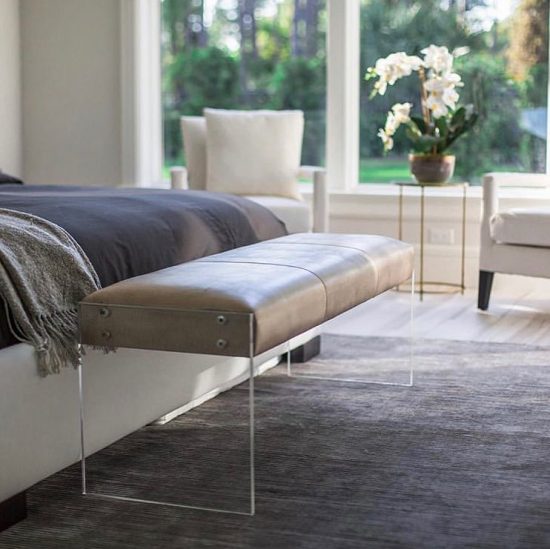
1) In rooms where you don’t want furnishings to compete with the view.

2) In smaller spaces (desks in small nooks, console tables in hallways). Tuck a chair under a makeup table, and it virtually disappears.
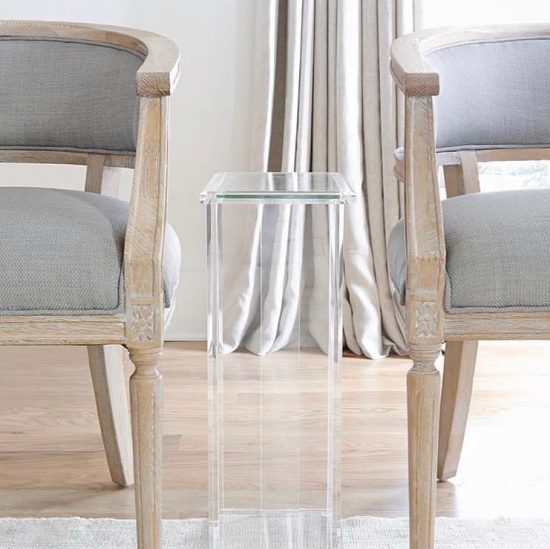
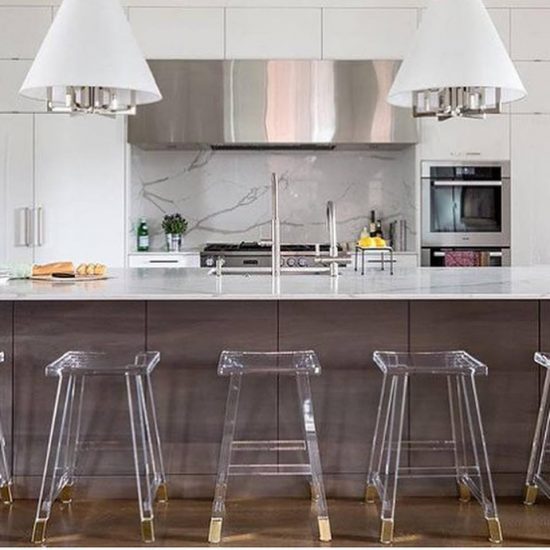
3) To showcase a special feature in the room (like that that gorgeous rug you got in Marrakech). Collectors love them next to contemporary art pieces. In the kitchen, acrylic stools are a much sleeker alternative to bulkier upholstered seating.
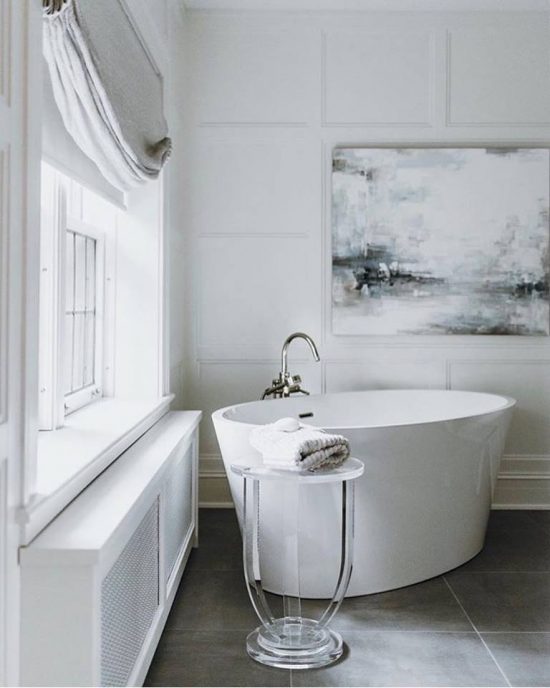
4) In bathrooms, where you could always use an extra perch.
5) As an occasional piece. Whether it’s a bar cart or a backgammon table, an unexpected piece crafted in acrylic always becomes a conversation piece.
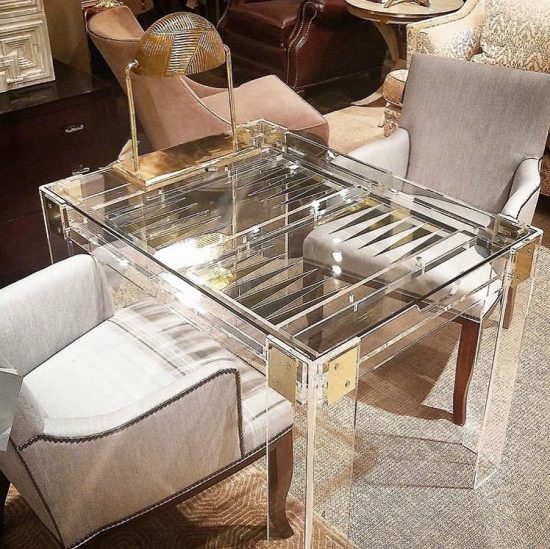
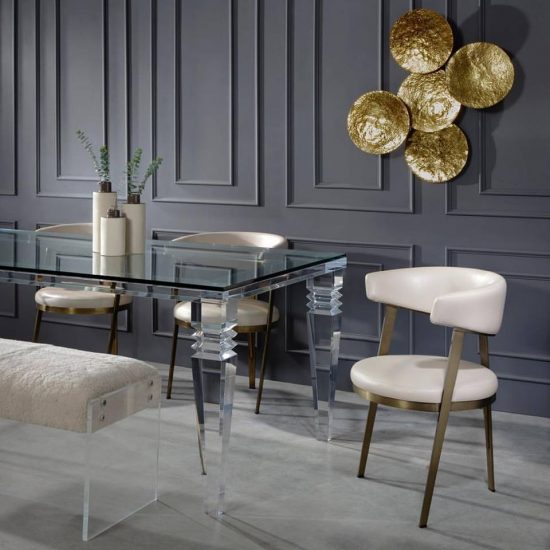
6) To avoid competing with other strong elements in the room. And as an added bonus: mixed with shearling or leather, they’re the definition of chic.
.
The Instant Decorator: Poolside Project
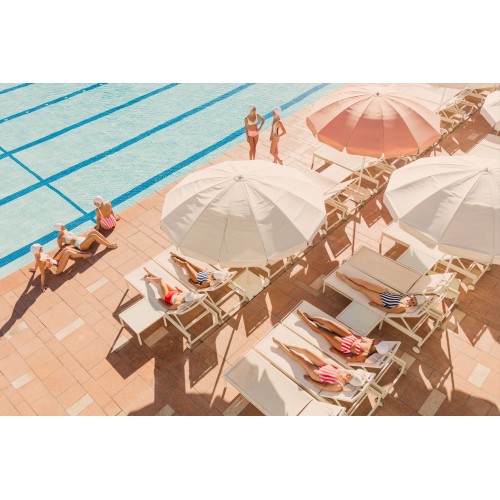
Inspired by Gray Malin’s photographs at the Coral Casino Beach and Cabana Club in Santa Barbara, we styled a collection to help you dress up your poolside in minutes.
Just Dropped: The Haas Brothers + L’Objet Collaboration
In less than eight years, artists Simon and Nikolai Haas (collectively known as Haas Brothers) have taken the art world by storm. Known for their colorful, biomorphic, and imaginative furniture, ornaments, and objects, the Los Angeles-based twins started out by making furniture for Tobey Maguire when he was redoing his office at Sony Studios in 2010.

Following this, they landed a slew of high-profile jobs, including designing monster masks for Lady Gaga, outfitting Louis Vuitton Shanghai’s digs with Peter Marino, producing furniture for Donatella Versace, and working on the lobby of the Ace Hotel in Los Angeles. As if that’s not enough, they’ve also shown their work at Art Basel Miami.
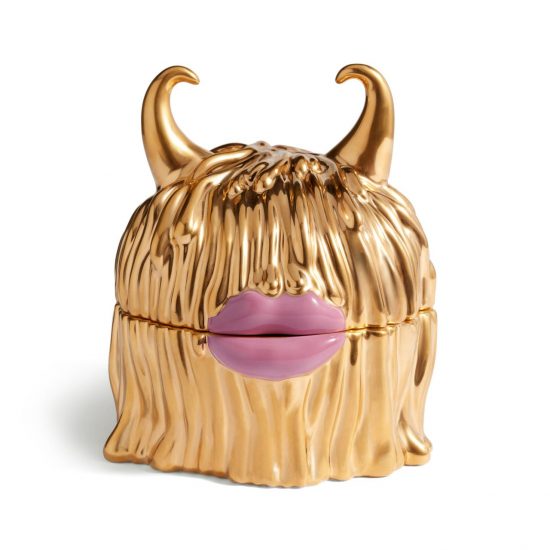
Now, they’ve collaborated with Elad Yifrach from L’Objet to create a family of unforgettable, whimsical creatures:

Inspired by the otherwordly landscape of Joshua Tree, they have brought to life a gathering of creatures that will be sure to delight.
Here are some of our favorite monsters:
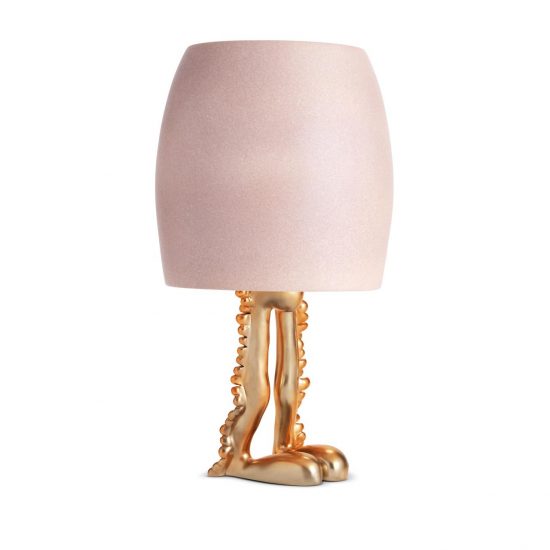
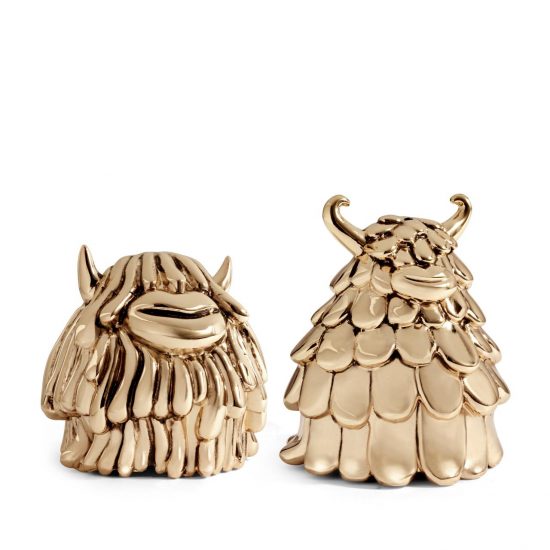
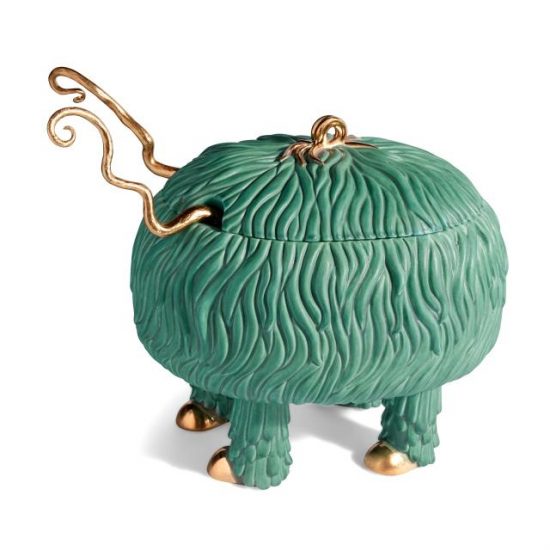
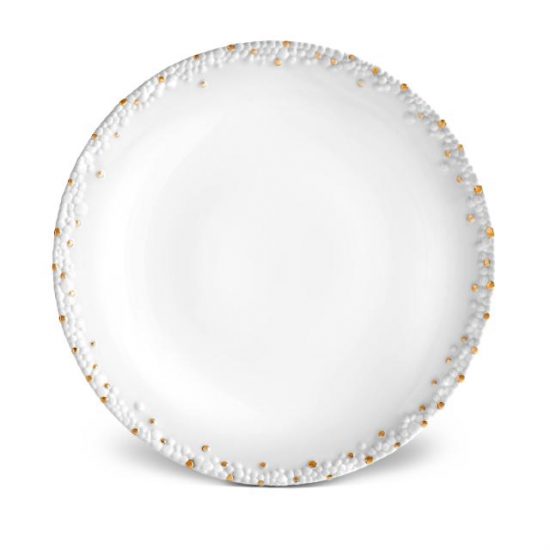
Love the Haas Brothers? Click here to see the entire Haas Brothers + L’Objet collaboration. Quantities on these pieces are limited, but all are available for pre-order and worth the wait.
Setting the Table: Celebrating Lunar New Year in Style
If you’re like us, you’ve probably moved way past the heavily sauced Chinese dishes from your younger days and sampled your share of truly spectacular Chinese food.
Today, Hong Kong and Macau have 82 Michelin starred recommendations. And on our last trip to Singapore, the dim sum at Jiang-Nan Chun (at the Four Seasons Singapore) was out of this world. Closer to home in L.A., Chang’an in the San Gabriel Valley shows us how a new generation of Asians likes to eat: in restaurants that are well-designed, specialize in serving premium food, and can just easily welcome the local family of ten as well as the Gucci/Prada/Lamborghini students at the local college.
So if you’re a fan of this next-caliber Asian food, how do you do it justice at home? We’ll show you show. And once you’ve got the hang of it, a Lunar New Year’s celebration, which falls on February 5th this year, is the perfect time to try it out.
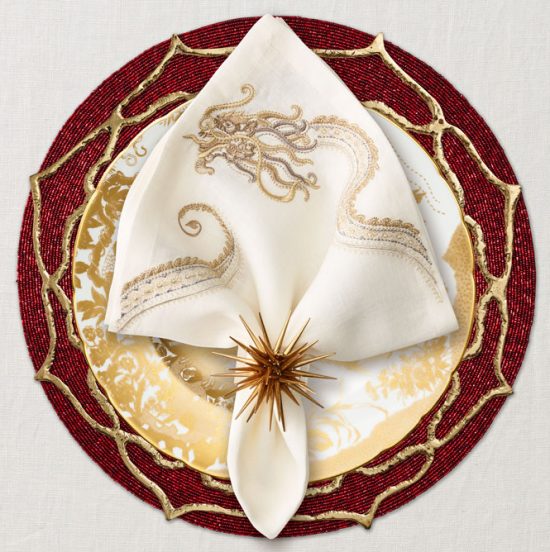
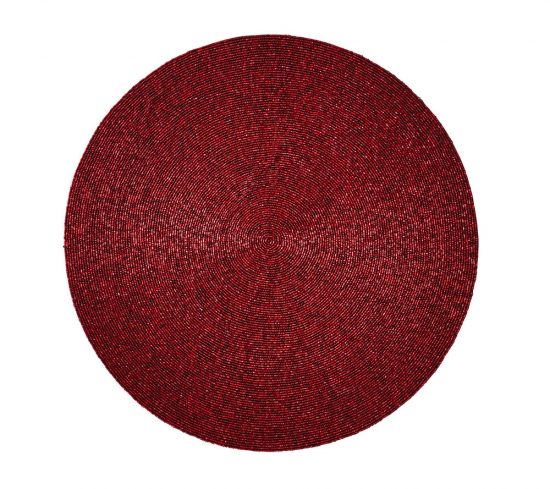
1. Start by incorporating red (luck, joy, and happiness) into your table setting.
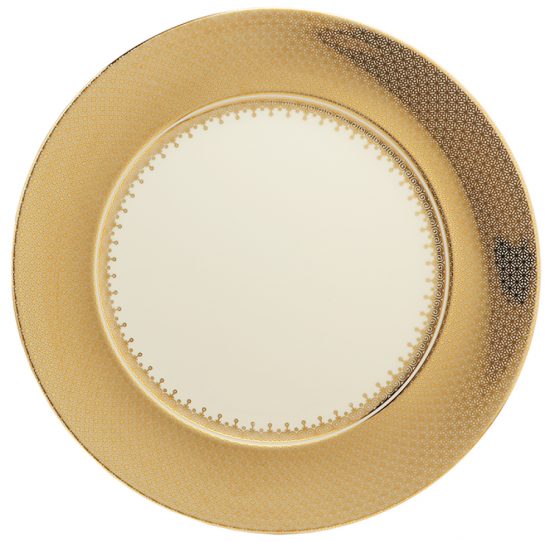
2. Layer it with gold, which symbolizes prosperity.
3. Top your plate with an exquisitely detailed napkin … like this one with a dragon motif, a classic in Chinese mythology.
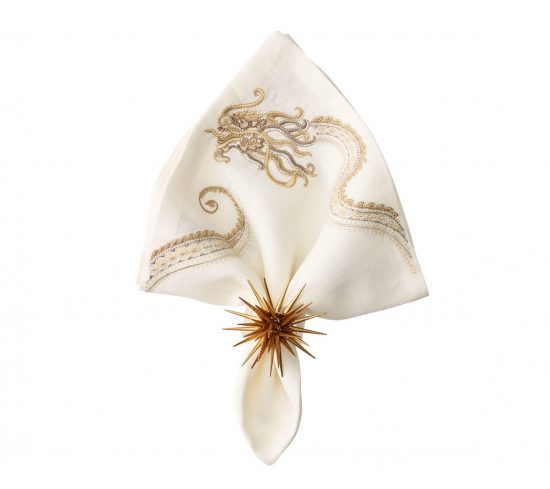
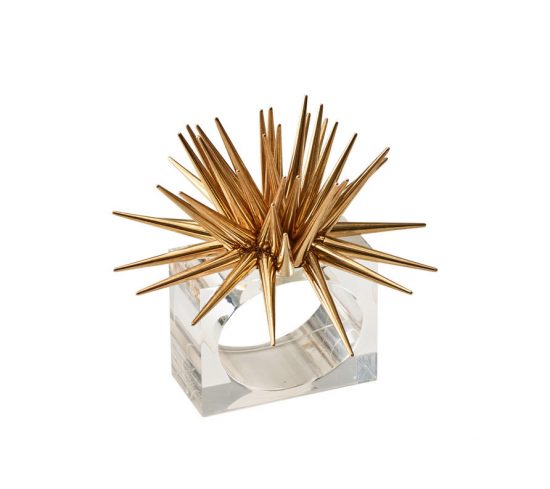
4. Accessorize with a smashing napkin ring; this one reminds us of a spectacular fireworks display.
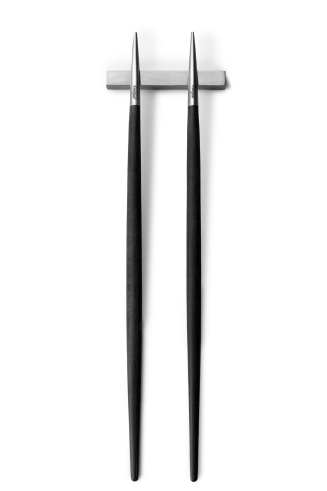
5. To the right of each setting, add a sleek pair of chopsticks.
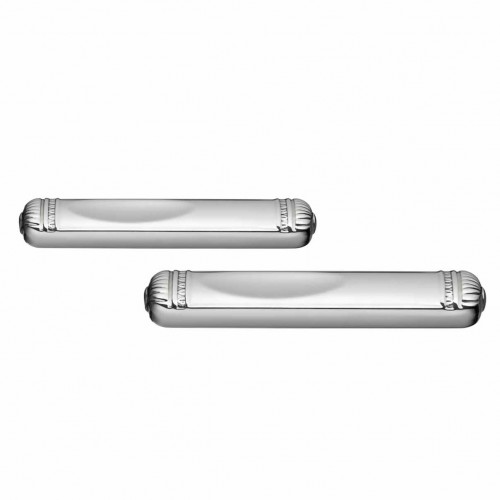
6. Don’t forget nice chopstick rests.
7. If you’re serving soup, add a Chinese soup spoon.

8. Around the table, add containers for condiments.
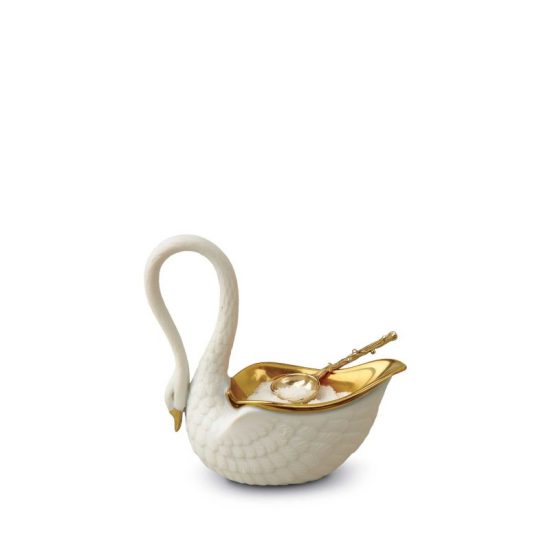
9. Asians take their tea seriously; make sure yours is served hot.
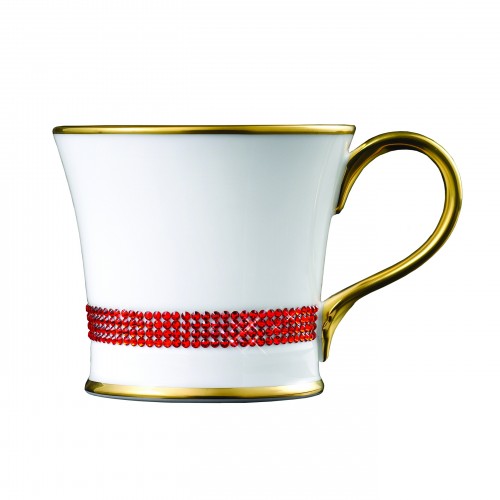
10. And as parting gifts, a beautiful candle to keep your loved ones warm all year round.

Free Herend Gift with Purchase
Our Herend Monogrammed Coaster Gift with Purchase starts today!
Get a free Herend gold monogrammed coaster or a platinum monogrammed coaster with your purchase of $200 or more. Plus, get free shipping on all orders over $75.
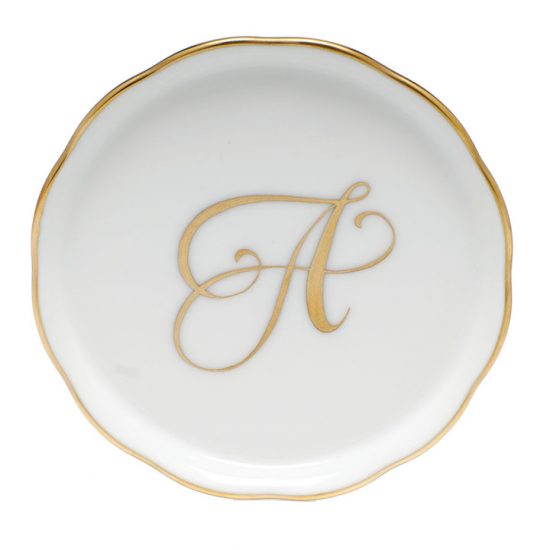
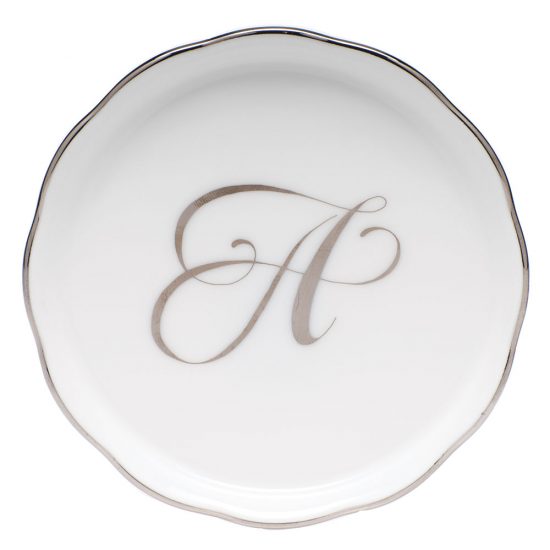
Known around the world as both Queen Victoria’s and Princess Diana’s favorites, Herend is prized for its delicate handpainted designs.
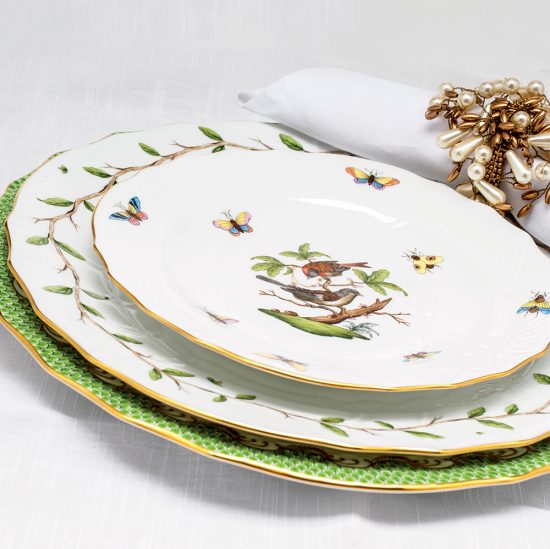
To get your free gift, click here and use coupon code HERGWP89.
To see all Herend, click here. Hurry; offer ends October 2, 2018. Not valid with other offers.
Art Deco in Los Angeles: Our Favorite Buildings
Although New York and Miami are widely considered to have the best examples of Art Deco architecture in the U.S., Los Angeles has its fair share. Here are some of our favorites, all of which can be visited in one day.
In Westwood, the Bruin Theatre, named after the mascot of the University of California, Los Angeles, features the school’s blue and gold colors. In its heyday, its circular facade and ornate marquee hosted countless movie premieres.

When it was built, The Bullock’s Wilshire/Southwestern Law School was the first department store in the country designed to accommodate automobiles. It features large display windows facing the street and a main entrance facing a parking lot in the rear. The success of this building spurred the development of Wilshire Boulevard, a major thoroughfare connecting downtown Los Angeles with the west side.

Built in 1930, the Eastern Columbia Lofts was once one of the tallest buildings in downtown Los Angeles. Its signature turquoise terra cotta exterior combines deeply inset vertical windows with sunburst motifs, geometric shapes, and stylized animals and plants.

Also known as the Cal Edison, One Bunker Hill was originally the headquarters of the Southern California Edison utility company, and its facade has numerous references to light, power, and hydroelectric energy. The fully restored lobby is stunning, and it boasts ceilings, floors, and walls composed of at least seventeen types of marble.

The extensive use of narrow, vertical windows gave the Wiltern Theatre the illusion of a much taller building than its 150 feet (the maximum height approved by that time). Inside, the Wiltern boasts a signature sunburst in the ceiling combined with opulent murals. On opening night, Hollywood heavyweights including Clark Gable, Joan Crawford, and Douglas Fairbanks were in attendance.

Designed by New York architect Bertram Grosvenor Goodhue, The Los Angeles Central Library includes figures from different cultures depicting various disciplines and literary luminaries. The building, opened in 1926, also features Egyptian, Roman, and Byzantine details to reflect the public’s fascination with the discovery of King Tut’s tomb in 1922.

And finally, the spectacular Waldorf Astoria Beverly Hills. Boasting unobstructed views from every room, this new hotel is inspired by the glamour of Hollywood and the sleek lines of Art Moderne.

If you are looking for an uberelegant place to stay, this definitely fits the bill. And while you’re there, be sure to visit the outdoor rooftop bar. On a sunny day, there’s no better way to enjoy the city.

A Natural Find: Undyed Wool Rugs
If you’re anything like us, you’ve made quite a few changes to the way you live … using less water, shopping more frequently at the local farmers market, and using safer detergents in your laundry.
On top of it, we’re also living simpler lives. At home, almost everything we own is in neutral colors (yes, we feel right at home at the Brunello Cucinelli store!) because they’re both calming and really practical since everything goes with everything.
So imagine our joy when we discovered that Jaipur has introduced a pretty extensive line of undyed rugs! Made using wool sheared from roaming sheep, these rugs are super soft underfoot and come in lots of colors, ranging from light grey to bright white, butterscotch brown to soot black. Each is different, just like Mother Nature intended:

And while they are meticulously cleaned, all these wool rugs are free of dyes and chemical treatments. So they’re better for the environment, and better in your home.
For our library, where we have dark gray cabinets with oak floors, we’ve selected the Konstrukt Kelle White/Gray Undyed Rug. We wanted something that would brighten the space, but in a very soft and natural way, so the subtle bits of gray are just perfect.
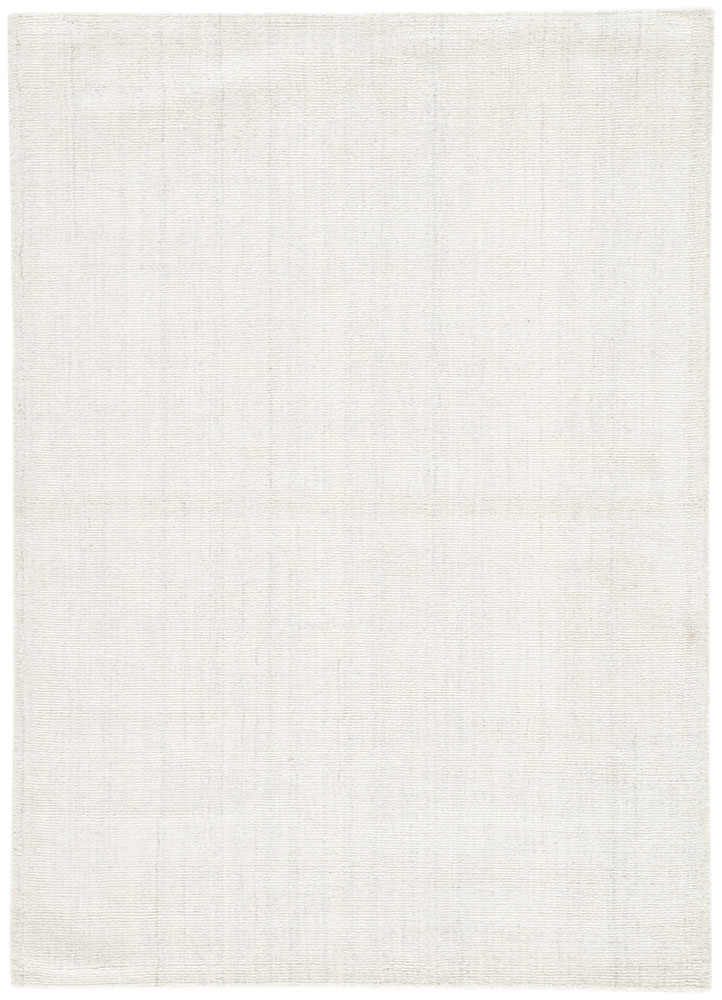
But there are so many other styles to choose from, all of which would work in dens, casual living rooms, bedrooms, and libraries:
If you’d love an undyed rug but don’t see your size, EL01 and EL03 are both available in custom sizes.
Would you use undyed wool rugs in your home? Then click here to see more.
How to Decorate Red Rooms: The Essentials
Red rooms make a statement. In deep red, they are rich, elegant, refined, sumptuous, and dramatic. Brick reds are more earthy, so they’re evocative of country interiors. And bright reds – like lipsticks – are passionate, powerful, and stimulating. Here are some of our favorite red rooms.
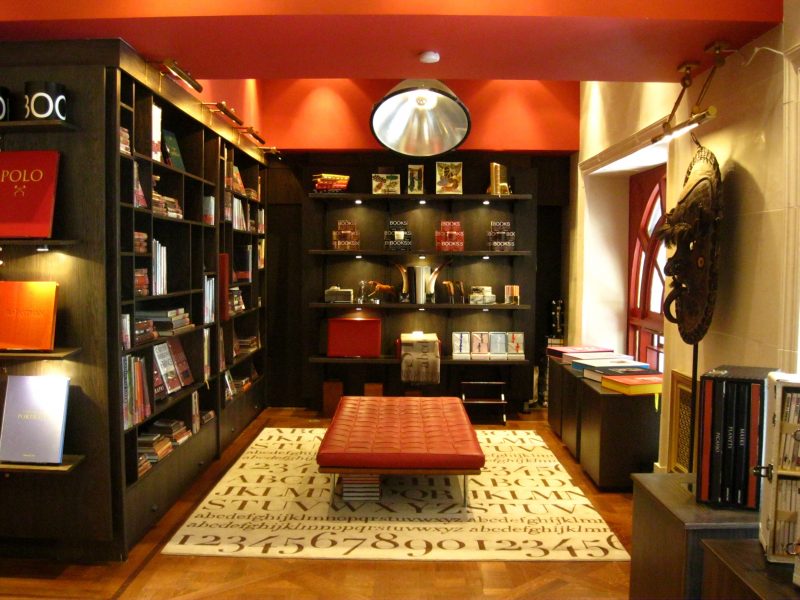
Red Library: Assouline Paris
Details: Here, the strong orange-red details are lightened by warm beige (in the rug and the limestone walls), but then given a graphic punch by the dark wood cabinetry. This is a perfect way to balance two dominant colors (red and black).
Red Sitting Room: Carolyne Roehm at Weatherstone
Details: The reds in this room contain shades of blue which are expertly picked up by the blue vase, blue matting around the paintings, and blue details in the upholstery and the rug. To create a warming effect (perfect around a fireplace), this setting is tied together with gold details.

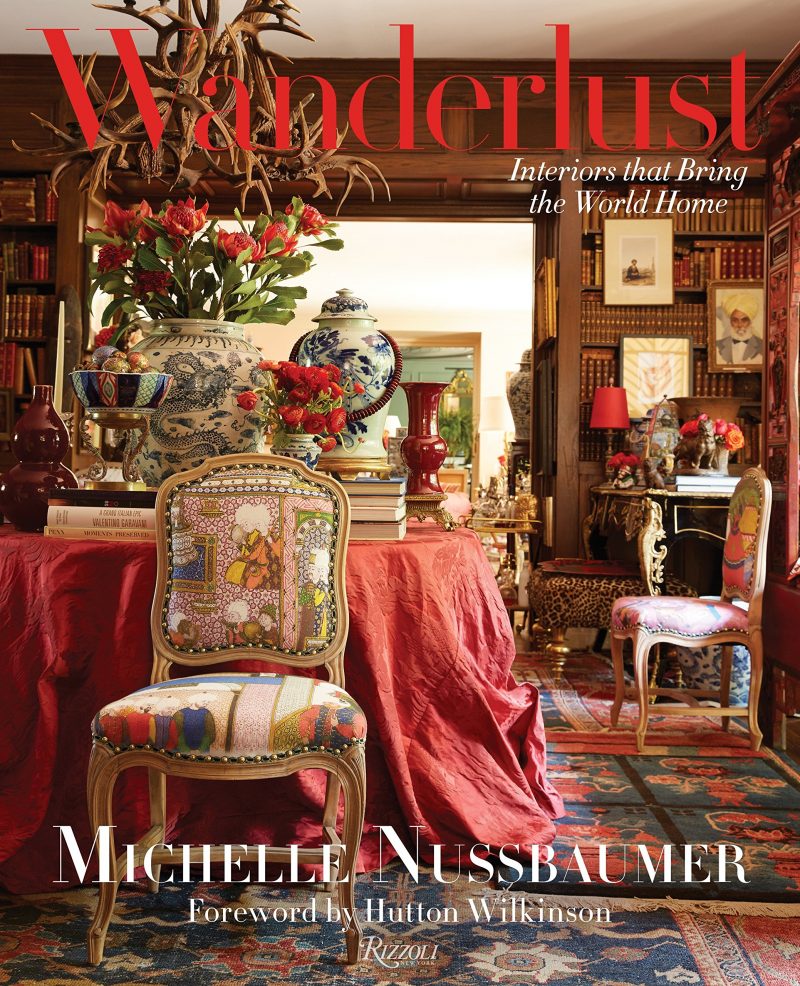
Red Drawing Room: Michelle Nussbaumer
Details: While predominantly red and blue, Michelle’s room shows how you can layer different tints of the same color (reds with pinks, blues with light blues) for a foolproof scheme. The presence of yellow, warm greens, and wood accents warms up the room.
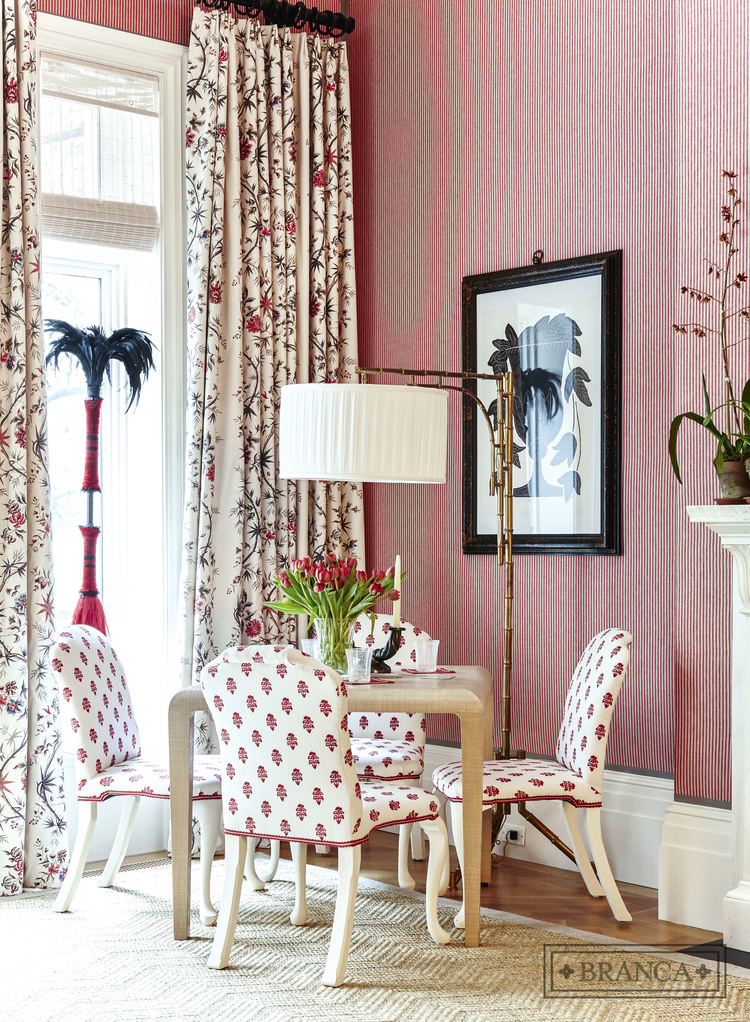
Red Living Room: Alessandra Branca’s 2015 Kips Bay Decorator Showhouse
Details: Mixed with lots of ivory, this red room feels fresh and lighthearted. So if you love red but don’t want a heavy look, just use it more sparingly.
And for those who can’t get enough, you can always take it with you:
Red Wheels: Michelle Nussbaumer’s ikat red truck

To see more ways to decorate with red, click here.
Yves Saint Laurent’s Marrakesh Home: The Essentials
When Yves Saint Laurent visited Marrakesh for the first time in 1966, it transformed him forever. The strong sun, lush colors, and intricate patterns you see everywhere left an indelible mark in his mind. “Marrakech taught me color,” he said. “Before Marrakech, everything was black.”
Indeed, one of the most important parts of Saint Laurent’s legacy has been the Jardin Majorelle, the garden he restored with Pierre Berge and a must-see on any trip to Marrakesh. (Tip for visitors: they don’t take credit cards, so bring plenty of dirhams to cover your entry fees.) The original garden has been joined by the Musee Yves Saint Laurent Marrakech, and plans are now being made to open up Saint Laurent and Berge’s private home (Villa Oasis) to the public.
When it opens, you should think about going to Marrakesh just to see this. Not only is the house itself spectacular, it captures all the iconic elements of Moorish and Arabesque design, which then fed our favorite Mediterranean, Tuscan, Spanish Revival, and Southwestern styles of architecture and design. Indeed, there’s literally so much to see at Villa Oasis, it could be hard to absorb in one visit.
Starting from the outdoors, this space is surrounded by a riot of warm weather plants. Here, fuchsia bougainvillea creates a vibrant canopy in the outdoor patio:
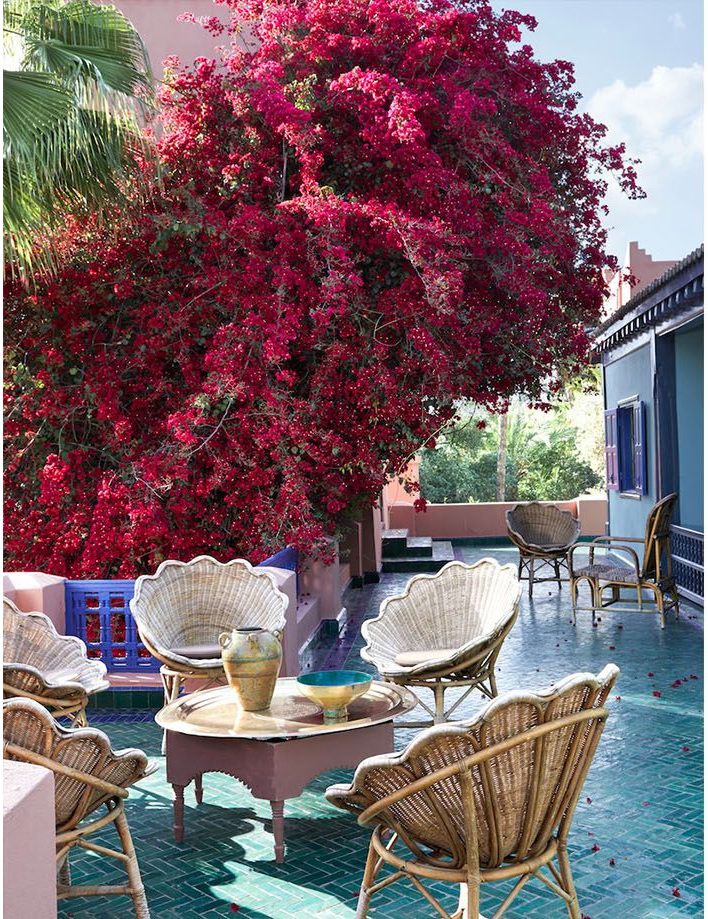
Pink against cool turquoise. Maybe not a combination you’d naturally pick out in the morning, but it works so well here.
A hand-carved and hand-painted cedar door, framed with intricately carved molding.
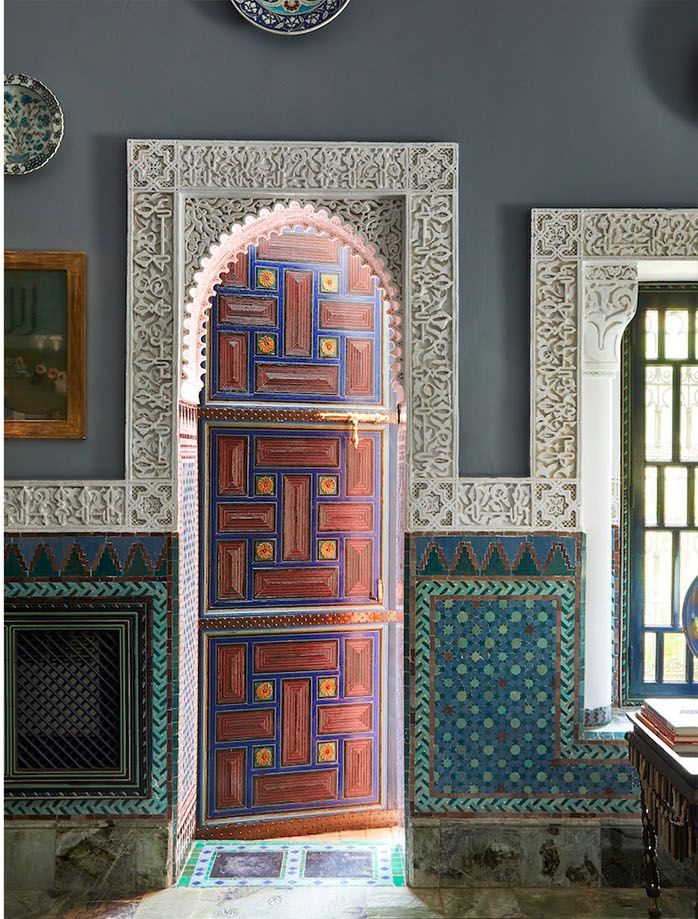
The darker and cooler colors of the interior walls contrast with the bright door that still hints at the light outside. Here are some ideas inspired by this scene:
Decorated by Jacques Grange, the blue and green furnishings echo the palette of the tiled fireplace.
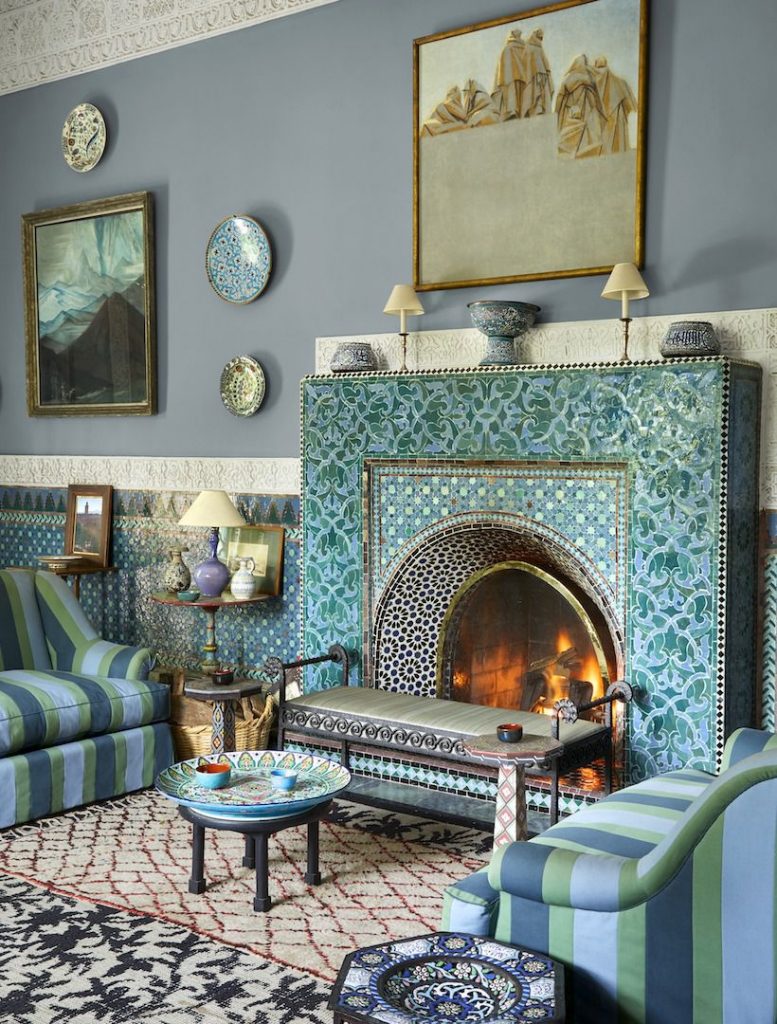
The cooler colors and lavish yet elegant patterns could work in many interiors:
Designed for musicians to entertain visitors, this nook in the entrance hall was frequented by Marella Agnelli, Betty and Francois Catroux, and Loulou de la Falaise.
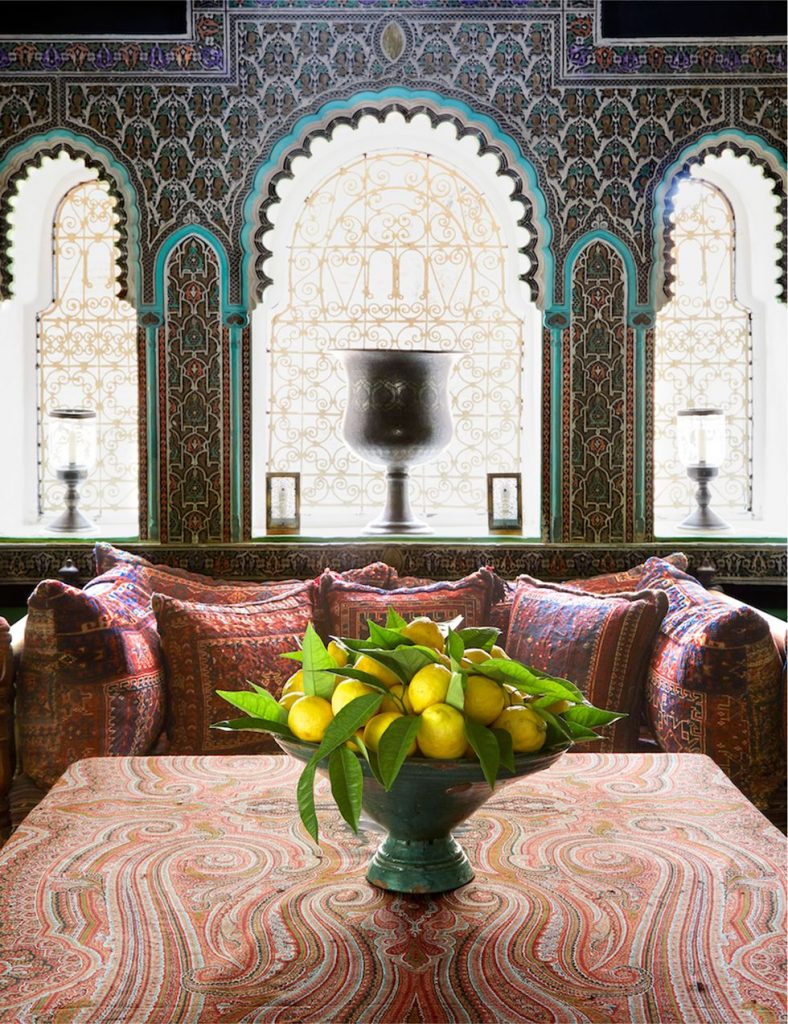
Party time! The hot colors suggest fun, and using them consistently inside and outside create one space for indoor-outdoor entertaining:
The intricately detailed Moorish library is too gorgeous for words:
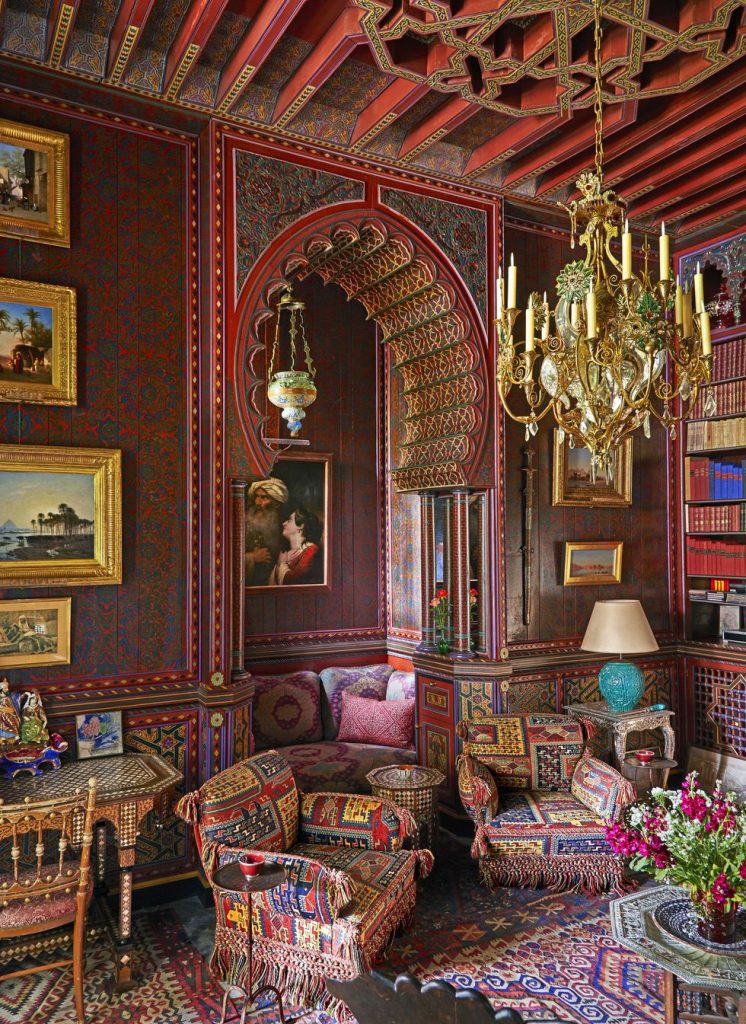
There’s simply so much color, pattern, and rich decoration. It’s as if not just books but the whole world of design is being collected in this one space.
Yves Saint Laurent and Pierre Berge’s master bedroom; the hand-carved headboard was painted to match the space:
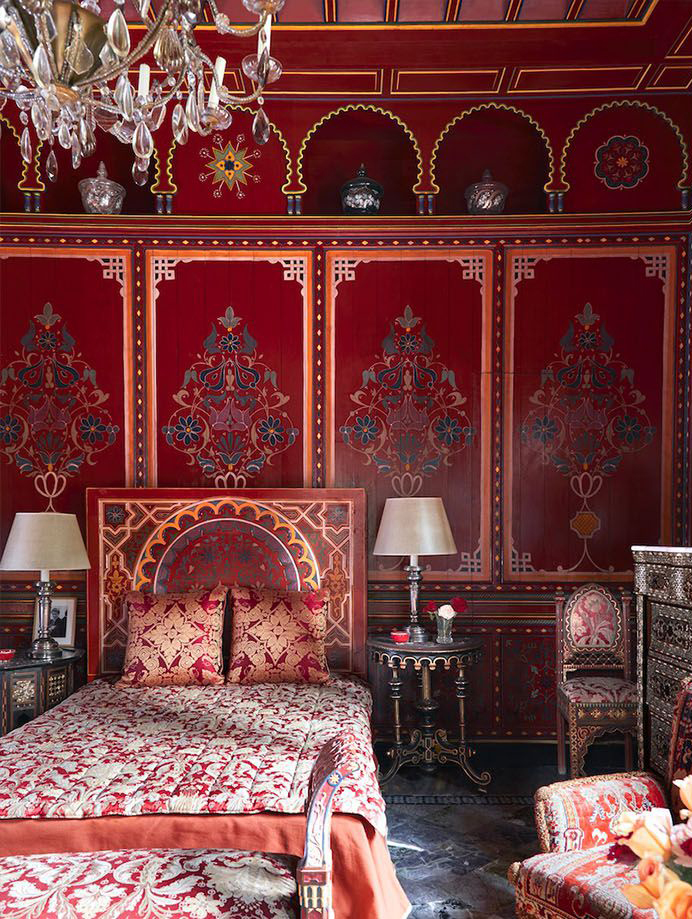
Isn’t this space a pure work of fantasy?
The villa’s top floor, called the Minzah, was designed and painted by Saint Laurent.
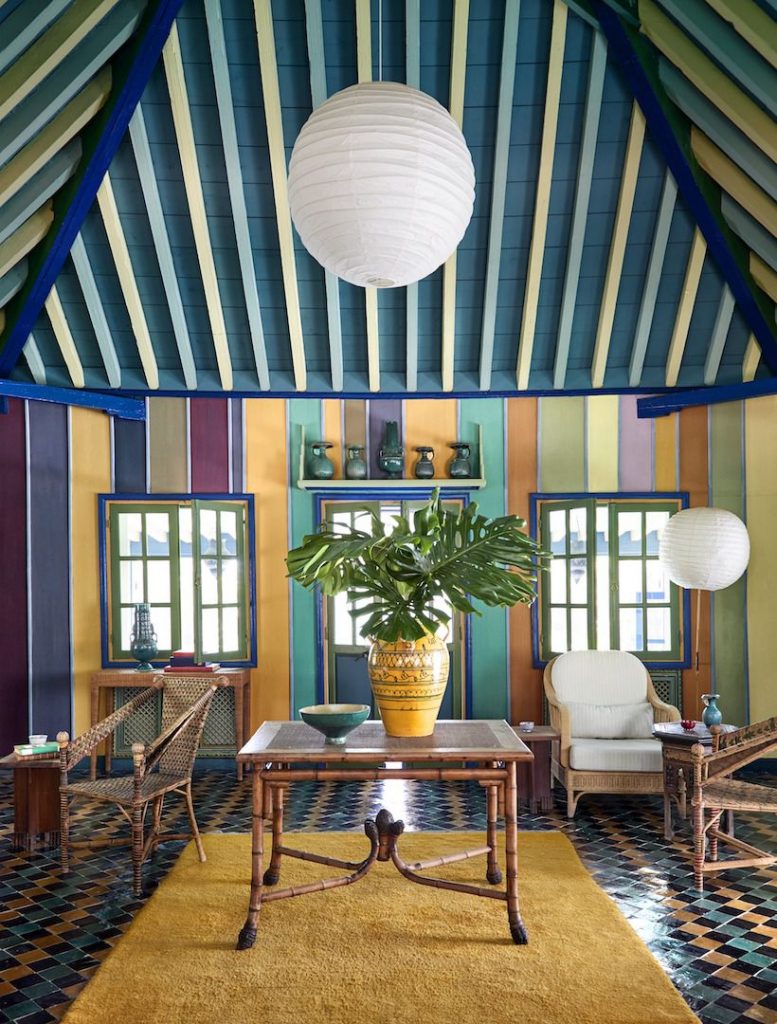
This space is at once pure Marrakesh and at the same time gives us ideas that could bring a little fun anywhere:
And finally, more shots of Jacques Grange’s custom upholstery:
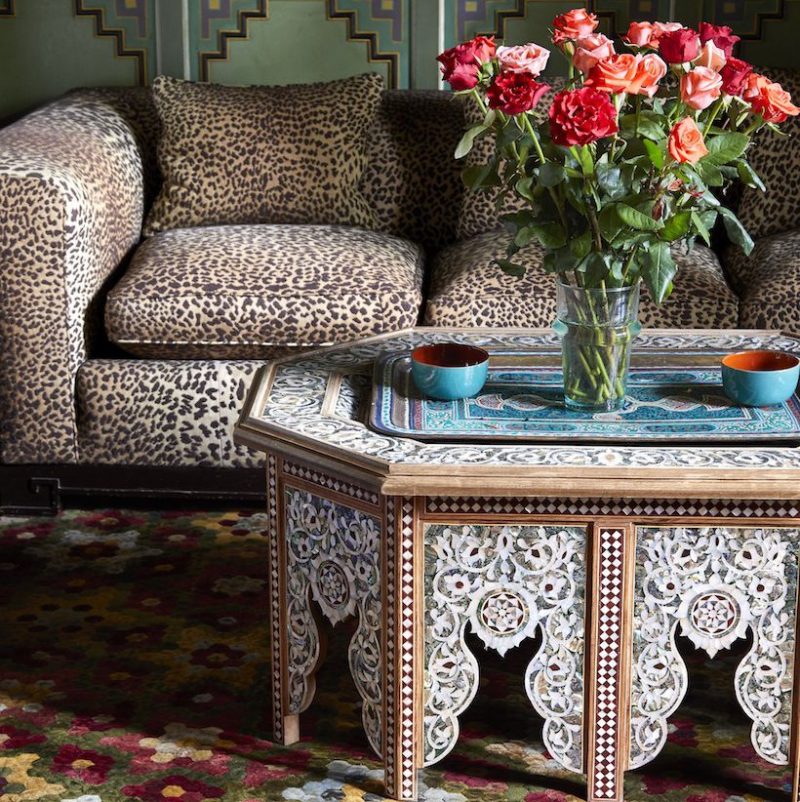
Did this transport you to Marrakesh? If so, click here or see below for more Marrakesh picks:
Decorating the Modern Penthouse: The Essentials
Soaring ceilings. Dramatic windows flooded with light. Views across Manhattan to the rivers. Today’s ultra-luxurious penthouses, like those you’ve seen on Million Dollar Listing New York, have a wonderful Master of the Universe feeling to them:
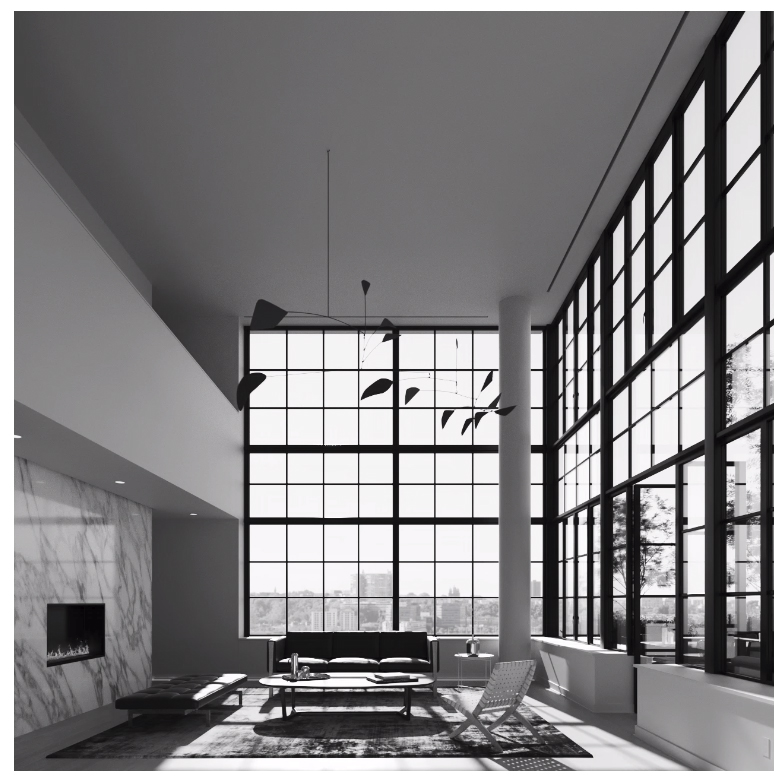
But in fact, they’re quite challenging to furnish correctly. The angular walls, metal casement windows, and double height ceilings can feel cold, generic, and even a bit too industrial. These spaces are begging for the right finishing touches to make them soar and feel like home.
To decorate these spaces correctly, you first have to take a step back and study them. What does a space like this really say? How do you want to feel when you’re living here? Imagine yourself standing there underneath 20-foot ceilings. At the corners you have huge structural columns going up. Surrounding you are metal windows with rhythmic angular lines. You look down and see rows and rows of old buildings crammed together. You look up and see to the limitless horizon.
In a word, it wants you to feel “This Is What I Have Wrought.” That you have brought this world at the top of the city into being with your own strength. None of it existed before. None of it was given to you. But as you stare out into the distance, the world still beckons with even further opportunities. There are no limits.
Now what would happen if you filled this space with pastel colors? Or gilded furniture and damask curtains? The riot of colors and patterns would quickly take away the views and the strong envelope of the space. On the other hand, if the space only had the predictable modern furniture, it would feel unimaginative and probably uncomfortable.
This is the basic dilemma of such a space: How do you capture spirit of the space, while lending it the richness of your life?
I found a really great example of this with architect-turned-developer Cary Tamarkin’s newest building on West 29th Street. The marble walls, hardwood floors, and soaring space really came to life with the right furnishings:

This space came together well because it followed these important guidelines:
– Stay within a narrow, neutral color palette. The City is a serious place, with glass and steel buildings and people in grey and black. You don’t see neon signs outside. Don’t put them inside.
– Reference all the major materials in the space: the marble surfaces, the concrete, the wood floors, and the white gallery walls. That way your design feels like it naturally belongs here.
– Keep it abstract. Your space is forward thinking. Just like you. And your art and furnishings.
– Do not compete with the views. Keep furnishings low and sleek.
– Choose objects that are large enough for the space. Remember, you are working with soaring ceilings, so you want to highlight that.
– Make the space comfortable, but edit yourself. Choose tailored furnishings.
– Layer in antiques. You did, after all, exist before this penthouse. You’ve traveled and collected, and those pieces belong here. They should just look like they belong in this space, not like there’s been an abrupt turn in your life.
If you’re decorating a space like this, here are a few pieces to get you started:
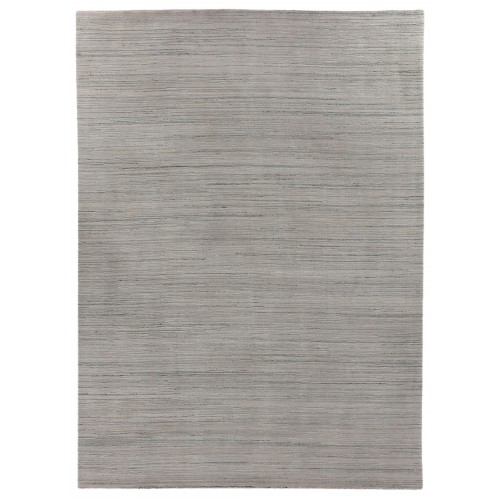
1. Large, minimalist low pile rug in a neutral color. The rug defines a comfortable seating area. It also helps to muffle noise, which could be an issue for such a large space. The minimalist design, low pile, and neutral color like taupe, grey, or even charcoal are perfect for a space like this:
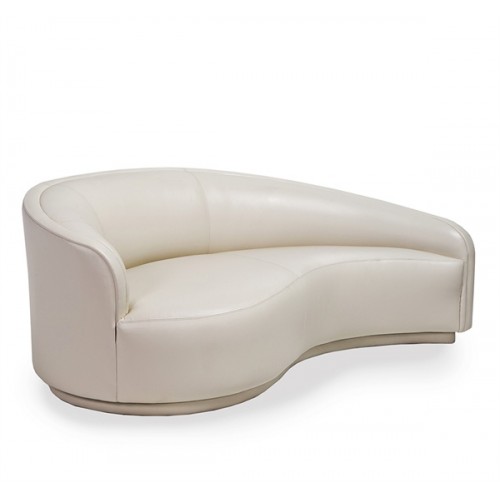
2. A sofa like this one is sleek, neutral, and comfortable; the low profile maximizes your views.
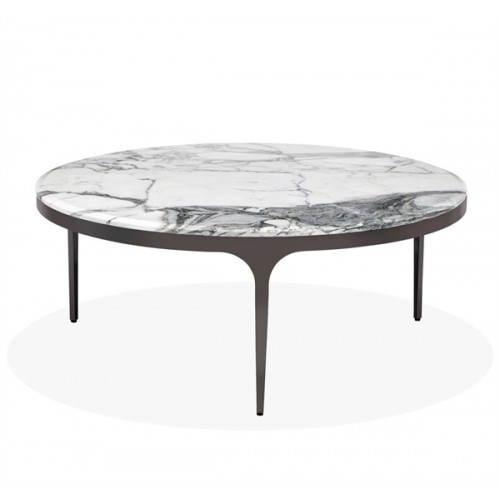
3. Bring in the various textures of the space in the accessory pieces, like this coffee table with a stone top that complements, but not exactly matches, the marble on the wall:
4. Similarly, echo the warmth of the floors with wood and leather furniture. Get extra points for finding quirky, sculptural shapes.
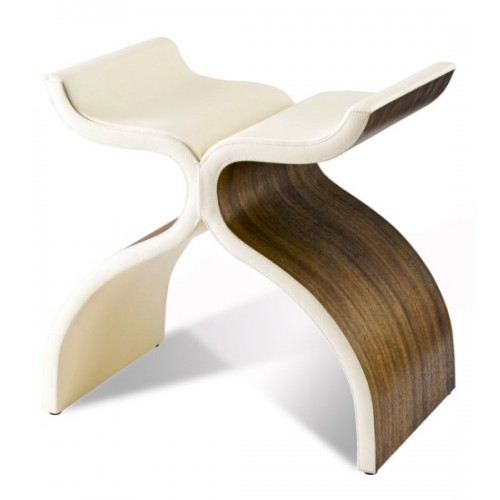
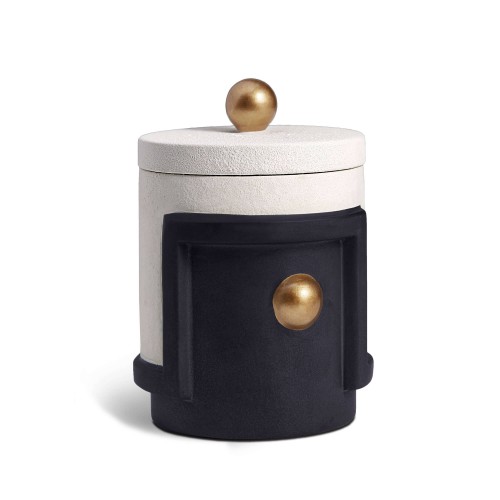
5. Add a few, carefully chosen accessories to the space. Starting with the coffee table, bring in interesting books, layer in dark details (to pick up the soaring metal windows) and add height with sculptural forms.
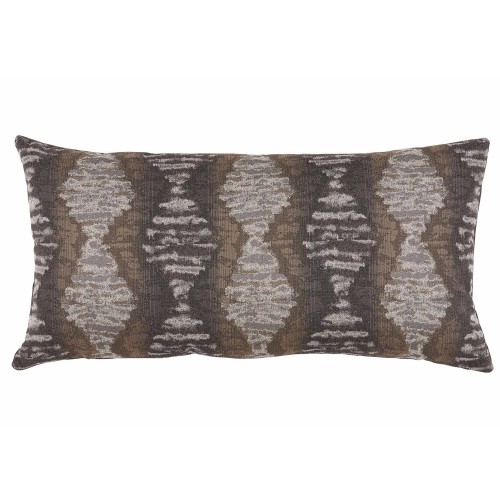
6.Warm up your sofas with pillows and blankets in cashmere, wool, and faux fur, again in subtle neutral colors:
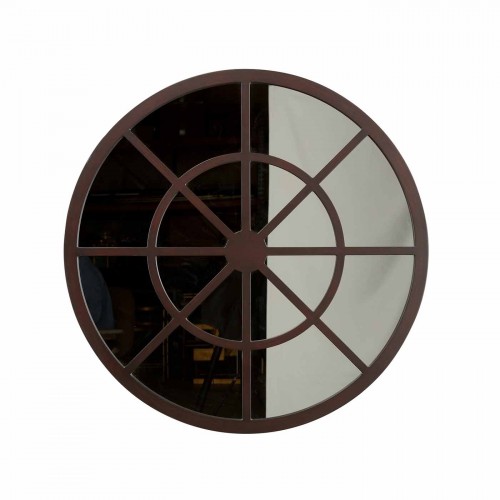
7. On the walls, add interesting mirrors and artwork with simple lines:
8. For lighting, pick pieces that have clean lines, but are not too contemporary. The space is already modern enough; a more transitional piece will make it feel timeless.
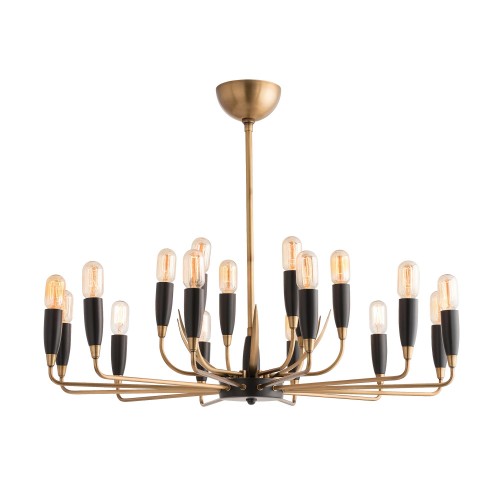
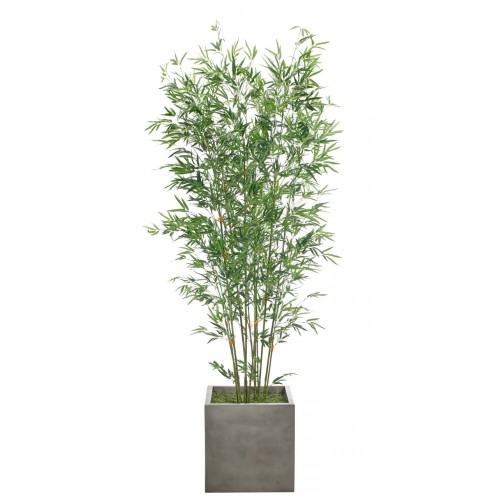
9. Add greenery or modern florals. They’ll soften the space.
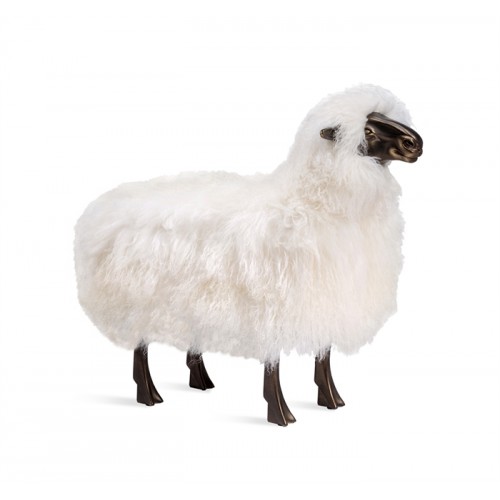
10. Don’t forget a bit of whimsy.
Shop the Modern Penthouse
To see more items in our Modern Penthouse collection, click here.
L’Objet Loret Gold Napkin Rings Featured in French Style Magazine
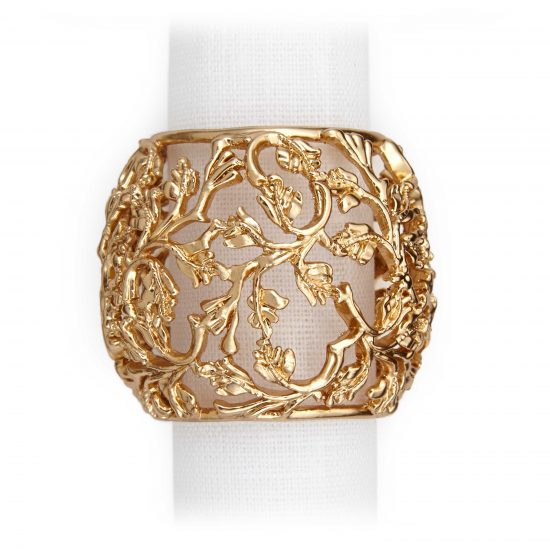
Merci beaucoup to French Style magazine for having featured our L’Objet Lorel Gold Napkin Rings in their Summer 2018 issue:
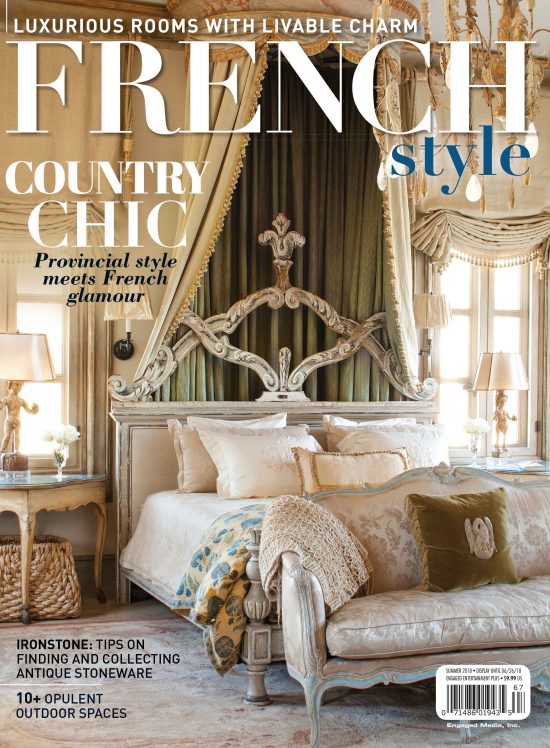
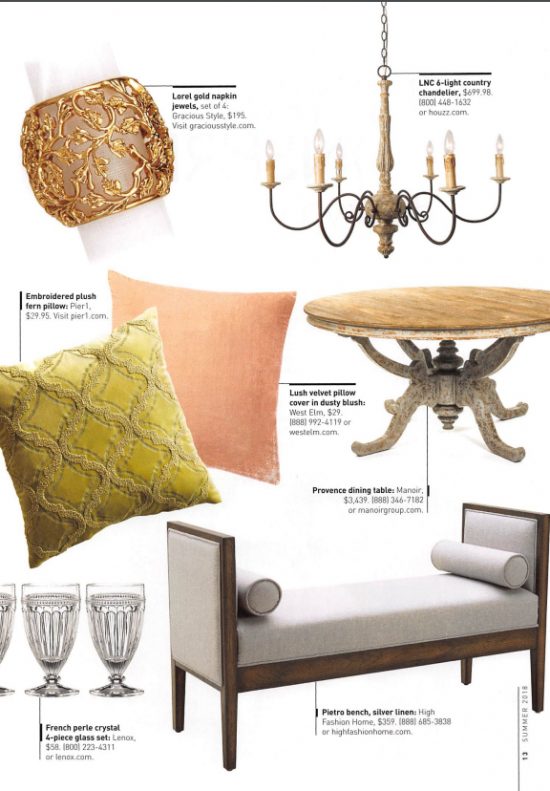
The Lorel handcrafted napkin rings are plated with 24kt gold and combine elegance with whimsy.
A Luxe Upgrade: 7 Instant Ways to Transform Your Bathroom
Bathrooms are the hardest working rooms in every home, so it’s really important to keep them looking fresh. Here are 7 easy ways to upgrade them:
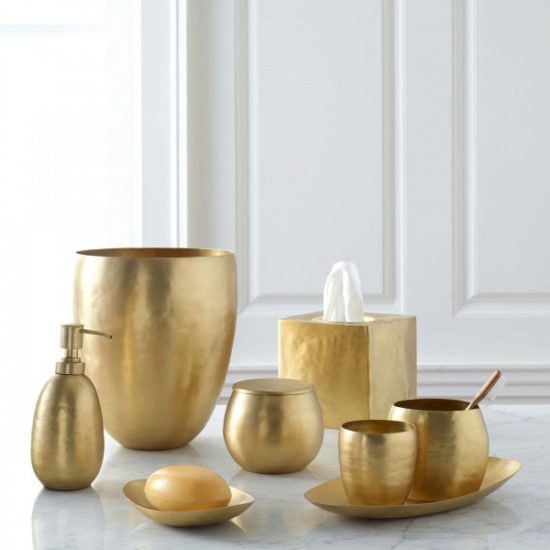
1) A set of matching bath accessories.
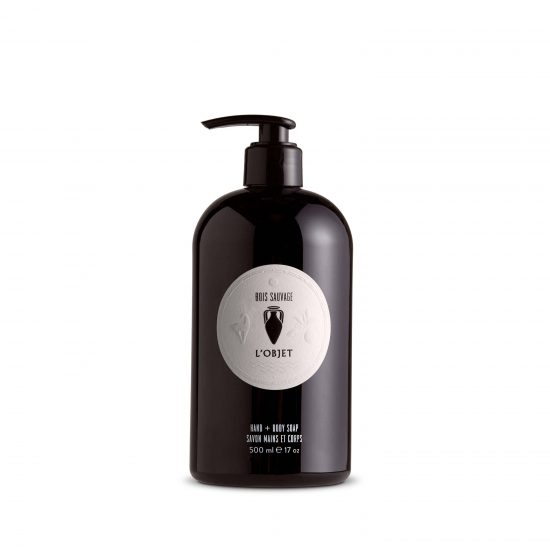
2) A bottle of liquid soap.
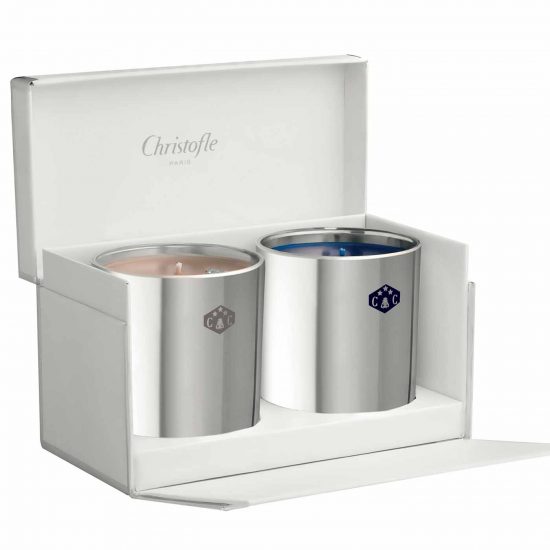
3) A scented candle.
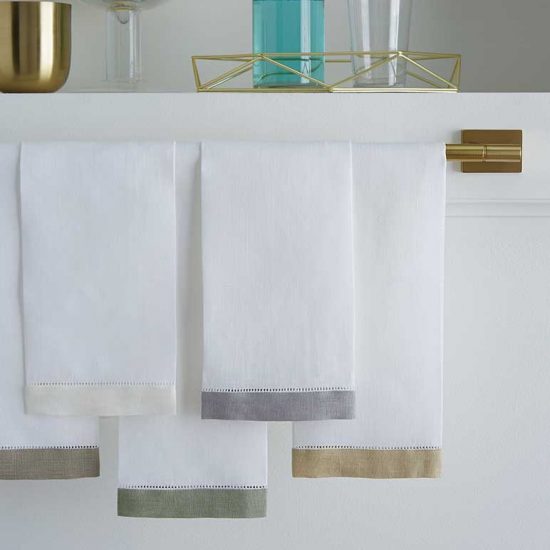
4) A set of linen guest towels.
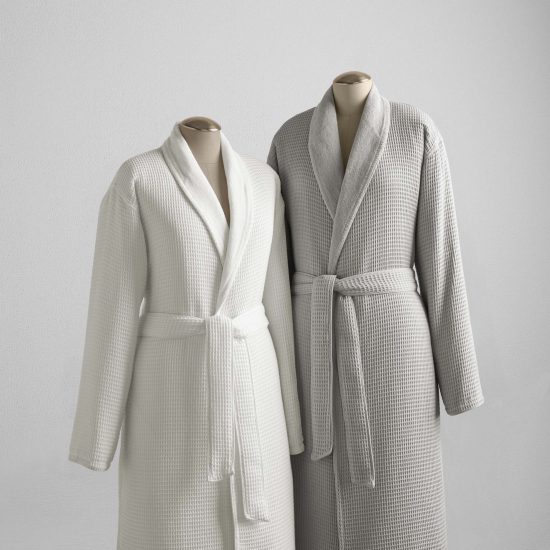
5) A new robe.
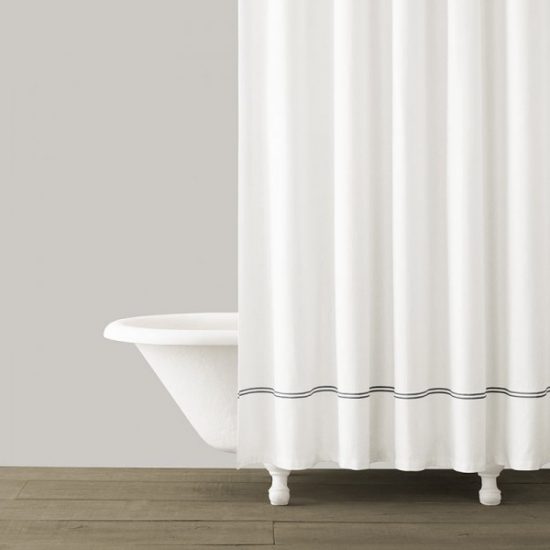
6) A new shower curtain.
7) A set of new towels.
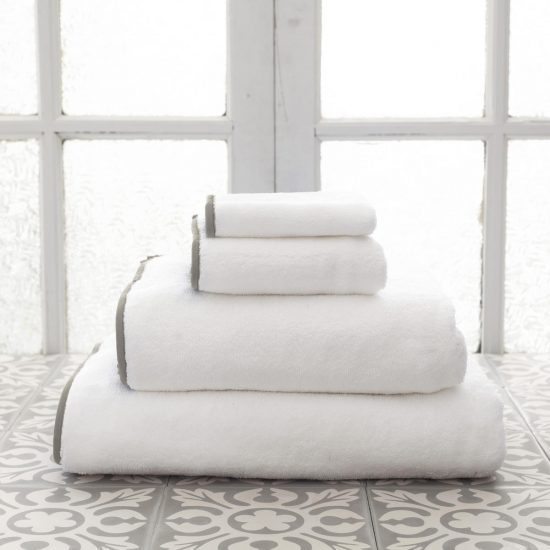
Check out the Kardashians’ Insane Gold Egg
The Kardashians are known for their crazy, over the top lives, but wouldn’t you love to be invited to one of Kris Jenner’s epic Christmas parties? Yes, we’d go too.
Kris loves her Christofle silver; here she is showing off her Mood flatware set, which comes in its own gilded 24 kt gold egg. It’s so stunning it practically needs its own security team:

Prefer a different color? It also comes in rose gold:

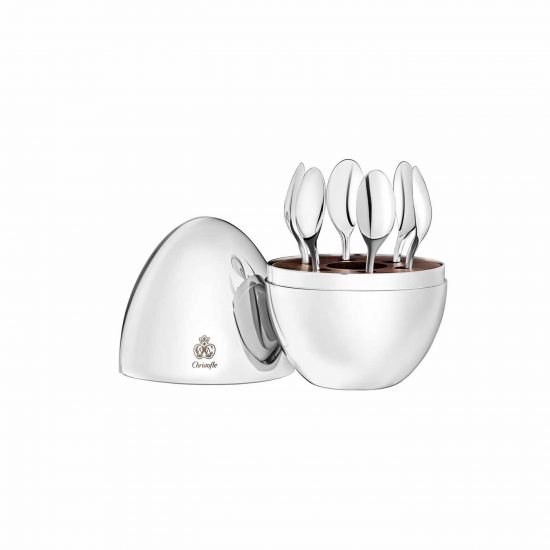
In silverplate:
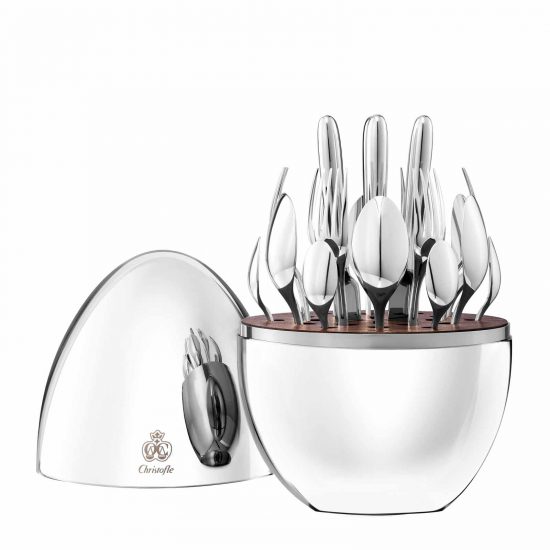
And if you’re looking for something smaller, in sets of espresso spoons:
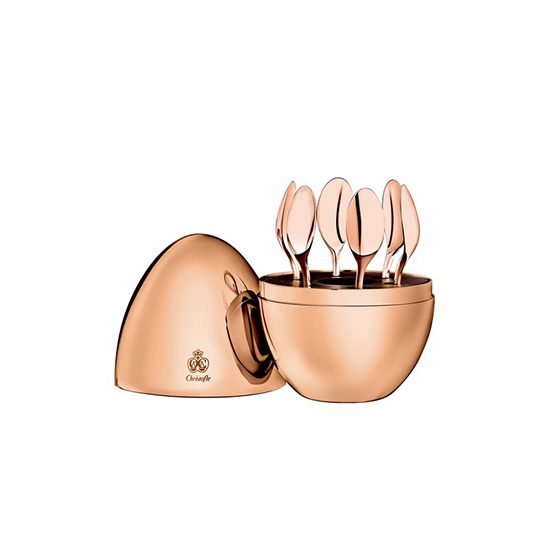
These make perfect gifts for any coffee-loving friend.
Say hi to Khloe, seen her playing with her mom’s set.

Meet the Maker: Stunning Portuguese Flatware from Cutipol
Last year, we traveled to Portugal, and the trip was a revelation. The country, which for years was ruled by the Estado Novo dictatorship, is now in the midst of a spectacular design renaissance. Everywhere you see the contrast between traditional Portuguese buildings festooned with centuries-old tiles and clean, modern design. There’s also a move to bring the country into the future, but there are strong traces of a Portuguese point of view.
Here’s an example. At the Six Senses in Douro Valley, one of the hotels where we stayed, they carefully renovated an existing manor house from the 19th century to minimize the impact on the hills and the surrounding villages.
So while the exterior looks like this …

… the interiors are much more streamlined. Even then, the dichotomy prevails. While the guest rooms are outfitted with floor-to-ceiling windows to maximize the views of the wine country …
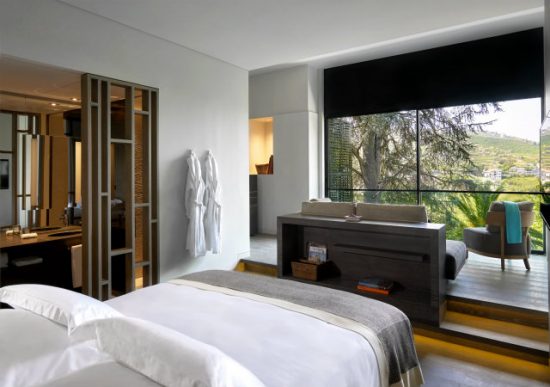
… the more intimate reception areas (like the dining rooms, the wine library, and the spa) are all authentically furnished with distressed woods, copper cookware, and local artisan craft.
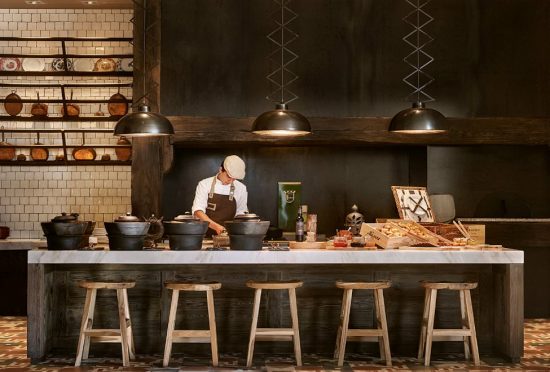
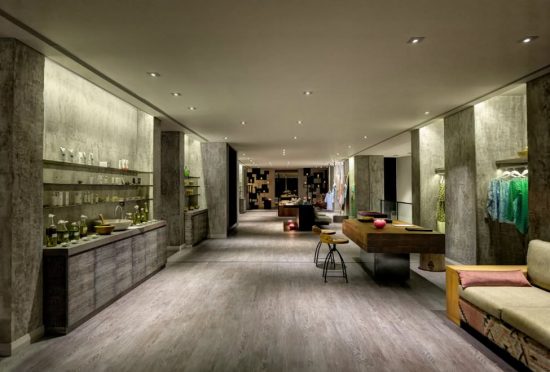
In Lisbon, we experienced something similar. While the city is more cosmopolitan, the bars, the restaurants, and the new buildings all share a confident Portuguese streak: one that is more streamlined, but retains influences from the past and includes nods to former Portuguese possessions like Brazil, Mozambique, Goa, and Macau.
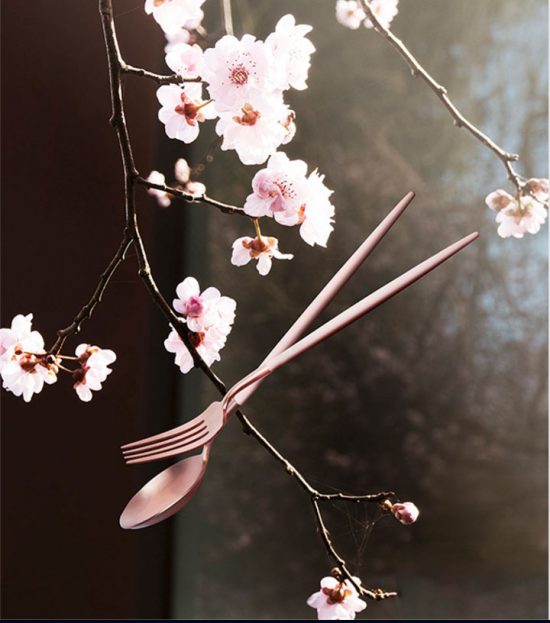
One of our many finds on this trip was Cutipol flatware. Made by a family-owned company in the village of Sao Martinho de Sande, these sleek pieces are (very affordable) jewelry for the table. The slender handles are so refined, they’re almost sculptural. And the clear Asian bent (almost every collection sports flatware sets) means it’s at home anywhere in the world.
So much so, they were prominently featured at the 2017 Met Gala, honoring Japanese designer Rei Kawakubo/Comme des Garcons:
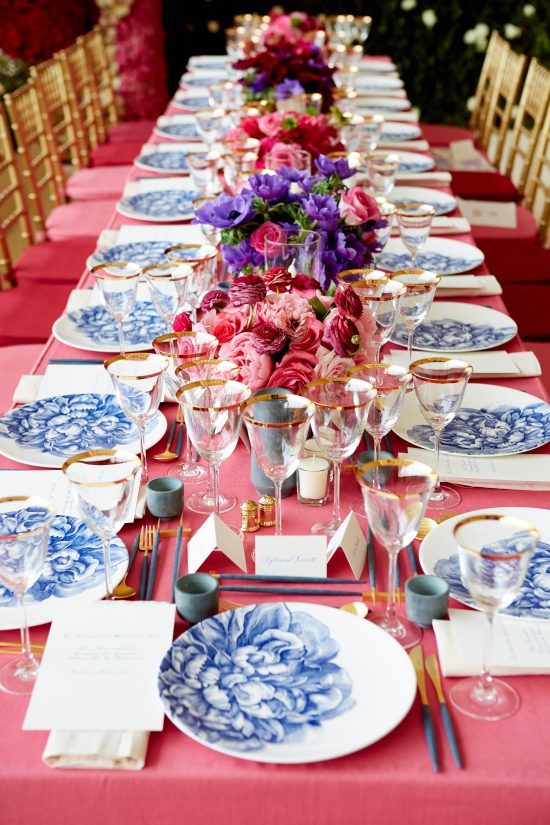
By combining sleek design with hand crafting, Cutipol is perfect for today’s world: a seamless merging of new and old across all four corners of the world. We’re really proud to be introducing it at Gracious Style!
Here’s what you need to know about Cutipol.
1. The collections are designed in-house by Jose Joaquim Ribeiro, a member of the Cutipol family.

More than forty years ago, he was asked by his father for help in guiding the company into the future; his love for architecture is evident in his designs.

2. Cutipol’s signature Goa collection is available in impossibly gorgeous colors including black, blue, brown, grey, pink, red, and white.


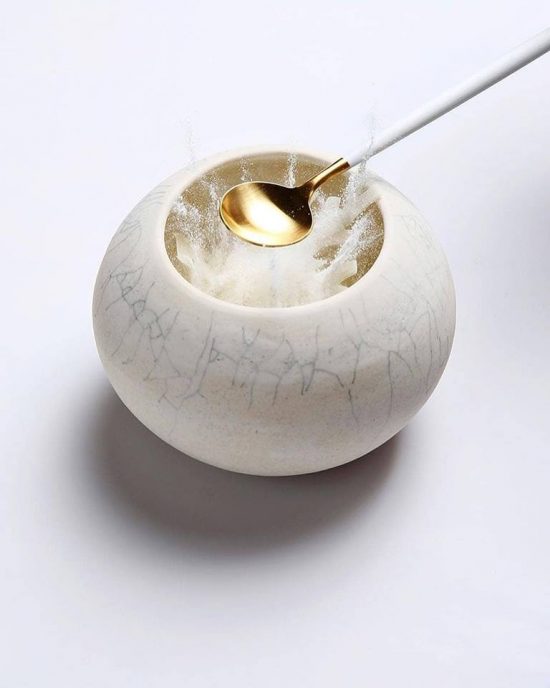
3. This is the kind of flatware you want to use to show off your molecular cooking. Here it is being used by chef Aitor Zabala at Somni, his new restaurant with Jose Andres inside the SLS Beverly Hills:
4. The collections are grounded in traditional design, so they work well on traditional tables.
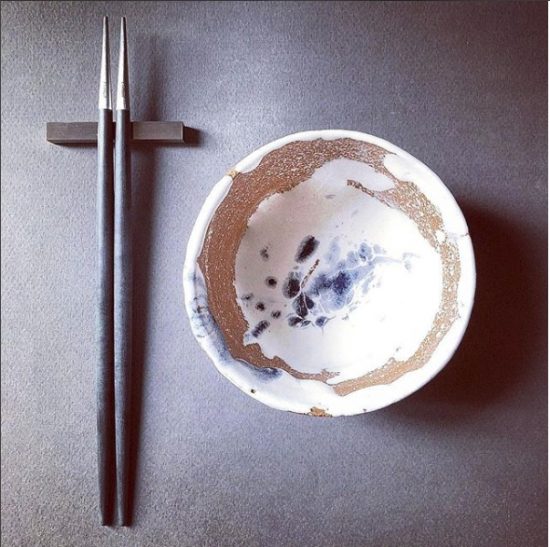
5. Asian pieces are available in almost every collection.
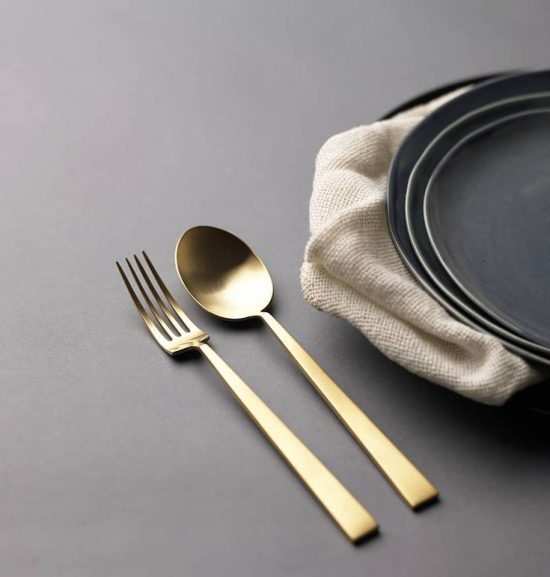
6. Cutipol flatware is available in different finishes (including stainless steel, black, copper, gold, and rose gold), all of which are dishwasher safe.

7. Cutipol flatware is spectacular for weddings, birthday parties, anniversary celebrations. Here’s a shot of an event by Casa de Perrin, a fabulous rental company in Los Angeles:
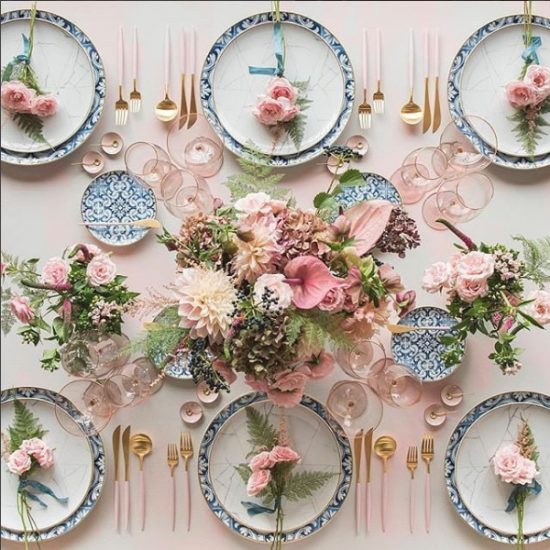
8. You’ll probably be the only person you know who’s ever heard of Cutipol. Unless, of course, you’re friends with someone who went to the Met Gala …
9. All our Cutipol flatware comes from Portugal, so it’ll take about four weeks to get it in. But we promise the wait is absolutely worth it!
Here are some of our most popular Cutipol flatware collections:
Shop all Cutipol
How to Make Takeout Look Like a Million Bucks
Summer’s here, and although we can’t all be sailing with Beyonce and Jay Z around the Mediterranean, you can definitely live la dolce vita at home.
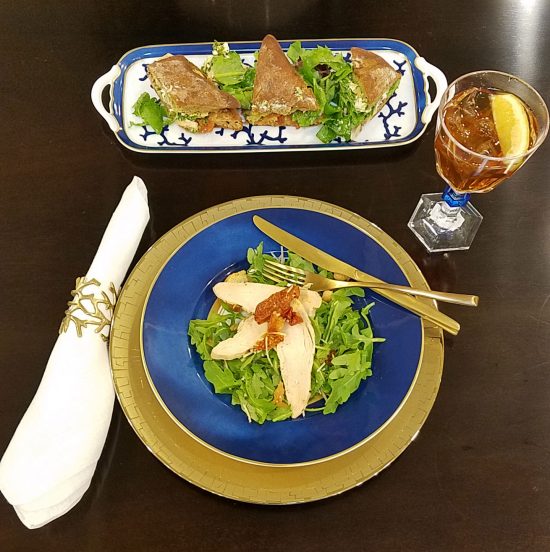
Here’s how you do it.
Start with takeout salad and sandwiches from your local deli.

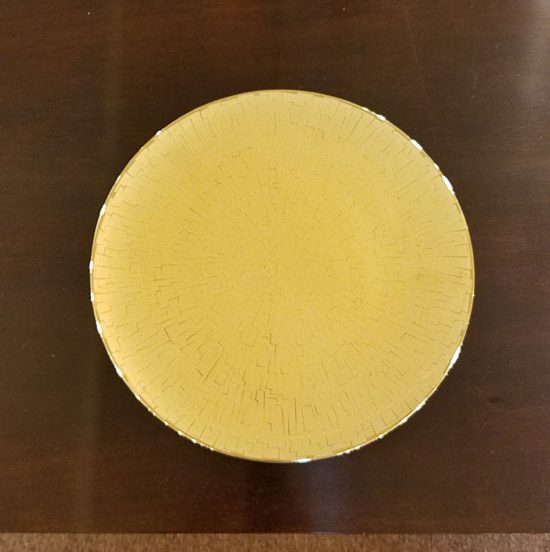
Set out a gold charger, to bring in some sun.
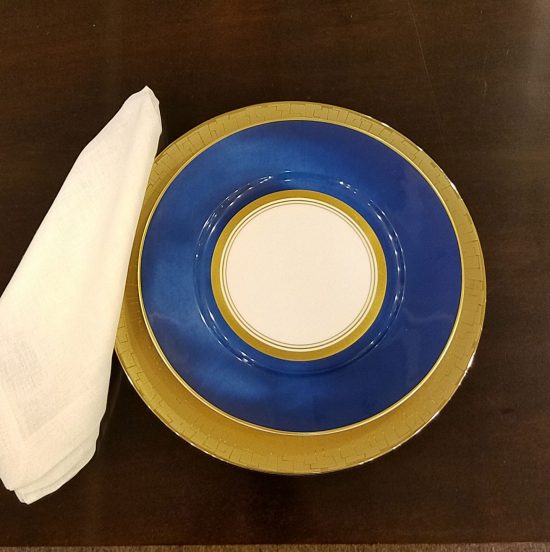
Add a marine blue dinner plate. Notice how the gold detailing along the center rim picks up the glow from the charger.
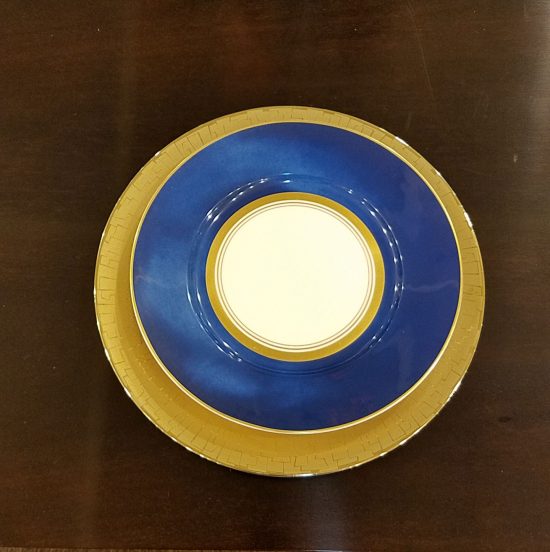
Now, a napkin. Which looks good, but a little flat.
So quickly add a napkin ring … gold coral looks good here.
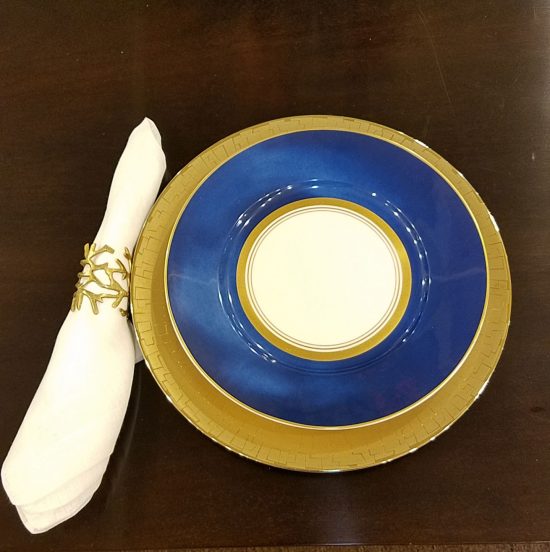
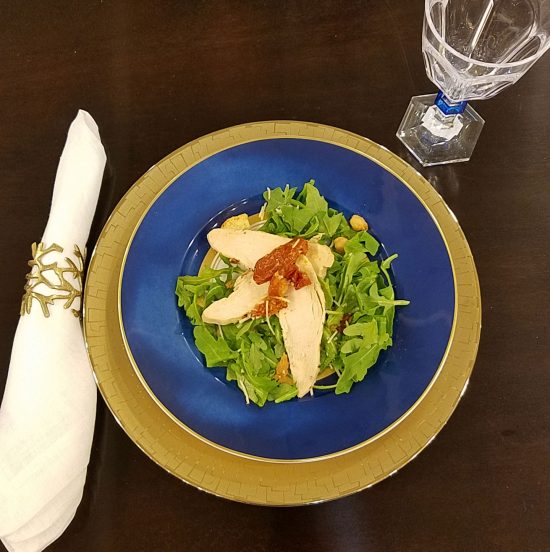
Plate your salad and add a glass. This one’s acrylic (and super popular onboard megayachts), but feels just like the real thing.
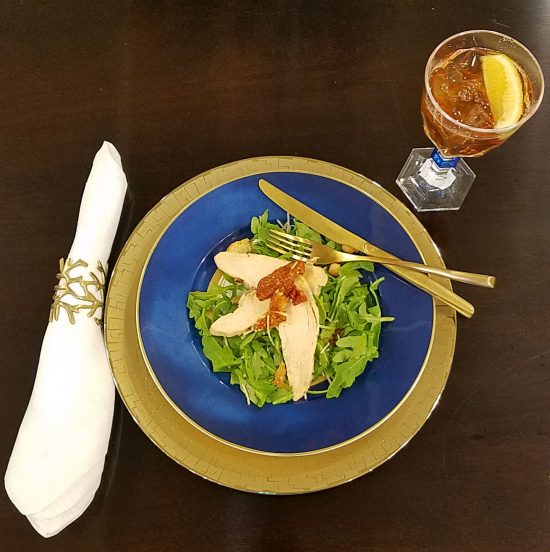
Need flatware? The plastic forks and knives from the deli definitely won’t do. So bring out this chic gold flatware set from Herdmar, and pour your ice tea out. Don’t forget the lemon; it’s what the crew would do for you.
And finally, set out your sandwiches on an gorgeous blue coral tray.
Play some music, and you’re done! Like what you saw? Take a look at our “Do Takeout Like the .01%” collection. Because really, you don’t have to cook to eat well at home.
To see all our Dining Makeover Videos, click here.
See What A-Listers Are Using at Yacht Parties This Summer!
Since almost everyone goes barefoot on yachts, experienced crews work hard to minimize the presence of breakables onboard. But how do you stay safe while making sure that your uberprivileged guests feel pampered?
The secret, for countless A-listers like Steven Spielberg, Valentino, Roberto Cavalli, and Prince Albert II and Charlene of Monaco, is a new kind of acrylic glassware that looks and feels like crystal, but doesn’t break.
Developed by Italian designer Mario Luca Giusti, it’s so stunning that even seasoned yacht-setters are often surprised when they hear it’s not crystal. And paired with the latest in unbreakable dinnerware, they make an irresistibly smart combination.
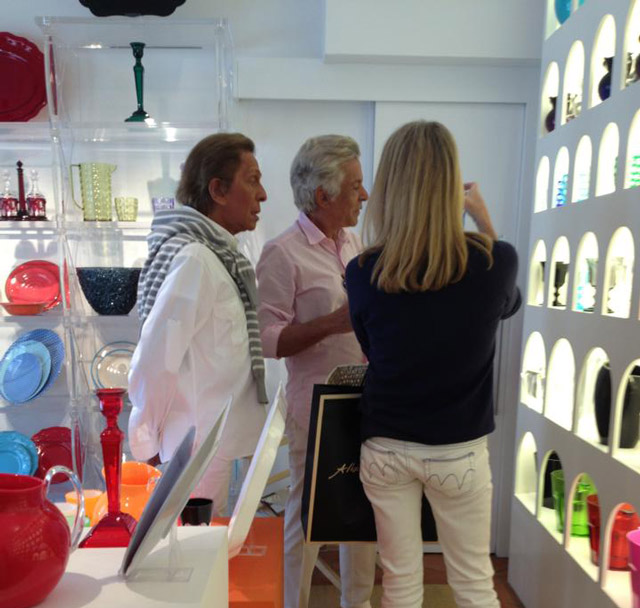
Valentino and Giancarlo Giammetti admiring the pieces at Mario Luca Giusti in St Tropez:
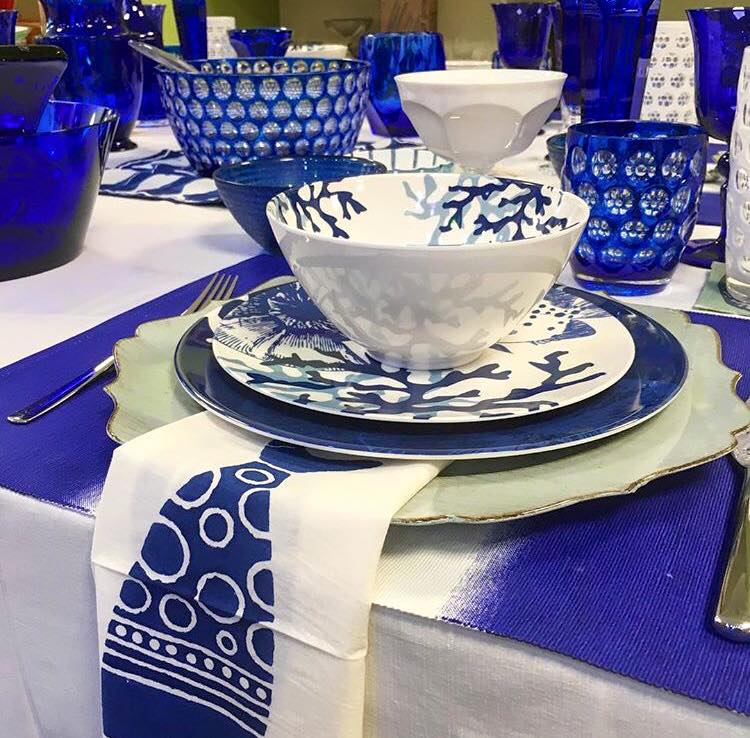
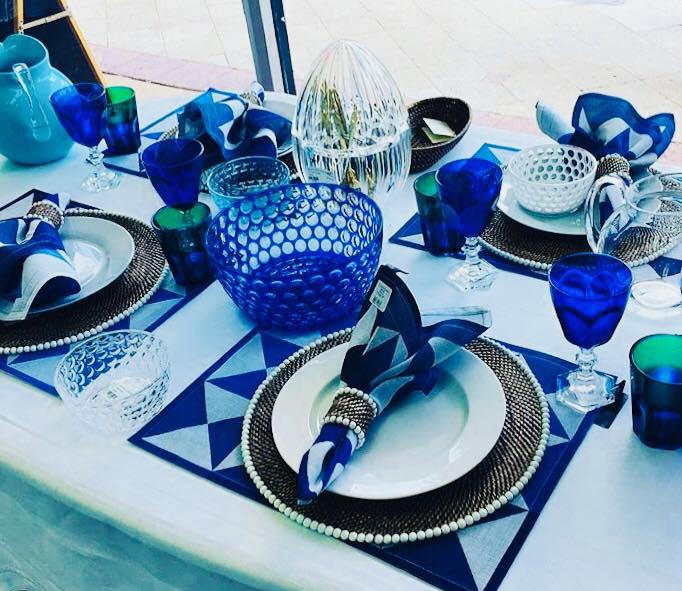
A lunch table set with Corallo blue melamine dinnerware, Lente acrylic blue barware,and Dolce Vita acrylic white stemware.
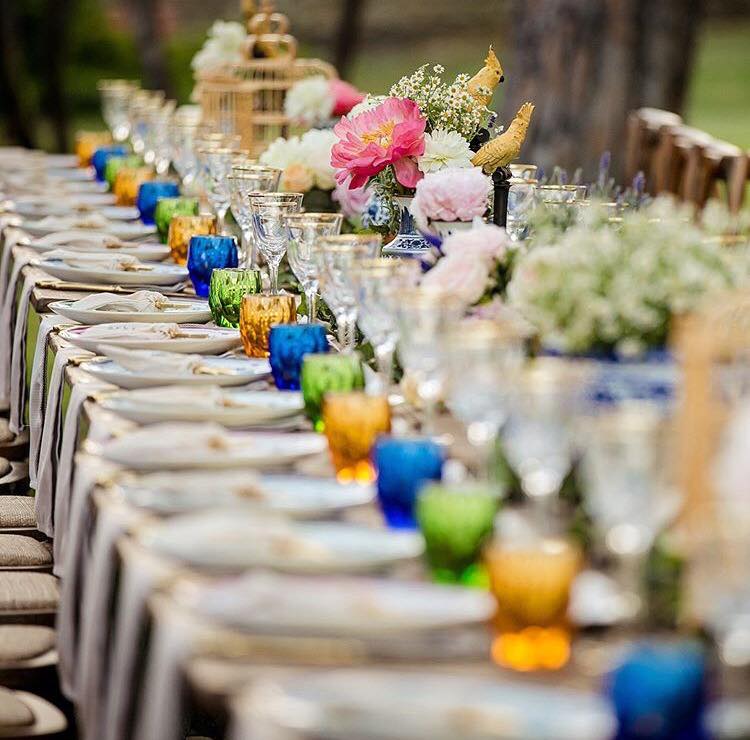
Entertaining outdoors with Milly acrylic barware in amber, green, and blue. Perfect for including the little ones, who won’t have to worry about breaking any glasses.
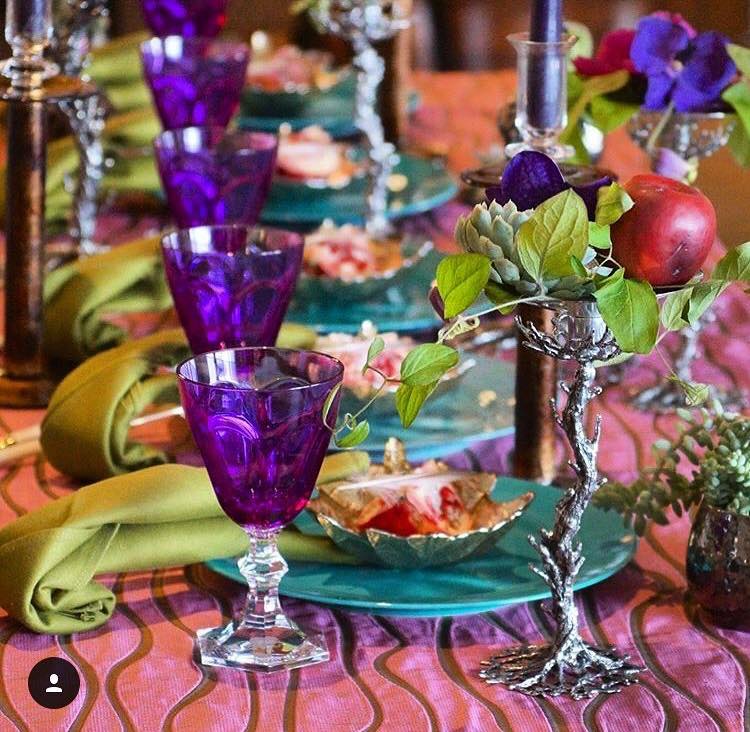
Recreating a garden setting with Dolce Vita acrylic stemware in violet:
Lunch poolside with Lente acrylic salad bowls in blue and white, Dolce Vita acrylic stemware in blue, Double Face acrylic tumbler in blue/green, and a stunning Mafalda clear flatware holder.
Oh, and in case you thought acrylic and melamine were just for daytime, you’ll be surprised at how good these pieces really are. Here’s a shot Mario’s pieces being used at the Italian Embassy in Paris:
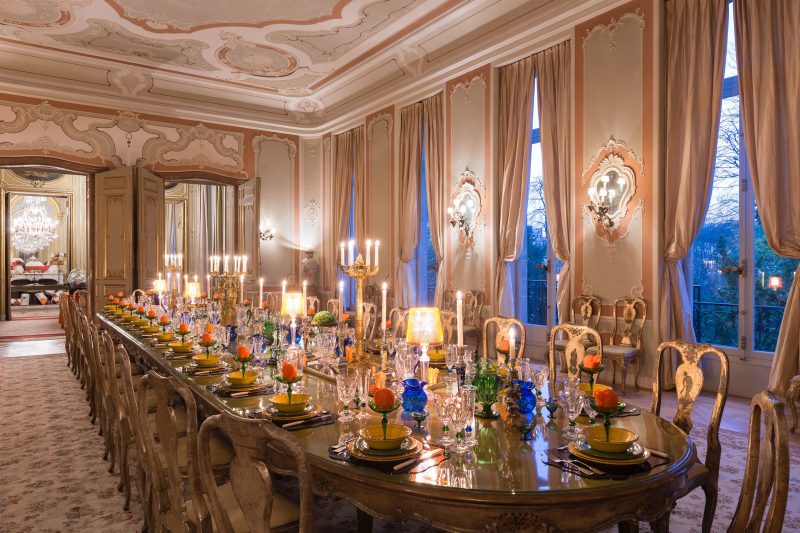
© 2015 Guglielmo de’ Micheli
Time for a dip. Cheers (Lente acrylic tumbler in white)!

Entertaining outdoors? We have brand new collections of stunning accessories perfect for use outdoors. Click here to see more.
What to Know About RabLabs Products
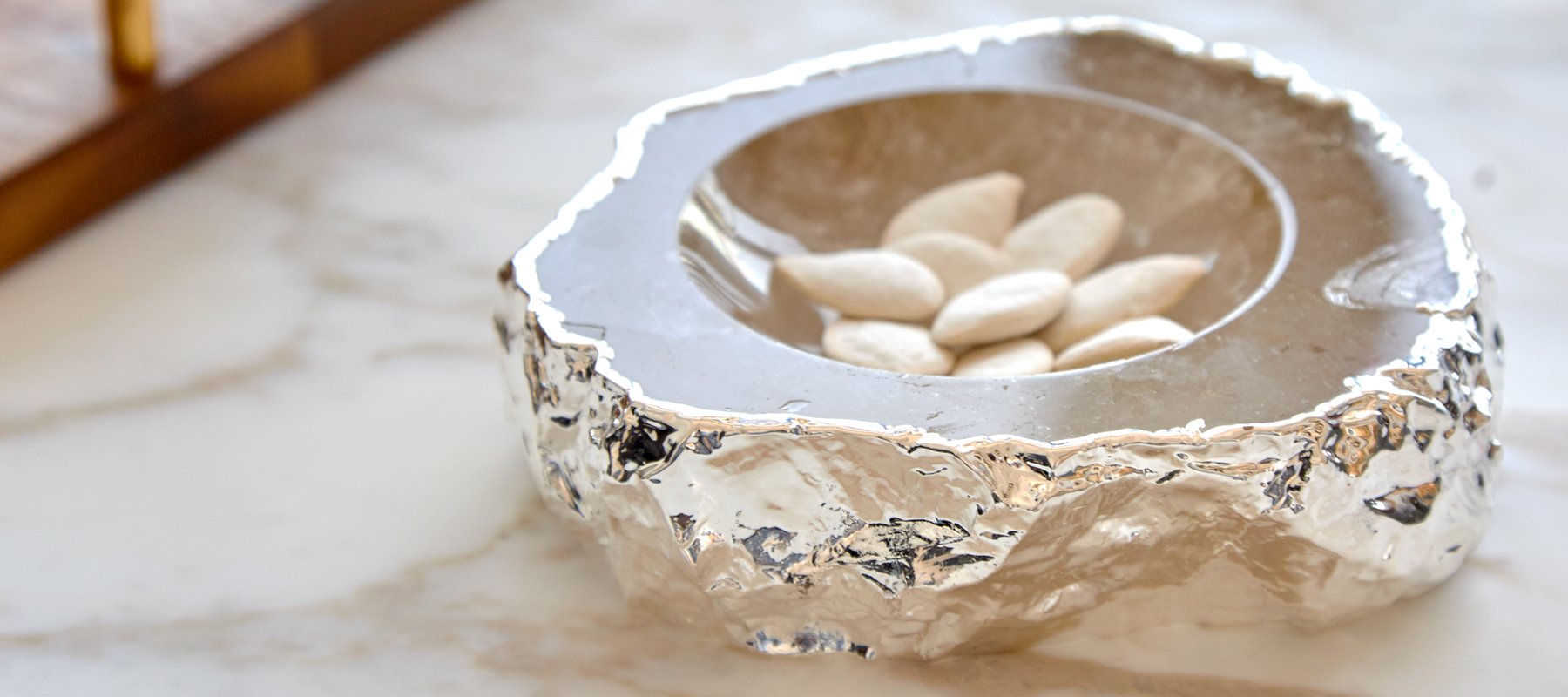
Which materials are used in RabLabs designs?
RabLabs designs are created using semi-precious gemstones, combined with pure silver, 24k gold, and rose gold. They also utilize materials like stainless steel, plated metals, and glass. These materials are chosen to last forever, and to retain their quality for generations to come. Each piece is unique, because of the materials, and the variation in the designs.
Where do the materials come from?
All RabLabs pieces are designed in areas of the world close to where the gemstones originate, in partnership with multi-generation, family-owned artisanal companies in Brazil and Italy, to produce these hand-made designs.
What is natural variance, and how will it affect my item?
Each of the gemstones used in RabLabs designs is natural, hand-selected, and unique. Therefore, these products will vary in size, shape, and color. While RabLabs has standardized its pieces to a degree, nature will always dictate some variance. It is this variation that makes these pieces rare and one-of-a-kind. Unfortunately, it is not possible to fulfill requests for more or less striations, a specific color shade, or a particular size or shape.
How do I care for my RabLabs pieces?
Most of RabLabs pieces simply need to be wiped clean with a soft, damp cloth. Products with pure silver gilding will require cleaning with silver polish.
Why You Need A Rock Star At Home: RabLabs’ Anna Rabinowicz
One of my favorite things about meeting new people is hearing their stories. I especially love hearing about people like designer Martyn Lawrence Bullard, who started doing one thing, moved on to something else, and then finally took all those pieces together and ended up creating something that’s unique to him.
So when I found out that RabLabs founder Anna Rabinowicz went from designing prosthetics to working with gemstones, my ears were piqued. How did that happen?

Here’s the story: When Anna was younger, she and her family traveled around the country for her father’s medical career (he was an academic and a doctor). But on the weekends, they visited mineral shows, where she was mesmerized by the stones (so old!) and their complexity and range of colors. Back then, collecting agate stones was just a hobby.
Anna grew up, earned master’s degrees in design and engineering from Stanford, and then started work developing medical prosthetics. At the same time, she taught industrial design at Parsons.
The process of being in a classroom, speaking about creating objects, and delving into research just melded together for her. She learned that she loved the beauty of natural things. “Whether it’s the body or elements of nature, they’re one and the same to me,” she says.
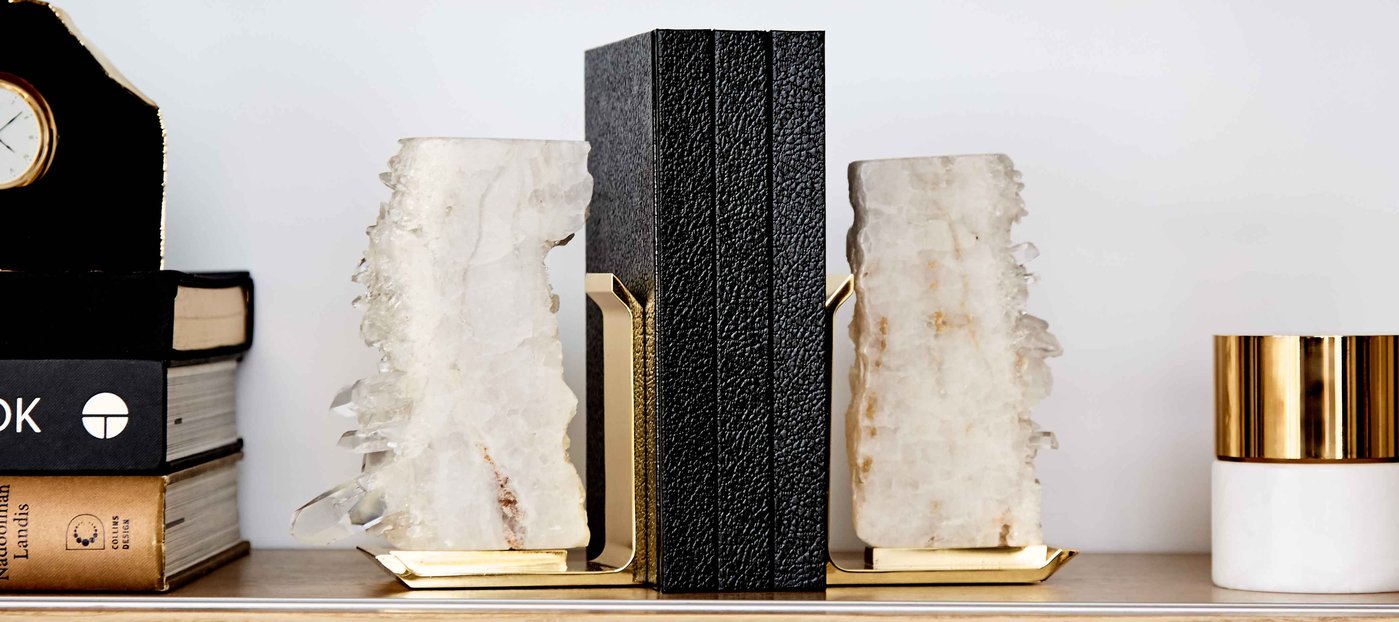
Fast forward to 2002, when she turned that love of natural beauty into a line of objects called RabLabs, which combined minerals, metals, and stone into sophisticated products for the home.
Like all the best artists, she ended up following her passion, and as luck would turn out, her first product – a set of Lumino coasters crafted from matched agate slices – was an instant success and continues to be of one of the company’s best sellers.
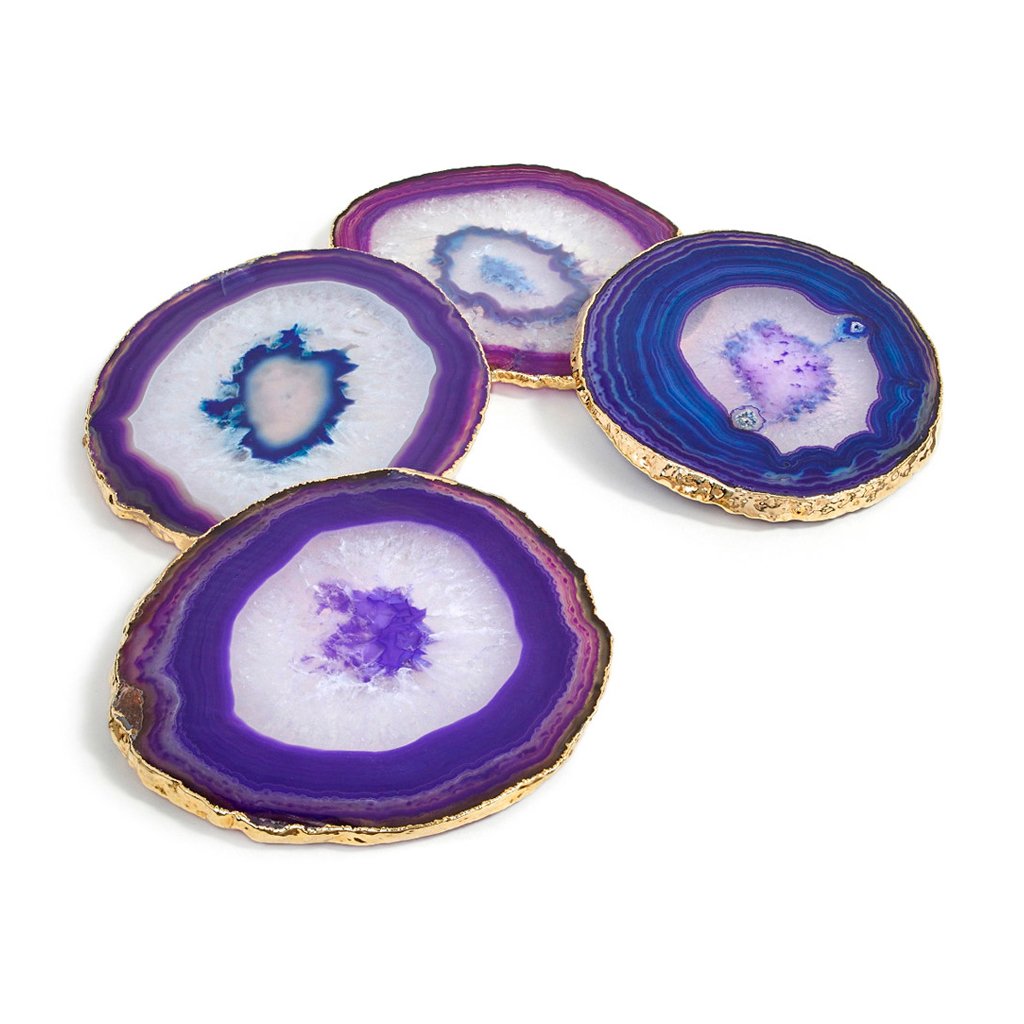
The product was a hit because in a world filled with mass production, we’re all looking for something that’s intrinsically unique. Anna’s gift is that she saw how objects that have stood the test of time will continue to grow old with us.
In one of her first interviews with Amara, she said: “I am most inspired by the forms, structures, and textures found in nature … It is incredibly inspirational to realize that what appears so magical about nature to us as humans is also a mechanism for survival, for the animals and plants themselves.” And later in another interview with Cottages and Gardens magazine, she went on to say: “I use materials that are designed to last forever, so if people love them they will pass them down from generation to generation. They become modern-day heirlooms.”
But it’s a lot of hard work to turn that vision into these unique pieces. For example, Anna might start with a massing of raw Italian alabaster:
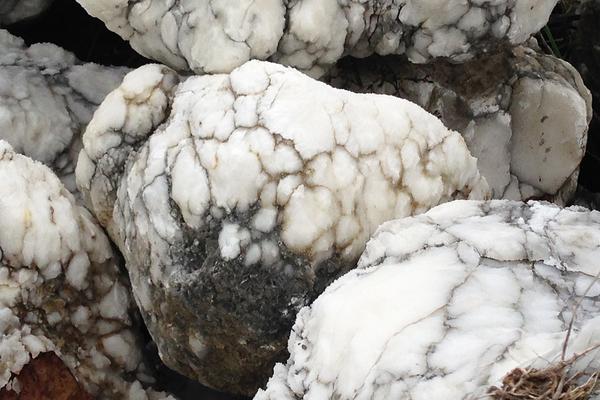
In her studio, this becomes a foundation for a new collection. She researches the material, sketches ideas for new concepts, and tinkers with it (to the millimeter!) until she’s found the best expression of their natural textures.
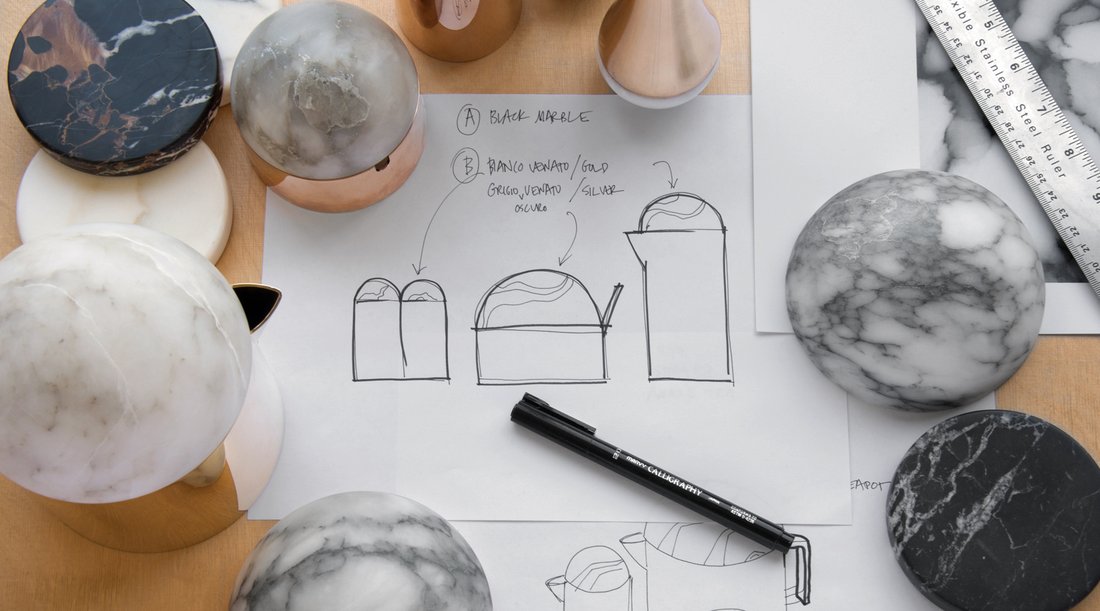
Working with artisans in Brazil and Italy, Anna refines their processes and works with them to realizing her designs from stone:
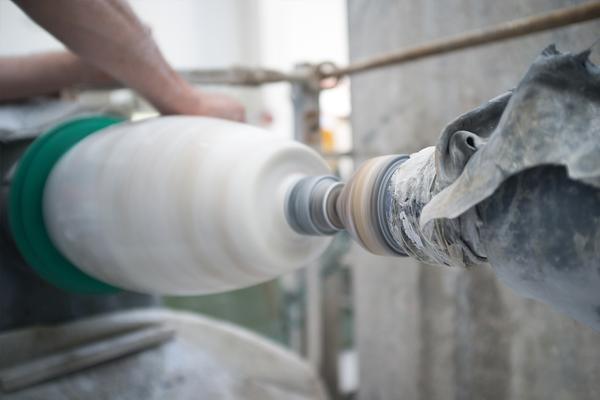
Then, prototypes are submitted and adjustments are made:
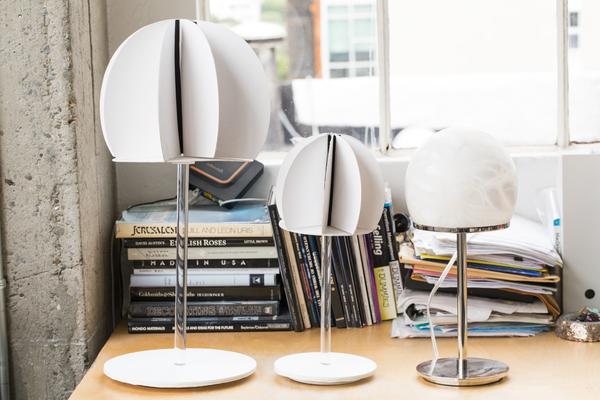
Until something extraordinary is created:
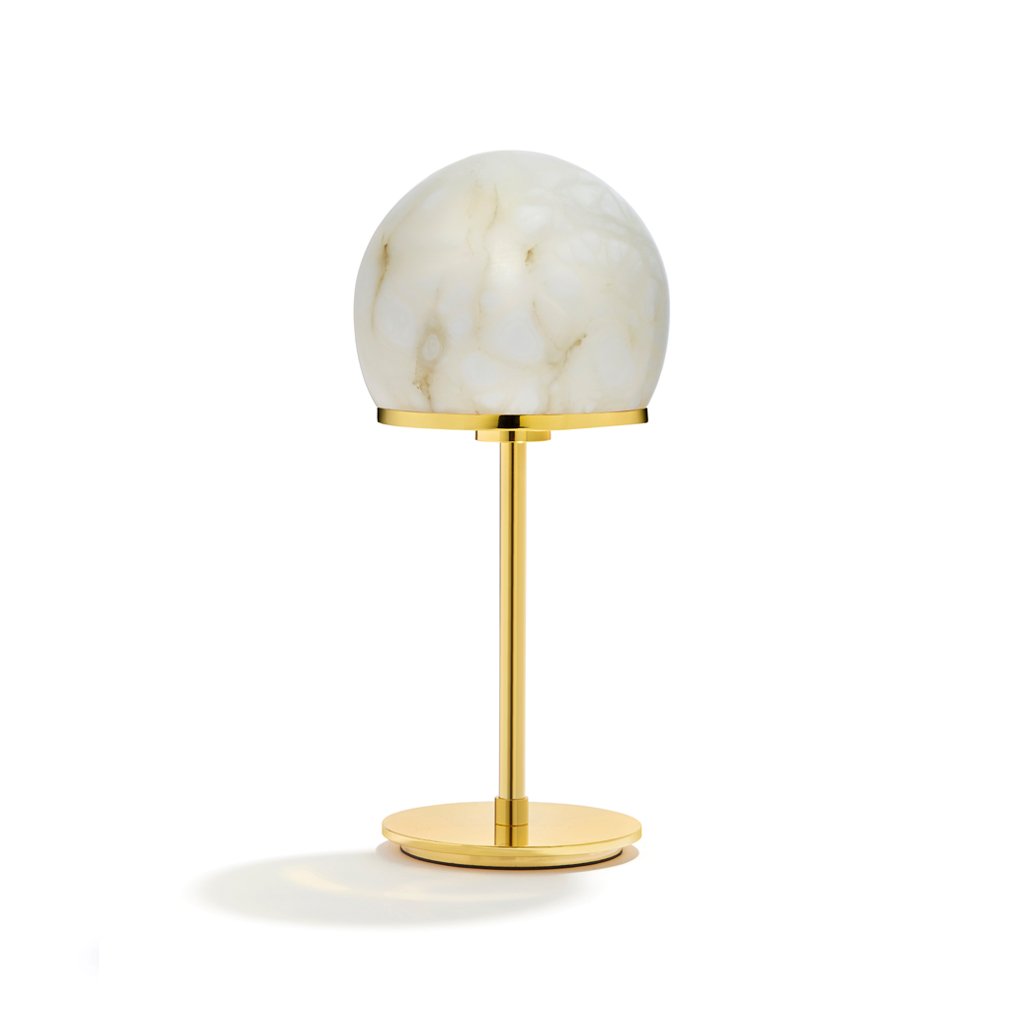
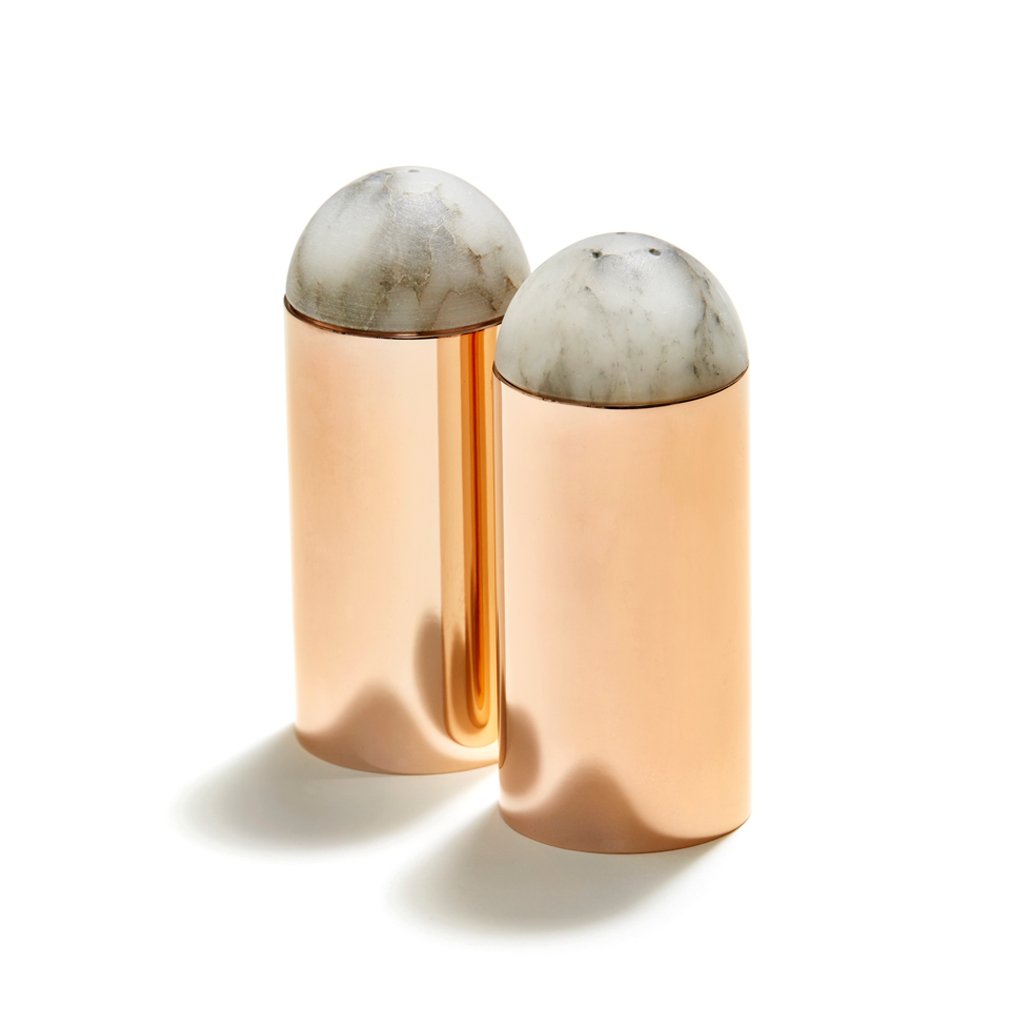
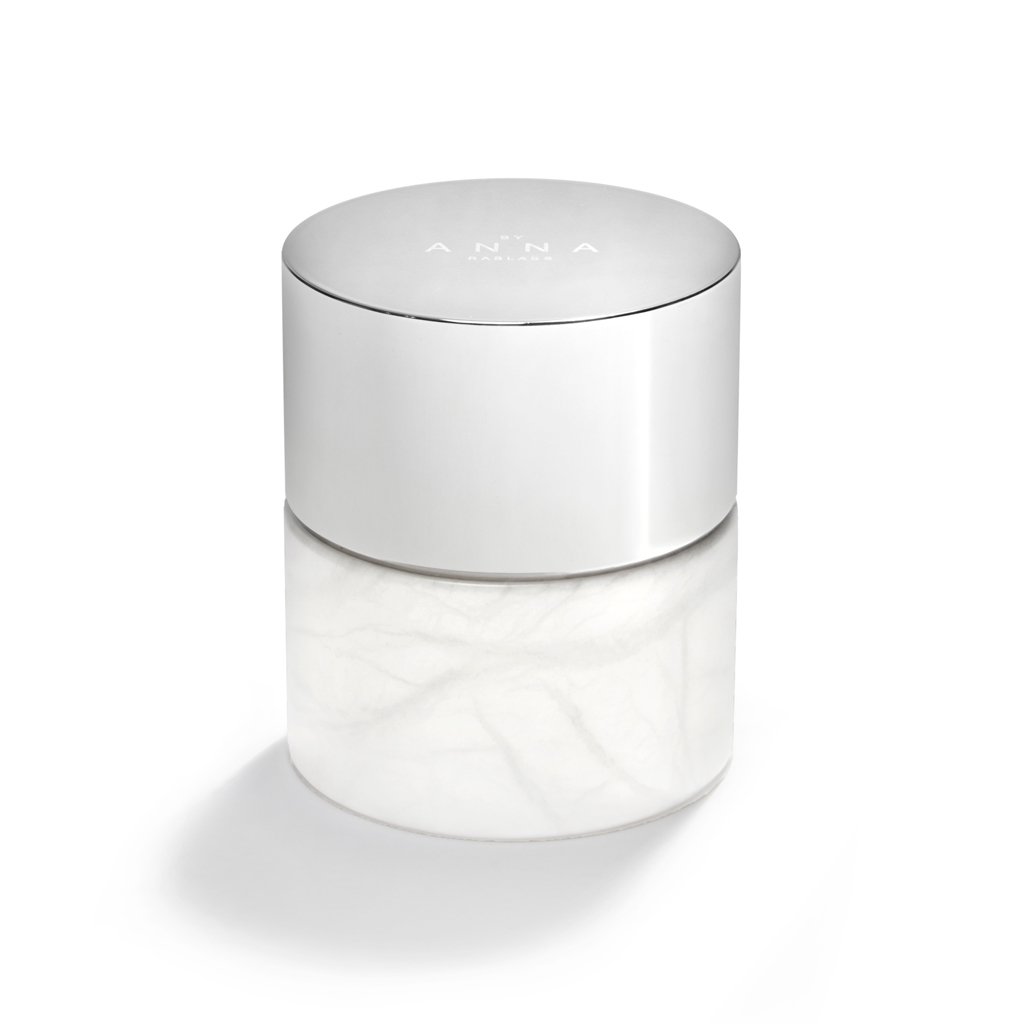
What I love about these pieces is that they fit perfectly well in our modern world. You can set down the coasters next to the lamp and the candle on a table, and at a casual glance nothing seems out of place. But when you look closer, you realize that the objects are fashioned from natural materials like agate, marble, and alabaster.
They did not just pop out of an injection mold, precisely shaped like a million other pieces. Each one has special veins and patterns that only natural stone has. Each one attained its shape only through hours of work by an artisan. When you pick one of Anna’s creations up, you’ll be surprised by their heavy weight. And when you gaze at them more closely, you’ll start to trace the veins and notice patterns, even faces, in the stones.
Eventually you’ll be mesmerized by a little world that draw you in. And that’s when you realize, “This is art.”
Shop Rab Labs
How Gucci and Alessandro Michele Are Making Richard Ginori Great Again
Founded in 1735 by a Florentine aristocrat, Richard Ginori is one of the oldest porcelain manufacturers in Europe. It is easily the most distinguished manifattura of fine porcelain tableware in Italy, meaning that all production takes place under one roof, so quality is very consistent.
For nearly 300 years, it’s been very closely associated with Italy and its history. Its pieces have graced museums, luxury liners, restaurants, luxury hotels, and fine tables around the world. It has made collections for the Vatican and has featured designs by top Italian architects like Gio Ponti and Paola Novane.
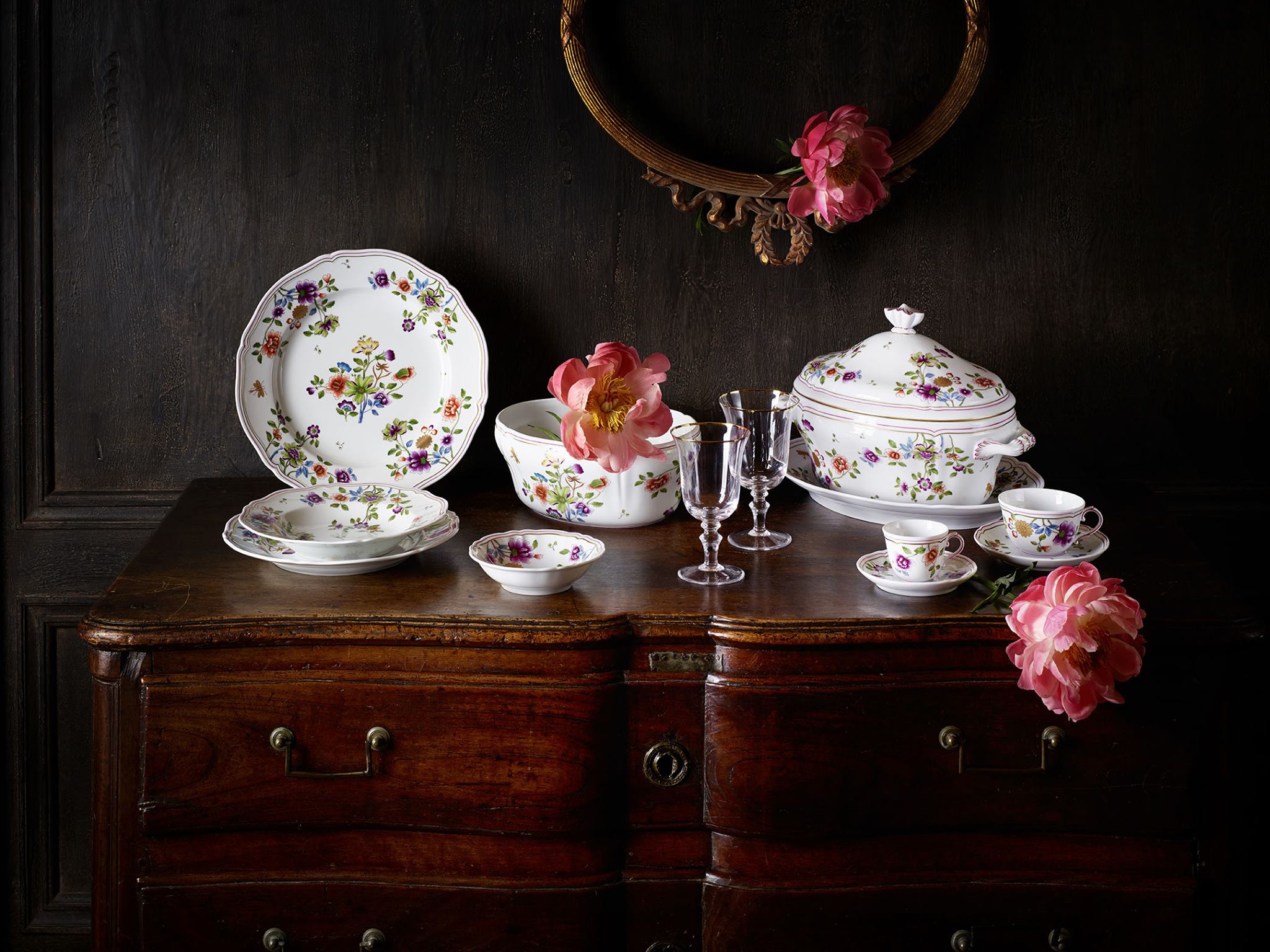
Unfortunately, difficult economic conditions and changing times caused this storied company to file for bankruptcy in 2013. But in June of the same year, Gucci acquired Richard Ginori, and the company’s artisans breathed a collective sigh of relief. Richard Ginori has now joined the global luxury company that includes Gucci, Yves Saint Laurent, Bottega Veneta, Balenciaga, Stella McCartney, Alexander McQueen, and Brioni.
Gucci’s strategy with Richard Ginori is the same as with its other brands — focus on luxury and bring in fresh, new designs. Today, Richard Ginori’s creative director is none other than Alessandro Michele, the superhot designer responsible for Gucci’s huge growth in recent years.

Having trained with Tom Ford, Alessandro is well known for his idiosyncratic take on chic geek vintage. His impact at Gucci has been nothing short of spectacular. The house – which had in recent years languished on the tasteful and straightforward – has now been reinvigorated with a playful sense of style, making it a huge hit with millenials.
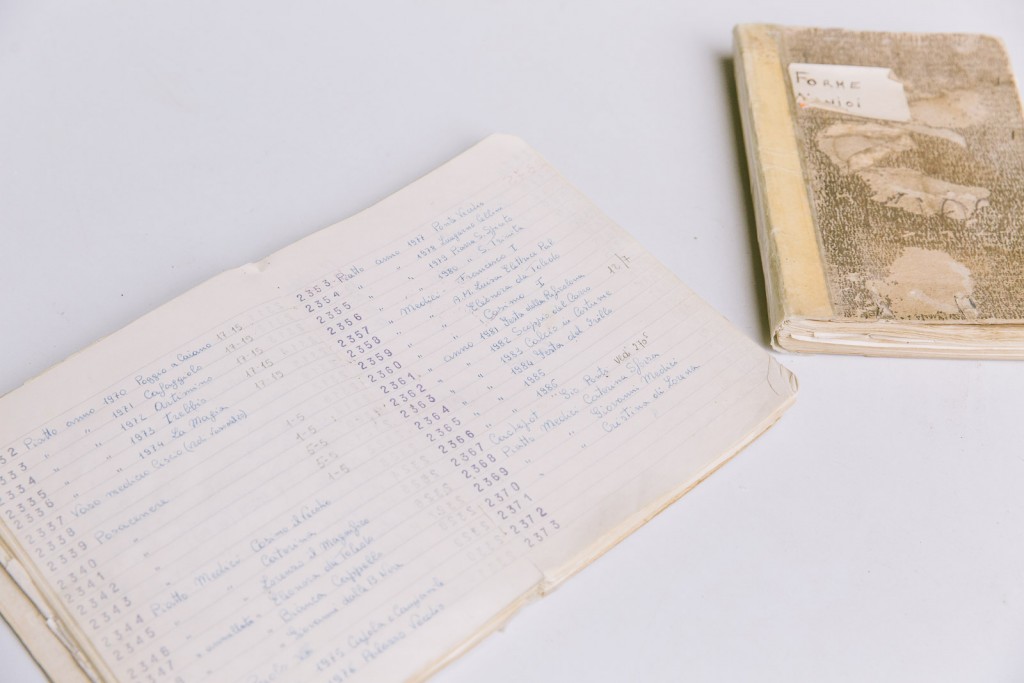
At Richard Ginori, Alessandro started by going through Ginori’s historical patterns, all of which are kept in this archival book (some patterns date back almost 280 years) …
… and reissued several Gio Ponti collections. Here’s Catene, created by the iconic Italian architect almost 100 years ago in 1926:
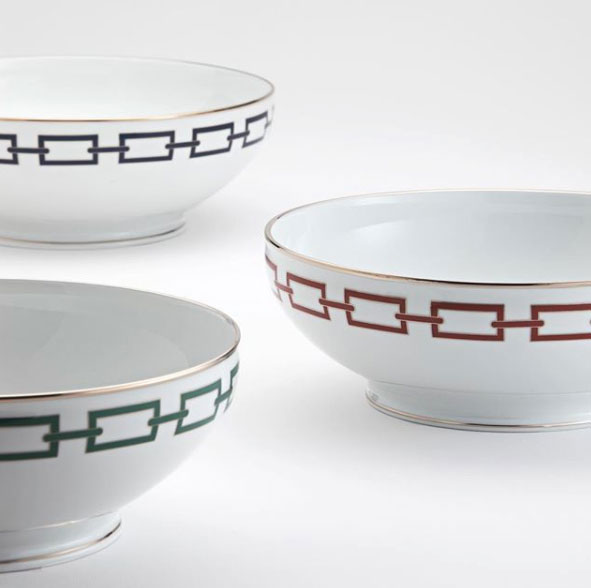
Labirinto, also created in 1926:
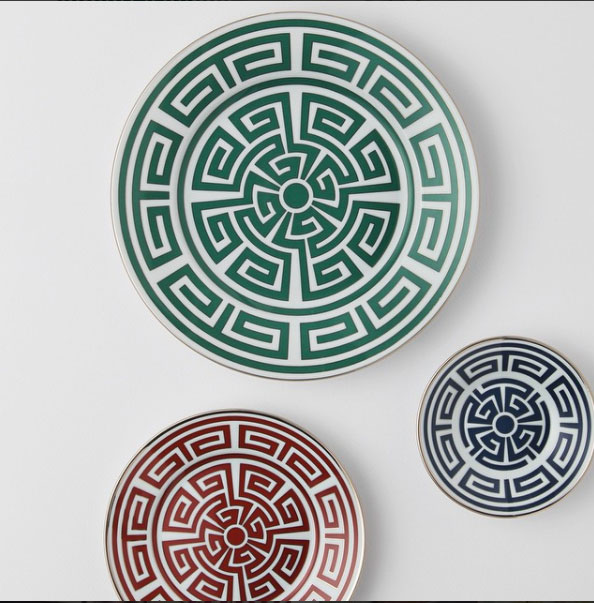
And the beloved chinoiserie pattern Oriente Italiano, now available in whimsical new shapes and colors:

Then he started to have some fun with Ginori’s traditional themes. In one collection, he was inspired by how traditional craftsmen would cover imperfections on porcelain pieces by painting insects. So he supersized the insects and painted Ginori’s best-loved patterns like Galli Rossi and Oriente Italiano on them:
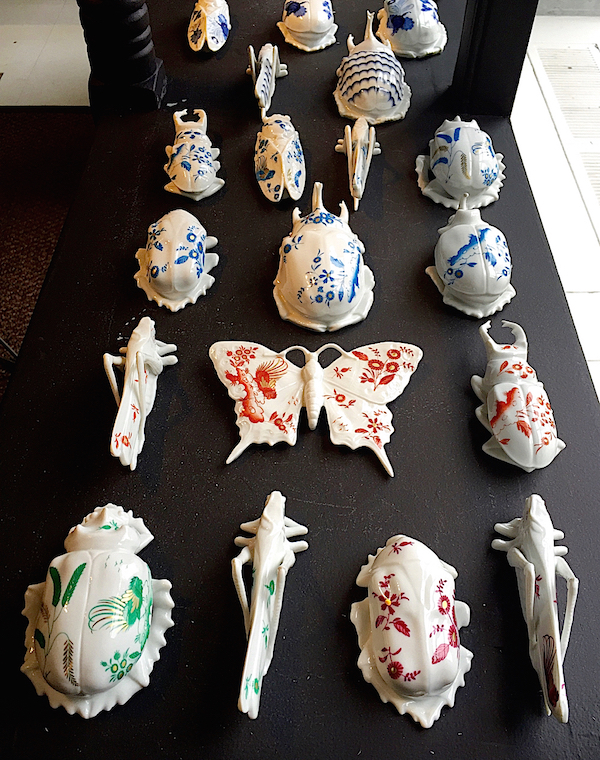
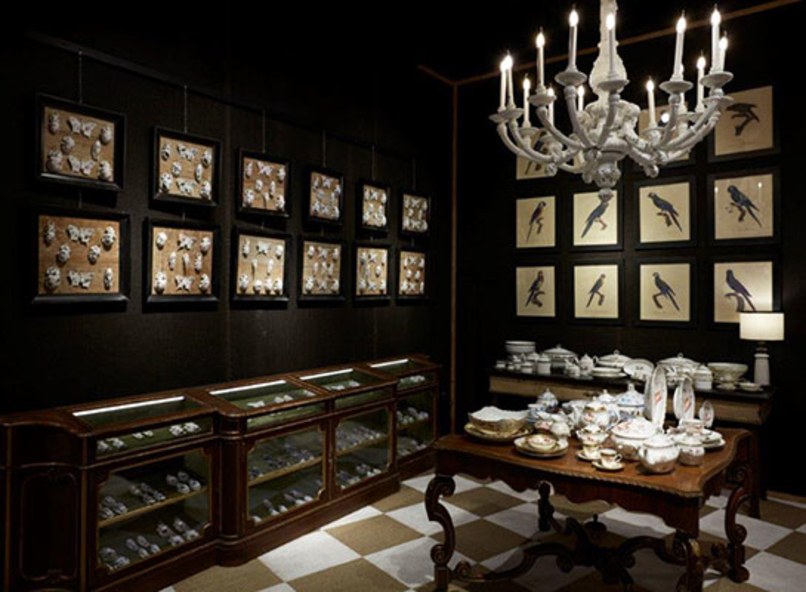
This new collection is called the Insetti. Instead of an often-overlooked detail, the insects are now the main attraction, honoring the traditional patterns on their backs. Look closely, and you’ll see that the collection is shown inside shadow boxes at the new Ginori flagship store in Milan:
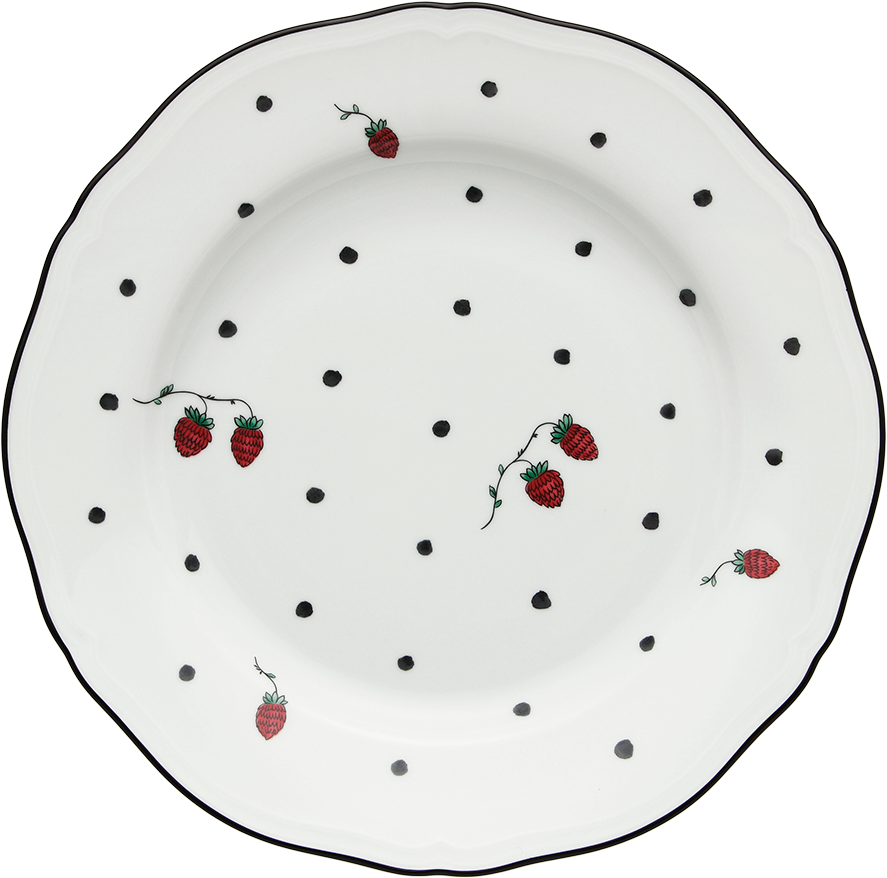
He then took the daintily romantic Italian Pois, reminiscent of a country pattern, and made it chic in black with handpainted polka dots:
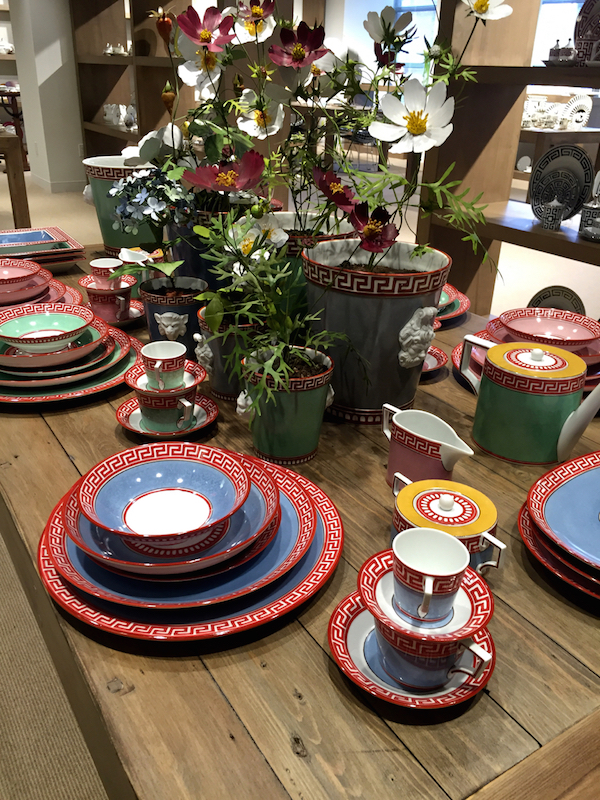
Some of Alessandro’s new designs are mirroring his fashion statements for Gucci and his love of color. For example, his Giardino dei Simplici dinnerware, which draws from Gio Ponti’s Labirinto but with richer, lusher colors:
Can you see the similarities in this look from Gucci’s Spring 2016 Ready to Wear?

And as for this lion on the Giardino dei Semplici vase?
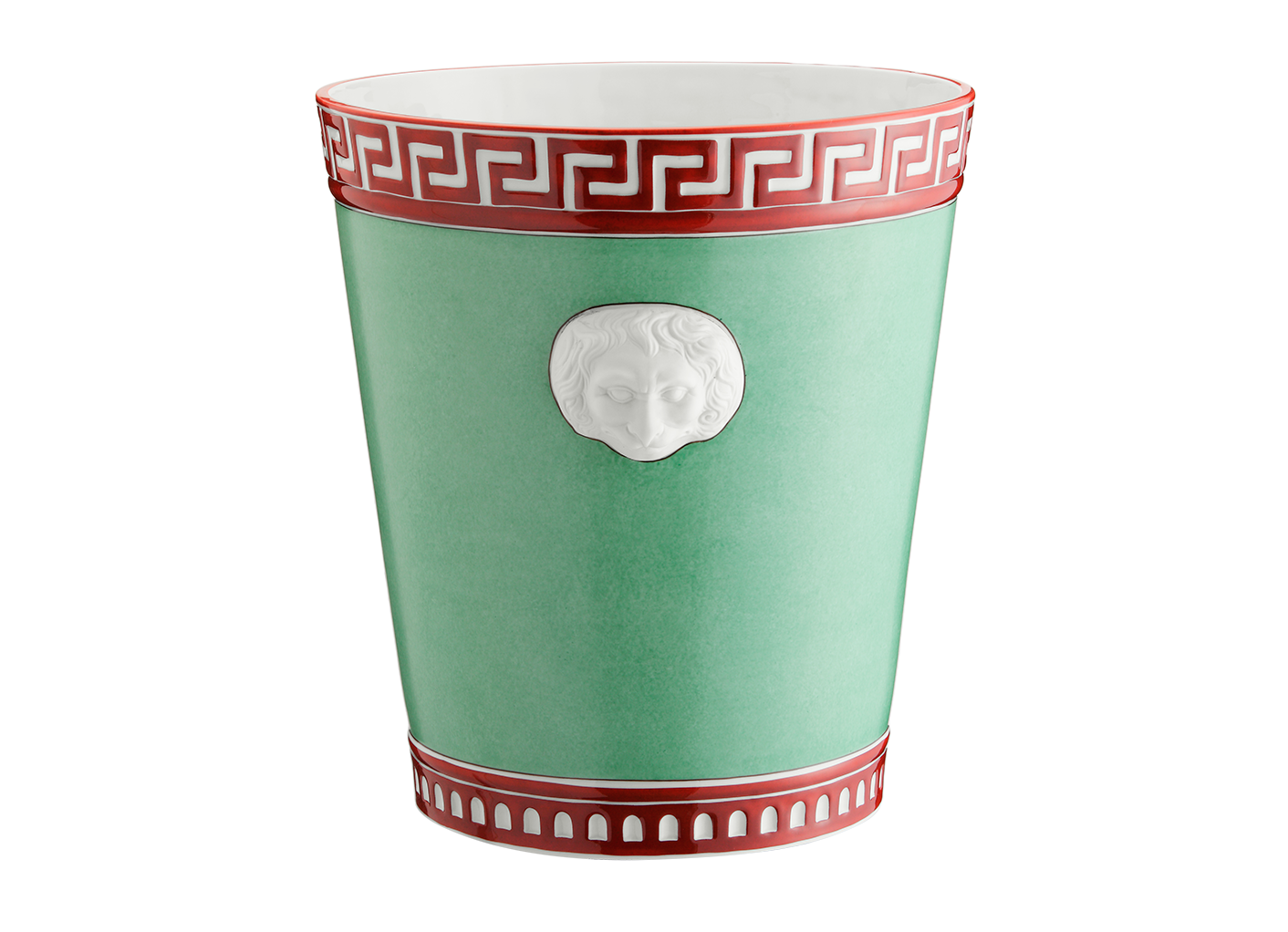
Here it is, as a belt buckle, at Gucci:

Cartiglio Citrino, in citrine and magenta:
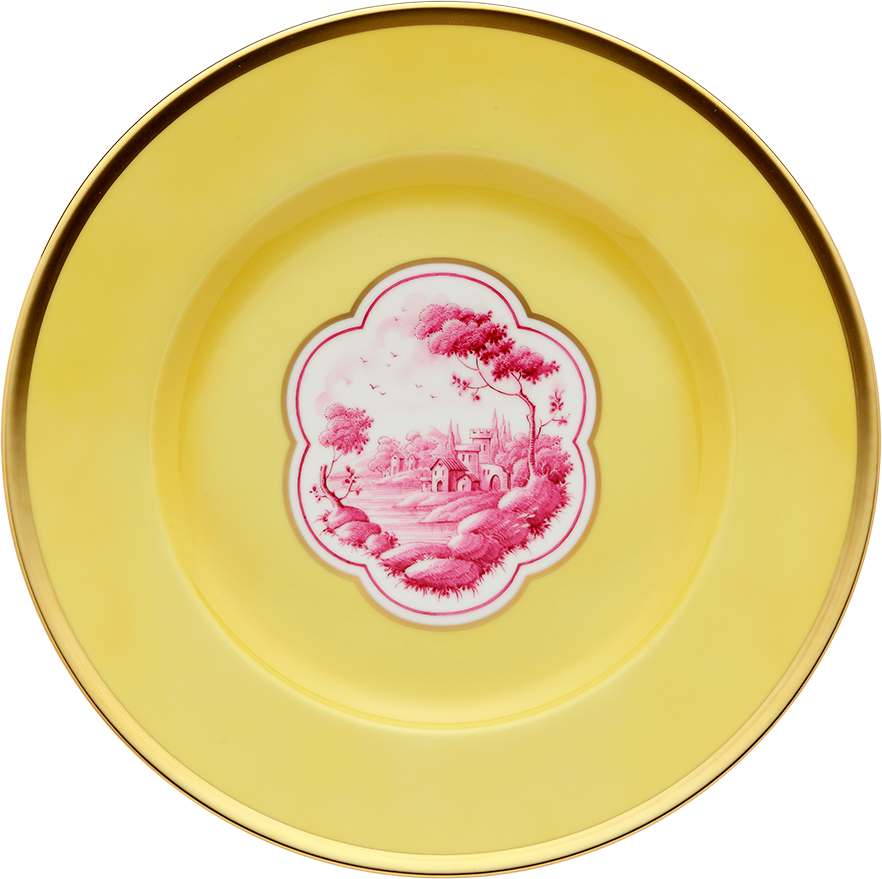
Seems right at home with this look from Gucci Fall 2017 Ready to Wear:

And finally, our favorite of Alessandro’s new collections is Voliere. Featuring a selection of twelve different birds, it’s at once traditional and fresh. Handpainted on white porcelain, it includes a palette of over fifty shades and is detailed with gold edging.
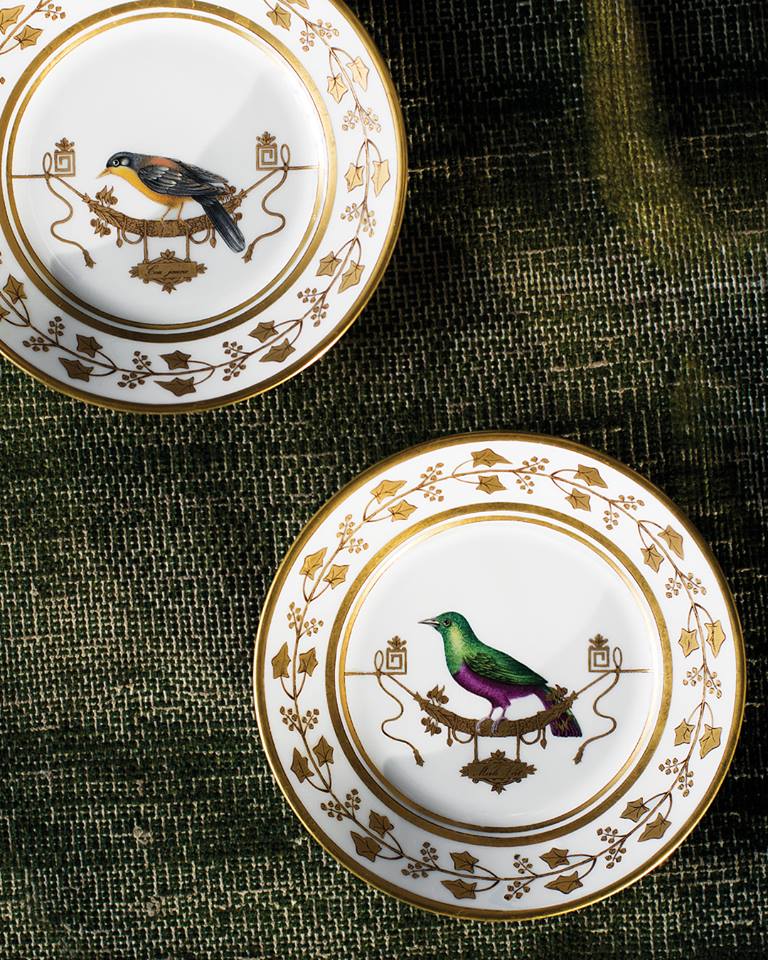
Look closely below; here are the details being worked out, in preparation for painting:

And so begins a new chapter in the storied history of Richard Ginori. This time, we’ll see Gucci’s magic of cutting-edge design and global luxury take it to new heights.
Shop Richard Ginori
A Trip Without the Flight: The John Robshaw Bath and Beach Collections Have Arrived!
Late last year, we traveled to Marrakech, and it was a revelation. Behind dusty doors, we got to peek inside lavishly planted courtyards full of bright pink bougainvillea, olive groves, and lemon trees. Imagine waking up to this after hours and hours of flying:
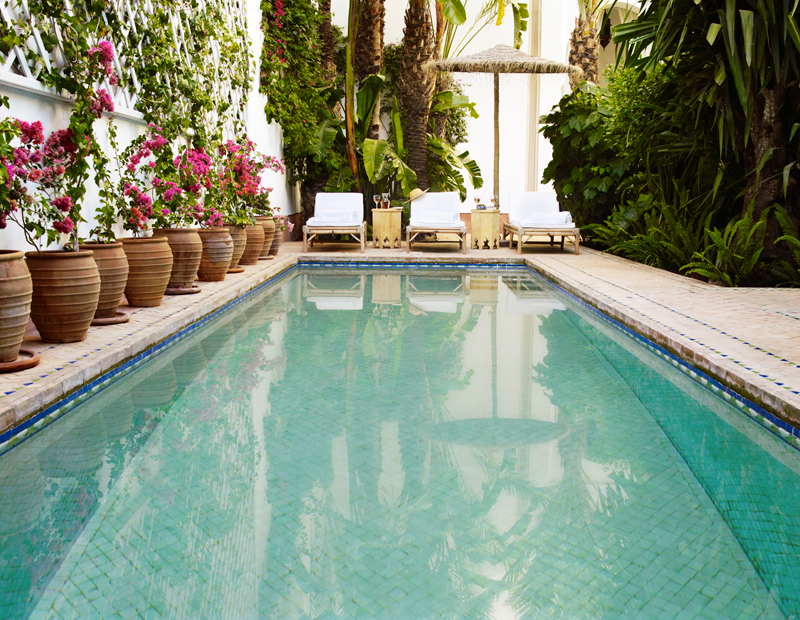
These gardens, combined with a spectacular mix of colorful fabrics and tiles, antique rugs, and the scent of rose blossoms everywhere, created an atmosphere that was intoxicatingly beautiful. It was such a treat to have a drink here after a hot day outdoors!
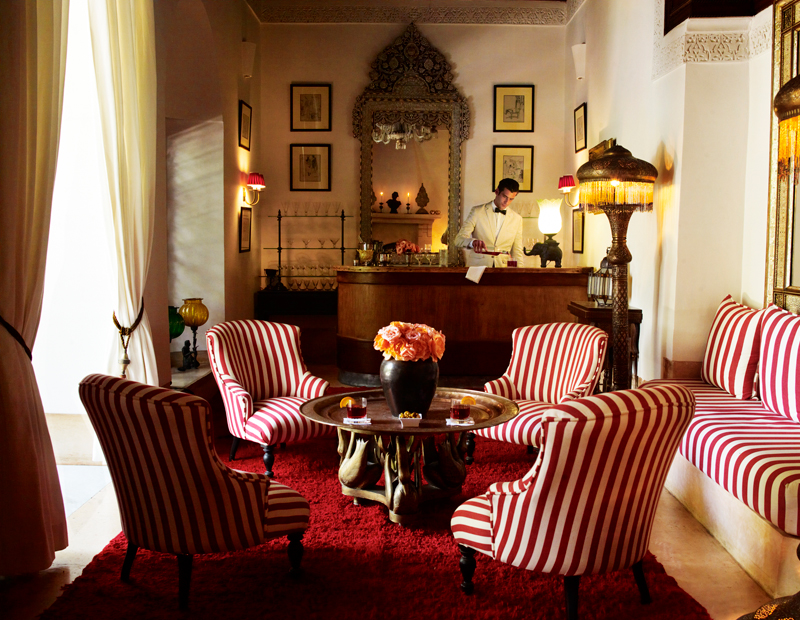
Even the bathrooms were little jewel boxes, lit up at night:

It was truly a life-changing experience, which we wanted to bring home. Construction was out of the question (we – gasp – just finished an 18-month project!), and after all our holiday parties, we really just wanted something that we could pull of easily, but that would make a difference every single day.
Enter John Robshaw. John, as many of you know, is really well known for his love of Indian and Southeast Asian patterns, done up in his signature painterly way.

And what he’s doing for the bath is exactly what we were looking for. Something exotic and vibrant, but without the need to get on a flight.
Take a look at these highlights from John Robshaw’s Spring 2018 bath and beach collections.
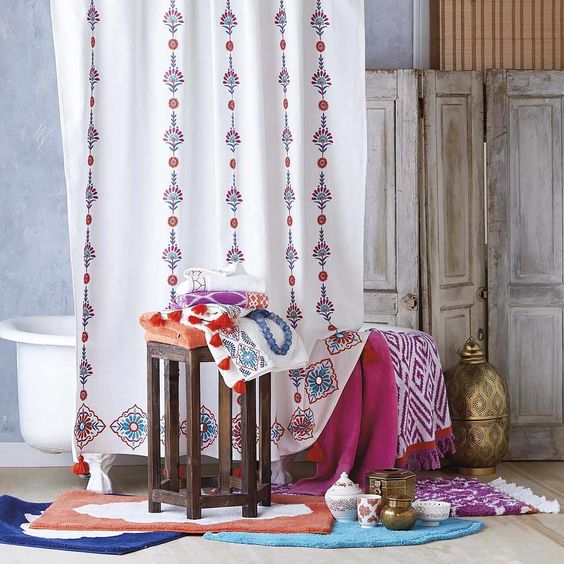
Here’s the Aloka Coral shower curtain, surrounded by Kalasin Lotus towels and a smattering of John’s signature bath rugs.
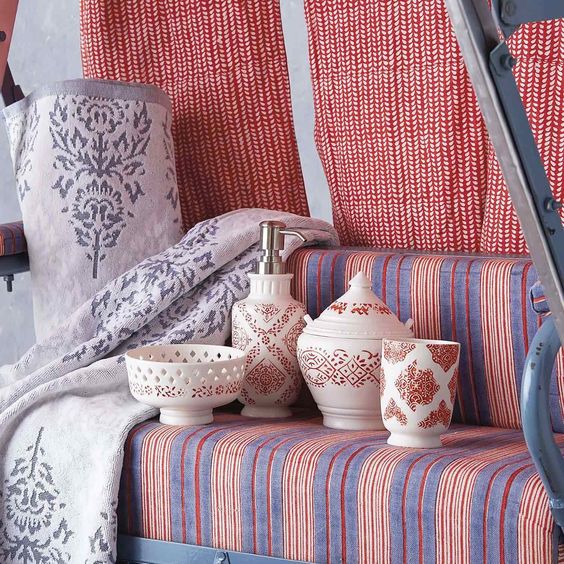
Combine this with the Lakki bath accessories, available in coral, indigo, or linen:
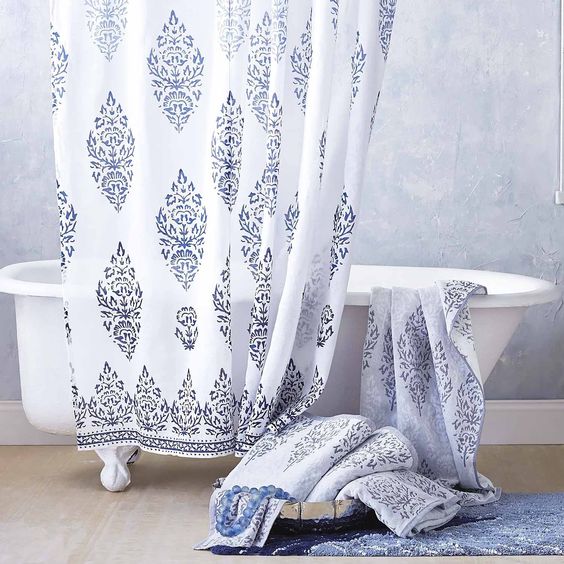
Or if you like blue, go with his Jalati Indigo bath towels and matching shower curtain:
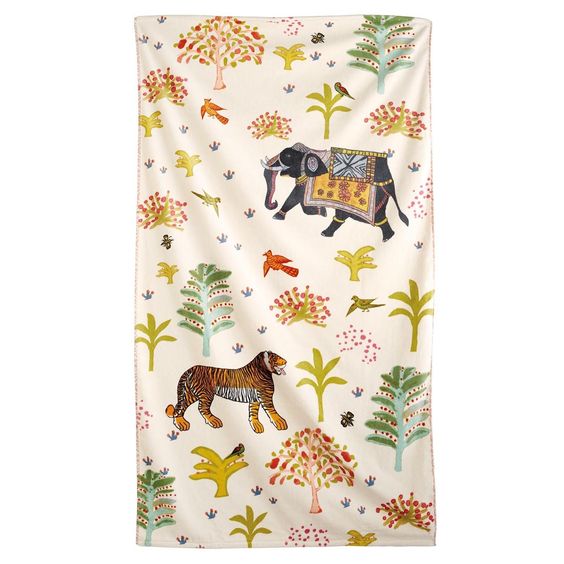
And inspired by John’s safari in Kenya, who wouldn’t love his Masai Mara beach towel? It’s guaranteed to make you smile and take you on a trip around the world without ever leaving home.
To see John Robshaw’s bath and beach collections, click here. We’d love to hear which one’s your favorite!
What to Know About St. Gèneve Down Products
TRADITION
There’s an old Scandinavian tradition that when a woman got married, her parents would give the couple a new down duvet and pillows made by her mother, with a coin sewn into the duvet for good luck. At St. Gèneve, this charming tradition continues. All St. Gèneve down duvets have a coin sewn in, with the same spirit of good wishes.
HOW TO CHOOSE YOUR DUVET
Higher quality duvets are more versatile: they will be warmer in the winter and cooler in the summer than lower quality duvets. This is because higher quality down is better at insulation, lightness, and breathability than lower quality down. The table below illustrates how this works.
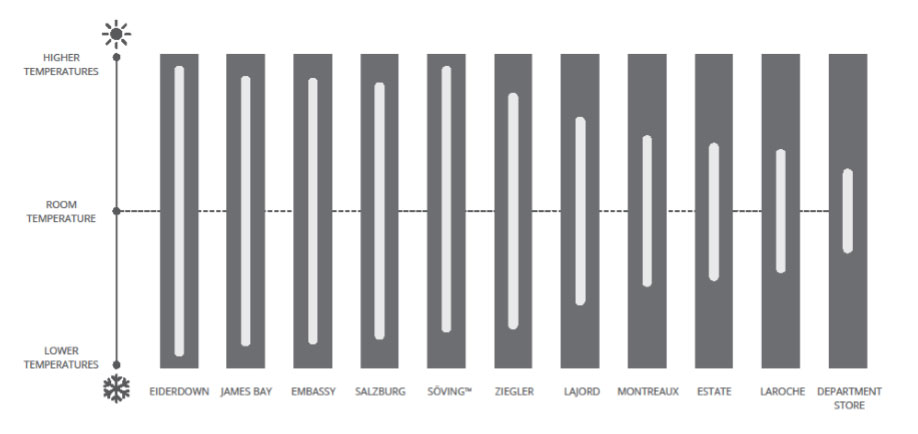
Duvets are offered in three weights:
Winter Weight – recommended for average sleepers in cool to cold bedrooms. Winter duvets are guaranteed to be warm enough for a period of 10 years, or St. Gèneve will add more down at no charge, providing that the duvet has been properly cared for, and a duvet cover used at all times. Please note that down cannot be removed from a duvet.
Classic Weight – recommended for warm sleepers and heated bedrooms.
Summer Weight – recommended for very warm sleepers, in warm conditions
Dual Zone – St. Gèneve can make duvets with different weights on two sides; for example, a Classic weight on one side and a Winter weight on the other.
SÖVING™ – this adjustable duvet lets you choose how cool or warm you want it to be.
TYPES OF DOWN
Genuine Eiderdown: 700+ Fill Power Eiderdown
– Eiderdown is the softest and highest insulating down in the world.
– It is warmer in the winter, cooler in the summer.
– It is lightweight, and it takes less weight of Eiderdown than any other down to get the same warmth.
– Its advanced insulating capacity allows it to adjust to the temperature of the person under the duvet.
– Hand collected from birds’ nests at Canadian Eider Duck sanctuaries.
– Certified under the Zurguard system to be hypoallergenic.
– Duvets are hand sewn in sealed baffle box design.
– Tests at 700 loft, but its unique high density and cling make it insulate better than a 1000 loft down.
View Genuine Eiderdown Duvet with Silk Cover, Genuine Eiderdown Pillow with Silk Cover, Genuine Eiderdown Duvet with Cotton Cover, Genuine Eiderdown Pillow with Cotton Cover.
Also view Eider Eider Down/Polish White Goose Down Luxe Pillow, which combines Eiderdown for softness and 1000 loft Polish White Goose Down for support.
James Bay: 700+ Fill Power Wild Canadian Goose Down
– Similar to Eiderdown, James Bay huge down clusters cling together for superb insulating power, so they must be hand sorted and cleaned.
– Collected from wild geese in the Canadian North by Cree First Nations under special license from the Canadian Government; this down is even rarer than Eiderdown.
– Certified under the Zurguard system to be hypoallergenic.
– Duvets are hand sewn in sealed baffle box design.
– While it tests at 700 loft, it has similar cling and high density as eiderdown, so it insulates as if it were a 900+ loft down.
View James Bay Wild Canadian Goose Down Duvet with Silk Cover, James Bay Wild Canadian Goose Down Pillow with Silk Cover, James Bay Wild Canadian Goose Down Duvet with Cotton Cover, James Bay Wild Canadian Goose Down Pillow with Cotton Cover.
Also view Eider Eider Down/Polish White Goose Down Luxe Pillow, which combines Eiderdown for softness and 1000 loft Polish White Goose Down for support.
Embassy Bay: 1000+ Fill Power White Goose Down
– Highest loft of any down available worldwide.
– Originally developed for the high-end Japanese market, it was first used in technically sophisticated jackets and later in their most deluxe duvets.
– Polish white goose down undergoes additional sorting processes to extract only the largest, most pure clusters of down. This exquisite down has ultra large clusters and some clinging ability like eiderdown.
– It is incredibly soft and lightweight, providing comfort for generations.
– Certified under the Zurguard system to be hypoallergenic.
– Duvets are hand sewn in sealed baffle box design.
– Tests at 1,000 loft.
View Embassy White Goose Down Duvet, Embassy White Goose Down Pillow.
Salzburg: 800+ Fill Power White Goose Down
– Distinctive down because it looks and behaves like a “White Eiderdown”.
– Comes from mature geese and is meticulously hand sorted to obtain the largest clusters with the highest densities and cling factor possible.
– The high density of Salzburg down increases insulation because the center of the down cluster is more complex and traps small pockets of air. Heat loss is prevented because the down clings to one another resulting in smaller gaps between each cluster.
– This down is incredibly soft and lightweight. With care, it will last for generations.
– Certified under the Zurguard system to be hypoallergenic.
– Duvets are hand sewn in sealed baffle box design.
– While Salzburg tests out at 800 loft, its eider-like properties give it the equivalent insulating power of 900 points.
View Salzburg White Goose Down Duvet, Salzburg White Goose Down Pillow.
Ziegler: 850+ Fill Power Polish White Goose Down
– Poland has a rich history of goose farming and is known for having some of the finest white goose down in the world.
– Ziegler down is among the best Polish downs.
– Raised on special farms, Ziegler Polish White Goose Down is noted for its high loft and warmth.
– Certified under the Zurguard system to be hypoallergenic.
– Duvets are hand sewn in sealed baffle box design.
– Tested at 850 loft.
View Ziegler Polish White Goose Down Duvet, Ziegler Polish White Goose Down Pillow.
Söving: 800+ Fill Power Clear Lake Colony White Goose Down
– Has a special baffle design that lets you choose how warm you would like it to be, just by turning it over.
– Patented breathing channels can open and close depending on how much warmth is required. Plus, the down can also be shifted up and down the channels by simply shaking the duvet. This allows you to perfectly control your sleeping environment.

– In the summer, when the duvet is used with the narrow channels facing up, the breathing zones are opened to allow air to circulate and keep you cooler.
– During the winter, when the duvet is used so the wide channels are facing up, the breathing zones are closed to keep you warmer.
– Certified under the Zurguard system to be hypoallergenic.
– Hand sewn patented design.
– U.S. Patent #8978179
View Söving White Goose Down Dual Temperature Duvet.
Lajord: 850+ Fill Power Canadian White Goose Down
– One of St. Gèneve’s most popular duvets, Lajord is light, cozy and will be cherished for generations.
– Lajord White Goose Down comes from a goose farm in Saskatchewan, where farmers raise free range geese that are more mature than those in other colonies. St Genève purchases their entire production each year.
– Certified under the Zurguard system to be hypoallergenic.
– Duvets are hand sewn in sealed baffle box design.
– With a loft of 850 cubic inches per ounce and extremely large clusters, this down is one of the most prized of all domestic downs raised in North America.
View Lajord Canadian White Goose Down Duvet, Lajord Canadian White Goose Down Pillow.
Montreux: 675+ Fill Power White Goose Down
– Montreux duvets and pillows are filled with hypoallergenic white goose down that has been certified under the Zurguard® system.
– Guaranteed to hold their shape and insulation ability for years and designed to be extremely comfortable.
– Certified under the Zurguard system to be hypoallergenic.
– Duvets are hand sewn in sealed baffle box design.
– This down is exceptional quality with a loft of 675.
View Montreux White Goose Down Duvet, Montreux White Goose Down Pillow.
Estate: 650+ Fill Power Polish White Goose Down
– Polish white goose down comes from free range geese.
– Family-run farms raise mature geese that produce this lovely soft down.
– Certified under the Zurguard system to be hypoallergenic.
– Duvets are hand sewn in sealed baffle box design.
– Tested at a loft of 650.
View Estate Polish White Goose Down Duvet, Estate Polish White Goose Down Pillow.
Laroche: 600+ Fill Power Canadian White Duck Down
– This down is taken from mature white ducks, resulting in large, lightweight and resilient down clusters.
– Certified under the Zurguard system to be hypoallergenic.
– Duvets are hand sewn in sealed baffle box design.
– At a loft of 575, Laroche white duck down is superior to many grades of goose down.
View Laroche White Duck Down Duvet, Laroche White Duck Down Pillow.
Altro: Hypoallergenic Daunlon Cluster Polyester
– Down alternative collection filled with hypoallergenic fiber.
– Puffy, soft, and cozy.
– Duvets are hand sewn in sealed baffle box design.
View Altro Down Alternative Duvet, Altro Down Alternative Pillow.
Silk Duvets
– Natural alternative for those who find down duvets too warm during the summer.
– In nature, silk cocoons protect young moths from heat, cold, mildew, mold, and mites, so silk is one of the most perfect insulators.
– Made with Tussah silk from Antheraea moths. These moths feed on oak trees, creating silk that is heavier, tougher, and more resilient.
– 100% hand layered fill.
– Safe, organic, and natural.
– These silk duvets cannot be washed or dry cleaned; always use a duvet cover.
View Silk Duvet.
Heirloom White Goose Down Pillows
– The Heirloom has been designed to be a wonderfully comfortable pillow. It is filled with down blended from different countries in order to achieve a perfectly consistent quality.
– Certified under the Zurguard system to be hypoallergenic.
– This pillow will stay soft and supportive for years.
– Tested at 600 fill power
View Heirloom White Goose Down Pillow.
Hutterite White Duck Down/Feather Pillows
– The Hutterites are a group devoted to a simple agricultural lifestyle who live peacefully in self-sustaining communities. When they emigrated from Europe over a century ago, they brought the farming skills of generations with them, including the raising of geese and ducks.
– St Genève Hutterite products are made with a blend of duck down for softness and duck feathers for spring and durability.
– Tested at 600 fill power
View Hutterite Duck Down/Feather Pillow.
Chateau Down/Feather Pillows
– Designed for firmer support
– Center of 15% down/85% feather, surrounded by a soft layer of white goose down.
– Most comparable pillows use only feather in the center, which flattens too easily.
– This blend of down and feather stays puffy and refluffs easily.
View Chateau Down/Feather Pillow.
TYPES OF TICKING
Ticking refers to the fabric material used to cover the duvets and pillows. It is very important, as it should be long lasting, down proof, and not processed with any chemical treatments.
St. Gèneve starts with high quality long staple cotton, which is spun into fine, strong threads in Germany and woven to achieve the following unique properties:
– Soft and breathable
– Down proof
– Machine washable
– Long lasting
– Dust mite proof
– No coatings or chemical treatments used
– 300 Thread Count
OKEO-TEX
All of St. Gèneve’s German fabrics have achieved the Oeko-Tex designation. These fabrics have been rigorously tested to ensure that no harmful chemicals were used. Fabrics approved by Oeko-Tex are the safest made anywhere in the world.
HYPOALLERGENIC PROCESS
All St. Gèneve ZURGUARD® products are guaranteed to be hypoallergenic.
– In the ZURGUARD® system, the down is sanitized to eliminate all bacteria and odors.
– The ZURGUARD® system treats down gently so that down fibers are not damaged, or become overdried or brittle. This ensures that the original natural resiliency is maintained, and the down does not go flat.
– The ZURGUARD® system does not artificially enhance the loft of down.
– ZURGUARD® down exceeds all government standards for purity and cleanliness.
SIZES
St. Gèneve duvets are made to fit typical mattresses (up to 14″ thick) with about 15” hanging over the sides and foot. This is so that when a person gets into their twin bed, or two people get into their Double, Queen or King bed, the duvet will settle down around the sleepers without too much overhang.
– Twin 72″ W x 88″ L
– Queen 90″ x 94″ L
– King 108″ x 94″ L
For those who prefer oversized duvets to cover their extra deep mattresses (up to 19” thick), St. Gèneve offers two additional sizes:
– Super Queen 100″ W x 100″ L
– Super King 114″ W x 100″ L
BEDDING PROTECTORS
Cotton Comfort Protectors
– Quilted construction
– 100% cotton percale cover; 90% cotton (for breathability) and 10% acrylic (for washability) filling.
– Available as mattress protectors (16″ or 24″ pockets) and pillow protectors.
View Cotton Comfort Mattress Protector, Cotton Comfort Pillow Protector.
Organic Cotton Pillow Protectors
– 100% organic cotton
– GOTS (Global Organic Textile Standard) certified
– Available as pillow protectors
View Organic Cotton Pillow Protector.
Allergy Protectors
– Prevents dust mites or bed bugs from getting into bedding.
– 100% cotton imported from Germany.
– No chemical finishes or synthetic components.
– Self-locking zipper.
– If putting covers on existing pillows, clean pillows first to eliminate existing mites or allergens.
– Available as duvet cover protectors, featherbed protectors, mattress covers (10″ or 14″ pockets), and pillow protectors.
View Allergy Duvet Cover Protector, Allergy Featherbed Protector, Allergy Mattress Cover, Allergy Pillow Protector.
Waterproof Protectors
– Completely breathable, so vapor will pass but not liquids.
– Completely waterproof to protect your mattress from marks and stains.
– Special antimicrobial fabric finish keeps your mattress clean and hygienic.
– Dust-Mite-Proof: impedes dust mites from getting into your mattress. If dust mites are a serious concern, use an Allergy protector, as those completely encase the mattress.
– Made with a comfortable soft cotton knit, with a polyurethane center layer.
– Fabric made in Spain and sewn in Canada.
– Available as mattress protectors (up to 8″, 12″, and 20″ thick) and pillow protectors.
View Waterproof Mattress Protector, Waterproof Pillow Protector.
GUARANTEES
Duvets:
– St. Gèneve down duvets are guaranteed for 20 years against defects in materials or workmanship, provided that the duvet has been reasonably cared for, labels are attached and that a duvet cover has been used at all times.
– All St. Gèneve duvets are sewn in a sealed baffle design. The filling is guaranteed to stay in place, and never shift into another compartment, for the life of the duvet.
– St. Gèneve Daunlon™ Polyester-filled duvets are guaranteed 5 years against any defect in materials and/or workmanship.
– St. Gèneve Winter weight down duvets are guaranteed for a period of 10 years to be warm enough, or St. Gèneve will add down at no charge, provided that the duvet has been reasonably cared for, labels are attached and that a duvet cover has been used at all times. Please note that down CANNOT be removed from a duvet. Lighter weight duvets are NOT guaranteed for warmth.
Pillows:
– St. Gèneve Luxury Style Pillows are guaranteed 5 years against any defect in materials or workmanship, provided that the pillow has been reasonably cared for, labels are attached and that a pillow protector has been used at all times.
– St. Gèneve Cushion Form Style Pillows are guaranteed 2 years against any defect in materials and/or workmanship, provided that the pillow has been reasonably cared for, labels are attached and that a pillow protector has been used at all times.
17 Tips for Picking the Perfect Pet-Friendly Rug
If you live with pets, we bet you’ve had to part with a rug or two after the why-didn’t-I-see-this-coming happens. But you’re not alone, and we promise you there’s a way to keep both your adorable pets happy and your home looking stylish.
Here’s our primer on how to pick the perfect pet-friendly rug.
Materials
1. Indoor/outdoor rugs are the best choice. They’re virtually chew- and scratch-proof, can handle lots of foot traffic, and easily wash up with a little detergent and water. And don’t worry, the new ones are so soft, you could easily walk on them with bare feet.
2. Woven wool and tufted wool rugs are durable, easy to vacuum, and pretty easy to clean.
3. Woven cotton rugs are lightweight and easy to take outside for a shake. They’re also durable, but they’re not scratch proof, so keep an eye on younger pups.
4. Cotton chenille rugs are super soft, but they attract more fur so they require more frequent vacuuming.
5. Avoid hooked and looped rugs – claws can get stuck on these, and then you can end up having to remove an entire run.
6. Avoid viscose-blend rugs, as those require professional cleaning.
7. Avoid sisal, jute and other natural-fiber rugs, as they don’t take stains well and cats love to scratch them. If you like the look, get a vertical scratching post made using sisal rope.
8. Stick with low-pile rugs. Not only are they easier to clean, it’s harder for cats to hook their claws into the strands.
Colors/Patterns
9. If you go with an indoor/outdoor or woven cotton rug, pretty much any color will work.
10. Saturated colors and small patterns can work wonders at hiding accidents.
11. If you like neutral colors, go with the flow and coordinate your decor to your pet’s fur.
12. Consider using an inexpensive vintage rug. As these have already been loved, you’ll find it much easier to deal with it when it’s broken in.
Size
Although we generally love larger rugs, these aren’t easy to move if you need to clean one. So if you have pets, consider these two options:
13. Use carpet tiles (Flor makes good ones), so you can just replace a few pieces here and there.
14. Get smaller rugs and place them side by side; you’ll still get the same look, but it’ll be much easier to move if you need to take the rug out to clean.
Cleaning
15. Try a Furminator to help reduce shedding.
16. Get a vacuum that’s been tested for picking up pet hairs. Miele, Dyson, Hoover, and Shark all make good ones.
17. Make sure you have a spot cleaner on hand before accidents happen. Nature’s Miracle is highly regarded for its deep cleaning properties, and available at most pet supply stores.
Before + After: A Recipe for A Fashionable Den Makeover
My den had a problem.
Even though it had gorgeous views and comfortable furniture, everybody just walked right past it. This seemed like a great place to spend an afternoon, but nobody — not even I — was tempted to do that:
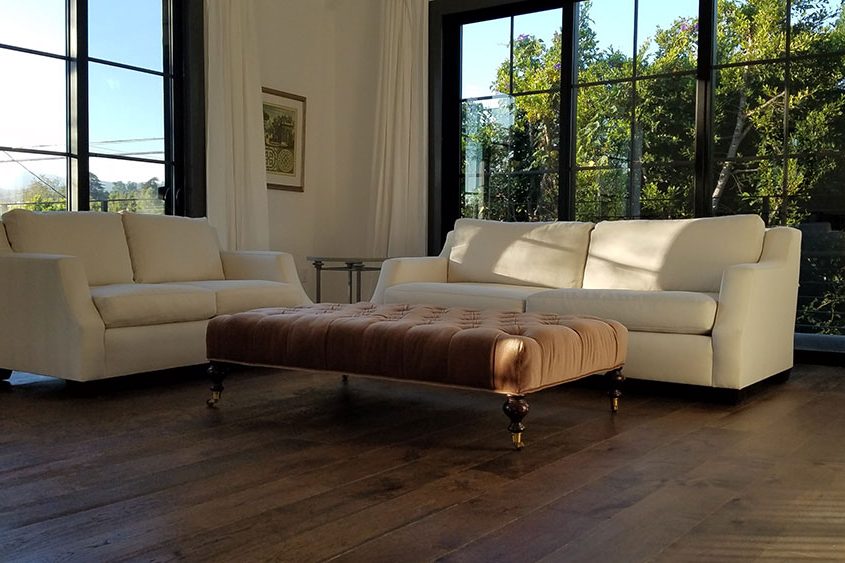
Fortunately, there’s an easy, step-by-step process to turning a den or family room into an inviting, stay-for-a-while space. Here’s the recipe:
Step 1: Start with a rug.
The rug is usually the most important accessory in any room. In this den, the right rug could help define the space better and make it comfortable for lounging. For this room, I didn’t want the furnishings to compete with the outdoors, so we went with a neutral rug (Dash & Albert’s Marled Grey Woven Cotton Rug) that coordinated with the linen curtains and the furniture.
Before we moved our furniture out, we measured to make sure we got the right size rug. When you do this, try to include all the large furniture pieces on the rug but leave about 18″ of bare floor exposed all around.
– If the rug is too small, the area will look unbalanced.
– If it’s too large, it will look like wall-to-wall carpeting that just missed.
(For more details on choosing rugs, see our post on How to Choose a Rug for Every Room of in Your New House.)
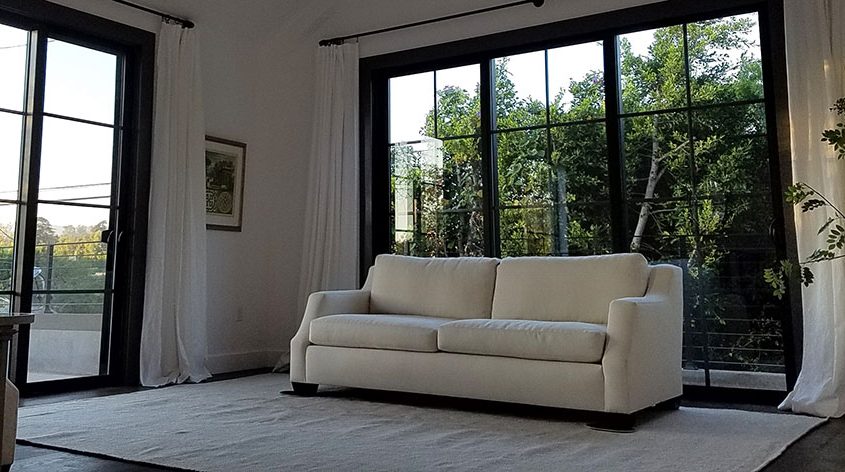
Step 2: Add comfortable furniture. If you can, invest in down-filled cushions for your sofas; you’ll be grateful every time you sit down. But my favorite trick is to use an ottoman as a coffee table. They’re great for lounging, and if you cover them in a medium dark fabric, no one will mind putting their feet up. Here, we used a soft brown mohair:
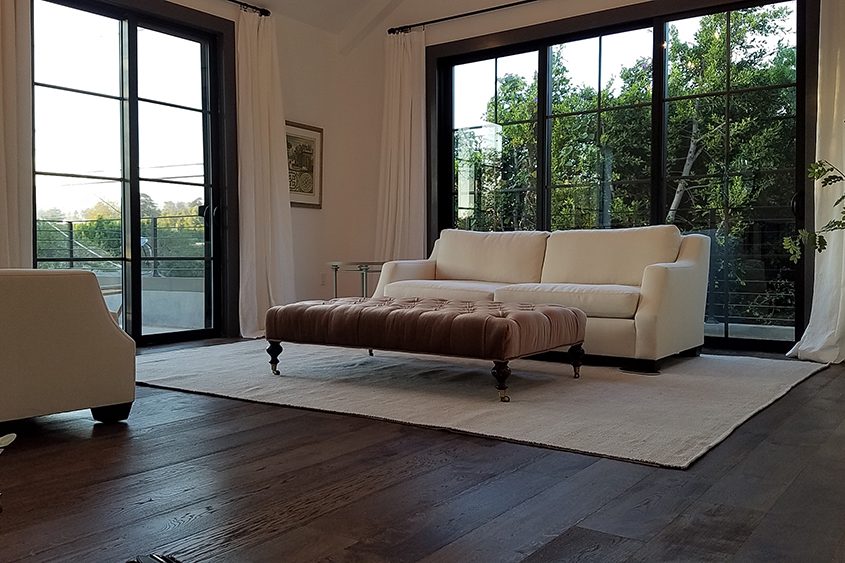
Here’s the room with the loveseat in place. Before you place your furniture, look at the room and really think about where it should go. In the picture below, note how well the larger sofa works with the larger patio door behind it, while the loveseat is scaled to fit the smaller patio door on the left.
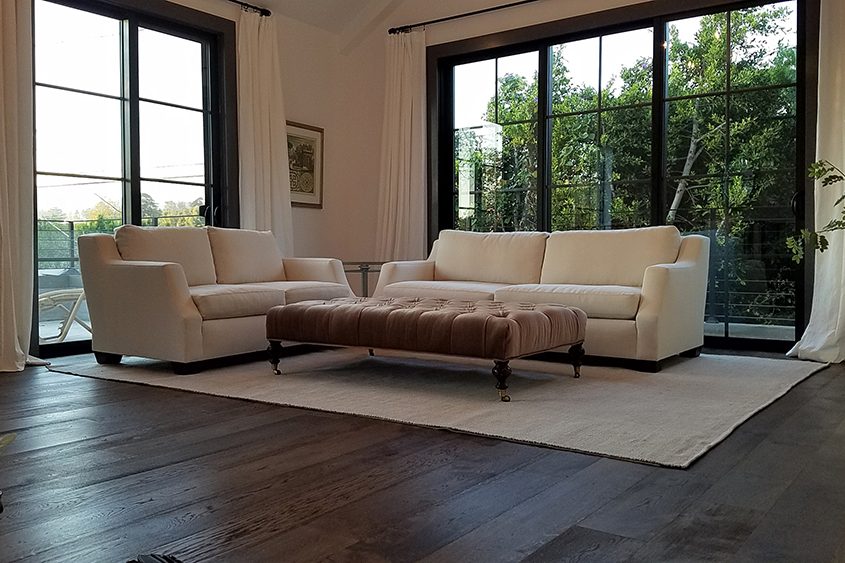
Step 3: Blend in a dash of your favorite pillows. Now you have something to sink into …
Step 4: Fill with flowers. And now you have something pretty to look at.
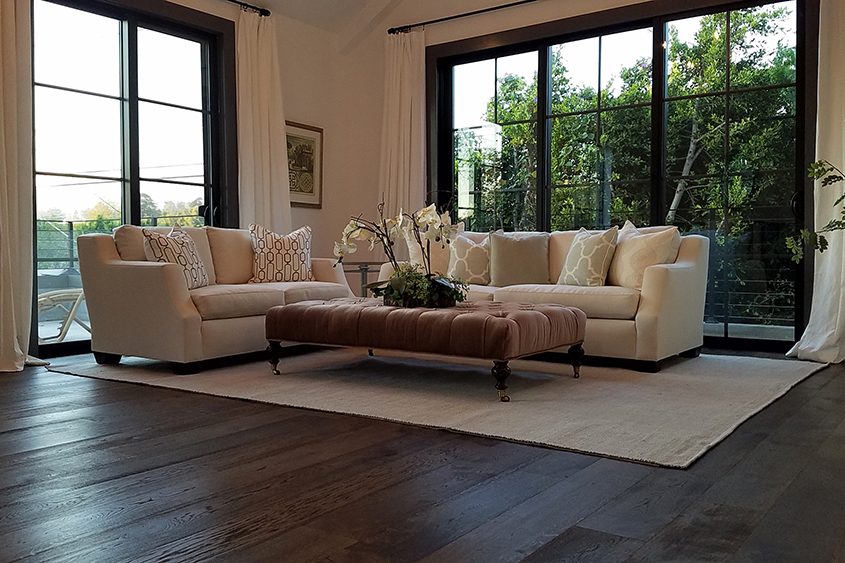
Step 5: Add a dash of lighting. On the two side tables, we added reading lamps (on dimmers), which add task lighting and cast a cozy glow at night. You can also use floor lamps; they’re really important to adding height to your room.
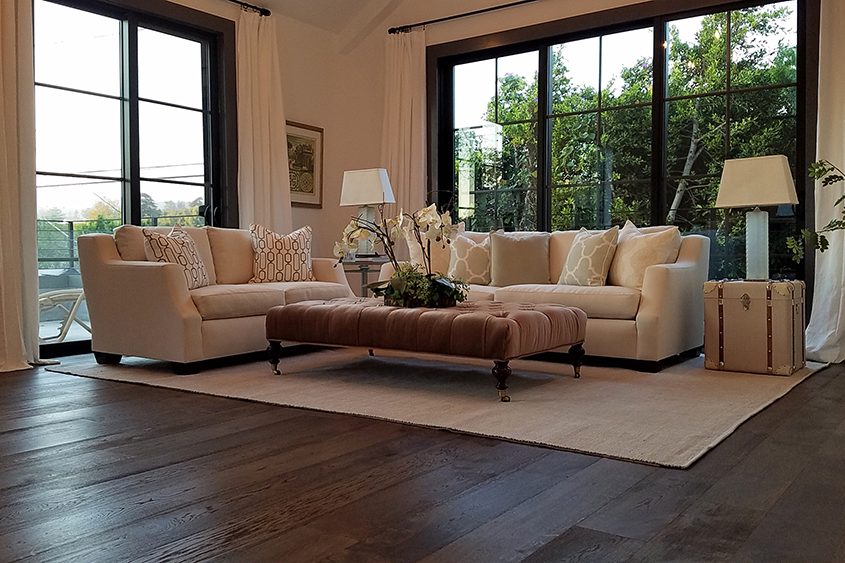
Step 6: Layer with scent. Next we placed added a diffuser on one of the side tables (scent helps us relax); candles would work just as well.
Step 7: Mix in a stack of books. In addition to our current books, we always keep a couple of picture books laying about … they’re both beautiful and great for guests to browse through.
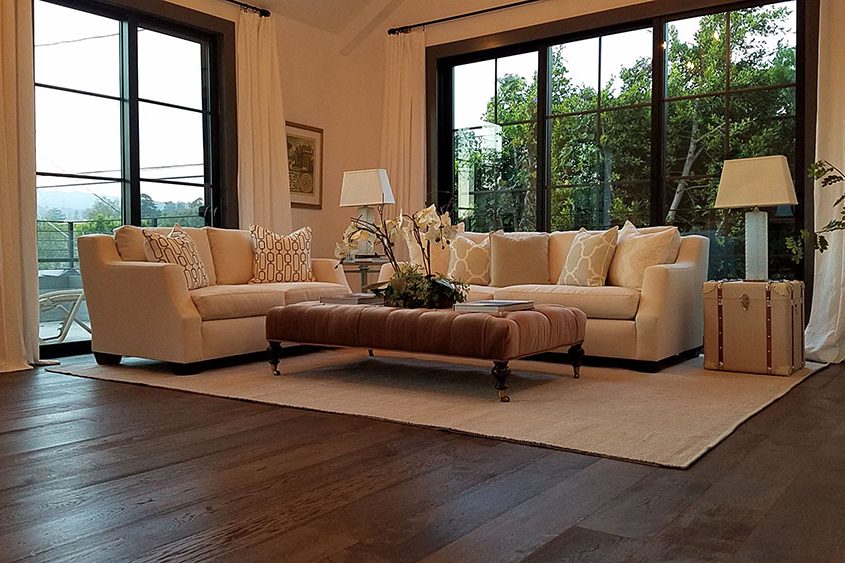
Step 8: Fill in with small accessories, like these candleholders or a small sculpture.
Step 9: Arrange a throw artfully on the sofa. Because you want this handy as soon as it gets a little chilly.
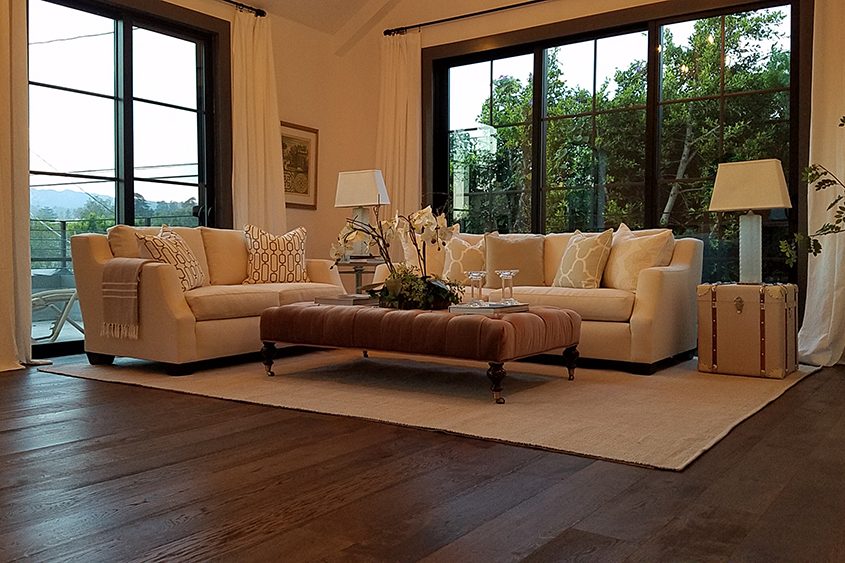
Step 10: Pour yourself a drink (or two or three or four…)! Congratulations; you’re all done.
To recap, here are the steps to make over your den:
- Start with a rug (see more rugs here)
- Add comfortable furniture
- Blend in a dash of your favorite pillows (see more pillows here)
- Fill with flowers
- Add lighting (see more table lamps here and see more floor lamps here)
- Layer with scent
- Mix in a stack of books
- Fill in with candleholders (see more candleholders here) or small accessories (see more accessories here)
- Arrange a throw over the sofa (see more throws here)
How to Choose the Right Rug for Every Room in Your New House
Walk into any room. Does it feel comfortable or unfinished? Does everything tie together, or does it feel jarring?
Chances are, the difference is in the rug. As one of the biggest items in any room — larger than all the furniture and the art — the rug defines the room. The right rug can define your space, bring your design together, and warm it up for people to relax and linger. The wrong rug can look oddly out of place or contrast harshly with the rest of your room.
But choosing a rug could be a bear, with all the materials, sizes, colors, and patterns. And choosing rugs for a whole new house? Ugh! After doing that numerous times, I decided to jot down what I’ve learned, spoke with several rug makers, and looked at how we live today. Finally, I also read up on what the world’s top designers suggested (which I summarized here).
In the end, I came up with these simple, room-by-room guidelines on how to choose an area rug for your new house.
ENTRYWAY RUGS
Outside the house, a simple weather-resistant floor mat is best. Choose an oversized one to accommodate multiple guests (and all your UPS packages) at once.
Once you step inside, the foyer should set the tone for what will follow next. If you have a fabulous handpainted medallion on your floor, by all means show it off and avoid putting a rug on it. Otherwise, a rug in the entryway will make your home feel more welcoming, especially if you have marble floors or a lot of furniture in the space. The combination of a soft landing and a warmer texture will instantly signal that you’re now inside private quarters.
Although the outdoor rug has done much of the heavy lifting, go with a durable, low-pile or medium-pile in a forgiving color to handle foot traffic. You don’t want guests to hesitate before stepping inside; wool is a great choice since it’s the easiest to clean.
Some helpful tips:
- If the door will be opening onto the rug, measure the height of the rug to make sure it will not be in the way.
- If you have a double-entry door, find a rug that covers the width of the entire opening.
- Your entryway rug should be wider than your front door; large enough to feel like a real landing rug.
- If you have a long and narrow space, use a runner, like in the picture below:
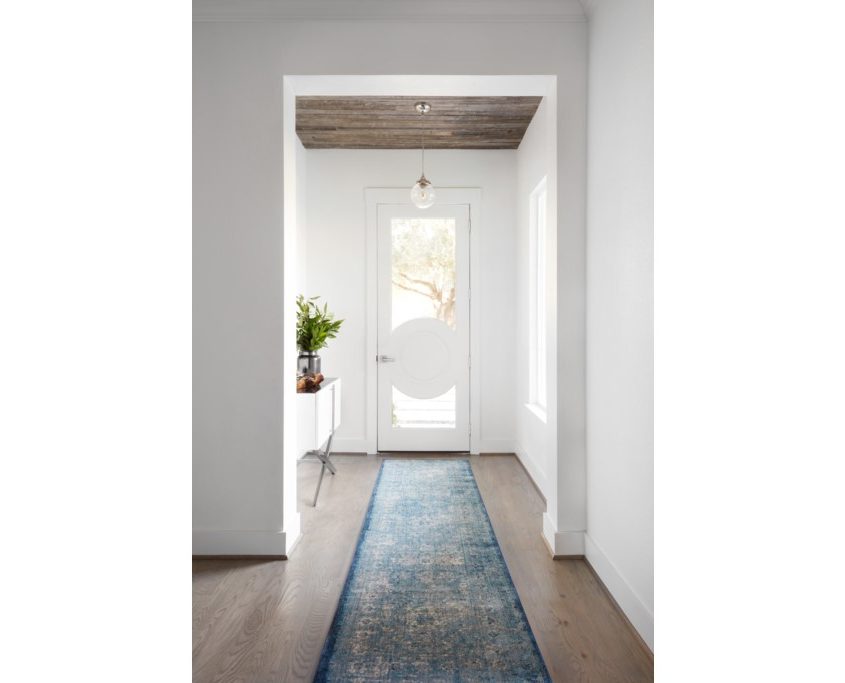
- Round rugs look great with double-entry stairways.
- Make sure you use a rug pad under entryway rugs to keep them from slipping.
LIVING ROOM RUGS
In the living room, area rugs are used to either anchor a seating group or delineate a space. Since living rooms typically feature beautiful flooring, use a rug that shows a nice border on the floor (approximately 18″ all around).
Don’t stint on rug size: make sure all four legs of every piece of furniture can fit on the rug. The only exception is with sofas that are pushed against a wall; in this case, the rear sofa legs can rest directly on the floor, as shown below:
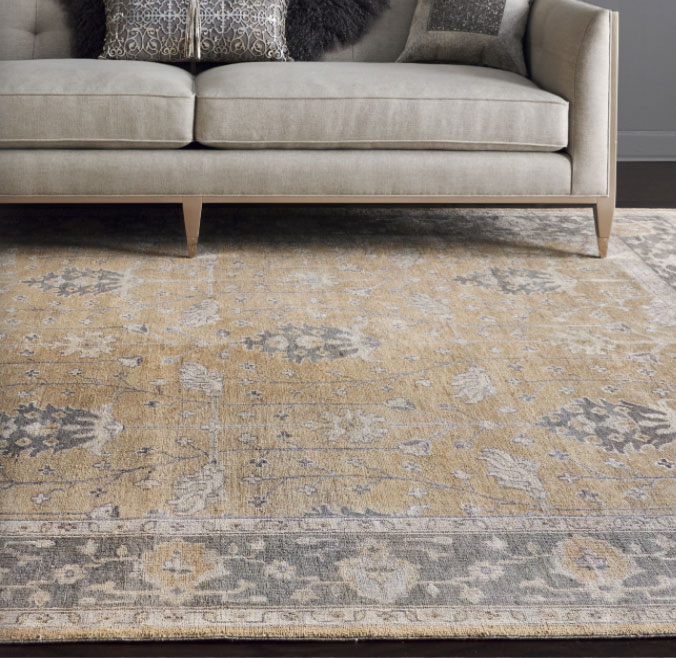
As they are the most formal reception rooms, get the best rugs you can afford for your living room. They will leave a lasting impression.
You can either go with a bold pattern (to complement a stunning piece of art), or you can go with a soothing option that either coordinates with your room or the view outside. See how the rug in the picture below picks up all the colors in the room?
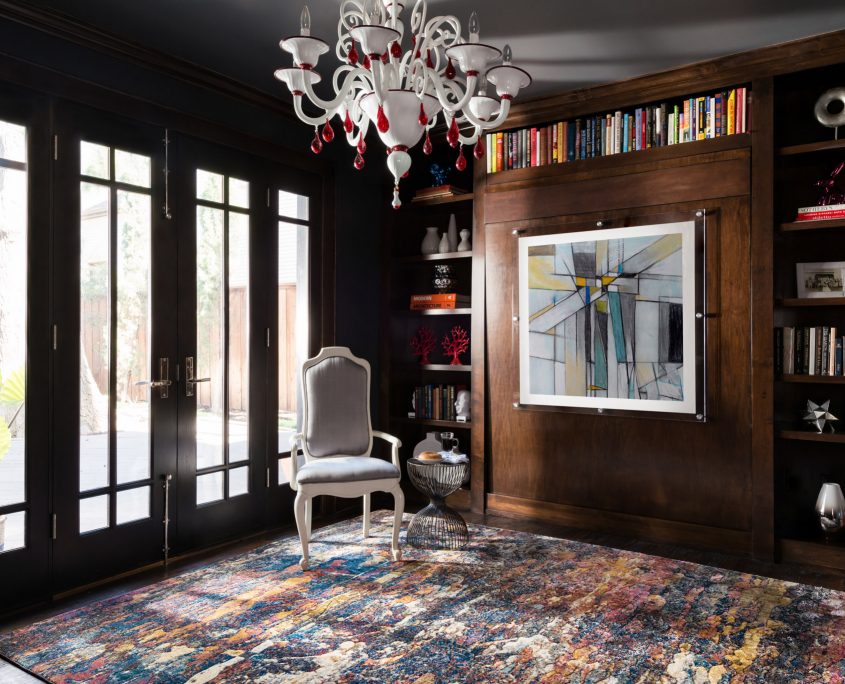
Similarly, the colors of this area rug pick up those of the walls, curtains, and furniture. The rug’s muted traditional design also matches the classically elegant interior of the room:
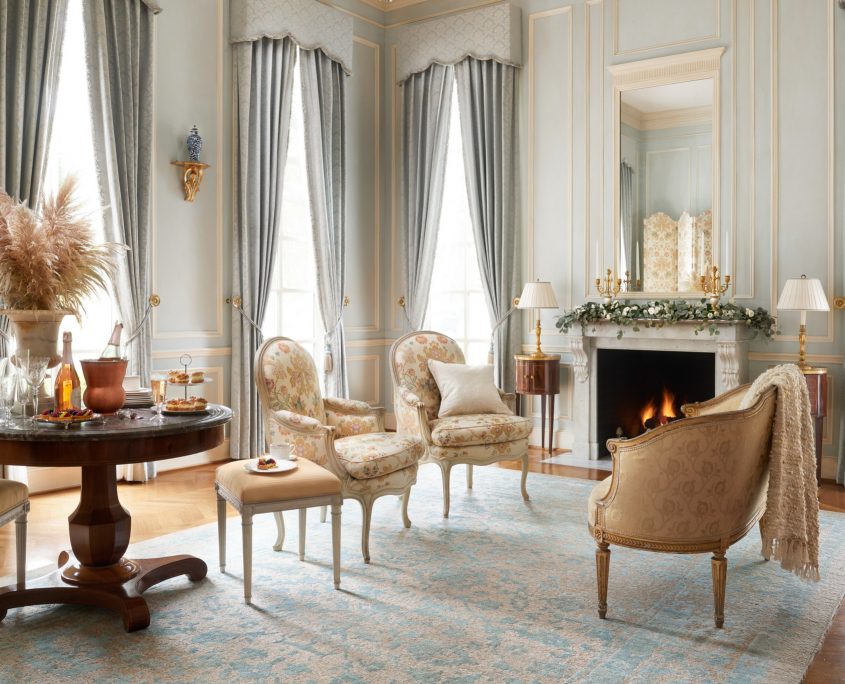
Either way, wool is a great choice for the living room, as it holds its shape and resists dirt better than any other fiber out there. If you’d like something a little fancier, a mix of wool and silk or viscose is a great choice for extra softness and sheen.
For a more casual feel, go with a natural fiber rug like a seagrass or a sisal. These super-popular neutral rugs add texture and just a bit of color, but be sure to clean them quickly as they will easily absorb stains. And by the way, did you know they came in lots of patterns and colors?
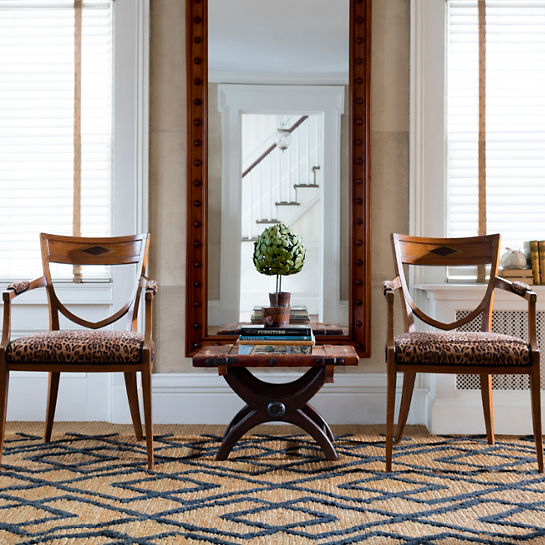
Some more tips:
- If your favorite rug is not large enough, layer it on top of a larger sisal or jute rug.
- If your living room opens onto an outdoor space and you’re concerned about foot traffic, divide your living room into two seating areas and leave the floor bare in between for walking.
- Remember that your coffee table will probably cover the center of your rug, so a rug with an allover pattern may work best in these spaces.
DINING ROOM RUGS
Dining room rugs can really help cut down on noise from moving chairs to lively discussions, but there are little tricks to make sure you get the right one.
First, you have to get the right size. The right rug needs to cover the floor when the chair is under the table, when it’s pulled out, and when a person is seated on it. To figure this out, place (or mark the floor with tape) all the furniture in the room. This includes the table and chairs, sideboards, bar carts, and large plants. Ideally, you want a rug that extends at least 24 inches around the table. And if you can, leave at least 18 inches of floor exposed between the edges of the rug and the wall.
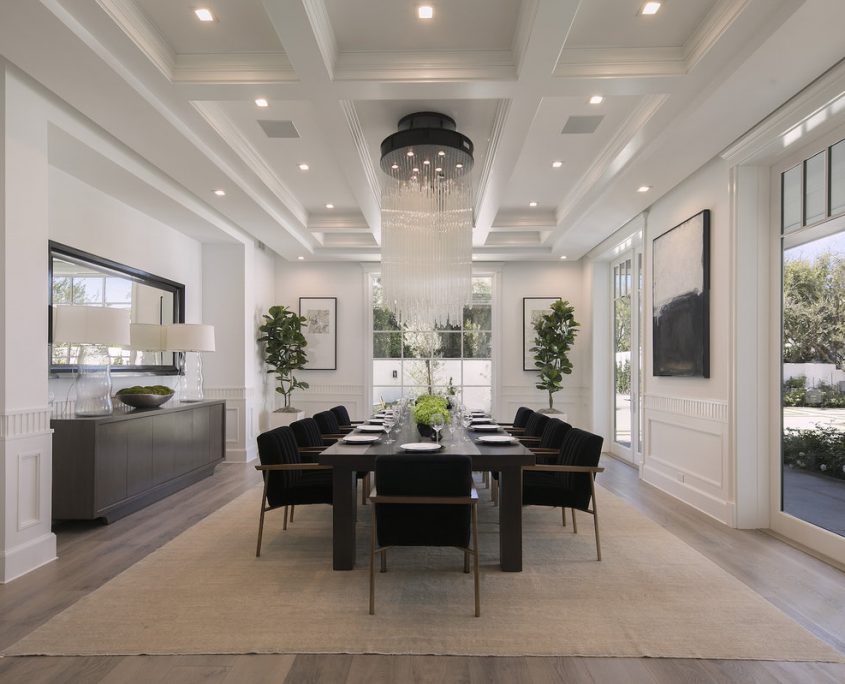
Next, create symmetry by choosing a rug that is the same shape as your table or the same shape as your room. Here, the larger rectangular rug helps to tie in the size of the room and all the windows spread along the exterior wall:
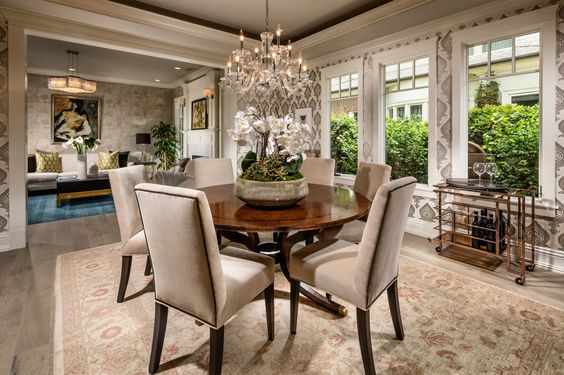
Whereas here, the round rug really highlights this cozy dining space off the kitchen:
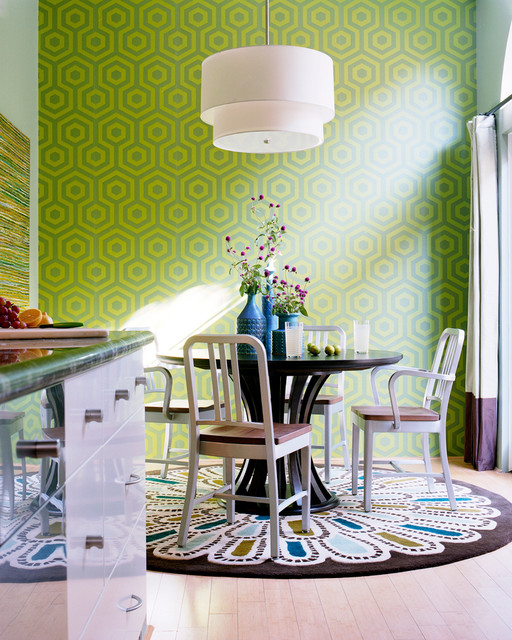
As far as materials, go with a durable wool (easy to clean) so wayward crumbs can be easily cleaned.
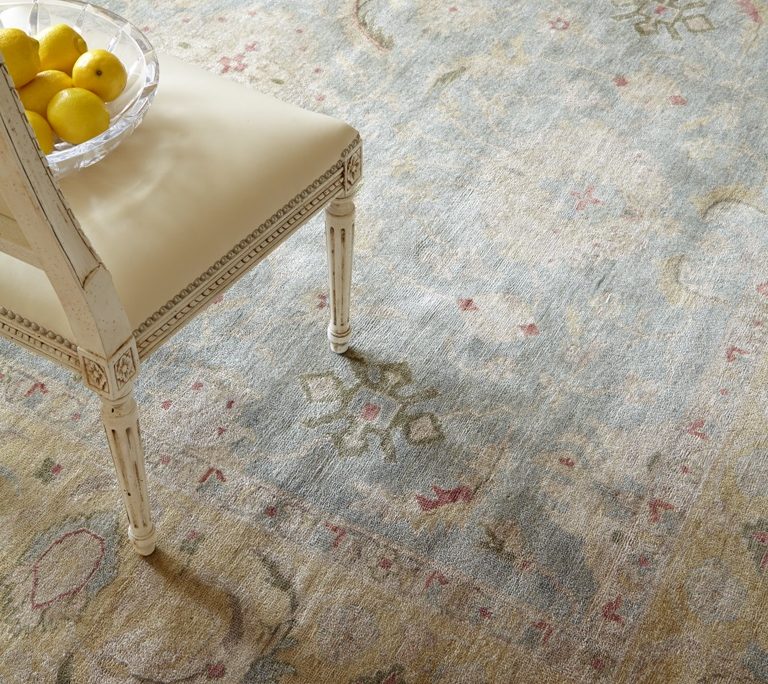
If you have a more casual household or worry about rowdy guests spilling wine, consider an indoor/outdoor rug. These come in beautiful neutral patterns and can be taken outdoors to be washed.
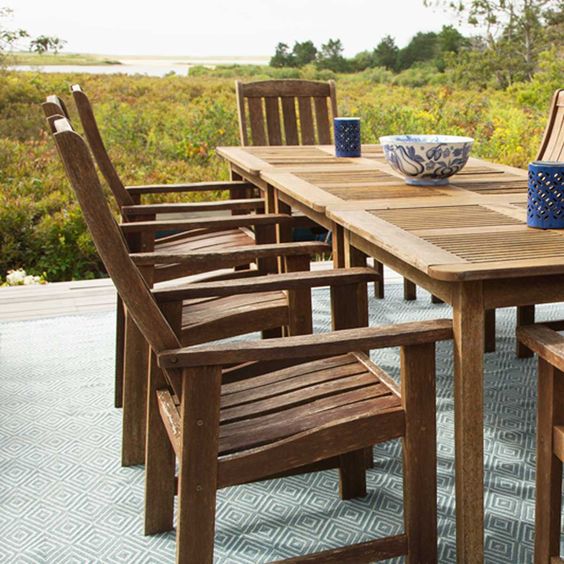
Save the finer silk rugs for the living room or the master bedroom. Also, know that while they look great, natural fiber rugs like sisal, jute, and sea grass are difficult to clean, so leave those for other rooms.
Select a low-pile rug (like a flat weave) for the dining room, as it will make it easier to pull chairs in and out.
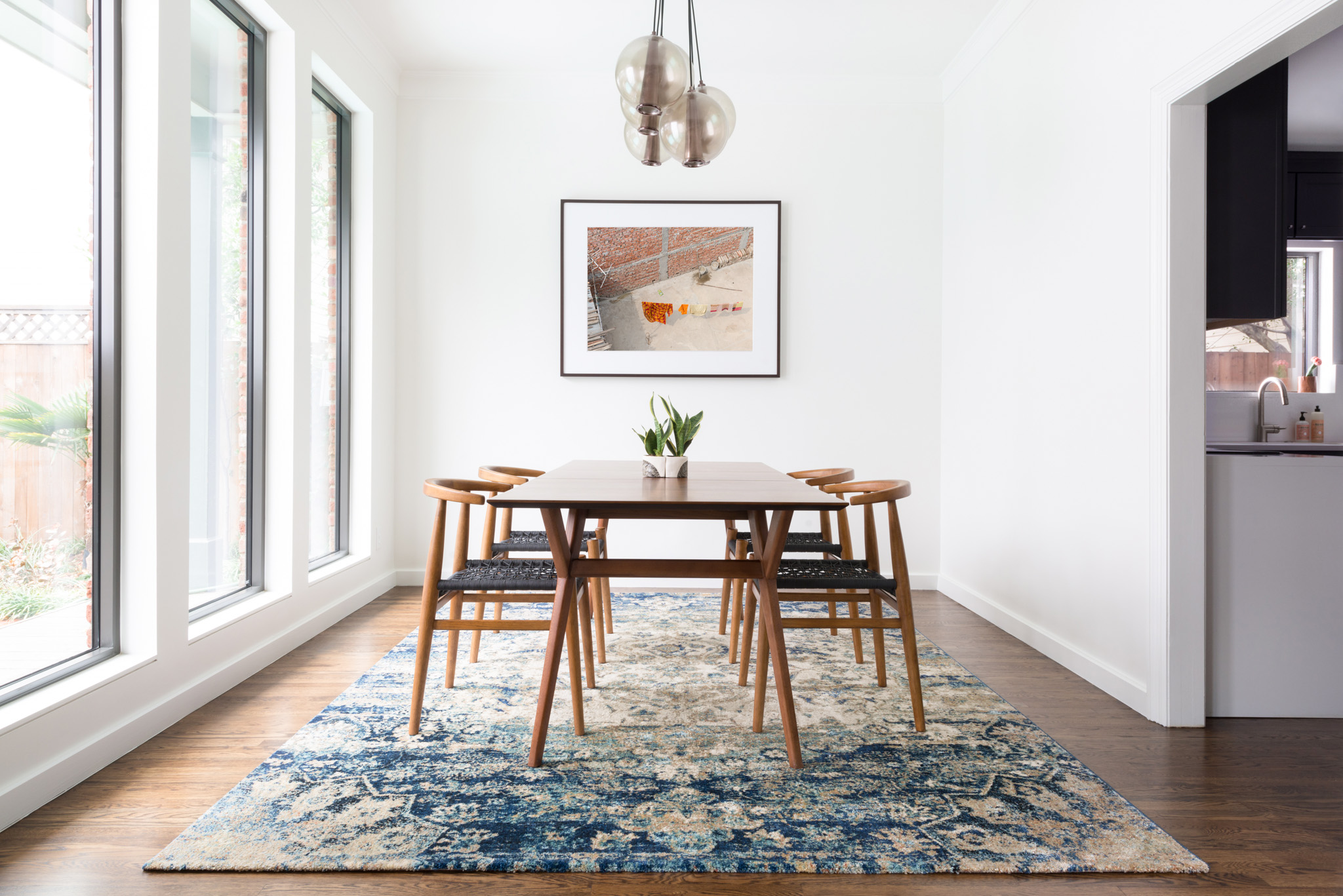
And since dining rooms are used most heavily at night, medium to darker colors look great under candlelight. They also look great during the day:
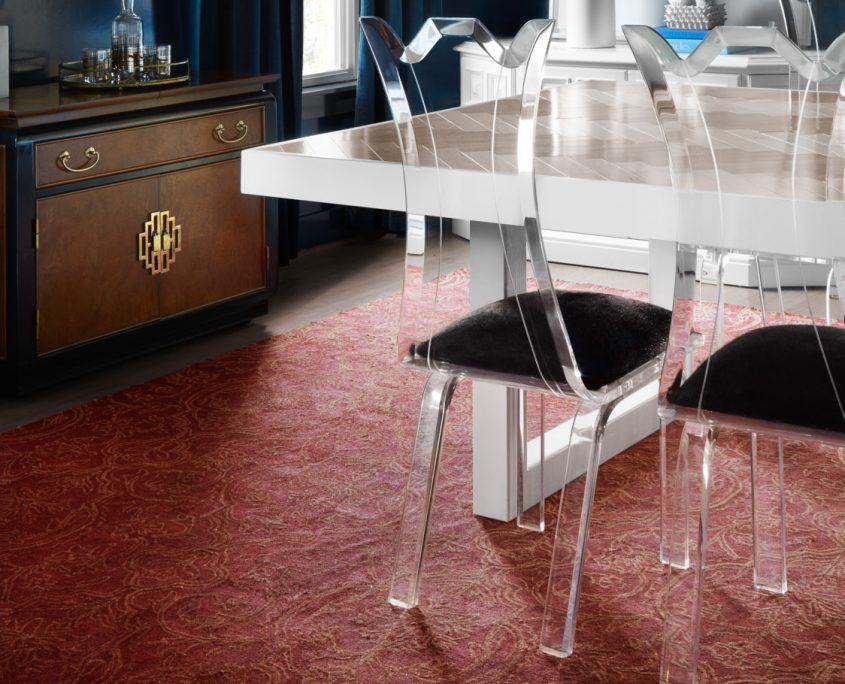
BEDROOM RUGS
Master bedroom rugs should be restful. Avoid disruptive, loud patterns – unless you find zen with fuchsia. This is your private space (with lighter foot traffic), so you can go with a plusher pile (great for bare feet) and splurge on more delicate silk or cashmere blend rugs. You’ll be grateful every time you come home and every time you wake up. And for a more casual feel, go with a simple cotton rug.
As far as size, learn from high-end hotels. They cover every bedroom completely with carpet for quiet and comfort. So choose the largest one you can to make the bedroom quieter. At the minimum, go with a rug that’s large enough to extend 24″ in length and width from the edges of the bed. That way, when you get up in the morning, your feet will be on the rug.
In children’s rooms, pick something that’ll go with their decor. Better yet, have them help you choose it and they’ll remember to take good care of it. Does anyone in your family like rainbows?
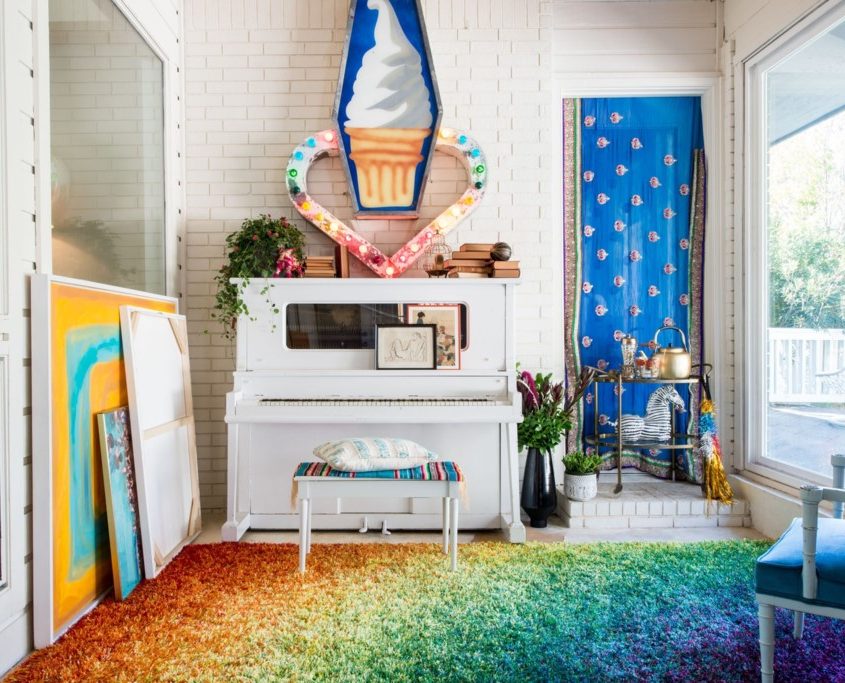
In nurseries, don’t worry if the bed is pushed up against the wall: if you use a rug that’s large enough to fit under the front legs of the bed, you’ll be left with a nice-sized play area for the kids on the floor. Take a look at the picture below:
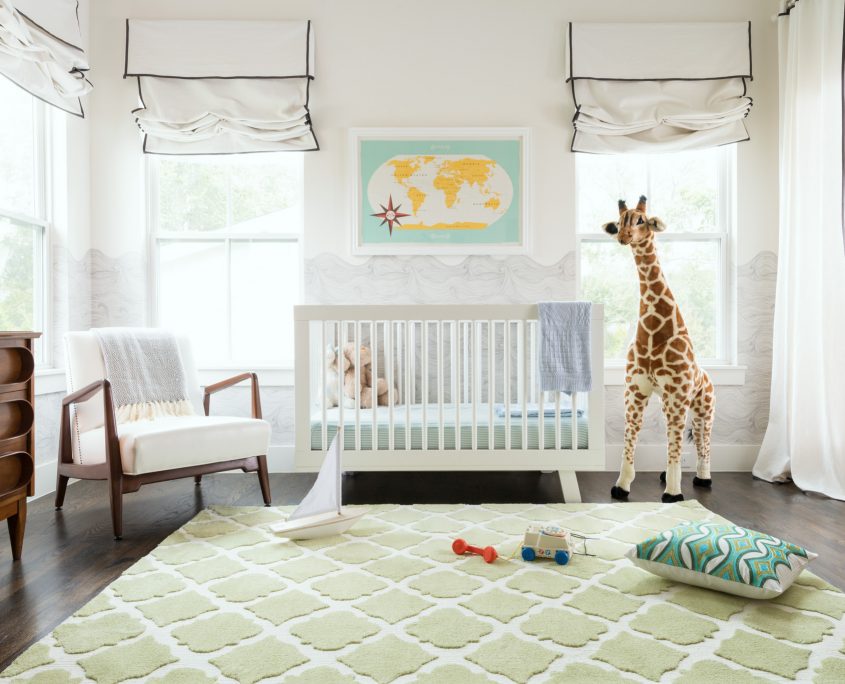
Guest rooms should have low pile rugs, especially if they may need to accommodate the elderly. If you’re looking for a traditional look, go with wool. Otherwise, cotton lends a carefree feel. Either way, you want to make these rooms as comfortable and practical as you can.
Remember that for those allergic to wool, acrylic rugs are a fabulous alternative. Although they don’t hold their shape as well (since they’re more easily crushed), they do look similar and are more affordable.
BATHROOM RUGS
To really move your bathrooms to another level, try adding a beautiful rug in the center of the space. See what the runner did in the space below:
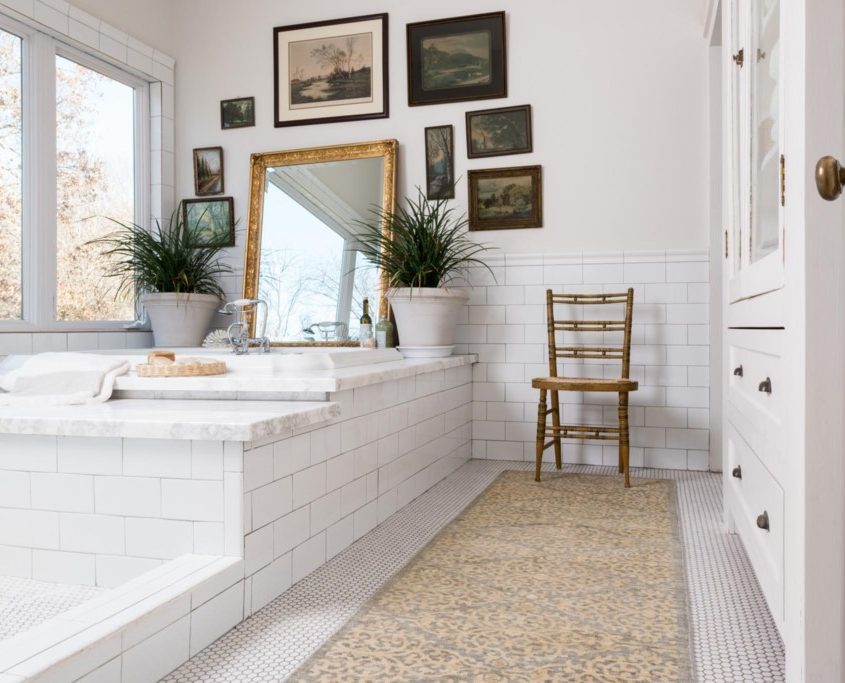
You’ll have something warm to step onto. If you can fit an ottoman on top of it, it will create a restful seating area in the room. If you’re planning on washing it often, get a machine-washable rug.
CLOSET RUGS
Could your closet fit a rug? If so, get one. It’ll instantly turn the closet into its own room. And it’ll warm up the space. Because really, sometimes you just need to sit down and think about what you’ll wear to the party tonight. With all those shoes to choose from, why not put your foot on something soft while your head’s doing all the thinking? So choose something clever, like this:
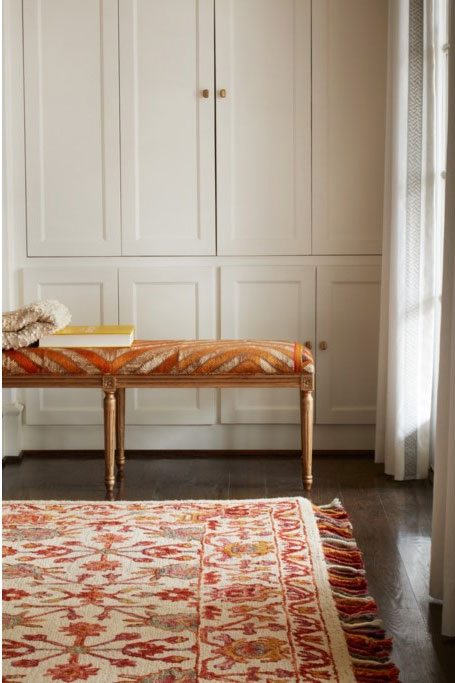
OUTDOOR RUGS
Rugs are a great way to make your outdoor space feel as inviting as indoors. Outdoor rugs have come a long way from those plasticky things our parents used. If you’re looking for something super durable, water resistant, and UV-treated for fade resistance, go with a propylene rug. For something that feels a little more wool-like, look at PET rugs, which are made from recycled plastic bottles and really are quite soft.
In areas immediately next to your home, stay with colors and patterns that harmonize with those inside. Why? Because they’ll visually extend the size of your space indoor, and who wouldn’t want a little more room without having to move?
See how easily you can do this, whether your home has more neutral colors, like in the picture below …
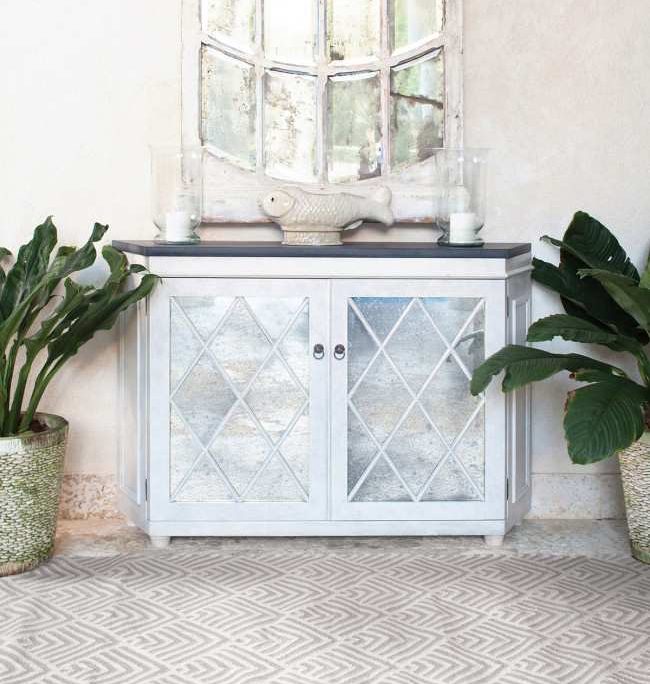
… or warmer colors, like designer Justina Blakeney shows us in the porch below:
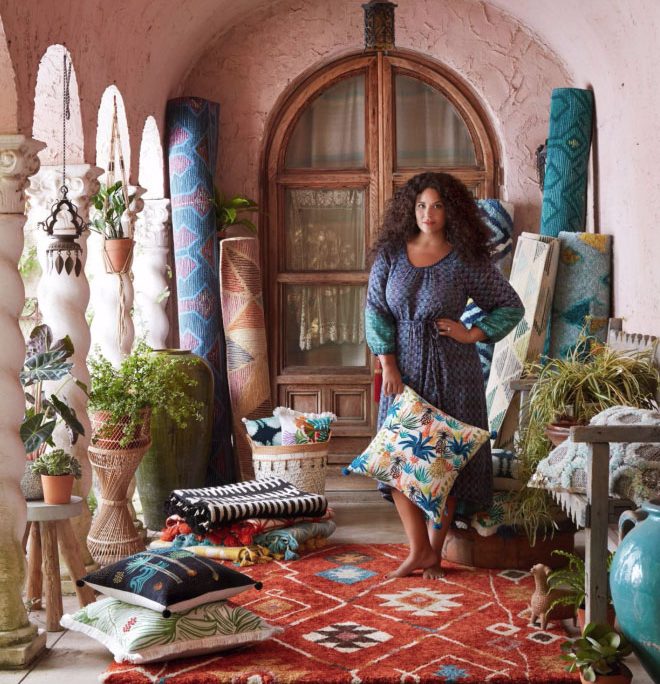
In uncovered areas, especially those farther away from the house, you can go with stronger colors. Imagine if you were inside the house, looking at this:
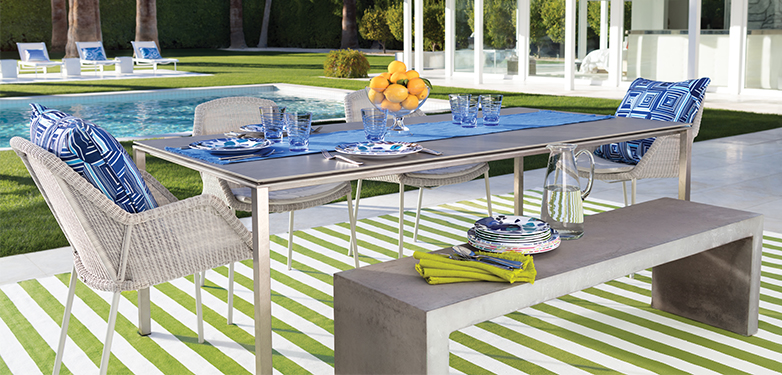
See how the bright rug draws your eye to the outdoor dining area?
If you have different pathways around your garden, dress them up with outdoor runners.
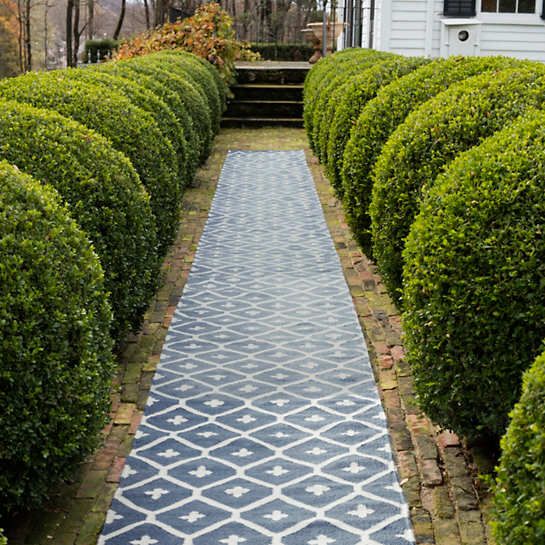
The right rug will take care of you for years. So have fun finding the perfect rug, and be sure to share any tips you have with us!
To see all our rugs, click here. Or try our rugs suggester to find your rug based on color, size, or room.
16 World Famous Interior Designers’ Tips on Area Rugs
After working on hundreds of projects, designers are full of practical advice on choosing area rugs. As one of the largest pieces in any room, rugs will immediately make or break the space and everything you layer in afterward. That’s why many designers, like Martyn Lawrence Bullard, won’t start working on a space until they’ve selected the rug.
Here’s a selection of their best tips:
On Lifestyle
“An area rug for a single female client is very different from that for a family with 5 kids, 2 dogs, and a cat. I always seek out area rugs that are durable and beautiful. Durability and cleanability are two factors that are always important to me.” (Roderick Shade via Architectural Digest)
“Carpet affects the acoustics of the room: in spaces that need a little dampening, the fullest, deepest carpet will quiet the space.” (Wallace Cunningham via Architectural Digest)
“First of all I look into the climate (tropical, mountain, cold, etc) before choosing material and design.” (Juan Montoya via Architectural Digest)
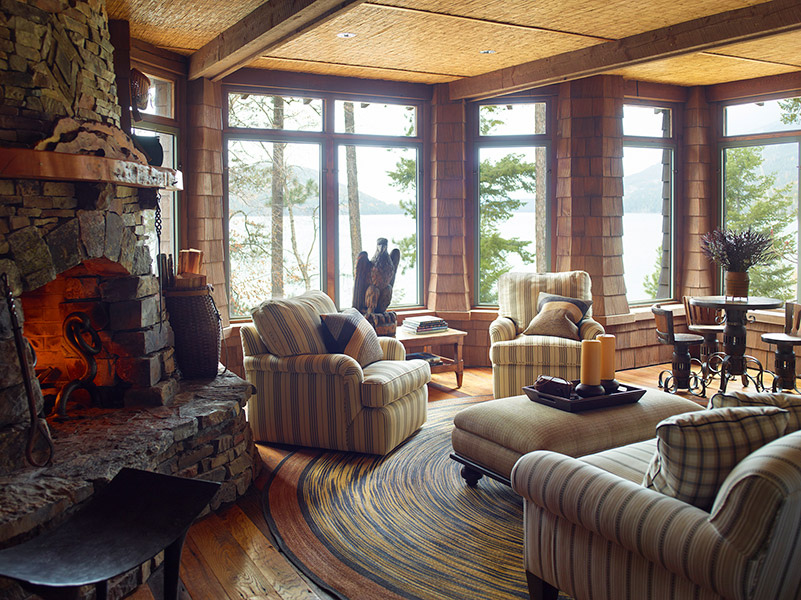
On Style
“Carpets can state something very personal about a person’s history and interests, as well as making political and religious statements. Carpets also reflect history and culture (one could literally tour the globe and discover its history by looking at carpets). Carpets can be art.” (Wallace Cunningham via Architectural Digest)
“I look for character when choosing or designing an area rug.” (William Georgis via Architectural Digest)
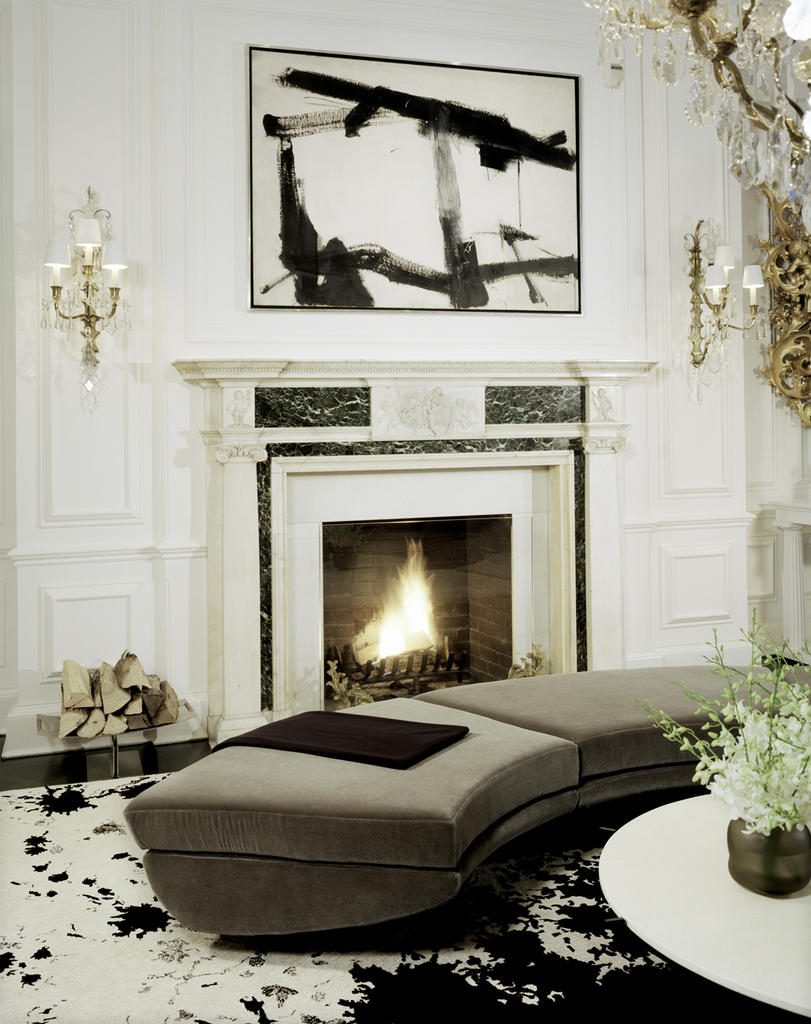
“My rooms are architectural and spare so I prefer to use antique area rugs as accents. I don’t like to waste them under beds or couches.” (Karin Blake via Architectural Digest)
On Color
“A good rug is the anchor for any room’s decorative scheme. I usually build my colors around the rug, pulling from the most random threads in the rug as accessory colors for pillows and lamp shades.” (Martyn Lawrence-Bullard via Architectural Digest)
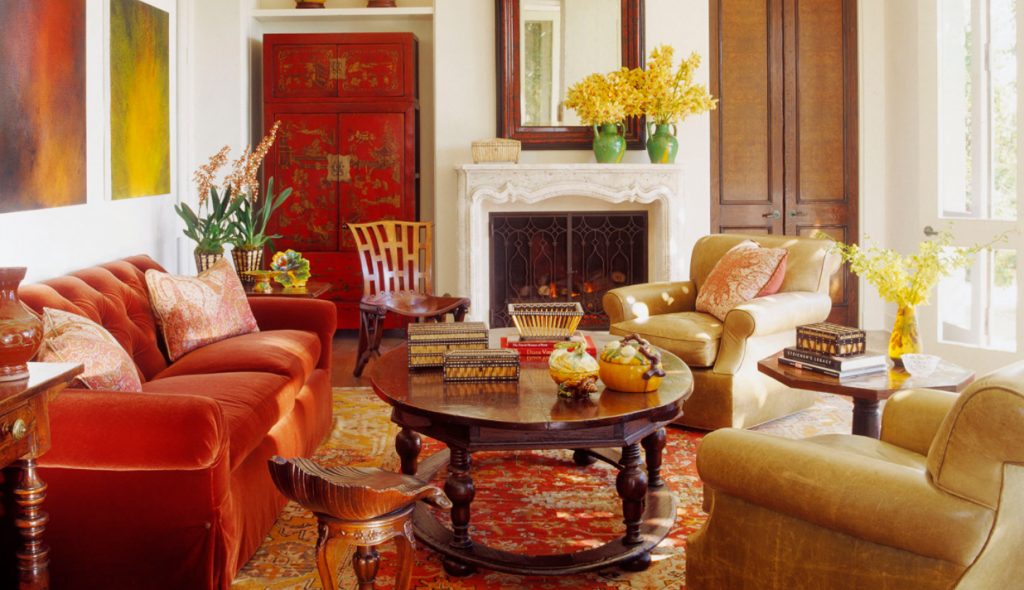
“Always a quiet elegance — a shouting rug is never grounding to the spirit of one’s soul.” (Suzanne Lovell via Architectural Digest)
“The perfect area rug should be of the right mix of colors to sit comfortably on the floor. After all, it is the equivalent of the ground we walk on. Pastels and white carpets should be left to the occasional-use room, and even then feel like any minute a disaster might occur.” (Mariette Himes Gomez via Architectural Digest)
On Materials
“I must confess that we don’t use standard rugs on our projects. Custom rugs are a signature in our interiors. However, we do use sisal rugs, which are not expensive.” (Geoffrey Bradfield via Architectural Digest)
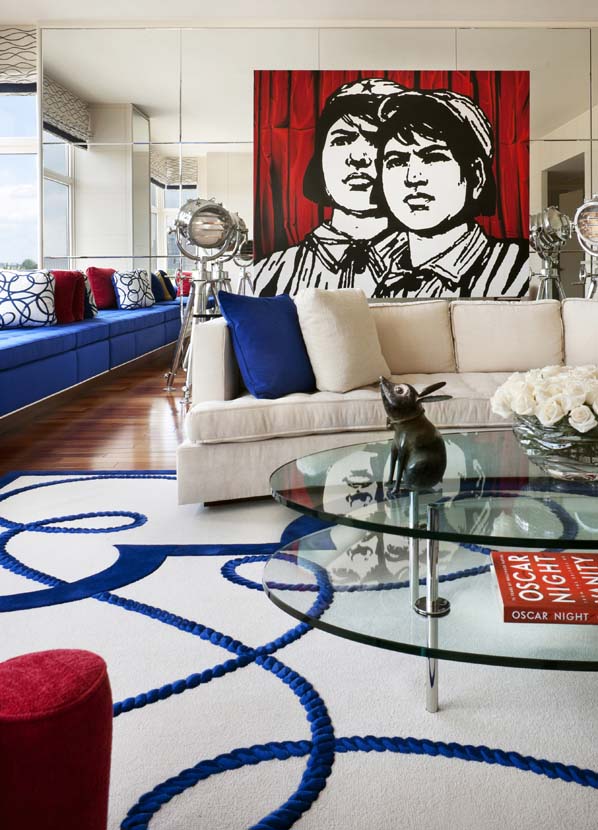
“Wool—not nylon!” (William Hodgins via Architectural Digest)
“I look for area rugs that are high quality hand knotted with both wool and silk.” (Donna Livingston via Architectural Digest)
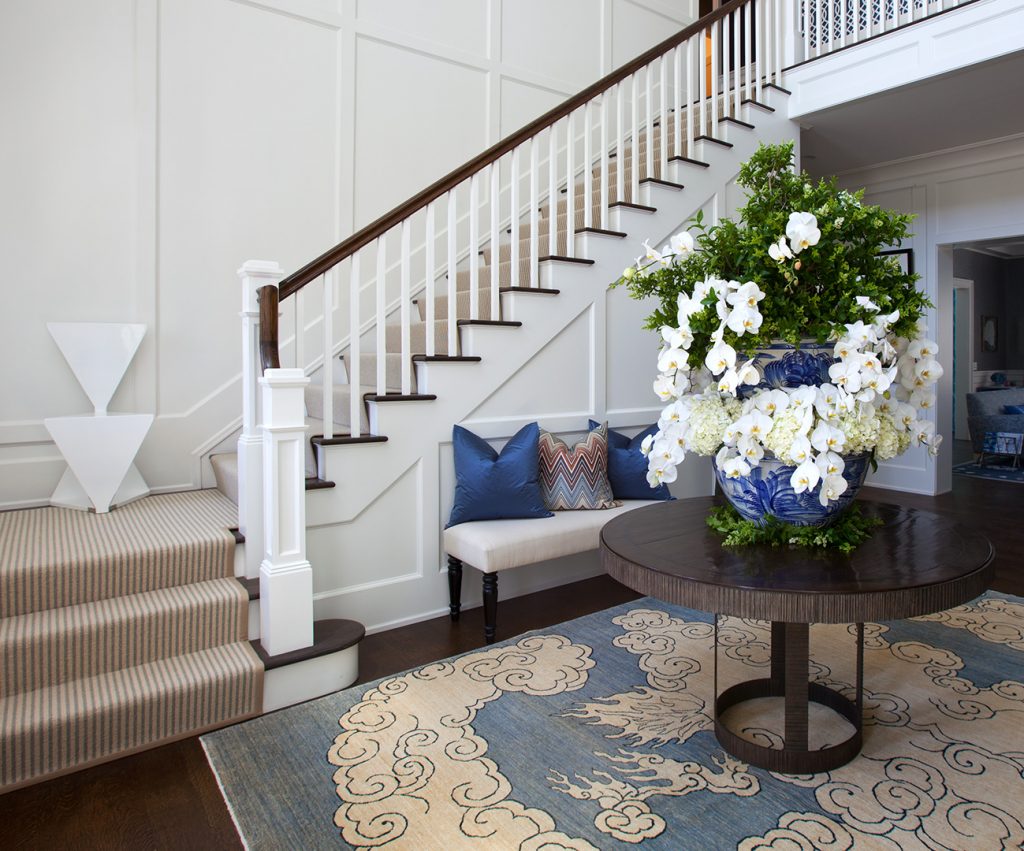
“Make sure it’s made from natural materials.” (Laura Hunt via Architectural Digest)
On Size
“When choosing your rug size make sure your furniture fits onto the rug. Sofas always look better on a rug rather than off or worse still half on and half off.” (Martyn Lawrence Bullard via Architectural Digest)
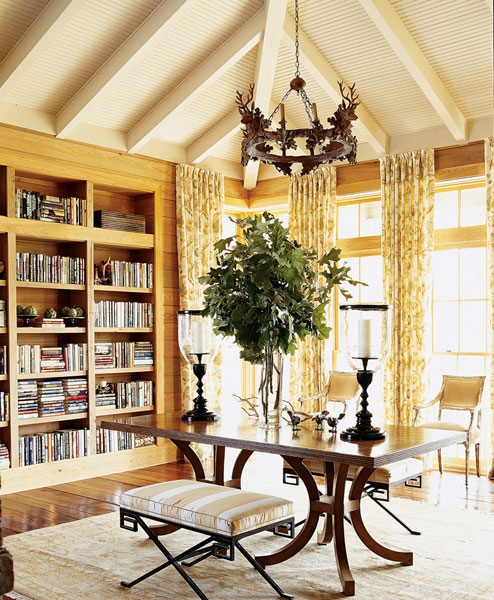
“For bedrooms, a good rule of thumb for size is to leave approximately 12″ of floor space between the edge of the rug and the base molding. For living rooms rugs, we would leave about 18″-24″ off the wall depending on the size of the room and whether or not the room is shaped or if there is a hearthstone.” (Ellie Cullman via Architectural Digest)

“The shape of the carpet is entirely dependent upon the shape of the room and the layout of the furniture. Sometimes you like the carpet to appear as an island in a hard space, supporting the furniture, and sometimes you like it to fill the entire space.” (Wallace Cunningham via Architectural Digest)
To view more area rugs, click here.
A Complete Guide to Downright’s Comforters and Pillows
As one of the country’s foremost manufacturers of down products, Downright offers many different types of fill, support, and warmth level to meet your needs. In fact, since they’re based in New York, they can even create custom comforters and pillows (if you’d like one, let us know).
But we understand that sometimes too much choice makes choosing a little confusing. So we asked our friends at Downright to help us better understand the world of down and guide us through their collections. As it turns out, it’s quite simple.
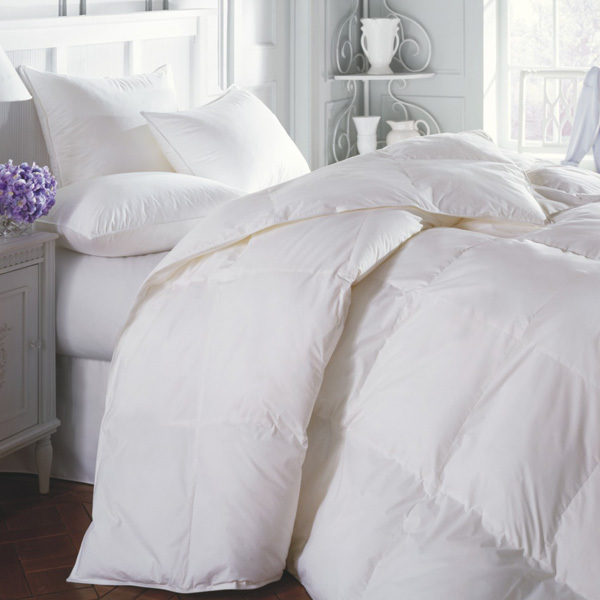
HOW DO YOU CHOOSE THE RIGHT PILLOW?
Choosing the right pillow is essential to a good night’s rest. Luckily, there are only two main factors to consider:
1. Firmness Level
Your specific sleeping style will determine the firmness of your pillow:
– Stomach sleepers prefer a soft, plump pillow that supports the head and neck gently, while allowing the head to sink into the perfect level.
– Back sleepers prefer a medium pillow that positions the head and neck in line with the natural curvature of the spine.
– Side sleepers prefer a firm pillow that provides more support and positions the head, neck, and shoulders in harmonious horizontal alignment.
2. Preferred Fill
– Down: Because natural down is so lightweight, it’s one of the most comfortable and desirable fills for pillows and comforters. Down has the amazing ability to breathe, lifting moisture away from the sleeper. With down, the higher the fill power, the higher quality the pillow. And within down, the most luxurious pillows are those that are filled with white goose down. All of Downright’s down is guaranteed hypoallergenic; down products will last longer and hold up better than synthetic fills.
– Down/Feather Blend: Down/Feather-filled pillows are firmer than down filled pillows. They are an excellent choice for those who want a firmer support.
– Comforel Down Alternative Fill: A wonderful hypoallergenic microfiber fill that offers down-like comfort, loft and softness. Perfect for sleepers who are prone to allergies.
HOW DO YOU CHOOSE THE RIGHT COMFORTER?
Finding a comforter that’s right for you is a two-step process. Just consider the following:
1. Warmth Level
Think about your season, climate, heating system. and thermostat setting. Most of our classic comforters are now offered in three weights to best suit your needs.
– Summer Weight: Ideal for the warm sleeper, warm climates or when rooms are above 70°F.
– All Year Weight: Our most popular choice. This all-season comforter is perfect for year-round use and for those who keep their bedroom temperature between 60°F and 65°F.
– Winter Weight: Ideal for the cold sleeper, cool bedrooms, very cold climates and for those who prefer extra warmth during the winter season.
2. Quality Level
We have classified our comforters into seven different categories to help you easily select the right comforter for you.
– Introductory: Our most affordable down comforter features a 233 thread count cover filled with 560 fill power white down. See Mackenza down comforters.
– Classic: These classics feature a soft, 300 thread count cover filled with high loft, 600 fill power white goose down, guaranteed to provide many years of warmth and pleasure. See Cascada Peak, Cascada Summit, and 3-1 Anytime down comforters.
– Best Value: Opting for lasting comfort and value? The comforters in this class offer remarkable quality and sumptuous softness. A high quality white goose down with large and plump clusters, our 700 fill power white goose downs provide luxurious warmth with minimum weight. A 383 thread count cotton sateen shell gives the finishing touch to this amazing collection. See Nirvana down comforters.
– Supreme: Exceptional superiority, the 650-800 fill power is one of the word’s finest downs. Premium clusters of down deliver superior loft and maximum warmth with minimal weight. Moreover, our silky smooth downproof fabric is made in Europe using the exclusive SanProCare process-known to enhance temperature regulation, absorption and release of moisture, and superior durability. See Bernina Hungarian down, Himalaya Polish down, and Himalaya Siberian down comforters.
– Ultimate: When only the very best will do; our most magnificent comforters offer unparalleled luxury, warmth and craftsmanship. The very largest, softest 920 fill power Canadian white goose down paired with a choice of Batiste lightweight fabric- or our 100% Pure Silk, Flowering Vine pattern cover, introduce you to the incredible lightness of warmth. These opulent comforters result in extraordinary comfort and promise luscious sleep for years to come. See Logana Siberian down, Logana Canadian down, Eliasa Canadian down, and Eliasa Eiderdown comforters.
– Down Alternative: Filled with Comforel, a hypoallergenic microfiber fill that offers down-like comfort, loft and softness at a more economical price than down. Perfect for sleepers who are allergy prone. View Sierra and Astra comforters.
– Tencel Ecofriendly: The combination of high quality 650 fill power white goose down and a Tencel® lyocell cover offers you easy-care comfort that’s soft on you and the environment. Tencel® lyocell is a natural fabric manufactured from Eucalyptus wood pulp, which is soft and silky, durable, and lightweight. See Organa down comforters.
WHAT IS DOWN?
Down is a soft layer of fine clusters found around birds (primarily in the chest area) under the tougher exterior feathers. Down makes for an extraordinary thermal insulator and because down is so lightweight, it’s one of the most comfortable and desirable fills for a blankets, comforters, and pillows.
Down clusters look like little cotton balls with a round center called a plumule. Each plumule has thousands of tiny fibers emanating from its core. As these fibers link to others, they create air pockets, which keep you insulated by trapping the heat.
The air within the pockets warms you naturally, using minimal weight. Down also has the amazing ability to breathe, lifting moisture away from the body. Far less down is needed in weight than other fillings, which means a much lighter, but warmer product.
WHAT IS FILL POWER?
All down is not the same. Down from larger, mature birds offer more insulating power and a better ability to loft. This means they will have a higher fill power.
Fill power is measured by the amount of cubic inches that one ounce of down will fill once it expands. The higher the fill power, the better the quality and warmth. In other words, a higher quality comforter will weigh less than a heavier, lower quality one; yet still provide more warmth, fluffiness, and lightweight comfort.
WHAT KINDS OF DOWN AND FILL POWER DO YOU OFFER?
At Downright we offer high quality downs with a variety of fill powers.
White Goose Down
920+ Fill Power – When only the very best will do, 920+ Canadian White Goose Down is made up of the largest uniform clusters, hand selected from mature, specially bred Canadian geese. This down delivers optimal warmth with minimal weight.
800+ Fill Power – 800+ Siberian White Goose Down is handpicked from the most premium, specially bred Siberian geese. This down will provide you with exceptional warmth with minimal weight.
700+ Fill Power – 700+ Polish White Goose Down is made from premium clusters that deliver superior loft and a higher degree of comfort compared to the top offerings of other leading brands.
650+ Fill Power – 650+ Hungarian White Goose Down comes from the finest of mature Hungarian geese. It is exceptionally soft and fluffy; guaranteed to yield pure warmth and pleasure.
600+ Fill Power – The fine down of European geese. This 600+ White Goose Down is the best in its grade. Soft, yet resilient, this down is a remarkable product that doesn’t compromise the warmth you crave.
White Down
600+ Fill Power – This 600+ White Down is the best in its grade. Soft, yet resilient, this down is a remarkable product that doesn’t compromise the warmth you crave.
560+ Fill Power – Our most affordable choice for down. This 560+ White Down has been carefully washed, making it one of the select few in this category that are also hypoallergenic. Its soft clusters, durability and light weight make this down a favorite entry level into a world of luxury and warmth.
Eiderdown – Eiderdown is the finest, warmest, most rare down in the world. The down is hand collected from abandoned nests in Eider Duck sanctuaries. Eiderdown’s unique characteristics provide you with the utmost in luxurious comfort. While the Eiderdown comforter provides you with the greatest warmth and insulation, it is extremely lightweight and will have you feel like you are sleeping on a cloud.
ARE YOUR PRODUCTS HYPOALLERGENIC?
Yes! OxyD ® is an exclusive Downright process that ensures that our down products are 100% hypoallergenic. All our downs exceed government standards for purity, without compromising volume and uniformity. Our down goes through a unique double-wash and quadruple-rinse program so you can be assured you are getting the cleanest, highest quality down in the market.
WHAT TYPES OF FABRICS DO YOU USE?
At Downright, we search all across the globe for the finest fabrics. We use only the most exquisite down proof cotton and silks. Close attention is paid every step of the way to ensure satisfaction. No matter which type of fabric or thread count you will choose, every Downright fabric is synonymous with breath-ability, softness and quality.
HOW ARE YOUR FABRICS NATURALLY ECOFRIENDLY?
Our fabrics conform to the widely accepted Oeko-Tex, Standard 100. This highly demanding testing process was developed as a standardized certification for textiles. All Downright fabrics have the Oeko-Tex 100-Confidence in Textiles label and are certified to be virtually free of all harmful chemicals.
WHAT IS BAFFLED BOX CONSTRUCTION?
Our baffled box design means an overall better product- with optimum lofting, even distribution, and greater durability. Our three-dimensional baffle box design features interior walls (baffles) that connect the top and bottom fabrics along the stitching lines, for a better look, a better feel, and a longer life.
HOW DO YOU CARE FOR DOWN COMFORTERS AND DOWN PILLOWS?
To ensure you enjoy maximum benefit from your Downright products, please follow these simple instructions:
- Pillows should be used inside a pillow protector and a pillow case or pillow sham.
- Comforters should always be used inside a duvet cover.
- Comforters may be spot cleaned for spills and aired out occasionally.
- While frequent washing is not advised, down products may either be washed or dry cleaned.
- Dry cleaning should only be performed by a company experienced with down products, as dirty cleaning fluid will cause the down to clump, lose its lofting ability and occasionally develop a mild odor.
- We recommend washing only in a front-loading commercial capacity washer. No machines with agitators as these are too rough and will tear the baffles, which would void the warranty. Use a low sudsing detergent or a product specifically designed for washing down products (like Down Wash). Run through the rinse cycle twice to remove all soap. Place in large capacity dryer on lowest heat setting and dry for several hours. This step is very important, because if down is not thoroughly dried, it may develop mold and odors.
A Parisian Find: Hand-Embroidered Linens from Renaissance Paris
In the 8th arrondissement in Paris near the elegant Musee Nissim de Camondo, there’s a small shop devoted to hand-embroidered linens, like the ones the fashionable Camondos would have enjoyed during their heyday. And even though the space is small, you’ll quickly see why the Palais de l’Elysee (the official residence of the President of France), the Ritz Paris, and designer Jacques Garcia all turn to Celine Perrin-Davy’s Renaissance Paris for their custom embroidered linens.
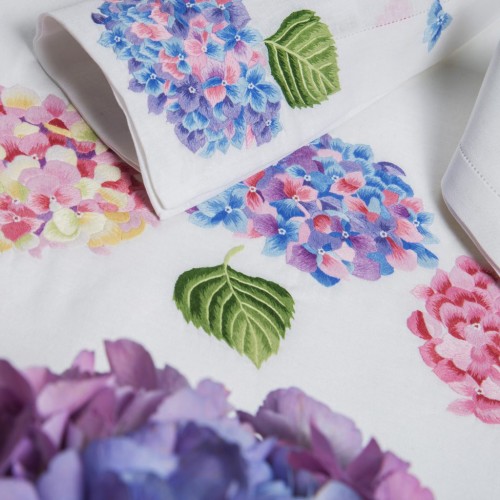
Ms. Perrin-Davy’s designs are a study in sophistication: examine each piece carefully, and you’ll see a multitude of techniques employed, each used to bring out the artistry in each collection.
To start, they have more than thirty hemstitch techniques to choose from.
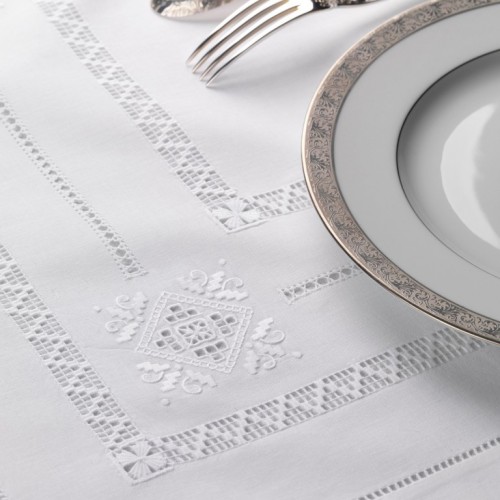
To that, you can add any design you’d like. For example, Jungle brings a tropical rain forest alive; this style is particularly popular aboard private yachts.
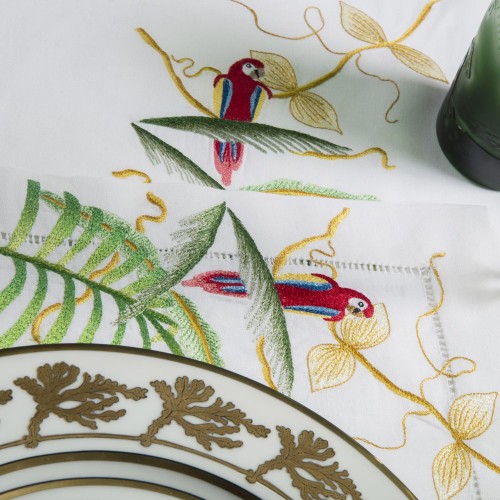
If you prefer something more colorful, choose from a variety of colorful backgrounds in a range of fabrics including Egyptian cotton percale, cotton voile, linen, silk, and organdy. Here’s Butterflies in white and aqua:
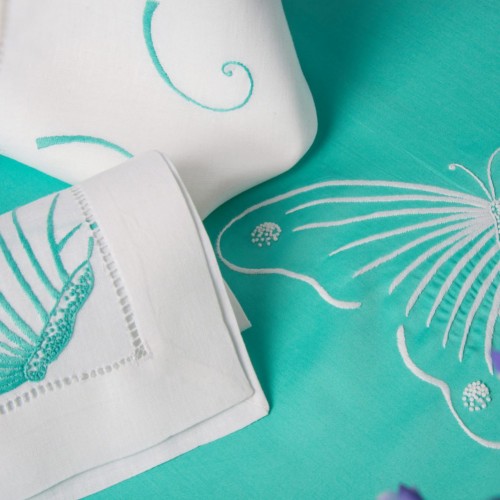
For something more traditional, Elegance sports the points de perle three-dimensional technique.
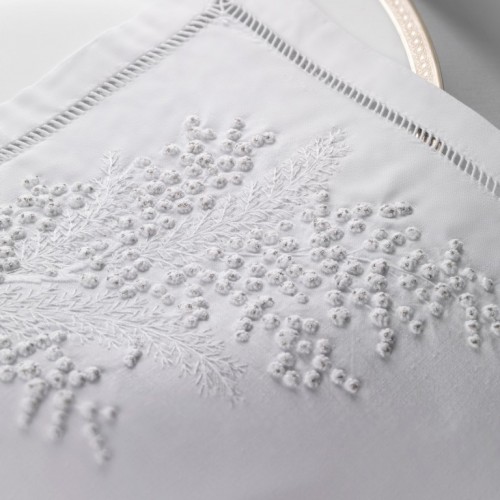
At Gracious Style, we’ve selected a range of Renaissance Paris designs, all of which are hand-embroidered to order and available in 4-6 weeks. But if your heart is set on a truly bespoke piece, we’ll work with Ms. Perrin-Davy to create a piece just for you.

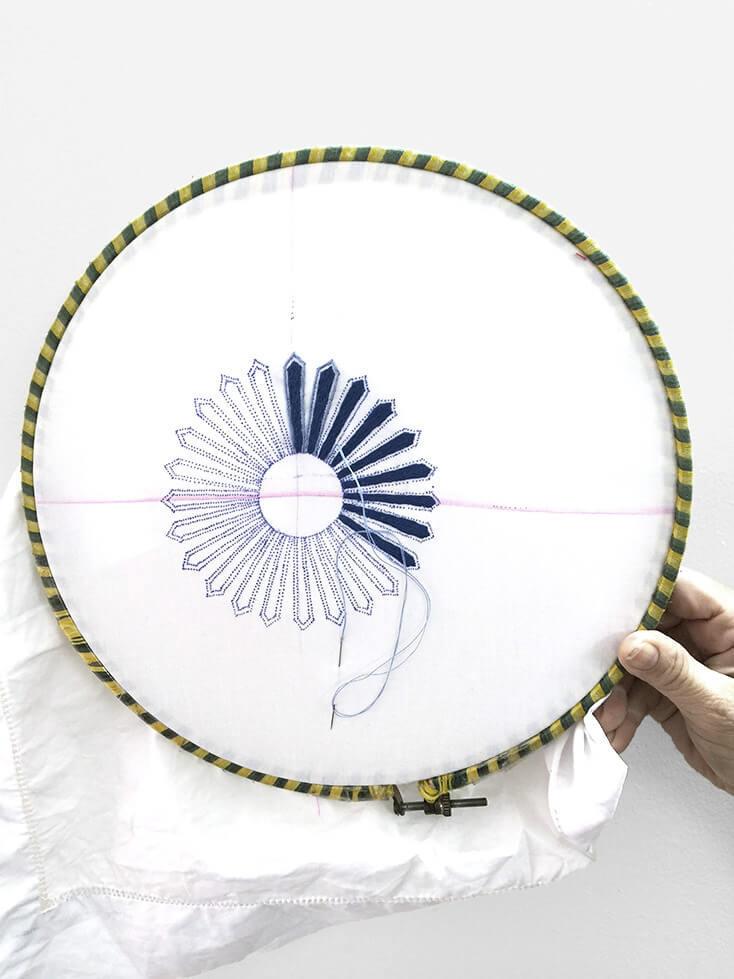
For example, here’s a collection she designed around Alberto Pinto’s Champignons dinnerware:
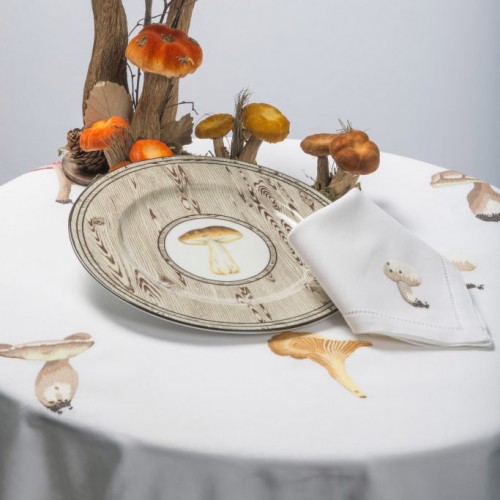
If you’ve always wanted to own truly bespoke bed, table, or bath linens to match your wallpaper, rug, or anything else, let us know and we’ll be happy to help you.
To see more Renaissance Paris collections, click here.
Video: The Lotus Layered Napkin Fold
Kim Seybert’s table settings are so gorgeous that you practically don’t even need food to have a party. Part of her secret is knowing how to add volume to her napkins.
For the lotus layered napkin fold below, all you need are:
1) One organza napkin
2) One regular napkin
3) One napkin ring
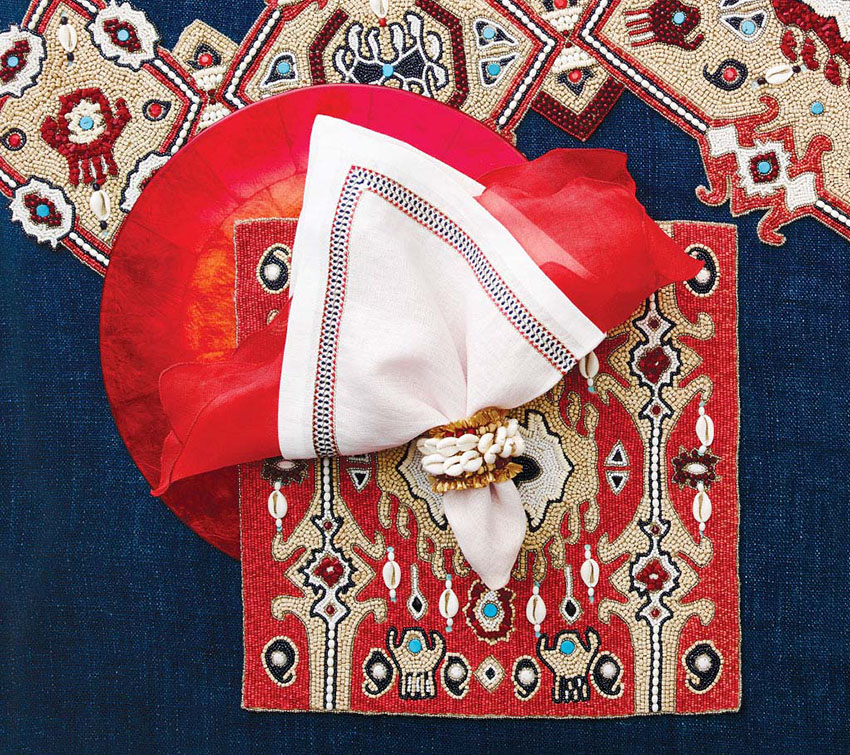
And to learn how to put them together, just follow the instructions in the video below. We promise you everyone will be impressed.
Mottahedeh: At Home with President and Mrs. Ronald Reagan
As an actor who became one of our most beloved Presidents, Ronald Reagan brought a new sense of style and glamour to the White House. Ronald Reagan wanted the country to feel optimistic again, and Nancy Reagan dressed to reflect this:

But in their private lives, the Reagans were completely devoted to each other, making time for tender moments together:

When Christie’s auctioned off their private collection to benefit the Ronald Reagan Presidential Foundation & Institute in September 2016, we got a glimpse at what they treasured in their post-White House years at their elegant home at 668 St Cloud in Bel Air, California, where both lived until they passed away.
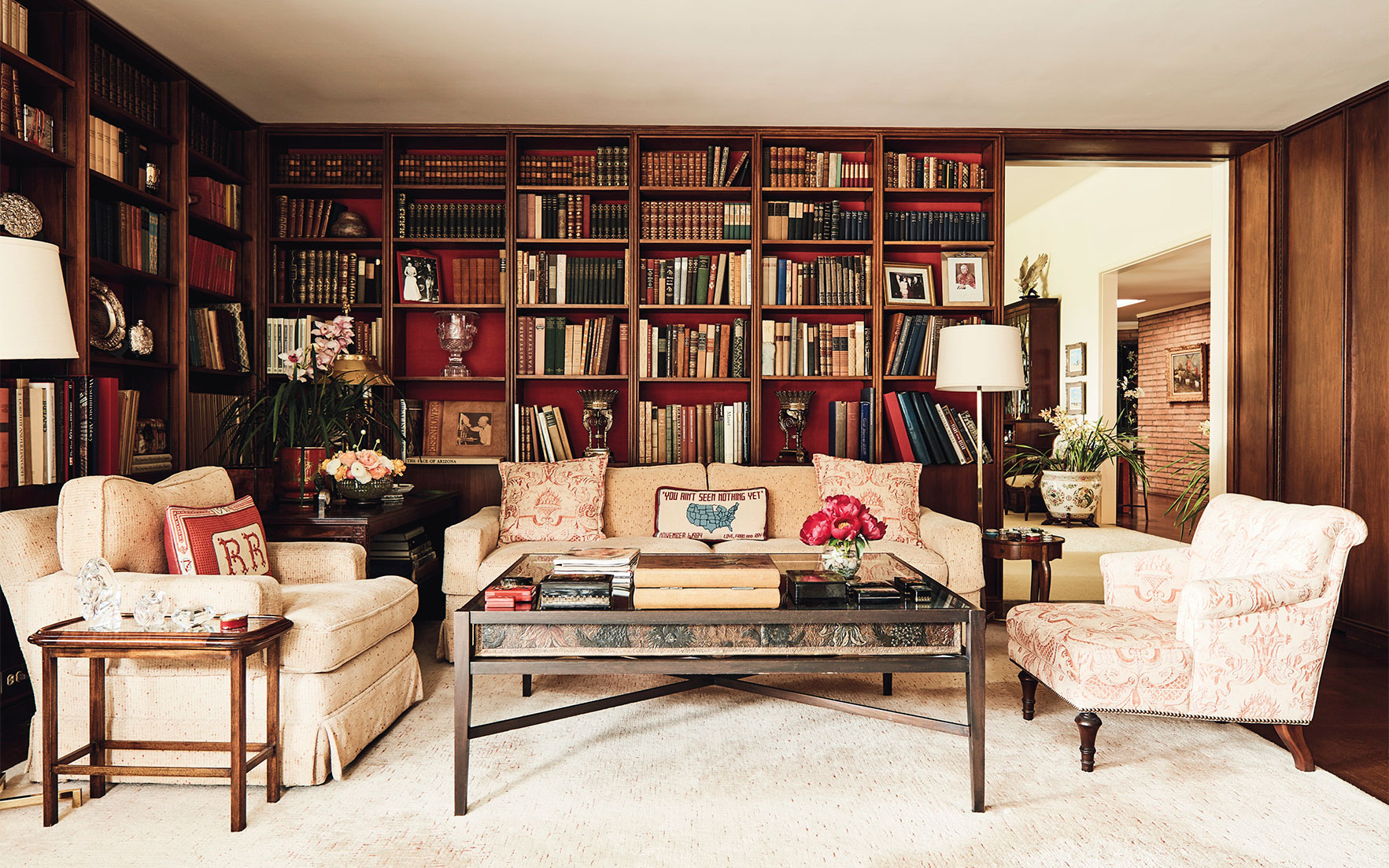
What caught our eyes were some interesting pieces by Mottahedeh that spoke of their love for an earlier, romantic Americana of the 19th-century. These included a magnificent carp tureen, which according to Mottahedeh president Wendy Kvalheim, was proudly displayed in the Reagans’ living room (instead of the more predictable dining room):
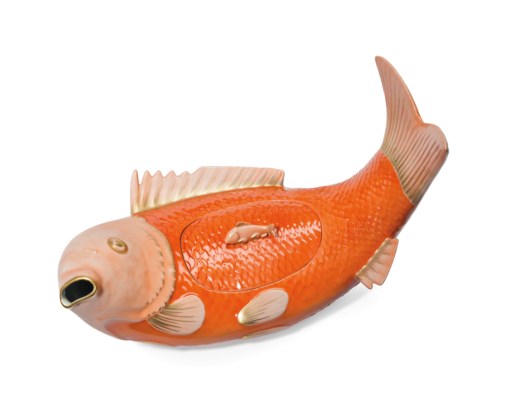
Following along the whimsical fish theme, they also owned a collection of oval carp platters, reproduced with permission from the Dallas Museum of Art:
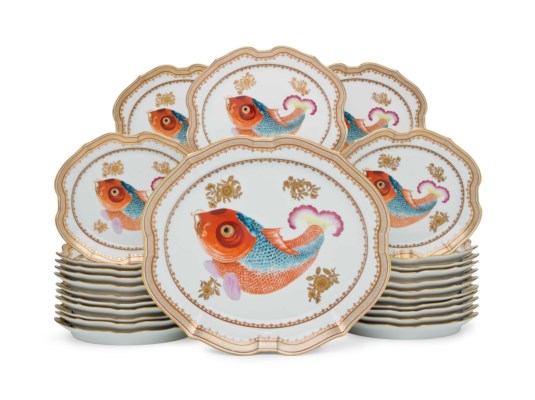
In the lot was their beloved “RWR” (for Ronald Wilson Reagan) monogrammed Golden Butterfly dinnerware …
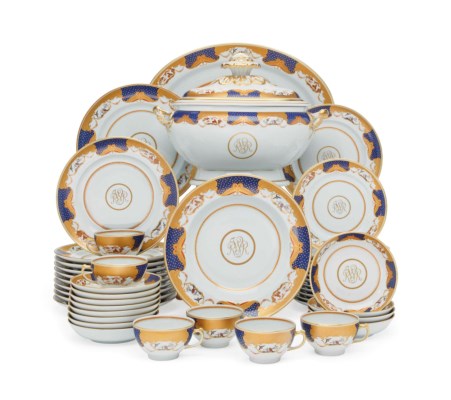
… shown below in their private dining room:
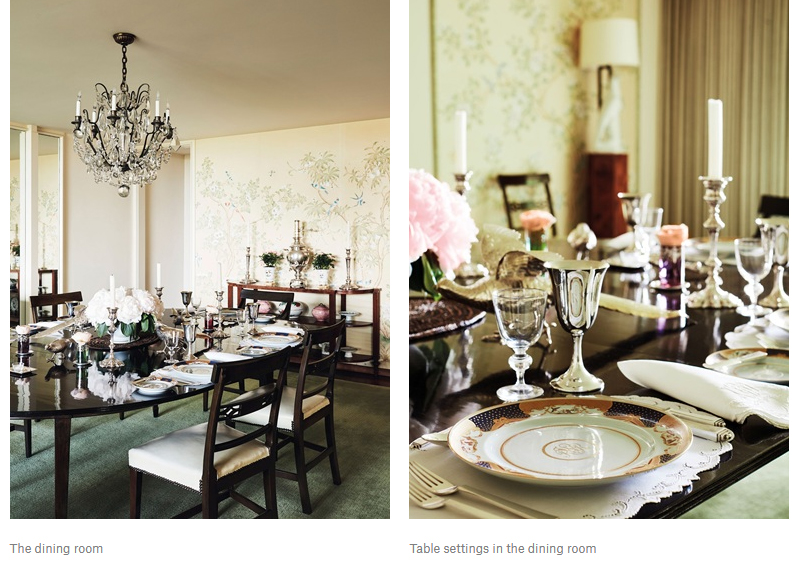
Also in the collection were a pair of Diplomatic Eagle wine coolers, originally commissioned for the diplomatic reception rooms of the Department of State and the White House.
The designs on these pieces, adapted from Chinese export porcelain circa 1810, feature one of the earliest depictions of the American eagle found in ceramic decoration:
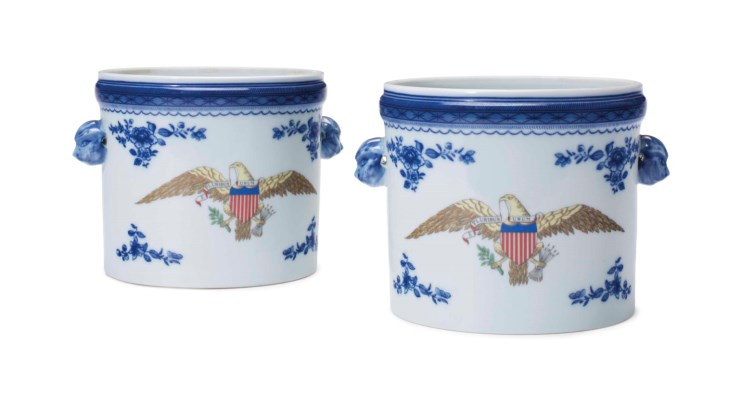
And our favorite piece, this monteith bowl (traditionally used as a punch bowl), given as parting gifts by President Reagan to his cabinet members.
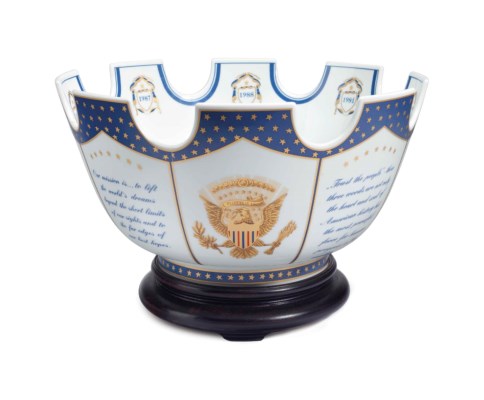
On the outside, the bowl bears the Great Seal of the United States along with quotes from President Reagan. On the inside, it has a Presidential Seal surrounded with eight shields dated for each year of the Reagan presidency. And finally, on the underside, it is inscribed “Presented by the President and Mrs. Reagan was presented by Ronald Reagan Recalling Eight Memorable Years 1981-1989).”
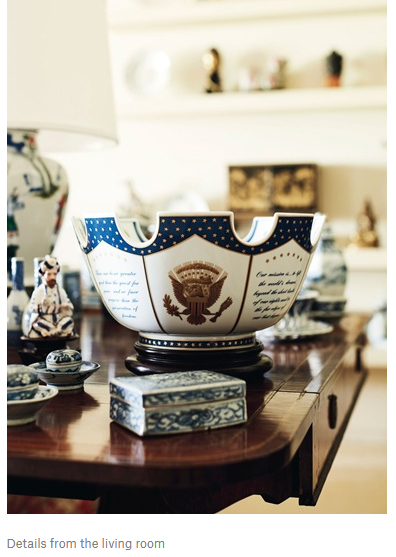
What a fascinating glimpse into the private lives of these two American icons! And amazingly, most of these pieces are still being faithfully produced by Mottahedeh.
Interested in learning more? Click here to read about the auction from Christie’s, which raised a total of $5,740,625 for the foundation. And be sure to check out the cocktail napkins embroidered “the drinks are on the house at The Reagans.” You gotta love their style!
To see more of the classic Americana china that the Reagans loved, click here to view our full Mottahedeh collection.
Alain Saint-Joanis: The Poshest Flatware Maker You’ve Never Heard Of
Wolfgang Puck knows his forks and knives. Same with three-star Michelin chef Pierre Gagnaire. As does, of course, the King of Morocco. And when each of these opened celebrated restaurants in the last few years, they all turned to Alain Saint-Joanis for custom flatware. This small, family-owned company has been making cutlery in La Monnerie-le-Montel in the center of France since 1876. And although they’re not a household name, they are – for a certain group of folks – the only go-to when you want custom handmade flatware.
Whether you prefer lacquered (for your city dining room), olivewood (for the beach house in Martinique), resin (for your annual 4th of July bash), or a custom color to match your yacht, they can make it for you. We sat down with Alain Saint-Joanis President Alain Poujol for a few questions.
– What makes Alain Saint-Joanis unique?
The huge variety of looks … people come to Alan Saint-Joanis for quality and design. We have collections inspired by Art Deco, Celtic, Greek, nature … it goes on and on.
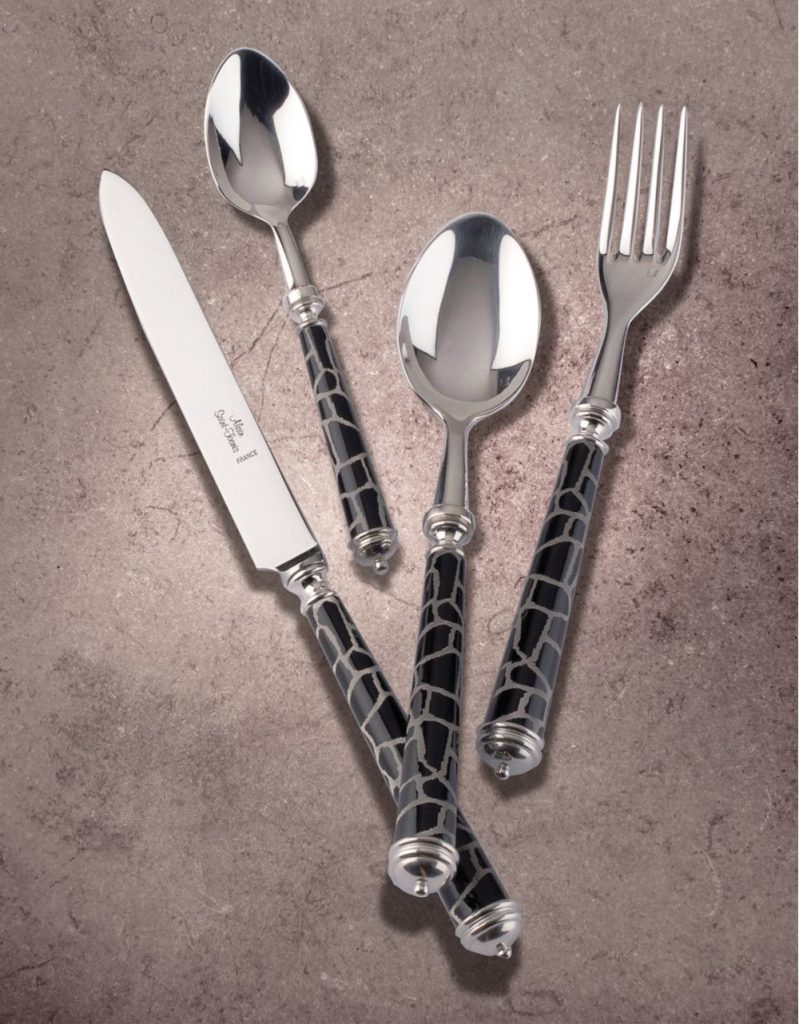
– What’s driving your new introductions?
We work with designers such as Thomas Bastide (head of design for Baccarat) for some styles, but most of the designs are developed in-house. That’s the privilege of being an old house…we have archives. For example, our Bamboo pattern is a re-edition from the 1950’s; this is rare nowadays, but the handles are made using real bamboo.
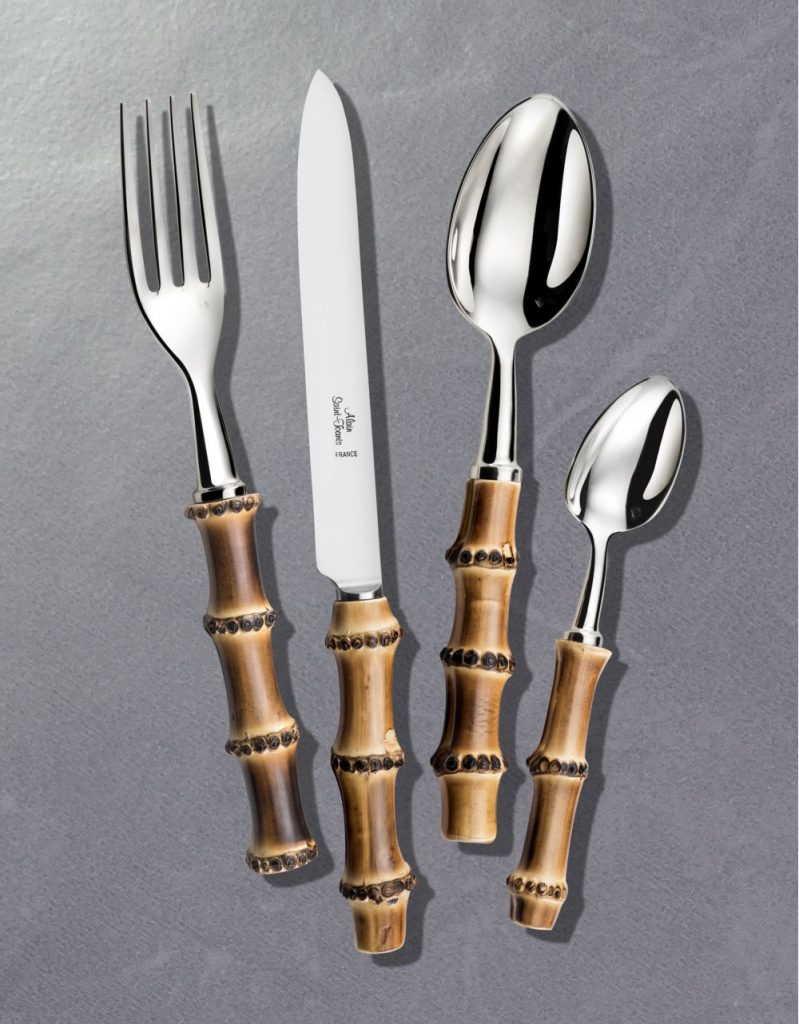
– How did this collaboration with Thomas Bastide come about?
Thomas Bastide is a longtime friend and a fellow motobiker. We share that passion. So we got together, talked about some of his ideas for new collections and developed them.
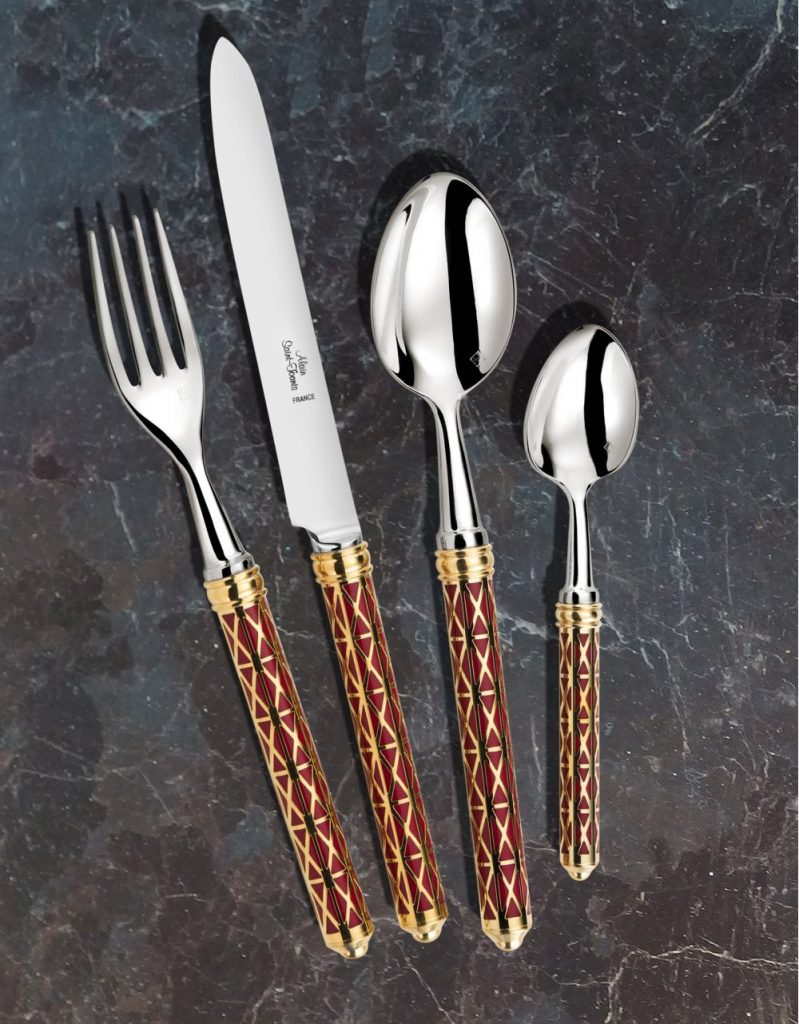
– Can you tell us about a project that stands in your mind?
Over the years we have developed so many great projects … for a wealthy New Yorker, we created a pattern with the handles looking like the Empire State building. You won’t see any pieces or pictures unless you get invited to his dining room. Part of the deal was to break the molds after the order was completed.
– Why are clients choosing your line? What are you known for?
Clients come to us for our designs, but they stay with us because of our quality. Right now wood is very popular because it’s natural. For U.S. customers, wood is protected by the Lacey Act – an Import Declaration – so it’s harder to come by. Our olivewood comes from trees that were used for their olive oil; we buy the wood afterward.
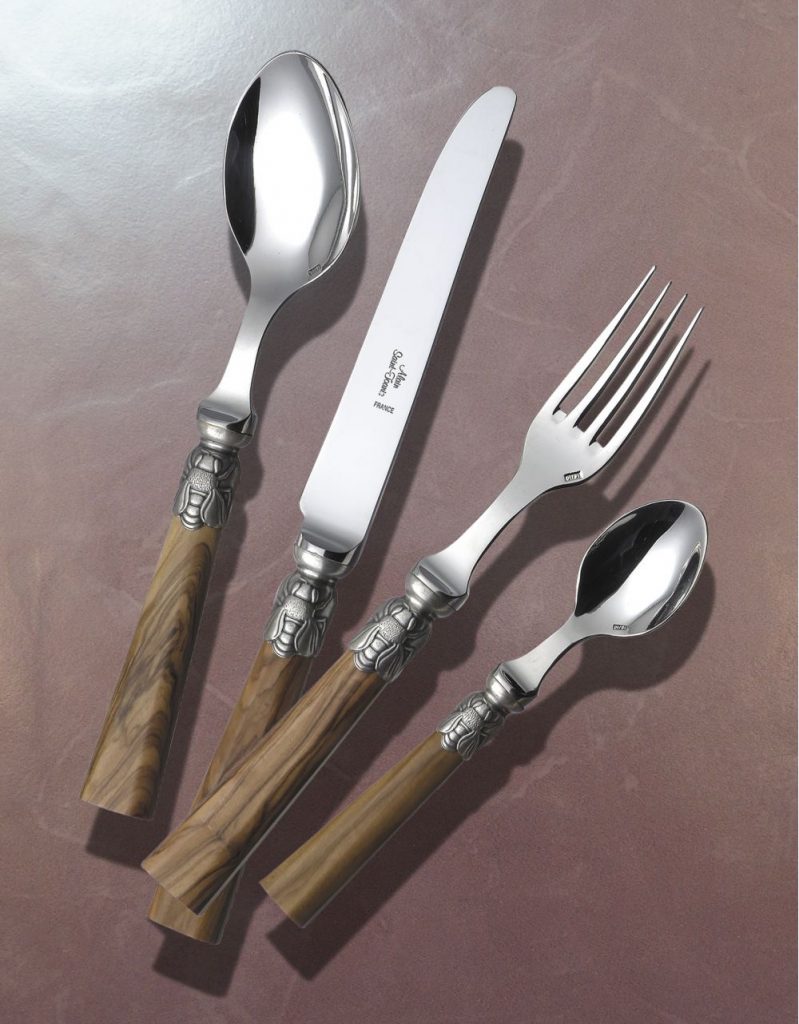
Also, we we are not overdistributed, and that means a lot to our clientele. Our work on metal is exquisite; one customer called our work “jewelry for the table,” and we really appreciated that.
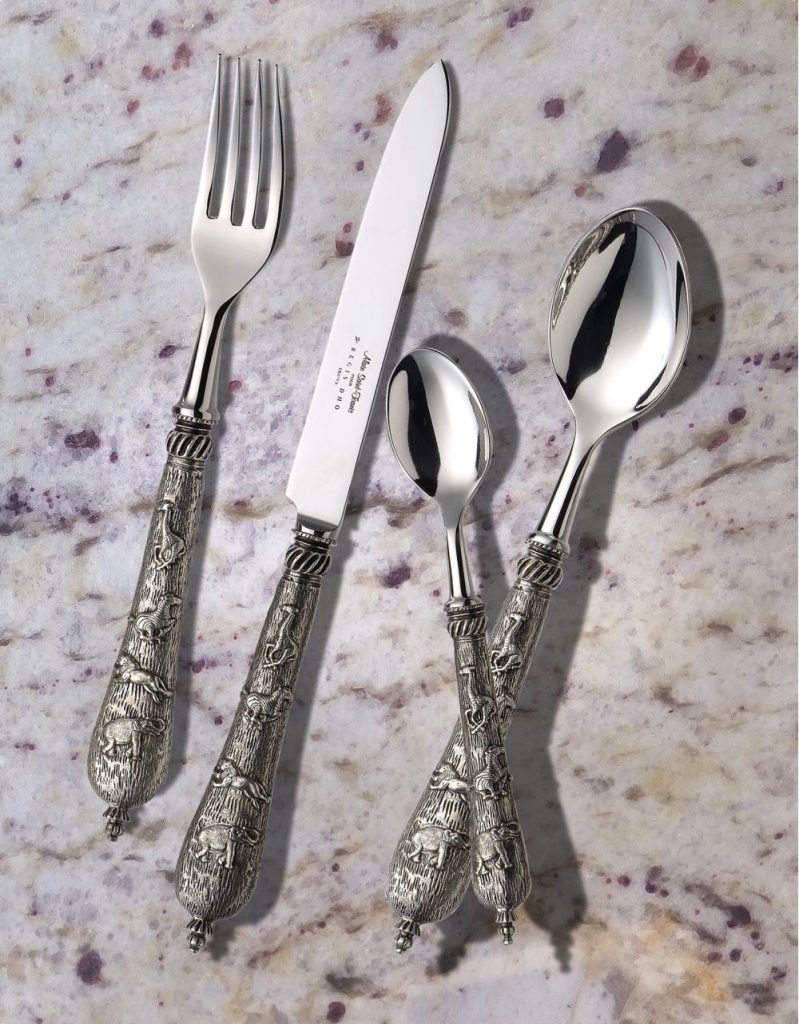
– Who’s buying these? Is it being used in any restaurants or hotels?
Our main business is retail. Over the years we have been providing our silverware to a number of celebrities, but we never communicate on the names. We do sell to high-end restaurants. Recently we worked with the Crillon hotel in Paris for their reopening, we’ve also done Pierre Gagnaire’s restaurants worldwide, the Royal Mansour in Marrakech, and Wolfgang Puck’s restaurant at the Bel-Air in Los Angeles.
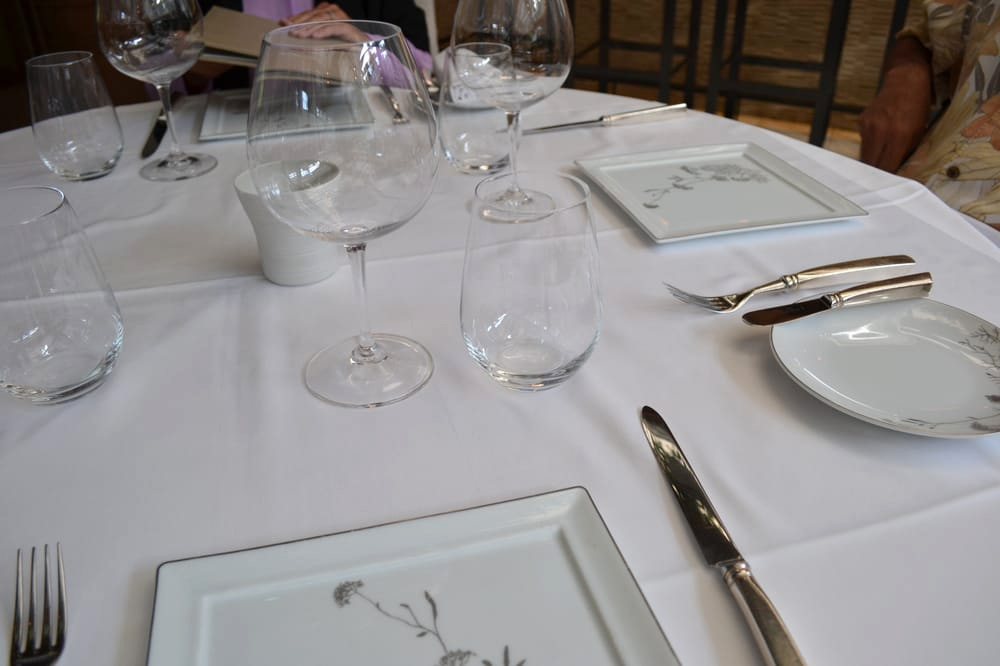
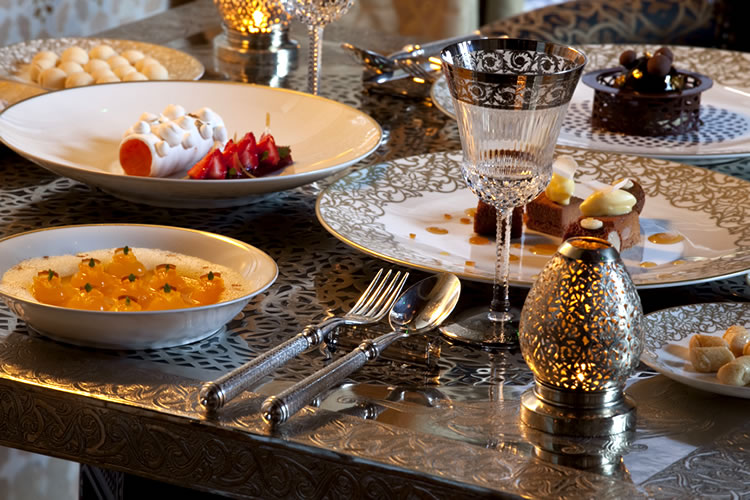
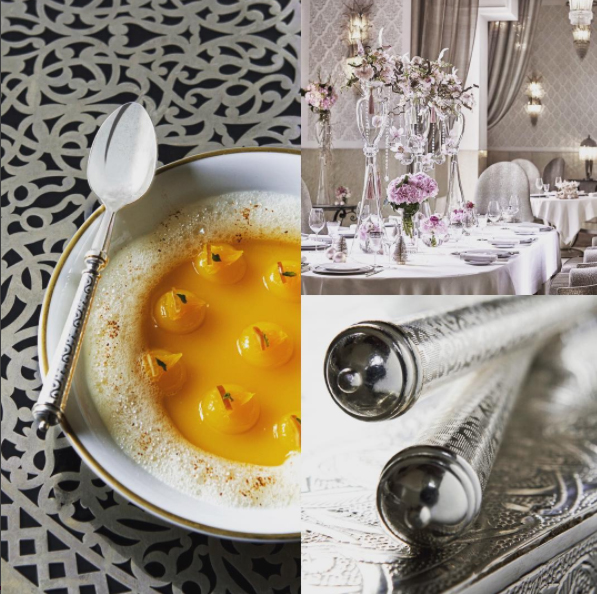
– You seem to do a lot of work with yacht owners. How did this get started? Can you share some of your more interesting projects?
Yachts and aircraft fittings, yes. Especially yachts manufactured in the Lurssen shipyard in Bremen (Germany). That’s where all the luxury megayachts come from. They started in business in 1875 and Alain Saint-Joanis in 1876, so we go way back.
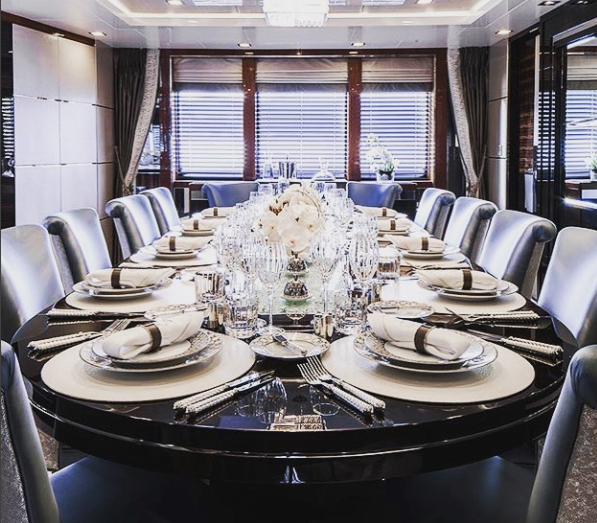
– What’s next for Alain Saint-Joanis? We saw something about Basel on Instagram; can you share any details?
Art Basel is a great source of inspiration. Our Cable pattern, for example, is derived from the body of a writing instrument. Also Basel is worth visiting just for the fabulous Lackerli (local cookies). Editor’s note: if this has gotten you thinking, here’s a recipe for lackerli from Pierre Herme.
– Are all your pieces entirely made by hand?
No. The designs on the wood and metal are made in small runs, but they are automated. The assembling and the polishing is all done by hand. Also, the polishing and sharpening on knife blades is all done by hand.
– We notice you use a lot of wood in your collections. How did this come about?
We’ve been working with wood forever. In the old French tradition, forks and spoons would come in sterling silver, and the knives would come with a metal blade and either a wooden handle or a bone handle. At that time it was mainly ebony wood; now we’re using a lot of olive wood. We liked the way that looked.
– How long does it take to make your pieces?
One of our most complicated is the pattern named Royal with enamel handles. There is a dark blue finish with gold dust. it’s very beautiful. The complete process is 8 to 10 weeks. However, some very simple patterns such as Oslo are just incredible. They don’t take as long to make because there is nothing to add, nothing to remove … just perfect simplicity.
– How long have your artisans been with the company?
Most of the workers have been with us for a long time … the youngest over 10 years. It takes several years to train a good polisher. And then you want to keep him in the family.
– How do you define luxury?
Luxury is beyond materials. You can use the best materials and end up with a “bad” product. Making cutlery has been in our DNA for several generations, and we have turned this heritage into a passion. We are a maker, a manufacturer … everything we make is made with the final customer in mind, so we are very attached to what we produce. It has to make life more enjoyable, more beautiful.
To see more collections from Alain Saint-Joanis, click here.
Beauville Linens: How a Small French Manufacturer Thrives in the Age of Globalization

But one of the town’s best-kept secrets is a little family-owned factory called Beauville, which has been producing linens for over 200 years. Their clients include Hermes, Pierre Frey, Cowtan & Tout, Ralph Lauren, Catherine Deneuve, the Royal Court of Sweden, and the White House, and they’ve been a favorite amongst our customers for several years now.
Recently, I spent some time finding out just what their secret was. I was amazed by what I saw — it’s not what they make, but how they do it.

The colors used on each Beauville fabric are prepared in the factory’s color kitchen; a total of 25 base colors are used to create an infinite range of shades.
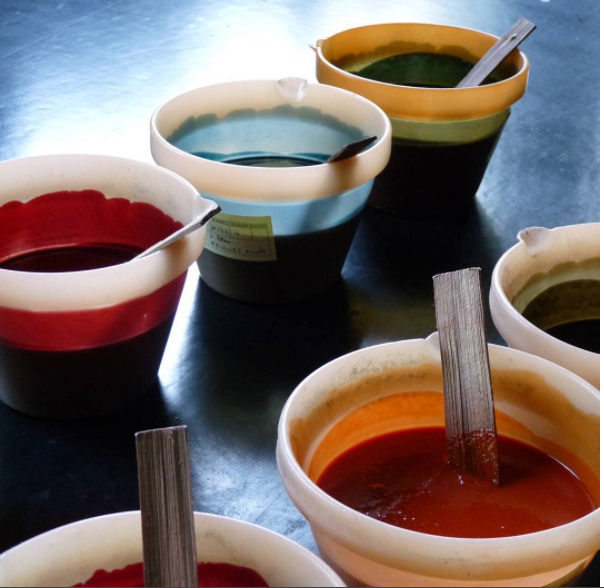
Using these colors, Beauville’s designers and colorists create two new collections of linens each year. Many of the more traditional patterns are inspired by 18th and 19th century French woodblock designs, while the newer styles are created in-house.
Here is a rendering of a spring design:
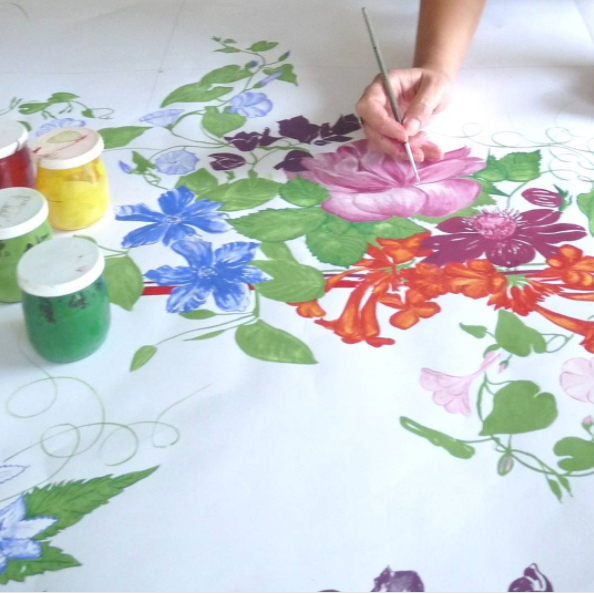
At work on the ever-popular Coral collection (found on yachts and beach houses around the world):
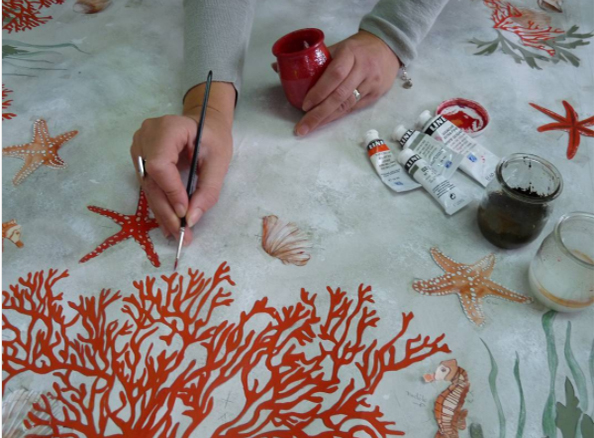
And here, gouache paints and brushes are used to create a holiday collection:
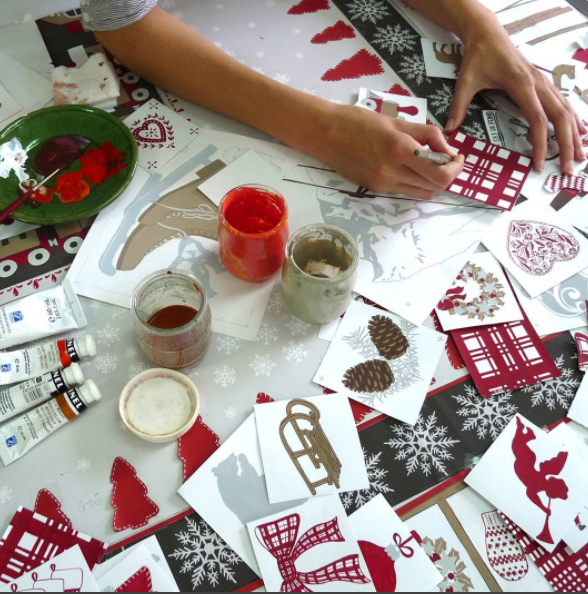
Once the designs have been created, a screen is created for each color used. Below, two printers carefully lift up a printing screen to place on the fabric. This must be done very precisely, or the design won’t be produced correctly. Using a squeegee, color is then evenly spread across the screen onto the cloth. Each application of color requires the use of a new screen.
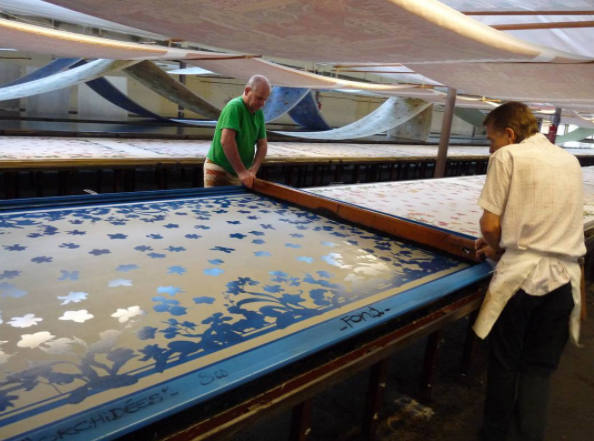
Up to 20 colors are used on each collection, so the company’s designs are noted for their vibrancy.
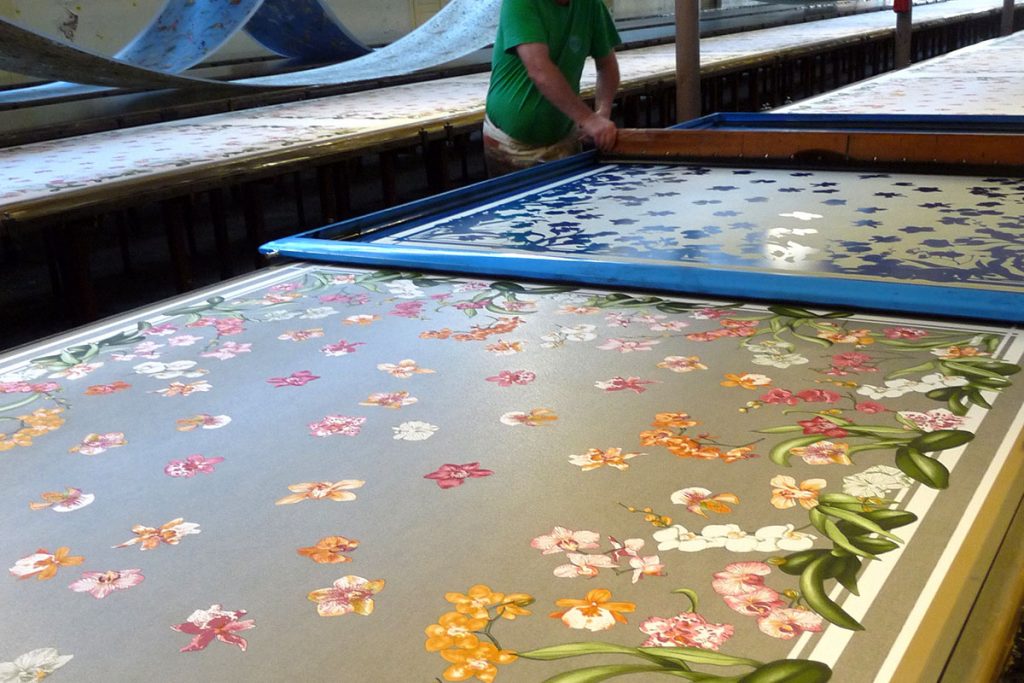
Once the fabrics are printed, they are steamed to set the dyes in the fibers, thus making them colorfast.

During production, quality is checked six times to ensure the prints are carefully made and colors are correctly applied.
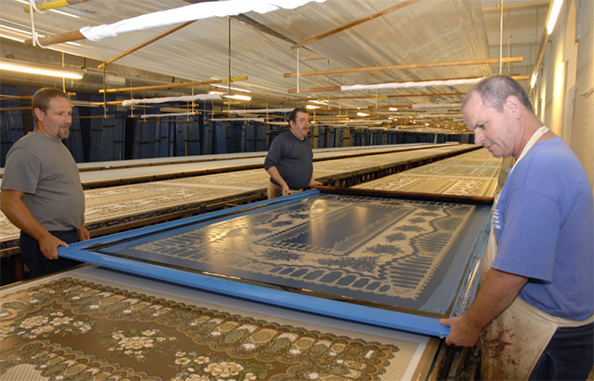
And for easy care, many of Beauville’s newest collections are stain-repellent, so spills can easily be wiped off:
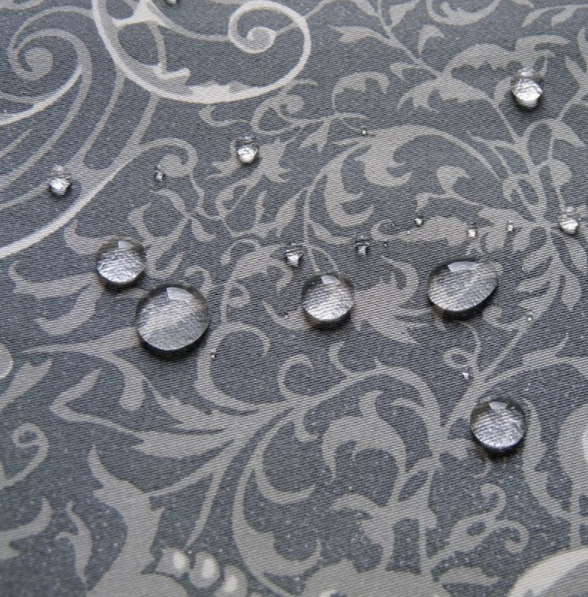
Every piece is singed, bleached, designed, printed, sewn, and finished in-house.
And here they are, ready to be packed:
Although Beauville is known for more traditional French and floral designs, here’s something unique: a woodblock printed panel which won First prize at the Exposition Universelle of 1900 in Paris. This panel is part of a series of four panels purchased by the Emperor of Japan to decorate the dining room of the Imperial Palace in Tokyo. In the midst of this sumptuous garden you can see six women dressed in majestic traditional costumes.

Beauville was awarded the “Entreprise du Patrimoine Vivant” label in 2009, given to French firms for their excellence in their traditional and industrial skills. There are currently fewer than ten firms throughout France with similar printing skills. Bravo!
To see all of Beauville’s collections, click here.
For Coffee Lovers: The Most Elegant Espresso Spoons Ever
If you own a Nespresso or a De’Longhi or a Breville, you can now up your coffee game with these new espresso spoons from Christofle, which come artfully encased in a drop-dead gorgeous presentation egg case.
The silver option ($360) includes six silverplated espresso spoons, a polished stainless steel chest, and a dark walnut wood insert.
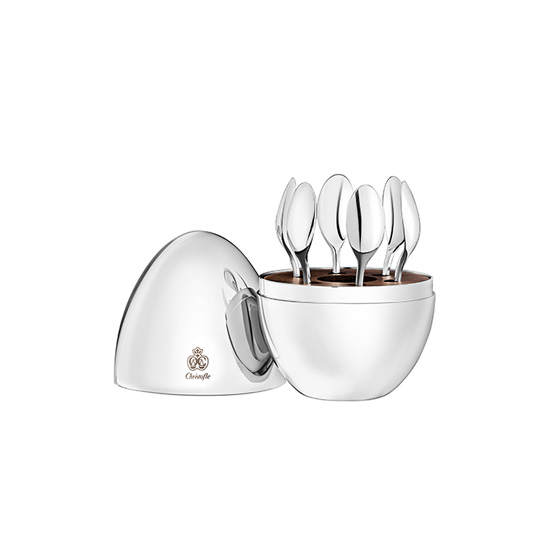
And for those who prefer a warmer look, the rose gold option ($650) includes six espresso spoons gilded with 18kt rose gold, a chest in polished stainless steel (copper color), and a dark walnut wood insert.
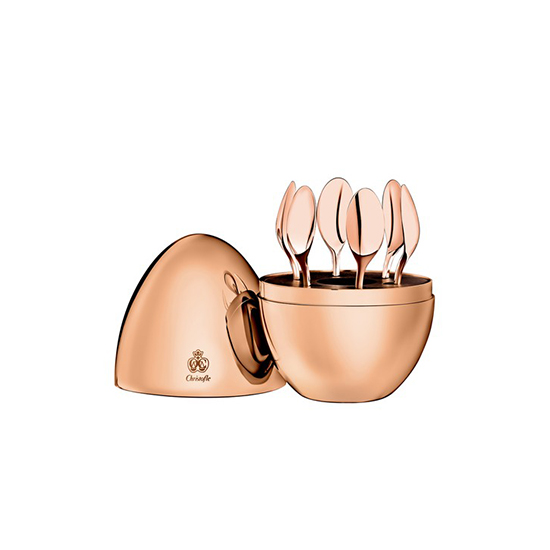
Love the look? Christofle has also introduced larger sets which include 24 pieces of flatware for six people in 24kt gold gilded metal, pink gold, and silverplate. Unlike most chests, these look as elegant in storage as they do on display:

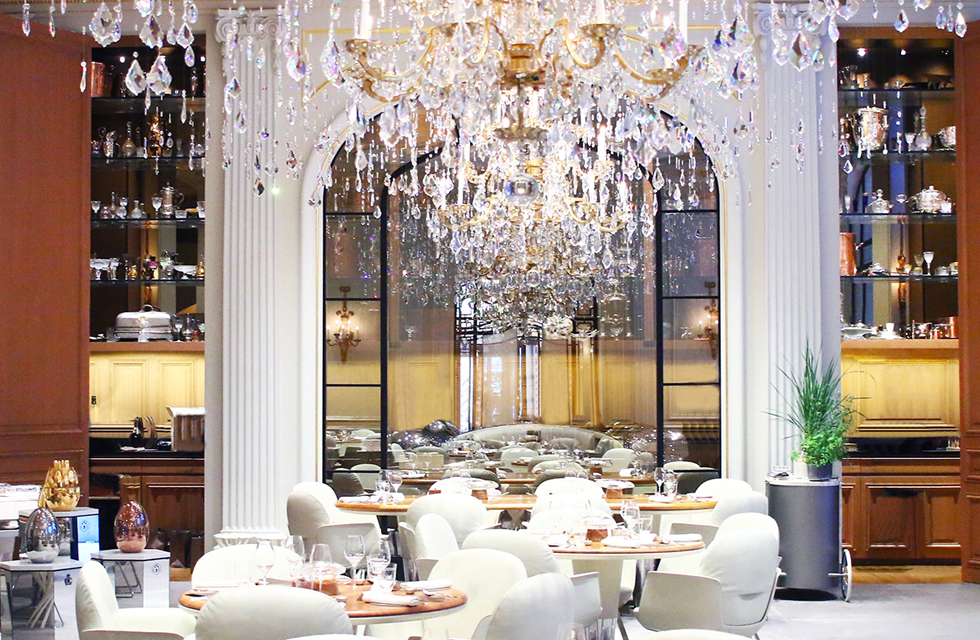
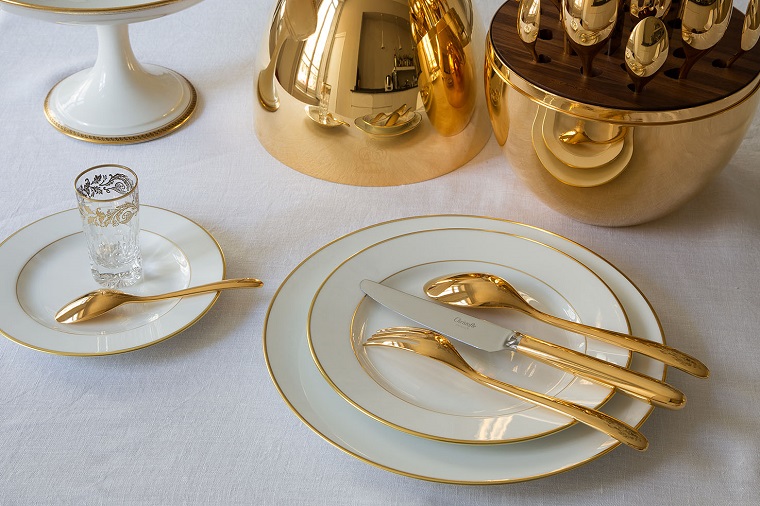
Destination Palm Springs: Annie Selke’s Getaway

When we heard that Annie Selke, the talented owner and designer behind the colorful Dash and Albert rugs and Pine Cone Hill linens, had bought a home in the Marrakesh Country Club community in Palm Springs, we knew it would be fabulous. Here, we share Annie’s story with you.
What made you decide to purchase a second home?
“After we had a horrible winter a few years back, I decided I wanted a second home someplace warm! I looked in Southern Florida, but nothing felt right. When I decided to buy the home in Marrakesh, it was kind of like my birthday present to myself. I really wasn’t even looking to buy anything.” But then, her friend John Gilmer sent her real estate listings, she saw pink and green everywhere, and she was sold.
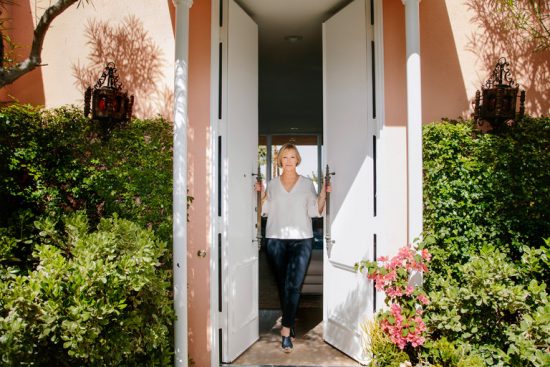
Why Palm Springs? What drew you to Marrakesh?
“My friend Stephen Drucker (former editor-in-chief of House Beautiful and Town & Country), who is a total real estate maven, bought a home in Marrakesh after looking at over 100 properties, so I trusted his judgment and ended up buying the property that is right next to his!”

She continues: “Marrakesh is absolutely gorgeous. The community was built by John Elgin Woolf, the king of Hollywood Regency architecture, which is a subset of mid-century modern style. It’s set on a golf course, and I love all of the green space.”

“I love so many things about Palm Springs but I especially love the great shopping! The consignment stores are just fabulous. You can find things with such character.
In my living room, I launched the whole scheme around these blue Moroccan lanterns I found at Cargo Consignments. They’re really too big for the space, totally over scale, but I saw them in the window and I knew right away I wanted them! They really were my inspiration for that space.”

What do you love most about Palm Springs?
“Since Palm Springs is in a valley, you can see the Santa Rosa Mountains and the San Jacinto Mountains almost all around you, anywhere you go.”

“In the winter, you get off the plane and you can see the snowcapped mountains and then you have the green palm trees and vibrant bougainvillea — it’s just this incredible juxtaposition of color and terrain … Because it was founded as essentially an outpost for Hollywood actors, the whole area has this rich history. It’s just this haven of midcentury modern architecture, it’s almost like a time capsule and people come from all over the world to see it.

What was it about Palm Springs that inspired the collection?
The whole area is this mix of very brown desert-y colors and these bright, vivid colors of plants and flowers—bright yellow, bright pink, lush green—it’s delightfully colorful and contrast-y in a cool way. I wanted to try to capture that in my designs.
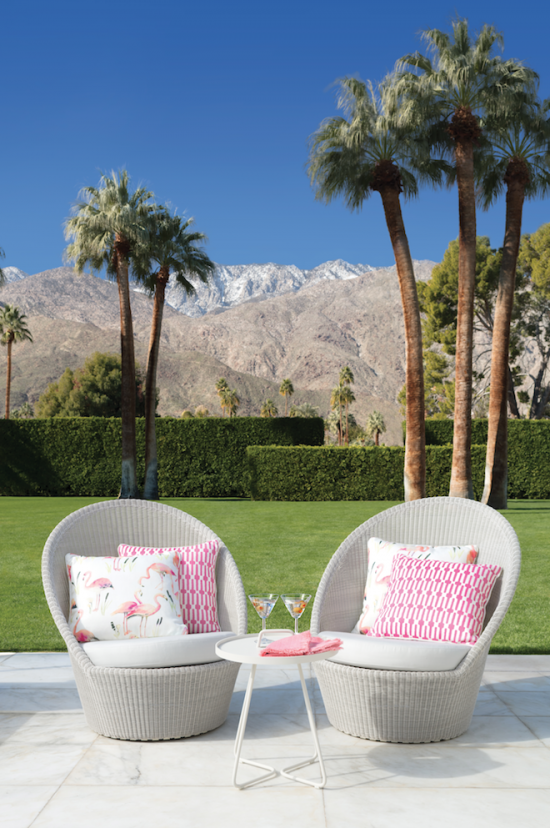
OK. We love the idea of Palm Springs. Can you show us your new collections?
If you want to pink it up …
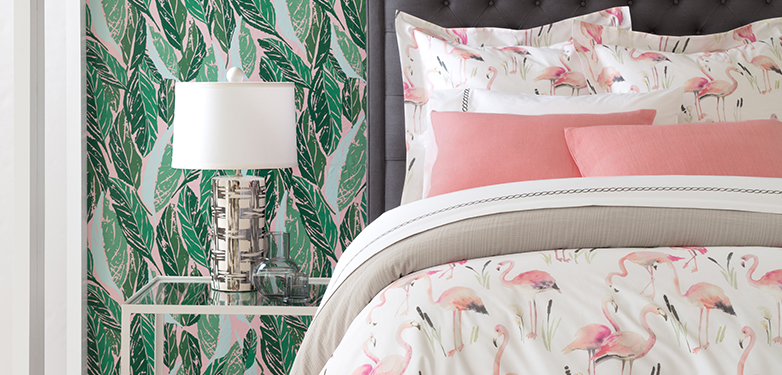
… or go green …
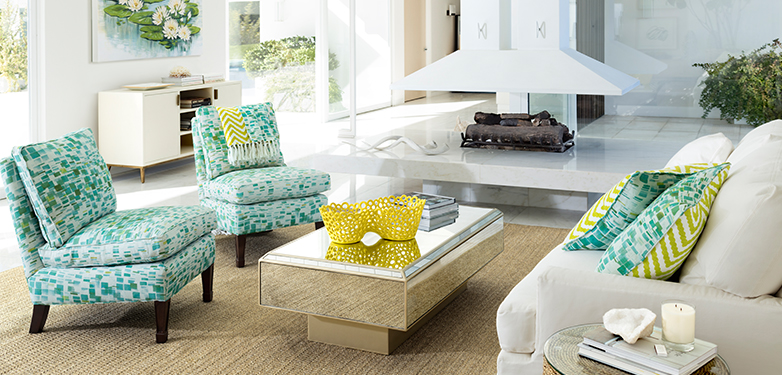
… or love true blue …
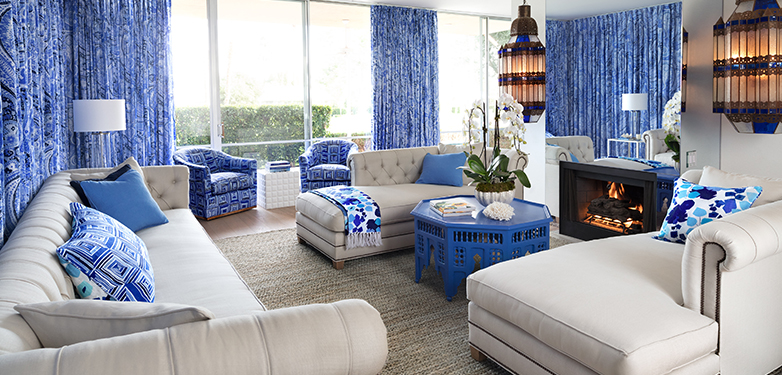
And if you want to come home to color, here’s what my bedroom in Palm Springs looks like:
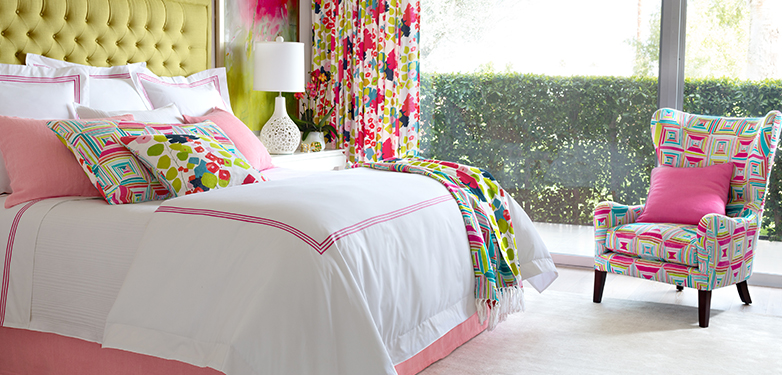
To read more about Marrakesh’s iconic style, click here for the feature in The New York Times.
Alberto Pinto: Dinnerware to Match His Interiors
First there was the red-eye to London. The customs and immigration line snaked around the terminal like a coiled serpent, lethargically moving in the early morning. Then there was the bumpy, stop-and-go rush hour ride into central London.
But the moment you walk into The Lanesborough hotel, your jaw dropped. The dull, harried modern world outside melted away. You were in a magical place filled with gilded carvings, cream and black marble, and shimmering silks and damasks.
Did you just go back in time to the glorious days when Britannia ruled the world? And were you about to be received by Her Majesty the Queen?
No … in fact, you had just walked into my first Alberto Pinto hotel.
Of course, once you’re in the room, you’d feel like taking it all home. But at some point, security would probably want to inquire why you’re trying to stuff the curtains and chairs into my carry-ons.
There’s got to be a better way to take a bit of Alberto Pinto’s amazingly over-the-top creations home … and luckily, there is. Through his collaboration with Raynaud prior to his death in 2012, Alberto Pinto designed a line of handpainted dinnerware that is very evocative of his interiors. In each instance, his celebrated love of travel, color, and pattern all come through.
The Lanesborough hotel in London – it’s grand, cozy, and filled with flowers everywhere …
Belles Saisons would be perfect for afternoon tea at the hotel.
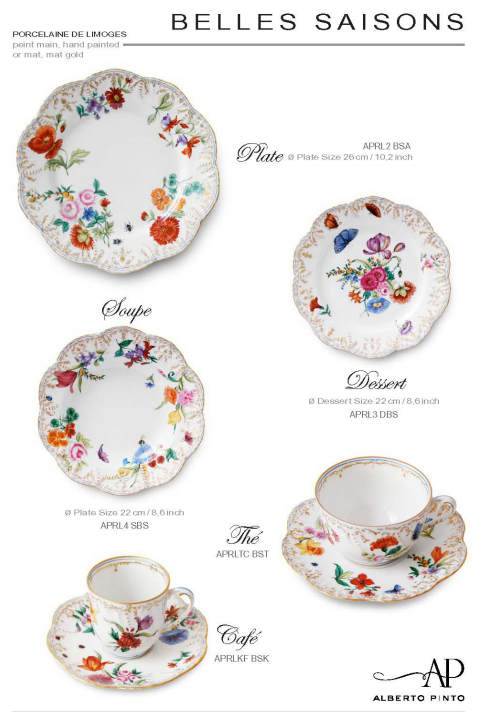
In Monaco, he enveloped a duplex with white walls and neutral wood accents, and then filled it with art:
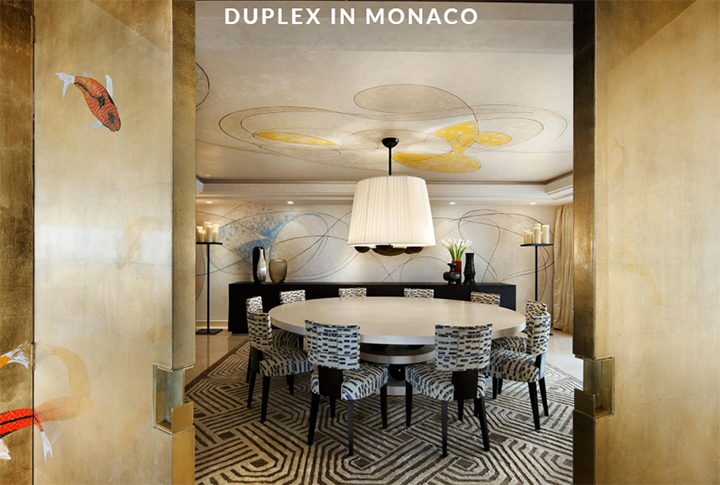
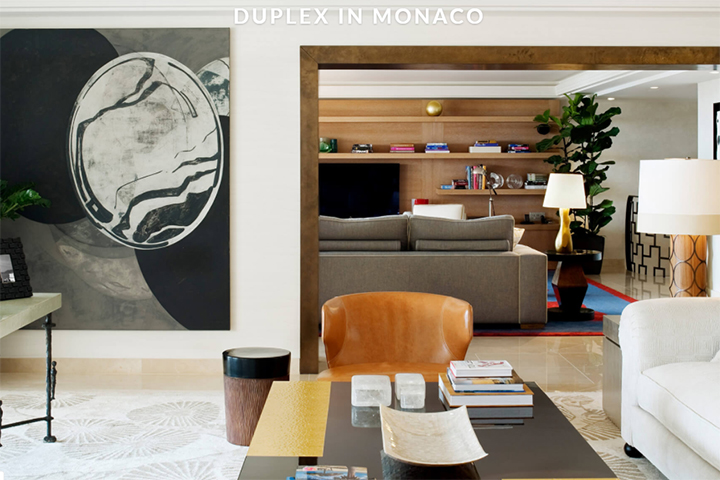
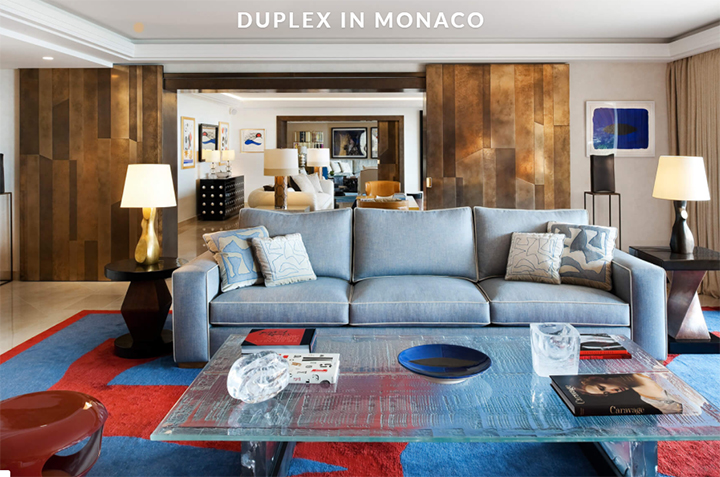
Can you see Renouveau Russe there? It’s so beautiful, you could hang it on the wall.
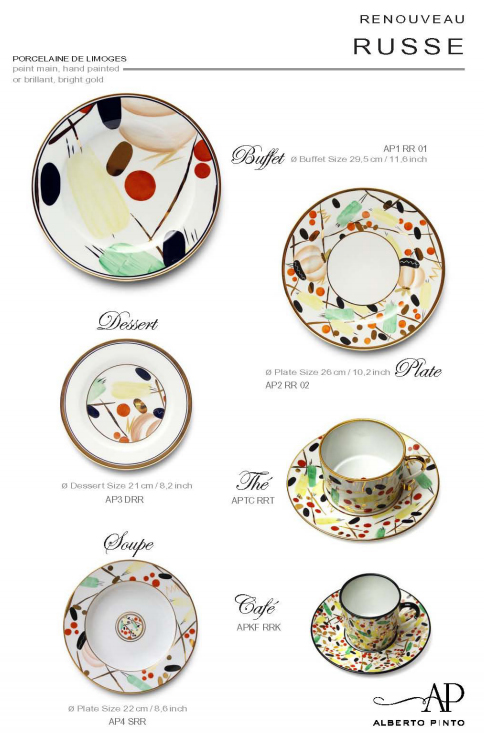
In Switzerland, something a little more refined …
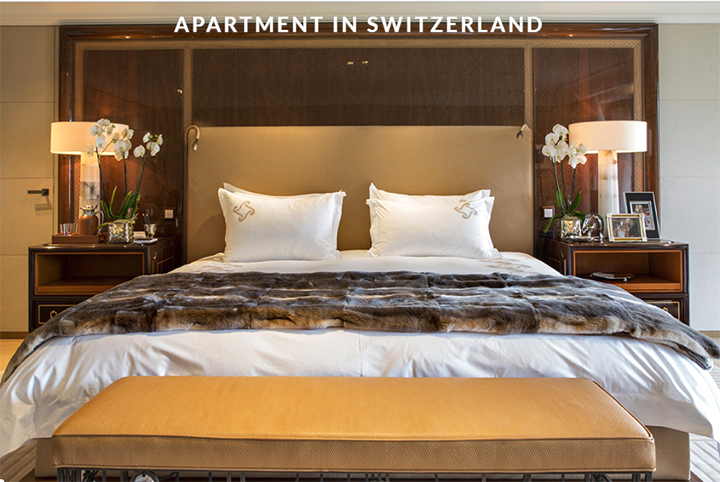
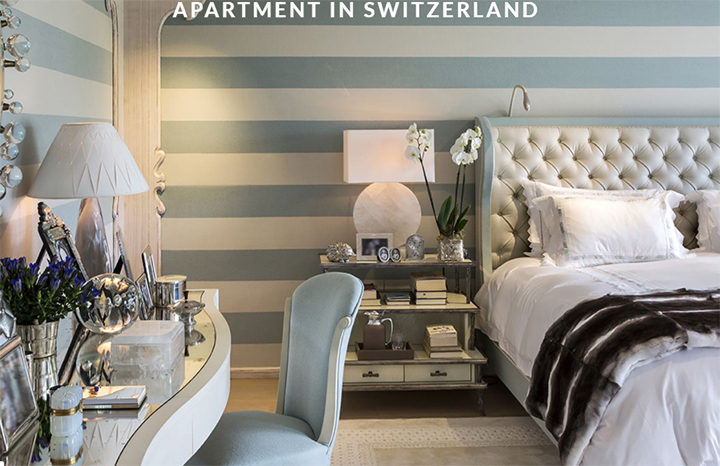
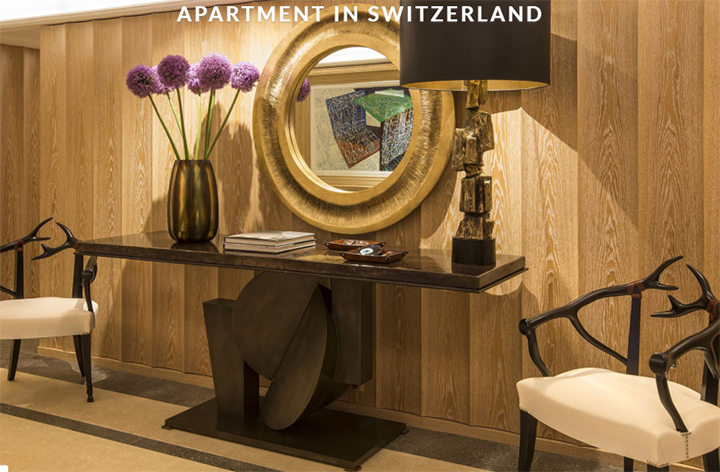
So we pair it with the exquisite Magnolia collection:
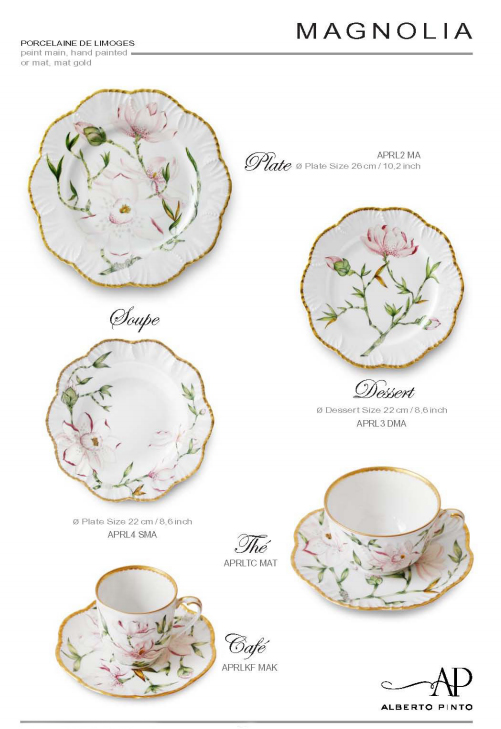
For a breathtaking home in Kuwait:
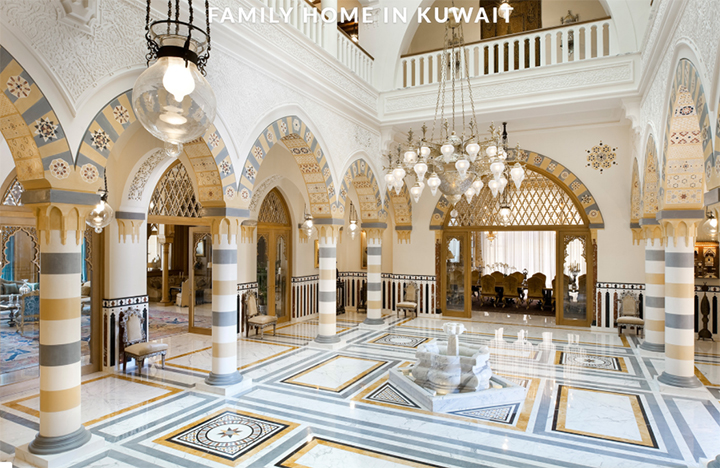
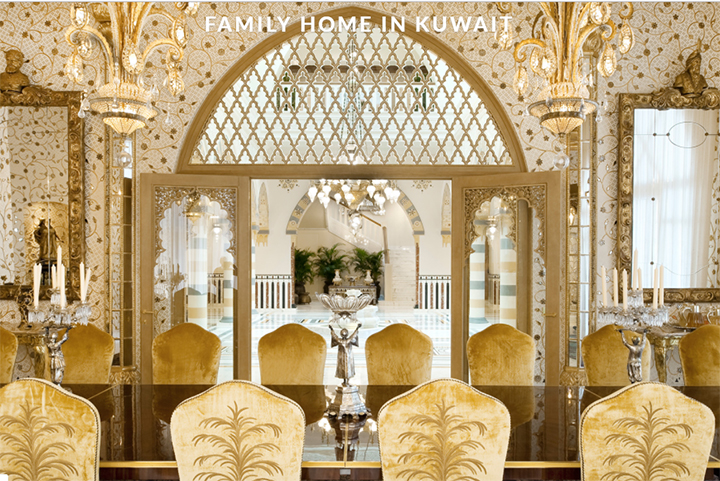
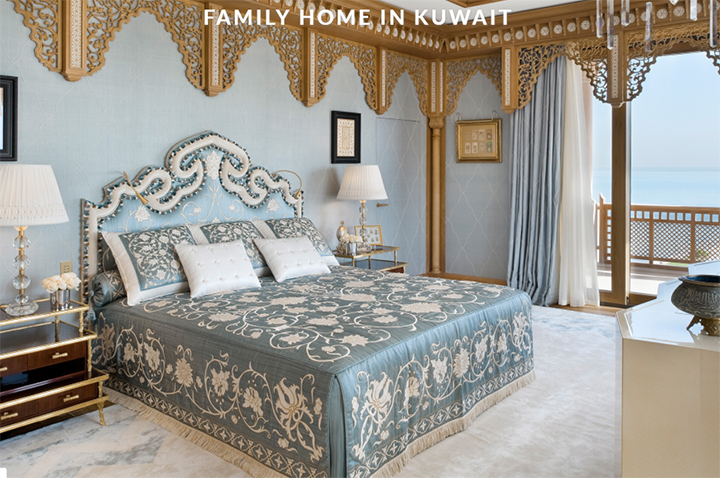
For this, you need something exquisitely detailed, like Or des Airs:
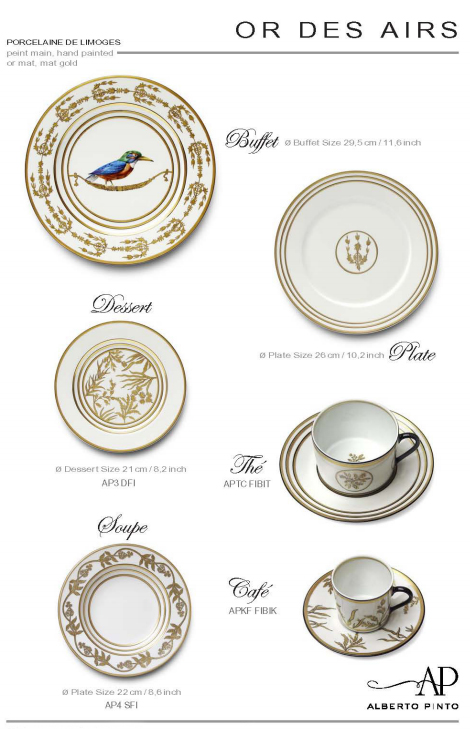
And for an apartment that’s done up in neutral creams and beiges:
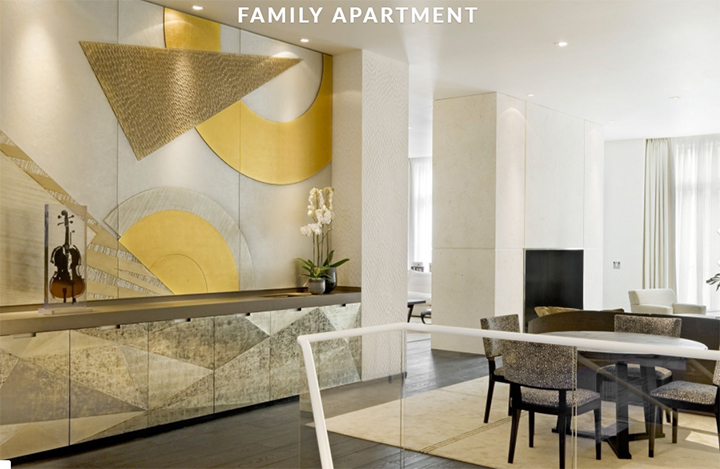

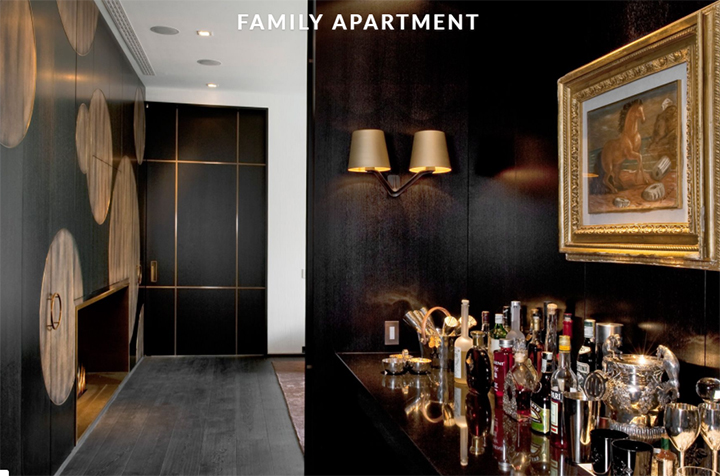
Champignons is both sophisticated and masculine.
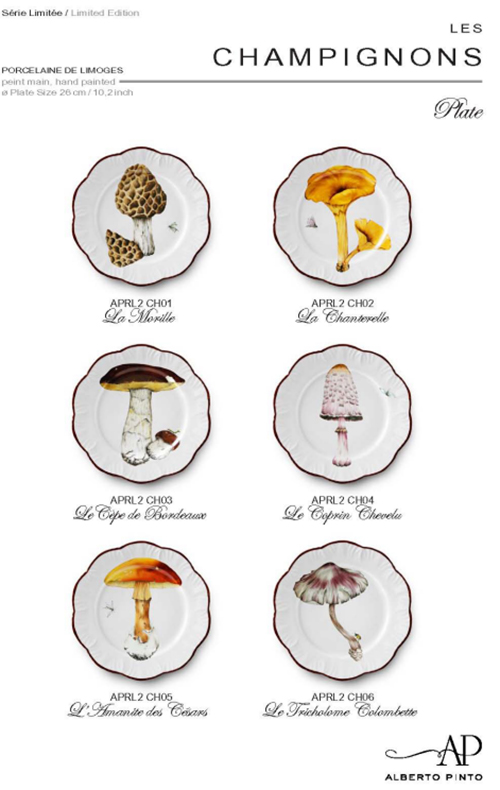
Like these? There is a series of good books about Alberto Pinto and his work, such as
- Alberto Pinto: Signature Interiors
- Alberto Pinto: Moderns
- Alberto Pinto: Classics
- Alberto Pinto Today
- Alberto Pinto: Table Settings
- Alberto Pinto: Bedrooms
- Alberto Pinto Orientalism
- Alberto Pinto: World Interiors
- Alberto Pinto Corporate: Contemporary Offices


You can also see our entire Alberto Pinto handpainted dinnerware collection here. Each piece is made to order (so there will be a long wait), but it’s worth it.
How to Create the Amazing $30,000 Met Gala Table Setting
What’s THE party of the year?
Probably the Met Gala, held the first Monday in May at the Metropolitan Museum of Art in New York to raise money for their Costume Institute. It’s like the Oscars, but with more panache, since it’s all about fashion.
Each year the event has a theme. Guests are encouraged to dress accordingly, so stars and their stylists go into overdrive planning their looks. For many celebs, being photographed at the Met Gala is almost as important as appearing in Vogue. That’s why stars like Gisele and Tom, Beyonce, and Rihanna really, really dress up:




This is also THE most exclusive social event in New York City. Tickets to the black-tie affair are $30,000 each (yes, you read that right), and a table goes for $275,000 — more than the average American house. But even if you had your platinum card ready, you have to get invited first. Attendance is strictly by invitation only, with the guest list personally vetted by Anna Wintour and Vogue. Only 550 guests were invited in 2017, so consider yourself very lucky if you were one of them!
For the 2017 Met Gala, which honored Rei Kawakubo/Commes des Garcons, event designer Raul Avila drew inspiration from the appliqued violets in one of her Fall 2007 looks:

If you were on the guest list, this is what you would’ve been treated to once you walked in:


After cocktails and the exhibit, you would have gone on to the formal dinner:
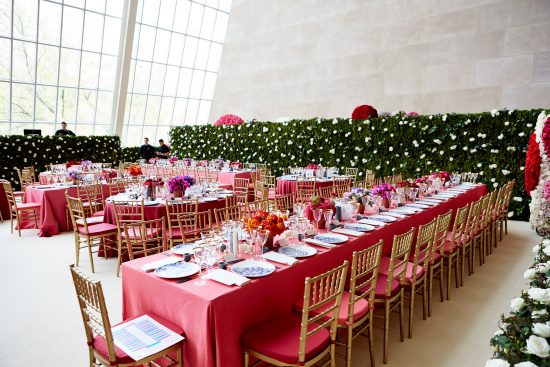
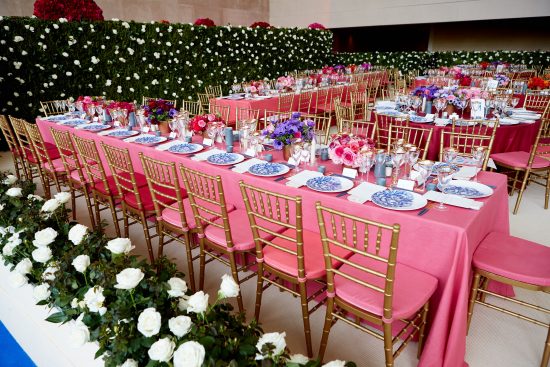
Playing off Raul’s whimsical floral theme, the gala featured gorgeous table settings by Eaddy Kiernan, who used pink and red linen tablecloths, Caskata peony blue-and-white china, Cutipol Goa gold and black flatware, and Vietri’s optical gold wine glasses. And in a nod to Ms. Kawakubo’s Japanese heritage, each guest was presented with a sake cup and a pair of chopsticks.
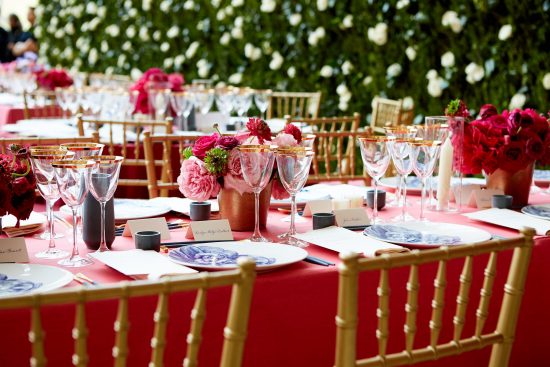
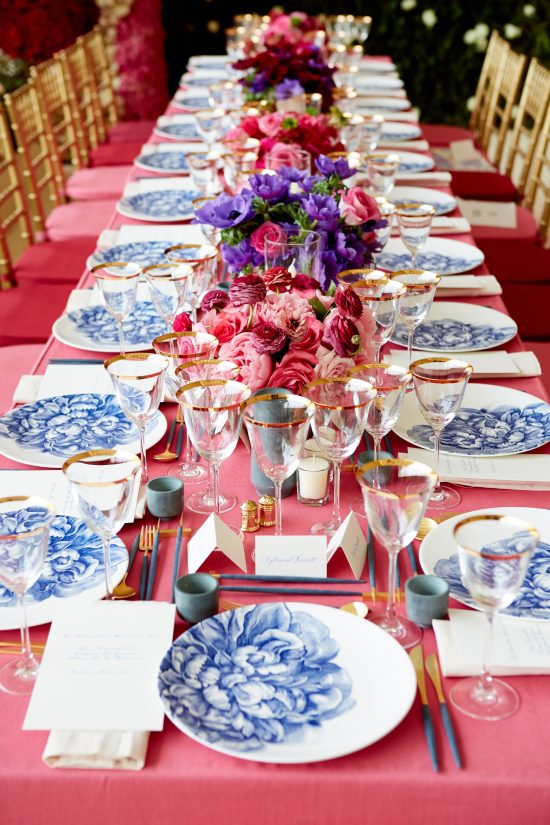
Here’s a close-up of your table setting when you sat down. You can see that every detail is perfectly thought out:
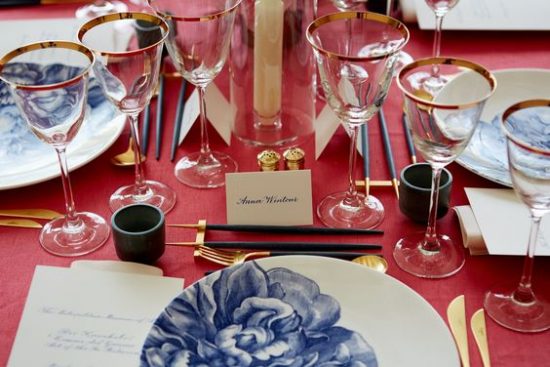
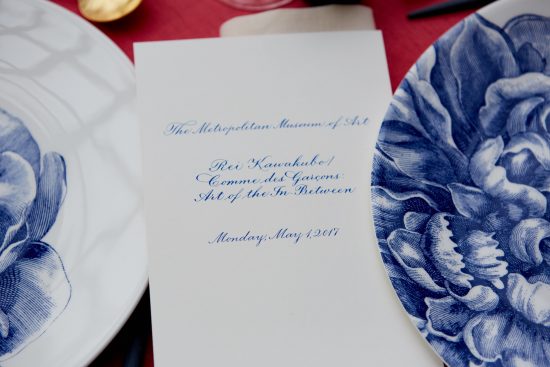
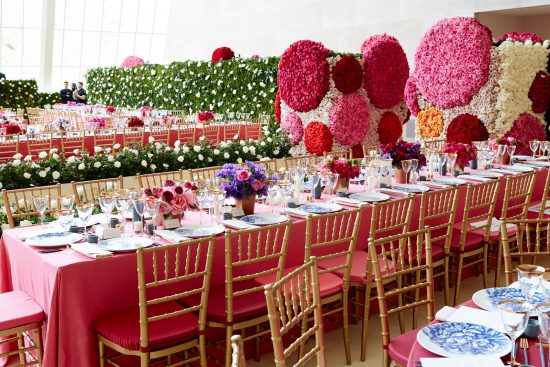
For the rest of us who, eh, couldn’t make it that night, it’s not hard to put together a party like this at home.
Just start with a couple of gorgeously colored tablecloths (and remember to think like a stylist, and pick colors that photograph well) …
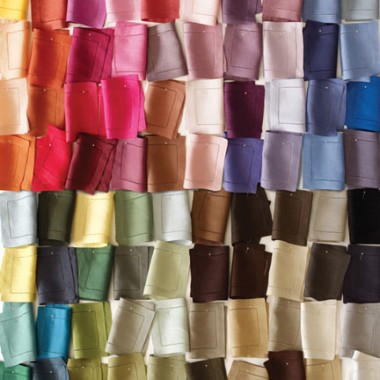
Add in dinnerware with graphic, oversized flowers (this is fashion, don’t be subtle) …
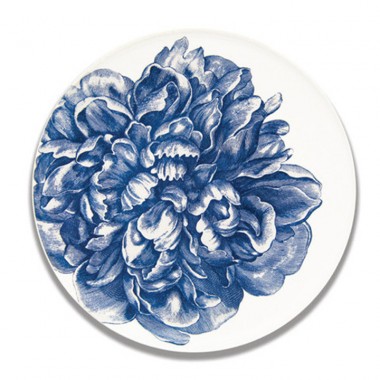
And then layer in your gold and black accents. For stemware, stick with something classic and elegant …
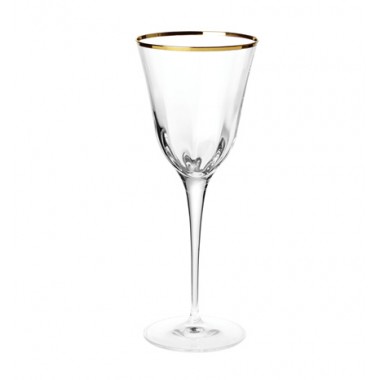
And then introduce something a bit edgier for your flatware. Cutipol’s Goa gold matte/blue collection is perfect:
And finally, bring in a touch of the exotic. Easy, with chopsticks …
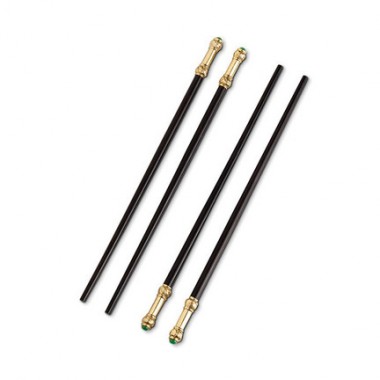
… paired with Pagoda shakers detailed with pearls …

And sake cups!
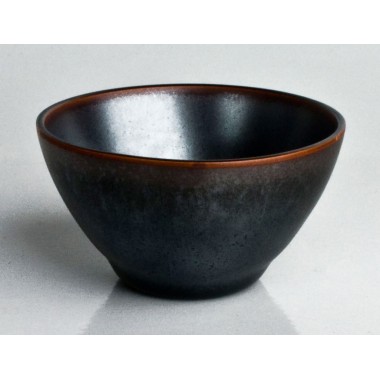
Toasts all around! What a gorgeous table you’ve created!
All About Anna Weatherley and her Handpainted Porcelain Dinnerware
Who is Anna Weatherley?
Although she’s probably best known for her line of handpainted dinnerware, Anna Weatherley has had many careers: from arms dealer (yes, really!) to famous couturiere to setting up handpainting studios in Hungary. Eventually, she was even commissioned by First Lady Laura Bush to design a collection of china for the White House.
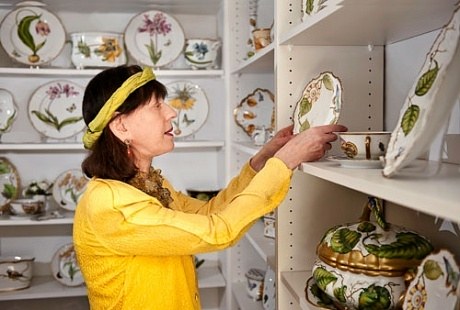
How did this happen? When she was young, Anna moved from her native Hungary to Australia. There, she studied art and design and soon became intrigued with Afghanistan, so she started a business importing furniture and textiles from Kabul to Sydney.
Eventually, she settled in Washington D.C., but her passion for design continued, so she returned to the bazaars of Afghanistan, where she found intricate guns for customers back in Australia. “I’d buy and ship these great 19th-century guns that the British left behind, beautiful guns with ivory and mother-of-pearl,” she says. “I wasn’t an expert, but I knew these guns were beautiful and decorative.”
When the supply of decorative firearms dwindled, Anna turned to fashion. During the 1970’s and 1980’s, she created a successful couture business, producing custom dresses using handpainted and hand-embroidered silk. Her customers included Elizabeth Taylor, Lady Bird Johnson, Jane Fonda, and upscale stores like Henri Bendel and Saks.
When did Anna Weatherley start producing handpainted porcelain?
But after the stock market crash of 1987, demand for her pricey dresses started to fall, so Anna looked to return home to Hungary. She was curious to see what almost fifty years of government control had done to the artistic community. But when she saw what passed for “art” in the formerly glorious Imperial capital of Budapest, she found little to celebrate.
“They were making this ghastly stuff, but I thought they were diamonds in the rough.”
So in the early 1990’s, she established a studio in Budapest and worked with her painters to create a collection of hand-painted porcelain based on botanical art.
“I always liked hand-painting because my fabrics were painted and embroidered,” she says.
Where does Anna Weatherley get inspiration for her designs?
Anna’s designs reflect her appreciation for the artistry of sixteenth, seventeenth, and eighteenth-century botanical artists, which she studied during trips to the Victoria and Albert Museum in London. Initially, she took botanical books to Budapest to show her artists.
“It took a long time to reeducate them. I was losing money, but I wanted to nurture them, and I didn’t want to lose them.”
Anna’s first collection, released in 1993, was named “Redoute Gardens” after the renowned French botanical artist Pierre-Joseph Redoute. Her goal was to honor the spirit of the artist without replicating it exactly.
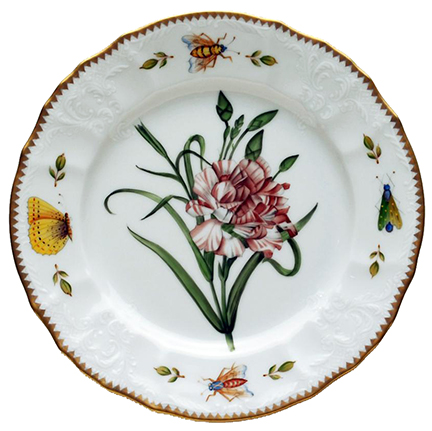
Next came “Hooker Fruit,” a collection of plates and serving pieces based on Joseph Hooker’s 1890s drawings.
“What I loved about his fruit was that they were a bit damaged or a little bit rusty looking,” Weatherley recalls. “After that every leaf I designed had to be torn or have a little hole in to make it look like a bug had been having lunch on it.”
Next came the tulips of Alexander Marshall – an experiment in color exploration. “Tulips are very gusty flowers,” says the designer, “and the colors are absolutely amazing.”
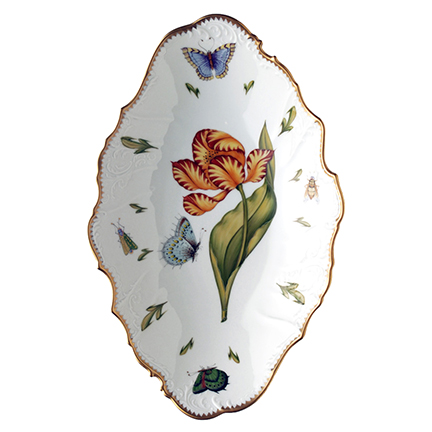
She then turned her attention to the pioneering work of Maria Sibylla Merian, a scientific illustrator renowned for her portrayal of the flora and fauna (and bugs!) she found on a trip to South America. “I faithfully painted her bugs, and nobody wanted to buy them.”
But bugs would play a key role in Weatherley’s masterful renderings.
“One day I got a call from Budapest saying that the painters had just finished one of my collections and they found a large black spot on all the porcelain.” Undaunted, Weatherley followed the example of one of the world’s greatest porcelain manufacturers – Meissen. “At the Smithsonian I learned that in the early days when Meissen had problems with production, bugs were sometimes painted over them.”
A new design direction was born. “Bugs became my best seller with the introduction of ‘Budapest Spring'” a delicate arrangement, mostly dominated by butterflies.
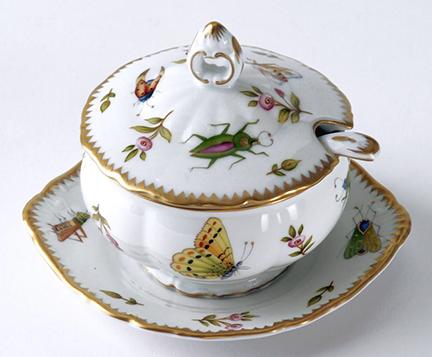
More garden series followed. “Pannonian Garden” was introduced in 1998 and pays homage to the bounty of florals that thrive around Hungary’s countryside dwellings.
Then came “Treasure Garden,” which was inspired by German painter Georg Ehret.

“Vegetable Garden” was inspired by seventeenth-century Florentine painter Giovanna Garzoni and French painter Jacques le Moyne de Morgues, who painted vegetables and fruits he found in Florida in 1564.
Since much time was spent in Budapest and at tabletop shows throughout America, Anna had little time to create her own garden in Arlington; but no matter how long she was away, she always found weeds standing when she returned. Her testament to those weeds is “Green Leaf.”
“Leaves have the most intricate texture and are more difficult to paint than a lush flower.”
In the Spring of 2001, she introduced “Morning Glory”, a common flower throughout Hungary. “This is one that God and I designed together, because it has an innocent charm and is fresh and young and not contrived. I wanted to have more free-form, which I like because a painter can exercise a little more personality.”
How is Anna Weatherley dinnerware created?
Starting with an illustration, Anna’s painters carefully apply paint using very fine brushes onto lustrous white porcelain, which is then fired several times at high temperatures to set the designs and harden the pieces. Each plate takes two days to paint, while a large dinner set might take as long as three months.
Who paints Anna Weatherley porcelain dinnerware?
Anna employs 60 master painters in Hungary to execute her designs. While each painter has a distinct technique and his own secret way of mixing colors to create their designs, the flowers and fruits are painted mostly by men. By contrast, women tend to specialize in painting the charming bugs and butterflies with miniature detailed wings and legs and gold-dipped eyes. Grasshoppers are a favorite of the team and each one is given a different personality. To finish the pieces, borders are softly brushed onto the edges by a single painter with mastery in this special technique.
Which celebrities own Anna Weatherley dinnerware?
When Princess Diana visited Washington D.C. in the 1990’s, Washington Post publisher Katharine Graham held a luncheon in her honor and presented her guests with Anna Weatherley porcelain gifts. This same visit prompted Anna Wintour to place an order for a present for Princess Diana. For this commission, Weatherley produced a pair of cachepots decorated with pears, cherries, and gooseberries based on British botanical art.
For First Lady Laura Bush, Anna created 75 seven-piece place settings of the Magnolia Residence China Service, featuring magnolia blossoms, butterflies, and insects in a design inspired by the flora and fauna found on the White House grounds. According to Weatherley, Mrs. Bush had seen her work on several friends’ dinner tables.

And for The Blair House, the official guest house of the White House for visiting heads of tastes, Anna created and donated a charming breakfast tea set.
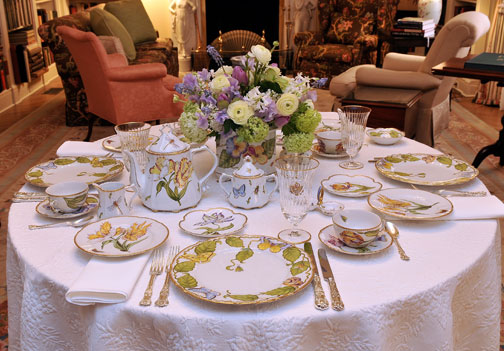
What’s next for Anna Weatherley? Learn more about Anna Weatherley lamps.
Anna’s latest introductions include a line of exquisite handpainted lamps.
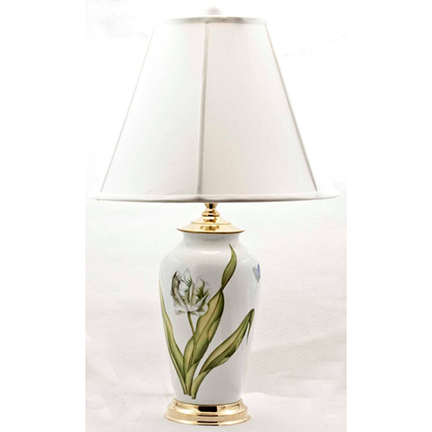
Throughout the years, Anna’s handpainted porcelain pieces have been featured in Architectural Digest, Veranda, Vanity Fair, Southern Accents, Elle Decor, Washington Post, Traditional Home, House and Garden, and Town & Country. If you own any Anna Weatherley pieces, we’d love to see them.
Love this collection? See more by clicking here.
Special thanks to Anna Weatherley, Devine, Vanity Fair, The Washington Post, The White House, and The Blair House.
Pallina Acrylic Pitchers Featured in Better Homes and Gardens
We love this outdoor entertaining scene from Better Homes & Gardens‘s June 2017 issue!

To help us entertain for the summer, the editors picked out “a few sturdy but elegant additions [that] put on a dressy spin on a picnic, dinner on the deck, or a party on the porch”:
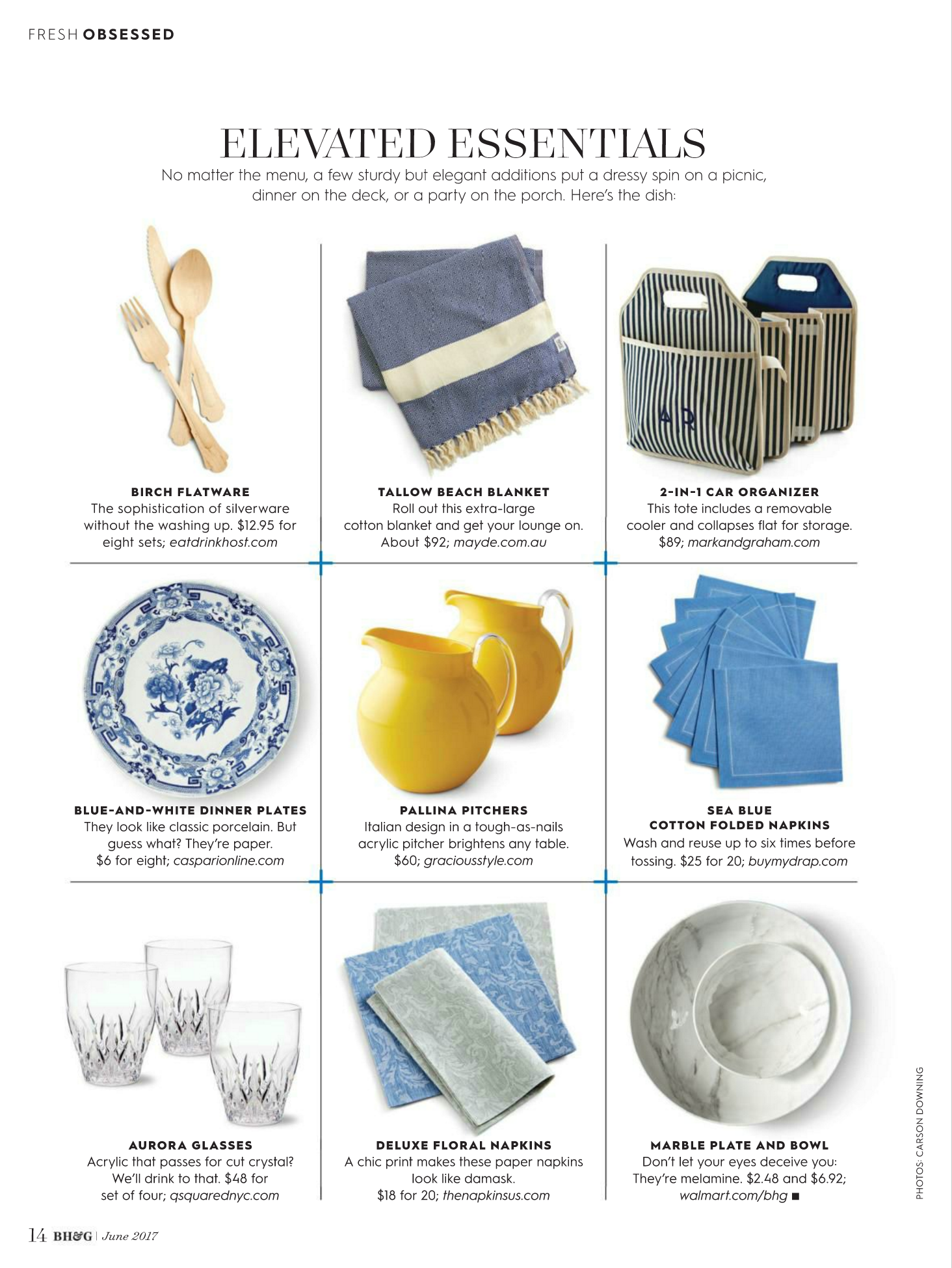
Included in this line-up is the Pallina Pitchers acrylic pitcher, the stylish yet “tough-as-nails” pitcher that comes in bright yellow, as shown in Better Homes & Gardens:
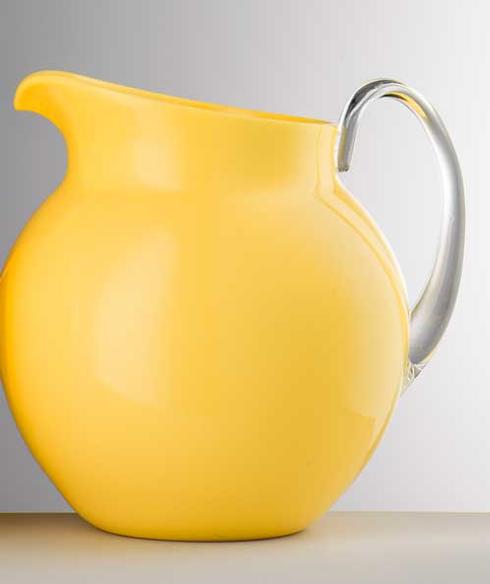
But it’s also available in nine other colors, including red:
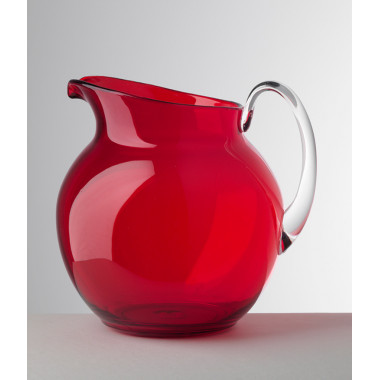
clear:
green:
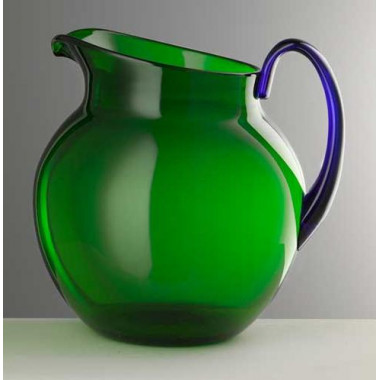
white:
ruby:
pink:
blue:
turquoise:
white fluorescent:
So no matter what your decor, it could add the right pop of color and elegance to your summer table.
Thanks to Better Homes & Garden for thinking of us!
The Ultimate Guide to Choosing an Area Rug
We’ve just moved into our new house, and although we love our hardwood floors, they are kind of overwhelming. We feel like we’re living in a showhouse, plus we’re always walking carefully since our footsteps can be heard so loudly throughout. So we need to start thinking about rugs. We’re looking to define specific areas, add color to some rooms, and muffle sound/bring in warmth underfoot.
Luckily, we’ve done this many times before, so we know what a change we’ll see once we add rugs. But for those who haven’t, here’s where you start.
A rug is good for:
- Defining a specific seating area. The area rug brings a group of furniture together. It could help smaller rooms look more spacious and turn larger rooms into separate, usable areas.
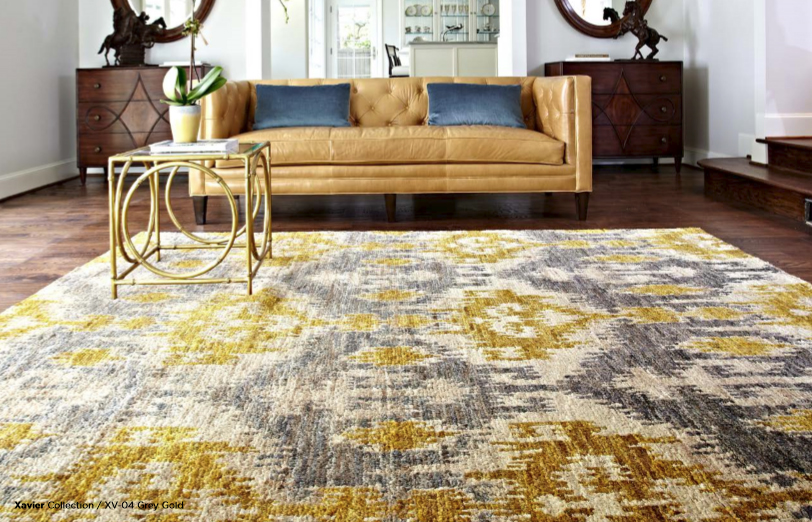
- Creating a focal point in your room. If your rug is particularly special, use more muted furnishings so you can really show it off. Clear tables (like this acrylic coffee table) really let your floors shine.
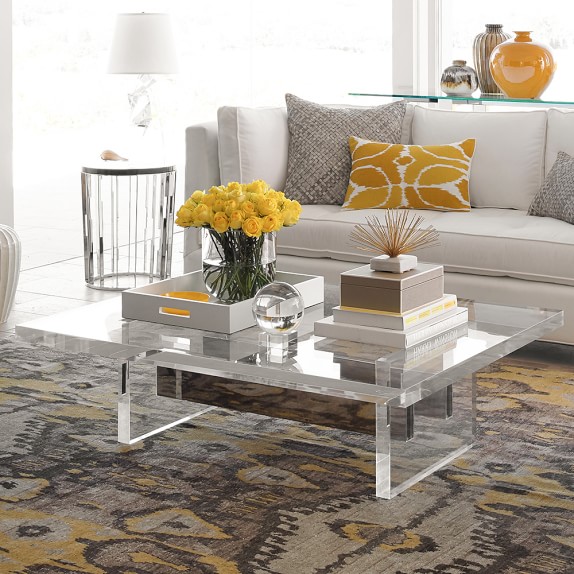
- Adding comfort and warmth underfoot, especially in bedrooms and family rooms.
- Protecting flooring and furniture. So next time you hear scraping noises from the constant pulling and pushing of chairs in your dining room, you’ll know how to avoid this.
- Muffling sound. Especially true when you have people walking on floors above you.
- Covering imperfections. Perfect for older homes if you just don’t love your floors.
So if you’re ready to look at some rugs, how do you tackle this?
Color
The first thing you should look at is how the colors in the rug coordinate with the existing colors in your room. The colors don’t have to match up perfectly, but they should complement each other. Trust us, when you get the color right everything else becomes so much easier.
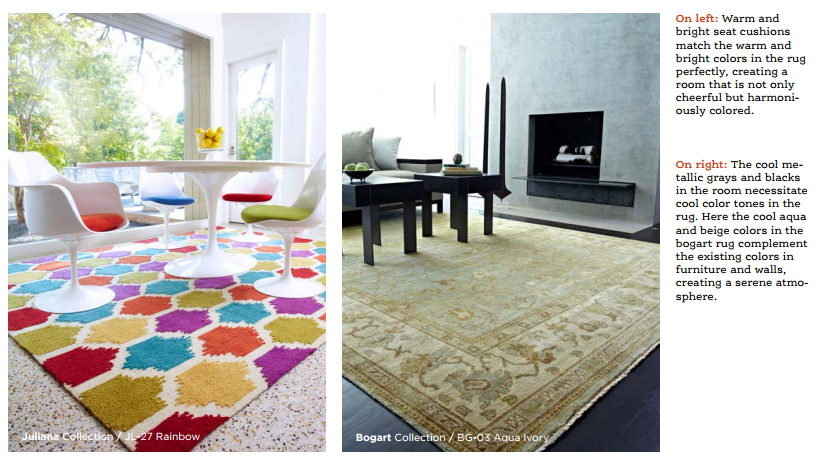
Design
Usually, the architecture of your space and the type of furnishings you own will dictate whether you go with a traditional, transitional, or contemporary rug. When in doubt, transitional designs are a smart choice because they’ll work with most interiors.
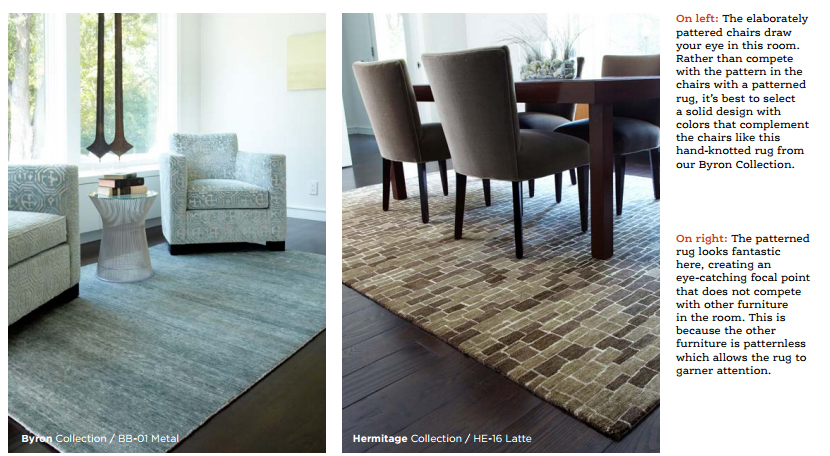
Texture
Design and color may define a rug to most onlookers, but the visual effects of texure should not be underestimated. Not only are textured rugs visually intriguing in themselves, they offset the solid surface of your floor, drawing your eyes into the dimensions of the rug.
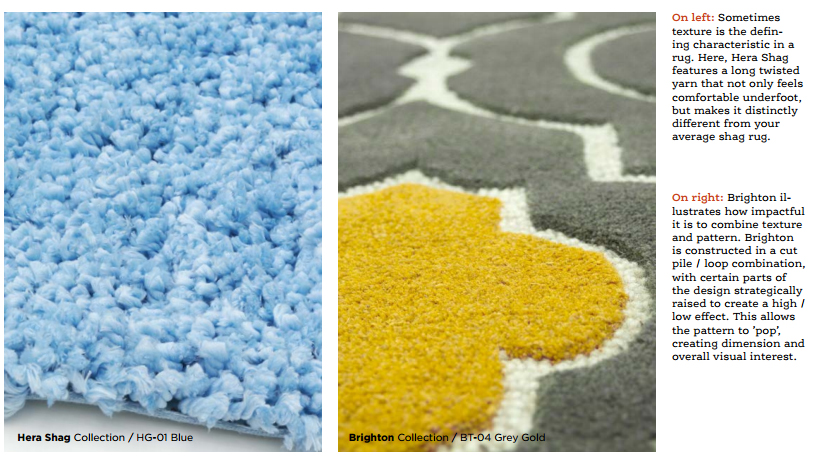
Information courtesy of Loloi Rugs.
Should I Get a Rug Pad?
Area rugs can be pricey, so many of us have wondered if we can just skip the rug pad in order to save a few dollars. Here’s the quick answer: nope. And here’s why.
Rug pads prevent your rug from sliding, buckling, and wrinkling. They also protect your rug from uneven wear patterns, and keep dirt and moisture trapped between the floor and the rug from damaging the rug’s underside. In a similar vein, they prevent your floors, especially wood floors, from getting bits of latex backing or thread stuck to or ground into in them. Also, vacuuming is easier with a rug pad. And who doesn’t want to keep their floors in their best shape for years to come?
If you’re ready to take the rug-pad plunge, here’s a quick guide to explain which types work best on which floors, and which types of rugs they work best with. Note that radiant-heat floors can melt rug pads and rugs with latex or plastic backing, so you’ll want to choose a rug weave—sans rug pad—that’s compatible with these floors, or forgo the rug entirely on these surfaces.
Outdoor Floor Rug Pads
Made of tough, no-slip PVC-coated polyester, these rug pads are perfect for the porch or patio and designed to work with indoor/outdoor rugs. Note: outdoor rug pads are not always suitable for vinyl, lacquered, acrylic, Saltillo tile, terra-cotta, and unsealed surfaces, so if you have any of these types of floors, check with the manufacturer before using.
Floor-Lock Solid Pad
These pads, made of needle-punch plastic with a latex backing, offer cushioning, insulation, and slip resistance in one washable, microbe-resistant package. Use with any type of indoor rug, especially micro-hooked cotton and wool.
Rug-Stop Rug Pad
This thin, durable, washable pad offers support and promotes even wear. It’s ideal for low-profile rugs, like woven wool and micro-hooked wool, and works well in stair runner installations, where too much height can actually encourage stumbling on the stairs.
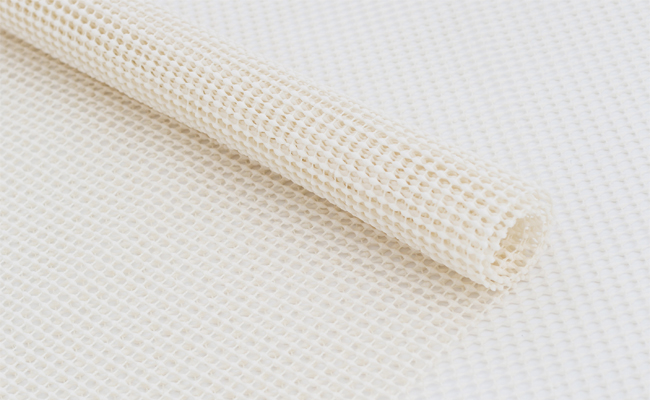
Solid Extra-Grip Rug Pad
In contrast to thinner pads, like the Rug-Stop, this pad in thick and cushy and enhances the foot-feel of high-pile rugs, like hand-knotted wools and jutes. Its higher loft also prevents liquids from leaking onto the floor beneath—a plus if you have pets or small kids in the house.
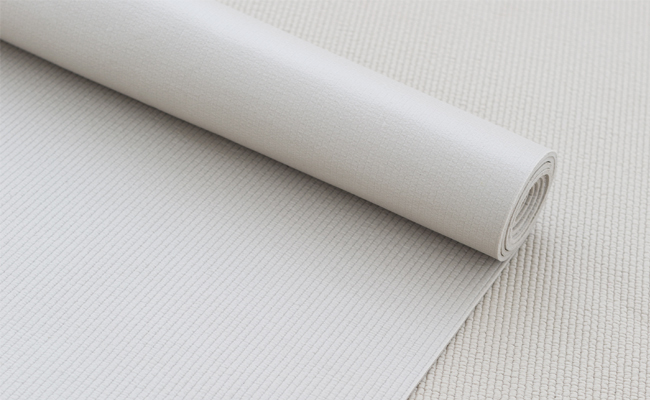
Information courtesy Loloi and Dash & Albert Rugs.
Getting the Right Size
The best rugs don’t just look great — they enhance and complement the entire look of your interior space. With that said, it’s interesting how the size of a rug, not just its appearance, can influence the dynamic of a room.
Tips
- Get a measuring tape and measure your room. Then, outline the area where you want your rug (try this with blue painter’s tape). Don’t forget to check every door and see how it opens. If you’re in between sizes, go for the larger rug.
- Keep at least 18 inches of bare floor exposed around the rug. This is a classic rule that works for most rooms. If your room is smaller, you can leave less space. The key is to get the proportions right.
- Legs on or off? It can work both ways, but you should be consistent. Ideally, all legs should be on the rug, but you may want to think carefully before buying a huge rug that will only fit in one space. We like going with more standard sizes (8′ x 10′ and 9′ x 12′) as they will fit in most rooms.
- Rugs can create an optical illusion — make this work in your favor. An undersized rug makes the room appear small and disconnected. When in doubt, go for a bigger size. It’ll unify the furniture and make the room appear bigger than it actually is.
- If you have a small rug that you love, lay it as an accent on top of a more neutral sisal/jute rug that’s the right size for your seating area. And as an added bonus, your room will look more collected that way.
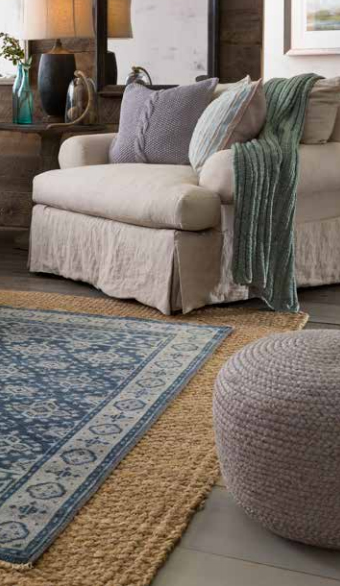
Hides work particularly well this way.
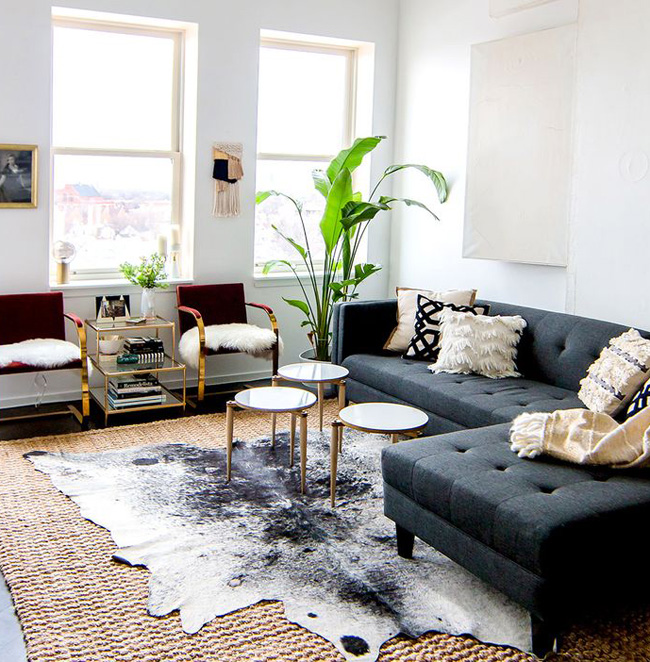
RUG SIZE
Living Room (common sizes: 5′ x 8′, 8′ x 10′, 9′ x 12′, 11′ x 14′)
In a living room, rugs help to pull a space together, add warmth and comfort, and muffle noise. Selecting a rug size for your living room depends on the size of your room as well as your furniture arrangement.
Tips:
- Any rug you choose should be longer than your largest piece of furniture (like your sofa).
- Whenever possible, choose a rug that is at least 8′ x 10′; your room will feel more pulled together.
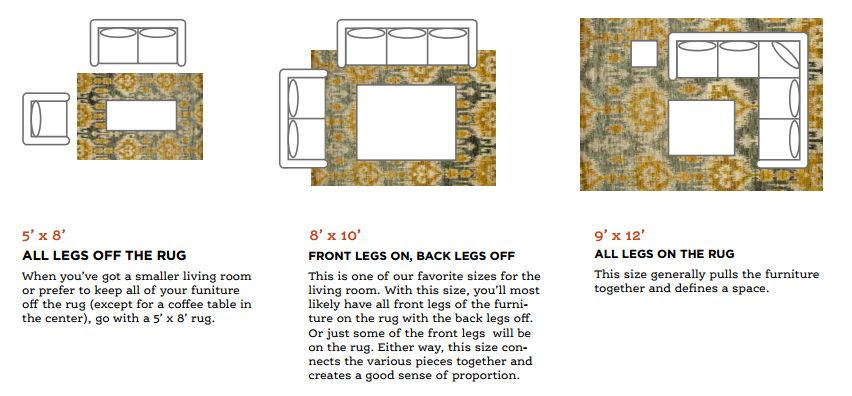
Dining Room (common sizes: 5′ x 8′, 8′ x 10′, 7′ round, 8′ round)
In the dining room, make sure the rug you select is big enough for the legs of the chair to sit comfortably on the rug — even when they’re pulled out for people to sit at the table. To make this easy, look for a rug that extends at least 24 inches around the table. And remember to keep at least 18 inches of floor exposed around all sides between the rug’s edge and the wall.
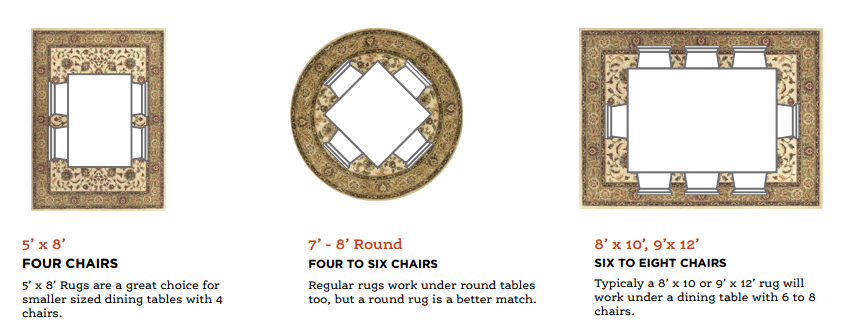
Kitchen (common sizes: 2′ x 3′, runners)
Many people prefer a small 2′ x 3′ area rug in front of the sink, which looks fine. But if you can, a longer runner will look even better, especially in larger kitchens.
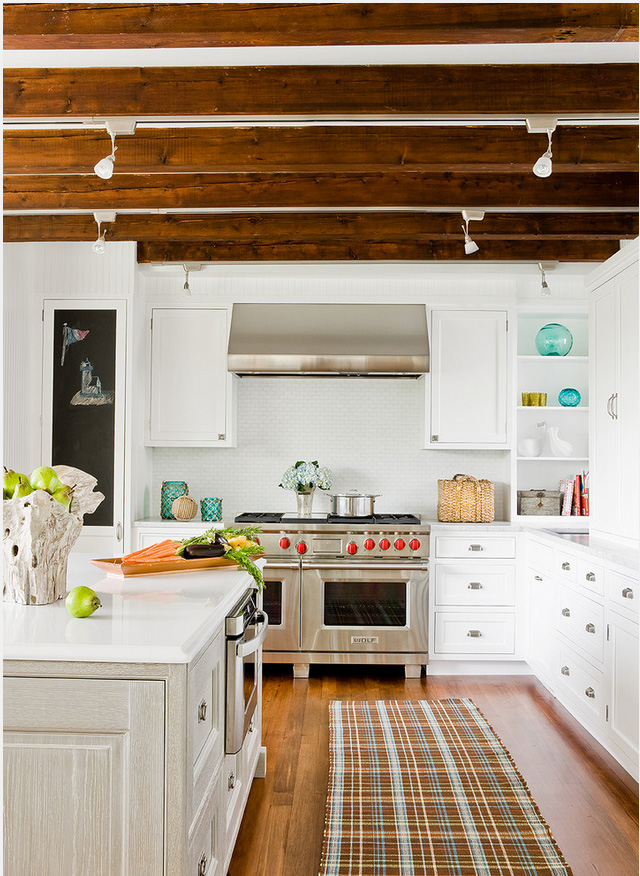
Hallways (common sizes: runners)
Rugs are great for warming up hallways. Used near console tables and beautiful artwork; they will create small resting areas and unify the space.
Bedroom (common sizes: 5′ x 8′, 8′ x 10′, 9′ x 12′)
In a bedroom, the size of your bed and the floor area that surrounds it will dictate what size you should select. Place a large rug under two legs of the bed and make sure the floor is visible all around the bed. The rug should extend at least 24″ in length and width from the edges of the bed. That way, when you get up in the morning, your feet will be on the rug.
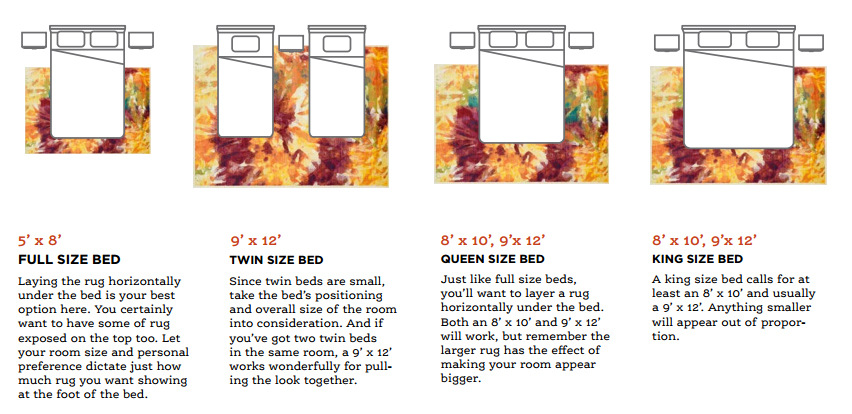
In nurseries, don’t worry if the bed is pushed up against the wall: if you use a rug that’s large enough to fit under the front legs of the bed, you’ll be left with a nice-sized play area for the kids on the floor.
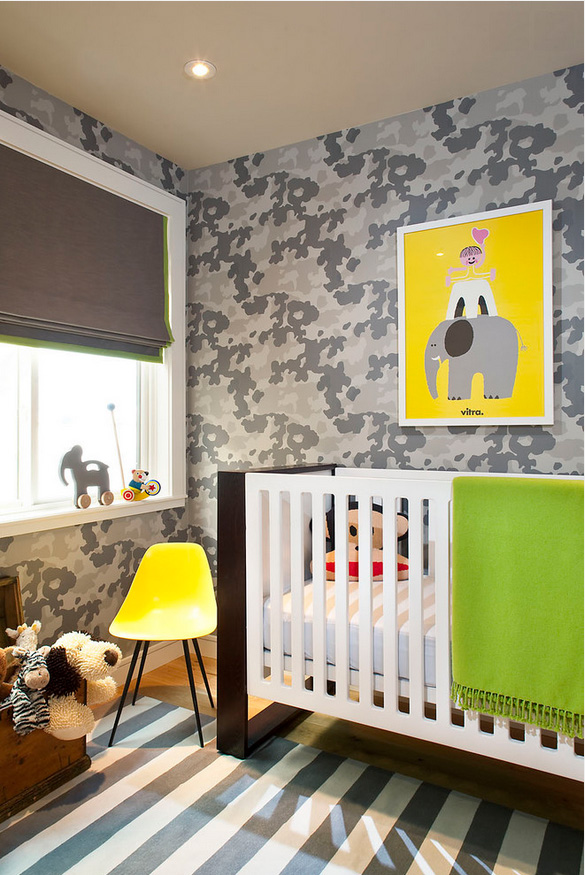
Patio (common sizes: 2′ x 3′, 5′ x 8′, 8′ x 10′)
Just like selecting a rug for your living room, you must consider the scale of your patio furniture arrangement before selecting a rug. One of the most underrated benefits of indoor/outdoor rugs is their ability to unify an outdoor furniture arrangement, which allows us to create a cohesive look in an open space.
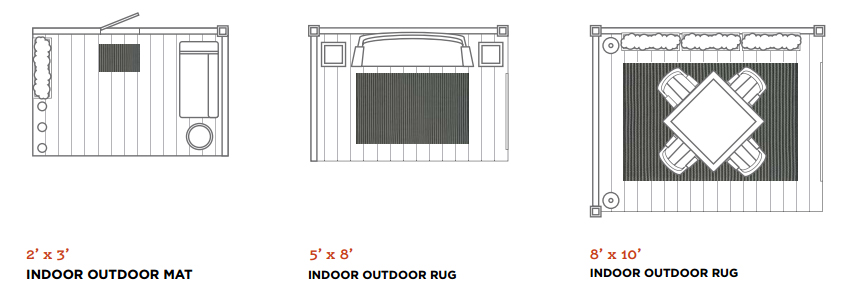
RUG SHAPE
The shape of a rug usually follows the architecture and the furniture arrangement in a room.
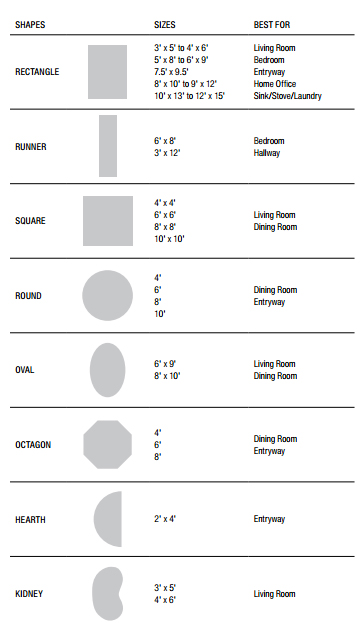
Rectangle – these are the most common shape, and they work in most rooms
Runners – great for hallways, kitchens, staircases, or next to beds
Round – these look great under round tables, either in the entryway or in the dining room
Square – generally work best in square rooms under square tables, either in the entryway or in the dining room
Half-circle or hearth – for entryways or fireplaces
Information courtesy Loloi, Safavieh, and Surya Rugs.
If you’re looking for more inspiration, check out our Rugs section here.
Construction
While hand knotted rugs are the most prestigious and best known, the majority of rugs in people’s homes are less expensive constructions, like hand tufted or machine-made rugs. This will help you understand more about the main construction types, including their durability, defining characteristics, and how they’re made.
Hand Knotted
- Price: $$$$
- Durability: Longest lasting construction. Good ones can last 10 to 25 years; great ones can last 100+ years.
- Manufacturing time: 5-12 months
- Shedding: Minimal
- Hand-knotting is the most intricate, labor-intensive rug weaving process in use today. A higher number of knots per square inch typically translates to better quality. An average weaver can tie about 3,000 knots per day.
- Process: Hand knotted rugs are made on a vertical frame called a hand knotting loom. Columns of threads are stretched from the top to the bottom of the loom; these threads form the foundation and the fringe ends of the rug. Once this has been done, a weaver sits behind the loom and hand ties individual knots onto the vertical strings. Once completed, the rug is then “sheared” to produce a uniform surface, hand washed for luster, and dried. Some rugs are dried in the sun for authenticity.
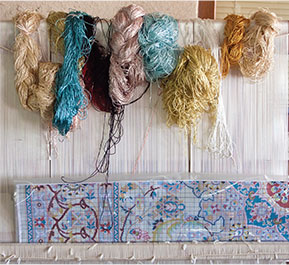
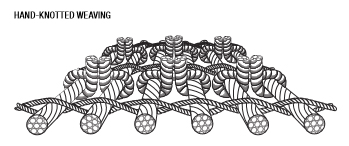
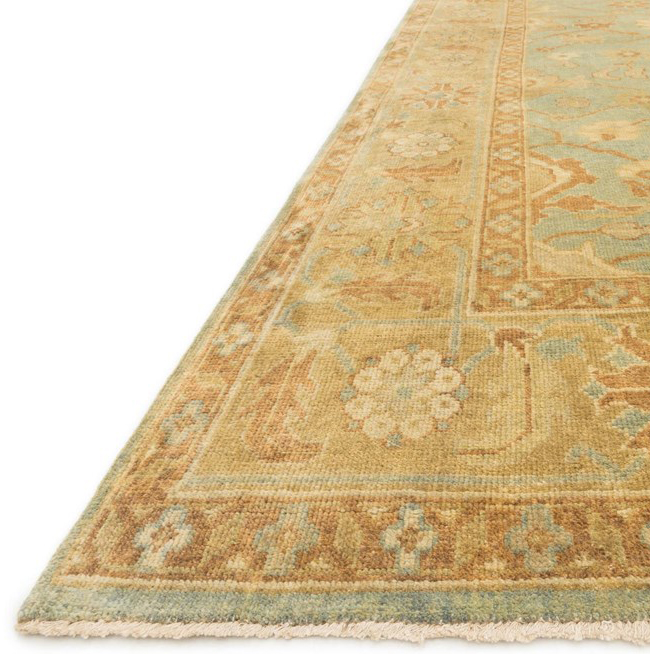
- How to Identify: Individual knots are visible on the back of hand-knotted rugs, making it possible to see the overall pattern and colors used on the rug’s surface. Weaving and knots will be slightly uneven. The fringe of a hand-knotted rug is an extension of the rug’s foundation.
- Best for living rooms, libraries, and bedrooms.
Hand Tufted
- Price: $$
- Durability: 3-6 years for standard rugs; 5-10 years for premium rugs
- Manufacturing time: 4-6 months
- Shedding: Sheds initially, subsiding over time.
- Compared to hand-knotted rugs, tufted rugs are less time consuming to produce, so they are more affordable. Tufted rugs tend to have a thicker pile height, so they’ll have a more cushiony feel.
- Process: Hand-tufted rugs are produced by pulling yarns through the rug’s backing material using a tufting gun. When the rug design is completed, the loops are cut to form a smooth cut-pile surface. The rug is then removed from the frame and a second fabric is glued to the back to hold the yarns in place.
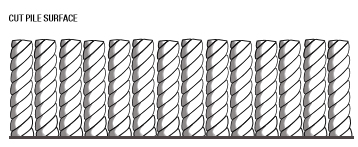
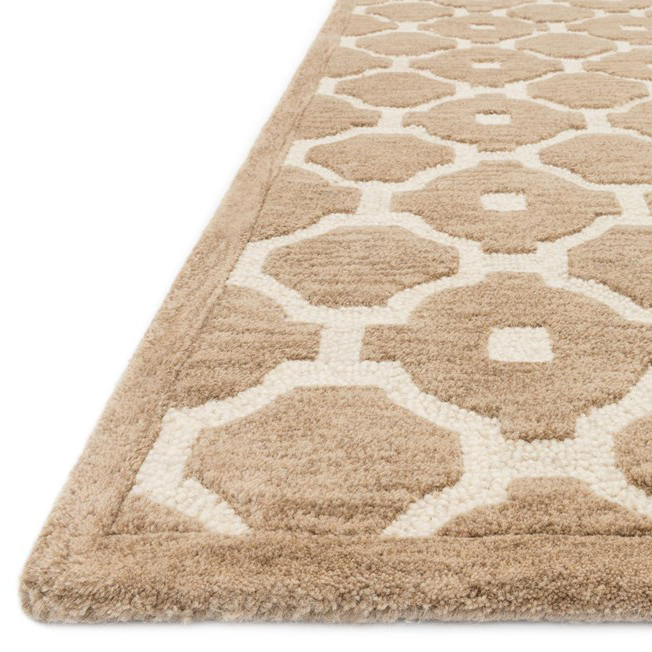
- How to identify: On the back of hand-tufted rugs, you’ll see a canvas backing applied with an adhesive to hold the yarns together.
- Ideal for family rooms, bedrooms, and living rooms.
Hand Hooked
- Price: $$
- Durability: 3-10 years
- Manufacturing time: 4-6 months
- Shedding: Sheds less than hand-tufted rugs, subsiding over time.
- Compared to hand-knotted rugs, hooked rugs are less time consuming to produce, so they are more affordable.
- Process: Hooked rugs are made like tufted rugs, but instead of shearing the yarns to create a smooth-cut pile, the loops are left uncut, so the finished product will feel more like embroidery. After the design is completed, the rug is removed from the frame and a second fabric is glued to the back to hold the yarns in place.

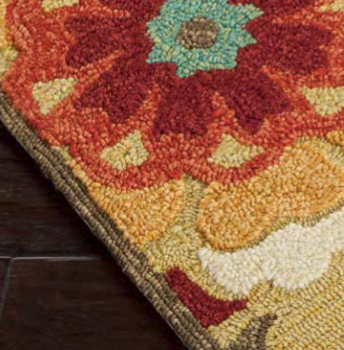
- How to identify: A canvas backing is applied to hand hooked rugs with an adhesive to hold the yarns together — similar to hand-tufted rugs. The surface pile of a hand-hooked rug will appear looped (rounded).
- Ideal for family rooms, bedrooms, and living rooms.
Hand Woven Shag
- Price: $$
- Durability: 2-8 years
- Manufacturing time: 4 to 6 months
Shedding: wool – moderate for an extended period, subsiding over time; polyester – minimal shedding. - Process: Hand-woven shag rugs are made on hand-operated looms with hundreds of plush, twisted and slightly felted yarns. A team of weavers uses a long steel rod to shoot the fibers across vertical strings that run the length of the rug.

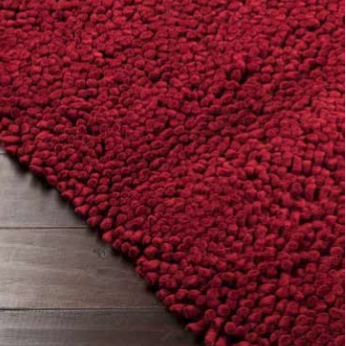
- How to identify: Unusually deep pile, giving it a shaggy appearance. May or may not have a canvas backing.
Power Loomed/Machine-Made
- Price: $$
- Durability: 2-6 years
- Manufacturing time: 2-3 months
- Shedding: Minimal shedding. Since most rugs of this type are made from synthetic fibers, the pile will crush with heavy traffic.
- Usually the most affordable rug construction. Typically made out of synthetic materials like polyester, polypropylene, and nylon, which are great for high-traffic areas.
- Process: Produced by large machines with hundreds of spindles of fiber that are mechanically woven into a thin mesh backing. A computer dictates the pattern, so the chances for error are minimal.
- How to identify: As with hand-knotted rugs, the rug pattern and colors are visible on the back of these rugs. However, a coarse latex backing is used to secure the fibers in place. The back of a machine-made rug will look very uniform and even (in contrast to the back of a hand-knotted rug, which will have slightly uneven knots).
- Ideal in high-traffic areas like entryways, family rooms, kid bedrooms.
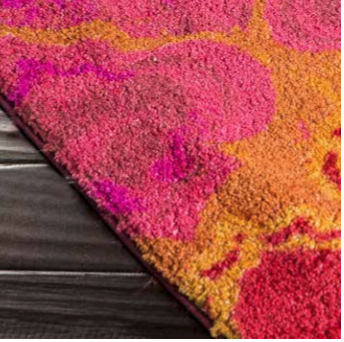
Flat Weave
- Price: $$
- Durability: 3-10 years
- Manufacturing time: 4-6 months
- Shedding: Moderate, subsiding over time.
- Often referred to as dhurries or kilims, flatweave rugs are woven on a loom rather than knotted. They are typically constructed from wool, cotton or synthetic materials. In most cases, the pattern on the front of the rug can be viewed clearly from both sides, making these rugs reversible.
- Process: The material used to make flat-weave rugs is braided onto a loom to create the structure of the rug. No base material is used , so these rugs are thinner (hence the name “flat weave”).
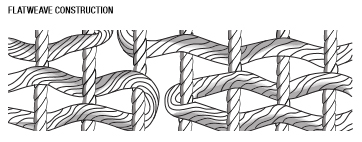
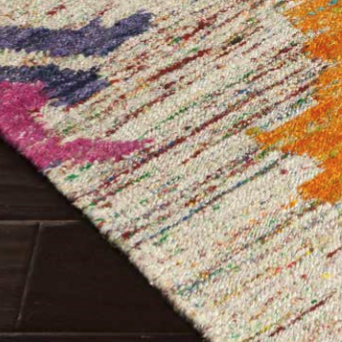
- Tip: Flat weave rugs are reversible, so you can extend their life by flipping the rug.
- Ideal for high-traffic rooms like kitchens, playrooms, and entryways.
Natural Fiber
- Price: $
- Durability: 2-6 years
- Manufacturing time: 4-5 months
- Shedding: Minimal
- Static resistant, naturally insulating, eco-friendly/biodegradable.
- Process: While not a true construction, natural (plant-based) fiber rugs possess their own unique characteristics. They are constructed of tightly woven fibers such as bamboo, cotton, jute, linen, seagrass and sisal to create a casual and relaxed look and feel. The fibers are often bleached or dyed to increase design options and aesthetic appeal. It is important to keep in mind that, as with other rugs, placing natural fiber rugs in direct sunlight several hours a day can result in the fading of dyed materials and gradual darkening of undyed fibers.
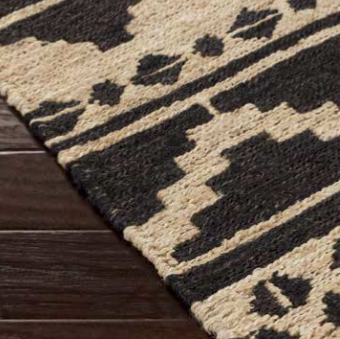
Hair-on-hide
- Price: $$
- Durability: 5-10 years
- Manufacturing time: 3-6 months
- Shedding: Minimal
- Process: Hair-on-hide rugs are handcrafted of natural hides to create a myriad of designs. They may be dyed, or left with their natural colors. Due to the innate differences among hides, variations in dye lot, color and pattern can be expected. Brands and other markings add character to hide rugs—making each a one-of-a-kind piece to create a truly authentic look.
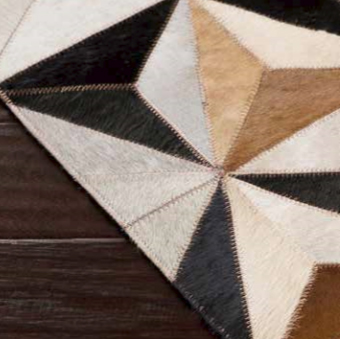
- How to identify: These rugs typically have a felted backing.
Indoor/outdoor
- Price: $
- Durability: 1-5 years outdoor; 2-8 years indoor. Leaving the rug in direct sunlight or standing water will significantly limit its life.
- Manufacturing time: 3-4 months
- Shedding: None
- Great durability and toughness.
- Process: Indoor/outdoor rugs are made of synthetic fibers (including olefin, polyester, polypropylene and PVC) that have been infused with UV inhibitors to minimize fading. These rugs are mold- and mildew-resistant and can withstand up to 500 hours of direct sunlight.
- Indoor/outdoor rugs can be hand-hooked or machine-made and typically have a latex, rubber or vinyl backing, which enables them to withstand the elements
- Ideal for patios, outdoor dining areas
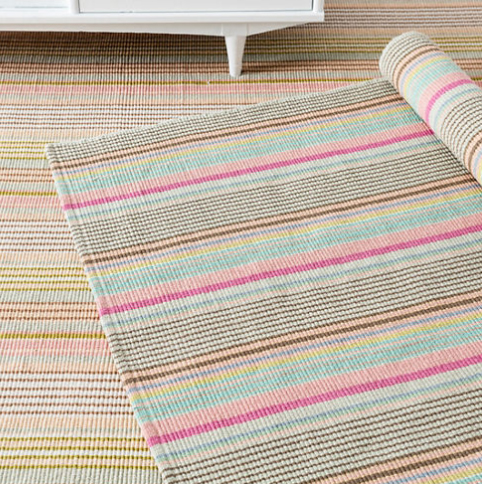
Information courtesy Dash & Albert, Loloi, Safavieh, Surya Rugs.
To shop our entire selection of rugs, click here.
Materials
When picking the right fiber, you have to consider things like cleanability, durability, softness, shedding, color retention, and more. In fact, sometimes synthetic fibers like polypropylene or polyester are better choices than natural fibers because they’re stain-resistant, fade-resistant, and soft.
Understanding the fibers below will help you determine what you should choose based on your needs.
NATURAL FIBERS
Cotton
- Texture: soft and smooth
- Durability: moderate
- Minimal shedding
- Sustainable/biodegradable
- Easy to clean and maintain
Sisal
- Natural fiber from the agave plant
- Texture: coarse
- Durability: high
- Minimal shedding
- Sustainable/biodegradable
- Does not attract dust and is static free
Seagrass
- Natural fiber from the agave plant
- Texture: soft, reed-like
- Durability: high
- Minimal shedding
- Sustainable/biodegradable
- Does not attract dust and is static free
Jute
- Shiny, vegetable fiber
- Texture: rough, with natural variations in color
- Durability: moderate
- Sustainable/biodegradable
Wool
- Most commonly used natural fiber in rugs (usually sheep’s wool)
- Texture: mildly coarse, very resilient
- Durability: high
- Sustainable/biodegradable
SYNTHETIC FIBERS
Acrylic
- Texture: smooth, shiny
- Durability: high
- Minimal shedding
- Most commonly blended with other fibers like polyester (this is called a poly-acrylic blend)
Polypropylene
- Texture: slightly less smooth than most synthetic fibers
- Durability: high
- Minimal shedding
- Bold, fade-resistant color
- Commonly used in indoor/outdoor rugs for its UV, mildew, and water resistant qualities
Viscose
- Synthetic, shiny fiber (also known as “art silk”) commonly used as a more affordable substitute for silk
- Texture: soft, smooth, silky sheen
- Durability: low
- Some rugs are made of 100% viscose, but most rugs use viscose to accent a pattern
Polyester
- Texture: smooth, shiny
- Durability: high
- Wears well and feels very soft, especially when used for rugs with a thick pile
- Moisture, stain, and abrasion resistant
- Retains color over time, easy to clean
Information courtesy Loloi and Surya Rugs.
Why Do I Need a Rug Pad?
Area rugs can be pricey, so many of us have wondered if we can just skip the rug pad in order to save a few dollars. Here’s the quick answer: nope. And here’s why.
Rug pads do the following:
- Prevent your rug from sliding, buckling, and wrinkling
- Protect your rug from uneven wear patterns, and keep dirt and moisture trapped between the floor and the rug from damaging the rug’s underside
- Prevent your floors, especially wood floors, from getting bits of latex backing or thread stuck into them
- Finally, vacuuming is easier with a rug pad. And who doesn’t want to keep their floors in their best shape for years to come?
If you’re ready to take the rug-pad plunge, here’s a quick guide to explain which types work best on which floors, and which types of rugs they work best with. Note that radiant-heat floors can melt rug pads and rugs with latex or plastic backing, so you’ll want to choose a rug weave—sans rug pad—that’s compatible with these floors, or forgo the rug entirely on these surfaces.
Made of tough, no-slip PVC-coated polyester, these rug pads are perfect for the porch or patio and designed to work with indoor/outdoor rugs. Note: outdoor rug pads are not always suitable for vinyl, lacquered, acrylic, Saltillo tile, terra-cotta, and unsealed surfaces, so if you have any of these types of floors, check with the manufacturer before using.
These pads, made of needle-punch plastic with a latex backing, offer cushioning, insulation, and slip resistance in one washable, microbe-resistant package. Use with any type of indoor rug, especially micro-hooked cotton and wool.
This thin, durable, washable pad offers support and promotes even wear. It’s ideal for low-profile rugs, like woven wool and micro-hooked wool, and works well in stair runner installations, where too much height can actually encourage stumbling on the stairs.
In contrast to thinner pads, like the Rug-Stop, this pad in thick and cushy and enhances the foot-feel of high-pile rugs, like hand-knotted wools and jutes. Its higher loft also prevents liquids from leaking onto the floor beneath—a plus if you have pets or small kids in the house.
Information courtesy Loloi and Dash & Albert Rugs.
For more rug pads, click here.
How Do I Choose the Right Material for My Rug?
When picking the right fiber, you have to consider things like cleanability, durability, softness, shedding, color retention, and more. In fact, sometimes synthetic fibers like polypropylene or polyester are better choices than natural fibers because they’re stain-resistant, fade-resistant, and soft.
Understanding the fibers below will help you determine what you should choose based on your needs.
NATURAL FIBERS
Cotton
- Texture: soft and smooth
- Durability: moderate
- Minimal shedding
- Sustainable/biodegradable
- Easy to clean and maintain
Sisal
- Natural fiber from the agave plant
- Texture: coarse
- Durability: high
- Minimal shedding
- Sustainable/biodegradable
- Does not attract dust and is static free
Seagrass
- Natural fiber from the agave plant
- Texture: soft, reed-like
- Durability: high
- Minimal shedding
- Sustainable/biodegradable
- Does not attract dust and is static free
Jute
- Shiny, vegetable fiber
- Texture: rough, with natural variations in color
- Durability: moderate
- Sustainable/biodegradable
Wool
- Most commonly used natural fiber in rugs (usually sheep’s wool)
- Texture: mildly coarse, very resilient
- Durability: high
- Sustainable/biodegradable
SYNTHETIC FIBERS
Acrylic
- Texture: smooth, shiny
- Durability: high
- Minimal shedding
- Most commonly blended with other fibers like polyester (this is called a poly-acrylic blend)
Polypropylene
- Texture: slightly less smooth than most synthetic fibers
- Durability: high
- Minimal shedding
- Bold, fade-resistant color
- Commonly used in indoor/outdoor rugs for its UV, mildew, and water resistant qualities
Viscose
- Synthetic, shiny fiber (also known as “art silk”) commonly used as a more affordable substitute for silk
- Texture: soft, smooth, silky sheen
- Durability: low
- Some rugs are made of 100% viscose, but most rugs use viscose to accent a pattern
Polyester
- Texture: smooth, shiny
- Durability: high
- Wears well and feels very soft, especially when used for rugs with a thick pile
- Moisture, stain, and abrasion resistant
- Retains color over time, easy to clean
Information courtesy Loloi and Surya Rugs.
To view our entire collection of area rugs, click here.
How Do I Choose the Right Size Rug?
The best rugs don’t just look great — they enhance and complement the entire look of your interior space. With that said, it’s interesting how the size of a rug, not just its appearance, can influence the dynamic of a room.
Tips
- Get a measuring tape and measure your room. Then, outline the area where you want your rug (try this with blue painter’s tape). Don’t forget to check every door and see how it opens. If you’re in between sizes, go for the larger rug.
- Keep at least 18 inches of bare floor exposed around the rug. This is a classic rule that works for most rooms. If your room is smaller, you can leave less space. The key is to get the proportions right.
- Legs on or off? It can work both ways, but you should be consistent. Ideally, all legs should be on the rug, but you may want to think carefully before buying a huge rug that will only fit in one space. We like going with more standard sizes (8′ x 10′ and 9′ x 12′) as they will fit in most rooms.
- Rugs can create an optical illusion — make this work in your favor. An undersized rug makes the room appear small and disconnected. When in doubt, go for a bigger size. It’ll unify the furniture and make the room appear bigger than it actually is.
- If you have a small rug that you love, lay it as an accent on top of a more neutral sisal/jute rug that’s the right size for your seating area. And as an added bonus, your room will look more collected that way.
Hides work particularly well this way.
RUG SIZE
Living Room (common sizes: 5′ x 8′, 8′ x 10′, 9′ x 12′, 11′ x 14′)
In a living room, rugs help to pull a space together, add warmth and comfort, and muffle noise. Selecting a rug size for your living room depends on the size of your room as well as your furniture arrangement.
Tips:
- Any rug you choose should be longer than your largest piece of furniture (like your sofa).
- Whenever possible, choose a rug that is at least 8′ x 10′; your room will feel more pulled together.
Dining Room (common sizes: 5′ x 8′, 8′ x 10′, 7′ round, 8′ round)
In the dining room, make sure the rug you select is big enough for the legs of the chair to sit comfortably on the rug — even when they’re pulled out for people to sit at the table. To make this easy, look for a rug that extends at least 24 inches around the table. And remember to keep at least 18 inches of floor exposed around all sides between the rug’s edge and the wall.
Kitchen (common sizes: 2′ x 3′, runners)
Many people prefer a small 2′ x 3′ area rug in front of the sink, which looks fine. But if you can, a longer runner will look even better, especially in larger kitchens.
Hallways (common sizes: runners)
Rugs are great for warming up hallways. Used near console tables and beautiful artwork; they will create small resting areas and unify the space.
Bedroom (common sizes: 5′ x 8′, 8′ x 10′, 9′ x 12′)
In a bedroom, the size of your bed and the floor area that surrounds it will dictate what size you should select. Place a large rug under two legs of the bed and make sure the floor is visible all around the bed. The rug should extend at least 24″ in length and width from the edges of the bed. That way, when you get up in the morning, your feet will be on the rug.
In nurseries, don’t worry if the bed is pushed up against the wall: if you use a rug that’s large enough to fit under the front legs of the bed, you’ll be left with a nice-sized play area for the kids on the floor.
Patio (common sizes: 2′ x 3′, 5′ x 8′, 8′ x 10′)
Just like selecting a rug for your living room, you must consider the scale of your patio furniture arrangement before selecting a rug. One of the most underrated benefits of indoor/outdoor rugs is their ability to unify an outdoor furniture arrangement, which allows us to create a cohesive look in an open space.
RUG SHAPE
The shape of a rug usually follows the architecture and the furniture arrangement in a room.
Rectangle – these are the most common shape, and they work in most rooms
Runners – great for hallways, kitchens, staircases, or next to beds
Round – these look great under round tables, either in the entryway or in the dining room
Square – generally work best in square rooms under square tables, either in the entryway or in the dining room
Half-circle or hearth – for entryways or fireplaces
Information courtesy Loloi, Safavieh, and Surya Rugs.
If you’re looking for more inspiration, check out our Rugs section here.
Introducing NEST Fragrances
Some of the most beautiful memories we have are all the more magical because of smell. It is the only one of the five senses that is fully developed at birth, so even newborns are sensitive to smell.
As a child, I remember visiting the Giacomin bakery in my neighborhood every day after swim class, enticed by all the aromas of their pastries and breads. In the summer, the smell of hot, buttered popcorn at the movies always meant we were in for a treat. During the holidays, the Christmas trees in our living room (and later, the smells of sausages and chestnuts roasting around Central Park) always marked the beginning of the season. Even while travelling, the clean scents of the Hotel Costes in Paris and the warm smells of the Chateau Marmont in Los Angeles are unforgettable parts of our trips.
Creating scent memories is complex and difficult. So whether it’s lavender or citrus or cedar, finding the right scent for a room is a little like finding the right score for a movie. You’re guided by the furnishings in the space or the words on the script, but then you have to thoughtfully layer in the right undertones. And when you do, all of a sudden your space goes from nice to extraordinary. The takeaway? Home scents are one of the easiest ways to add depth to a room.
Luckily, there are a lot of great scents out there. The most renowned – and usually priciest – scents in the world are French. From Diptyque to Chanel to all the great perfumes created by Jean-Claude Ellena (Hermes, Frederic Malle, L’Artisan Parfumeur), all the usual coveted names typically contain higher concentrations of natural oils, are expertly mixed, extravagantly packaged, and priced accordingly.
But then in the early 90’s, Laura and Harry Slatkin created Slatkin & Co., a luxury home-fragrance company that brought to the U.S. a new level of luxury. “Until then, the only scents on the market were cherry and strawberry,” Harry says. “We really treated candles like perfume for the home, using sophisticated top, middle, and base notes that you’d want to wear on your skin.” (Vanity Fair).

After 13 extraordinary years, their company was sold to Limited Brands, and Laura focused on creating scents for luxury brands like Estee Lauder, Christian Dior, Ralph Lauren, and Tory Burch (Harry, in the meantime, worked with Tommy Hilfiger to relaunch the fashion brand Belstaff). Luckily, she also created a line of her own and named it NEST Fragrances.
What is most striking about NEST‘s scents is that they are sophisticated, but approachable. The scents, including Sicilian Tangerine and Ocean Mist & Sea Salt, are based on familiar memories and they smell like they should. And while they are strong, they are not overwhelming.
This is a collection that will instantly enhance any space, but not overpower it. Every item we’ve tried has lasted much longer than other diffusers and candles, plus they’re packaged just beautifully. And to top it off? These scents are very well-priced, with every item under $75. Through and through, this is the best American line of luxury home scents out there.
Here’s a rundown on a few of their scents and how we’re using them at home:
Sicilian Tangerine – diffuser in the entryway

Bamboo – candle in the powder room
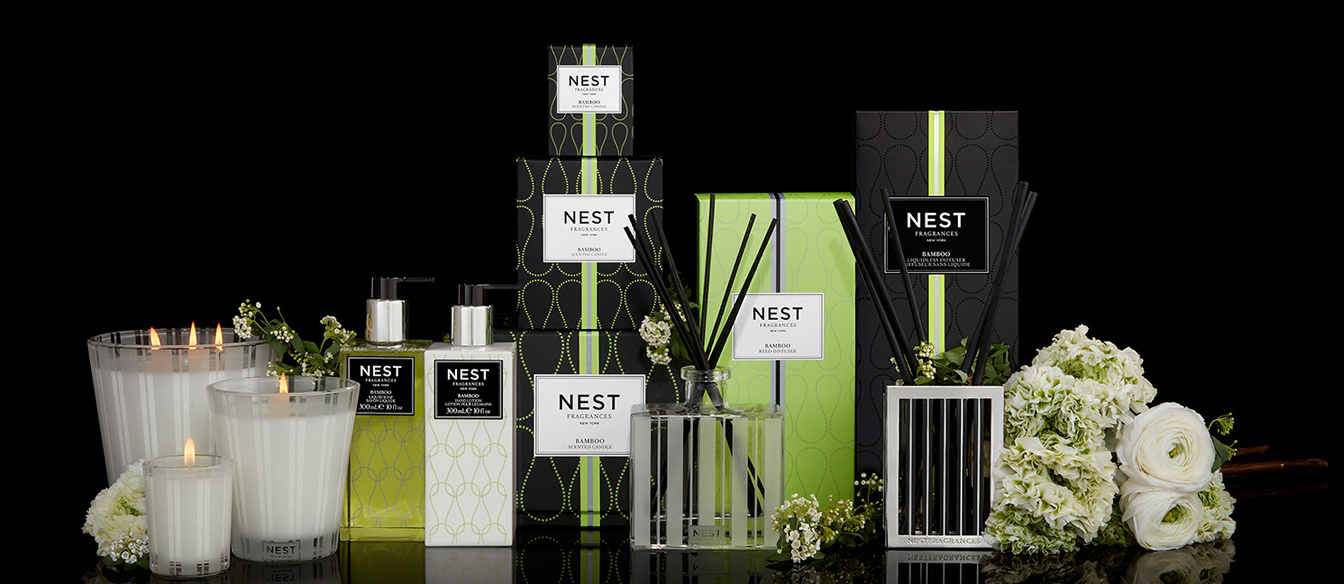
Grapefruit – three-wick candle in the living room
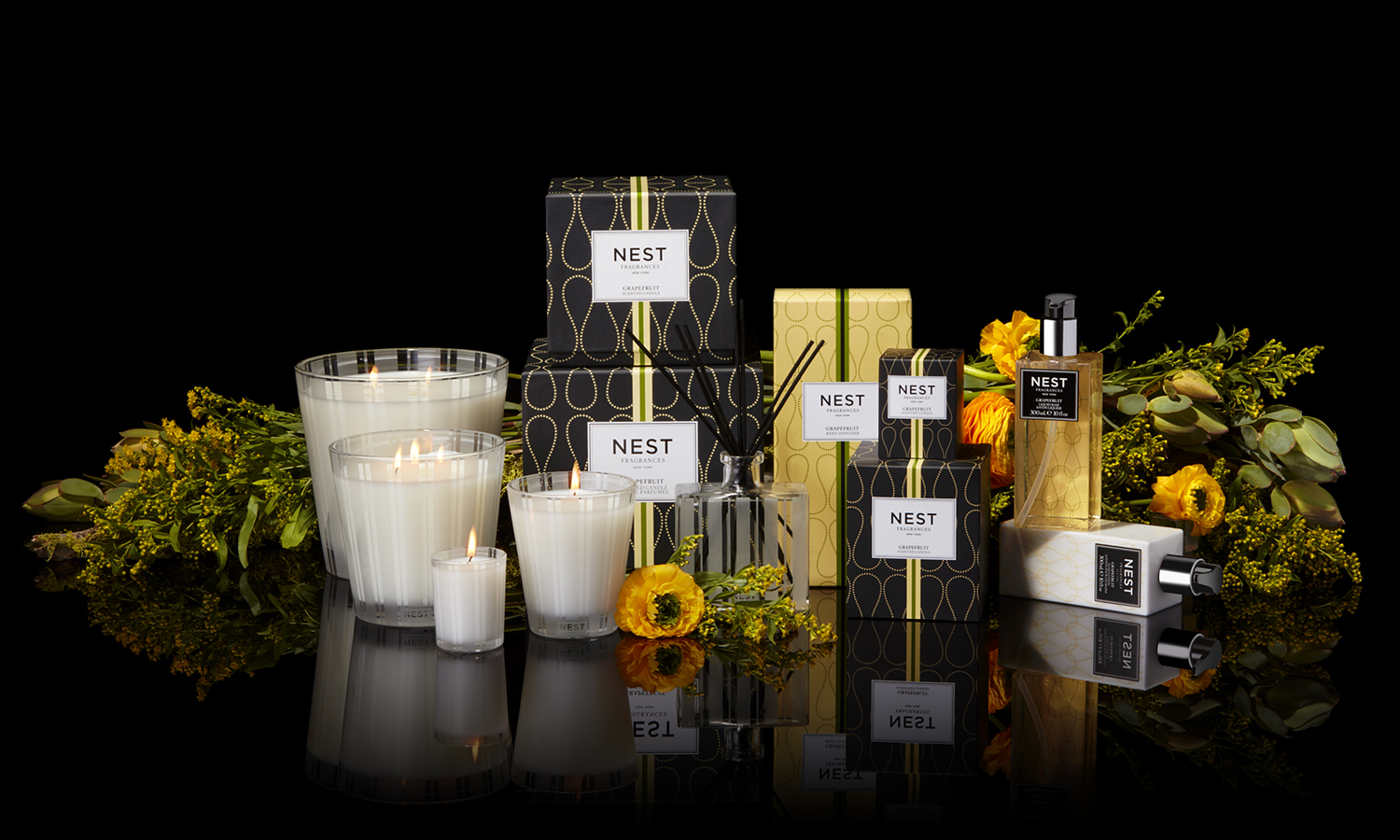
White Camellia – candles in the master bedroom

Cedar Leaf & Lavender – candles in the yoga room
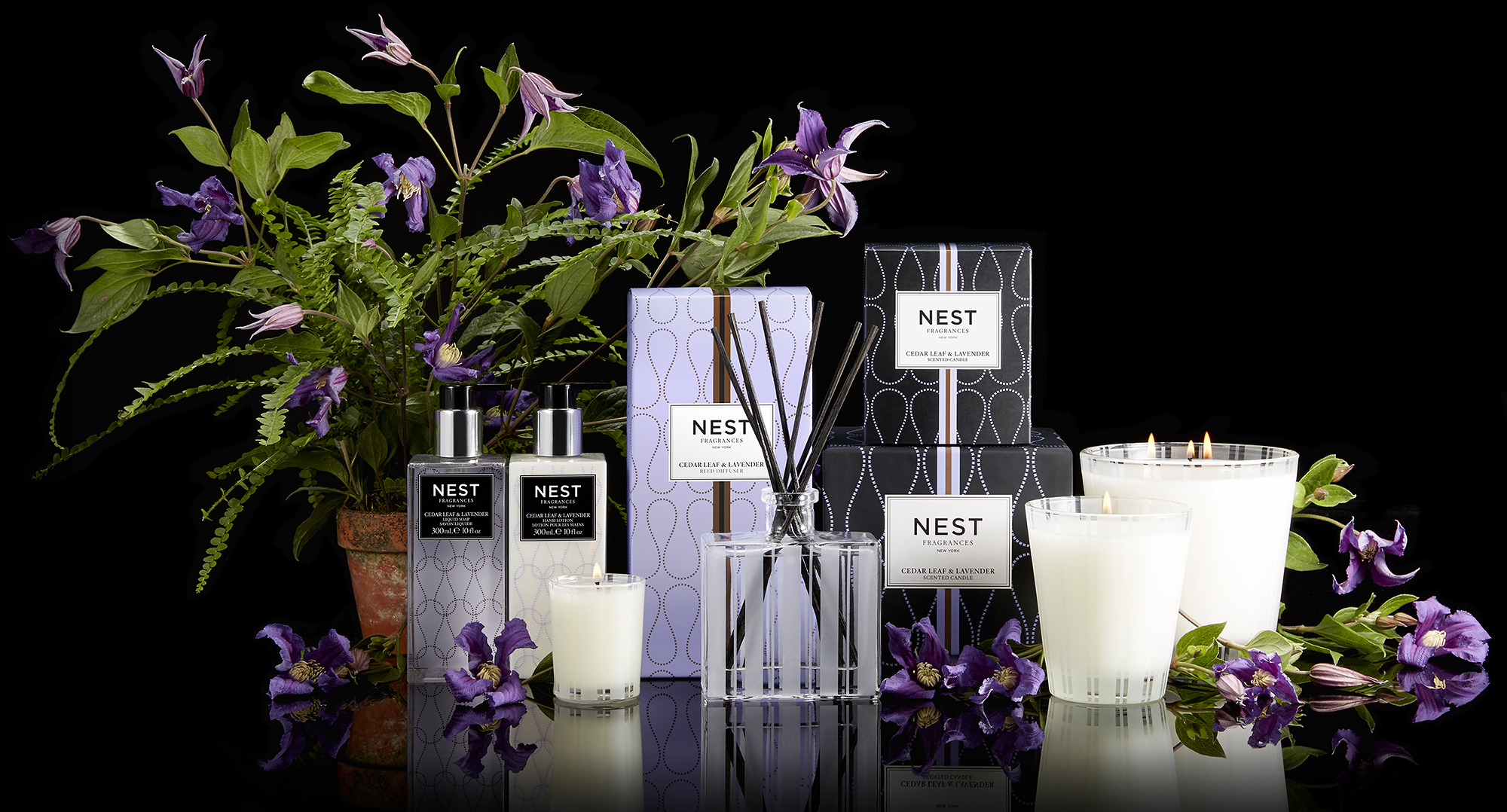
Cashmere Suede – diffuser in the screening room
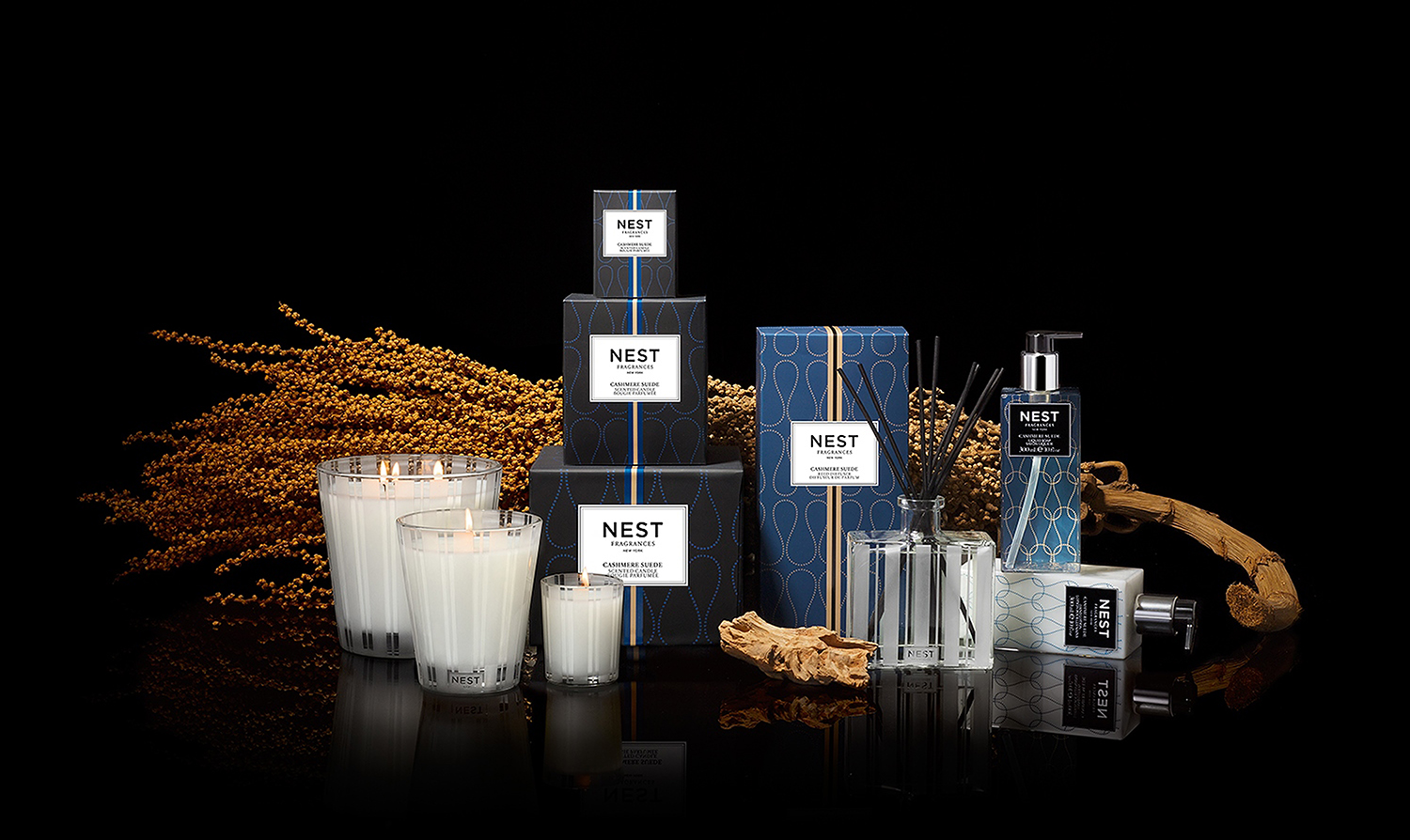
Apricot Tea – a gift of lotion, hand soap, and candles for Mom!
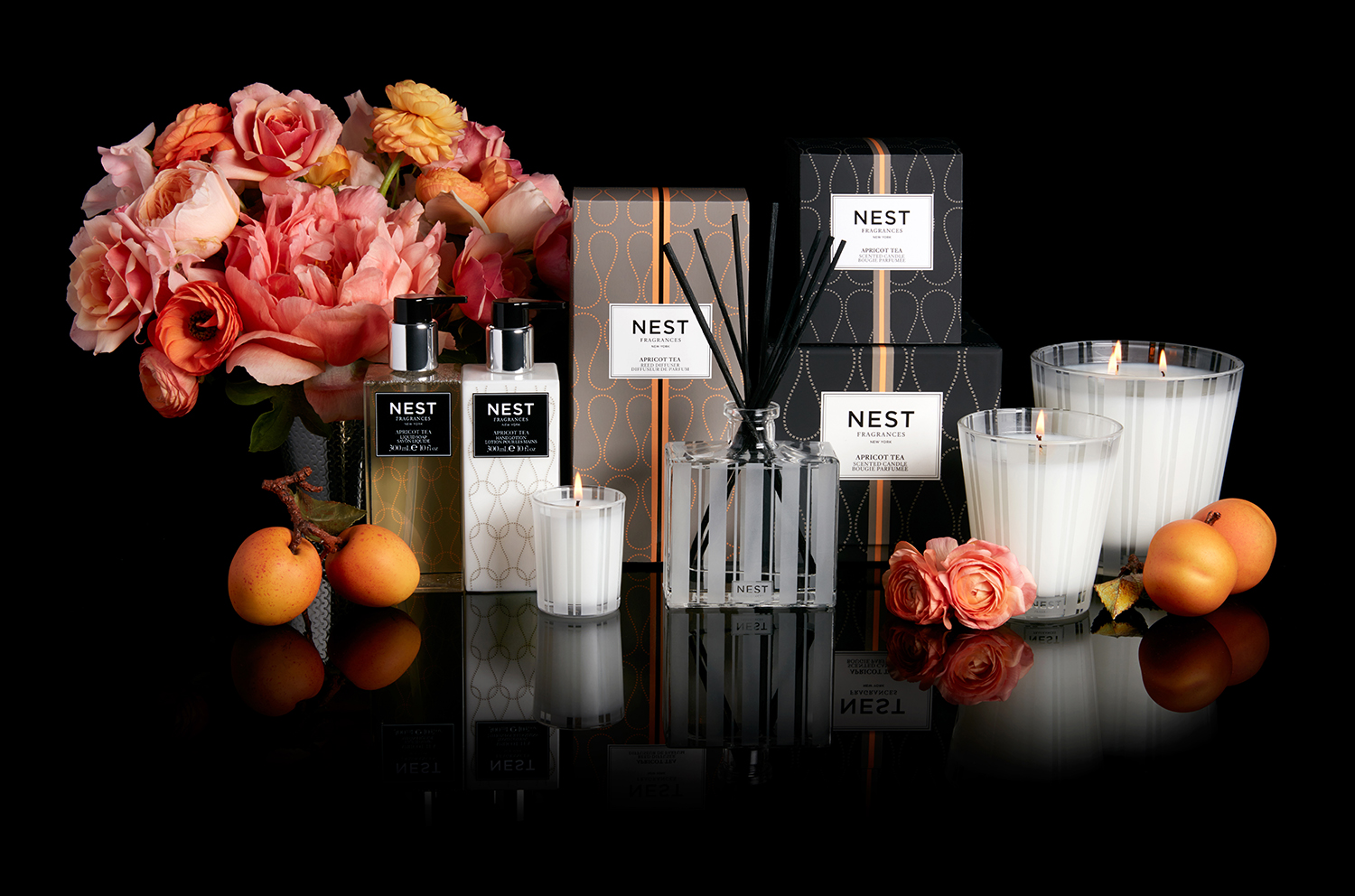
The NEST collection is deeply personal to Laura. “Each scent reminds me of my life and my family,” she says. “Our first apartment, a particular dessert, even my own recipe for Thanksgiving stuffing.” And so Laura, who has a son with severe autism, also created the Blue Garden collection to support Autism Speaks, the world’s leading autism science and advocacy organization.
Blue Garden – to support Autism Speaks
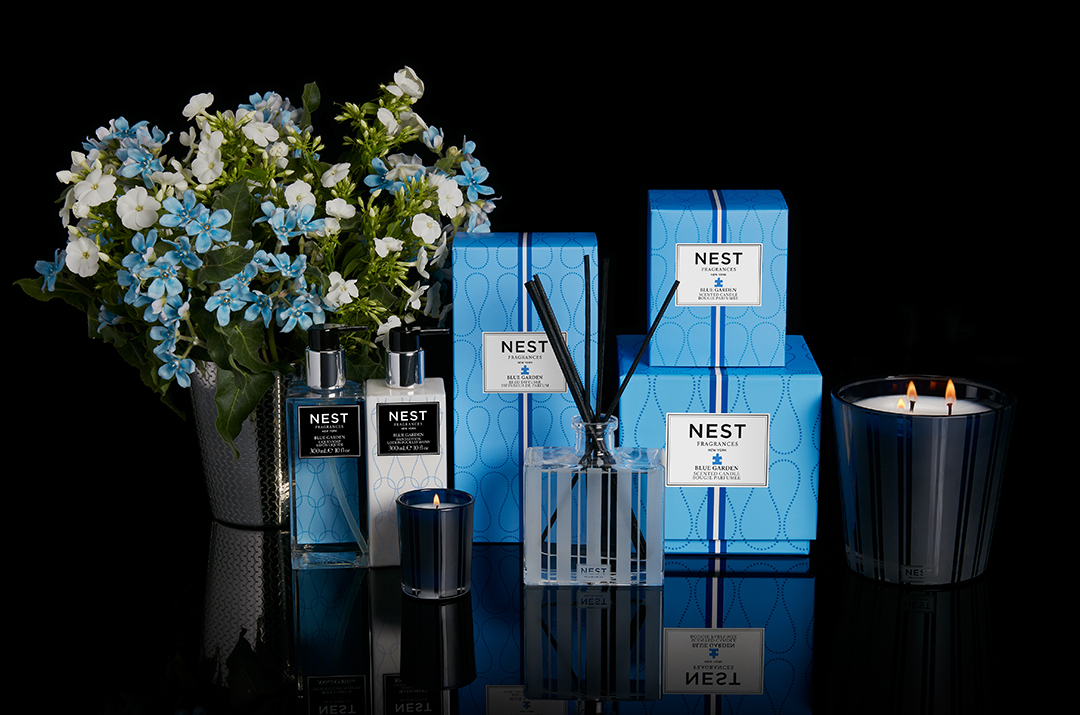
We’re so excited to introduce NEST Fragrances to Gracious Style! These beautiful candles, diffusers, lotions, and hand soaps are wonderful for yourself and as gifts throughout the year.
Flora Danica: The Amazing Story of the World’s Most Expensive Dinnerware
War. Diplomacy. Royal backstabbing. A Russian Empress who loved art and beauty. All that went into the making of the world’s most expensive dinnerware, Flora Danica by Royal Copenhagen.
Our story begins with Catherine the Great of Russia. In 1788, she was at the height of her power and prestige, having come to power 26 years earlier by deposing her husband in a coup. The formerly impoverished German princess was now the absolute ruler of the largest empire in the world, and she followed up one stunning achievement with another: Expanded Russia into the Black Sea and Crimea. Made Russia a major European power. Annexed Alaska. Reformed the government. Ushered in the Enlightenment. Check, check, check.

Catherine awed her contemporaries. Voltaire compared her to the Biblical Queen Semiramis of Babylon. Madame Vigée Le Brun, former court painter to Queen Marie Antoinette and no stranger to royalty, wrote that “…with her head held high, her eagle-like stare and a countenance accustomed to command, all this gave her such an air of majesty that to me she might have been Queen of the World…”
She was also the ideal Enlightenment ruler: Patron of the arts. Friend of the leading philosophers and thinkers. Champion of knowledge and learning, for women as well as men. The magnificent collections of St. Petersburg’s Hermitage Museum, a must see on any tour of Russia, actually began as her personal art collection.
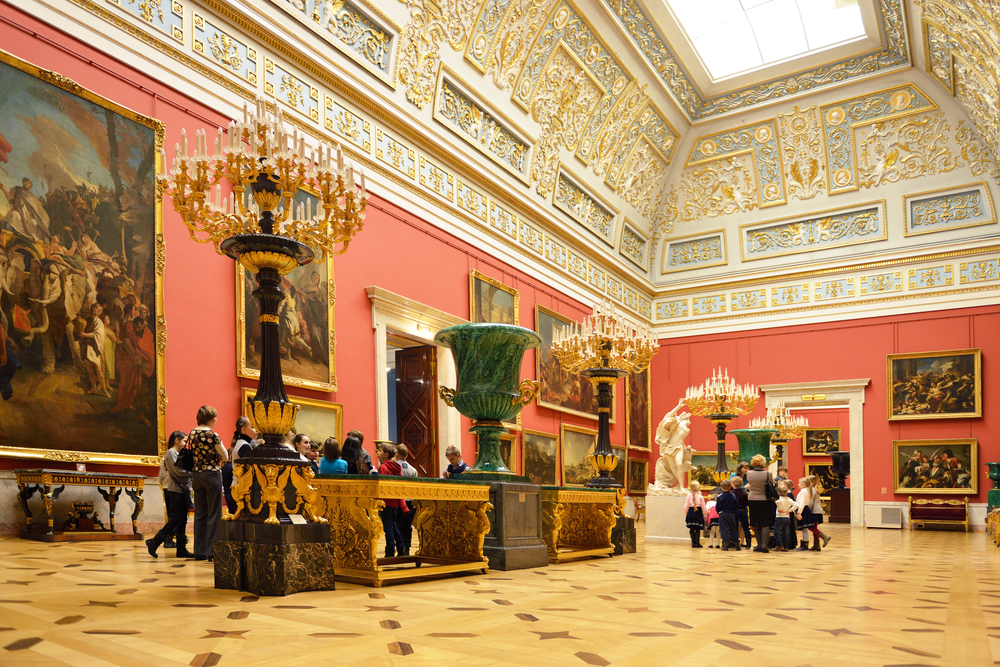
In 1788, Catherine the Great was at war with the Ottoman Turks a second time. Her cousin, King Gustav III of Sweden, decided to take advantage of the situation and attack Russia in the back. To deter him, Russia had signed a treaty with Denmark 15 years earlier. But when the war started, the Danes didn’t move. They had problems of their own: their King Christian VII was insane, his wife Queen Caroline Matilda had an affair, her lover Doctor Johann Friedrich Streunsee fathered one of her children, the King’s mother ordered him executed and the Queen banished, then had herself and the King’s elder son rule as regent. But we digress.
The Russians demanded that the Danes honor their obligations. When the Danes finally showed up, they came up with a smaller force than originally promised. A few months later, when the war ended, the Danes felt mightily embarrassed. It was also not a good idea to get Catherine the Great and Russia on your bad side. But how do you make amends with the absolute ruler of the world’s greatest empire?
They must’ve thought long and hard about this one and figured out three things:
First, Catherine was a well-known lover of the arts. She bought thousands of paintings from all the major European artists of the day. She also commissioned porcelain, metalwork, glasswork, and books, and she even wrote comedies, fiction, and memoirs herself.
Second, she was also a known patron of the French Encyclopedists, a group of philosophers including Voltaire, Diderot, and d’Alembert who set out to gather all the world’s knowledge into one grand Encyclopedie so that it could be available universally.
Finally, and this was key: They knew that the Russians had been after fine porcelain for over 70 years. True hard paste porcelain was very precious in 18th century Europe. Much whiter and stronger than stoneware, it was exclusively used by the royalty and aristocracy, and all the major royal families of Europe had set up their own porcelain factories in towns like Sevres, Limoges, and Meissen. Catherine the Great loved porcelain so much, she turned the Russian porcelain factory in St. Petersburg into the “Imperial Porcelain Manufactory” and placed massive orders for her and her family’s private use.
And so the Danes came up with an idea: Let’s create the world’s finest collection of porcelain which is also an encyclopedia of art. But it had to be so amazing that Catherine the Great would (hopefully) forgive their failure to help Russia during the war. They trusted the task to the Danish royal porcelain factory, Royal Copenhagen, and its chief artist Johann Christoph Bayer:

They commissioned a dinnerware collection of 1,802 pieces. They used the finest porcelain they could manufacture and then rimmed them in gold in a lace-like detail — just to be sure it was nice enough. Other pieces featured delicate flower buds that were carved out by hand:
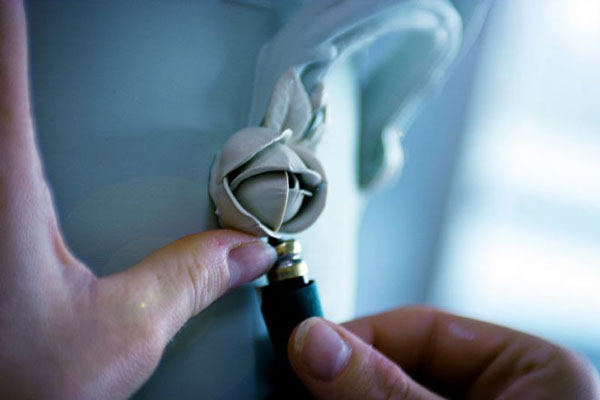
Then, 3,000 flora and fauna from the Flora Danica botanical encyclopedia of 1761 would be individually hand-painted on the dinnerware pieces:
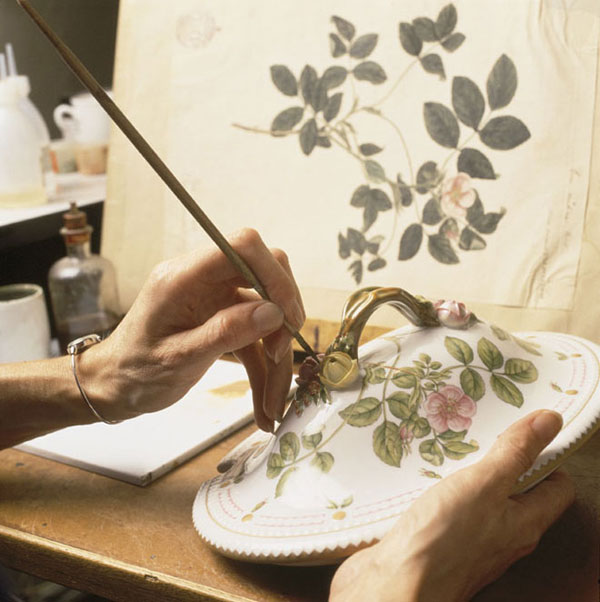
With this much decoration, the porcelain pieces are “overglazed,” which means they are decorated after being glaze-fired in the brightening kiln to produce the wide range of colors and the richness of detail. Then they are fired once more at about 850°C or 1,562 °F after they are painted, to allow the paints to melt and fuse with the fired glaze. Immediately after firing the gold decorations look matte and dull. Their characteristic gold sheen appears only after vigorous polishing with glass brushes or sand:
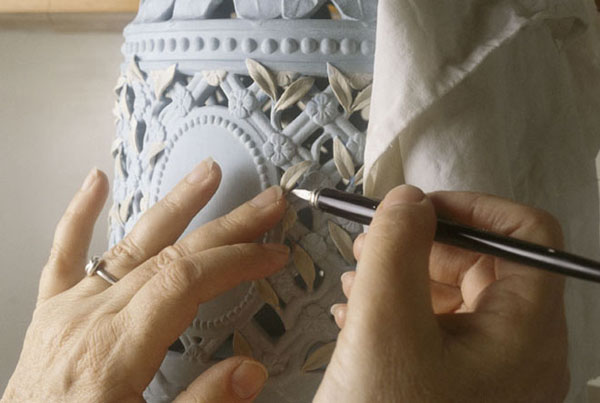
The result was something so magnificent, they could be used for state banquets or just displayed as works of art in Catherine’s great palace in St. Petersburg:
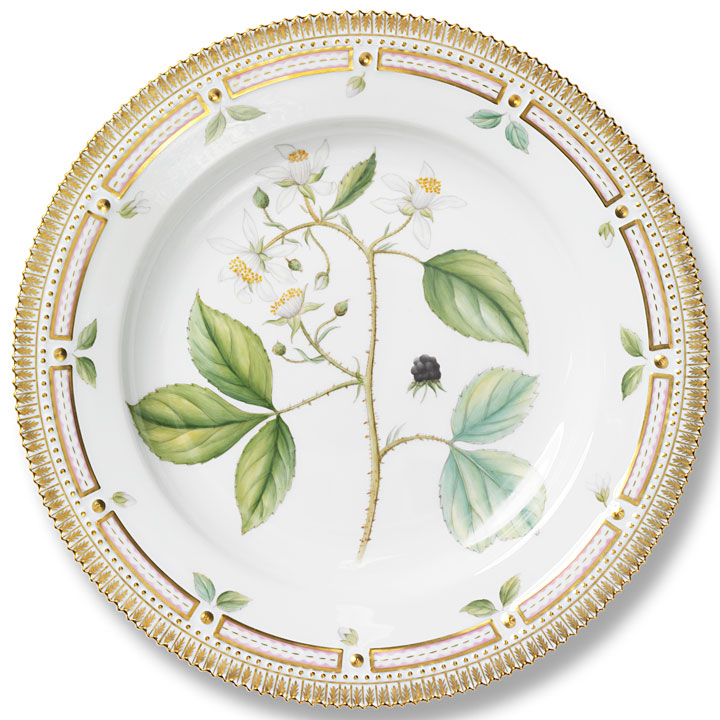
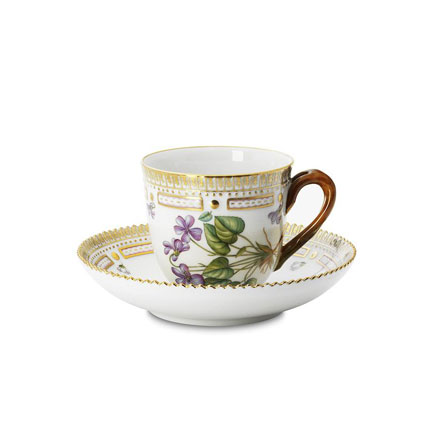
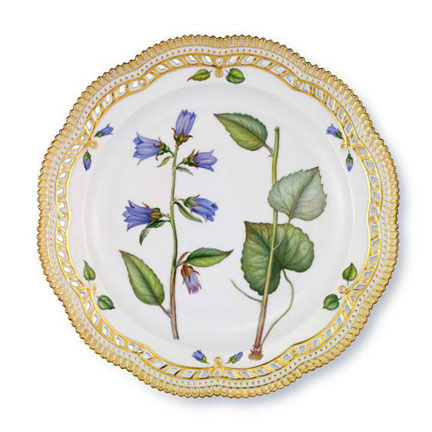
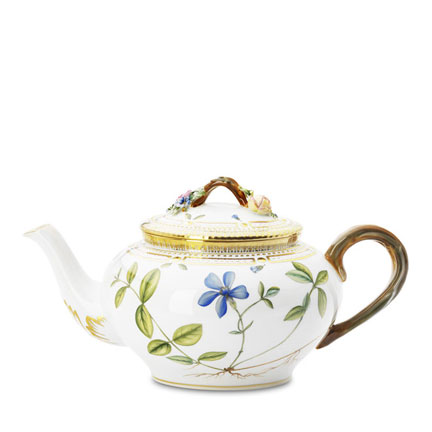
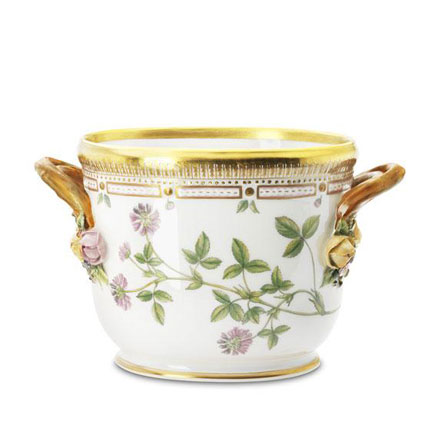
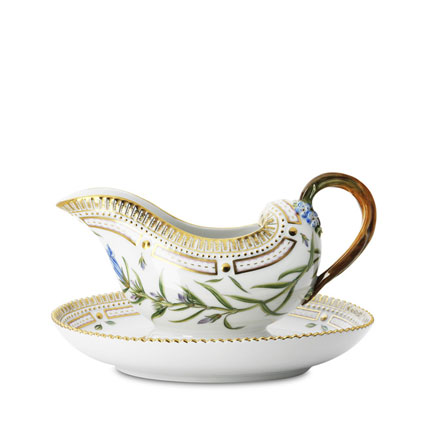
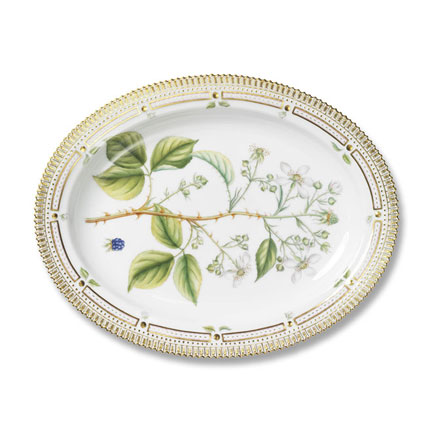
This multi-year project was probably intended as a gift for the 40th anniversary of Catherine the Great’s reign in 1802. But in 1796, Catherine suddenly died of a stroke. Her death caused chaos in Europe. Her son and successor, Paul, hated her and wanted to undo everything she started. He even dug up the remains of her dead husband, Peter III, for an elaborate state funeral before burying him with her — condemning her to spend eternity with the man she deposed and killed.
The Danes got the hint. They weren’t giving Paul the fine porcelain intended for his mother — he might’ve just smashed it to spite her! But they must’ve been so pleased with how this collection was coming along, their regent Prince Frederick VI, ruling Denmark in his father’s name, continued its production and even ordered some more, expanding it to 100 place settings.
In 1802, the production was finally finished. By now Paul was also gone: the Russians finally decided he was too crazy and poisoned him, replacing him with his 24-year-old son Alexander I (of War and Peace fame.) But the Danes weren’t giving him their prized porcelain. The first Flora Danica dinnerware service was delivered to the Danish Royal Palace, where Frederick VI used it to celebrate the birthday of his father King Christian VII in 1803, probably at their splendid Rococo-style Amalienborg Palace in Copenhagen:
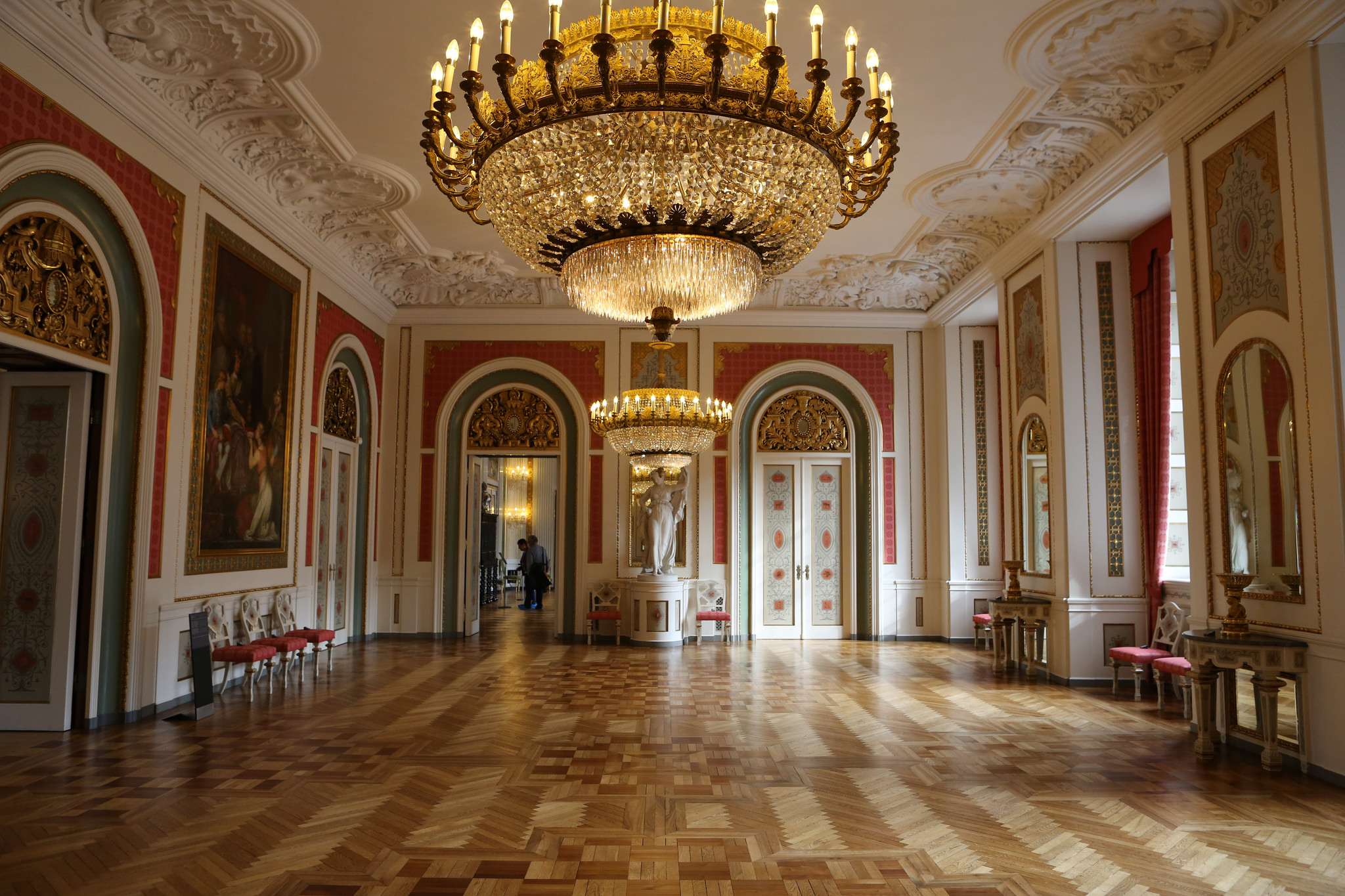
It must’ve been a very nice thing to do for his father, who suffered schizophrenia, was forced by his mother to divorce his tragically adulterous Queen, and had been sidelined for over 30 years already. And Flora Danica continues to be used by the Danish Royal Family for special occasions to this day.
Today, Flora Danica is regarded as one of the most original and inspired examples of from the golden age of porcelain. It has also been collected by today’s royalty: Oprah, Princess Marie-Chantal of Greece, and various members of the Kennedy family. Royal Copenhagen continues to make it by special order from its factory in Denmark — the last porcelain dinnerware made in Denmark, and you can order or register for Flora Danica here.
Arranging Flowers with Jeff Leatham from the Four Seasons George V in Paris
The flowers at the Four Seasons George V in Paris are so stunning, they’ve made the hotel a must-stop for anyone visiting the 8th arrondissement. Go any time of the year and I promise you’ll be thrilled.
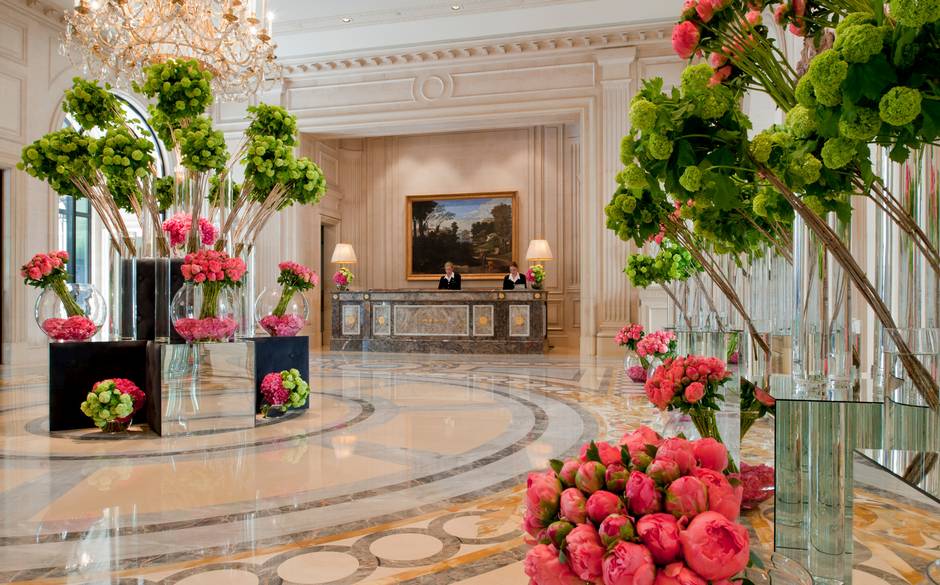
Three times a week, the hotel receives a shipment of around 10,000 fresh flowers from Amsterdam, which are used to lavishly decorate the hotel’s reception areas and guest rooms. In case you’ve wondered, the masses and masses of chic arrangements are created every week by American Jeff Leatham and his team of 11 florists.

A native of Utah, Jeff originally worked as a model in Paris, and after strolling past a small flower shop, he was struck by the beauty he saw inside. “I had a flash of flowers as works of art, tiny elements that could be combined to create something amazing,” says Jeff.
A friend referred him to the Four Seasons Los Angeles, which he joined as a part-time florist although he had no formal experience arranging flowers. But his talents soon became noticed, and after an event in L.A. brought the team from the Four Seasons George V to his hotel, he was offered a position in Paris. He moved there a week later, and the rest is history. Jeff is now the Creative Director for Four Seasons Hotels worldwide, and he’s created flowers for Cher, Oprah, and Eva Longoria.
But he remains accessible and down to earth. For example, here are a few of his flower-arranging tips (via The Telegraph):
– Use simple vases that don’t distract attention from the display
– Never use more than three types of flowers in a display
– Too much water in a vase causes stems to rot – put in a small amount of water and top up as required
– Don’t mix white flowers with other colors (except, if necessary, yellow)
– If using a clear vase, top up the water with Perrier – the bubbles latch on to the stems and add sparkle
If you love Jeff’s style and would love to recreate it at home, here are three simple ways to do it:
1) Get his latest book, “Jeff Leatham: Visionary Floral Art and Design (Rizzoli):”

2) Get a crystal vase from Jeff’s exclusive collection for Waterford, Fleurology. When it arrives, run and get the prettiest flowers you can find. Take a look at how he’s transformed a few simple vases below:
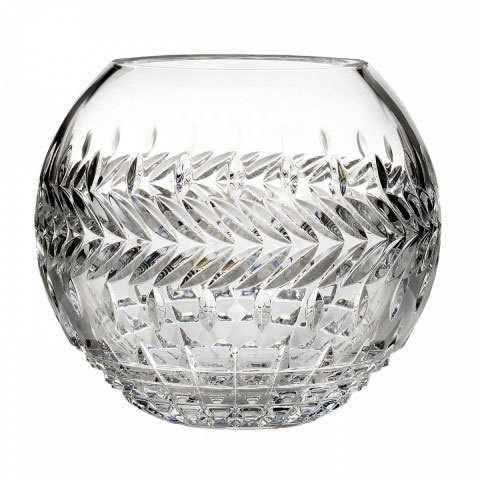 |
|
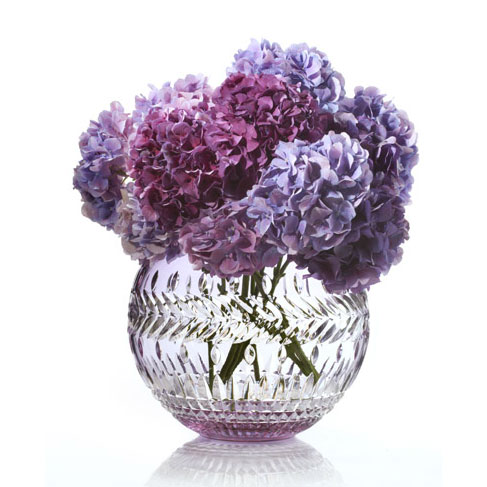 |
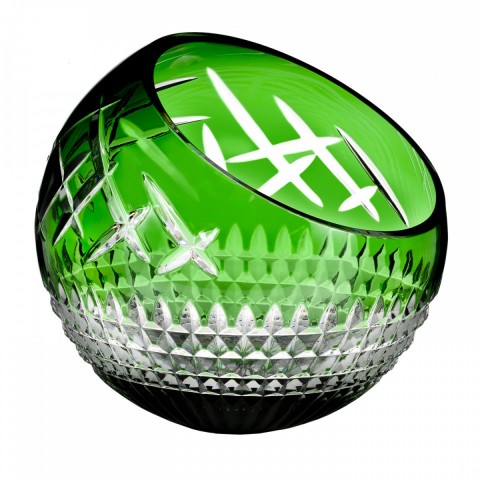 |
|
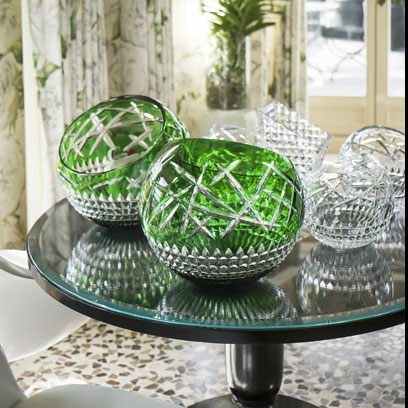 |
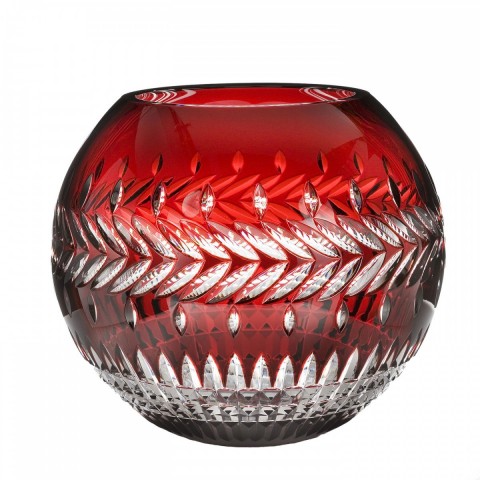 |
 |
 |
3) Reserve a spot in one of Jeff Leatham’s two-hour floral workshops. They are offered four times a year, and they’re complimentary for hotel guests. Click here for more information.
Will you be in Paris soon? If so, we’d love to see your pictures.
To see the entire Fleurology line, click here.
Punk, Studs, and Color: Waterford’s New Rebel Collection
Every once in a while, a collection comes along that just knocks it out of the park. Jo Sampson, the British designer responsible for developing some of the most iconic interiors in the world (for Hermes, Fairmont hotels, and Four Seasons hotels), was recently tapped by Waterford to create a fresh new line of barware and home accessories. And the results are stunning!

Appropriately named the Rebel collection, Jo contrasted the idea of a punk stud (which she chose for its tough, streetwise feel) with the refined craftsmanship for which Waterford is known. And then, she combined golden metals with crystal in shades of plum, amber, blush, pink and purple for an edge, cool, nonconformist look that expertly mixes the rough with the smooth.

The finished capsule collection rocks! And if you love how the Brits are so good at creating interiors that feel familiar, yet hip, this is what you need in your home.


Are you in love? Hear Jo talk about Rebel in this video:

To see the entire Jo Sampson for Wateford Rebel line, click here. Which one’s your favorite?
Just $15: Pretty in Plaid Flatware from David Stark and Martha Stewart
Cold weather might bring back plaid and tartans, but they don’t have to make your home look like those oversized lumberjack shirts in the back of the closet. In fact, plaids are a great way to mix things up and introduce different colors. Says renowned NY event producer David Stark in his recent Pretty in Plaid feature for Martha Stewart:
If you’re the type of person that wants things to look cohesive, but not too matchy-matchy, try mixing different colors of the same plaid. For color mixing, pick a particular color that each plaid will have in common. For example, if each pattern contains a vibrant cherry red, it will keep your look together. These flatware sets all have the same base color — a neutral white — so they can be mixed and matched on your dinner table.
And here are the plaids he chose, in London Chic chocolate red, London Chic cucumber green, and London Chic denim blue:
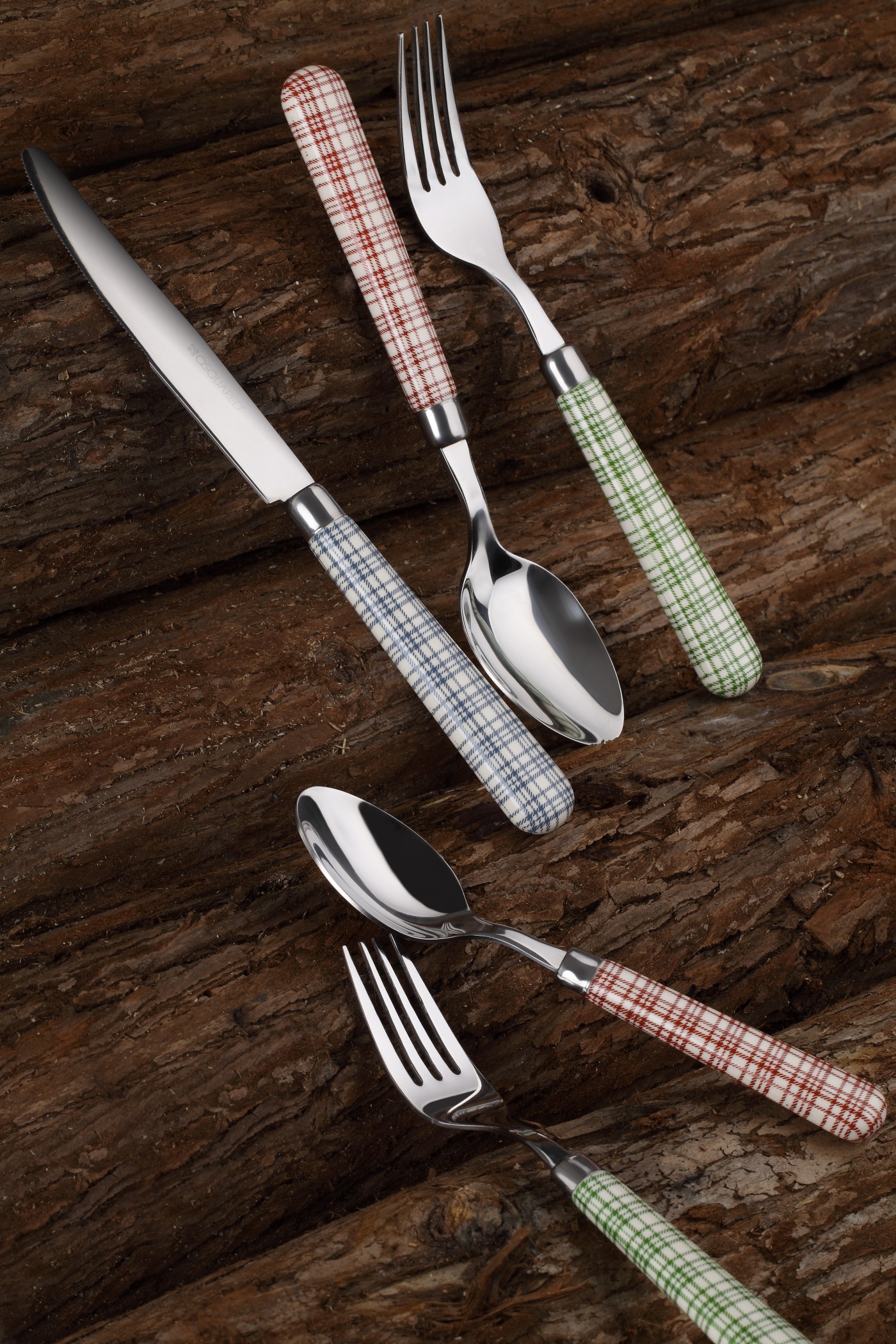
And the best part? The stainless steel flatware has ABS plastic handles which are dishwasher safe and treated with Xtra Wash, a unique technology that keeps colors looking like new after hundreds of washes. These are an absolute steal at only $15 per 5-pc setting!
We still remember watching the Martha Stewart TV shows years ago, so it’s a real treat to be featured in her blog now. Thanks for thinking of us, David and Martha!
The Architecture of Light at The Broad Museum in Los Angeles
How would you display one of the most coveted contemporary art collections of our time?
Eli and Edythe Broad, by now L.A.’s most famous art collectors, were so particular about how their art was to be displayed, they actually turned down just about every museum in town and commissioned their own $140-million museum by Diller Scofidio + Renfro:

When we visited The Broad last weekend, we realized that part of the reason might be how to display the art in the proper light.
Art is usually kept away from direct sun light to prevent damage. Eli Broad knows this well: he once kept a van Gogh in a desk drawer so it wouldn’t get sun damaged. But art shown under artificial light just looks different. So The Broad employs a special architectural detail to show its art under perpetual indirect natural light.
Each of the openings in the ceiling and on the side of the museum, dubbed the “veil” by the architects, functions as a light cell, bringing in a small amount of natural light and casting it on a concrete surface:

The light from many such small concrete surfaces then add up to a bright but indirect light for the interior, dubbed the “vault”:

On the side of the museum, the light cells bring in the outdoor light with just glimpses of the outside world, instead of creating distractions to compete with the art:
Seen from the outside, the museum may look like a bold gesture for the revitalization of downtown Los Angeles, especially next to the Walt Disney Concert Hall:

But in fact, it is actually a perfected machine for showcasing art in the best light, thus fulfilling the Modernist creed of “Form Follows Function” to a T.
Have any of you been to The Broad? If so, we’d love to hear what you thought! If not, get free tickets to The Broad by clicking here.
All Garnier-Thiebaut French Linens on Sale 20% Off!
Great news! From now until the end of June, all Garnier-Thiebaut table linens and kitchen towels are on sale for 20% off. Plus, you get free shipping on all orders over $75.
The linens from this well-known French company have been used by the Four Seasons George V in Paris, the Mandarin Oriental Hotel in Geneva, Le Meridien Bora Bora, and The French Laundry restaurant in Yountville. Their designs range from classic neutral tablecloths to vividly bright jacquard table runners and wonderful kitchen towels.
Plus, their easy care collection is stain-repellant, so you can wipe away all spills for easy summer entertaining. To read more about the company’s Green Sweet easy care collection, click here.
Here are a few of our favorite collections:
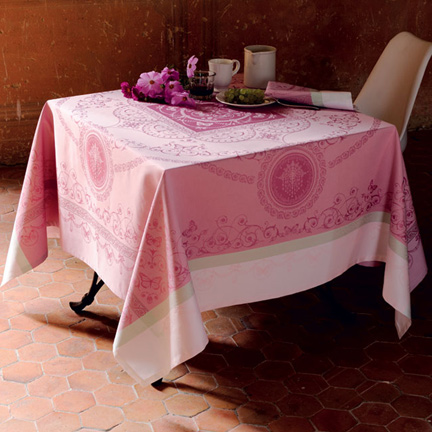
|
|
|
|
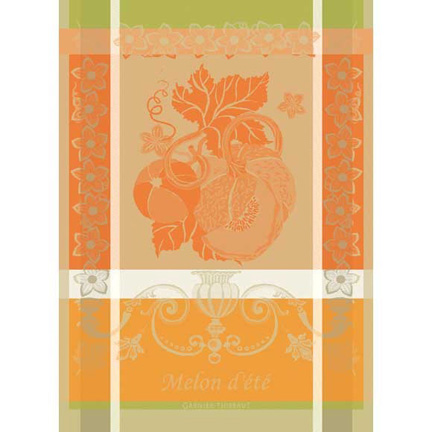
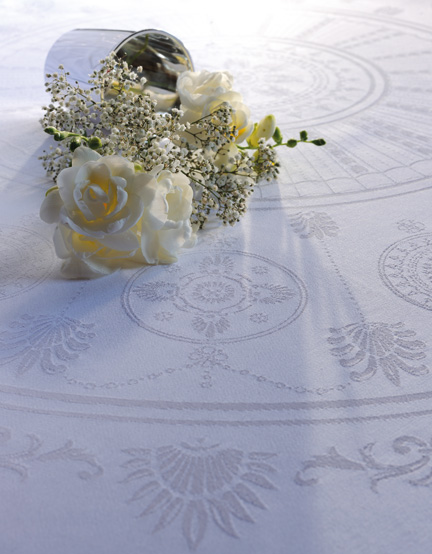

To view our full Garnier Thiebaut section, click here!
Traveling with the Next Generation: How to Get the Look at Home
Isn’t it extraordinary when you walk into a hotel that’s so well designed it feels like it was created just for you? Or when you know instinctively where you need to check-in, or where you could meet friends for a drink after work? And then, as you walk around, you realize that other people are having the same experience, but they’re speaking Russian?
It’s really hard work to get all those details right, and for them to make sense for very different people from all over the world. But that’s good design.
Years ago, I read a book by Isadore Sharp, founder of the Four Seasons Hotels. And in it he talked about some of the changes he’d pioneered over the years that little by little had created the behemoth it is today.
For example, did you know that he introduced the practice of giving each guest toiletries like shampoo and conditioner (and not just soap)? Twenty-four hour room service (practically a necessity after those late flights)? Or twice-daily housekeeping service? Seems like a small thing, but isn’t it nice to come back to your room after dinner and see that the mess you left behind has all been picked up?
Little by little, each of these innovations have changed how we interact with hotels. They’re now more than just places to sleep; the best ones deliver full-on experiences ranging from a local weekend away from home to full-on trips with the family to finding a way to connect with a new city while you’re in town for your college buddy’s wedding.
So I was really interested when I saw an article in the New York Times (“Hotels for the Next Generation“) that talked about the newest brand extensions from some of the largest hotel brands in the world: Marriott, Hilton, and Hyatt.
Were the innovations in these brands significant? And if so, how could we adapt these ideas at home?
Here’s what I learned. The new brands are aimed at the Millenial generation (aged between 18-34 in 2015) and at cosmopolitan travelers looking for affordable, modern spaces with a bit of personality.
Moxy (from parent Marriott) is creating spaces for younger travelers who are very connected in social media and enjoy sharing spaces for work and fun. For these people, free wi-fi is a must, along with open areas (like those featured in our “Billion Dollar Startup” blog) that allow them to connect with other people. There’s also a 24-hour self-service coffee bar.
Get the look: Here in Los Angeles, all the new high-end houses have this: large kitchens connected to large family rooms, with disappearing glass doors that fully open onto a huge deck. So this way, parents can keep an eye on their kids, while guests can feel free to pitch in to help. Need a cup of coffee? Make yourself at home; our state-of-the art coffee machine is right there in the corner, and milk and cream are the fridge underneath. Or help yourself to a beer; it’s all there for you. Make it easy and fun for everyone to feel at home.

|
|
|
|
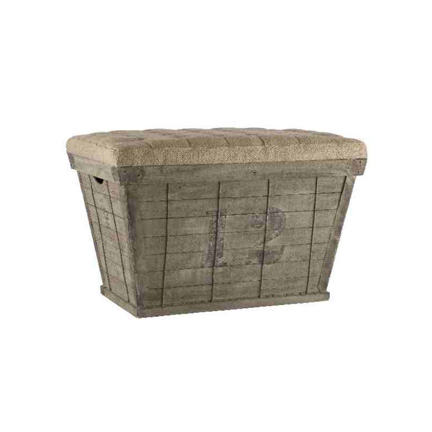

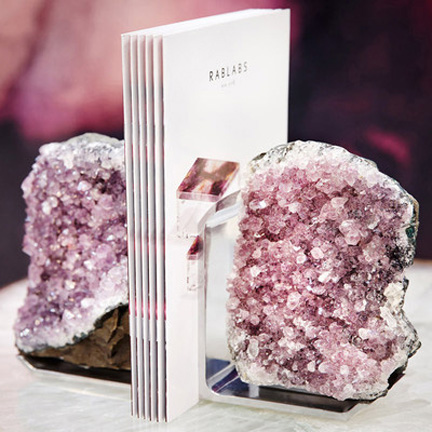
AC (also from Marriott) is designed for some of the same people, but these folks are much more design-centric. The look is very cool: modern, with warm touches of wood, extraordinary lighting, and interesting pieces of art throughout. This is for the guy who no longer walks around in his college duds; he’s the young agent who’s got his eyes on a pair of Pradas and knows what a Tom Ford suit looks like. For these, it’s all about clean lines: sofas in neutral colors, curated objects that are arranged just so; high-tech the whole way. These places are usually very clean and relaxing.
Get the look: Clean lines and neutral colors are sophisticated and calming. Try organizing your closet so that all your clothes and shoes are color coordinated. Swap out your bath accessories for ones in cool shades of white and gray. Introduce a sense of calm by turning off your cell phone, dimming the lights in your dining room, setting the table, and sitting down to dinner with your family.
|
|
|
|
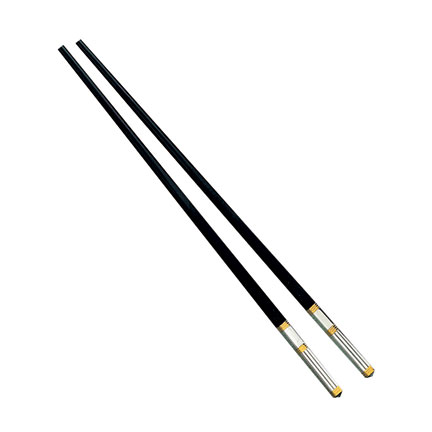
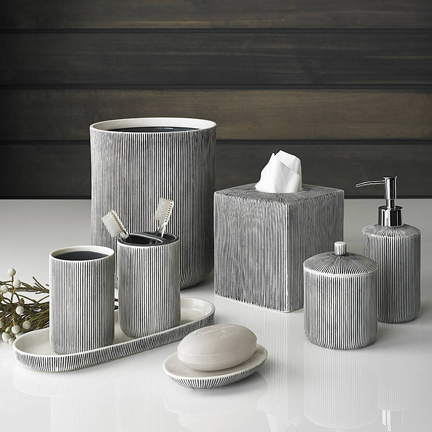
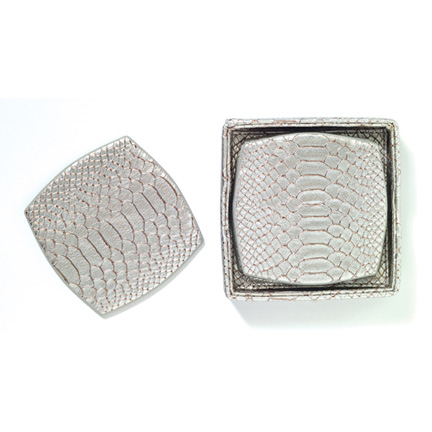
From Hilton, there’s a new brand called Canopy. As the name implies, this is all about a place that wants to take care of you. In their introduction to the brand, they have a group of cool people drawing out their ideas for a hotel on a blackboard. So the result is a place that works just for you. If you’re in Denver, you might find snacks from the Rocky Mountain Chocolate Factory as a welcome treat. In the evening, there are complimentary beer tastings, and in the morning, you can have free breakfast at the hotel or on the go.
Get the look: How would this work at home? Start by asking your family members what they need to be happy at home. Then think about how you can connect more with where you live. Can you give a chance to your neighborhood trattoria, so that when your sister comes to visit from out of town, you can take her to a place she won’t find anywhere else? What kind of stories are there for you to pick up? The finance guy who’s now making wood bowls out of his garage? And he’s really good at it, so you’ve brought a few home?


|
|
|
|
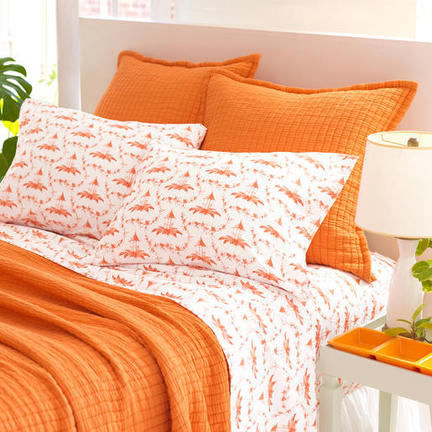
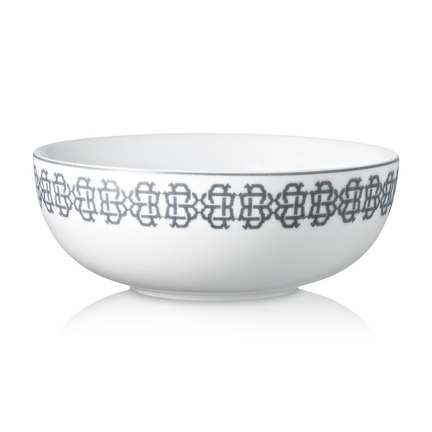
Do you have any ideas to share about how hotels have influenced what you do at home? If so, please share it in your comments.
Obsessed with Copper: 14 Ways to Use The Gorgeous New Metal
I’m obsessed with copper. Sometimes, when you’re putting a room together, nickel is too bright while brass seems too shiny. In those cases, copper strikes just the perfect balance between something that looks aged but can still bring the room alive.
Here are some amazing ways to use copper in your home:

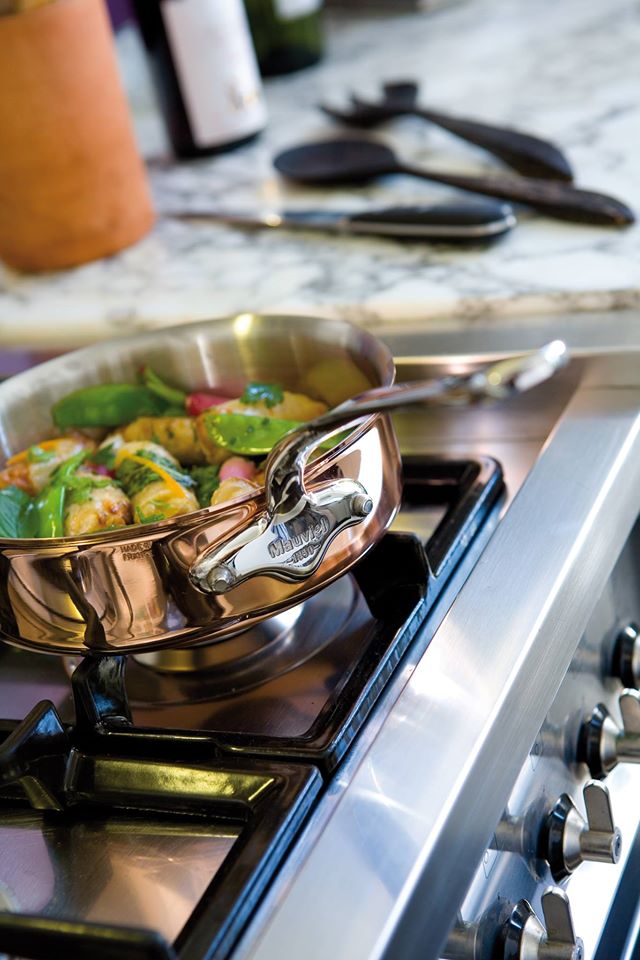
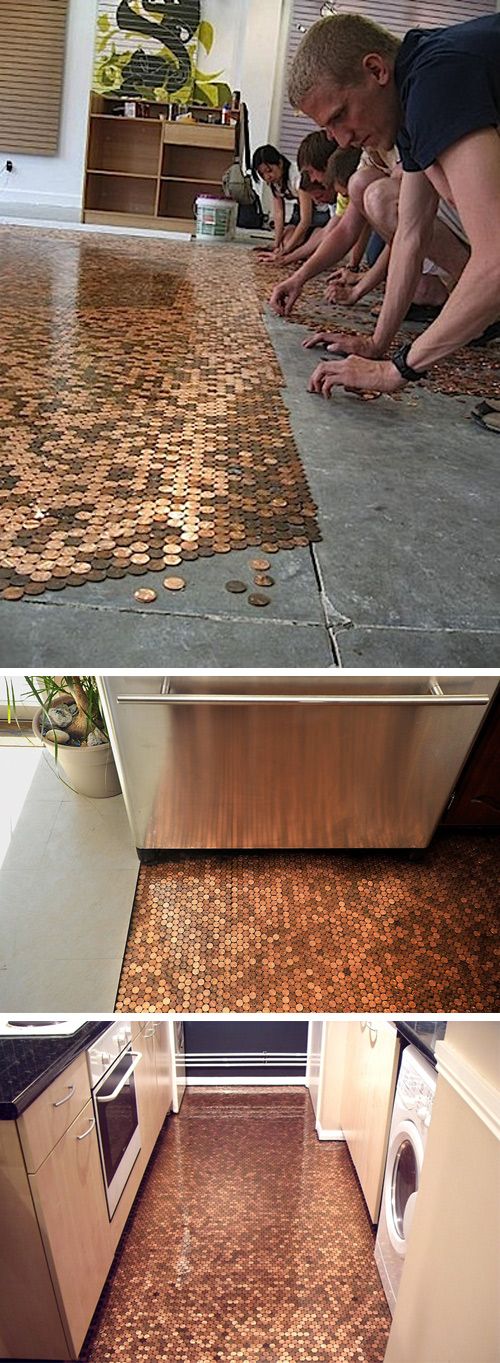
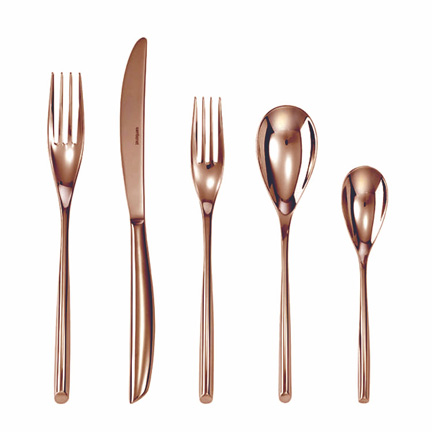
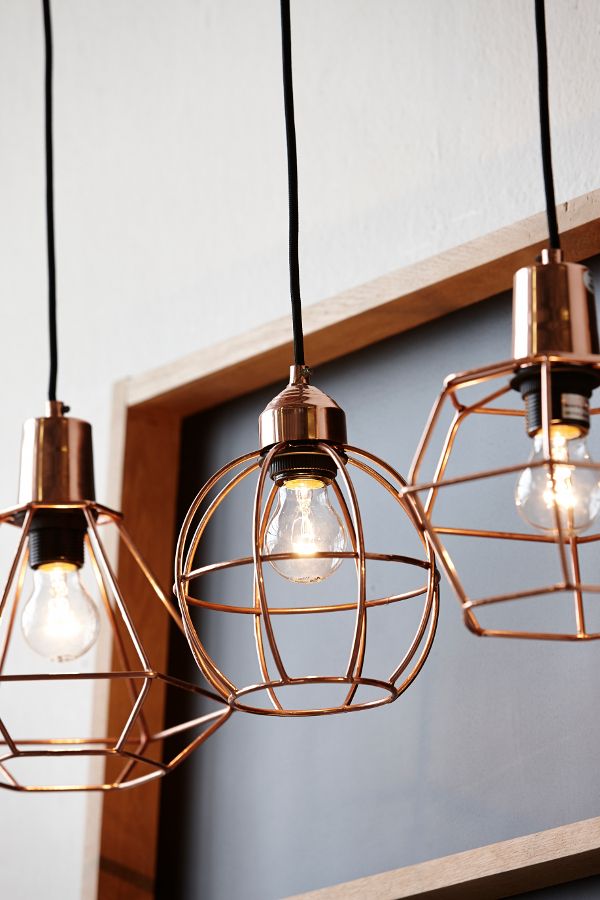

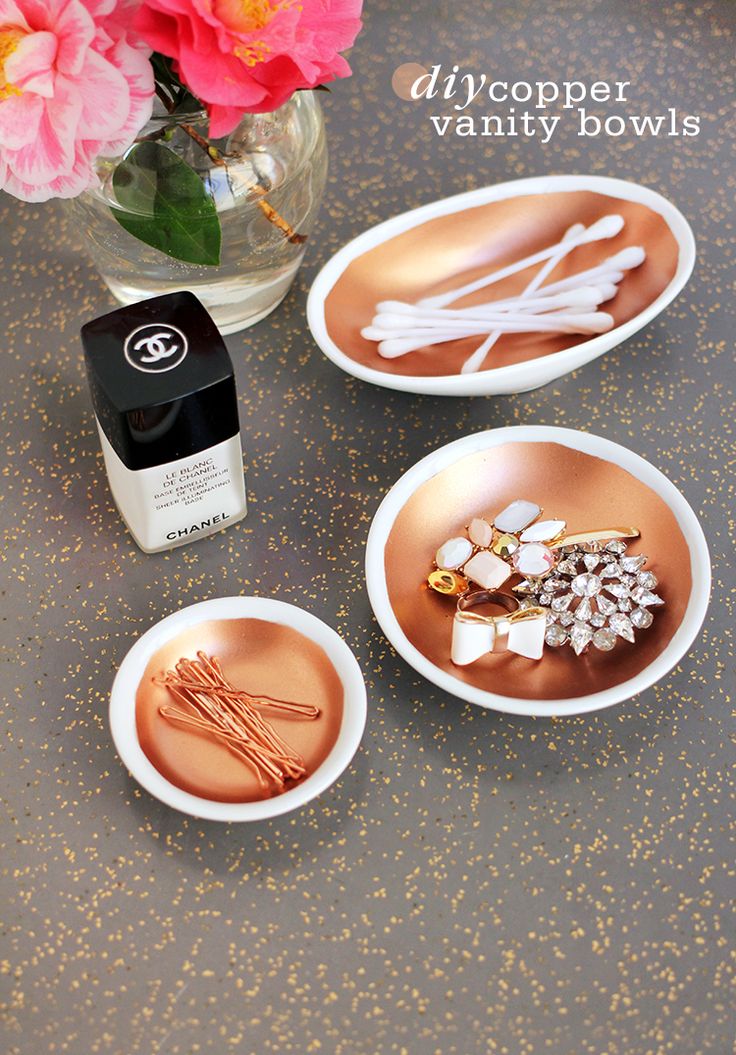
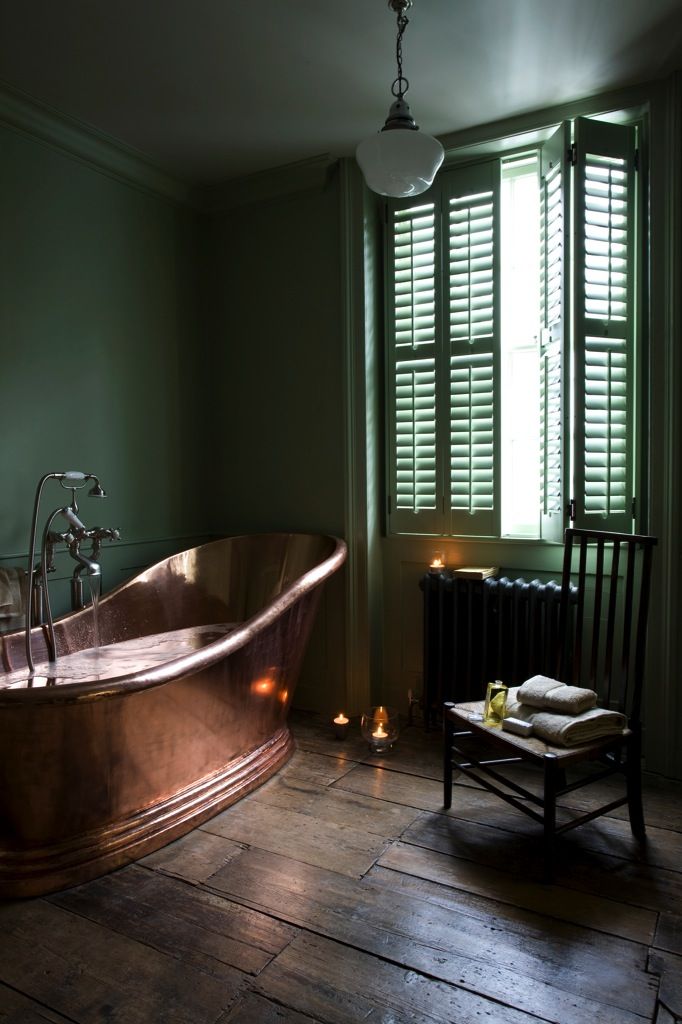
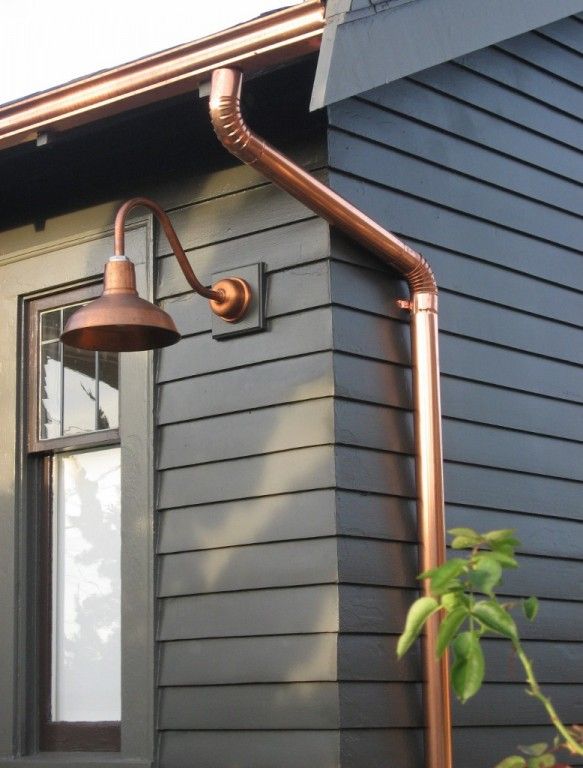
Inspired? You’re welcome.

Check out more ways to use copper by following our Pinterest Copper Accents page.
How to Choose the Right Rug for Every Room in your House
When choosing a rug, always start by thinking about you’ll be doing in the room. Typically, it comes down to three functions:
1) Entryways, bathrooms, kitchens, laundry rooms and mud rooms: easy to clean rugs
2) Family rooms, offices, closets: casual and lightweight rugs
3) Living rooms, bedrooms: thick and plush rugs
After you’ve narrowed it down to which kind of rug you need, here are a few things to consider:
Entryways/Foyers
– In the entryway, choose a rug that hides dirt well and is large enough to cover the width of your door.
– Measure your door clearance so that the rug is not so thick that it gets in the way when you open and close your door.
– In the foyer, rugs can be used to anchor a console table, direct your sight lines forward, or add color. For best effect, leave at least 6-12″ of bare wood exposed on all sides.
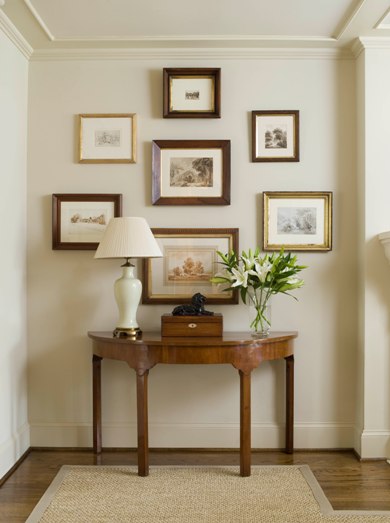
Living Rooms
– The best rugs visually anchor seating groups, so choose one that is large enough to fit all four legs of your furniture pieces. If necessary, the rear legs of your sofa can be left off-rug.
– If you want to leave some of your floors exposed, choose a rug that leaves you with 18″ – 24″ of space between the rug and the wall.
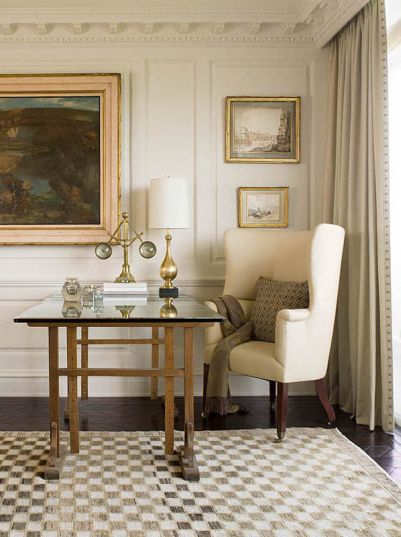
– If your living room is very large, pick two or three rugs and lay them side by side. These can either be identical or complementary.
Dining Rooms
– To make sure that the rug is large enough to cover chairs when they are pulled, choose one that is at least 24″ larger than your dining table on all sides.
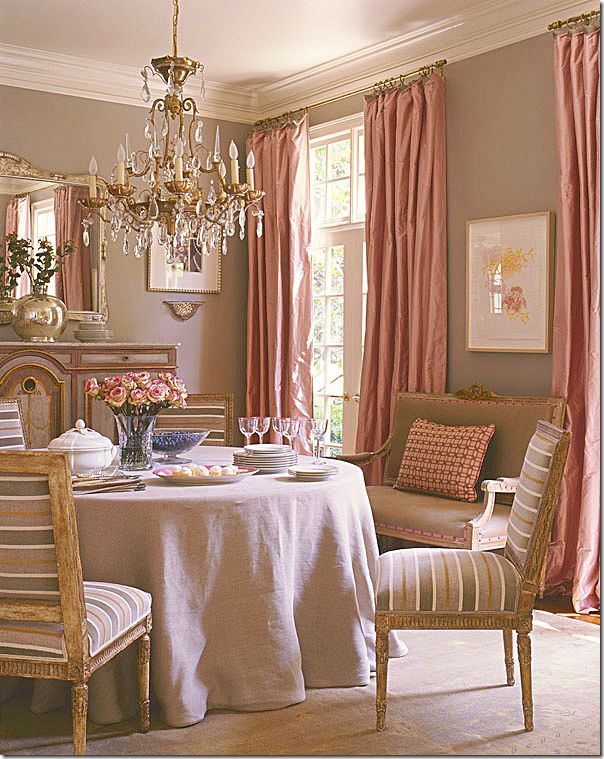
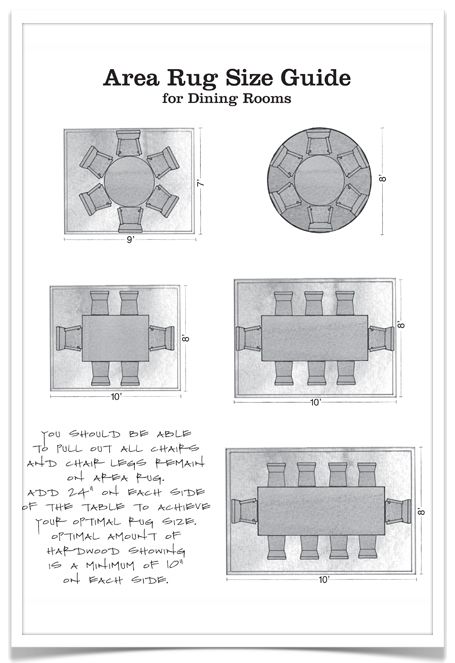
– In a multipurpose room, delineate the dining area with its own rug. However, if there’s already a large rug underneath, then you can leave the space bare.
Offices
– In offices, even smaller rugs will bring in a lot of style. They’re also great at making work seem more fun.
Take a look at this study room for kids …
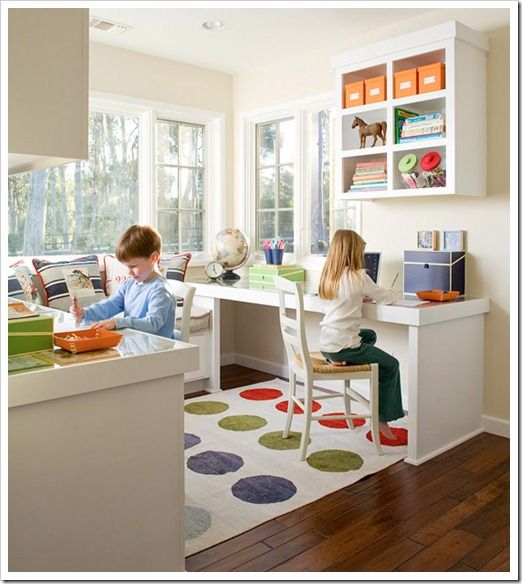
… and at this space for adults. Don’t the rugs just finish up the rooms?
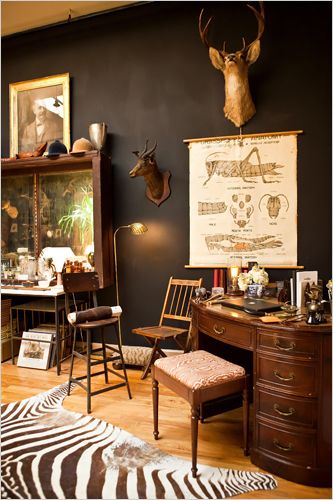
Stairs
– Stairs typically look best with solid or striped rugs.
– If you have heavy foot traffic, go with a darker color; otherwise, a fun rug can really brighten up the space.
– For an easy solution, start with runners (see our instructions for installing a stair runner here).
Bedrooms
– Choose an area rug that is at least 24″ larger than your bed on all sides. This way, you’ll be able to step onto something soft when you wake up.
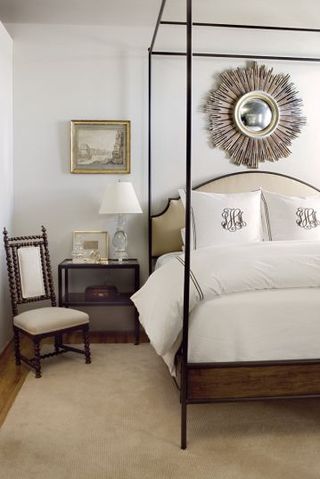
– If you use nightstands, be sure the rug ends at least 6-12 inches beyond the edges.
– If you want to leave some of your floors exposed, choose a rug that leaves you with 18″ – 24″ of space between the rug and the wall.
– If you have a sitting area, you can use one smaller rug between two chairs or in front of a sofa or chaise lounge.
– Here are some easy guidelines for choosing an area rug for your bedroom:
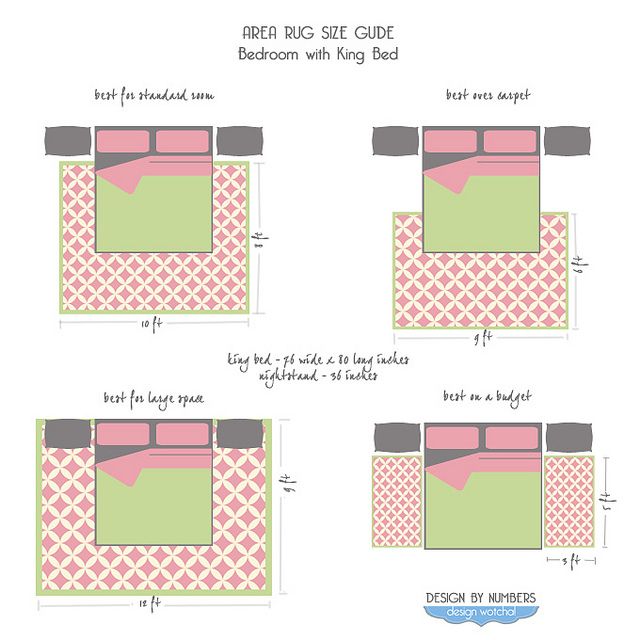
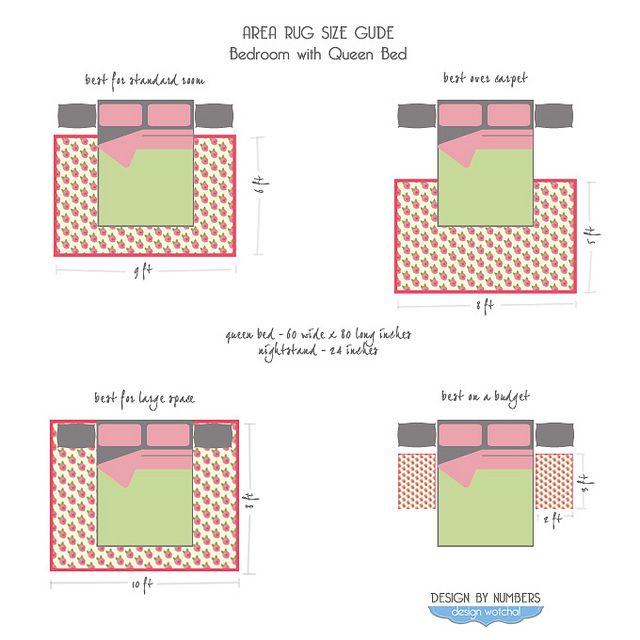
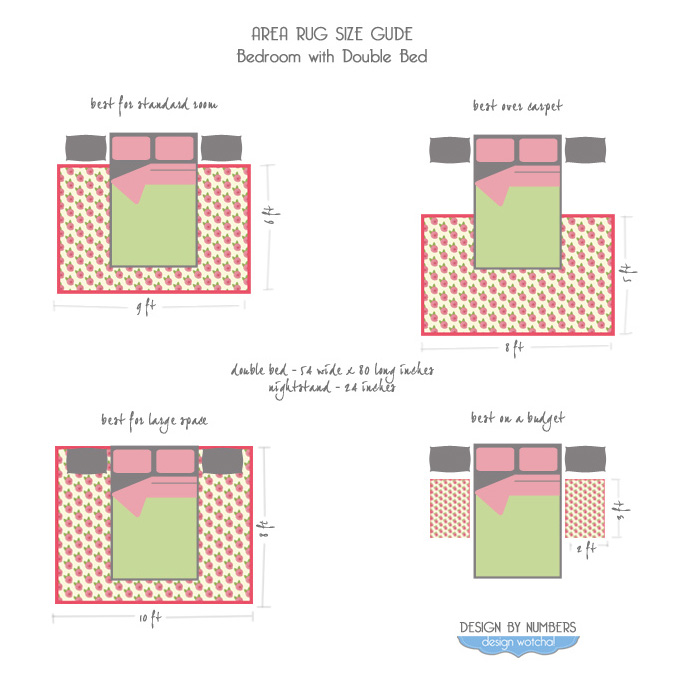
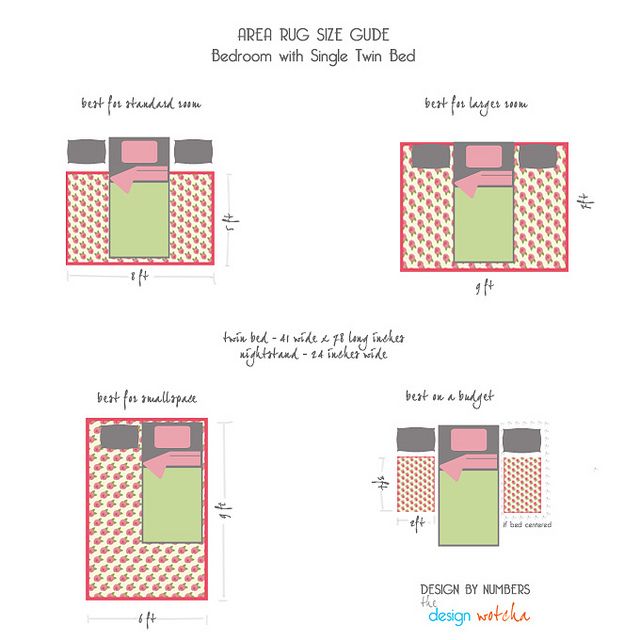
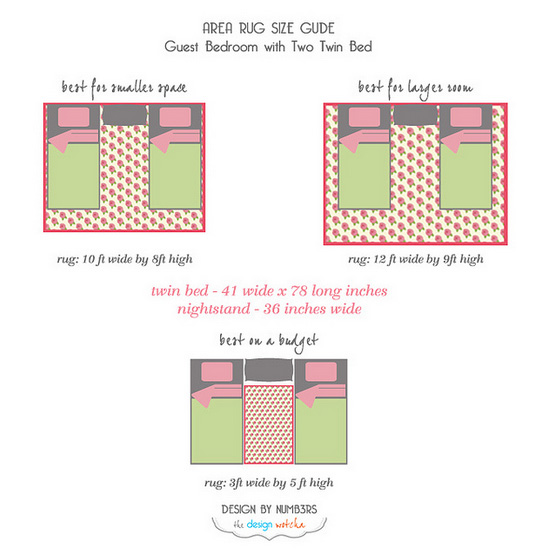
Bathrooms
– Bath rugs are essential for stepping out of the tub or shower. Pick one that’s washable and large enough to cover the size of your glass door.
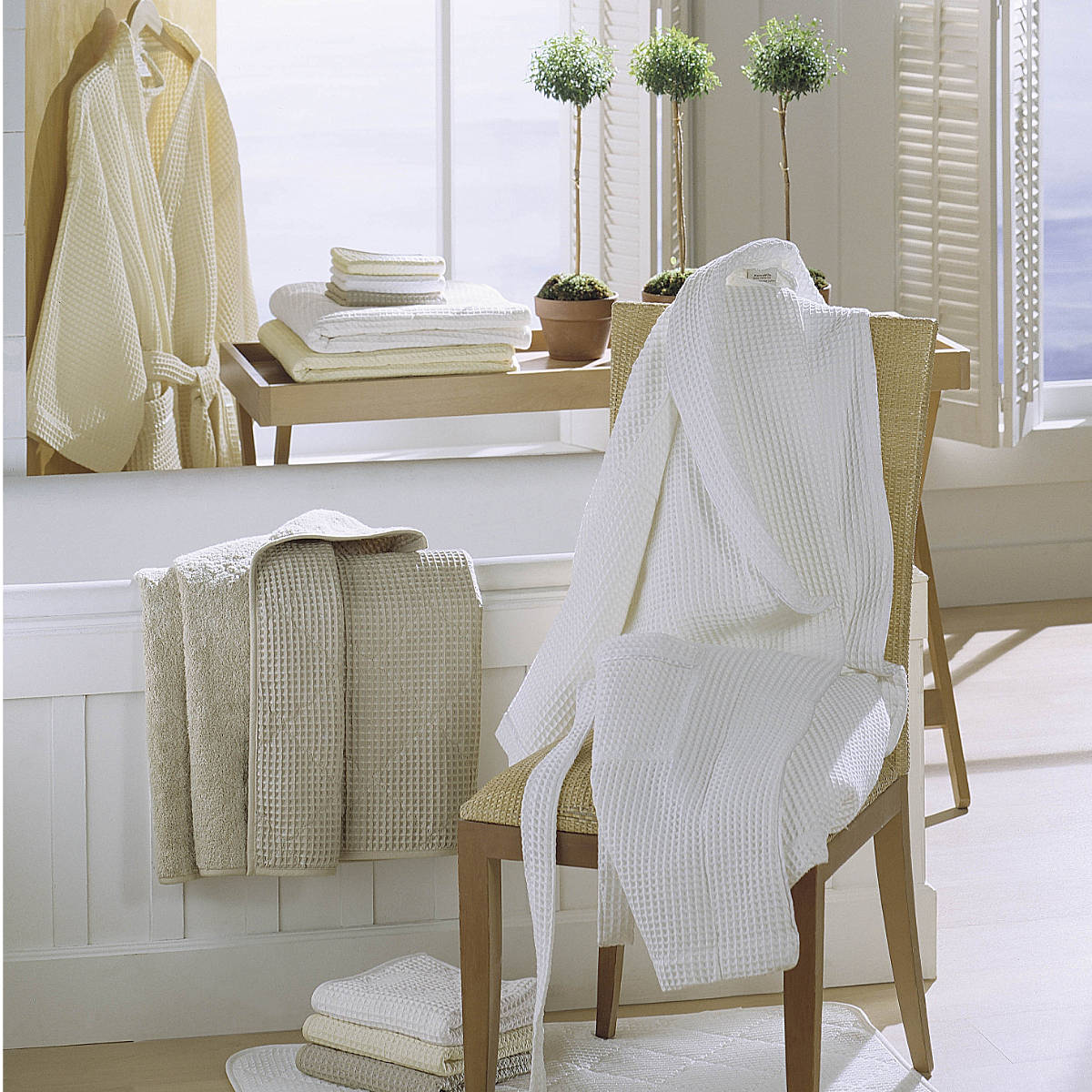
– If you have double sinks, matching bath rugs add softness and symmetry to the room.
– Area rugs are perfect for covering up older tile or hardwood. It’s also great for walking around barefoot.
Closets
– Bold area rugs look fabulous in closets.
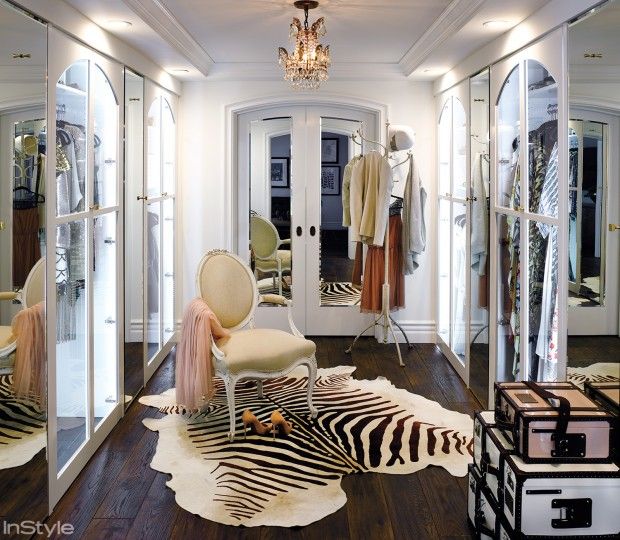
Laundry Rooms/Mud rooms/Back doors/Outdoors
– Indoor/outdoor area rugs are perfect for these high-traffic, moist environments. You can use them to add color and texture to each area, and they are easily cleaned.
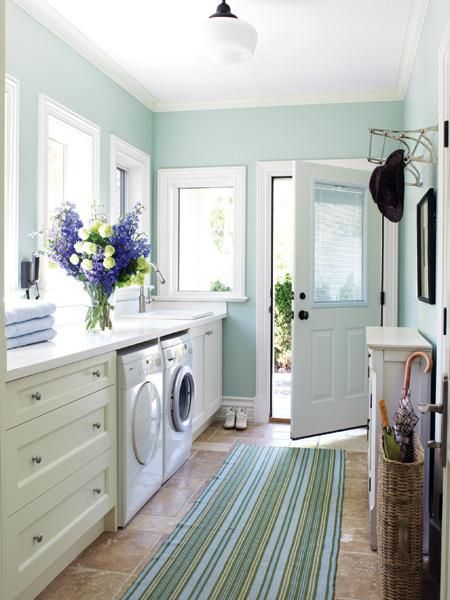
– Outdoors, rugs are perfect for delineating specific areas, like this dining space:
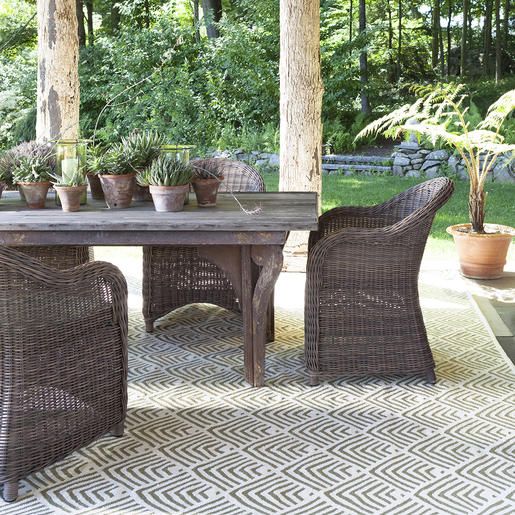
– We also love using rugs to guide guests toward special areas in the garden:
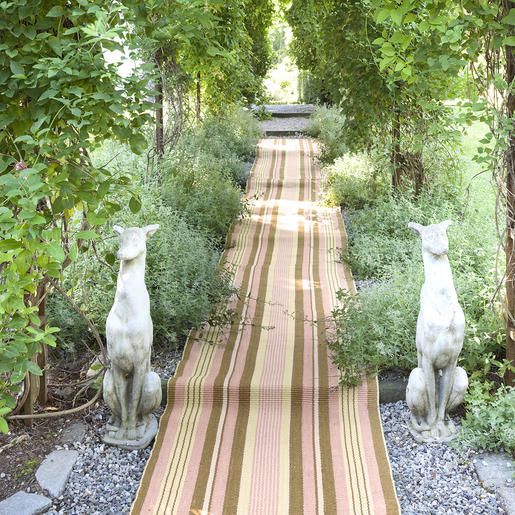
To view all our rugs, click here.
Inside the Offices of Billion Dollar Startups
So much attention is given to valuations of hot companies that it’s sometimes hard to remember that just a few years ago, all of these were just a fragment of someone’s imagination. So we thought it would be fun to check in on them and see: what do you do when you’ve outgrown your digs and need to get yourself some real offices? And what do the best modern offices share in common? Here’s what we found out.
They definitely don’t look the way they did in the 50’s …

… or even what they looked like in the 90’s:

Today’s offices are much more open, with space for both focused work and collaborative areas. They feel like playrooms, and they’re filled with all the best comforts from home, like sofas, rugs, pillows, and fully outfitted kitchens.
Designed by Studios Architecture and housed in the New York’s Empire State Building, Shutterstock’s loft-like offices include plenty of comfortable seating and small breakout rooms.

If Airbnb’s San Francisco headquarters feel like home, it’s because it include replicas of popular listings in Bali, Rykjavik, and Paris.
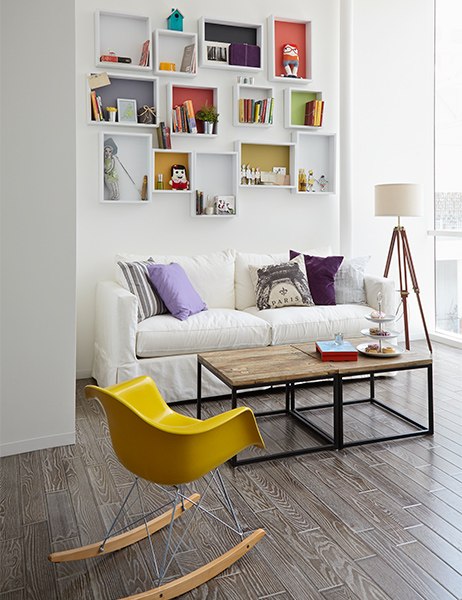
Although very high-tech, Uber’s San Francisco offices feature lots of natural materials, soft rugs, and comfortable communal seating.

Jessica Alba’s The Honest Company is a powerhouse manufacturer of non-toxic products, but their headquarters are anything but industrial. They are full of natural light, playfulness (notice the wall of positive mantras in the background), and ready for any babies who visit.

Hulu’s architects, Gensler, spent months researching how the Hulu team works, and they concluded that the average team member spends their day doing 50% focused work, 35% collaboration, 6% play, 5% learning. So for the company’s Santa Monica headquarters, they designed an open space that allows for lots of collaboration (previously known as playing videogames).

Finally, we have Tory Burch’s offices in Manhattan. Like her stores and her homes, designer Daniel Romualdez has created a superchic set of rooms oozing with Tory’s style and reminiscent of home.

Our takeaway from all these offices? They no longer look like work!
So whether you work alone or in a huge company, just focus on making your office is as inviting and comfortable as you can. Start by asking yourself the following questions:
– Does it inspire me? If you’re working on designing a collection of jewelry, could you display pictures of gorgeous movie stars to get the conversation started?
– How can I make the space more personal? If you love flowers or just feel happier when you see pictures of your last vacation, bring them in.
– Is my chair comfortable? Could I make it better with a throw or a pillow? Would I like it better if it were turquoise like Tory’s?
– Is my desk organized? Could I use a pencil cup, or a tray?
– Could I add a lightly scented candle?
– Do I have separate zones for focused work and meetings with colleagues?
– Do I have comfortable seating for guests who visit?
– Can I easily tilt my computer screen to share something I found online?
– Could I bring the outdoors in? Can I add plants or sit near a window with a view to the outside?
– Is the lighting right? If it’s too harsh, can I install dimmers? If it’s too soft, can I bring in a favorite lamp?
– Does it feel inviting? Does it have my favorite colors? Could I add a rug underfoot so it’s plush when I work?
A successful office is one that is seamless, so you never feel like you’re “at work;” you’re simply working on a project that you love. So shouldn’t it be the best you can make it?
Understanding Area Rugs: Materials and Construction
To be able to choose the right rug, it helps to be familiar with the different kinds of materials and weaves. Here we break it down for you.
The most common materials for rugs are wool, cotton, acrylic, nylon, polypropylene, and hemp. There’s also silk and cashmere, but those are rare.
Wool is the finest and priciest. It keeps its shape and resists dirt better than any other fiber, so it holds up better under traffic and is more easily cleaned once soiled.
Cotton is a good choice because it is natural and lightweight (great if you move furniture often).
Acrylic fibers resemble wool, but they don’t hold their shape as well over the long run. They are less expensive than wool and they are a great alternative for those who are allergic to wool.
Nylon is one of the most popular, well-priced fibers used for carpeting today. It wears well and holds up under lots of traffic.
Polypropylyne (olefin) and Polyethylene (PET) are stain and water resistant, so they’re frequently used to make outdoor area rugs.
Sisal, sea grass, coir, and jute all come from the fiber of the hemp plant. They’re beloved by designers because they’re neutral and add texture without competing with anything else in the room. If you choose one of these, clean up spills as soon as they happen.
Now that you’ve chosen your material, let’s turn over to our friends at Dash & Albert to give us a primer on the different weaves available.
Woven cotton rugs are durable enough to stand up to the heavy traffic of a kitchen or hallway, but also soft enough for the bedroom, nursery, or family room. They are reversible, affordable and lightweight, so they’re great if you like to rearrange furniture often.
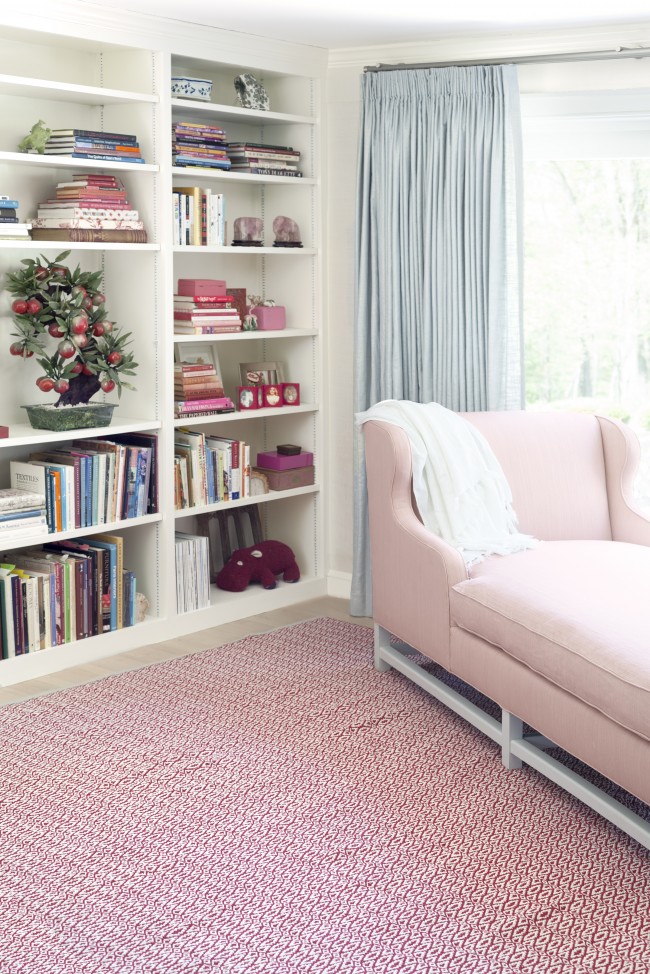
Woven chenille rugs are made from a combination of cotton and cotton chenille for plushness and softness. Like woven cotton rugs, they’re lightweight and reversible. Woven chenille rugs are great for low- to medium-traffic areas where you want a little more cushion underfoot, such as guest rooms, hallways, and home offices.
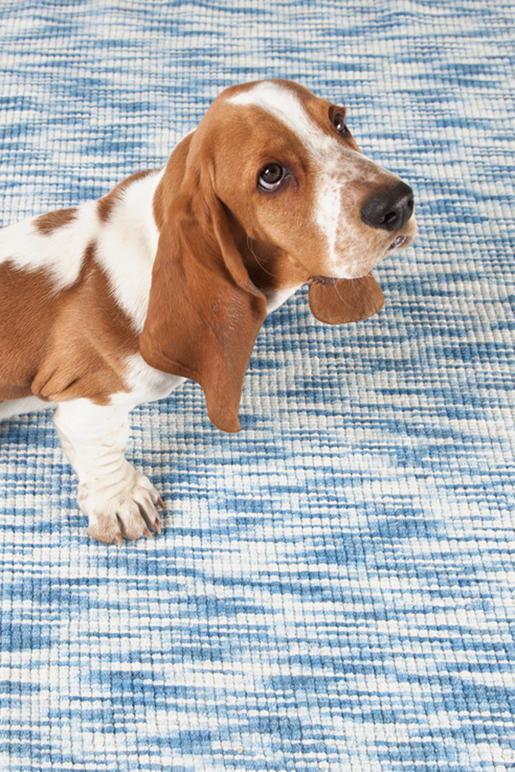
Hooked cotton rugs are hand hooked by skilled artisans from scrap jersey fabric or yarn, giving them a springy, looped construction that feels bouncy underfoot.
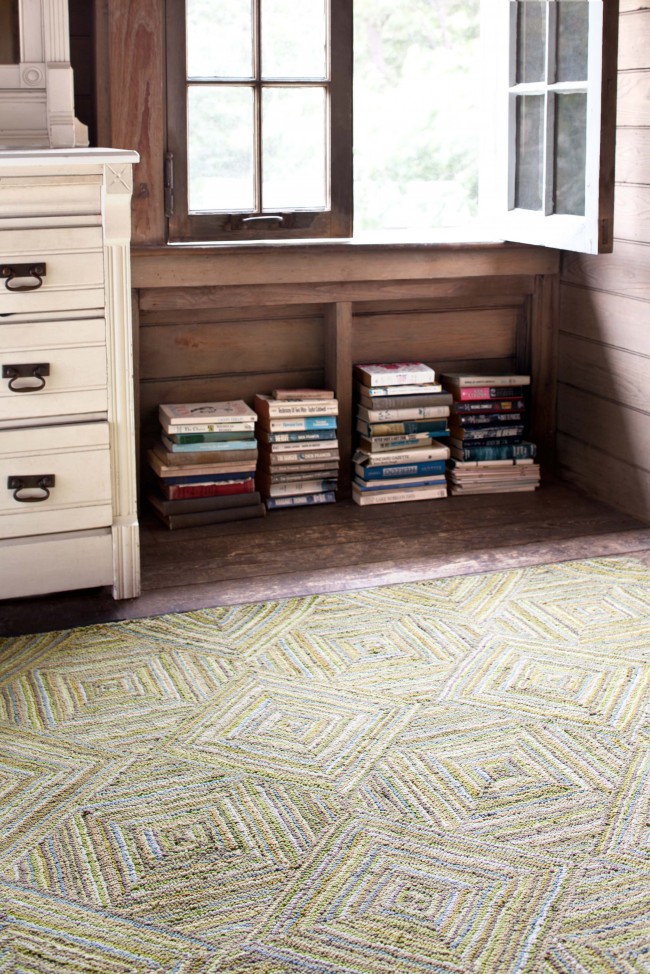
With hooked cotton rugs, the size of the hook and fabric loops is important in determining where to place your rug. Chindi large and medium hooked rugs are high-profile and very plush, so they’re well-suited for living rooms, bedrooms, and family spaces. If you’re looking for that same cushy feel with a lower profile and a more detailed pattern, go with chindi micro-hooked and yarn hooked rugs. These are great in offices, dining rooms, and even stairs!
Woven Wool Rugs
With a rougher hand and a dense, durable construction, woven wool rugs have a natural earthen charm and rustic texture. Woven by hand from 100 percent wool yarns, these rugs work best in low-traffic areas like guest rooms, home offices, and sitting areas. They are lightweight and reversible.
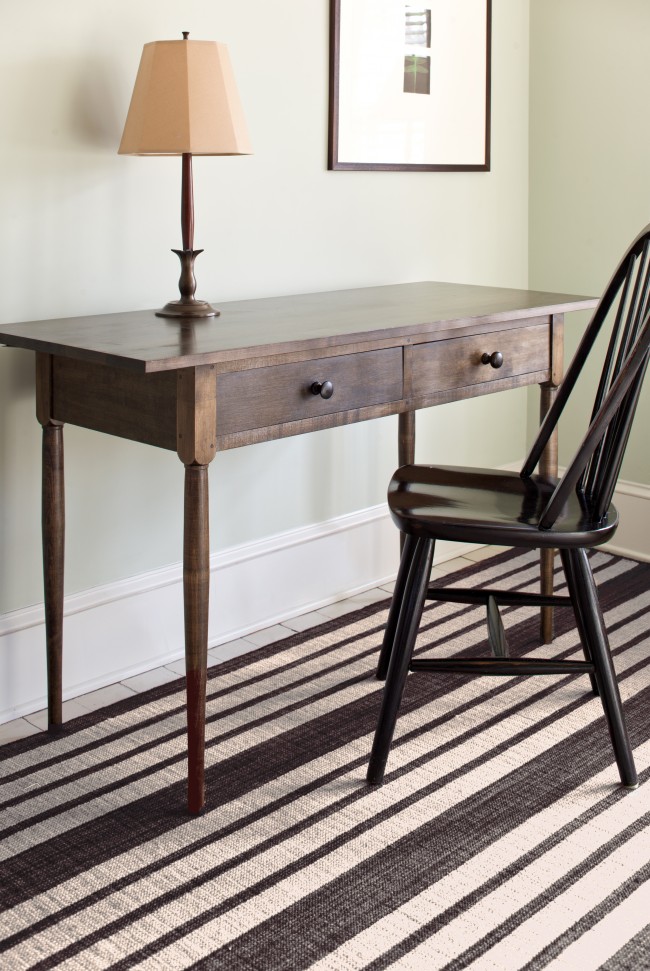
Soumak Woven Wool Rugs
Sophisticated and unusual, soumak wool rugs are crafted by braiding the weft yarn around an additional warp, so they have a more textured surface than their wool woven counterparts, and feature a dynamic pattern with lots of visual movement. Soumak woven wool rugs are for indoor use only, and work well in living rooms, bedrooms, and home offices.
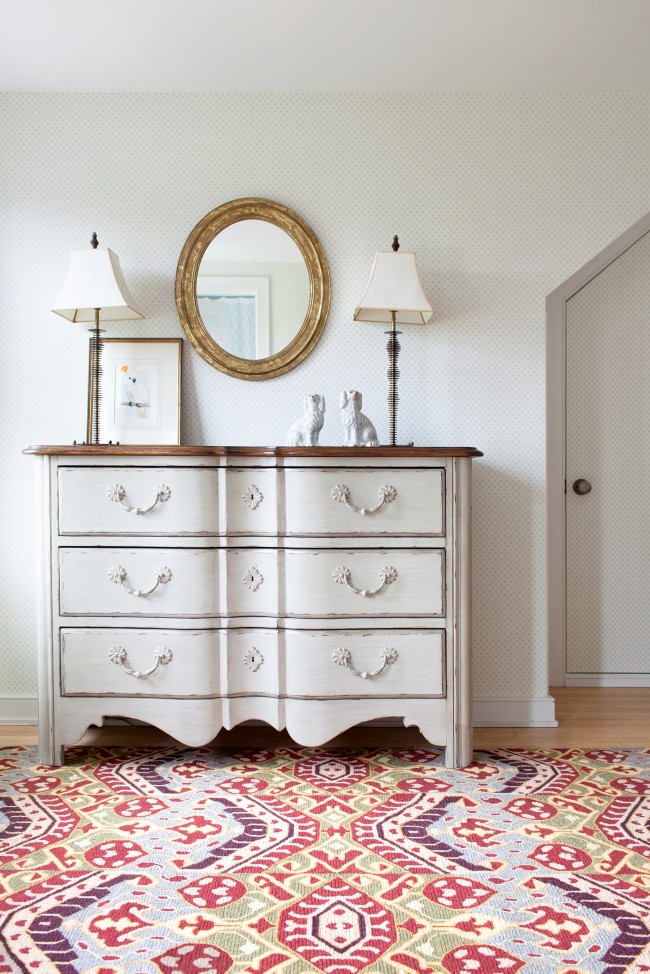
Hooked wool rugs require little maintenance and get better with age. The size of the hook and the yarns will help determine where to use your rug. Micro-hooked wool rugs are made with smaller wool yarns in tight hooks that create a low-profile rug, so they are perfect for high-traffic areas, including hallways, entryways, stairs, kitchens and mudrooms. Medium-hooked wool rugs, crafted from four to five plies of thick wool yarn in large hooks, feature a higher profile, making them ideal for bedrooms and living rooms.
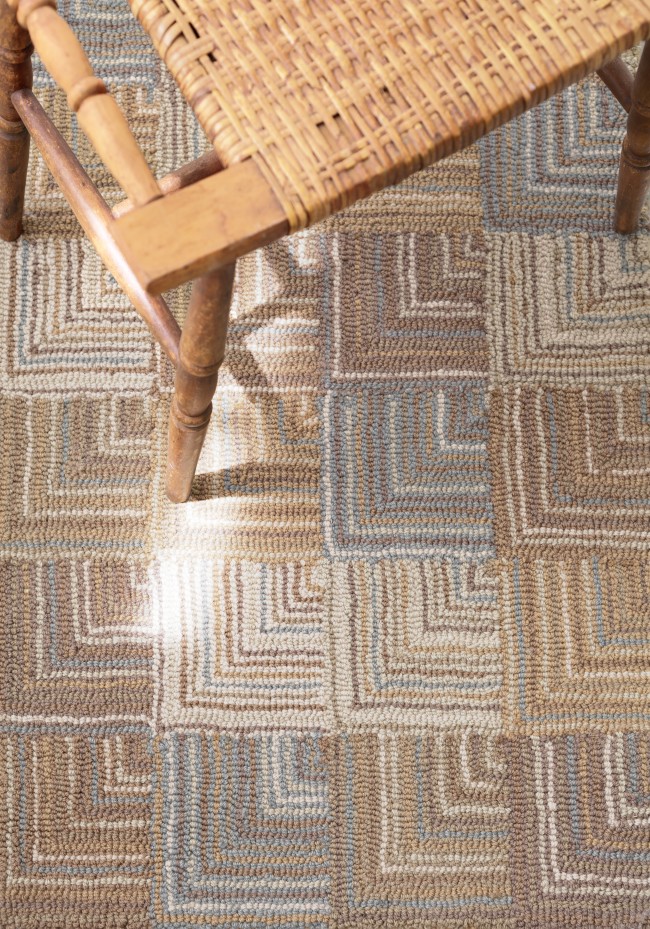
Tufted & Carved Wool Rugs
Full and lush, tufted and carved wool rugs are a true treat for the feet! Thick wool yarns are hand hooked in intricate designs, and then sheared to create a lush pile. The pile is then hand carved along the design, creating an area rug with a truly luxurious feel. The wool rug weave with the highest, cushiest profile, tufted and carved wool rugs are at home in living rooms, dining rooms, and master bedrooms.
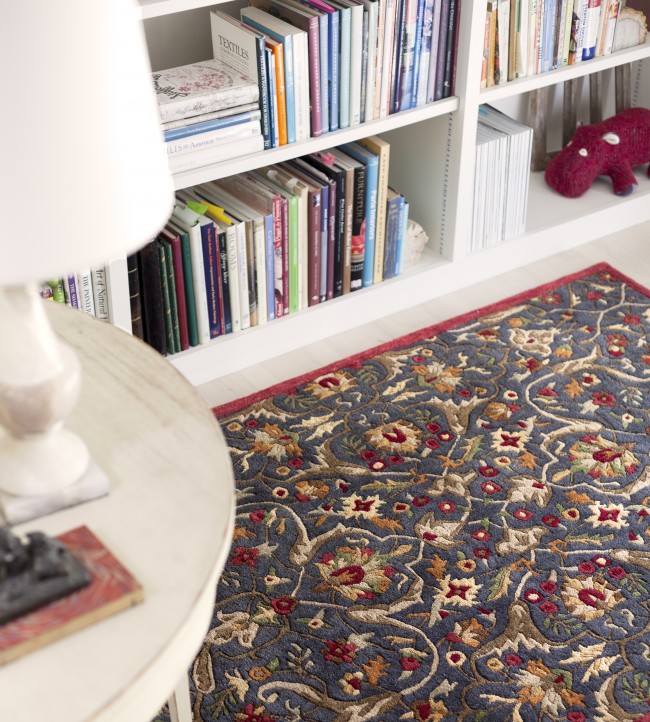
Hand-Knotted Wool Rugs
Crafted by only the most skilled artisans, hand-knotted wool rugs are timeless investment pieces. Because of their unusual weave, hand-knotted rugs can appear lighter from one angle than the other—an optical illusion that’s part of their appeal. Plush and sumptuous, these area rugs are perfect for rooms where the rug is the star: living rooms, bedrooms, nurseries, and playrooms.
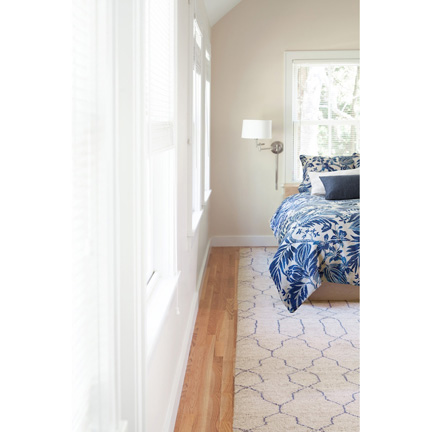
Kilim woven wool rugs feature weft-created, geometric patterns; knotting creates an open weave that gives more definition and dimension to the pattern, while interweaving creates a softer pattern with intermingled colors. Durable, bold, and low-profile, these showstopping kilim rugs are natural for any room that could use some pattern, including bedrooms, dining rooms, and family spaces.
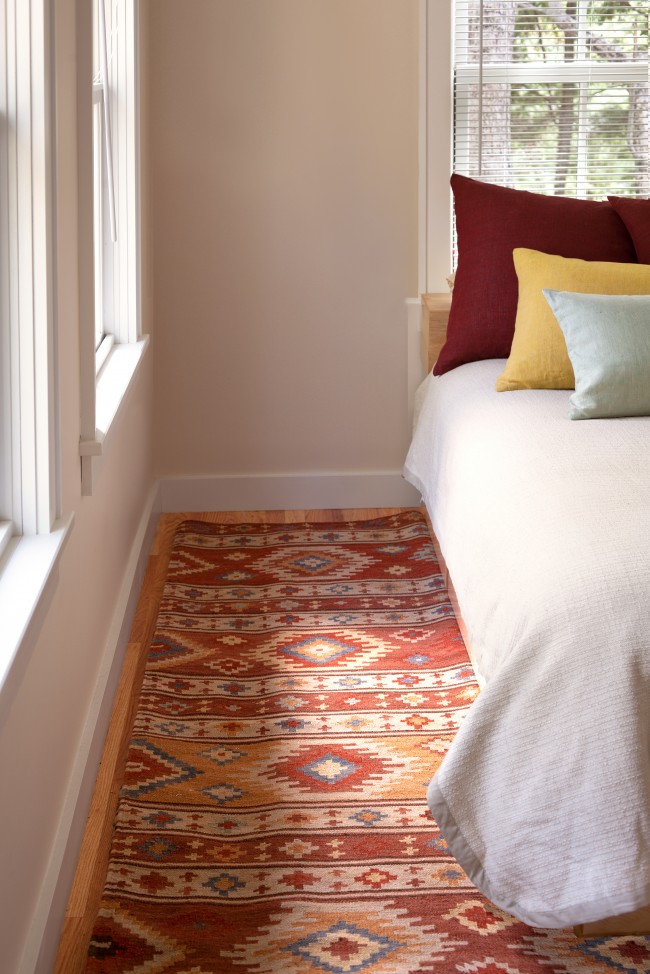
Woven Indoor/Outdoor Rugs
Made of nearly indestructible, UV-treated polypropylene, indoor/outdoor rugs are terrific for high-traffic areas: kids’ rooms, sunrooms, decks, and porches; and any floor that gets wet—like the bathroom, the kitchen, or the basement. And of course, indoor/outdoor rugs are ideal for homes with pets.
Small indoor/outdoor rugs are great for shoes, play mats, cargo-area covers in the car, and even food bowl mats for pets.
There are three types of woven indoor/outdoor rugs: flat weave, diamond, and dhurrie.
Classic flat weave indoor/outdoor rugs are hand-woven, with extruded poly yarns making up the warp and weft. The technique results in an array of patterns and happy stripes that make fun additions to frequent-cleanup areas like playrooms and crafting spaces.

Diamond woven indoor/outdoor rugs are very similar to their flat-weave companions, except that they’re hand-woven on a jacquard loom, with the weft skipping specific warps to create their distinct diamond pattern. The eye-catching geometric is a star performer in areas where you want visual interest but still need durability, such as the entryway, the hallway, or the man cave. Bonus: geometric patterns can help camouflage everyday dirt, so if you haven’t quite gotten around to vacuuming, they’ll still look handsome for a few more days.
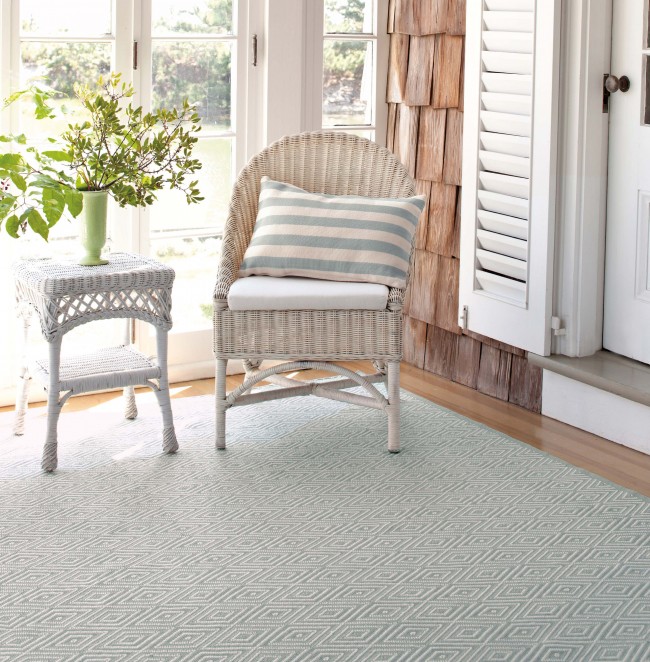
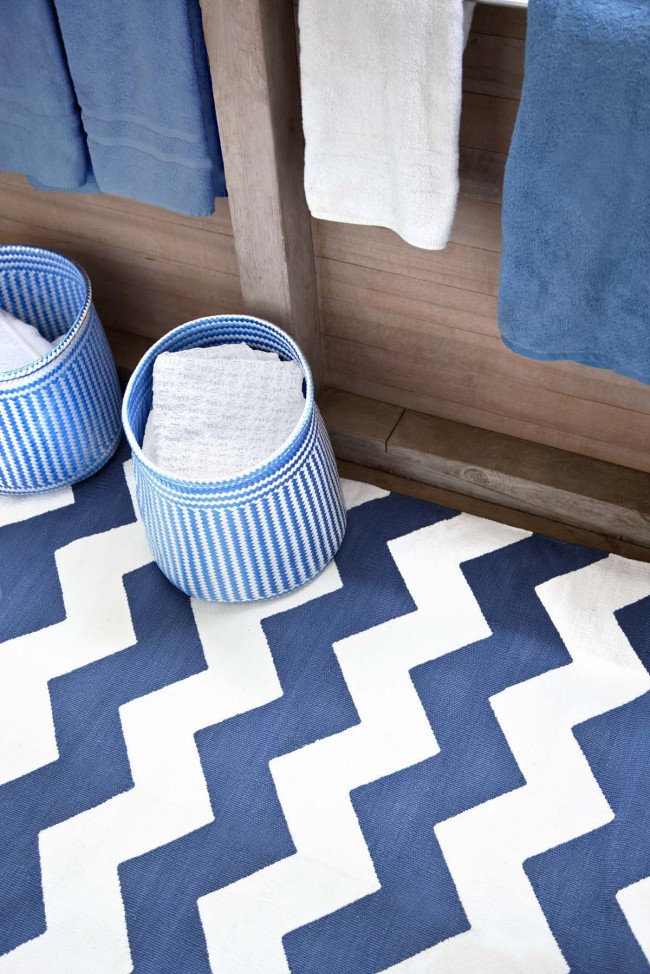
Woven Rope Indoor/Outdoor Rugs

PET (Polyethylene) Indoor/Outdoor Rugs
With their soft, pliable texture that is often mistaken for wool, PET indoor/outdoor rugs are just right for high-traffic areas that require a more sophisticated look. Made of recycled polyester, these area rugs are durable, washable, eco-friendly décor pieces that come in a variety of beautiful patterns and versatile hues. They’re lovely additions to the porch or patio (no need to worry about the sun, they’re UV-treated for fade resistance!), but also blend right in to more formal spaces like the living room, dining room, or bedroom.
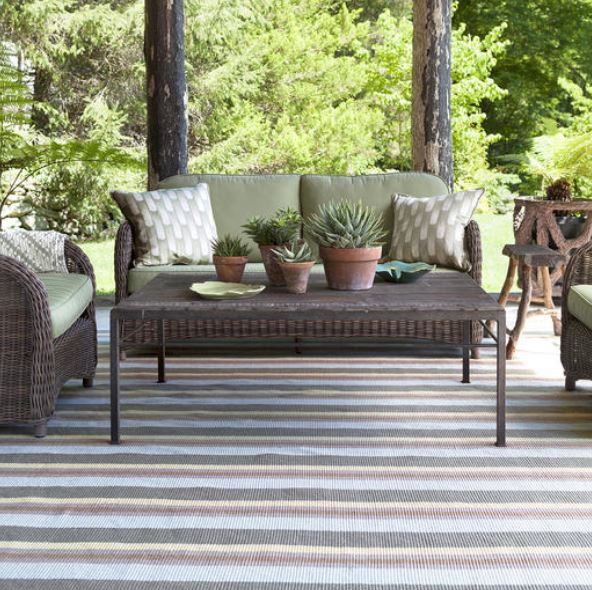
Obssessed with Empire? How to Recreate Cookie’s Office
In the glamorous world of Fox’s new hit show, Empire, work is as decadent as play. If you love this opulent style, take a look at some of our favorite picks to transform your work space into queen’s quarters, just like Cookie’s!

|
|
|
|
|
|
|
|
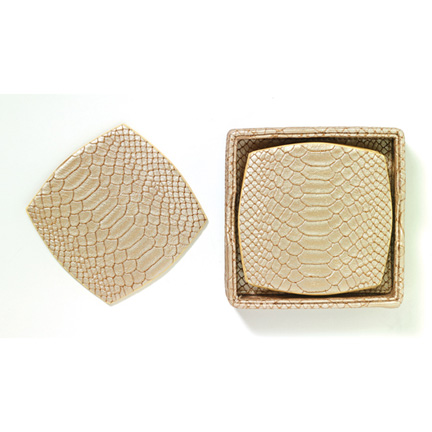
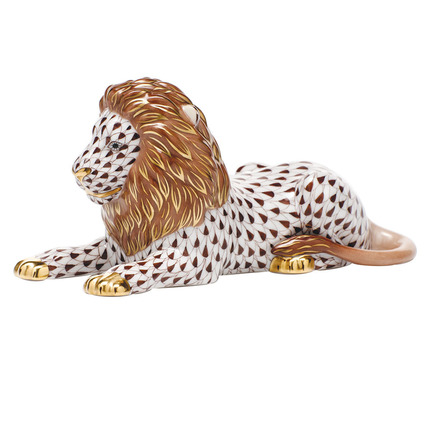
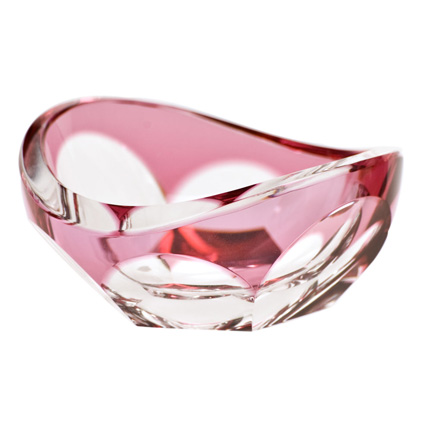
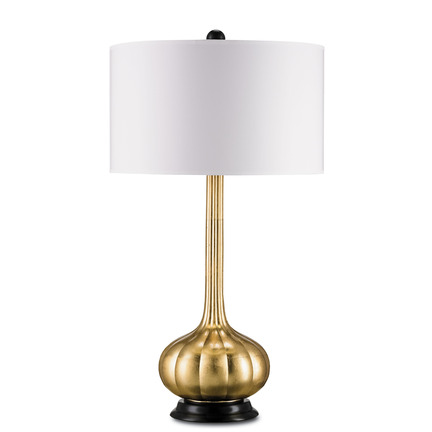
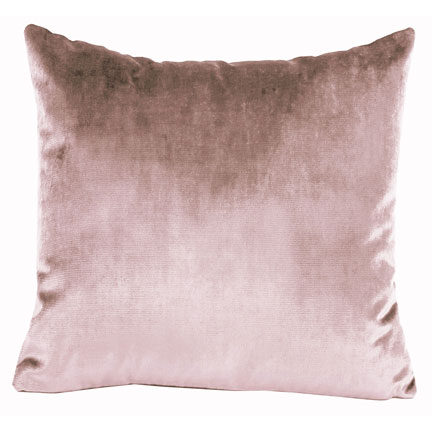
For more ways to make your office over the top, click here!
J. Lo’s Big Move: Transporting Style From Coast to Coast
Combining class with sass has always been key to Jennifer Lopez’s signature style. From her glossy videos to her glittering dresses, J.Lo exudes the glamorous life of a true A-lister.

It comes as no surprise that such a star should have a dazzling home to match. With the purchase of a $22 Million New York penthouse, Jennifer Lopez is taking a touch of Tinseltown back to the East Coast.

The singer/actress recently listed her Los Angeles mansion in Hidden Hills for $17 Million, after buying it with ex-husband Marc Anthony for less than half this price ($8.2 Million!) in 2010.

Making a move this big may come as a shock, as these homes appear so dramatically different. But Jennifer’s a woman who knows what she wants. Take a look at how she is translating her style from a spacious West Coast mansion to a sophisticated East Coast apartment.
Keeping her color scheme light and bright, Jennifer took the soft, airy feel of her previous living room…
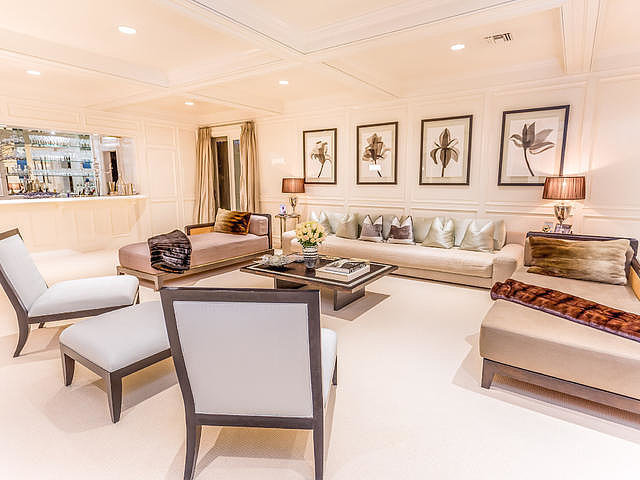
And upgraded to hardwood floors, tufted furniture, and a glowing skylight. Swapping the floral artwork from her LA home for an abstract painting, Jennifer’s new abode incorporates a more active engagement with nature through live house plants.
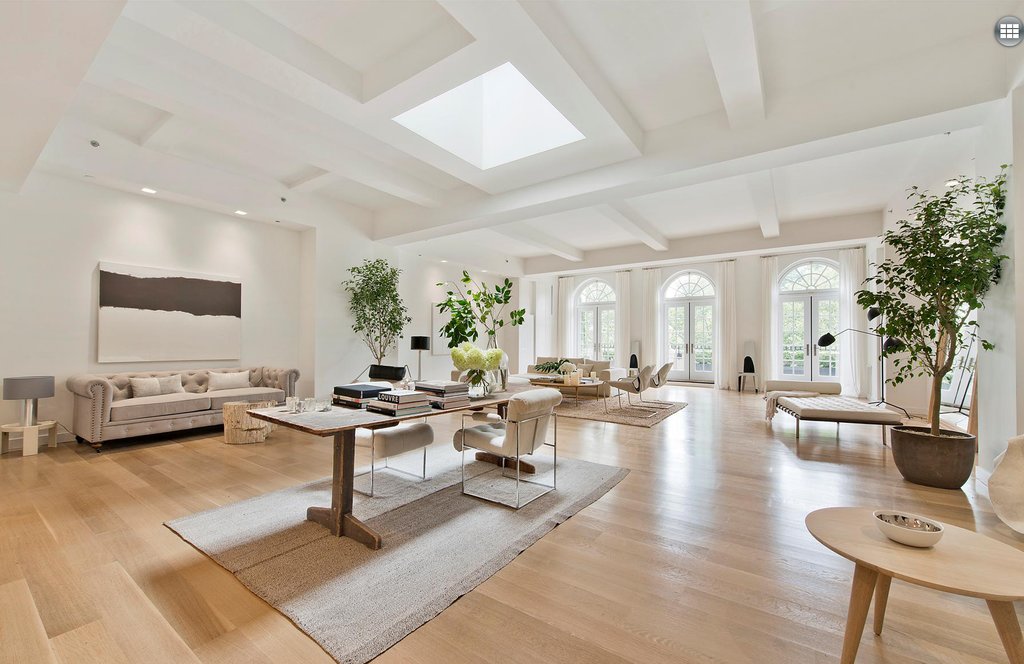
Staying true to her four-post beds and long, luxurious curtains…
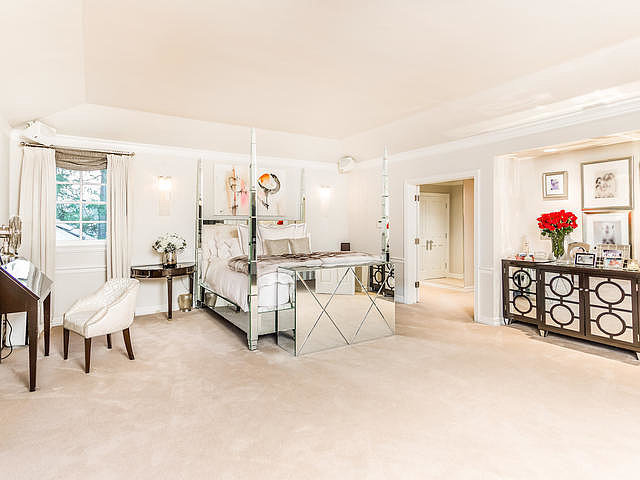
The bedrooms are updated with more natural finishes. Keeping colors neutral, both homes achieve a rich, layered look through varying textures, materials and shapes.
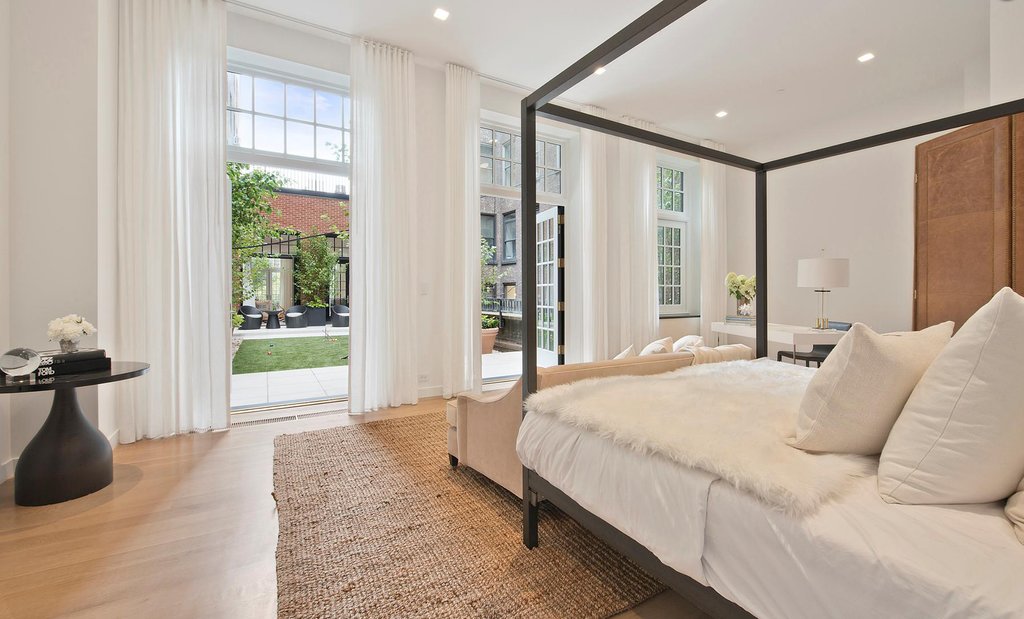
While she still loves the recessed lighting, stainless steel accents and open floor plan seen in her last kitchen…

Her New York kitchen boasts an even more open-air feel with higher ceilings, sleek seating, and a longer, more functional island.
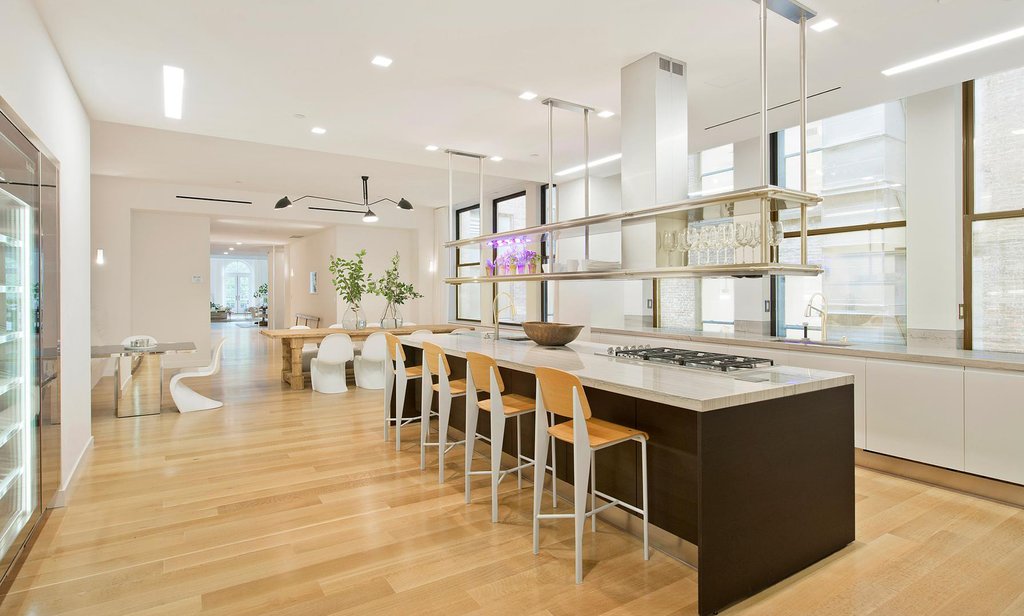
One of the most dramatic differences between the two homes lies in the master bathroom. Jennifer loves the free-standing tub and plush sheepskin rug that give the room a luxurious and indulgent feel…
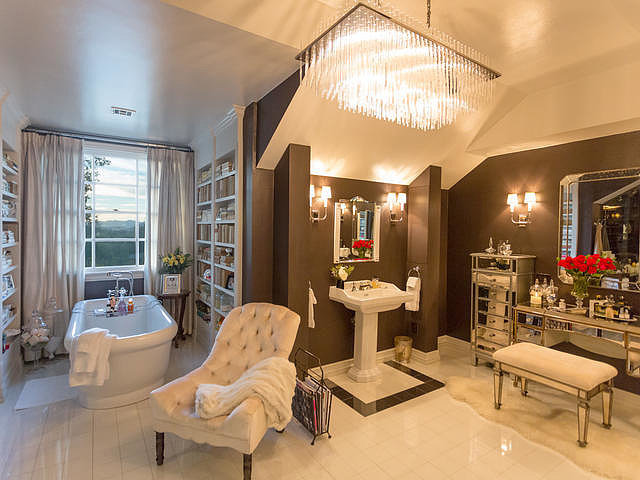
But has swapped out the dark paint and room divider for the squeaky -clean look of all white. The floor-to-ceiling glass shower walls visually open the space, while the huge doors and windows fill the room with natural light, lending that California feel.
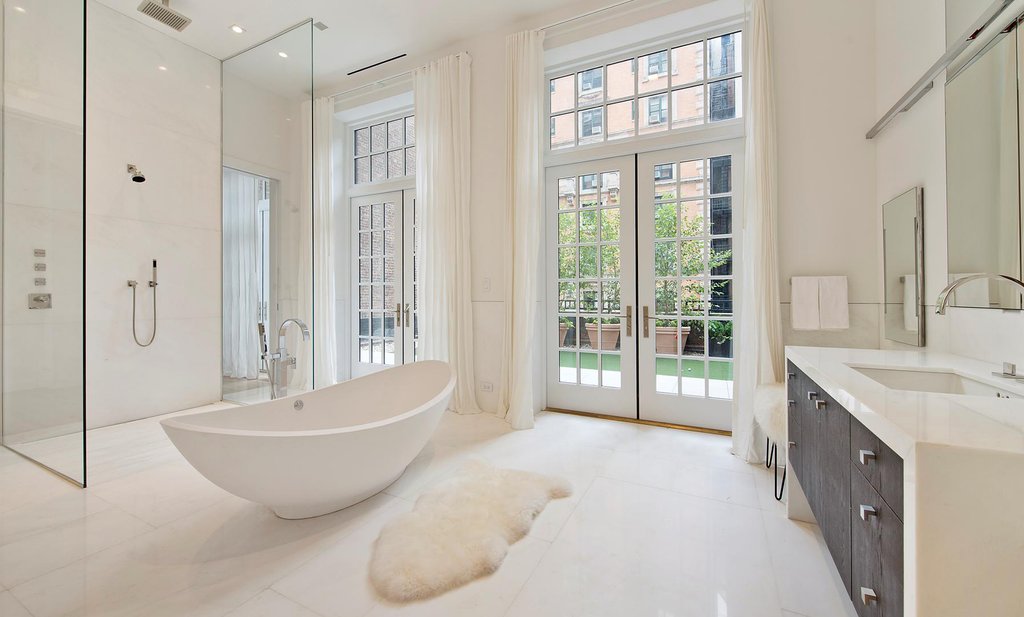
While Jennifer is saying sayonara to an enormous, resort-like pool…

She is keeping in touch with the great outdoors with a rooftop garden, golf and croquet course, and some spectacular city views.
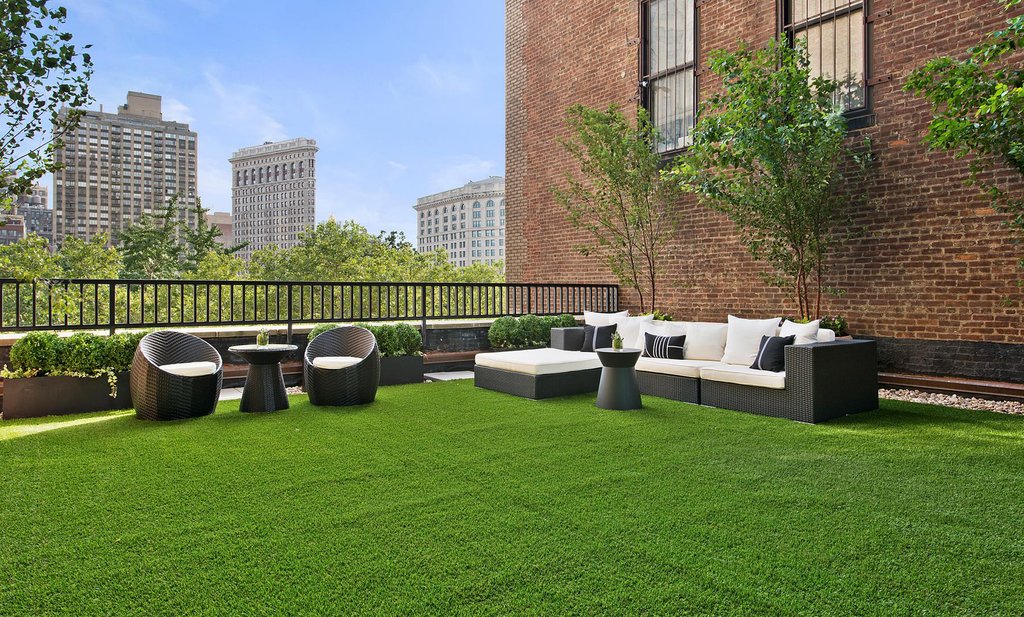
Love J.Lo’s new digs? Or do you prefer her sunny spot in California?
Tell us in the comments section!
7 Secrets for Designing Amazing Small Spaces
Small spaces should be jewel boxes. From New York, London, and Paris, we’d like to share with you some amazing small spaces, and the secrets for what made them so great.
1. Tear down the walls. There’s no room to hide, so open up!
2. Order, order, order! A small space must always be neat and organized.
3. Open the shelves and hang the cookware. This creates more space and makes you look like a real chef.
4. Every object must be intriguing. Because your space is a capsule of your life and your dreams.
5. Treat your fixtures like works of art, and show them off.
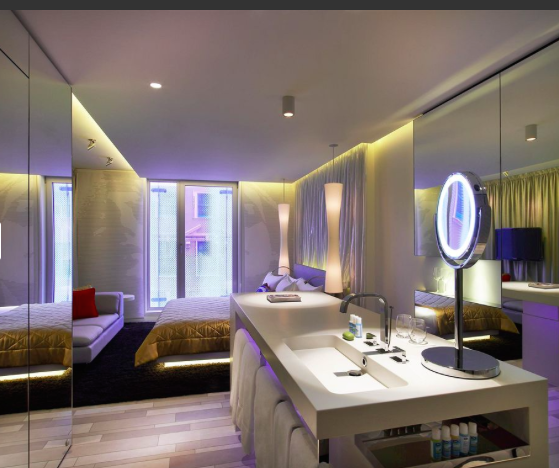
6. Farm.

7. And the oldest trick in the book: Use a big mirror! It’ll create more light and space:
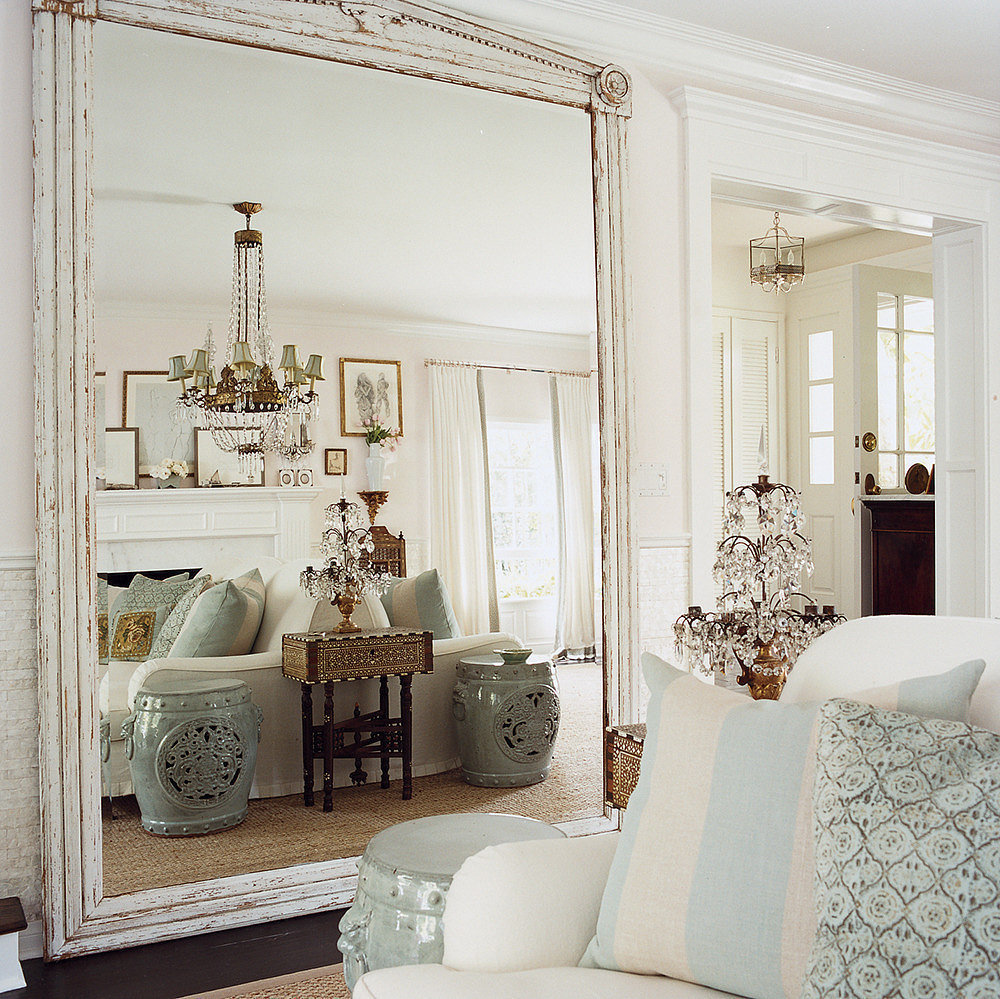
Small space decorating means making the most of everything. Embrace what you’re given. Make every piece, every inch, every moment a work of art. There’s no place to hide, no room for second best, no time for excuses.
Just like life itself.
The World’s Best Closets (And How to Create Them)
We recently finished building a home, and the most fun (and difficult) part of the whole process was in designing the closets. We had a long list of requirements: separate his and hers closets, plugs for our phones, iPads, and laptops, windows for natural lighting, seating, jewelry drawers, watch cases, open display for pretty shoes, hidden display for running shoes, the list goes on and on.
Anyway, if you’ve been dreaming about a new closet, you’re not alone. Closets are now the most important rooms in high-end homes, since many of us can’t cook, but who doesn’t love shoes? So we went straight to the top and here’s what we learned:
1) Turn your closet into a sitting room by adding plush seating and a fabulous crystal chandelier.
2) Add pull-out telescoping bars or valet hooks so you can easily preview your outfits.
3) Build your closets to the ceiling; store out-of-season items and suitcases high up.
4) Floor-to-length mirrors are key: the more, the better.
5) Properly lit and displayed, everything can look like an art gallery. And while you’re at it, an espresso machine wouldn’t hurt.
6) Organize everything by type, and then by color. And all those shoe boxes you’ve been saving? Get rid of them … they are taking up too much space.

7) Add clear shelves so you can see all your accessories at a glance: sunglasses, jewelry, watches.
8) Good lighting is key: LED hanging rods and backlit displays for a modern feel …
… or picture lights for a classic look. And while you’re staring at Nate’s closet below, do you see how inviting that yellow ottoman looks?
9) Layer in your favorite accessories: these could be fashion books, pictures of your family, or vintage hats. And how cool is the helmet in this closet?

10) Keep a pair of laundry baskets handy: one for dark clothes, one for light. And if you have room, also keep a bag for items to be donated or repaired.
11) Borrow a tip from the pros: keep a locked safe for jewels, cash, and important documents. You can hide this behind a mirror.
12) Place gowns and special clothes behind glass doors.
13) Add a vase of fresh flowers, fragrance, and a tray for keys, wallet, and phones.
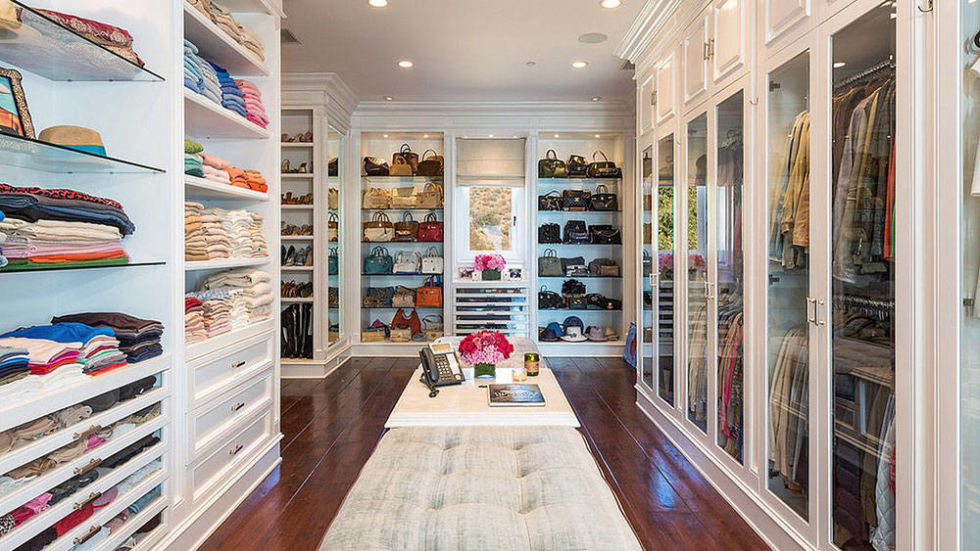
14) Replace all your old hangers with slim, velvet-colored hangers. You’ll fit more items, and they’ll all hang at the same height. And while you’re at it, remove all dry cleaning bags.
15) Edit, edit, edit. If you haven’t worn it in five years, donate it. If you haven’t worn it in one year, try it on to make sure it fits. Trust us: you need to clear space so you can go shopping again!
Inside Beyonce and Jay Z’s New House in Los Angeles
What do you think Jay Z and Beyonce’s house would look like? Lots of bling and attitude?

Although they were outbid on a home by Minecraft founder Markus Persson (check out his $70 million bachelor pad here) back in December, Beyonce and Jay Z are back in L.A. Located in ultra-exclusive Holmby Hills, the house – which they rented last summer – has 16,000 sq ft, seven bedrooms, nine bathrooms, and a gorgeous infinity pool.
We love how it’s both private and filled with light, starting with the front door, which is accessed by a sunken entryway.
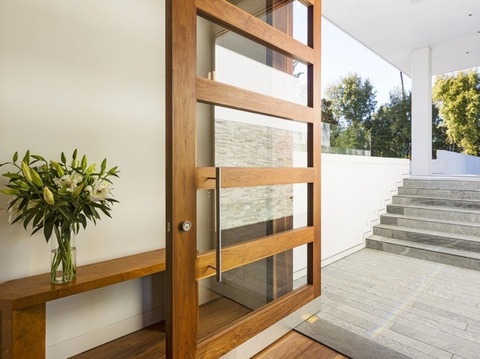
The double-height family room is calming, soothing, and surrounded by massive panes of glass and mature landscaping.

Inside, there are lots of huge walls ready for art …

… while the bedrooms echo the outdoor with wood paneled accents.

Outside, expansive terraces are perfect for entertaining outdoors …

… while the side opens on to an enormous infinity pool:

Lots of parking for Bey and Jay’s cars …

… and not another house in sight (just steps leading down to a sunken tennis court). A tasteful, modern house; perfect while they hunt for their next digs.

Is this what you expected? Tell us in your comments below.
And want to keep more stories coming? Then follow our blog.
5 Spring Makover Essentials
Ready to welcome the new season? Here are our 5 favorite spring essentials to freshen your home in the blink of an eye.
1. Layer vases of fresh blooms on your dining table, countertop or bedside table.
![simon-pearce-vases[1]](https://blogs.graciousstyle.com/wp-content/uploads/2015/02/simon-pearce-vases1.jpg)
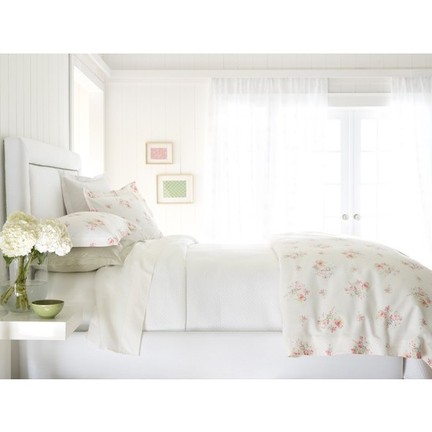
3. Pop some pastels into your bathroom.
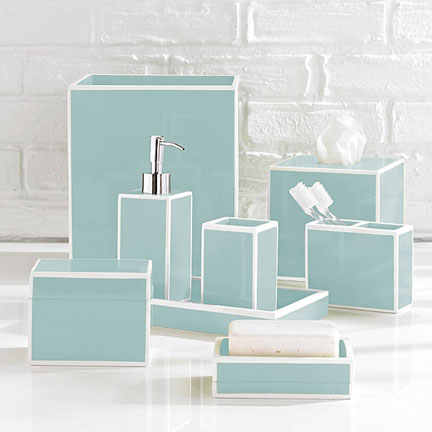
4. Bring new life to your entryway or coffee table with your favorite Spring creature!
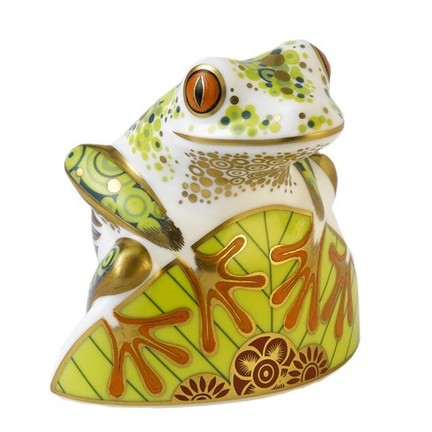
5. Go barefoot on a spunky new rug.
Love what you see? Take a look at all 16 of our best Spring Essentials here!
How To Decorate a Teardown
We found a house last year whose architectural style was officially listed in the MLS as “Teardown.” The selling agent insisted on showing us the house personally so that we “knew what we were getting into.”

We loved the neighborhood, so we bought it anyway. Since we weren’t ready to do any major work on the house, we limited ourselves to cleaning and decorating, and we were surprised by how far that took us.
The entryway and staircase area was quite dark, so we used lamps and mirrors to brighten up the dark spots:
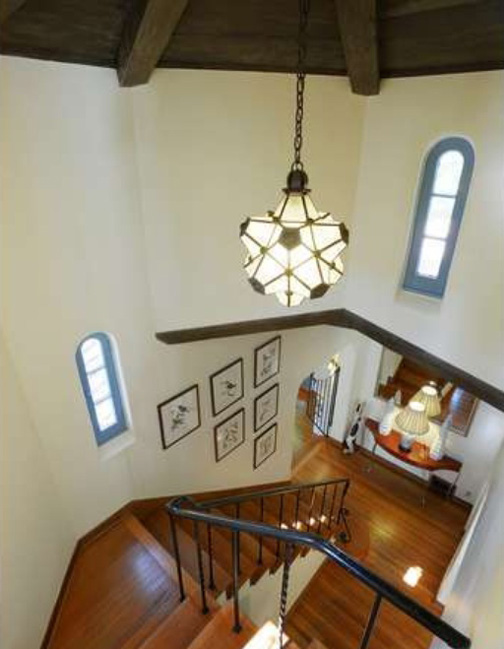
To the left of the entryway, we had an oversized living room. Here, we removed all the curtains, painted the window and door trims blue, and set up different seating areas to make it warm and inviting:
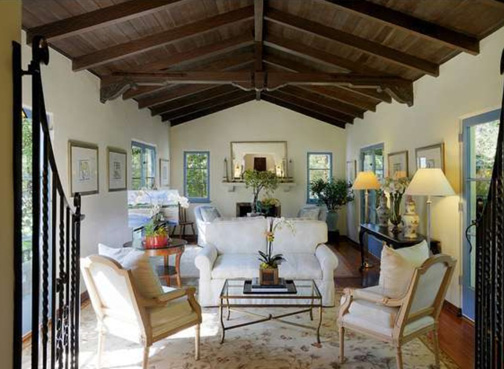
In the dining room, two hutches from our previous house gave us much needed storage. They also lent stronger architectural lines to the room.
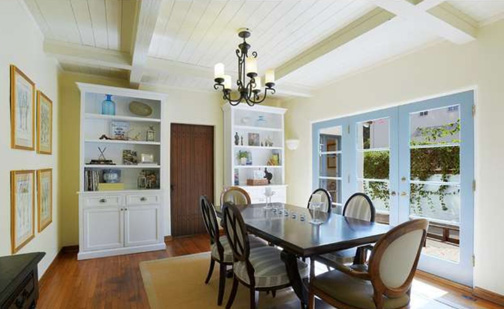
Here’s what we learned:
– Clean everything. Trim the trees, wash the house, and remove old carpet, wallpaper and curtains.
– Remove all unnecessary doors and shelves. Chances are, you won’t miss them, and the spaces will feel larger and more open.
– Paint every wall, including the insides of your closets. If you’re moving into an older home with a lot of existing detailing, it’s fine to paint it all the same color. In our case, this also helped unify a recent addition with the original structure.
– Use rugs to bring in warmth and color. They are also great for outdoor areas.
– Create intimate spaces with comfortable seating nooks. Finish these up with pillows and throws.
– Add table lamps and floor lamps. Older homes usually don’t have great overhead lighting; lamps will bring in soft light and add height to every room.
– Flowers (whether in a vase or on the wall) will brighten up any space.
– Use mirrors everywhere (entryway, staircase landing, living room, dining room, hallway) to bring in more natural light.
– Bring in soft scents. Layer in your favorite candles and diffusers.
– Add new plants to your entryway.
If you have any other tips to share, we’d love to hear them!
Get Your Act Together: 10 Things To Do Before You Bring Her Home
So you’ve been dating for a while, and you’d like to show her your place. Great idea, but there’s more to preparing your home than just throwing everything in the dishwasher. Read on for the 10 key points that can make or break her visit.

1. Curb appeal. Initial impressions mean a lot. Still have those Christmas lights up from last year? Swap them out for a clean, new welcome mat. If the mailbox is overflowing with junk mail, go through it now.
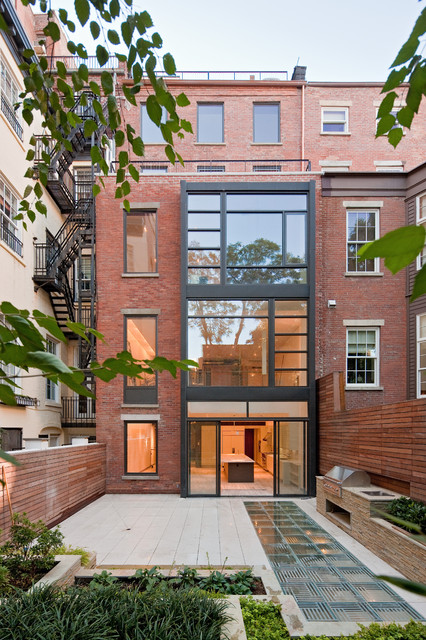
2. Clean up! This might sound obvious, but you need to get it done. Start by removing clutter from all surfaces (kitchen, bedroom, bathroom, living room). Once these are clear, wipe everything down and only put back essentials like your coffee maker or remote control. Also, don’t forget to vacuum your floors, wash all your linens (sheets and towels), and make your bed.

3. What’s in your fridge? Yup, she’s going to look. If you only have beer and hot sauce in your fridge, at least wipe down the shelves so they’re nice and clean. Toss out all leftovers and anything past its expiration date. A good rule to live by: if you have to smell it to remember what it is, it’s too old. Extra Credit: Surprise her with a bottle of bubbly for a romantic nightcap!

4. Bathroom necessities. Your bathroom should be spotless. Always (and we mean always) close your toilet, have lots of toilet paper available, refill the hand soap, and place towels next to the sink. Extra Credit: Clean up your medicine cabinet. In case she takes a peek, this is not the place to hide anything you took off the countertop in step 2.

5. The TV. If you have dusty equipment or a maze of wires surrounding your screen, tidy them up. Video games and movies are fun for certain occasions, but don’t really scream romance, so store these in a drawer or basket. Extra Credit: Go through your DVR. Are you really ready to explain to her that you secretly love watching The Real Housewives of Atlanta?

6. What’s on your bookshelf? Books can be an excellent conversation starter, so start that conversation off right. If you have a passion for poetry or an extensive library of Russian literature, this is the perfect way to show her. But be careful: don’t put lofty books there just to impress her. If she asks about the influence of neo-realism on 20th Century Italian film, you’d better have an answer!

7. The dog. Find out beforehand if she is comfortable around pets. A well-mannered dog is the sign of a devoted trainer, so be sure your best friend’s on his best behavior. If she’s afraid of animals or just a bit shy, be respectful of her boundaries and keep your pooch behind closed doors.
8. Take out the trash! Empty out all trash cans in the house and check surfaces for old receipts, empty beer bottles, ashtrays, or anything else that should say sayonara. Extra Credit: Light some candles or pick a handful fresh flowers to clear the air. These subtle details will not go unnoticed!
9. The Ex. There should be absolutely zero evidence of any other woman ever entering your home. Exceptions are your family, your housekeeper, and me, in spirit (see all other steps).

10. Show your personality. Your home is a reflection of you, so keeping it tidy will allow your favorite pieces to shine. If you play a musical instrument, love to surf or have a knack for painting, showcase your interests and talents through your home. Extra Credit: Invite her further into your world by playing her a romantic tune or cooking a sweet treat. Whether you have a passion for wine, sports or astronomy, show her how much you care through an outlet where you thrive.

2015: Year of the Sheep
2015 welcomes in the Year of the Sheep!
What does it mean? If you or a loved one were born under any of these dates, the Chinese believe that people born under this Zodiac sign are tender, polite, clever, and kind-hearted:
Feb 1, 1919 – Feb 19, 1920
Feb 17, 1931 – Feb 5, 1932
Feb 5, 1943 – Jan 24, 1944
Jan 24, 1955 – Feb 11, 1956
Feb 9, 1967 – Jan 29, 1968
Jan 28, 1979 – Feb 15, 1980
Feb 15, 1991 – Feb 3, 1992
Feb 1, 2003 – Jan 21, 2004
Feb 19, 2015 – Feb 7, 2016
While Chinese New Year doesn’t start until February 19th this year, here are some of our favorite finds to remind us of this peaceful, nurturing animal throughout the year:
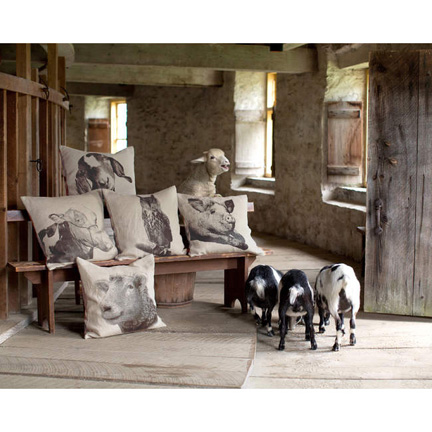
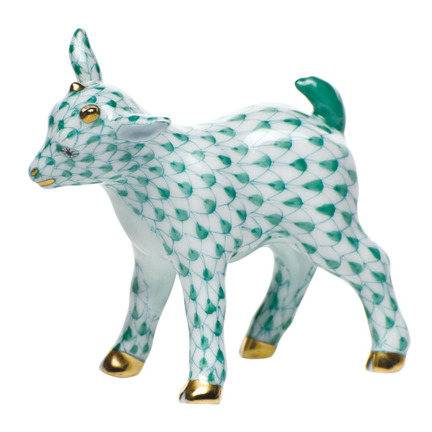
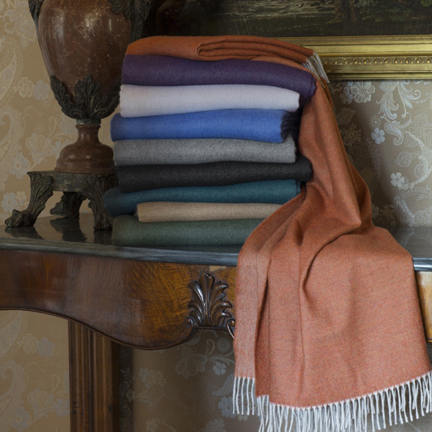
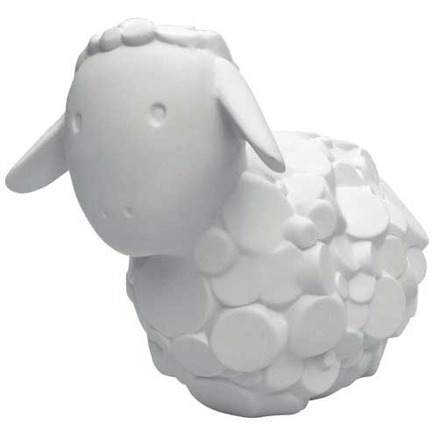

Happy New Year from all of us at Gracious Style!
No More Broken Glasses!
I’m always thrilled when my boyfriend volunteers to do the dishes… until I hear the chilling sound of another glass shattering in the sink! Between him and his brother, those 4 hands have broken a good 20 or 30 glasses over the past year. My solution? Mario Luca Giusti‘s durable, beautiful, boyfriend-proof drinkware.
In so many colors and styles, these glass-like acrylic pieces were just what our kitchen needed. Now, when I hear something tumble into the sink, I keep my feet up and remote in hand, knowing he’ll never break another glass.

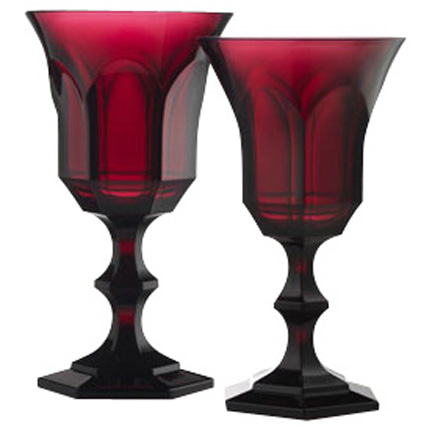
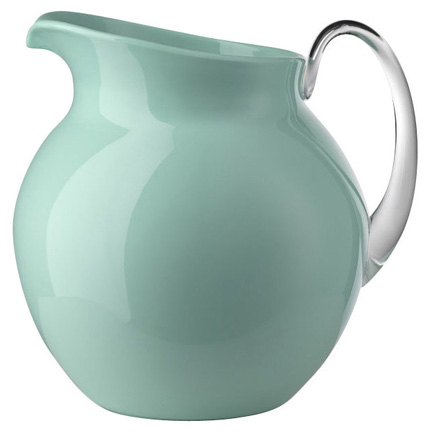
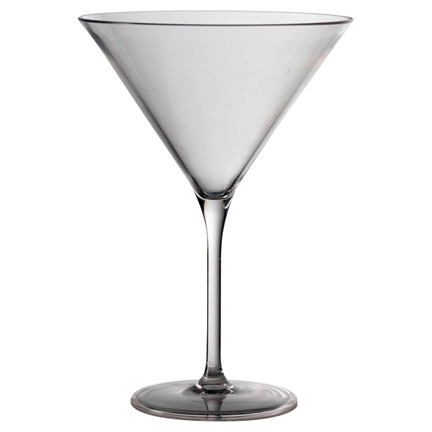
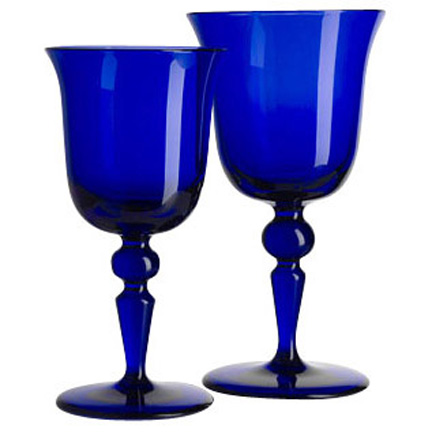
For more fun and easy styles by Mario Luca Giusti, click here!
Inspiration: A Mexican Fiesta from Mother Magazine
Taking a turn from tradition, the folks at Mothermag.com put their heads together to create a tabletop that is super fun and colorful. Using our delightfully versatile Jars Tourron Jade Dinner Plates, a bright Modern Fiesta scene came to life. Here, we share some of stylist Natalie Bowen’s tips on creating this fun and festive look in your own home…
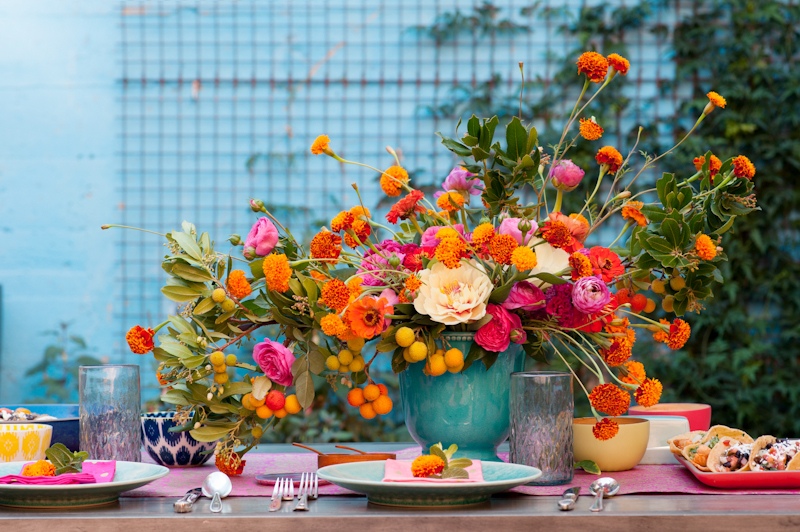
“If your napkins don’t match, don’t worry. Mixing bright hues and prints in the napkins—and all over the table—adds to the colorful, fiesta feel, perfect for birthday parties, baby showers, and the like.”
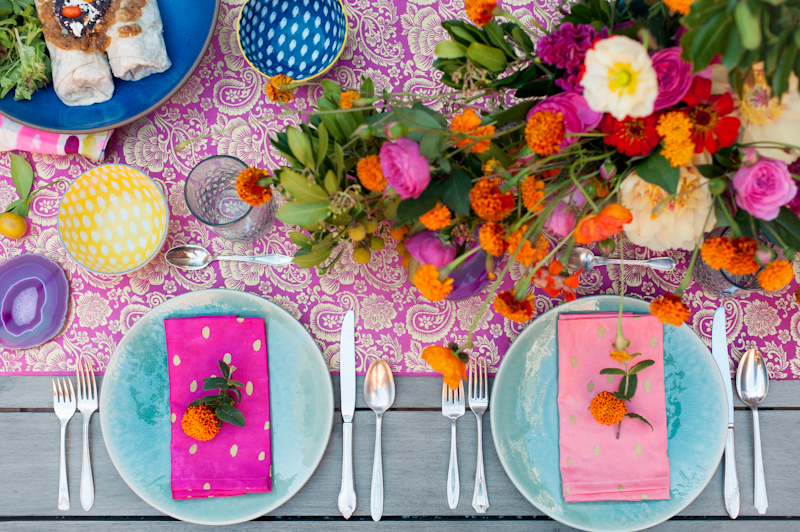
“Using a statement coaster adds a nice finishing touch, as does an assortment of vintage, mis-matched silverware.”

“Use fresh mint or herbs from the grocery store or your own garden as part of the floral decor topping the plates.”
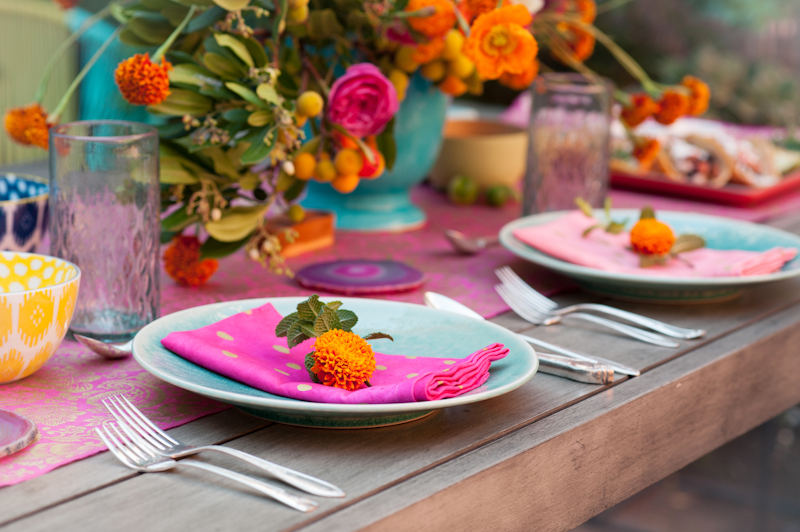
“We love the “fiesta” theme, because almost anything goes when it comes to the color palette. This is a real opportunity to use several of your favorite flowers for an awe-inspiring centerpiece or smaller arrangements.”

A special thanks to Mothermag.com for these stunning images!
For more from our Jars Tourron Jade Collection, click here.
Design Lesson: 3 Ways to Add Gold to Your Interiors
After our recent trip to visit Peter Marino’s new Chanel stores in Paris, we’ve been seeing gold everywhere. But this time around, it’s more chic and textural. The trick? Find a softer gold that’s infused with champagne, so it feels warm and organic. You want to bring just enough luster into a room to make it come alive, but not so much that it feels overdone.
Here are three ways to do it:
1. Combine gold with neutrals.
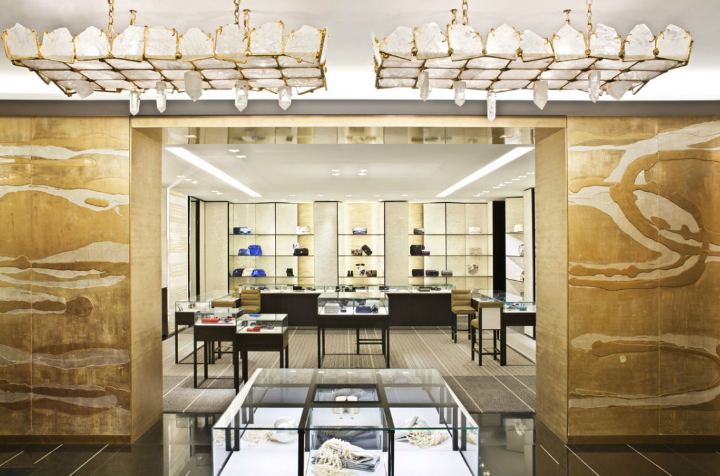
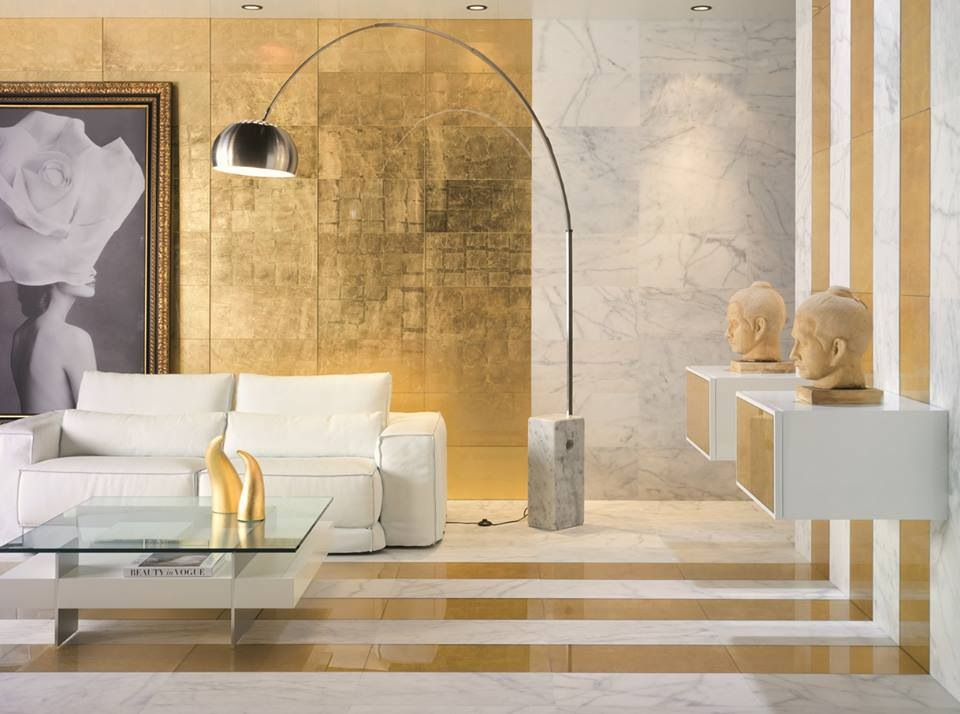
|
|
|
|
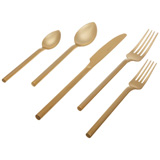
2. Combine gold with faded antiques.
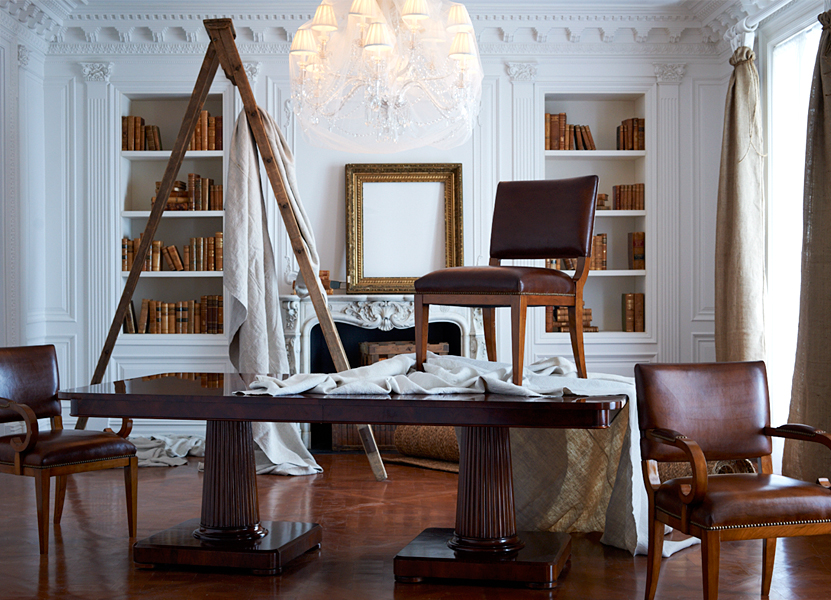
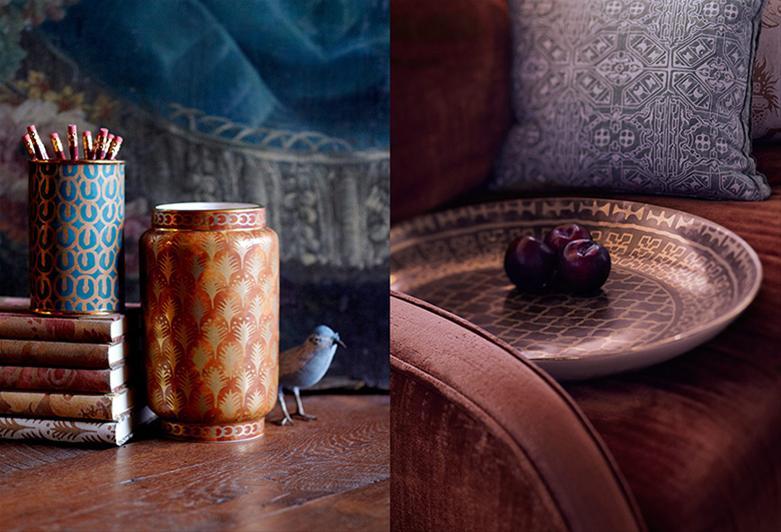
|
|
|
|


3. Combine gold with anything exotic.
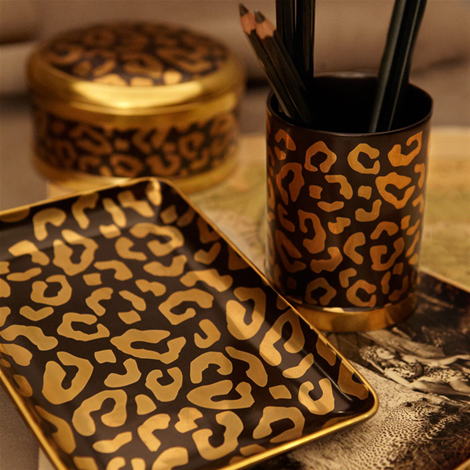
|
|
|
|



Interested in learning more? Check out our Gold Rush board on Pinterest.
Thursday Sale: Spruce Up Your Home for the Holidays
With guests arriving from out of town and the holiday fervor in full swing, there’s no better time to add that little extra something to your home decor. Snag one of these great sale items and start sending those invites!
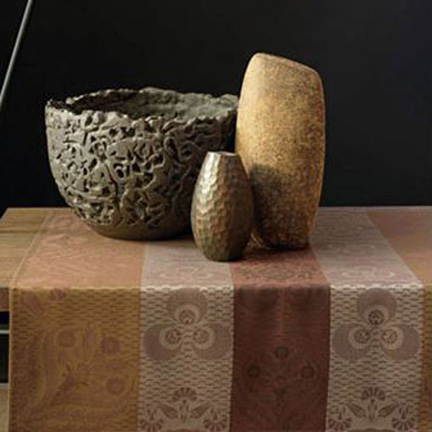
|
|
|
|
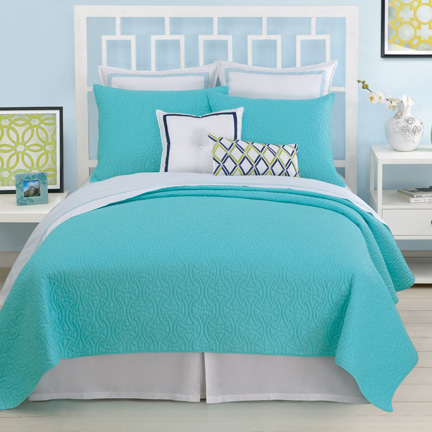
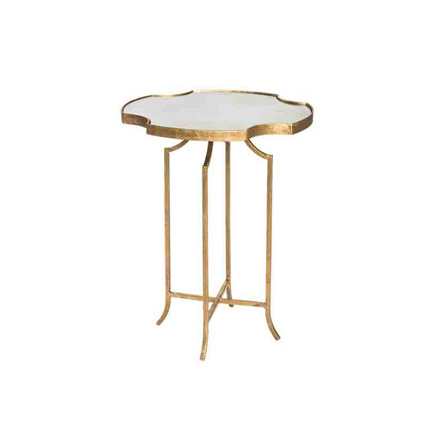
To view our full sale section, click here!
In Full Bloom: Beauville’s Chic French Printed Table Linens
There are times when you want an instant burst of color in your dining room, and nothing will do that more quickly than a brightly printed tablecloth. Beauville’s collections, designed and printed in the Alsace region of France, are meticulously silk screened with up to 20 colors for a look that is vibrant, yet sophisticated.
Here’s a sneak preview of the line, which we’ve just introduced at Gracious Style:
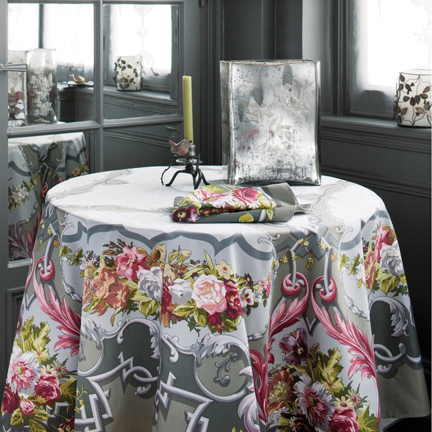
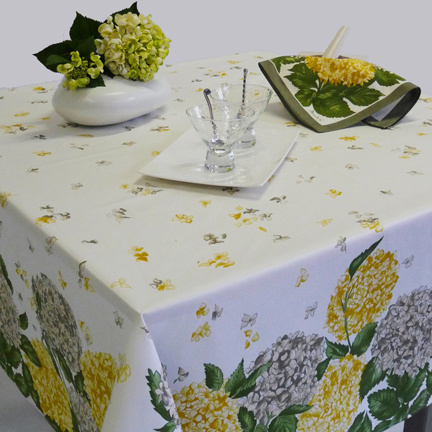
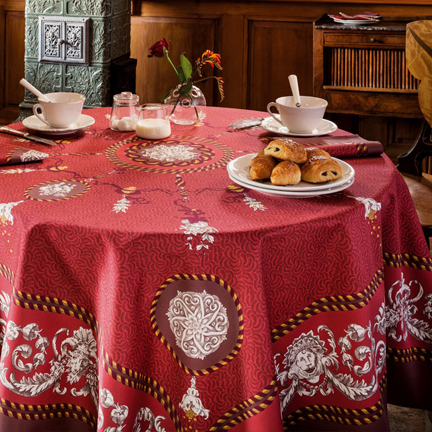
And to match these linens, solid napkins in fifteen colors:
|
|
|
|


Are you in love? See the complete collection of Beauville table linens here.
Five Ways to Freshen Your Bath
The holidays are coming! With busy homes filled with family, friends and out of town guests, the bathroom gets a lot of traffic during this time of year. Here are five ways to keep your bathroom fresh and guest-friendly throughout the season.
1. Start with the basics, and replenish your towel supply. Have several extra sets to cover your entire household plus visitors.
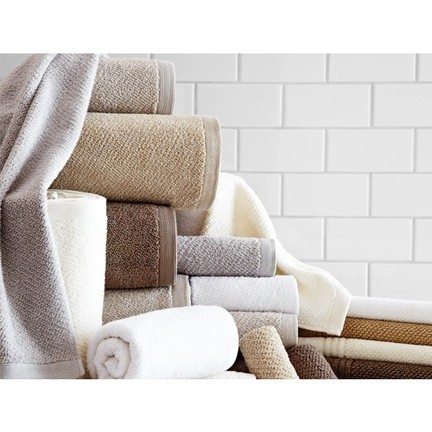
2. Bath accessories are a quick and easy update that can make a big impact.
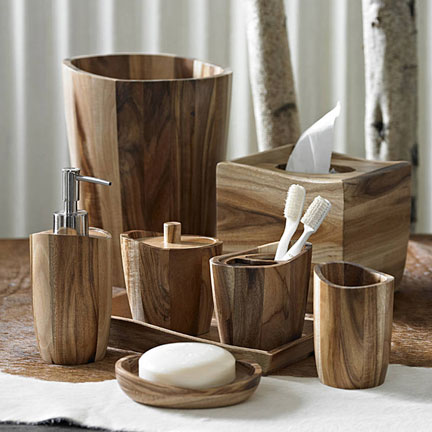
3. Swap out your shower curtain.
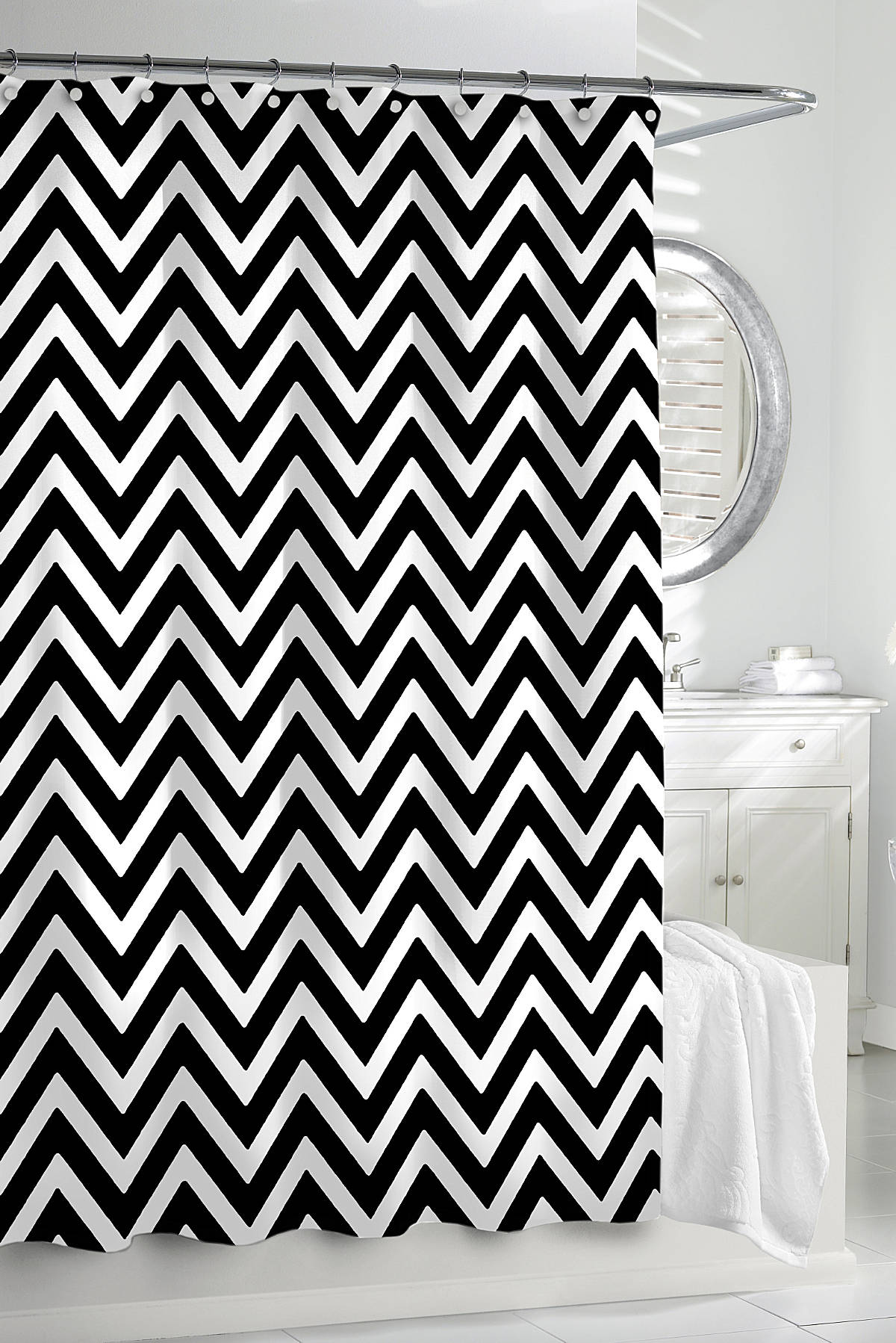
4. Robes are essential for keeping cozy around the house; make sure you have some spares for guests, too!
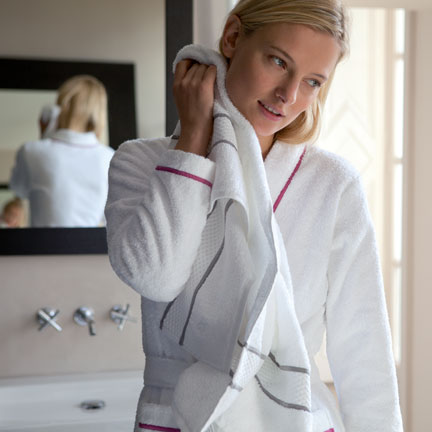
5. Add some fresh hues! A bathmat or rug is the perfect place to try a small splash of bold color.
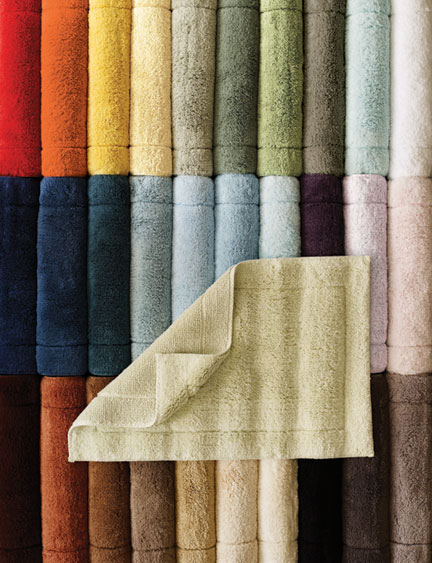
For more on choosing bath linens, click here!
Holiday Entertaining: Choosing Your Table Linens
Holiday season is just beginning, and picking the right table linens is an essential step for all hosts. To help you make the perfect choice, we’ve broken down the five basic questions to ask before making your decision:
1. What material should I choose?
Because they are strong and absorbent, we recommend natural materials like cotton and linen. But if you are short on time, there are great easy-care table linen collections available which are either stain-resistant or wrinkle resistant.
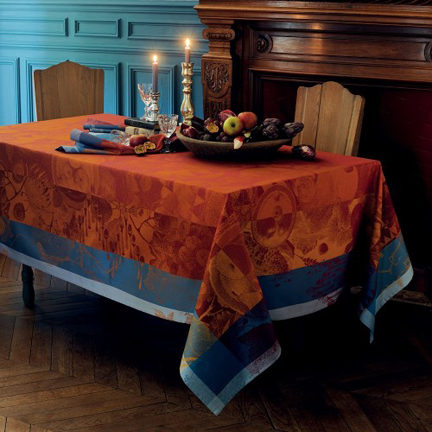
2. What size tablecloth should I buy?
For formal settings, we recommend that tablecloths should hang down 10″ to 12″ evenly around the table. In contrast, casual events call for cloths that have 6″ – 8″ drops.
To calculate the size of tablecloth you need, measure the length and width of your table and add twice the desired drop to each dimension. For example, if your table measures 48″ wide and 84″ long, and you would like a 12″ drop on each side, your tablecloth should be:
48″ + 12″ + 12″ = 72″ wide
84″ + 12″ + 12″ = 92″ long
For round tables, measure the diameter of your table and add twice the desired drop. Following the example above, 48″ round tables would require 70″ round tablecloths.
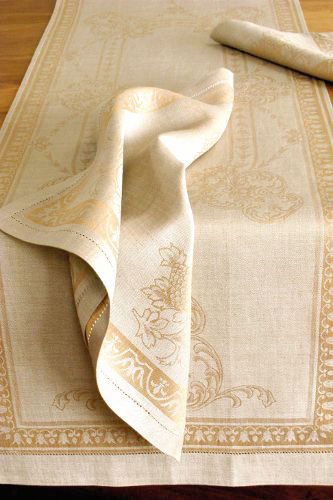
3. What shape should my tablecloth be?
On square and rectangular tables, we suggest using the same shape tablecloth. On round tables, either rounds or squares may be used, while on oval tables, either oval or rectangular tablecloths may be used. If you have several tables that you use often and your budget is limited, a nice alternative is to use placemats and napkins, which will work in any situation.
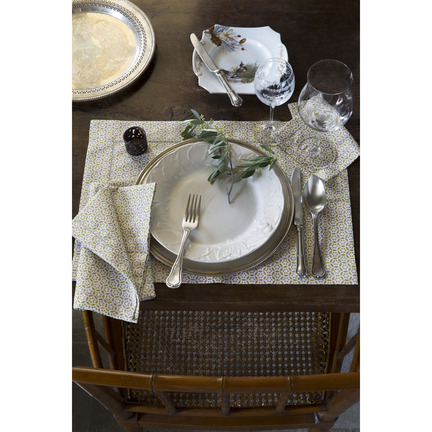
4. What should I consider in choosing linens for a special event?
There are several important factors to take into account when choosing table linens for a special event:
– Location: Choose colors to complement the existing décor of your dining room. For outdoor events, let the setting be your guide. Generally, bright colors look better in sunny locations, while pastels are wonderful in garden settings.
– Season: Spring and summer colors tend to be lighter, while bolder colors are more appropriate during the colder fall and winter months.
– Theme: Colorful linens are one of the most effective ways to set the mood you want to create. Vibrant colors add drama, while soft colors evoke a more refined atmosphere.
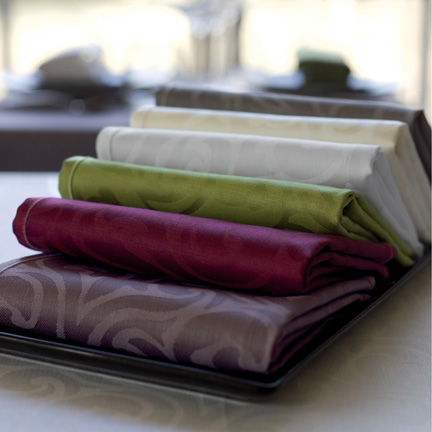
5. Do I need a table liner?
Although designed to last a lifetime, fine table surfaces are often exposed to excessive wear and tear. To help protect your tables, thick felt table liners are designed to reduce noise and protect your tabletop against heat and scratches. Unlike ordinary liners, these are plush and generously sized (approximately 5″ larger than your table) to extend over the edge of your table in order to create a softer drape underneath your fine linens. To read more, see Protecting Your Table with Felt Liners.
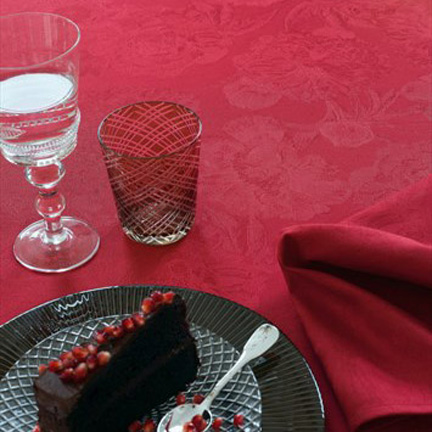
For more information on Choosing Table Linens, click here!
Bring Fall to your Bedroom
The leaves are turning, a brisk wind is blowing, and the magic of the fall season has just begun! Create an inviting retreat for yourself this season by adding some fall spirit to your bedroom. Here are a few key pieces to get you started:
– Roll out a warm wool rug on hardwood floors, or layer on top of carpet to welcome your toes out of bed in the morning.
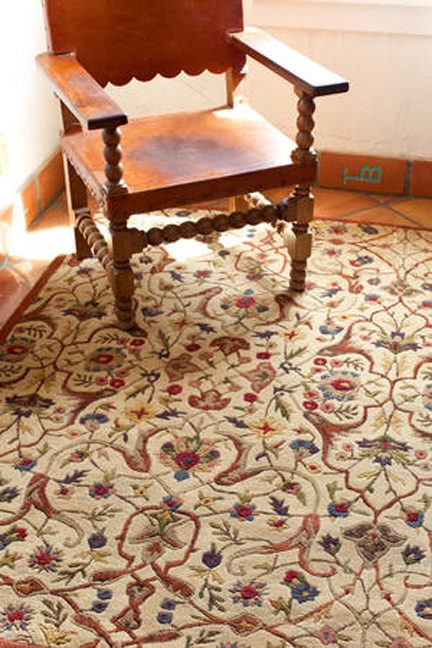
– Keep soft throws at your fingertips to grab on a cold night.
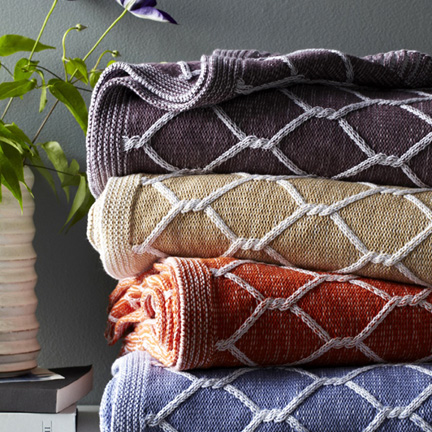
– Embrace the season’s hues in rust, chocolate and crimson. Try a new throw pillow, or get some soft new sheets in these timeless colors.
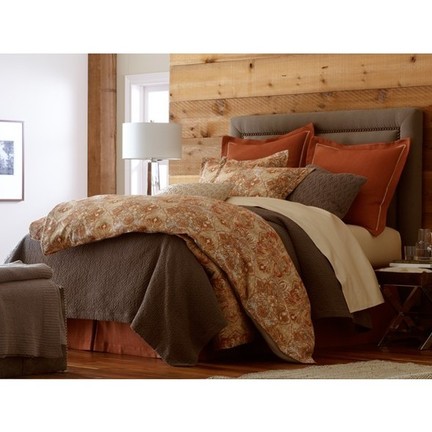
Delight your senses with the warm glow of candlelight.
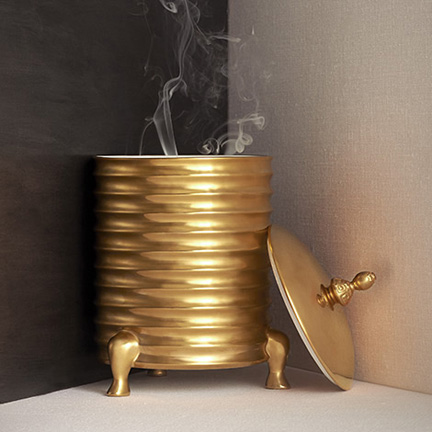
Always have a plush robe ready to go. Whether you use one post-shower, or just for lounging, this will always make you feel pampered.
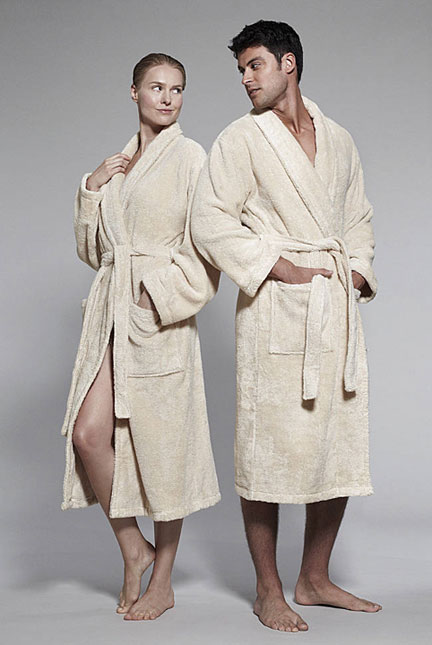
Space Spooks: Decorating for Halloween
When preparing for Halloween, most people think to costumes first. But don’t forget about your decor! Whether you’re hosting a spooky soiree, or just getting in the spirit of the holiday, adding a few tricks and treats to your home is as much fun as dressing up.
Nothing says Halloween like a classic skull. Choose one with crystals for a glamorous touch that will still be a conversation piece long after the season has ended.

For small children, keep things creepy but cute with Herend’s delicate tarantula figurines.

Mix and match real pumpkins with elegant glass ones to create a unique, textured look.

Enchant your guests with hauntingly beautiful barware in shades of smoke, midnight and jet black.
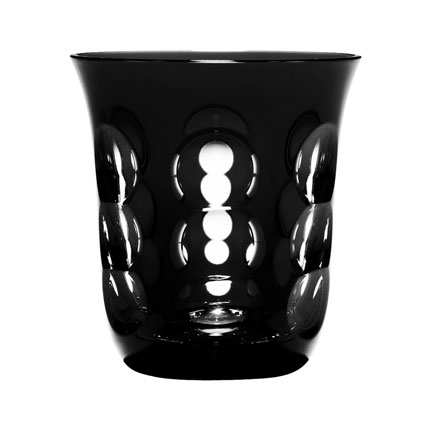
Add a punch of orange to your bed or bath to keep yourself in the spirit of the season.
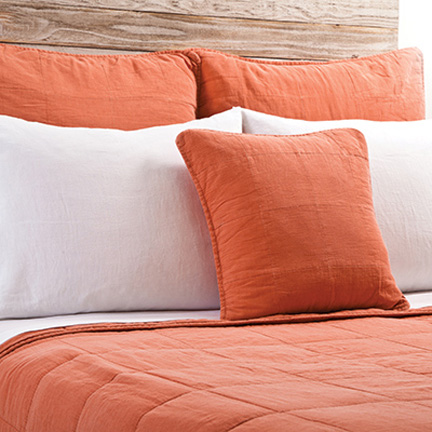
Introducing Tribute Goods
Founded by interior designer and arts enthusiast Karen Pulaski, Tribute Goods pays homage to great artists and pays it forward with a 10% donation of all profits to the arts, education and AIDS research.

This fresh, Texas-based brand showcases beautiful prints and patterns, produced on the finest Italian linens. Sea Glass was inspired by an original watercolor:
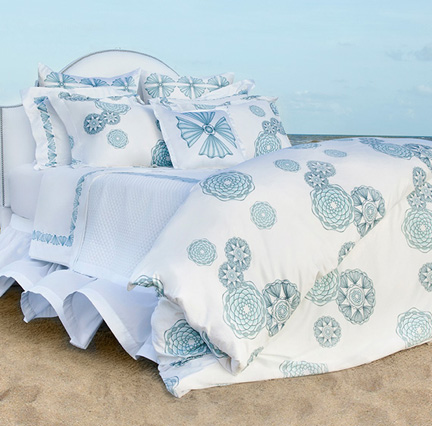
“Strength and Beauty” was an idea from my daughter Emma. She thought that I should create a floral line and the English rose is her favorite. – Karen Pulaski
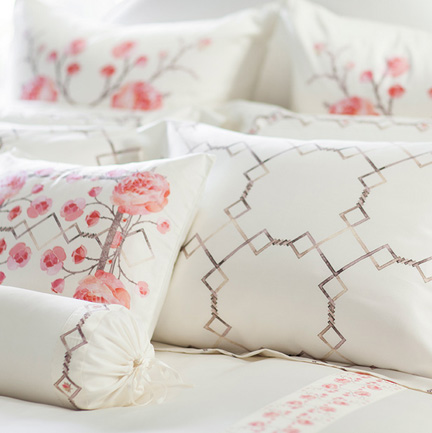
I began to dream of images and over a period of years developed my first collection based on the Elements- Earth, Air, Water and Fire. I loved the sentiment and fundamental connection that these themes had. – Karen Pulaski
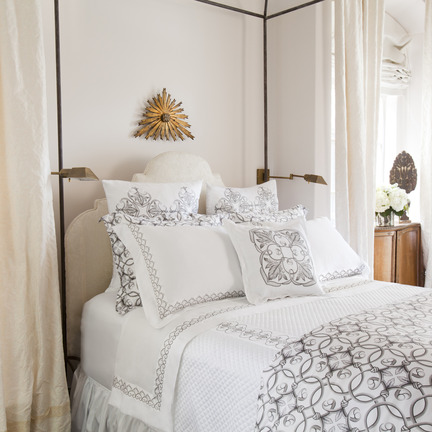
I began to search for artist(s) who have a subtle touch in their watercolor technique but with a contemporary edge. – Karen Pulaski
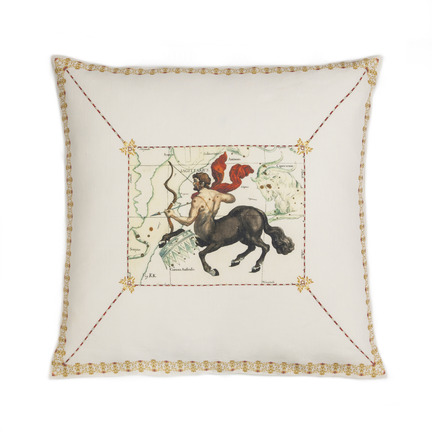
I wanted to create a floral motif that was masculine as well. A tension needed to be created that emphasized both the fluid floral aspect and a more rigid geometric pattern while maintaining harmony. Like a good marriage! – Karen Pulaski
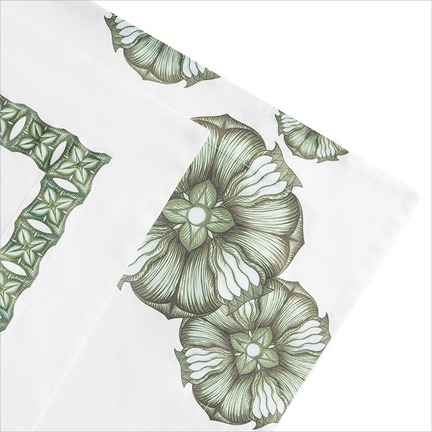
Love Karen Pulaski’s free-spirited, give-back style? See more Tribute Goods here!
Occasions Magazine Parties in Sunflower Yellow and Scarlet Red
Marrying the magic of summer with the anticipation of Holiday merriment, Fall is the perfect time for a truly enchanting wedding. And who better to keep us on trend than Occasions Magazine? Here, we give a peek at their Fall 2014 issue, where they feature our Vietri Fantasia Dinnerware and Waterford Lismore Crimson Champagne Flutes in their delightful Sunflower and Scarlet motifs.
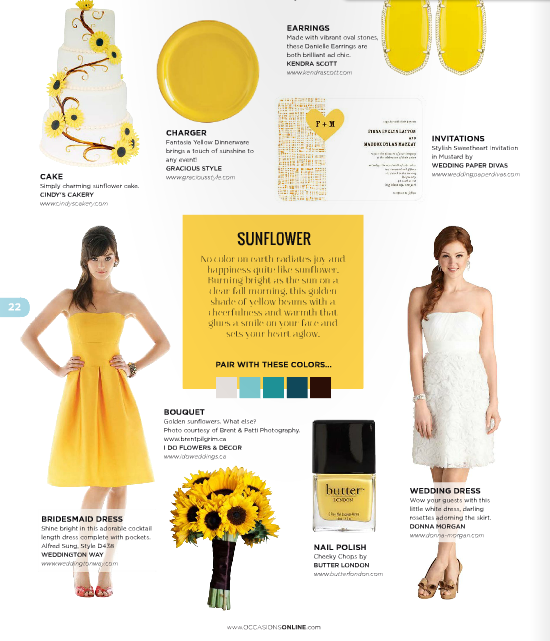 |
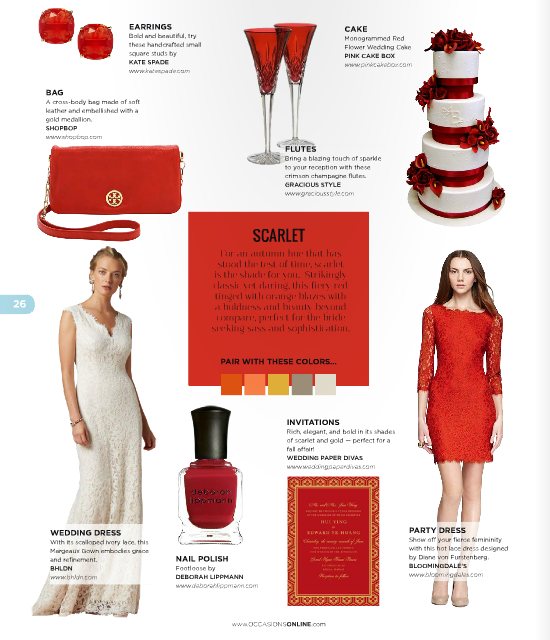 |
These harvest hues can instantly bring the charm of the season to your festivities and your home. Take a look at some of our favorite ways to use them every day:
Try a ruby red runner for a splash of spice that lets your tabletop shine through underneath.
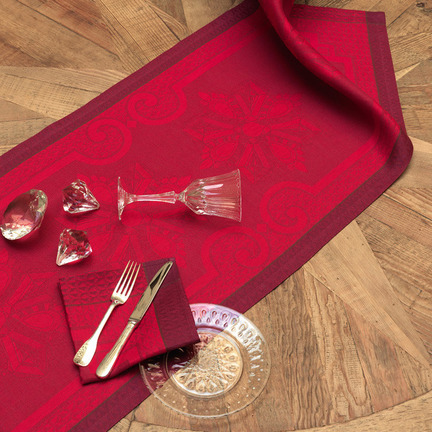
Give your boudoir some spunk with a cheery gold quilt and shams.
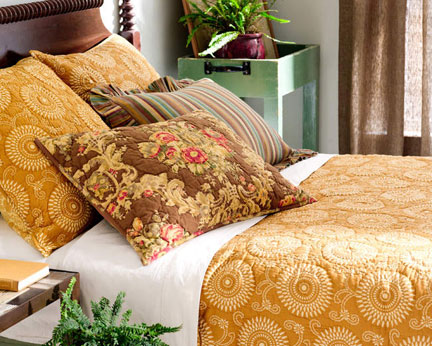
Ground any space with a bold stripe crimson rug.
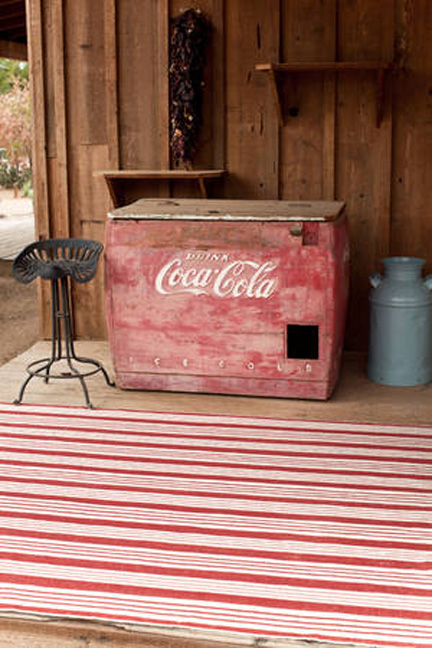
Show your kitchen some sunshine with festive kitchen towels.
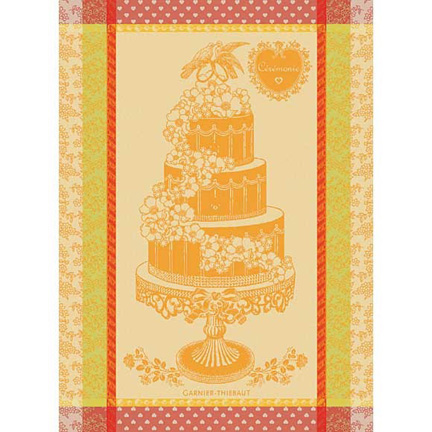
Add instant elegance to your desk or credenza with a lustrous deep red accessories box.
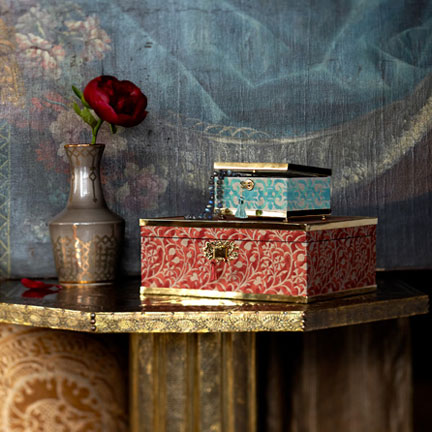
The Assouline Library: Ten Things to Know
A retail bookstore in the age of Amazon and ebooks? That’s exactly what Assouline does, and here’s how they’ve done it in their ten “libraries” around the world:
1) Red makes everything look richer.
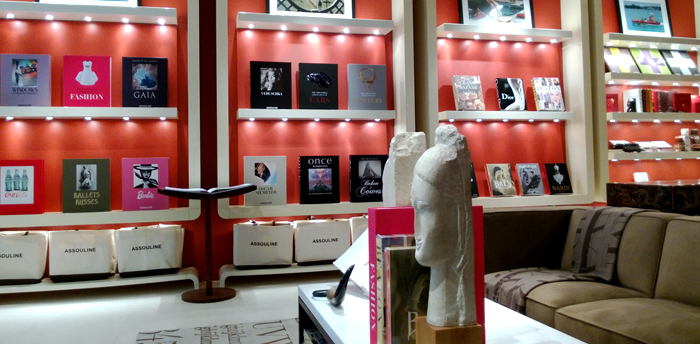
2. Display books with interesting objects from around the world (like this Bambou bookrest from L’Objet):

3) Treat your books like art and display them accordingly.
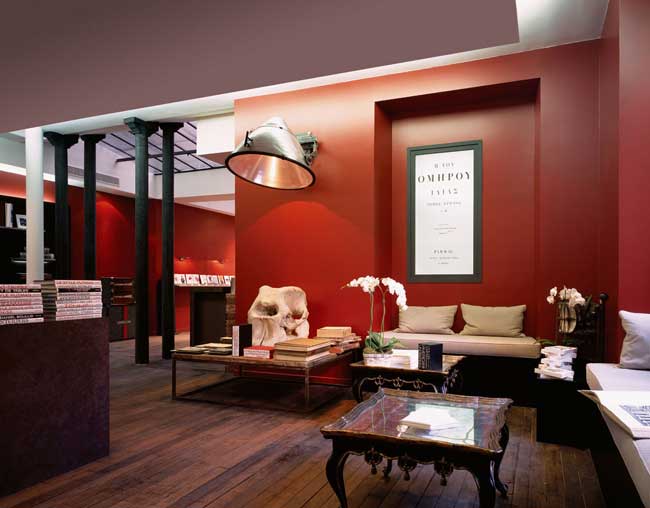
4) Bring in a bit of history and tradition.
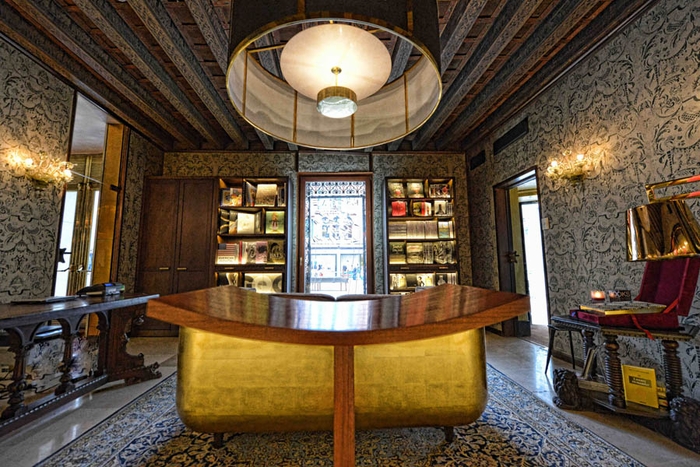
5) Some days you celebrate the fast life …

6) … while on other days you just unwind.
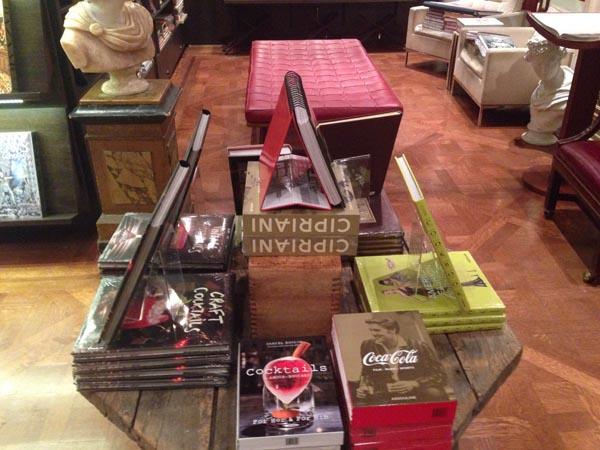
7) Well-loved books go with well-worn floors.
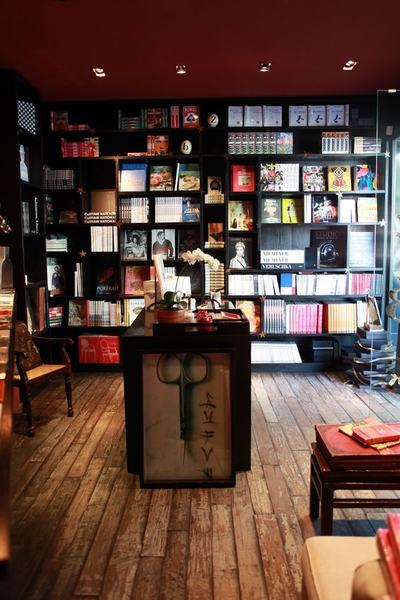
8) An alphabet and numbers rug – what a genius idea for a library!
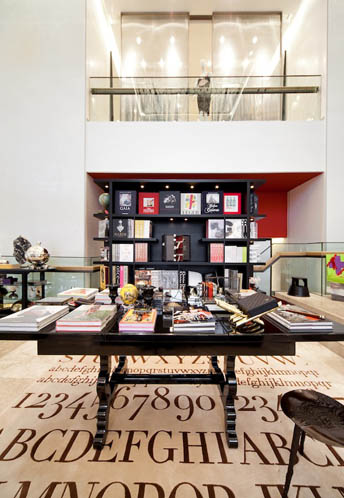
9) Picture lights are essential for illuminating important pieces.
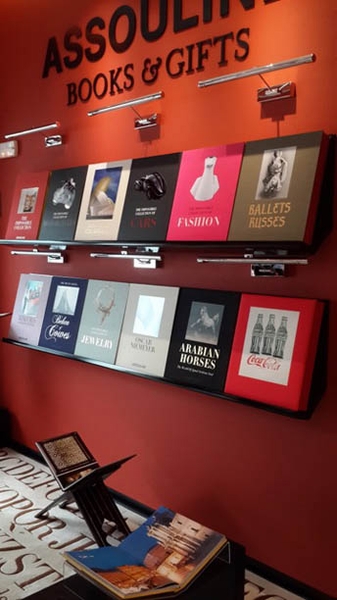
10) The writing on the wall says it all.

Don’t have time to run out to a store? Come visit our online selection of Assouline books here.
(All images courtesy Assouline).
Plan Ahead: Order Custom Holiday Linens Now!
Hosting for the holidays? Now’s the time to start planning those parties. And because all custom table linens are made to order, it can take up to 10-12 weeks to complete production, so get out your measuring tape! As these orders cannot be changed or cancelled after they are placed, here are six helpful tips to ensure you order the perfect table linens:
1. Count your expected guests. You may need to add additional leaves to your table for these special occasions, so be sure to measure the fullest length you need. Ordering additional napkins can be a great way to ensure you’re prepared for anything.
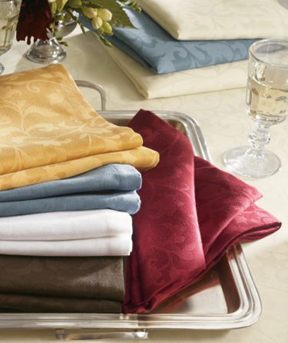
2. Consider shape. If you have an oval table, both an oval or rectangular cloth will work. Take a look at Sferra’s Classico, which has elegant long corners draping from an oval table shape:
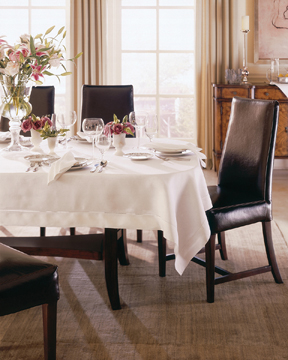
3. Calculate your desired drop. We recommend a 10-15 inch drop on all sides, so be sure to add 20-30 inches to both the length and width of your table. Casual settings typically require a shorter drop, while some formal linens may reach all the way to the floor.
Not sure how long your drop should be? Place one of your dining chairs at your table and measure the gap between the bottom of the table and the top of the seat, and use this as your guide.

4. Choose your material. While linen shows classic elegance and tradition, you may also consider an easy-care option if you need to use these cloths frequently in a short period of time. Options like Egyptian Cotton allow for a texture with a beautiful, subtle sheen, while a synthetic option may be the right choice for those who need to quickly wash and dry to prepare for the next event. Easy care materials require little to no ironing, but if you opt for linen, try ironing your cloth while it’s still damp, which makes wrinkles much easier to erase.
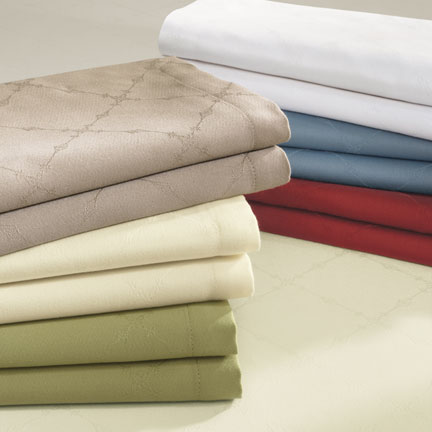
5. Remember, these may shrink! All of our custom tablecloths are made slightly larger to compensate for shrinkage. If you would prefer to have the cloth cut exactly to your specific dimensions, without any additional fabric, please feel free to indicate this in Special Instructions at Checkout.
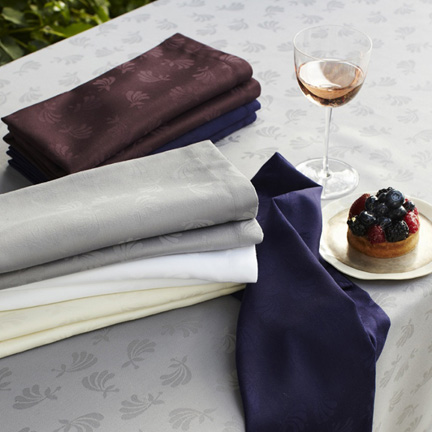
6. Have fun! Don’t forget the reason for the occasion: the celebrate with the ones you love! If you want to bring life to a white or ecru tablecloth, try colorful dinnerware or vibrant seasonal flowers on your table. If you love bright linens, choose from over 100 colors in the aptly named Festival Collection. Please note that the Festival fabric cannot be cut in an oval shape, but looks beautiful in round or rectangle.
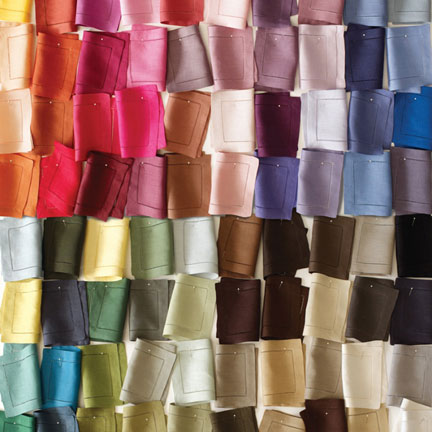
For all of our custom table linens, click here.
How will you make this Holiday Season shine?
What Does Design Say About You: A Walk Through Our Neighborhood in Los Angeles
Alain de Boutton recently wrote a book called Art as Therapy, where he asked: “What does art do for us?” His answer is that art completes us — it gives us what we yearn for but are missing in our day-to-day lives.
For example, why does this painting, “A Courtyard of a House in Delft” by Pieter de Hooch, still appeal to us?
Is it because we yearn for a simpler life, one without all the complications of the modern world, yet neat and proud in its own way? Most of us wouldn’t trade our real life for a 17th century one, but this painting still reminds us of how our life should be. Maybe it could even get us to do a few things to live our ideal life.
We see this all the time in Los Angeles. We all live in a giant modern city, but our homes reflect the life we wish for, not the one we actually lead. And because Angelenos hail from all corners of the world, there is incredible diversity in the homes we build here. For example, could you believe that these houses are literally right next to each other?
This one reminds us that the future is still full of possibility:

Or maybe we just need a cup of tea . . . in the English countryside:

Here’s to America at its best — can you smell the apple pie baking?

Here we can escape to Andalusia, with its gnarled olive trees, trickling fountains, and cooling tiles:

Each house is in its way an antidote for the modern world. We may all drive through traffic to spend a day in front of screens, but the life we yearn for is not lost. We just have to design for it.
Le Bresil Dinnerware: A Collaboration with Zuber Wallpapers
Created in collaboration with Zuber & Cie, Haviland’s Le Bresil Dinnerware is as much a work of art as Zuber’s famous Les Vues du Bresil scenic mural wallpaper collection. Originally introduced in 1829 and printed in 247 colors from 1693 blocks, Bresil is one of Zuber’s most complex productions.

Each Zuber panel contains large expanses of color and incredibly ornate details, many of which are recreated in the dinnerware.

With tropical trees and exotic birds, the elaborate imagery of the dessert plate captures the imaginative spirit of Zuber’s colorful scenes.

By balancing the delicacy of the bird in the foreground with the intricacy of the trees behind, Haviland’s artisans used dimension to perfect Zuber’s meticulous style in this stunning tray.

If you love this as much as we do, next time you’re in Switzerland, be sure to stop by the Musee du Papier Peint, which has a mural of the wallpaper in their Salon Bresilien:
Salon Bresilien in the Musee du Papier Peint (courtesy museum)
For more pieces from this exquisite collection, click here.
For Opera Lovers: Dinnerware Inspired by Mozart’s The Magic Flute
Written in the late 18th Century, Mozart’s Die Zauberflöte, or The Magic Flute, is one of the best-loved operas in history. With this as his inspiration, whimsical Danish artist Bjørn Wiinblad created the Sarastro dinnerware collection for Rosenthal.

Each piece in the line features a different scene from the opera depicted in relief, so they all sport exceptionally wide rims.
|
|
|
|
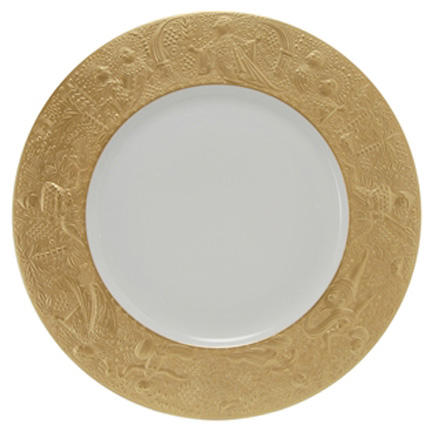


The genius is in the details. Here are a few of the ones we’ve discovered:
Fowl Play: The symbol of the bird is used throughout this opera. For example, one of the central characters, Papageno the bird catcher, sings playful tunes intended to mimic the sound of chirping birds. Look closely at pieces from Wiinblad’s dinnerware collection, and you’ll see that the theme of the bird is shown in beautiful relief throughout.

Up to No Good: With elaborate costumes and heavenly melodies, Mozart created many of his characters to be deceptively beautiful. The Queen, who initially appears to be harmless, later reveals her malicious intent to destroy Sarastro. In Wiinblad’s depictions of these characters, they are intentionally shown in an aura of ambiguous elegance.

Hidden Secrets: There are beautiful secrets and surprises hidden throughout the opera. For his part, Wiinblad surprises his audience by using his own handwriting to paint the names of the arias and scenes depicted on each piece. But they’re not obvious … he’s hidden them in the crevices and underneath each piece.
|
|

It is a collection that looks as good on the table as it does on the shelf. Available in gold or plain white, each piece is delightful.

To view all pieces from this extraordinary collection, click here.
Guide to Choosing Rugs
The perfect rug will pull your room together, so many designers start rooms by choosing the rug. To get you on your way, here are a few practical tips:
Choosing the Right Size and Shape
– Start by making a floorplan. Measure your room and add all the furniture you’re planning to put in it.
If you’d like a smaller rug, center it under the dining table, coffee table, or main lighting fixture in the room.
If you’d like a larger rug, block out any areas that you know will get a lot of floor traffic and place it in the middle of the space that’s left over. Sofas and chairs can be placed either completely on top of the rug, just with the two front legs on the rug, or a mix of both.
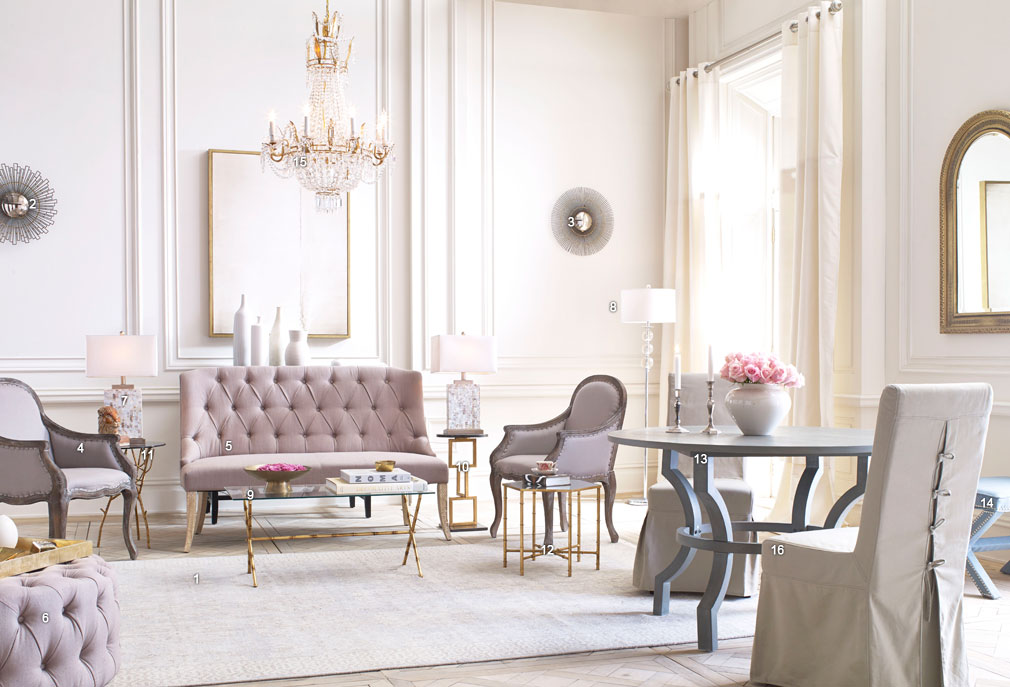
– Allow one to two feet between the edges of the rug and the perimeter of the room. For example, if your room is 12 x 14 ft, and you want a large rug to cover the room, go with a 9 x 12 ft rug. Let the floor frame your rug.
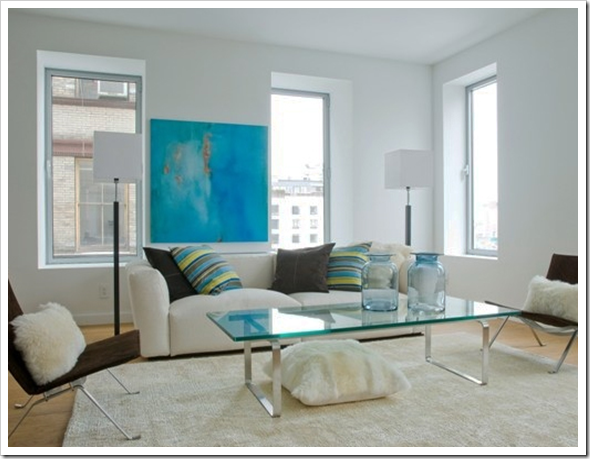
– Larger rugs will make rooms feel larger. They visually embrace the space better.
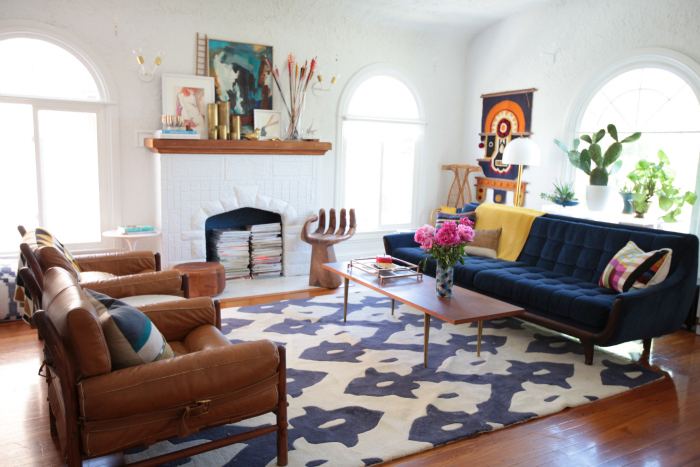
– Rugs typically come in the following standard sizes: 3 x 5 ft, 4 x 6 ft, 5 x 8 ft, 6 x 9 ft, 8 x 10 ft, 9 x 12 ft, 12 x 14 ft.
– Rectangular rugs look best in rectangular rooms, square rugs look best in square rooms, and round rugs look best in foyers and kids’ rooms.
– In bedrooms, place rugs either completely under the bed or have them cover the bottom 2/3 of the bed. Choose a rug that’s at least two feet wider than your bed so that you can step onto something soft when you get up.
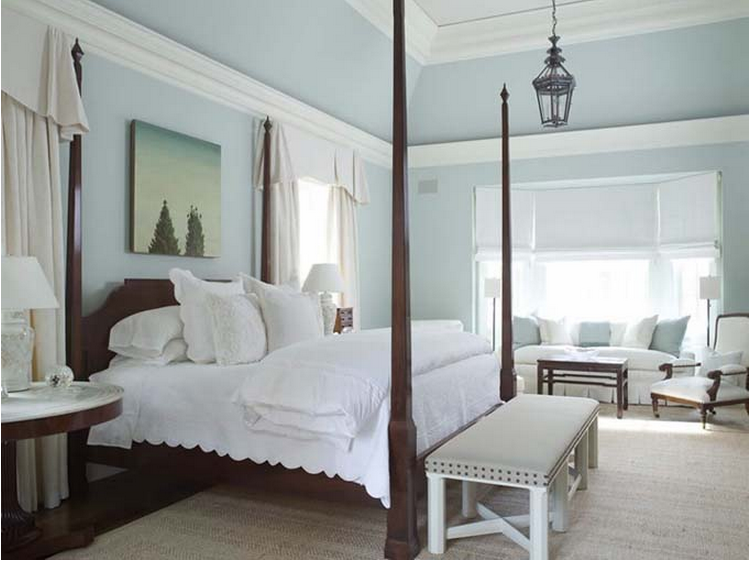
– In kitchens, use 2′ x 3′ rugs in front of the sink. In larger spaces, a runner can instantly warm up a room.
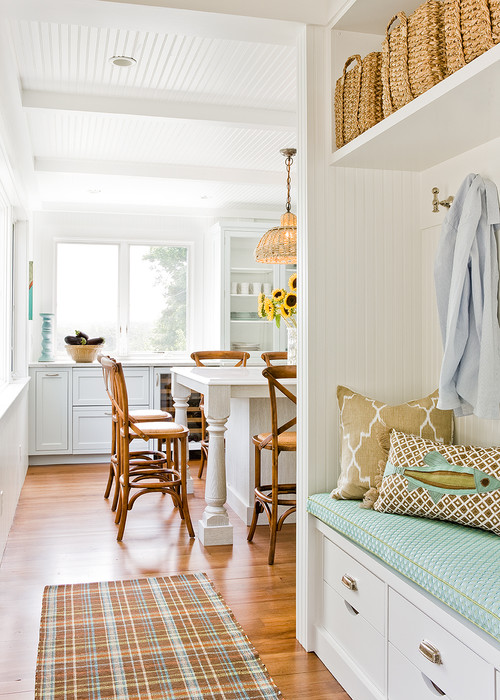
– In dining rooms, rugs, should always be centered under the dining table.
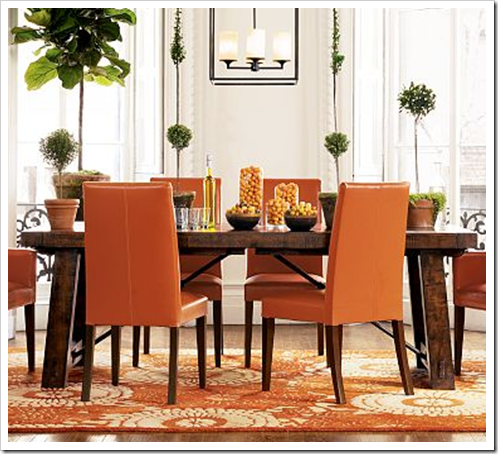
Choose the Right Material
– Entryways: in high-traffic entryways, choose a flat-weave rug that can easily be cleaned. For more formal settings, a wool rug sets an elegant tone for the rest of the house.
– Hallways: synthetics and flat-weave rugs
– Living rooms and dining rooms: cotton or wool rugs
– Kitchens and outdoor: synthetics and flat-weave rugs
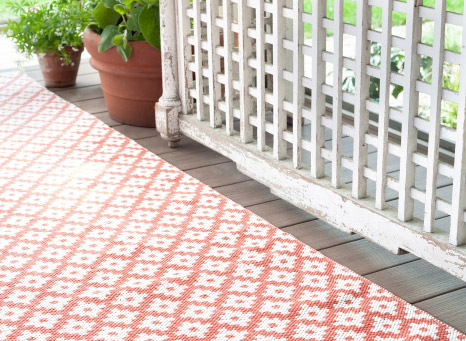
– Bedrooms: soft textures like wool and chenille
Choose the Right Design
– Solid rugs are more calming, and they work with either solid or patterned furniture. Choose a color that complements other accessories in the room, like your artwork or your pillows.
– Patterned designs energize a space, and they look stunning with solid furniture.
– In colder climates, go with rich, saturated colors to create a cozy and intimate mood. Warm colors like yellow, orange, and red add warmth to rooms with indirect light.
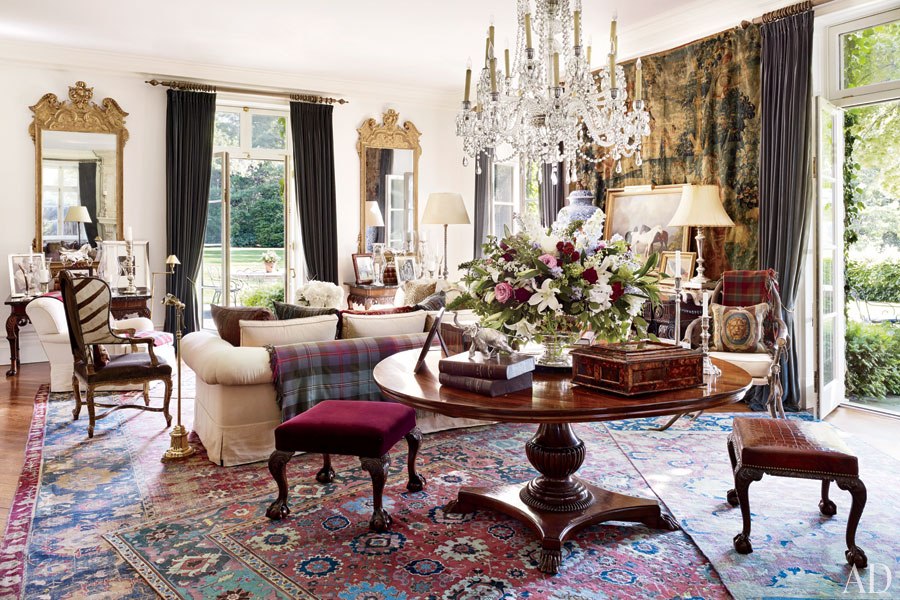
– Lighter colors open up smaller spaces and make them feel larger. In warmer climates, use ivories, blues, and greens to create a soothing atmosphere.

Caring for your Rug
– Use a rug pad. This will extend the life of your rug and make sure it does not slip around.
– Vacuum regularly.
– Rotate rug periodically to even out the wear.
– Trim any loose threads with scissors.
– Clean spills immediately by blotting with a clean cloth or paper towel. Test rug cleaners on an inconspicuous spot before using.
– Professional cleaning recommended on wool rugs.
Looking for a rug? To view our entire selection of rugs, click here.
Product Review: L’Objet Turtle Candle
Beauty, elegance and imagination are embodied in L’Objet‘s unique style, and their stunning and sensuous Turtle Candle is no exception. But what makes this candle so different? We asked Eve to tell us after she received hers:
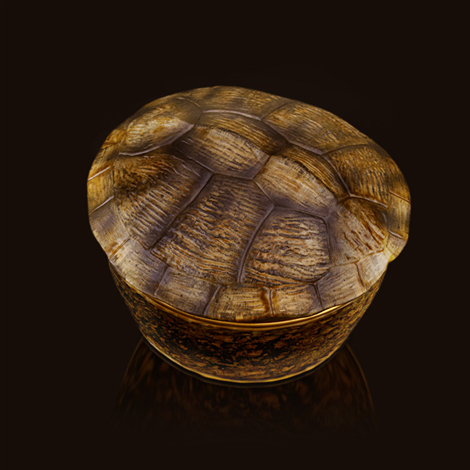
What were your first impressions when you received the package?
The presentation was beautiful. It was wrapped in a black box with gold trim, in L’Objet‘s signature packaging.
What did you think of the Limoges porcelain exterior?
I was so impressed by the canister. It has the real shape, color, and texture of a turtle shell! Moving your hand across the top, it feels like it really could be one. The intricately painted details and 14k gold edges really make it unlike any other candle.
How did it smell?
The Pink Champagne scent truly is intoxicating. The candle is very richly saturated, but the fragrance is light and sweet. While slightly floral, the smell was very fresh and crisp, like rain.
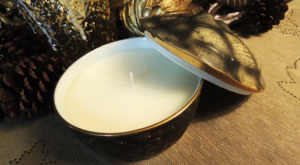
Did you light the candle right away?
Of course! I like candles because they make my home feel warm and relaxed, so I lit this one as soon as I got home from work. The scent is very clean and soothing, and within only a minute of lighting the candle, it filled the whole room with fragrance. It was the perfect way to unwind at the end of the day.
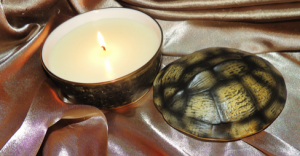
Would you recommend this candle to others?
Absolutely; I say buy two! It is so beautiful and unique that it makes a perfect gift, and it already comes so nicely packaged. But the minute you see or smell it, you will be glad you got one for yourself, too. The best part is, while it will burn up to 50 hours, the gorgeous box will last years after the candle is gone.
Guide to Choosing Lighting
The key to creating a comfortable lighting environment is to use a mix of general lighting (also called ambient), task lighting (for specific activities, like reading) and accent lighting (to highlight objects or architectural features).
Ambient Lighting
What are recessed lights?
Starting from the ceiling, the most common type of lighting are recessed lights, which are usually installed by a contractor. Also called can lights or downlights, they look clean overhead and they offer a practical and affordable way to light up a room, but don’t overdo it … you can always add task and accent lighting later.
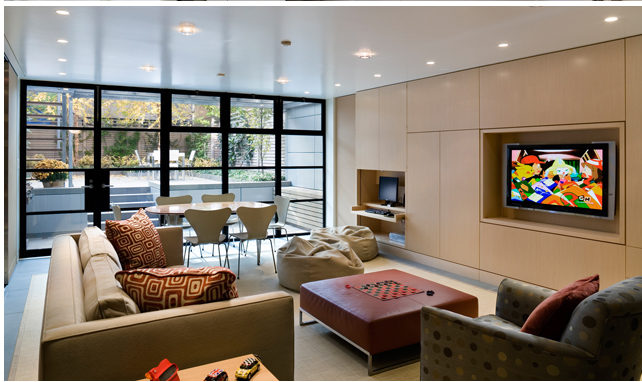
What are ceiling mounted fixtures?
Ceiling mounted fixtures include chandeliers, pendants, flush mount fixtures. They can cast light upward or downward, and they add an important decorative element to a room.
– Generally, chandeliers work well in large rooms with high ceilings. They are perfect for larger spaces like entryways, dining rooms, living rooms. If you do not have any furniture underneath your chandelier, remember to hang it up high so that the bottom is at least 6’6″ – 7′ from the floor.
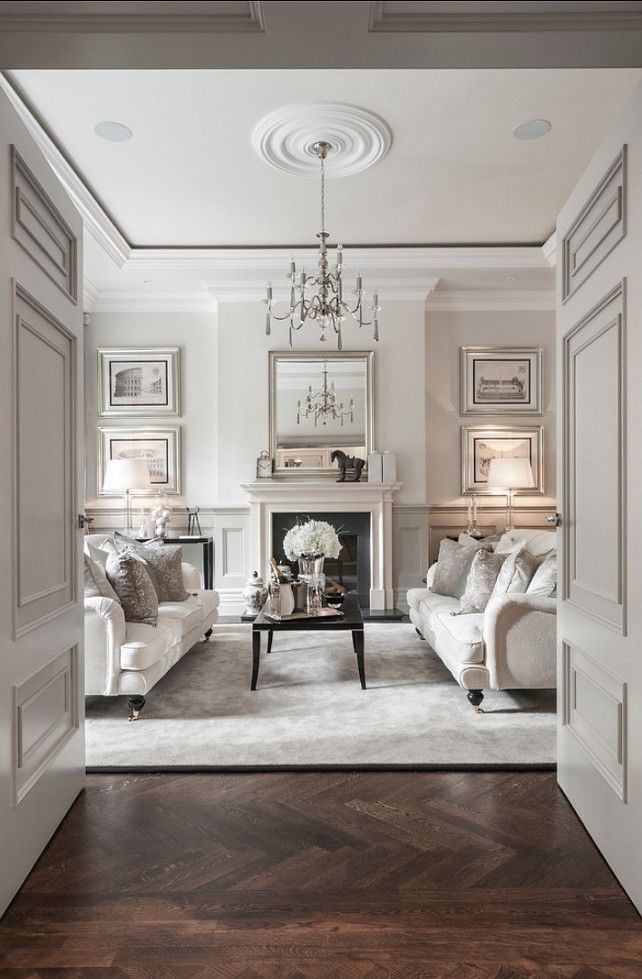
Pendants are great for hallways, especially on the first floor. They light your pathways and add visual interest to these spaces. Pendants will also make a kitchen feel more like a living space.
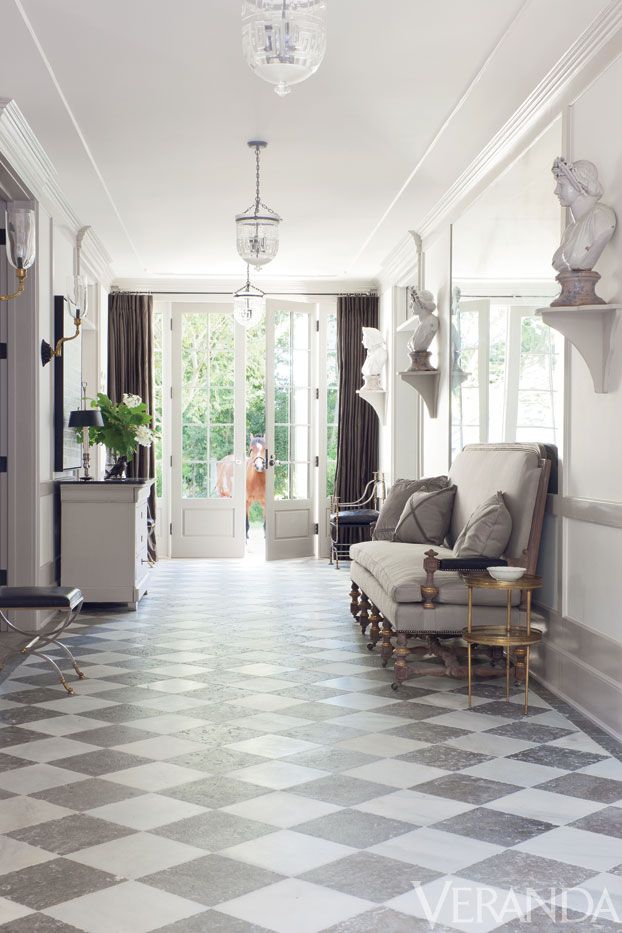
Finally, flush mount fixtures are ideal for spaces with lower ceilings. We love them in secondary bedrooms, mudrooms, large closets, and laundry areas. But of course, they can look good anywhere:
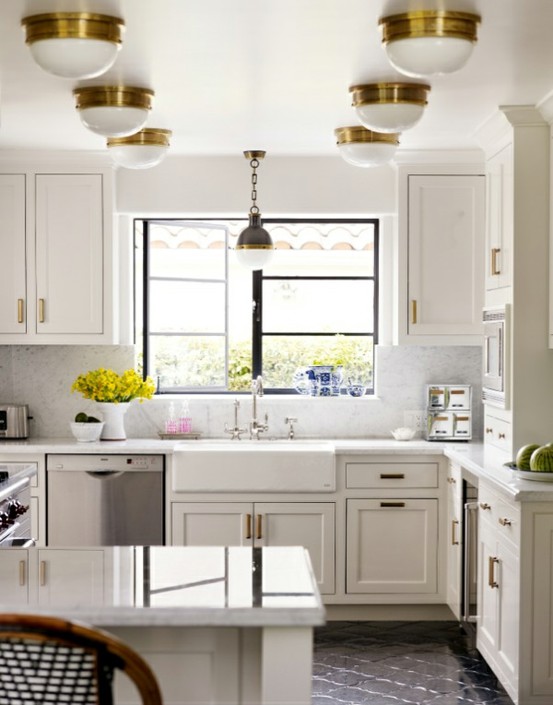
Where do you use wall lamps?
Wall lamps are frequently used in pairs – to frame mirrors, console tables, and sideboards. They look smashing in powder rooms and master bathrooms.
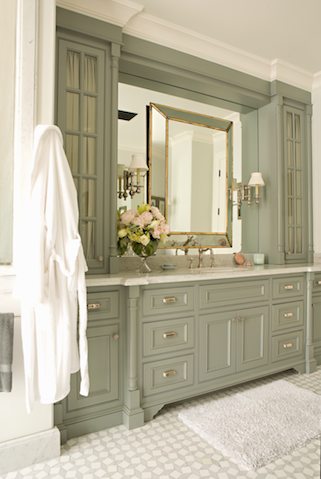
As they are installed closer to eye level, it’s a good idea to look for fixtures that look beautiful during the day. We love ones with mirrored finishes!
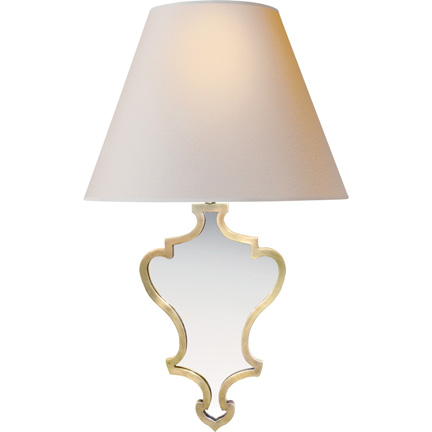
Task Lighting
What are good task lighting fixtures?
For task lighting, the two most popular kinds of fixtures are floor lamps and table lamps. If you are planning to install floor lamps in the middle of a room, remember to ask your electrician to install outlets nearby. As for table lamps, this is a good way to bring in a bit of color into a room.
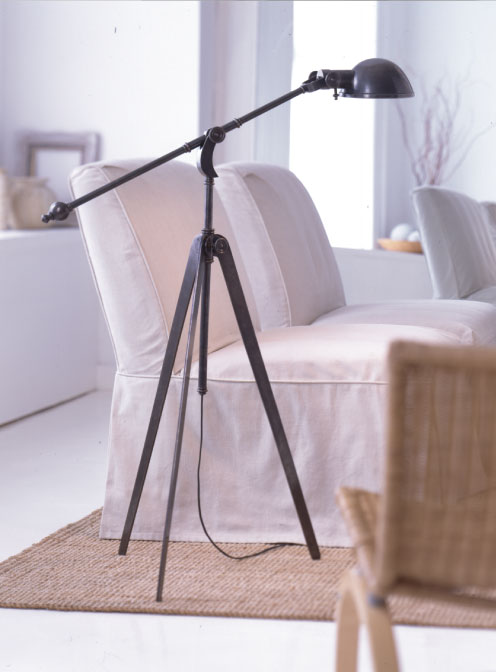
Accent Lighting
How do you light artwork?
The most common ways to light artwork is with track and recessed lighting because you have so much control over large areas and they are infinitely flexible. But for lighting individual pieces, our favorite method is to use picture lights. They can not only enhance the rest of the lighting fixtures in your space, but they will make your piece look precious.
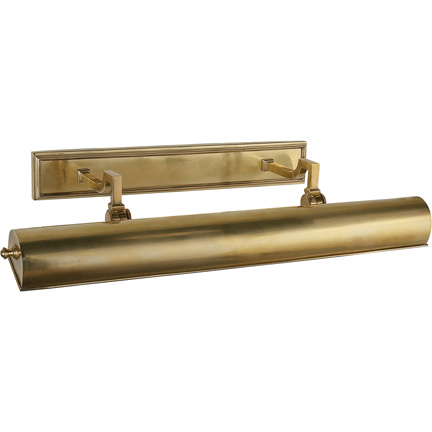
Outdoor Lighting
What do I need to know about outdoor lighting?
Outdoor lighting is key in creating a welcoming environment as you come up to your home, but it also does something else: it adds an element of security. Here are a few tips to get you started:
– Lead the way to your front door by using pathway lights that direct the light downward. Do the same in the back as you move into your yard.
– Add bits of lighting around your flower beds.
– Welcome guests to your front door with a large ceiling mount fixture (pendant lamps are great for two-story homes) or sconces.
– Install sconces around your garage entrance and deck.
– Accent special trees or water features using spotlights.
– Use motion-sensor lights to increase security at night.

Energy-Efficient Lighting
What are LED lights?
LED (light-emitting diode) lights are super-efficient forms of lighting. Compared to incandescent lights, they consume much less energy, last longer, and turn on more quickly. As they are becoming the standard in residential lighting, you’ll probably be seeing them more frequently when you shop for lighting.
I’m confused by the kinds of LED lights available. What should I get?
LED lights are available in different color temperatures so you can choose whether you’d like a warmer or cooler light. The lower the number, the warmer the light. Here are some suggested guidelines:
– 2700K (warm white) – ideal for homes, restaurants, and hotel lobbies
– 3000K (warm white, slightly cooler) – ideal for stores, offices
– 4000k (neutral white) – ideal for showrooms, offices
– 5000k (cool white) – ideal for museums, jewelry stores, hospitals
In the home, we usually recommend using 2700K throughout. If you prefer a slightly whiter light for the kitchen, or if you have a more modern style, then go with a cooler white.
And this is what they look like:
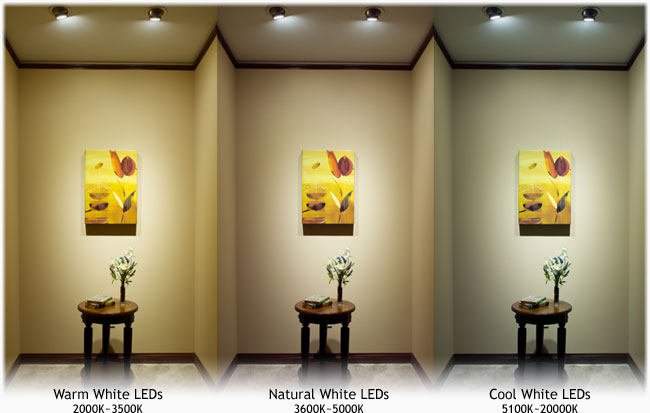
Lighting Placement
KITCHEN LIGHTING
I’m designing a new kitchen and I’d like to learn how to light it properly. Where should I start?
The best kitchens have a combination of overhead lighting (such as recessed lights) and task lighting (like undercabinet lights or pendants above the island) so you can avoid having strong shadows. Aesthetically, pendant lights work well because they fill up the vertical space between the island and the ceiling.
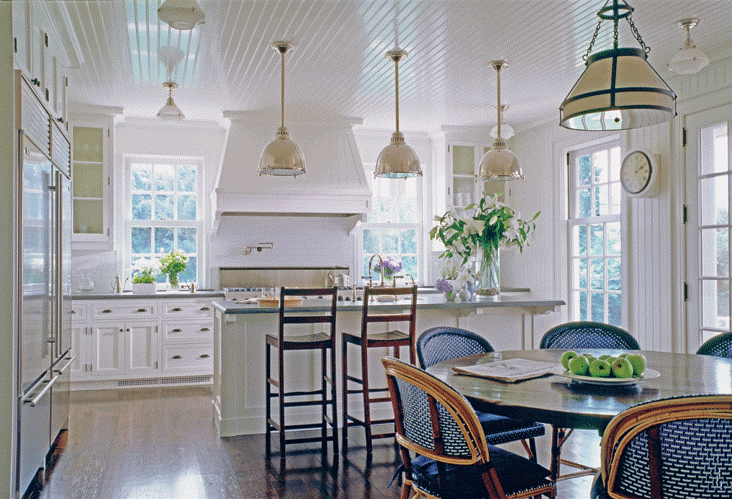
How many pendants should I hang over my island?
Pendants look best in odd numbers, approximately 4 feet are apart. So, if you had a 6 – 8 ft island, you could hang two lamps above it, whereas for a 9 ft island and above, you’d be better off with three. For a modern look, choose a cluster of smaller pendants (around 5 in diameter); traditional rooms look best with larger lamps (around 14 in diameter). Remember to hang them approximately 30 – 36″ above the island so that you can chat comfortably while you are seated.
How many recessed lights do I need in my kitchen?
If there are no tall cabinets in the perimeter of the room, place them 2 feet away from the wall, and every 6 or 7 feet apart.
– You do not need any lights right when you step into a room, so the first one can be placed about 3 – 4 feet inside a room.
– For hallways that are 9 – 14 feet, you’d need two recessed lights; above that, you’d need three or more. The smaller lights look more elegant, so we usually use 4 in – 5 in diameter lights.
If there are upper cabinets, move them farther away from the wall so they are not shining directly at the edge of your countertop. We usually center them along the walkway, so they are 3.5 – 4 feet from the wall.
Where do I need additional task lighting?
Under cabinets (to illuminate your countertops) and above the sink.
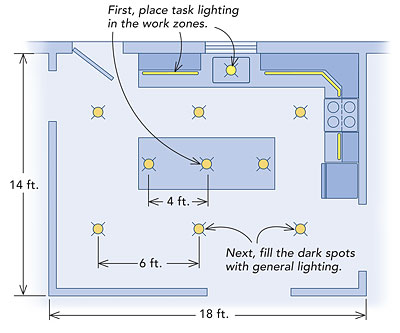
DINING ROOMS
How do I light my dining room?
We prefer dining rooms to feel more relaxed, so we usually just go with one ceiling fixture (like a chandelier) and two sconces on the wall on either side of the buffet or side table. We do not used recessed lights unless the room is very large (more than 18 ft along any edge).
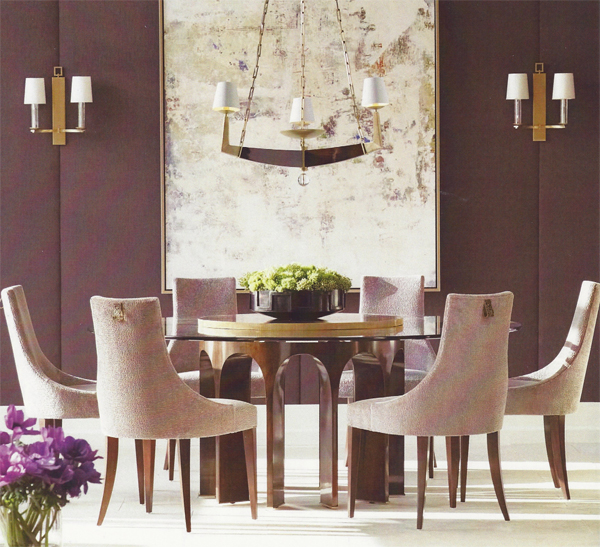
BEDROOMS
How much light do I need in a bedroom?
To determine the total number of watts you need in the room, multiply the width of the room (in feet) x the length of the room (in feet) x 1.5.
So for a 14 ft x 14 ft room (14 x 14 x 1.5 = 294), you’d need approximately 300 watts. This is a lot of lighting, but you would spread this over different lighting sources so you can layer the brightness. For example in a bedroom, you could do a flushmount ceiling lamp (for general lighting, with 2 x 60 watt bulbs), two bedside lamps (60 watt each), and a desk or floor reading lamp (also 60 watt). Instead of the ceiling lamp, you could also install recessed lighting.
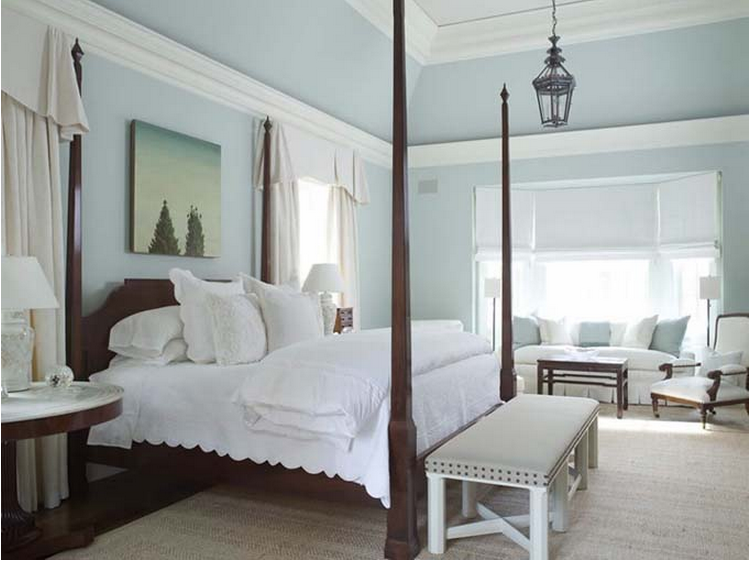
What size chandelier should I get for my bedroom?
– Add the length and width of your room (in feet), and convert this number to inches. This will be your diameter.
Example: for a room that is 20 ft long x 15 ft wide, you would need a 35″ rd chandelier.
– Measure the height of your room. For every foot, allow 3 inches of height for your light fixture. This will be your height.
Example: for a room that is 9 ft high, you would need a 27″ high chandelier. But remember, when hanging your chandelier, leave approximately 6’6″ – 7′ clearance from the floor so that you and your guests have ample room to walk under the light fixture.

Guide to Choosing Table Linens
UPDATE: Based on your feedback, we’ve created a Tablecloth Finder to help you find the right sized tablecloth — try it out and tell us if you like it!
Table linens are essential for setting the right tone to your event and they can really transform a space. Choosing a tablecloth is easy; here are answers to our most frequently asked questions.
Determining Quality
What should I look for in fine linens?
Fine linens are characterized by a combination of beautiful materials, expert construction, fine workmanship, and design. Most fine linens are made from linen or cotton because they are durable, absorbent, and soft.
What material should my table linens be made from?
Because they are strong and absorbent, we recommend cotton and linen. While they do require ironing, they are long-lasting and have the most luxurious feel and appearance.
For ease of care, there are high quality easy-care table linen collections available which are either stain-resistant or wrinkle resistant.
What is the difference between linen and cotton?
Both linen and cotton are natural fibers. Linen comes from the flax plant, which grows in the cooler climates of western and northern Europe. Cotton comes from the cotton plant, which grows in hot, humid climates throughout the world. Both fabrics are highly absorbent, durable, and become softer with use.
There are some subtle differences, however. Linen feels lighter and crisper and becomes whiter with use. It is also highly absorbent and lint-free. Cotton feels more substantial and is will shrink more than linen.
What determines quality in cotton fabrics?
Quality in cotton is primarily based on the length of the fibers. This is because longer fibers can be spun into smoother, stronger, and much finer yarns, which can then be woven to create fabrics that are softer and more durable. In particular, Egyptian cotton is prized because the humid weather and rich soil around the Nile delta produce especially delicate and long fibers. Cotton grown in Egypt has a staple length of over 2 1/4″, twice the size of that in generic cotton and 60% longer than Pima cotton.
What determines quality in linen fabrics?
Like cotton, higher quality linen fabrics are made from longer fibers because these produce finer and stronger yarns. In addition, these fibers have a very consistent thickness with almost no coarse knots or uneven slubs, resulting in a smooth hand. Irish and Belgian linen are widely acknowledged to be among the finest linen in the world.
Determining Size
What are standard table linen sizes?
Formal table linens are generously sized for elegant entertaining. Sizes will vary among different collections, but they are generally as follow:
| Cocktail Napkin | 6″ x 6″ |
| Luncheon Napkin | 18″ x 18″ |
| Dinner Napkin | 22″ x 22″ |
| Placemat | 14″ x 20″ |
| Tablecloth | 70″ x 90″ (seats 8) |
| Tablecloth | 70″ x 108″ (seats 10-12) |
| Tablecloth | 70″ x 126″ (seats 12) |
| Tablecloth | 70″ x 144″ (seats 12-14) |
| Tablecloth | 70″ x 162″ (seats 12-14) |
| Tablecloth | 70″ x 180″ (seats 16-18) |
| Tablecloth | 70″ round (seats 4) |
| Tablecloth | 90″ round (seats 8) |
| Tablecloth | 108″ round (seats 10-12) |
For more information, view our basic chart of tablecloth sizes and the tables they would fit.
What size tablecloth should I buy?
For formal settings, tablecloths should hang down 10″ to 12″ around the table. More elaborate occasions may call for a drop of anywhere from 15″ to 30″ (all the way to the floor). The longer the drop, the more dramatic the effect. In contrast, casual events call for cloths that have 6″ – 8″ drops.
To calculate the size of the tablecloth you need, measure the length and width of your table and add twice the desired drop to each dimension. For example, if your table measures 48″ wide and 84″ long, and you would like a 12″ drop on each side, you would add 24″ to each dimension:
48″ + 24″ = 72″ wide
84″ + 24″ = 108″ long
For round tables, measure the diameter of your table and add twice the desired drop. Following the example above, 48″ round tables would require 72″ round tablecloths.
What shape should my tablecloth be?
Rectangular table – rectangular tablecloth
Oval table – oval or rectangular tablecloth
Square table – square tablecloth
Round table – round or square tablecloth
My table has several leaves. What size tablecloth should I buy?
If the table is extended and shortened often, purchase separate tablecloths to fit each size. If this is not possible, you can buy a cloth that fits the size of table that is used most often, and purchase more affordable banquet cloths for larger affairs. Another solution is to simply buy a cloth to fit the largest table, and use it at all times. A third possibility is to go with a nice set of placemats and napkins.
Are custom tablecloths available?
Yes. If you can’t find a standard size tablecloth that fits your table, we are happy to offer custom sizes in many collections.
Suggested Quantities
How many table linens do I need?
We recommend that a basic collection of table linens include the following items:
1 Formal Tablecloth
12 Formal Napkins (usually to match the tablecloth)
1 Casual Tablecloth
12 Casual Napkins
12 Placemats
18 Cocktail Napkins
1 Table Liner
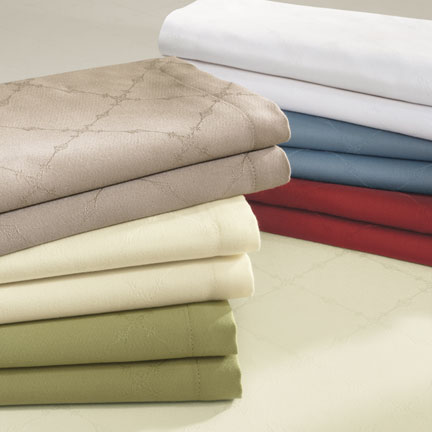
Design Tips
What design should I choose for my table linens?
Generally, formal linens are either solid, woven with a pattern, printed, or embroidered. White and ivory are the most traditional colors. Printed designs and more colorful embroideries, more suitable for informal settings.
What is a damask?
Unlike a print, a damask or jacquard refers to patterns that are woven into the fabric of the cloth, creating a subtle, yet elegant look. Although it is a common misconception that the term “damask” refers to a heavy cloth, damask patterns may be woven into fabrics of any weight.
What colors should my table linens be?
White is the most popular color for table linens and it is always appropriate for formal dining. Ivory and off-white colors are a popular second, especially in rooms with warmer tones. Beyond these, colors are wonderful for highlighting special elements in your tabletop collections or to celebrate festive occasions.
What should I consider in choosing linens for a special event?
– Location: Choose colors to complement the existing décor of your dining room. For outdoor events, let the setting be your guide. Generally, bright colors look better in sunny locations, while pastels are wonderful in garden settings.
– Season: Spring and summer colors tend to be lighter, while bolder colors are more appropriate during the colder fall and winter months.
– Theme: Colorful linens are one of the most effective ways to set the mood you want to create. Vibrant colors add drama, while soft colors evoke a more refined atmosphere.
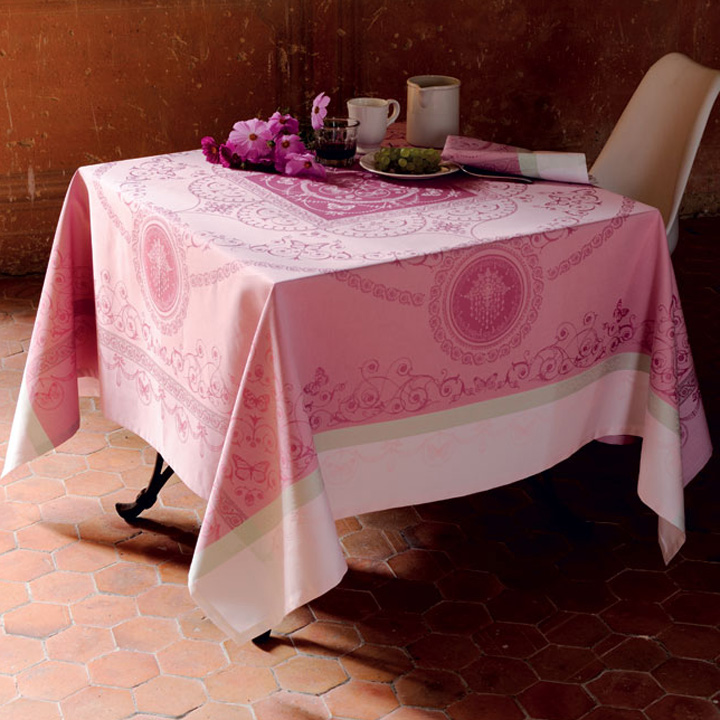
Protecting Your Tables
Why do I need a table liner?
Although designed to last a lifetime, fine table surfaces are often exposed to excessive wear and tear. To help protect your tables, thick felt table liners are designed to reduce noise and protect your tabletop against heat and scratches. Unlike ordinary liners, these are plush and generously sized (approximately 5″ larger than your table) to extend over the edge of your table in order to create a softer drape underneath your fine linens. To read more, see Protecting Your Table with Felt Liners.
What size table liner do I need?
We suggests choosing a table liner that is slightly smaller than your tablecloth (but larger than your table.) Following are our recommended sizes:
| Tablecloth | Felt Liner |
| 70″ x 90″ | 60″ x 82″ |
| 70″ x 108″ | 60″ x 100″ |
| 70″ x 126″ | 60″ x 118″ |
| 70″ x 144″ | 60″ x 136″ |
| 70″ x 162″ | 60″ x 154″ |
| 70″ x 180″ | 60″ x 172″ |
| 88″ x 106″ | 78″ x 96″ |
| 88″ x 124″ | 78″ x 114″ |
| 88″ x 140″ | 78″ x 130″ |
| 88″ x 160″ | 78″ x 150″ |
| 70″ round | 60″ round |
| 90″ round | 80″ round |
| 108″ round | 90″ round |
Caring for Table Linens
How do I care for my table linens?
Most fine linens can be laundered at home. Cottons and linens should be washed with like colors in cool water using a regular (non-bleach) detergent. Stains should be treated as soon as possible using a stain remover such as our LeBlanc Linen Wash. Bleaching agents such as chlorine, peroxide, or sodium carbonate should not be used.
Linens can be dried, but should be removed from the dryer while slightly damp in order to minimize wrinkles. They should then be spread on a large surface and pressed with a hot iron. When ironing embroideries, place them face down on a towel and press on the reverse side.
Taffetas, silks and laces should generally be dry cleaned, especially if the items are delicate or have decorative fringes.
Are there specialty linen cleaning solutions?
LeBlanc Linen Wash is a specially formulated cleaning solution for laundering fine linens. Its gentle, pH-balanced formula may be used on all natural fibers, synthetics, and blends. We particularly like it because it is concentrated, so it is effective on linens (including vintage linens) without the use of bleach, caustics, or phosphates. LeBlanc Linen Wash has been tested to remove lipstick, jam and jelly, fruit juice, coffee, tea, chocolate, red, wine, grease, cola, ink, and oil stains.
Do I have to iron my fine table linens?
For formal dining, we do recommend that you iron your fine linens. After washing, simply lay your slightly damp linens on your table over large towels or a felt table liner and press with a hot iron. Of course, you may also have your linens professionally pressed for a small charge.
How do I store my table linens?
Preparing linens for storage is easy. Make sure linens are completely clean and dry. Avoid starching them prior to storage. Fold items gently and store them in a cool, dry, and well-ventilated area. Do not store linens in plastic bags or cedar chests or in basements, attics, or garages to prevent large fluctuations in humidity and temperature. Check your linens periodically to ensure that they are clean and dry.
Guide to Choosing Bath Linens
You use your bathroom every day, so it’s time to show it some love! Bath linens are an everyday essential, so here are some key factors to keep in mind when making your selections.
|
|
|
|
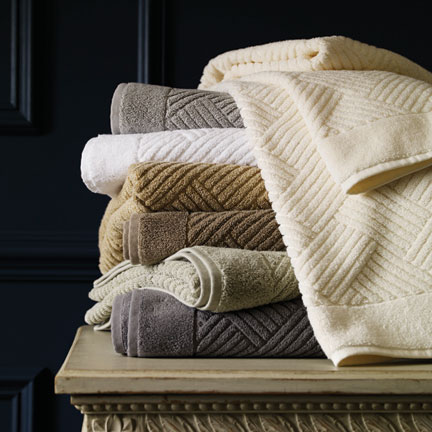
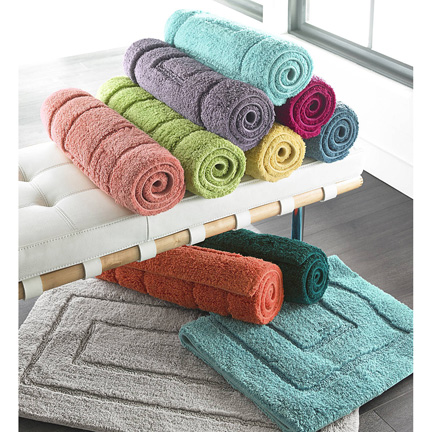
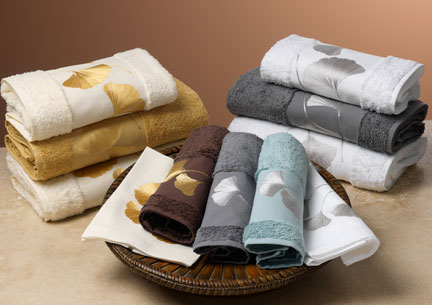
Understanding Bath Linen Materials
What quality should I look for in bath linens?
Material is the most important consideration when purchasing bath linens. Almost all fine towels are made from cotton (especially Egyptian and Turkish) because it is very absorbent and strong. Microfiber (high performance synthetic fibers that resist shedding and piling) and bamboo are becoming increasingly popular because they are even more absorbent and lighter in weight.
What is terry cloth?
Terry refers to the looped pile you see on most towels. The longer and more tightly packed these loops are, the more absorbent and durable the towel. Terry cloth towels are absorbent because the looped pile in the terry acts like very small sponges.
What is microfiber?
Microfiber is an ultrafine fiber that naturally resists shedding and piling. Compared with other materials, microfibers are twice as fine as silk and three times finer than cotton. Items made from microfiber are extremely absorbent, soft, and lightweight.
|
|
|
|
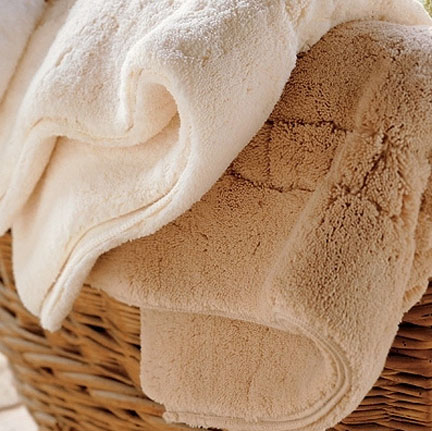
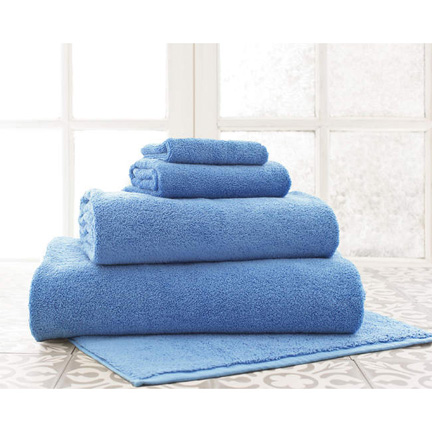
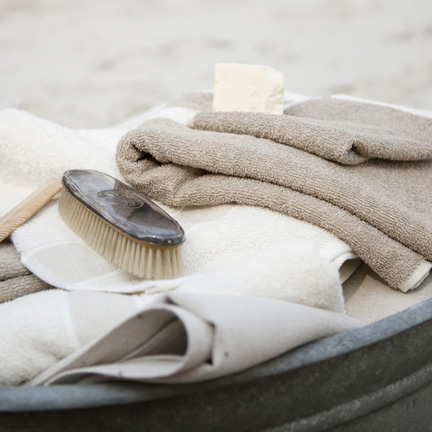
Choosing a Size
What are standard towel sizes?
Sizes will vary among different collections, but they are generally as follow:
| Bath Sheet | 47″ x 59″ |
| Bath Towel | 27″ x 55″ |
| Hand Towel | 24″ x 41″ |
| Guest Towel | 16″ x 24″ |
| Washcloth | 13″ x 13″ |
| Bath Mat | 24″ x 35″ |
| Shower Curtain | 72″ x 72″ |
|
|
|
|
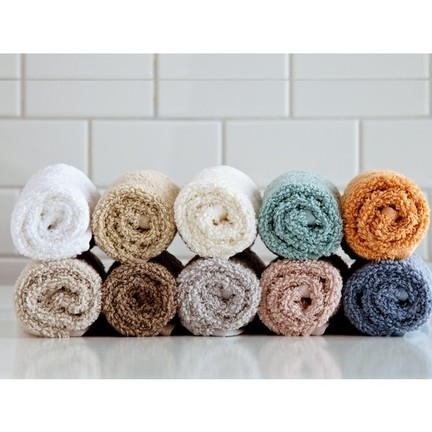
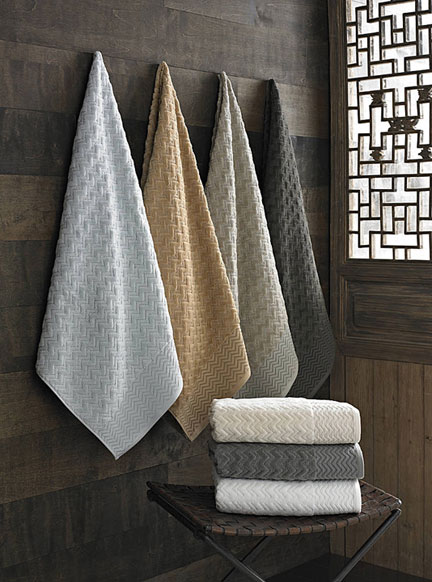
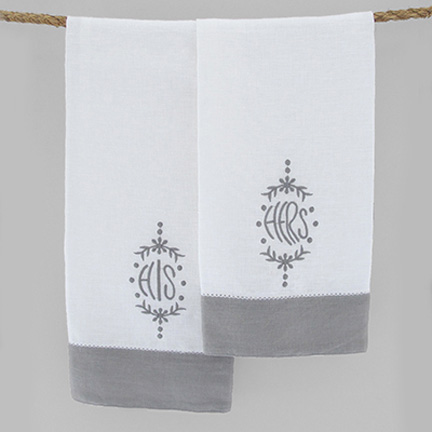
How do I select a bathrobe?
When choosing a bathrobe, comfort is key. Pick a material that is soft and absorbent, but not too tight. You want to leave enough room for a bulky sweater underneath during the cold winter months.
Care and Suggested Quantities
How do I care for my bath linens?
You should always launder new towels before using them. Wash with a mild detergent in warm water and then tumble dry. Do not wash with other laundry, as shedding or “linting” almost always occurs with new towels. Avoiding using bleaches or fabric softeners.
How many towels do I need?
- 2 Bath Towels or Bath Sheets per person
- 2 Hand Towels per person
- 2 Guest or Fingertip Towels per person
- 4 Washcloths per person
- 1 Bath Mat per bathroom
- 1 Shower Curtain and Liner per bathroom
- 2 Additional Towel Sets (bath, hand, guest) for each additional bathroom
|
|
|
|
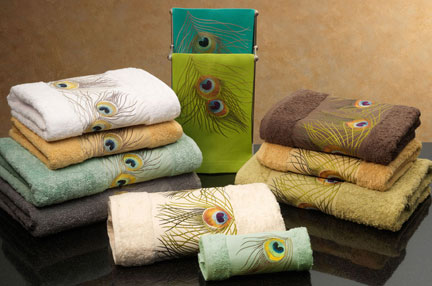
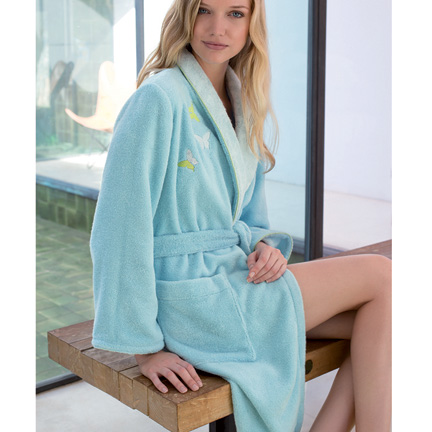
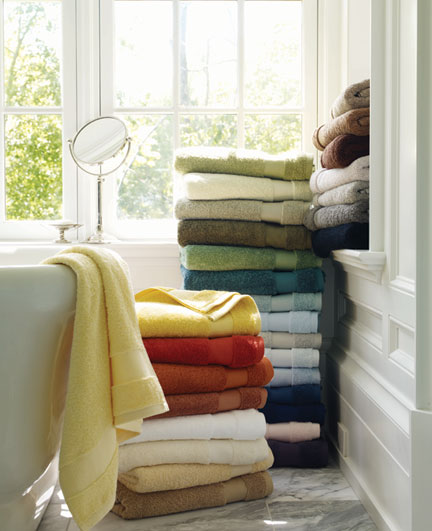
Guide to Choosing Pillows
Choosing the right pillow is essential to a good night’s rest. In order to decide which pillow is right for you, there are two factors you need to consider:
1. YOUR FIRMNESS LEVEL
Your specific sleeping style will determine the firmness of your pillow.
– Stomach sleepers should choose a soft, plump pillow to cushion and gently support the head and neck.
– Back sleepers should choose a medium pillow to position the head and neck in line with the natural curvature of the spine.
– Side sleepers should choose a firm pillow to provide more support and properly align the head, neck, and shoulders.
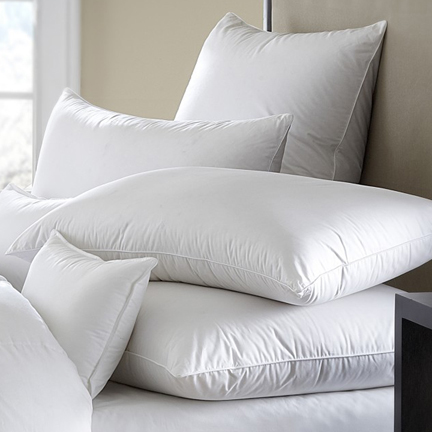
2. YOUR PREFERRED FILL TYPE
Down: Down is nature’s best fill and insulator. The most luxurious pillows are filled with white goose down.
– Because down is so lightweight, it’s one of the most comfortable fills for pillows and comforters.
– Down pillows are shaped for comfort and support and mold to your head and neck.
– The higher the fill power, the higher quality the pillow.
– Down pillows last longer and hold up better than synthetic fills.
– Down breathes well, lifting moisture away from the sleeper.
Down/Feather Blend: Down/feather pillows are firmer than down filled pillows. They are an excellent choice for those who want a firmer support.
Comforel/Down Alternative Fill: A wonderful hypoallergenic microfiber fill that offers down-like comfort, loft and softness, at a more economical price than down. This fill is perfect for sleepers who are allergy prone.
To view our entire selection of down and down alternative pillows, click here.
Guide to Choosing Comforters
It’s easy to find a comforter that’s just right for you. For an unparalleled sleeping experience, you should consider these two factors:
1. YOUR LEVEL OF WARMTH
To select the ideal comforter, you should consider such factors as season, climate, heating system and thermostat setting. Most of our classic comforters are now offered in three weights to best suit your needs.
Summer Weight: Ideal for the warm sleeper, warm climates or when the room temperature is above 70°F.
All Year Weight: The most popular choice, this all-season comforter is perfect for year-round use and for those who keep their bedroom temperature between 60°F and 65°F.
Winter Weight: Ideal for the cold sleeper, cool bedrooms, very cold climates and for those who prefer extra warmth during the winter season.
2. YOUR LEVEL OF QUALITY
Comforters are available with different qualities of fills and shells. The most affordable generally feature more common fills and lower thread count shells, while the most expensive use rare, exotic fills and finer fabrics.
Introductory: Our most affordable down comforters features a 233 thread count cover filled with 560 fill power white down (example: Mackenza comforters)
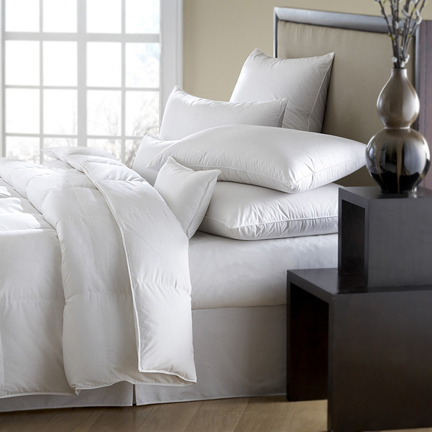
Classic: These classics feature a soft, 300 thread count cover filled with high loft, and 600 fill power white goose down, guaranteed to provide many years of warmth and pleasure (examples: Cascada Summit, 3-in-1 Anytime, and Buxton comforters)
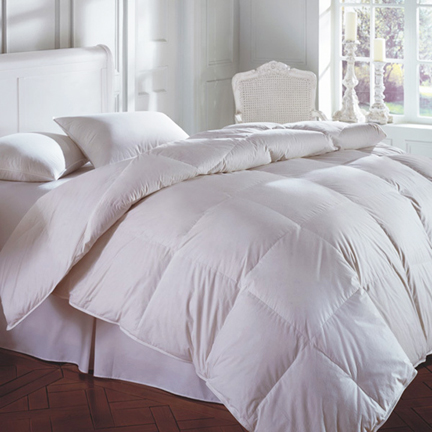
Best Value: Opting for lasting comfort and value? The comforters in this class offer remarkable quality and sumptuous softness. A high quality white goose down with large and plump clusters, our 650 and 700 fill power white goose downs, provide luxurious warmth with minimum weight. Choice of 330 or 383 thread count cotton sateen gives the finishing touch to this amazing selection (example: Nirvana, Continental, and Somerset comforters).
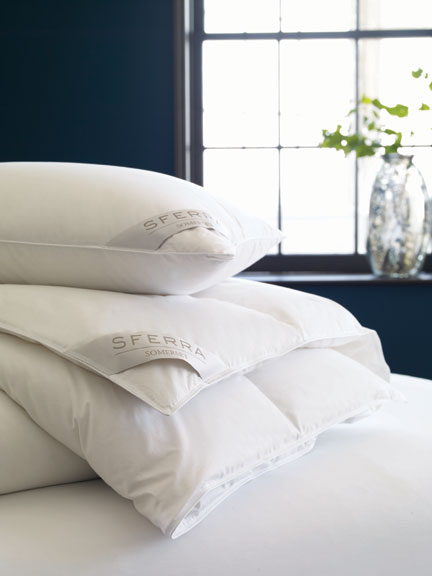
Supreme: Exceptional superiority, the 700 and 800 fill power is one of the word’s finest downs. Premium clusters of down deliver superior loft and maximum warmth with minimal weight. Moreover, our silky smooth downproof fabric is made in Europe using the exclusive SanProCare process, known to enhance temperature regulation, absorption and release of moisture, and superior durability (examples: Bernina, Himalaya, and Cardigan comforters).
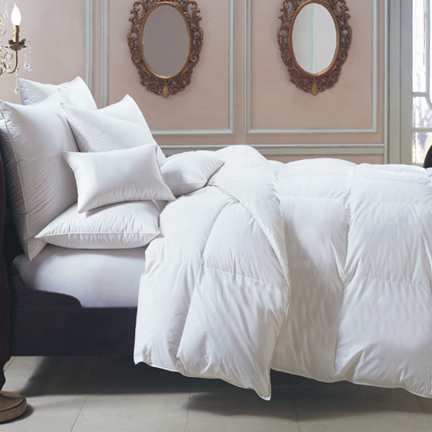
Ultimate: When only the very best will do; our most magnificent comforters offer unparalleled luxury, warmth and craftsmanship. The very largest, softest 920 fill power Siberian, Canadian white goose down, or Eiderdown paired with a choice of Batiste lightweight fabric- or our 100% Pure Silk, Flowering Vine pattern cover, introduce you to the incredible lightness of warmth. These opulent comforters result in extraordinary comfort and promise luscious sleep for years to come (examples: Logana, Eliasa, Snowdon comforters).
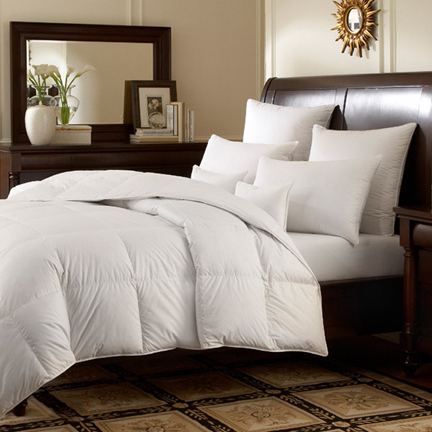
Down Alternative: Filled with Comforel, Innofil, and other similar fibers, these hypoallergenic microfiber fills offer down-like comfort, loft and softness at a more economical price than down. Perfect for sleepers who are allergy prone (examples: Sierra, Astra, Arcadia, and Anti-Allergy Down comforters).
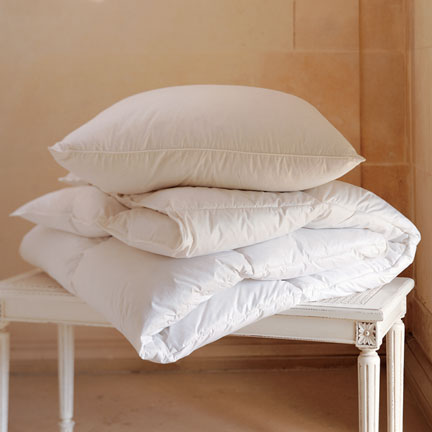
Tencel Ecofriendly: The combination of high quality 650 fill power white goose down and a Tencel® lyocell cover offers you easy-care comfort that’s soft on you and the environment. Tencel® lyocell is a natural fabric manufactured from wood pulp from Eucalyptus trees, which is extremely silky to the touch, has a very soft finish and is noted for its durability, light weight and strength (example: Innutia comforters).
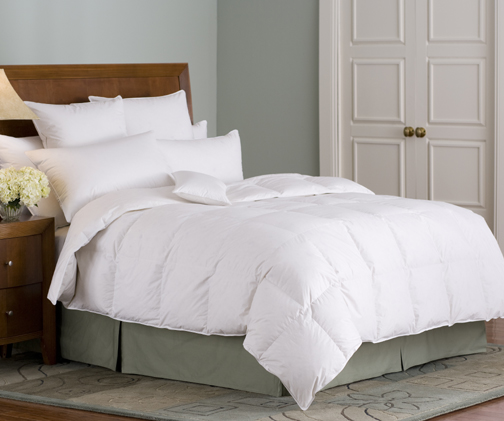
To view our entire selection of down pillows and comforters, click here.