
Save to...
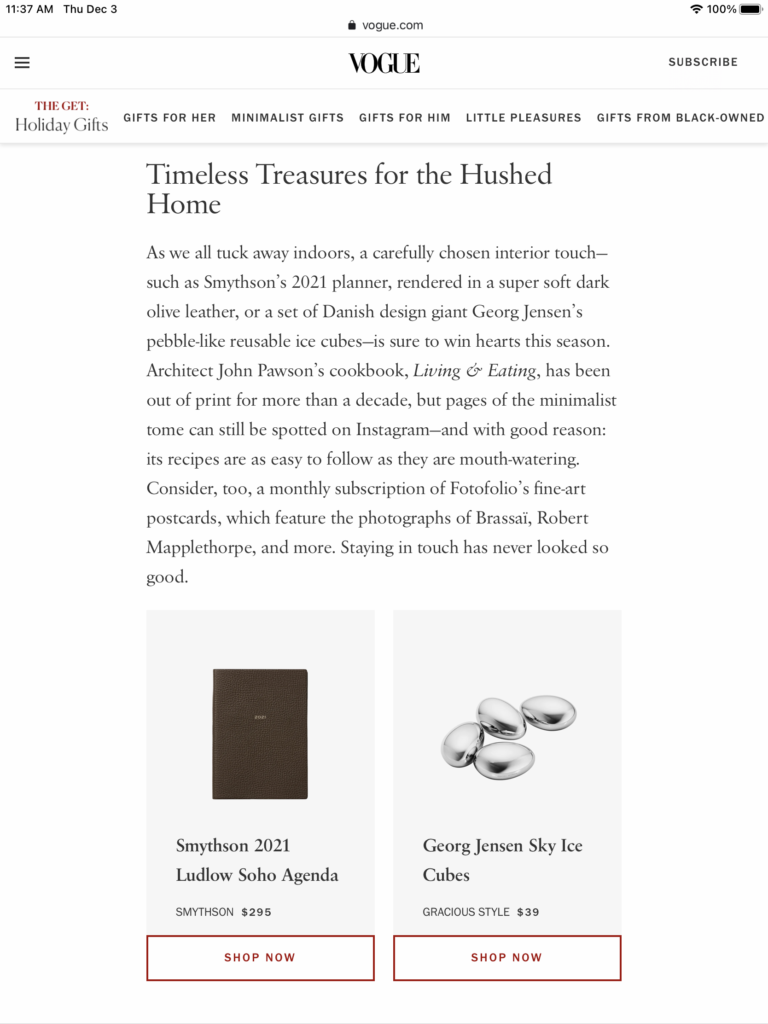
Featured in Vogue Holiday Gift Guide: Georg Jensen Sky Ice Cubes
Seeing our Georg Jensen Sky Ice Cubes in Vogue’s Holiday Gift Guide certainly made us feel a lot more stylish today:
These little pebbles aren’t just a statement of contemporary Scandinavian design. They can actually keep your drinks cool without watering them down, since they’re stainless steel and won’t melt. Just keep them in the freezer and then drop them in your drink. They’ll keep the drinks cold and the conversation going. They come in a set of four and safe to use in drinks:
Designer Aurelian Barbry has a strong belief that design should be beautiful but stay true to its purpose. These pebbles are complimented by his Sky bar set, with sculptural asymmetric shapes working both aesthetically and practically:
They’re all part of Georg Jensen‘s tradition of modernist designs that are functional and democratic, yet still beautiful with flowing curves and lines:
Easy Does It: Chic Entertaining with Paper Plates and Napkins
We all have our favorite linen napkins and hand painted dinnerware. But sometimes you have a lot of guests or a crowd shows up for a last-minute pool party (hey, we live in L.A.), and it’s gracious to never fuss when you entertain.
Those are perfect times to use paper napkins and acrylic. The good news is that you can still do it stylishly. We love making our friends feel special, so here are a few of our tried-and-true tips for entertaining with paper:
- Mix and match your table settings. If your plates have an intricate motif, pick up the colors in your napkins or glassware. Or, if you are using plain dinnerware, choose a festive napkin to commemorate a special occasion.
- Layer your settings. Whether you lay simple placemats, or chargers, or a tablecloth underneath, layers help bring color and dimension to your table.
- Don’t skimp on table decorations. Try greenery from your garden or fruit from the market or a few candles sprinkled throughout … it all helps.
- Use paper napkins effectively. Place them near your beverage and hors d’oeuvre stations, but also use them to line any clear bowls you might have. For example, parfaits served in coupe bowls can be beautifully presented on top of cocktail napkins.
- The grand finale: make sure your plates complement your dessert. We all look forward to indulging a little at the end, so think about what you’re serving and dress it up accordingly.
Keeps things simple, and get to work on that new drink you are dying to try out. Let’s get the party started.
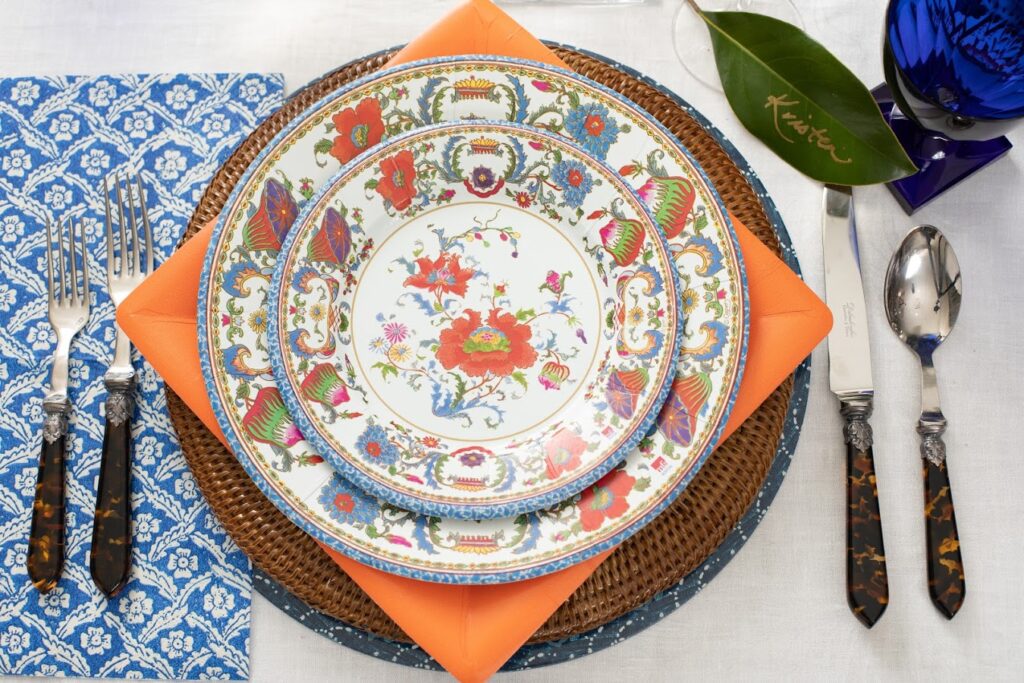
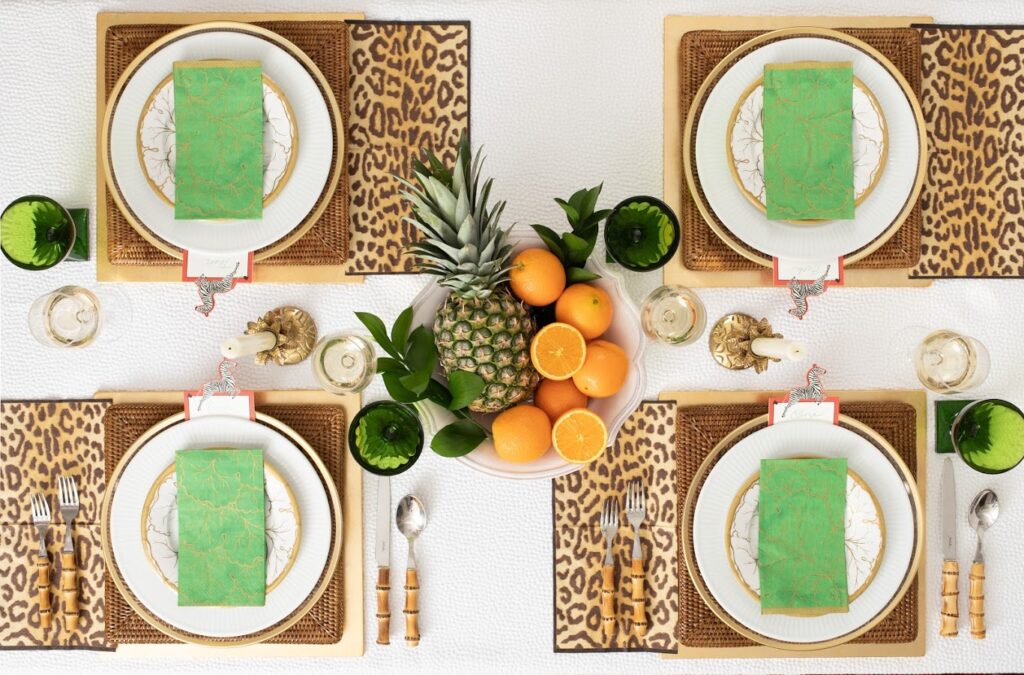
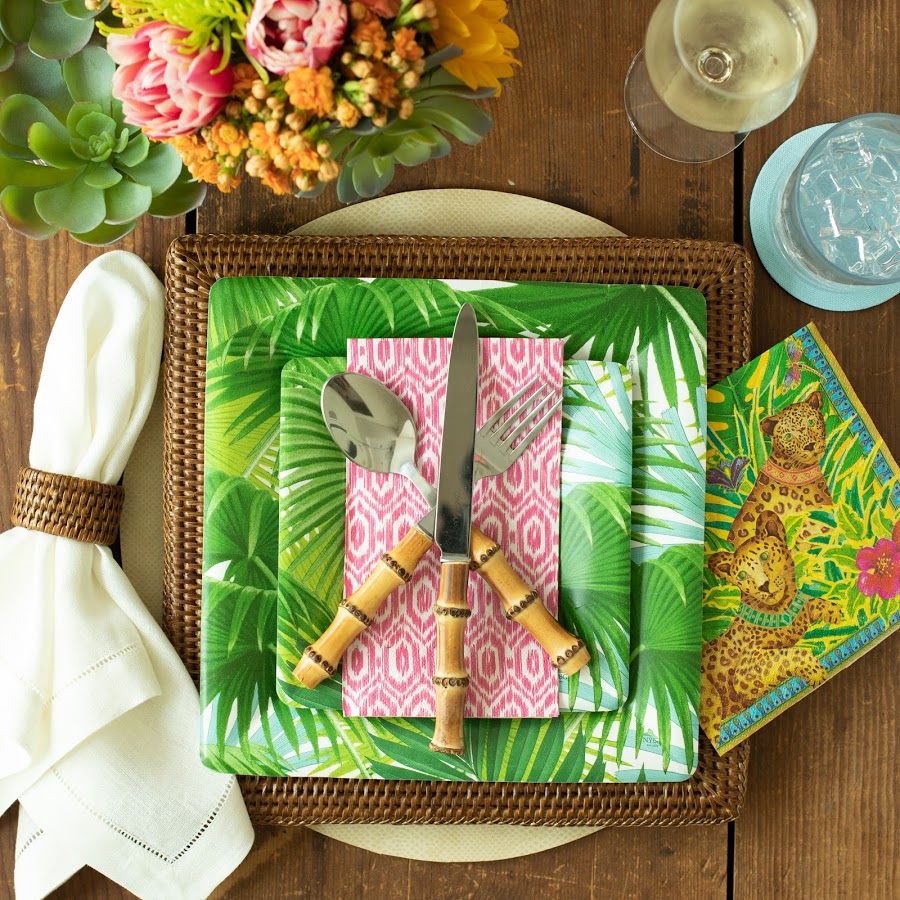
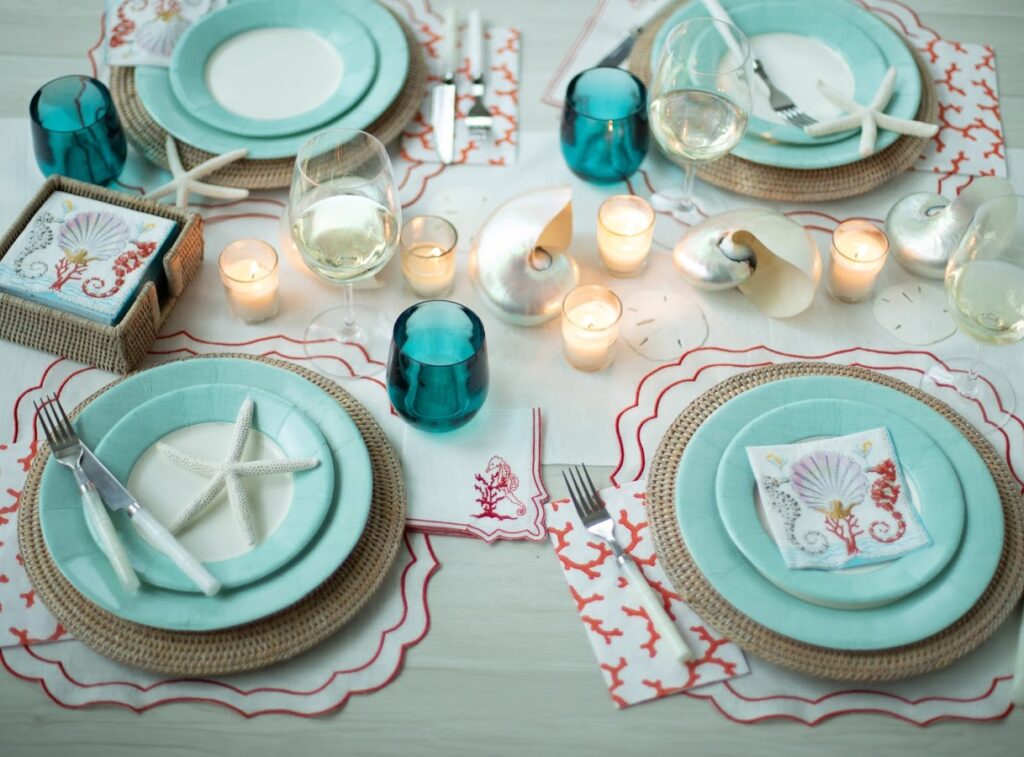
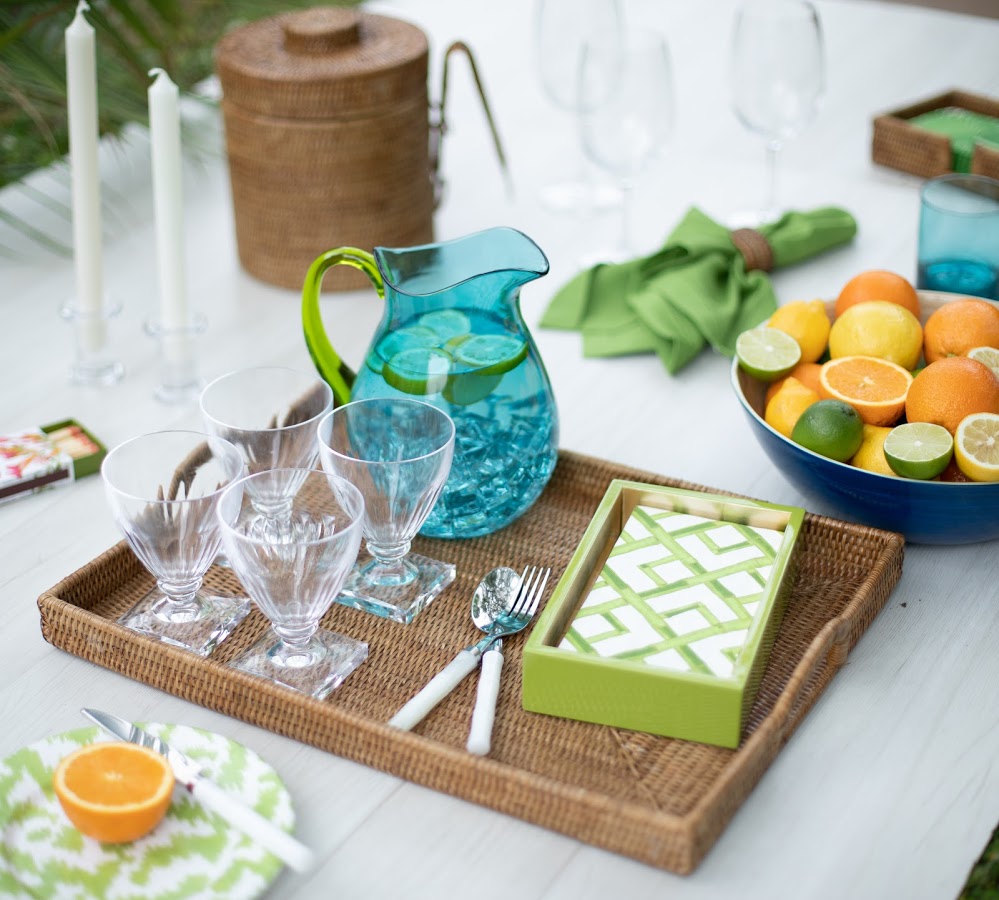
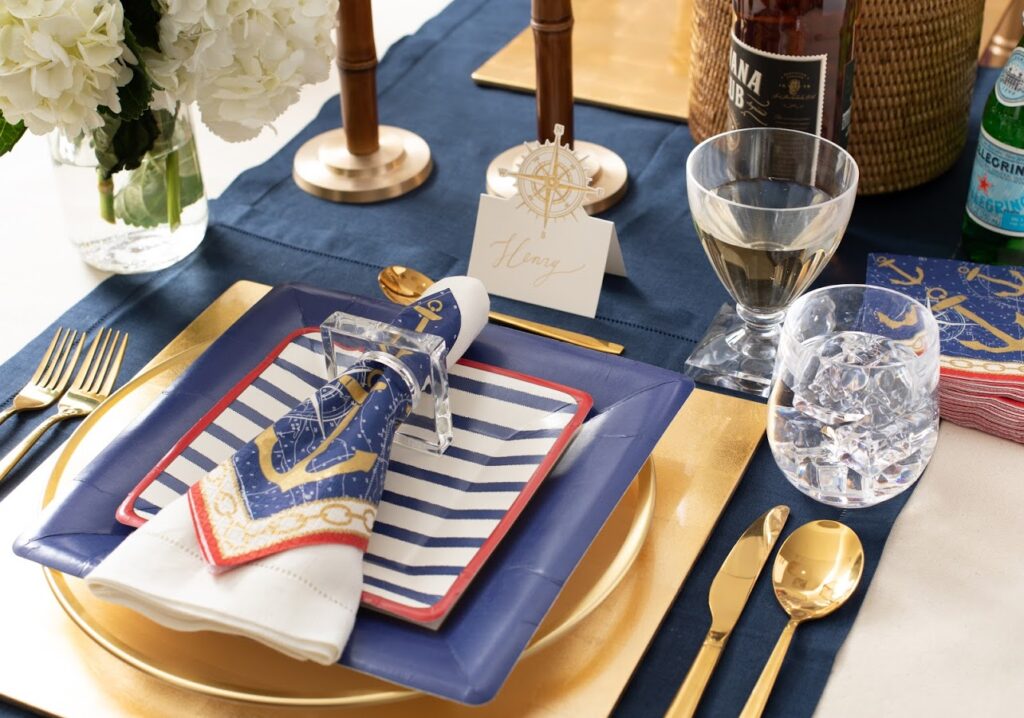
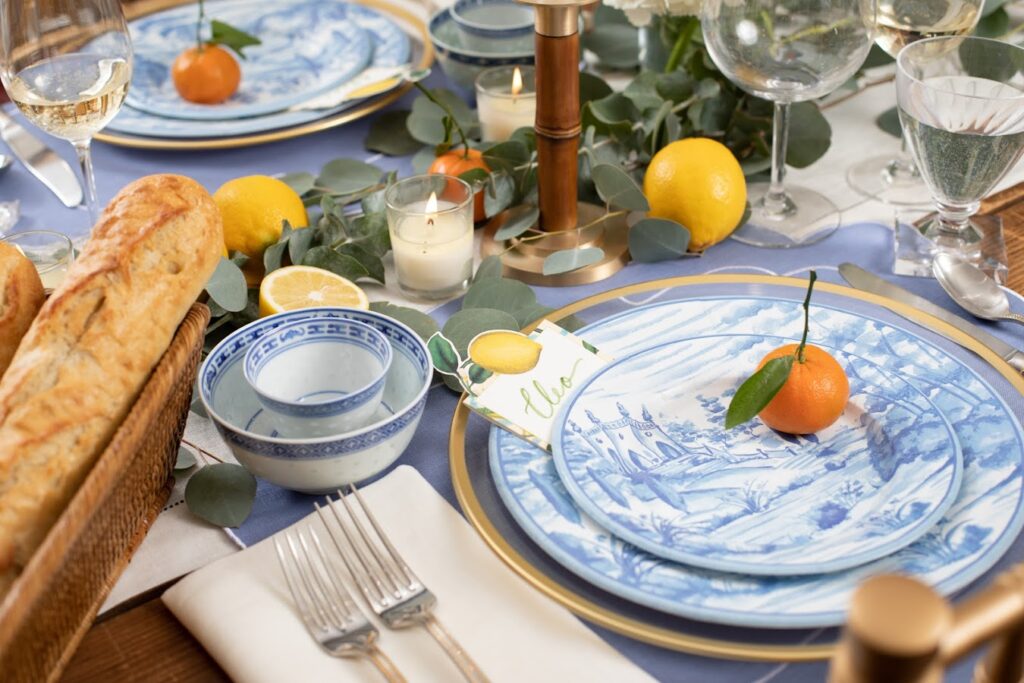
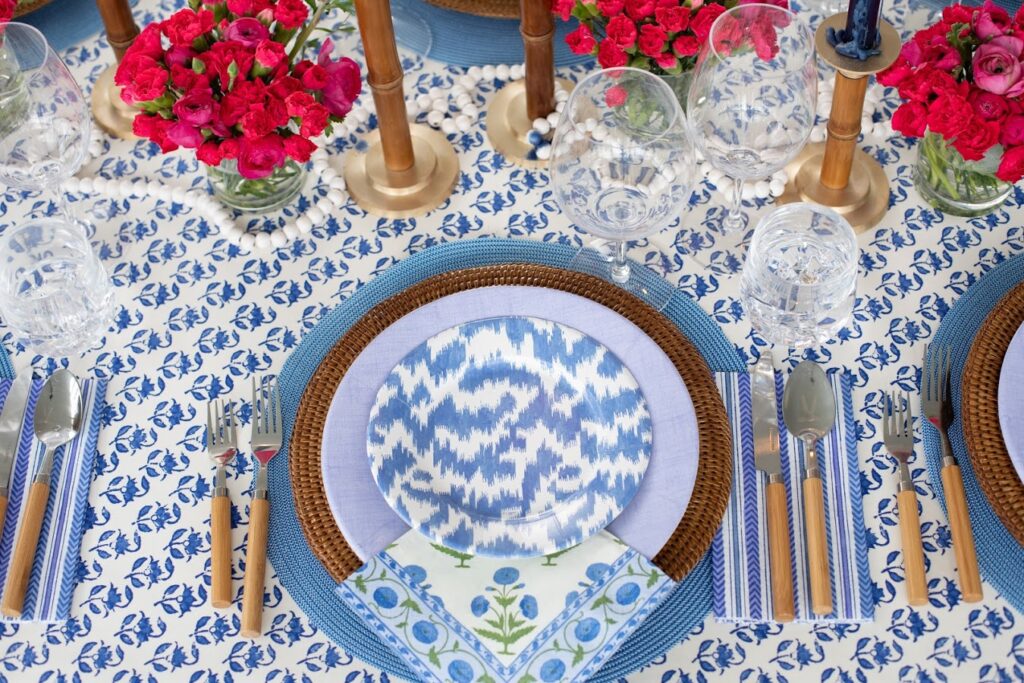
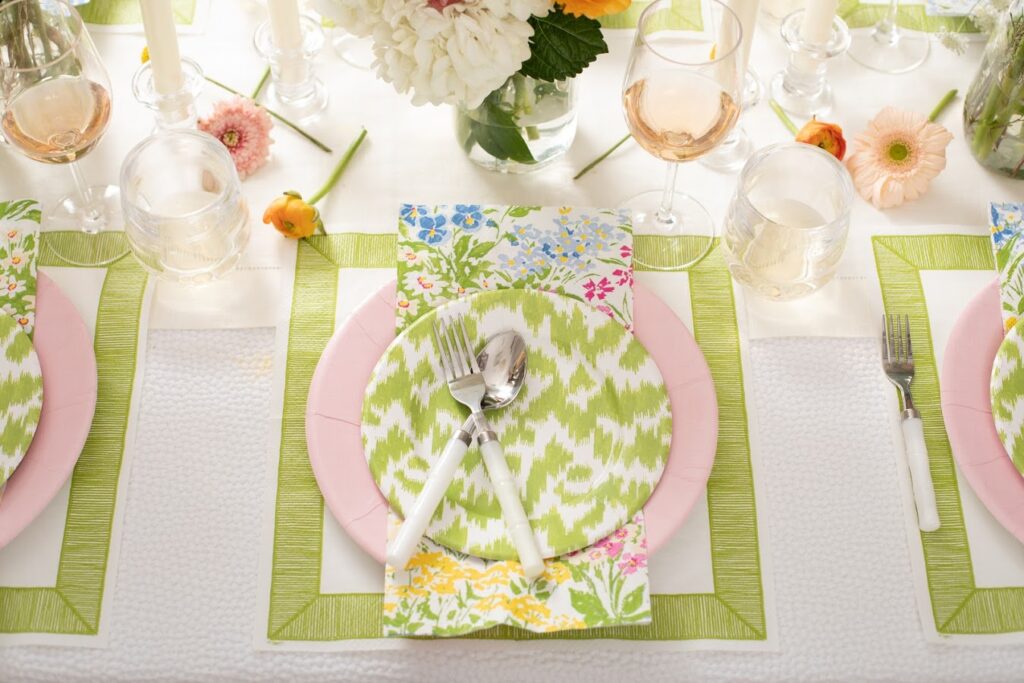
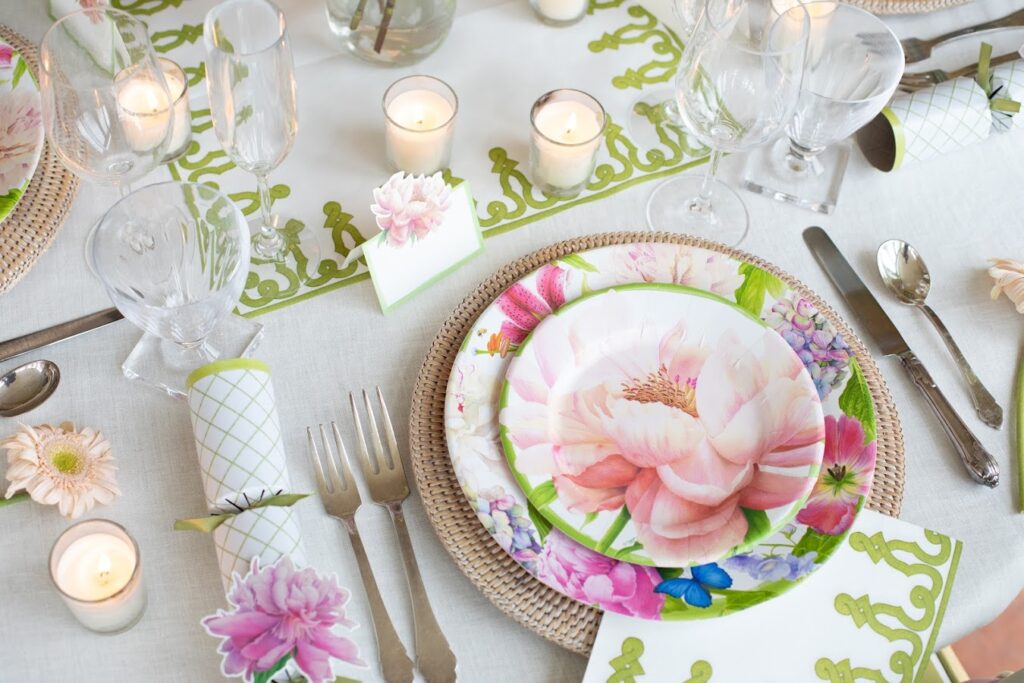
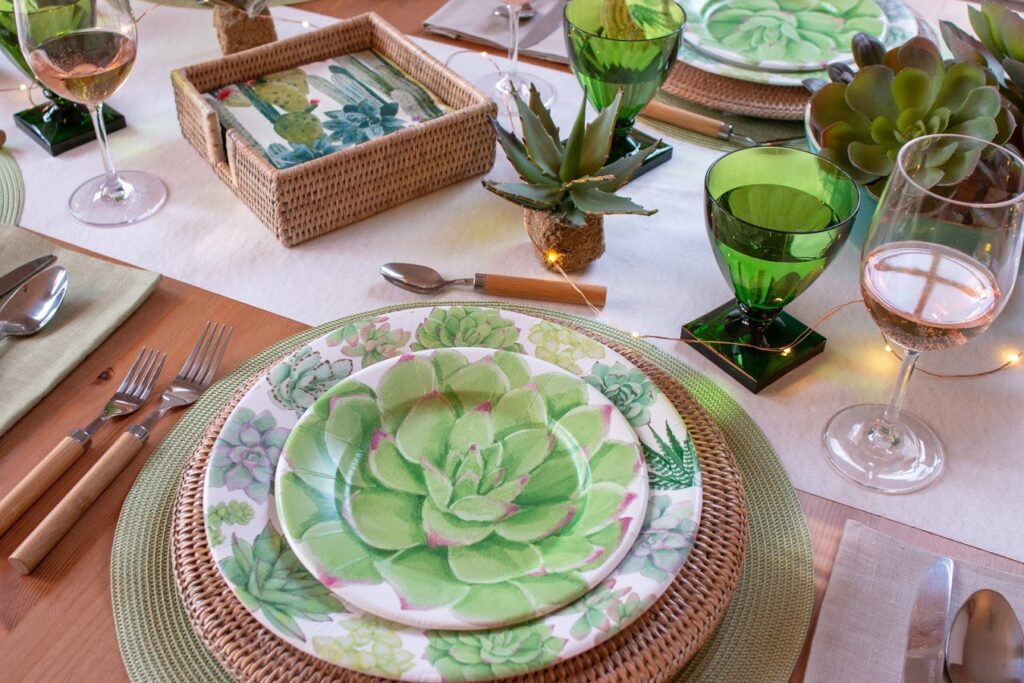
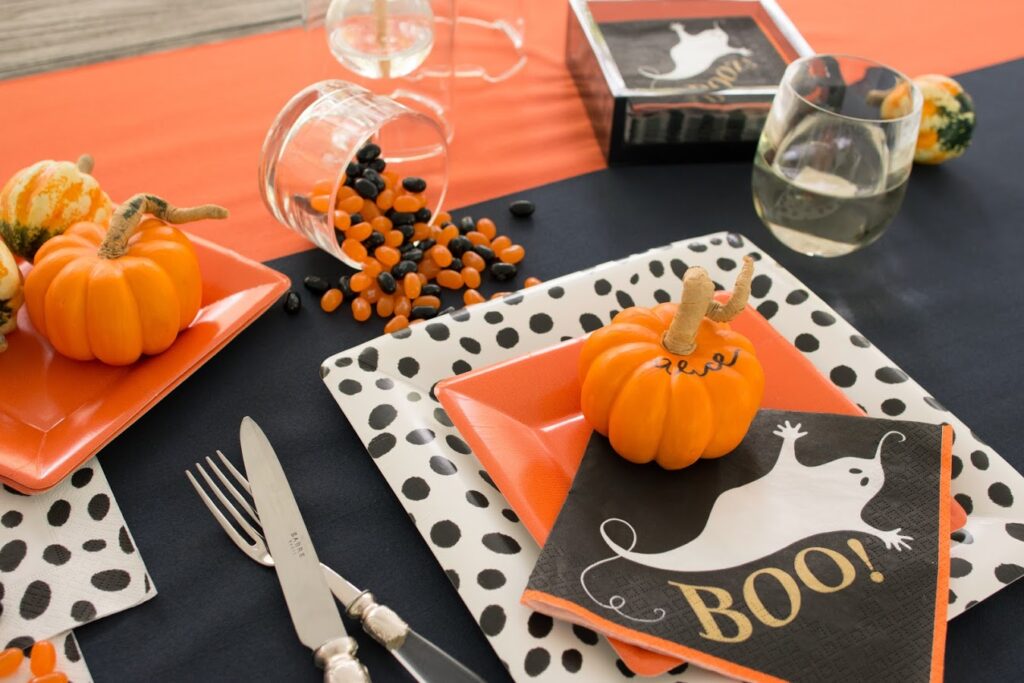
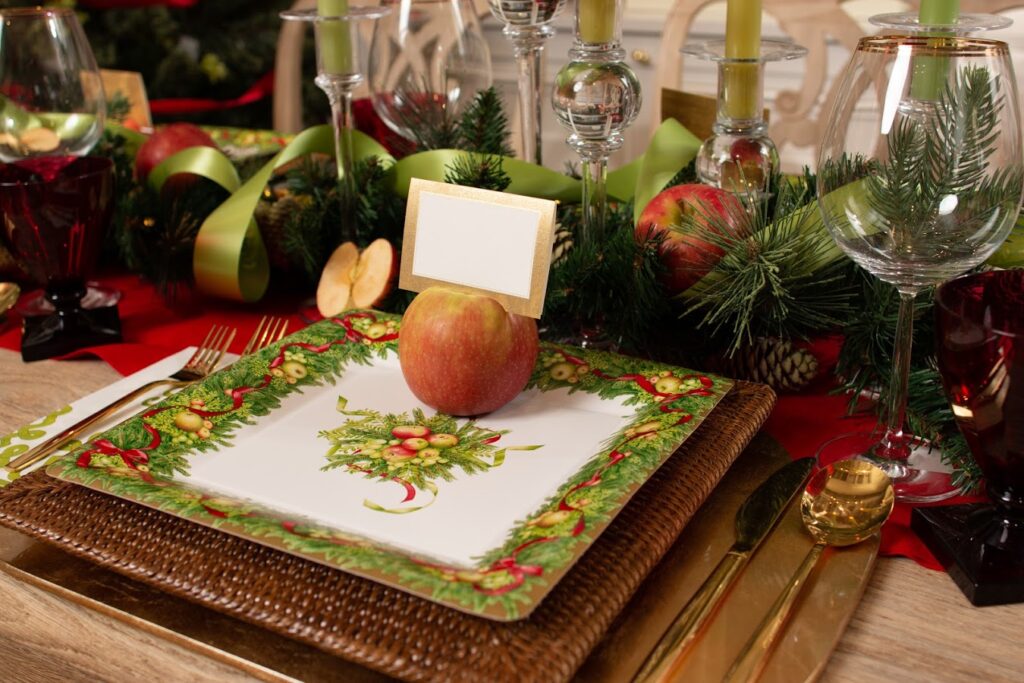
Click here to see how you can entertain with paper napkins, placemats, and plates.
The Details: Everything You Need for a Seaside Escape at Home
We hear you … it takes effort to cook meal after meal while quarantining, so why not take the whole family outdoors and do a seaside escape?
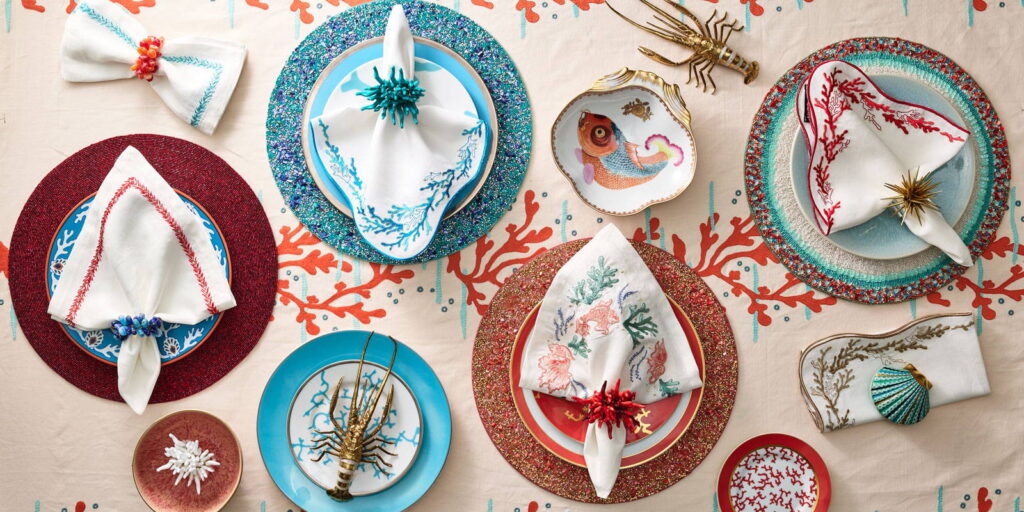
Let everyone pitch in … the kids can set the tables, the adults can help carry the plates and the drinks, and uberEats can bring the food. So now all you have to do is choose the music and wear that gorgeous straw hat with your biggest shades.
To see more Seaside Escape pieces, click here.
Bordallo Pinheiro: Why this 19th Century Portuguese Artist is More Relevant Than Ever Today
In our entire time at Gracious Style, we’ve never really come across a line that resonated quite like the one we’re about to share with you. On the surface, this Portuguese company produces charming pieces reminiscent of a simpler time, but wait until you hear how it all started, and you’ll see why it’s more relevant now than ever before.
Rafael Bordallo Pinheiro was a Portuguese cartoonist in the 19th century. He created a character called “Ze Povinho,” who personified the average Portuguese man: a rustic farm laborer who was kind to his friends and utterly disrespectful of the rich and powerful who took advantage of him. Pinheiro was also an artist who widely drew inspiration from nature.

His characters – like his animals – were common folk, the kind who are usually forgotten. So it is astounding to think how, almost 135 years later, the same themes are now at the forefront of our lives. Before, they were caricatures; now, they are also perfect teaching tools for our current conversations around nature and politics. What happens when we don’t listen to those with no voice? Can we survive if we don’t care about those around us? How do we maintain the integrity of our environment? How can we leave our world in a better place for future generations? Can we change enough to make a difference?
|
|
|
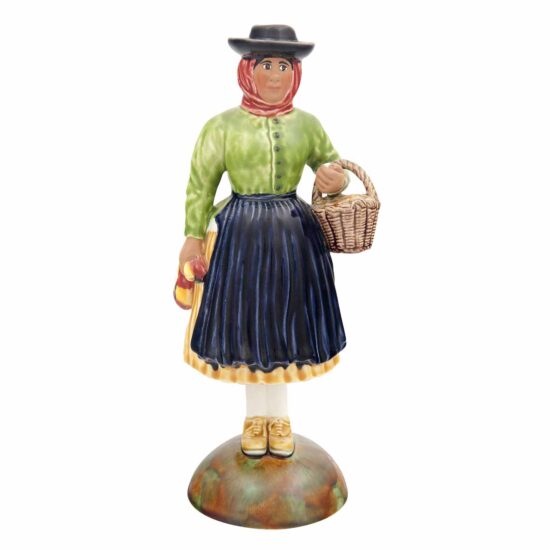
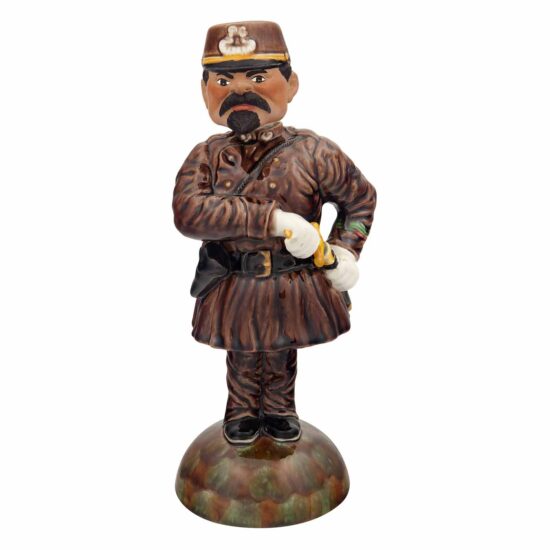
Bordallo was highly trained, but his artistic language was generally more whimsical and caricature-like. He was part of the Arts and Crafts movement of the mid- to late-19th century that rejected industrial manufacturing and fanciful Victorian designs that appealed to aristocratic tastes. Rather, he and his fellow Arts and Crafts artists proposed a return to the folk art traditions and using art to celebrate the common people. His art is similar to Staffordshire figurines, but more exaggerated in a way that reminds us of the dramatic, even grotesque, features of Goya’s earlier paintings.
Surprisingly, the factory that still makes Bordallo’s pieces today was established by the artist himself in 1884 in Caldas da Rainha (the Queen’s Baths), a town on the west coast of Portugal known as the capital of Portuguese pottery. It is rich in a special clay that gave rise to the town’s fame as a spa town dating back to 1484, when Queen Leonor of Portugal found some peasants bathing in a smelly pond. When asked why, they told her that the water cured them. She tried it herself, felt much better, and ordered baths to be built on the site. The minerals of the baths and the clay are probably related, giving the clay special properties for making the faience pottery that the factory uses.
Every piece of Bordallo Pinheiro pottery is still crafted by hand in Portugal. And now, they are enjoying a resurgence in popularity given how much more we understand about the role of nature and fair treatment in our world.
To those who follow his work, Bordallo Pinheiro’s pieces are best known for:
– Naturalistic pottery shaped like fruits and vegetables (the cabbage-shaped pottery is a staple of the Portuguese table)
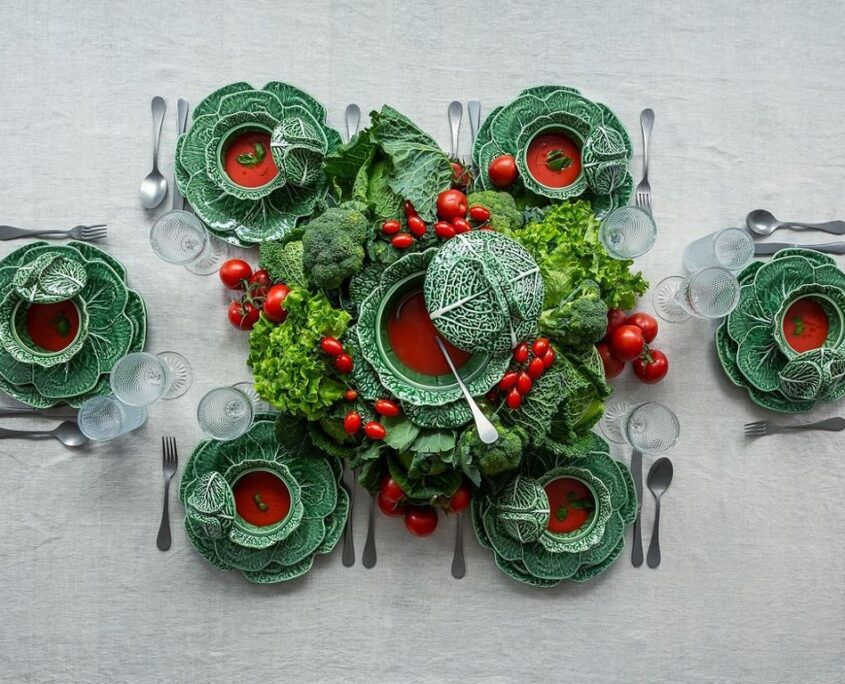


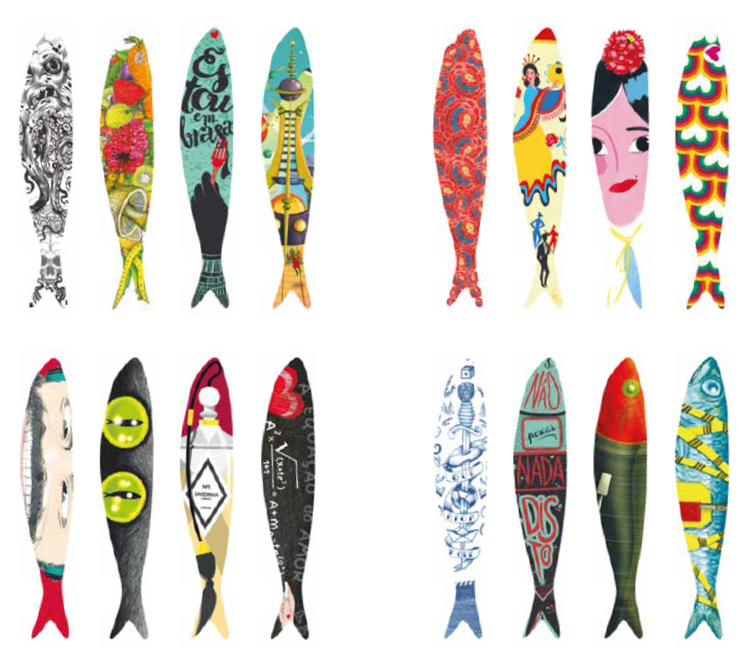
There is an active collector’s community around these works, with some vintage pieces going into the thousands of euros at auctions. So whether you’re looking for something more rustic or more contemporary, you should know about Bordallo Pinheiro. And next time you’re in Portugal, visit the Museo Bordalo Pinheiro, a hidden gem in Lisbon.
To see more Bordallo Pinheiro pieces, click here. And after you’re done, we’d love to hear about your favorites! Obrigado!
As Seen in Southern Lady: Good as Gold” Table Setting
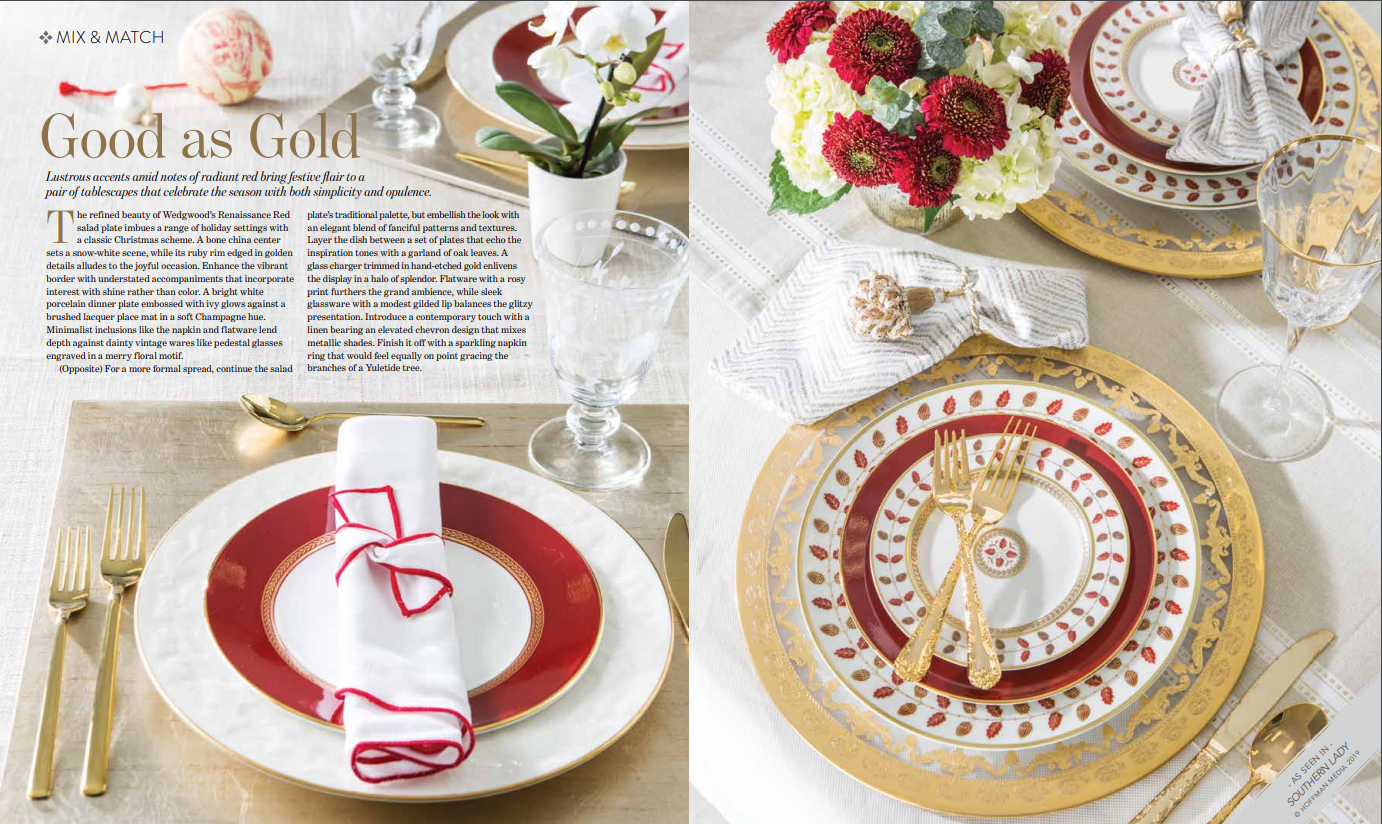
We love the “Good as Gold” feature put together by Mary Beth Jones in the Dec 2019 issue of Southern Lady. Whether you decide to go modern or traditional, gold is a great way to bring warmth to the table. And during the holidays, mixed with red and persimmon, it’s a look you can enjoy from Thanksgiving through Christmas.
Which One’s Your Favorite? Two Takes on Kim Seybert’s Bouquet Runner
We always look forward to Kim Seybert’s spring collections. One of the more gorgeous reminders of the changing of the seasons, her new Bouquet runner and placemat create a spectacular floral backdrop for entertaining.
Take a look at how quickly you can change the look just by editing the accessories around it.
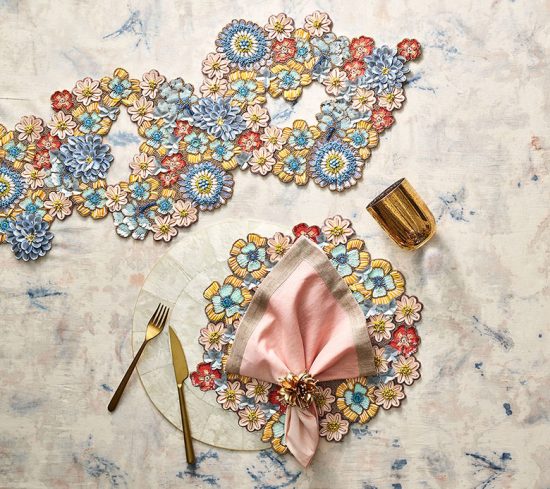
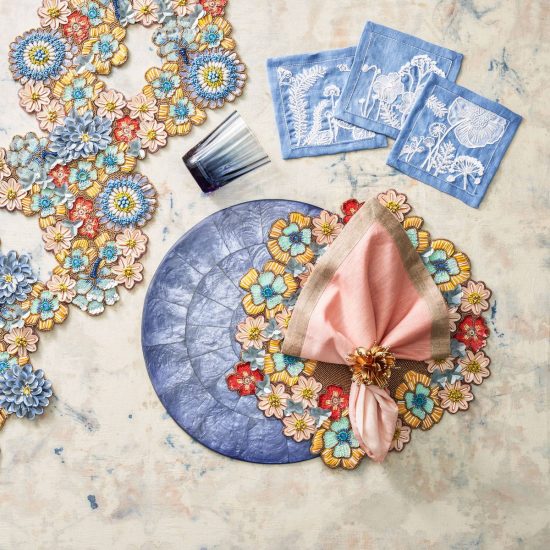
Here are some other ideas for accessorizing these amazing runners:
Freshen Up Your Home with These Boho Chic Essentials
As you plan your summer travels to Bali, India, and Morocco, here are some easy ways to update your home with a relaxed vibe.
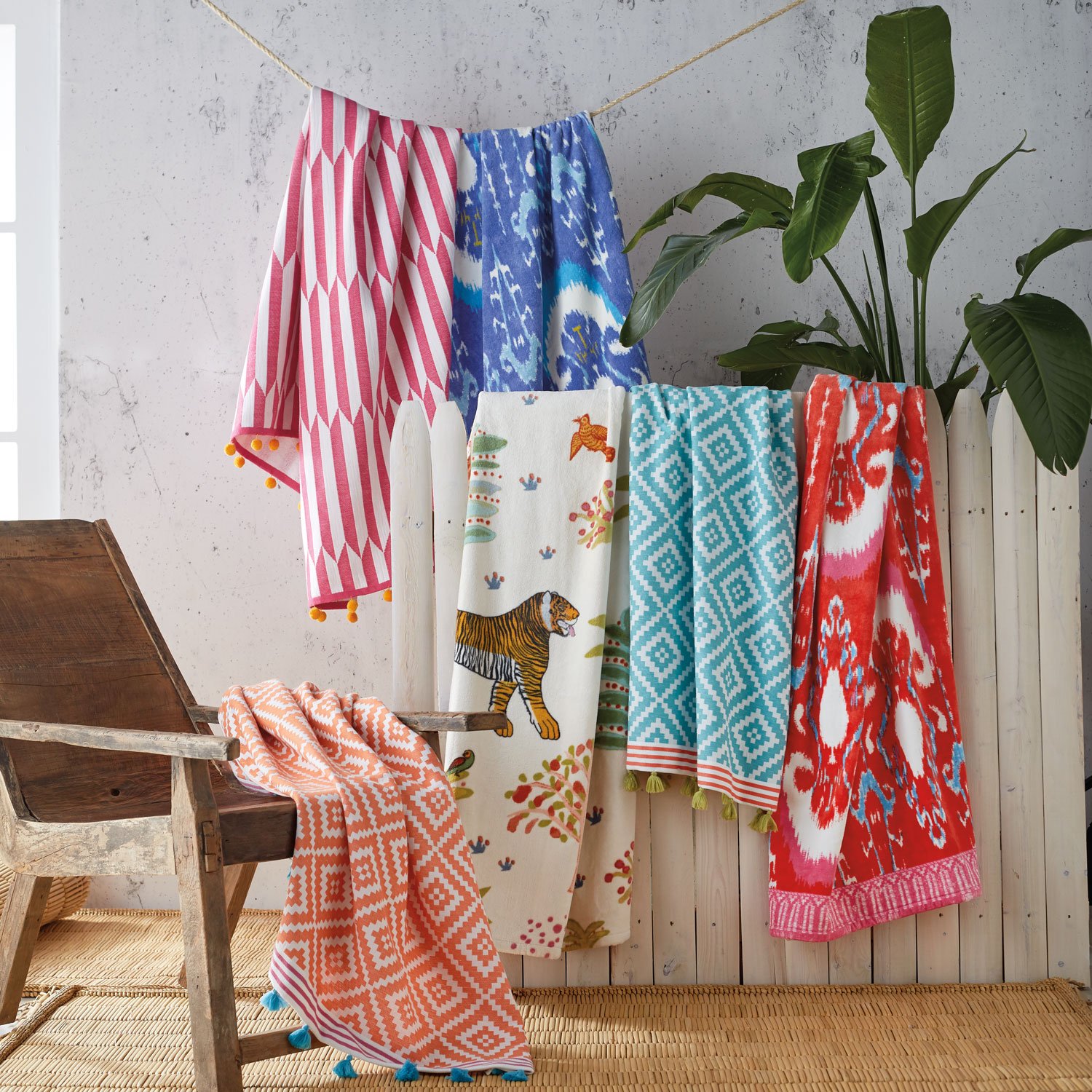
To see more Boho Chic Essentials, click here.
Inspired by Nature: Elegant Entertaining with TarHong’s Acrylic and Melamine Dinnerware
Have you seen the latest in melamine dinnerware? Many of the newest collections from Los Angeles-based TarHong are inspired by natural materials, so they’re perfect for indoor dining.
Escape to the wine country with the Marin and French Oak melamine collections:
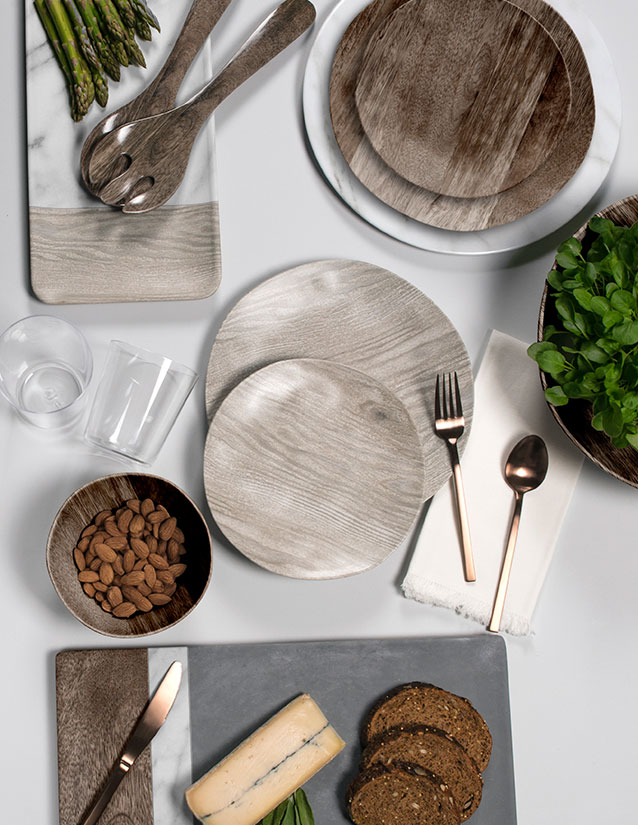
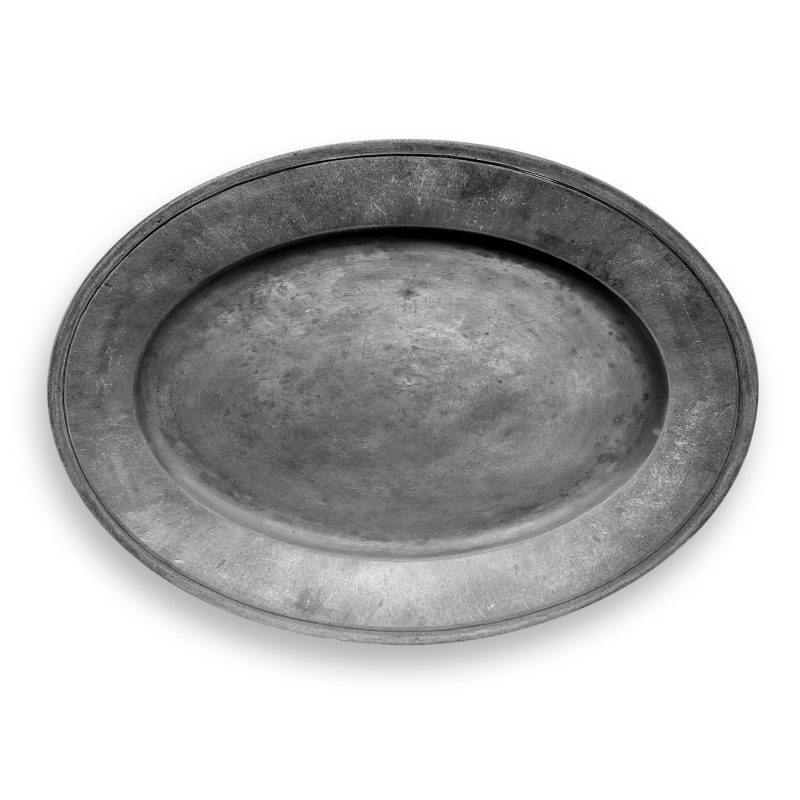
Their Pewter platters are substantial, but lightweight:
Carrara plates mimic marble, but won’t scratch your tabletops:

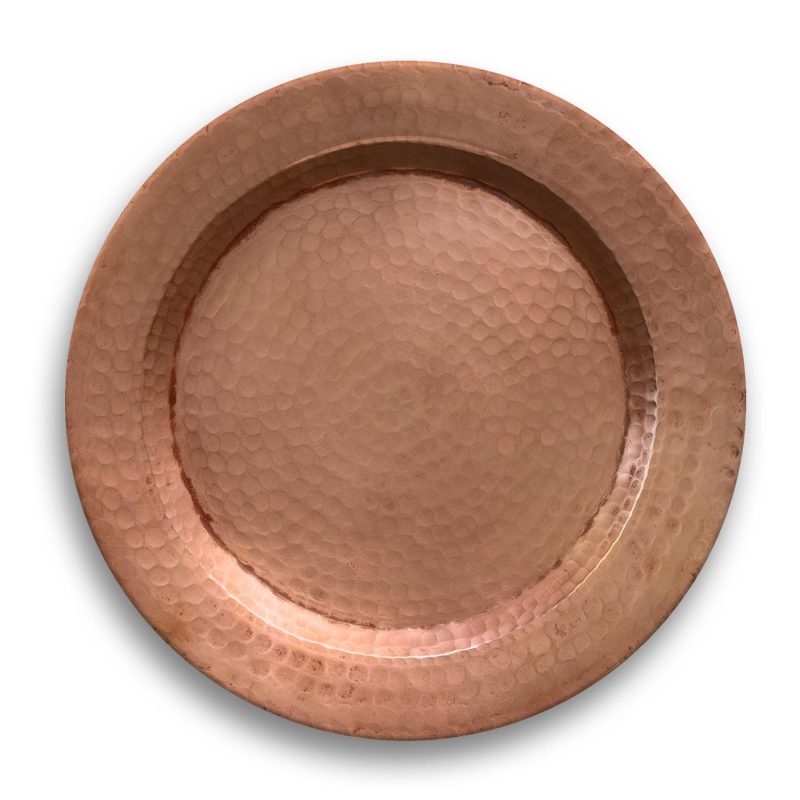
And copper chargers bring warmth, but will never need polishing.
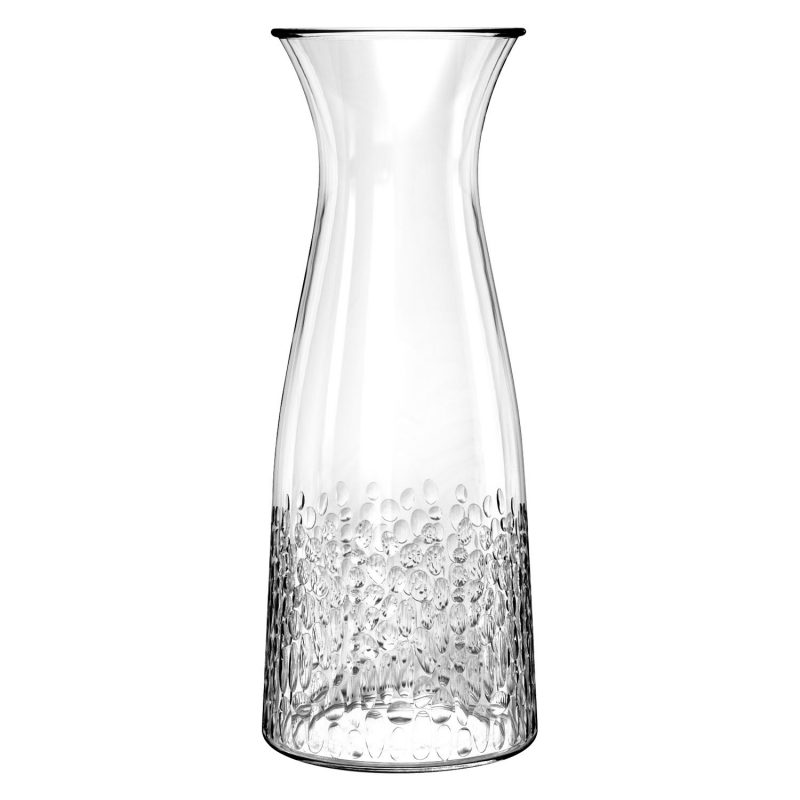
Drinks look their very best when served from the Cabo Acrylic carafe.
And for a bit of whimsy, bring in the colors of the sea with the Cube Double Old Fashioned.
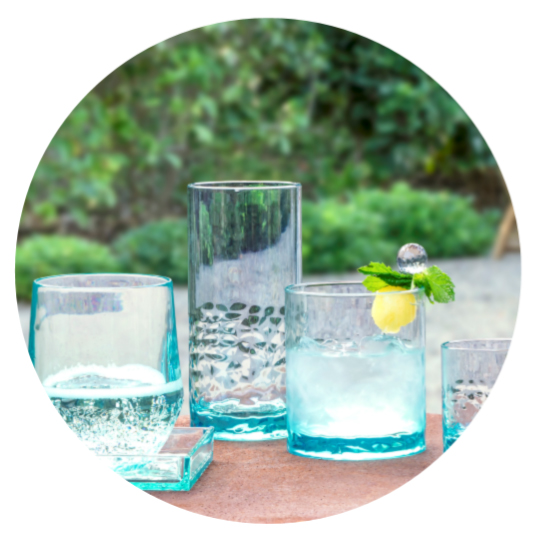
Like these? Explore the entire TarHong collection here.
Always On Vacation: Fine Art Photographer Gray Malin
Living in Los Angeles, we can’t help being drawn to anything that reminds us to spend more time outdoors. And whether it’s in Beverly Hills or Lake Como, images of folks on vacation always make us smile.
Gray Malin and his fine art photographs will do the same for you. The series which shot him to fame, Prada Marfa, is Marfa, Texas (known for its modern art installations) like you’ve never seen it:

Let’s dismount and go shopping:

Aerial photography is his strength.

Often starting work at 6 a.m. to shoot these, Gray stumbled upon his now-signature aerial pieces on a road trip to Las Vegas in 2011, where on a Saturday morning, he got up early to photograph the pool below his hotel room. The pictures went viral and the rest, as they say, is history.
Here’s what he saw flying above a beach in East Hampton … perfect in a pool house.

And here he is in Lake Como … #vacationgoals:

Closer to home, we love his series at the Parker in Palm Springs:

And here’s a retro look at the Beverly Hills Hotel:

And for all those days when you need to get away? Sometimes this is all it takes:

Hope we got you smiling! Here’s a selection of Gray Malin art that you could take home:
The Instant Decorator: Poolside Project
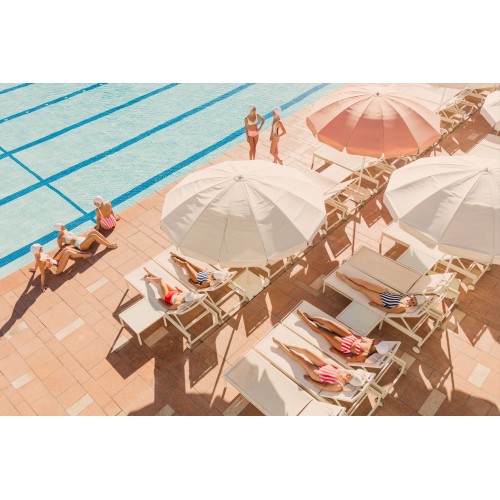
Inspired by Gray Malin’s photographs at the Coral Casino Beach and Cabana Club in Santa Barbara, we styled a collection to help you dress up your poolside in minutes.
Featured in Veranda: Capdeco Altea Flatware
It’s time to go bold! As the sun finally shines through, Veranda Magazine tells us to go bold with pattern and color for Spring and Summer:

And take a look this table settings, filled with lush greenery. It’ll definitely bring the garden indoors, if not the jungle in you:
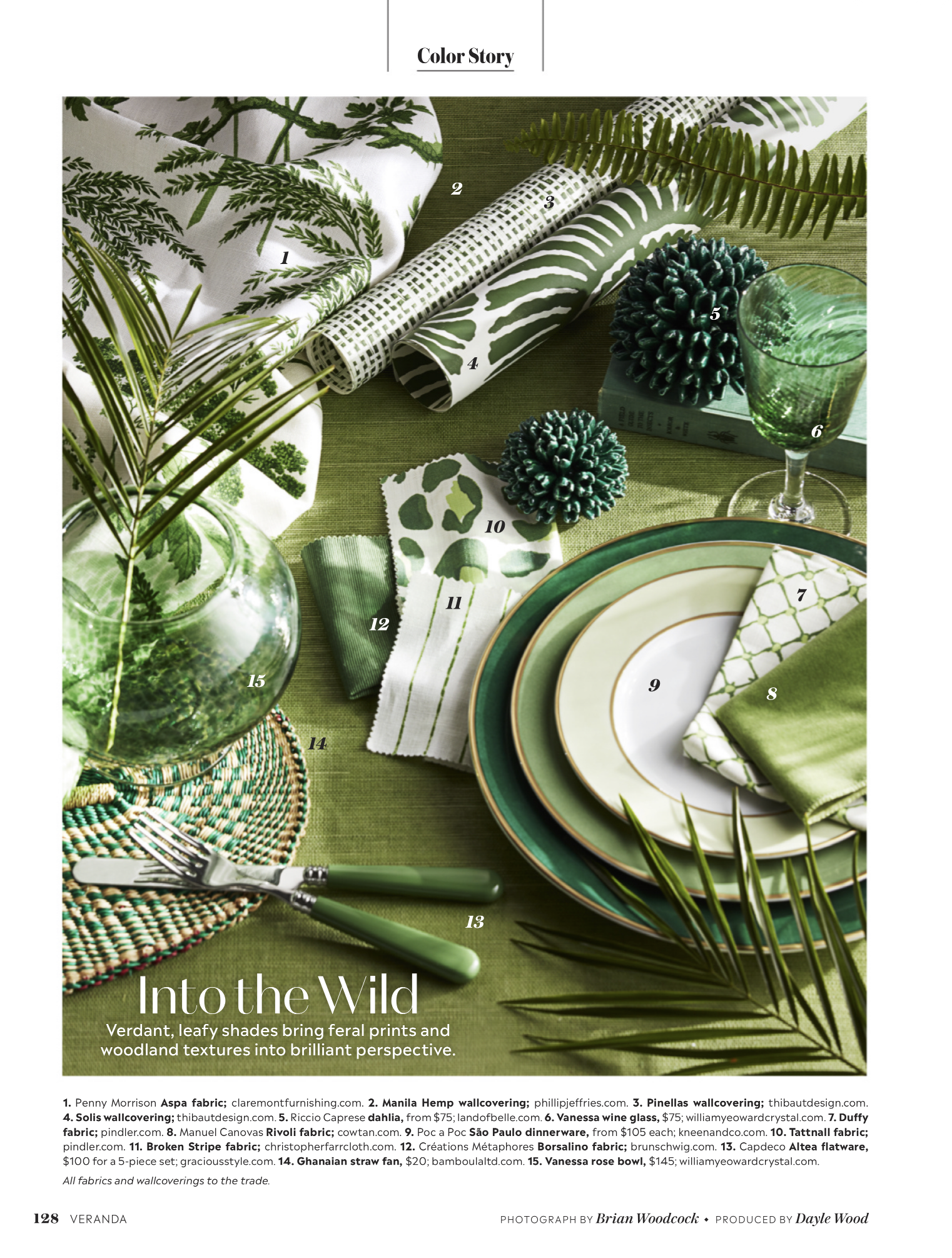
Featured here is the Altea Olive Green 5-Piece Place Setting:
and the Altea Lime Green 5-Piece Place Setting:
Here are some more ideas to get your green table setting going:
Happy Summer Entertaining!
Why Are You Seeing Enamelware Everywhere?
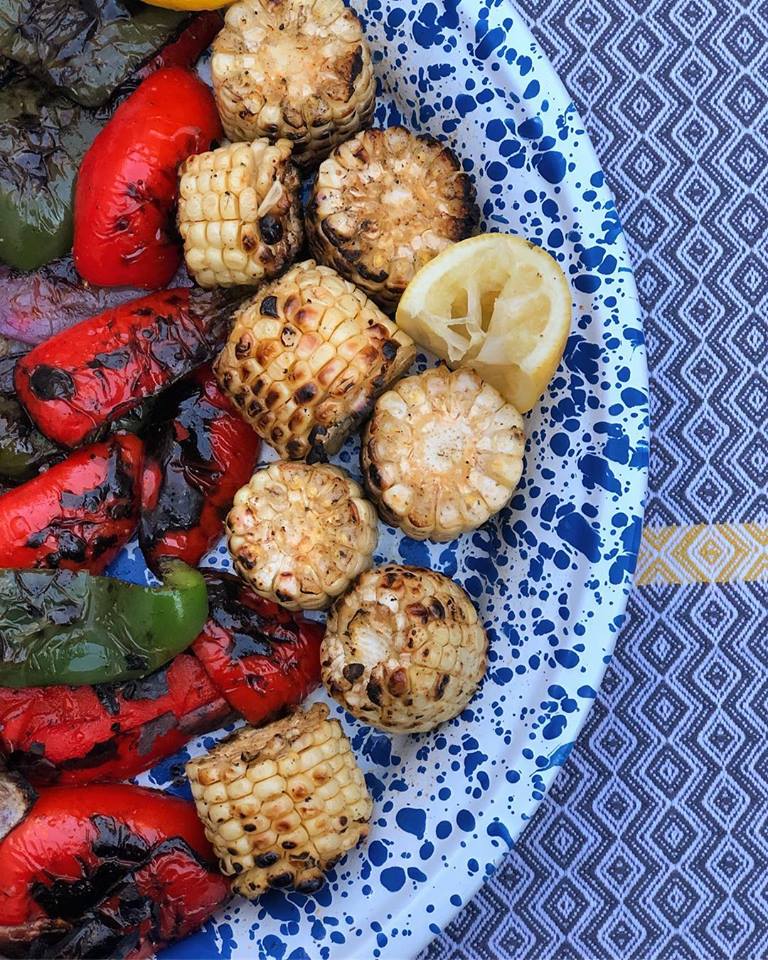
If you grew up in the 60’s and 70’s or went camping as a kid, chances are, you’re familiar with enamelware. And like so many things from that era (Gucci, anyone?), it’s hip again. It’s loved by the editors of food52, popping up all over Instagram, and being used in countless outdoor weddings.
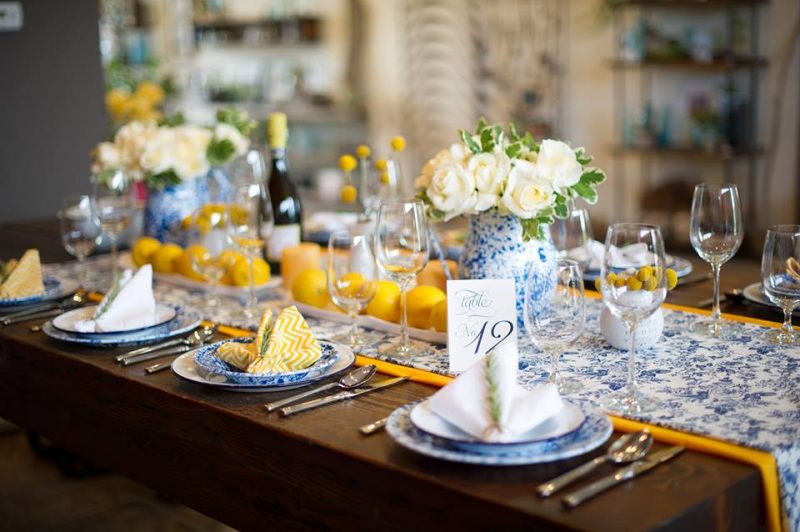
Today, enamelware feels as appropriate in the Adirondacks as it does in a condo in Brooklyn. Why? Because it’s functional. But it’s also urban and rural; universal in the best sense.
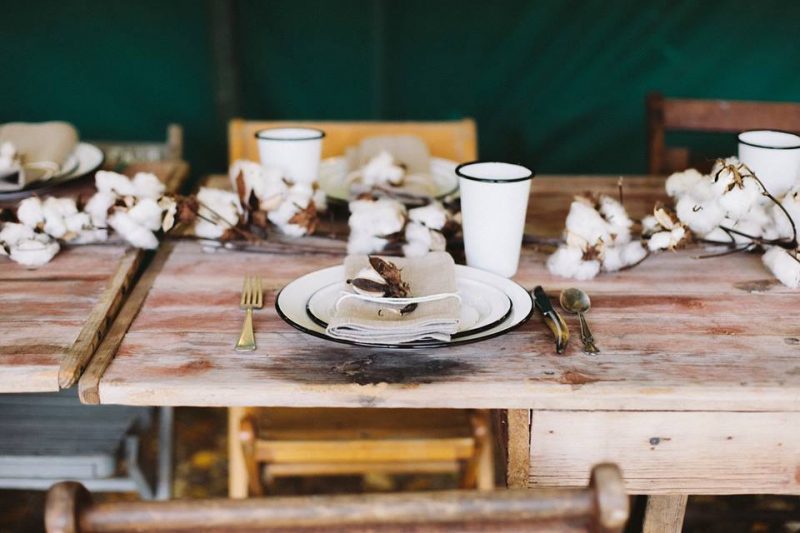
Plus, it’s a treat to reach for something that’s so lightweight, carefree, and fun for both kids and grandparents.

To channel a retro vibe, Crow Canyon Home makes pieces that are charming pieces of Americana, full of nostalgic, old-fashioned goodness. Used outdoors, they’re a great alternative to glass and disposable paper and plastic containers.
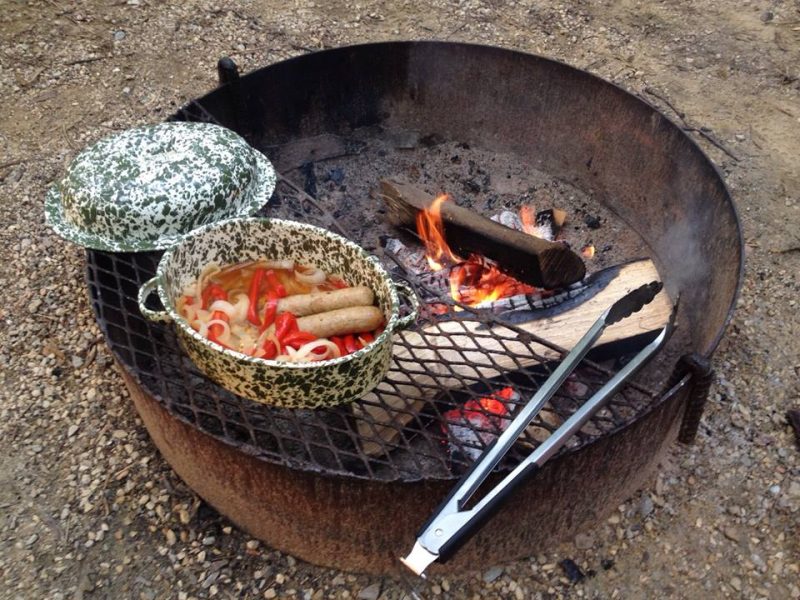
And if you’re going camping, enamelware is easy to carry and safe to use on the grill or the campfire.
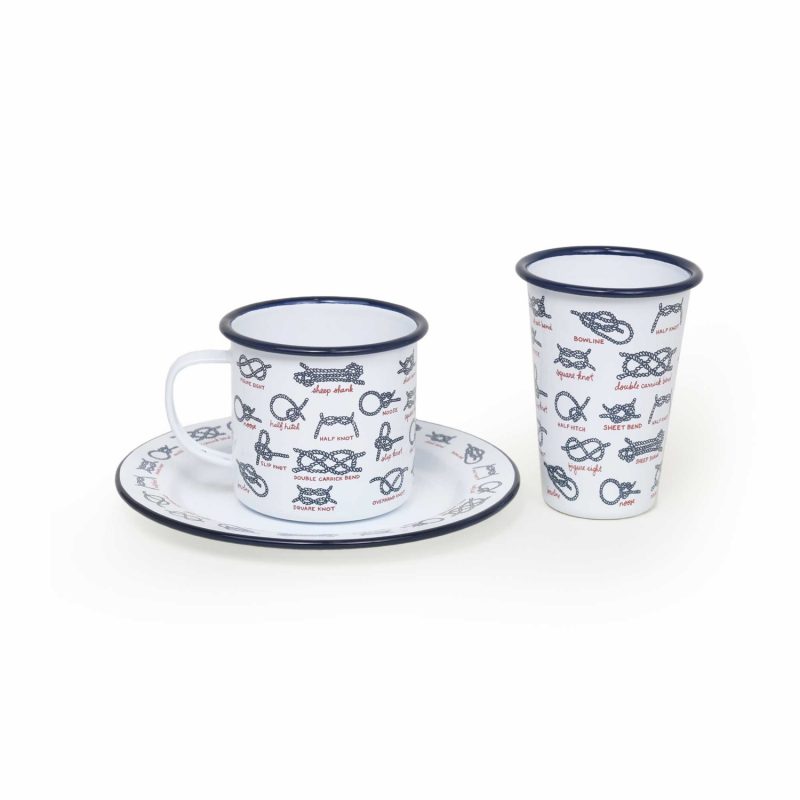
For sailors, Crow Canyon Home recently released a collaboration with Fishs Eddy, one of New York City’s most iconic shops. Here’s their Knots collection; it also comes in Sailboats and Buoys.
Farther afield, we recently found enamelware (in dinnerware, it’s actually porcelain fused onto heavy gauge steel) at Maison et Objet in Paris, where a duo of Turkish sisters were introducing Bornn, a new line of handcrafted enamelware. Their Marble Swirl pieces, each of which is hand made and colored, is stunning.
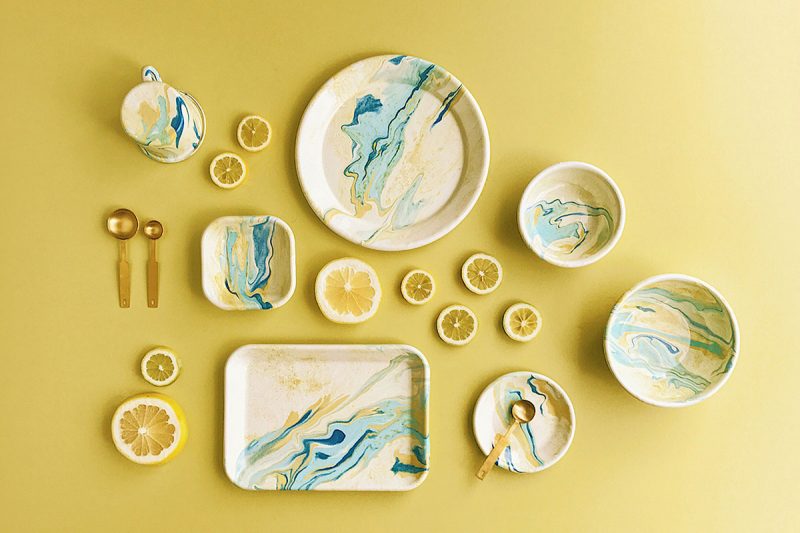
I mean, how is this even possible? Every piece is hand dipped and colored, so the pattern changes throughout.
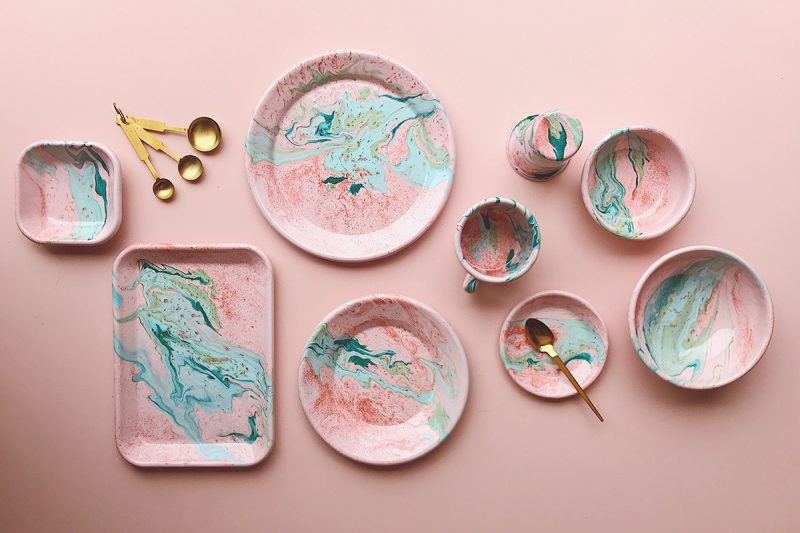
Or for something simpler, there’s the Bloom collection, available in seven colors:
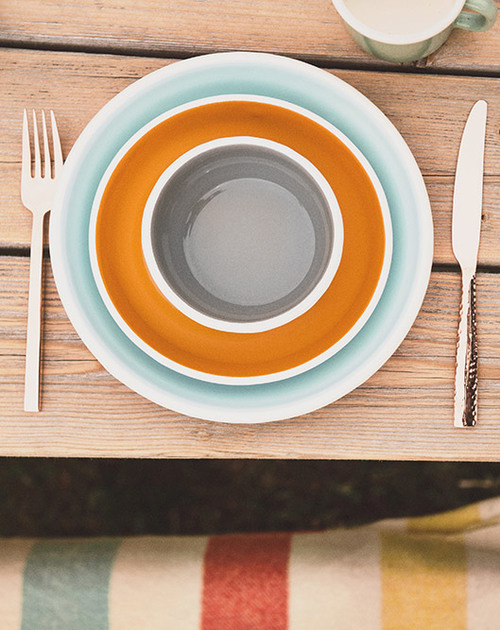
So what do you need to know? Enamelware dinnerware is made using a steel base, which is hand dipped in porcelain multiple times to build a base and topcoat to withstand heat. To create splatterware, a second color is flicked on using a special brush. Marble patterns are dipped and swirled multiple times until the colors are just right.
Enamelware is dishwasher, oven (up to 500F), grill, and stovetop safe. It’s also easy to clean and lightweight, so it’s great for kids. With heavy use, it might chip at the edges; don’t worry, that’s part of its appeal. And it’s completely food safe (even with chips). But don’t use it in the microwave, as the metal inside won’t do well.
Love it? Click here to see more enamelware pieces.
Just Dropped: The Haas Brothers + L’Objet Collaboration
In less than eight years, artists Simon and Nikolai Haas (collectively known as Haas Brothers) have taken the art world by storm. Known for their colorful, biomorphic, and imaginative furniture, ornaments, and objects, the Los Angeles-based twins started out by making furniture for Tobey Maguire when he was redoing his office at Sony Studios in 2010.

Following this, they landed a slew of high-profile jobs, including designing monster masks for Lady Gaga, outfitting Louis Vuitton Shanghai’s digs with Peter Marino, producing furniture for Donatella Versace, and working on the lobby of the Ace Hotel in Los Angeles. As if that’s not enough, they’ve also shown their work at Art Basel Miami.
Now, they’ve collaborated with Elad Yifrach from L’Objet to create a family of unforgettable, whimsical creatures:

Inspired by the otherwordly landscape of Joshua Tree, they have brought to life a gathering of creatures that will be sure to delight.
Here are some of our favorite monsters:
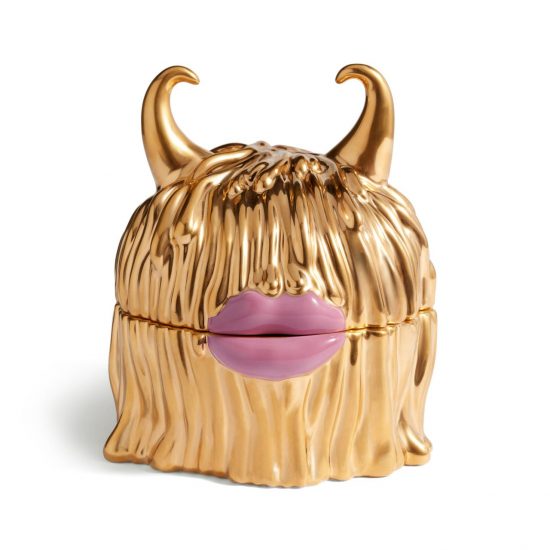
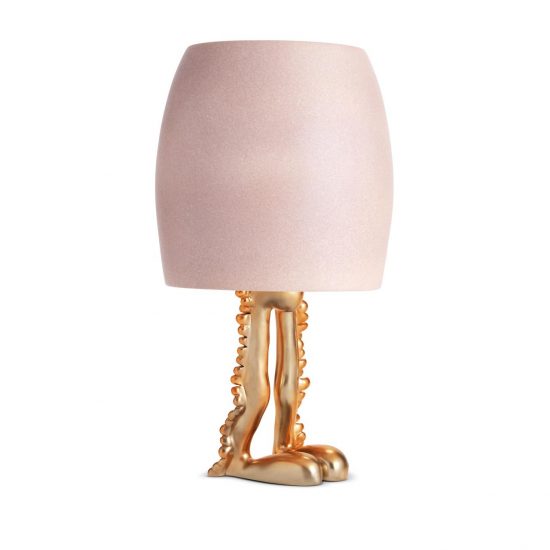
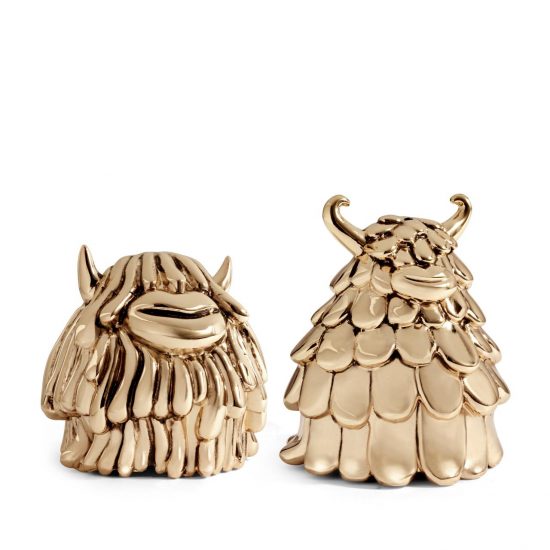
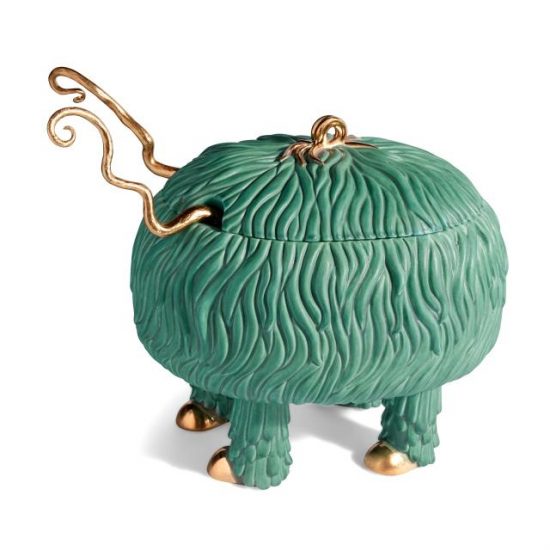
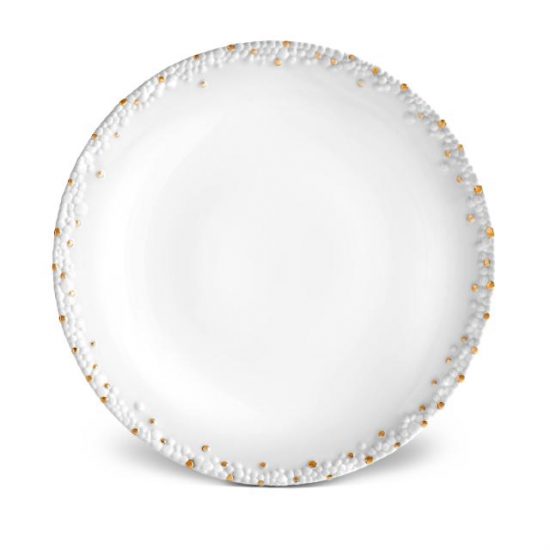
Love the Haas Brothers? Click here to see the entire Haas Brothers + L’Objet collaboration. Quantities on these pieces are limited, but all are available for pre-order and worth the wait.
Setting the Table: Celebrating Lunar New Year in Style
If you’re like us, you’ve probably moved way past the heavily sauced Chinese dishes from your younger days and sampled your share of truly spectacular Chinese food.
Today, Hong Kong and Macau have 82 Michelin starred recommendations. And on our last trip to Singapore, the dim sum at Jiang-Nan Chun (at the Four Seasons Singapore) was out of this world. Closer to home in L.A., Chang’an in the San Gabriel Valley shows us how a new generation of Asians likes to eat: in restaurants that are well-designed, specialize in serving premium food, and can just easily welcome the local family of ten as well as the Gucci/Prada/Lamborghini students at the local college.
So if you’re a fan of this next-caliber Asian food, how do you do it justice at home? We’ll show you show. And once you’ve got the hang of it, a Lunar New Year’s celebration, which falls on February 5th this year, is the perfect time to try it out.
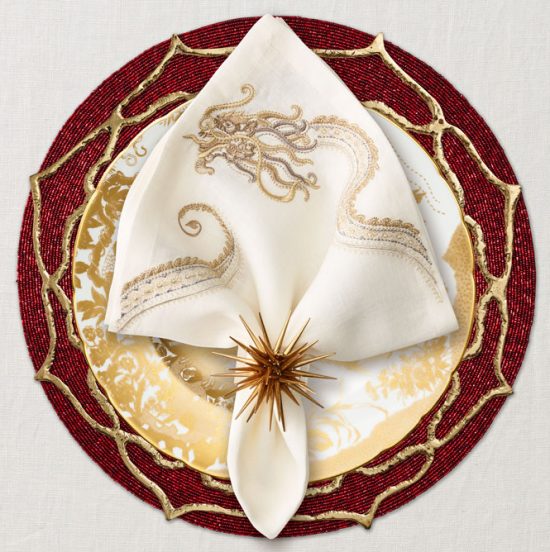
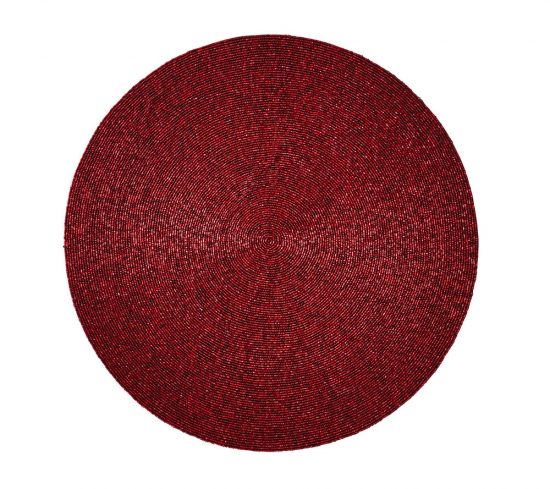
1. Start by incorporating red (luck, joy, and happiness) into your table setting.
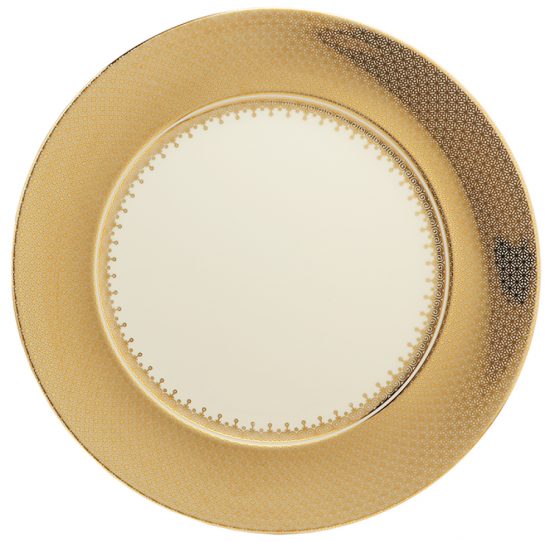
2. Layer it with gold, which symbolizes prosperity.
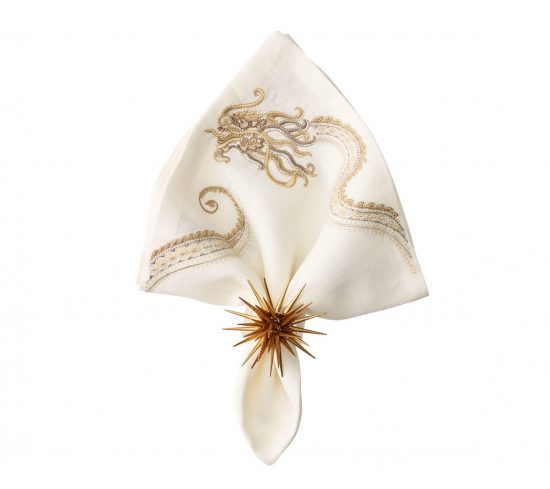
3. Top your plate with an exquisitely detailed napkin … like this one with a dragon motif, a classic in Chinese mythology.
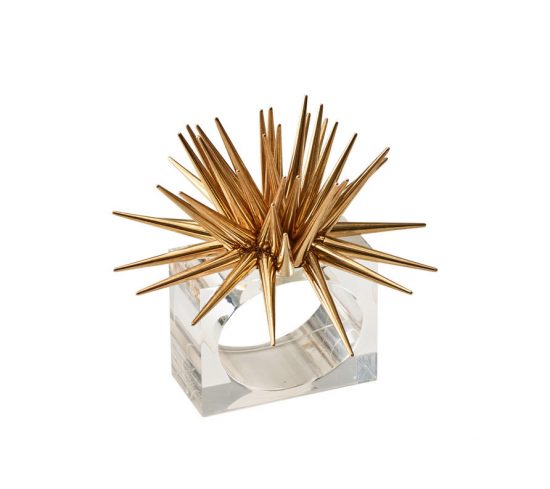
4. Accessorize with a smashing napkin ring; this one reminds us of a spectacular fireworks display.
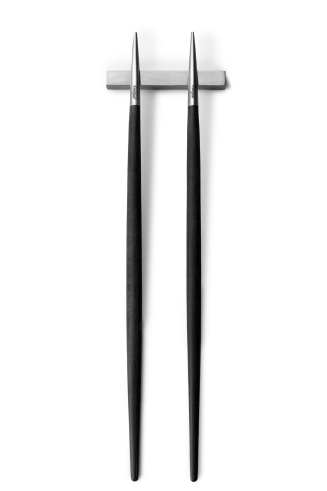
5. To the right of each setting, add a sleek pair of chopsticks.
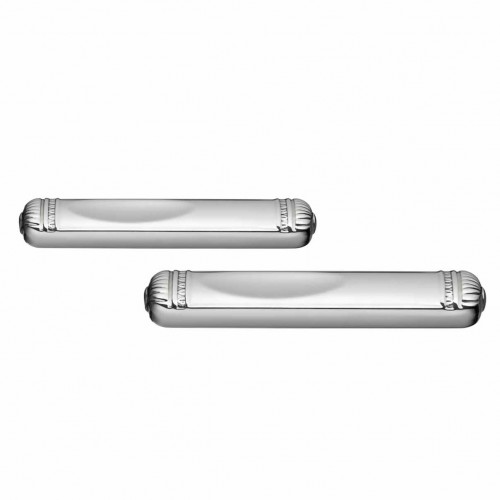
6. Don’t forget nice chopstick rests.
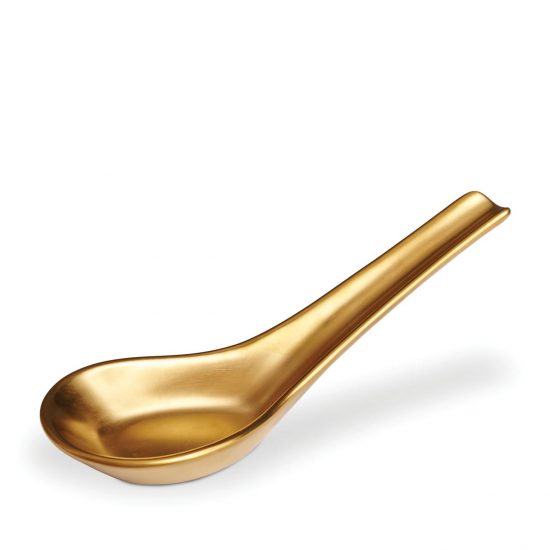
7. If you’re serving soup, add a Chinese soup spoon.
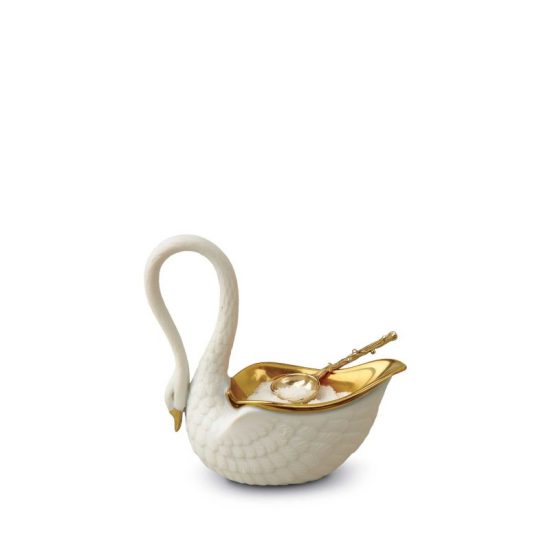
8. Around the table, add containers for condiments.
9. Asians take their tea seriously; make sure yours is served hot.
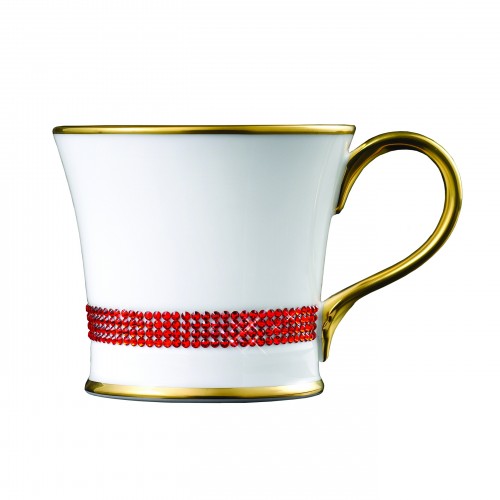
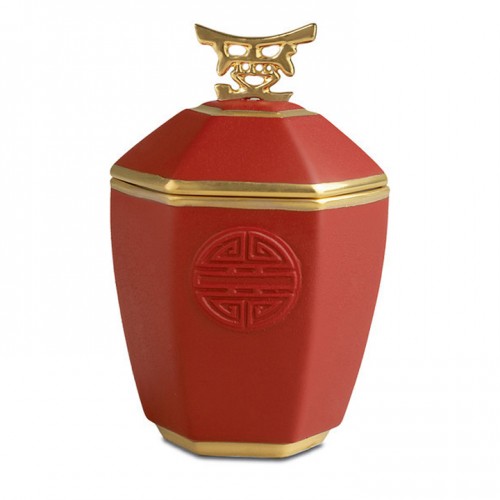
10. And as parting gifts, a beautiful candle to keep your loved ones warm all year round.
Vintage Pewter Candleholder Featured in French Style Magazine
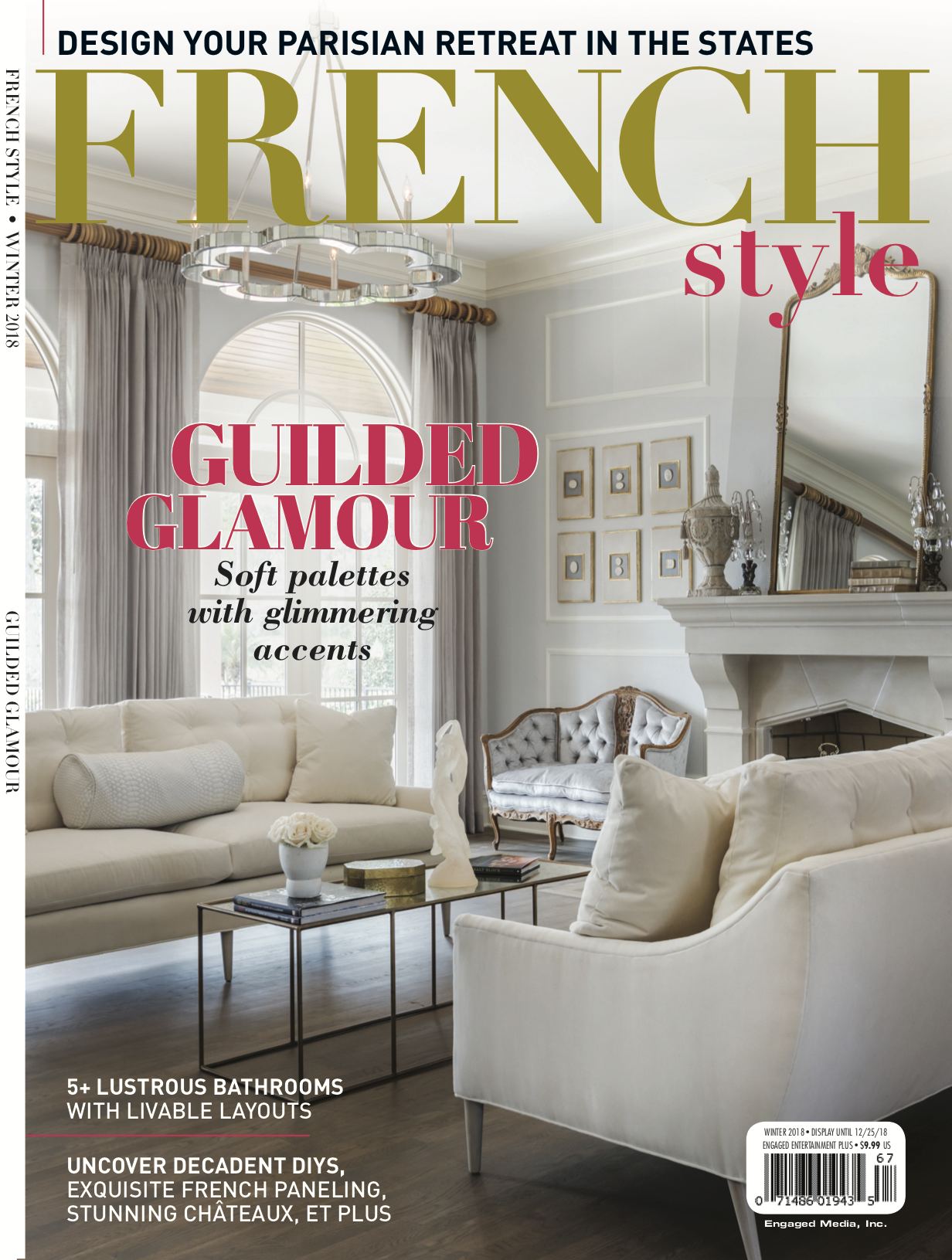
Who could resist a cover that helps you “Design Your Parisian Retreat”?
Part of their “Silver and Gold” feature is our Arte Italica Vintage Pewter 2-Arm Candleholder:
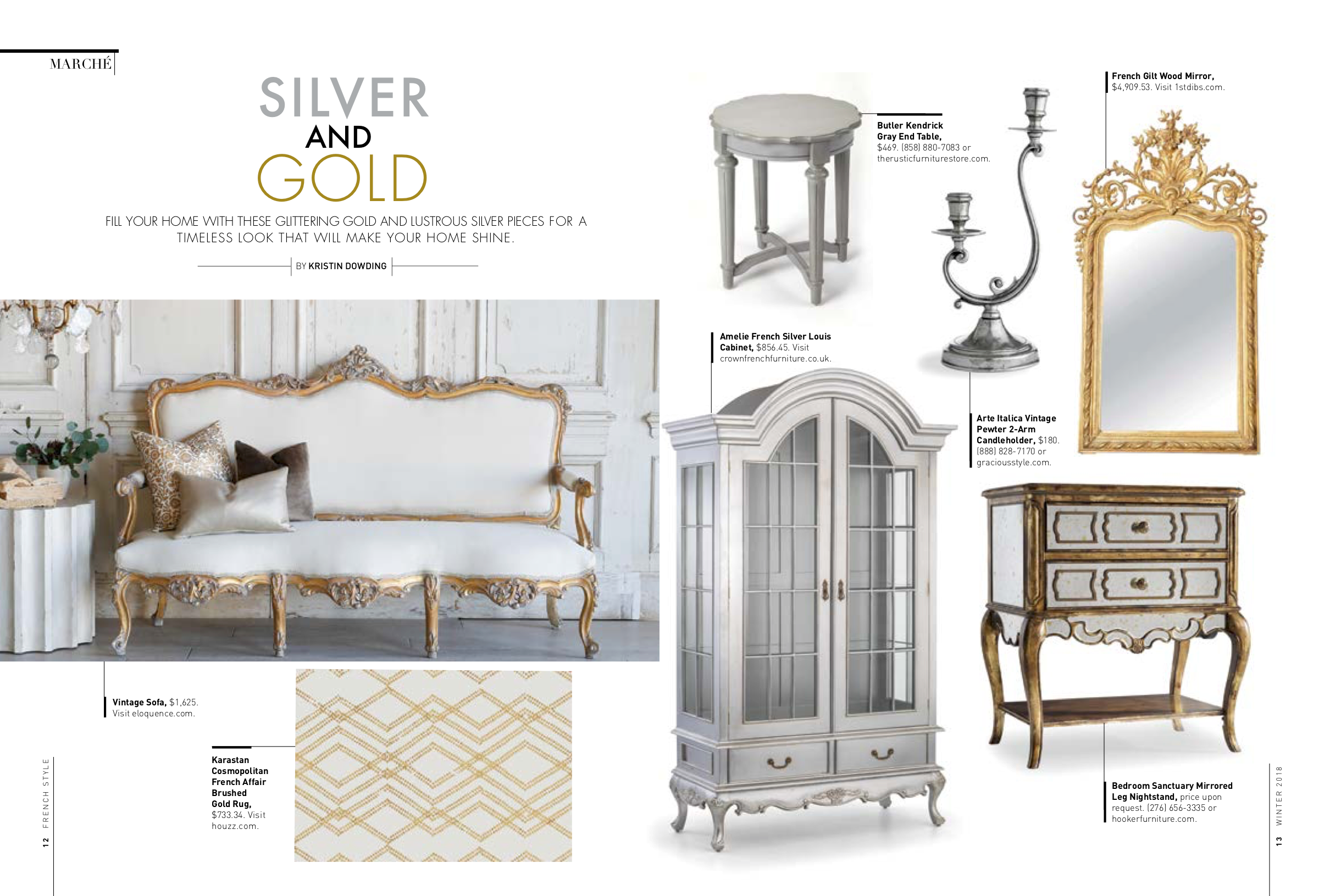
This classic pewter candleholder, handmade in Italy, brings the traditional style of the Renaissance to your home:
Game Night: Molly’s Game with Jessica Chastain and Idris Elba
If you haven’t caught it yet, you need to watch Molly’s Game: it had us watching nonstop at the edge of our seats!

The story – Aaron Sorkin’s (The West Wing, The Social Network) directorial debut – unfolds nicely, with Molly Bloom (Jessica Chastain) training to become an Olympic skier, glimpses into her brilliant mind, and then it takes us front seat into her career-ending injury. After that it gets really interesting.
To deal with her cracked nerves, she decides to temporarily put off law school and flies to Los Angeles to sort things out. Once there, she becomes a cocktail waitress. A patron at the bar ends up hiring her to become his office manager, and not long after that she’s running his underground poker games.
Little by little, she learns about card games … the terms, the odds, the styles, the players … until she ended up running the world’s most exclusive high-stakes poker game, hosting players like Tobey Maguire, Ben Affleck, and Leo DiCaprio.
An intelligently written and superbly acted (Kevin Costner plays her dad, while Idris Elba is her high-powered attorney) tale that will have you gasping at how quickly our lives can turn.
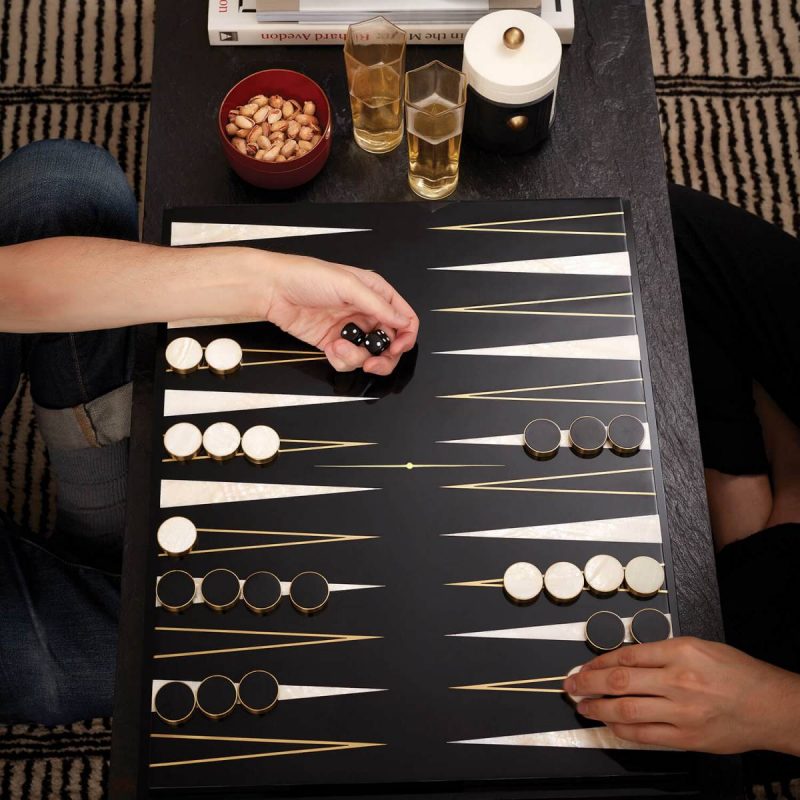
And if you’re feeling like sharing in the fun, get a few buddies together for game night. Of course, be sure to rub the rabbit’s foot for good luck:
Yves Saint Laurent’s Marrakesh Home: The Essentials
When Yves Saint Laurent visited Marrakesh for the first time in 1966, it transformed him forever. The strong sun, lush colors, and intricate patterns you see everywhere left an indelible mark in his mind. “Marrakech taught me color,” he said. “Before Marrakech, everything was black.”
Indeed, one of the most important parts of Saint Laurent’s legacy has been the Jardin Majorelle, the garden he restored with Pierre Berge and a must-see on any trip to Marrakesh. (Tip for visitors: they don’t take credit cards, so bring plenty of dirhams to cover your entry fees.) The original garden has been joined by the Musee Yves Saint Laurent Marrakech, and plans are now being made to open up Saint Laurent and Berge’s private home (Villa Oasis) to the public.
When it opens, you should think about going to Marrakesh just to see this. Not only is the house itself spectacular, it captures all the iconic elements of Moorish and Arabesque design, which then fed our favorite Mediterranean, Tuscan, Spanish Revival, and Southwestern styles of architecture and design. Indeed, there’s literally so much to see at Villa Oasis, it could be hard to absorb in one visit.
Starting from the outdoors, this space is surrounded by a riot of warm weather plants. Here, fuchsia bougainvillea creates a vibrant canopy in the outdoor patio:
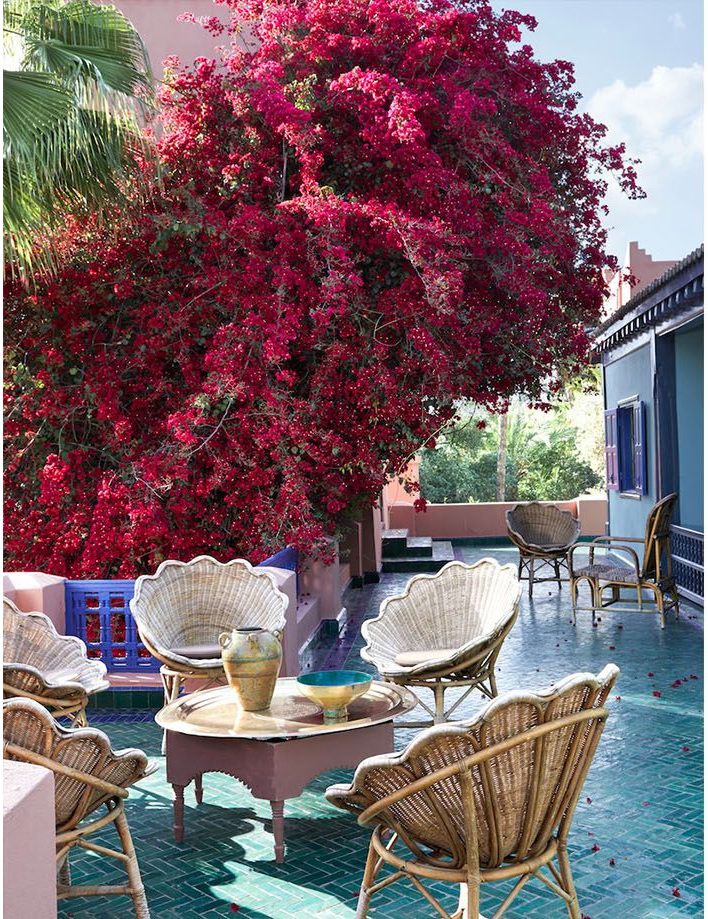
Pink against cool turquoise. Maybe not a combination you’d naturally pick out in the morning, but it works so well here.
A hand-carved and hand-painted cedar door, framed with intricately carved molding.
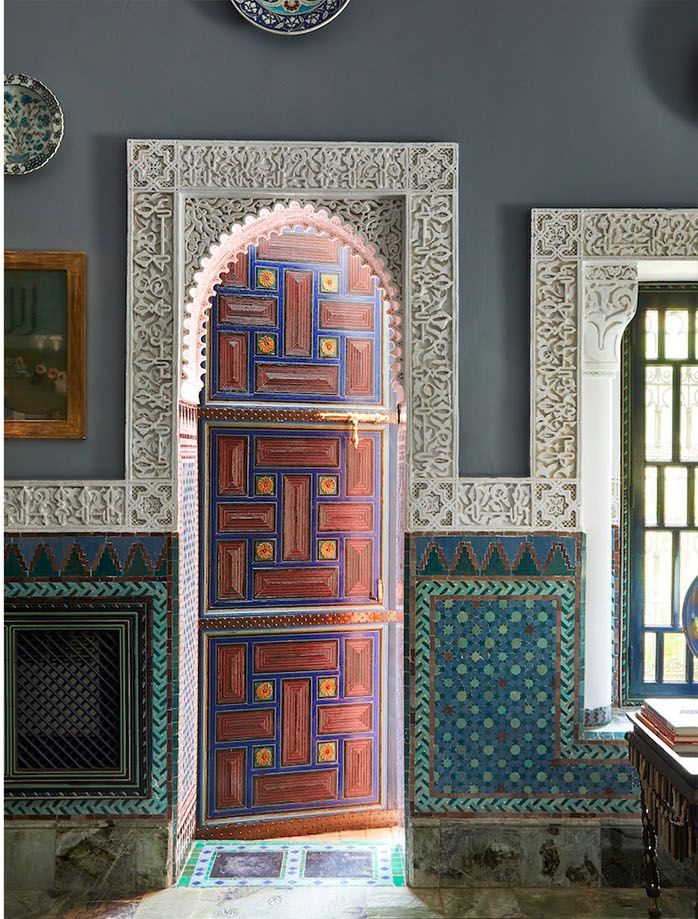
The darker and cooler colors of the interior walls contrast with the bright door that still hints at the light outside. Here are some ideas inspired by this scene:
Decorated by Jacques Grange, the blue and green furnishings echo the palette of the tiled fireplace.
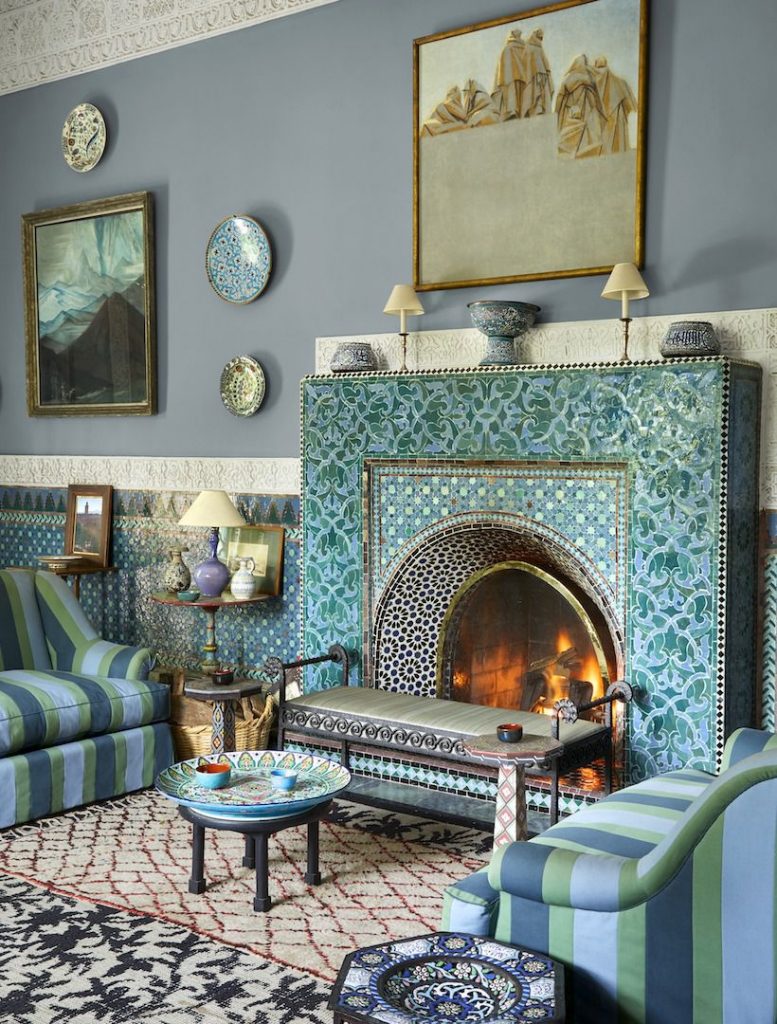
The cooler colors and lavish yet elegant patterns could work in many interiors:
Designed for musicians to entertain visitors, this nook in the entrance hall was frequented by Marella Agnelli, Betty and Francois Catroux, and Loulou de la Falaise.
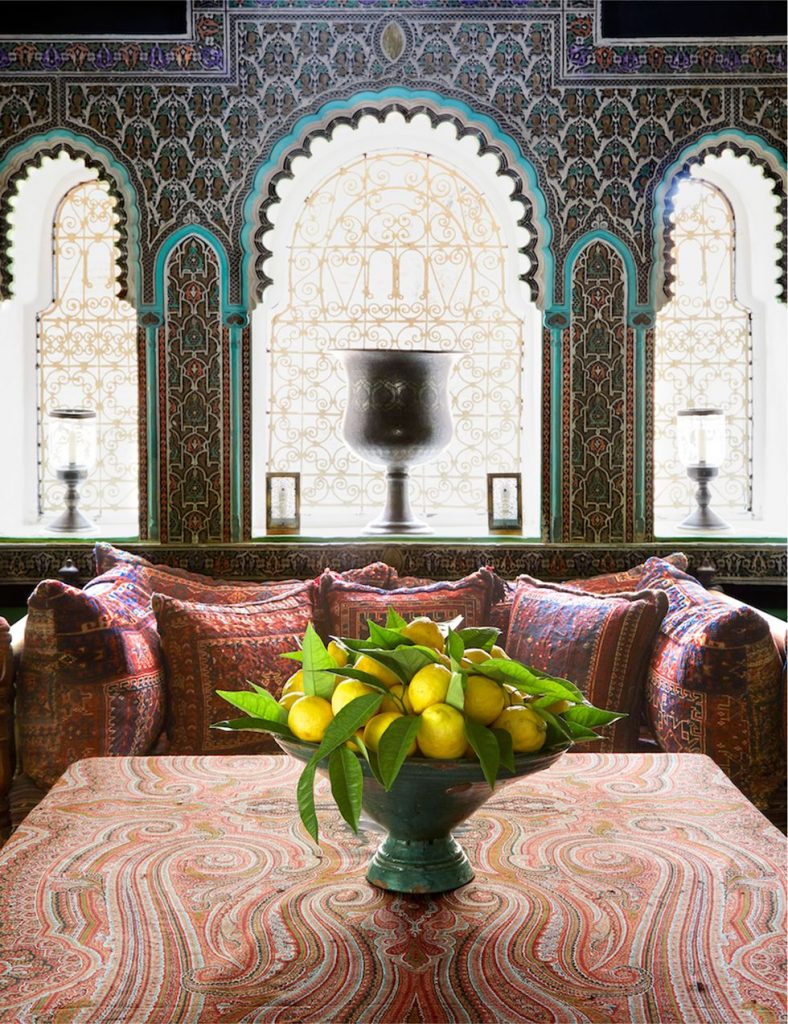
Party time! The hot colors suggest fun, and using them consistently inside and outside create one space for indoor-outdoor entertaining:
The intricately detailed Moorish library is too gorgeous for words:
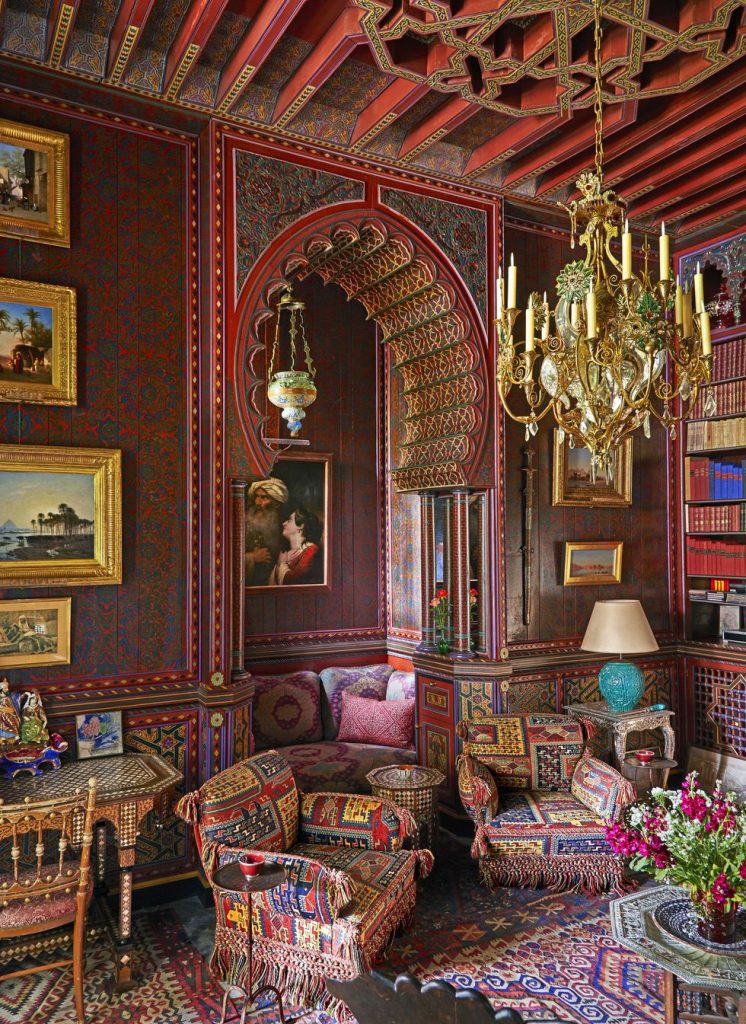
There’s simply so much color, pattern, and rich decoration. It’s as if not just books but the whole world of design is being collected in this one space.
Yves Saint Laurent and Pierre Berge’s master bedroom; the hand-carved headboard was painted to match the space:
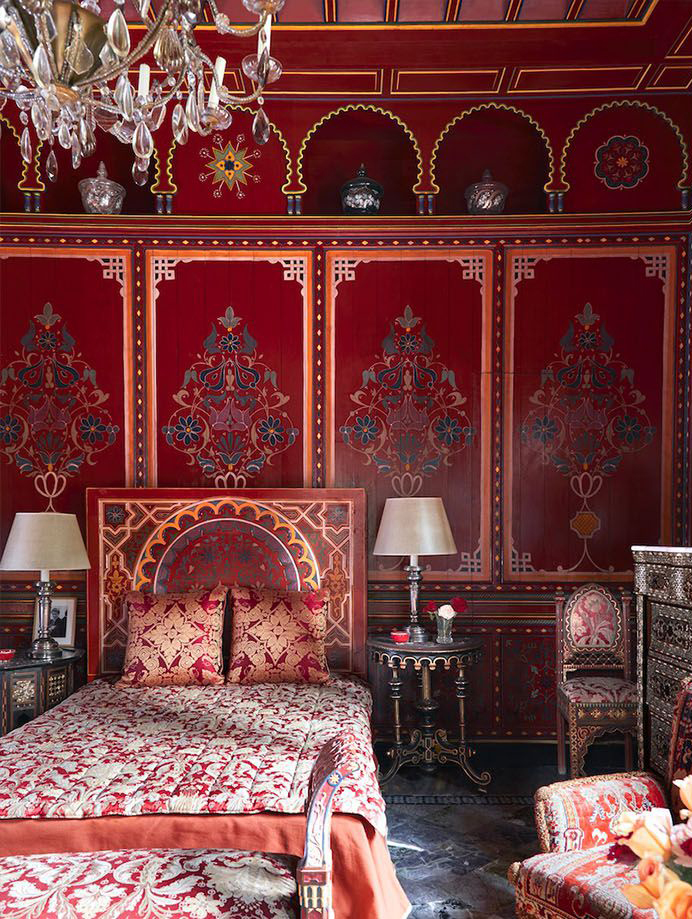
Isn’t this space a pure work of fantasy?
The villa’s top floor, called the Minzah, was designed and painted by Saint Laurent.
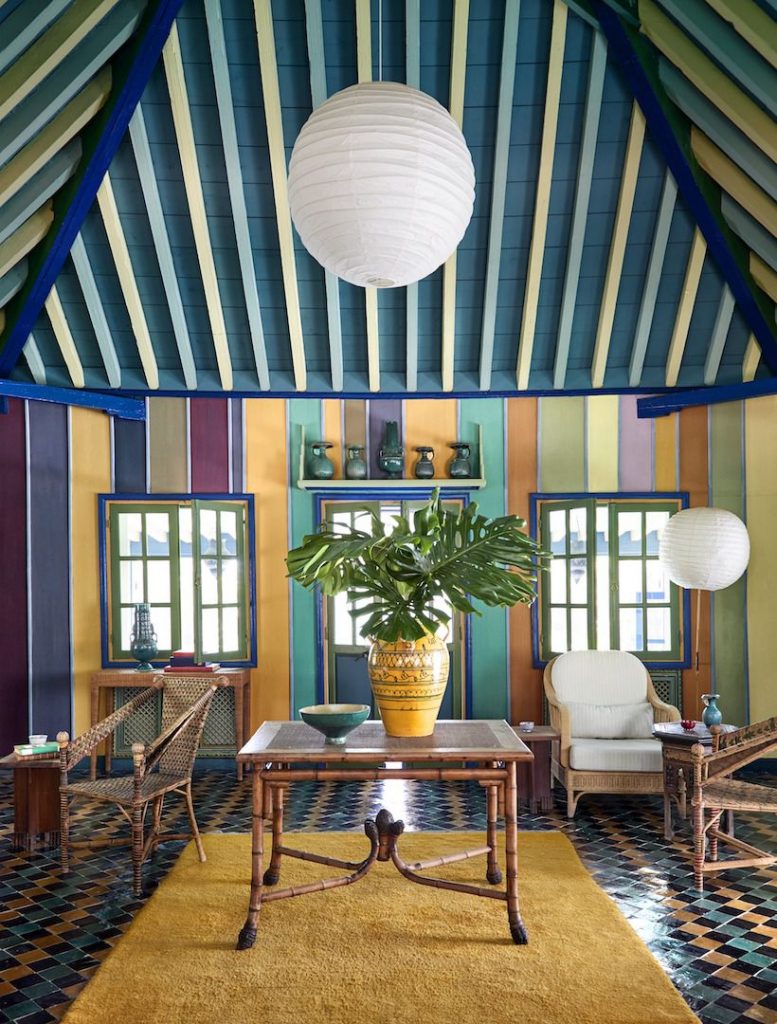
This space is at once pure Marrakesh and at the same time gives us ideas that could bring a little fun anywhere:
And finally, more shots of Jacques Grange’s custom upholstery:
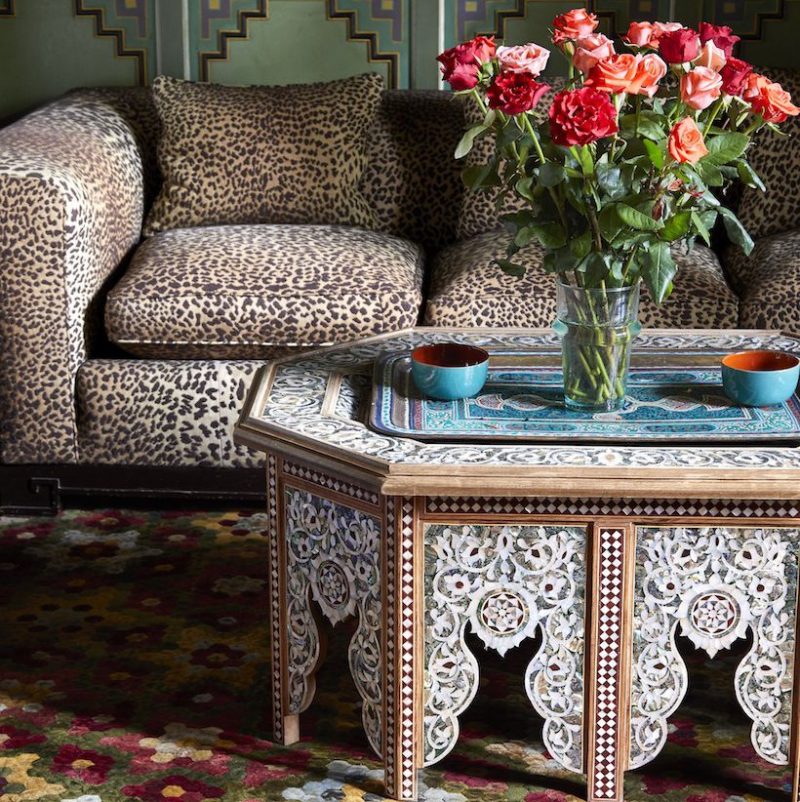
Did this transport you to Marrakesh? If so, click here or see below for more Marrakesh picks:
L’Objet Aegean Gold Dinnerware featured in Flea Market Decor
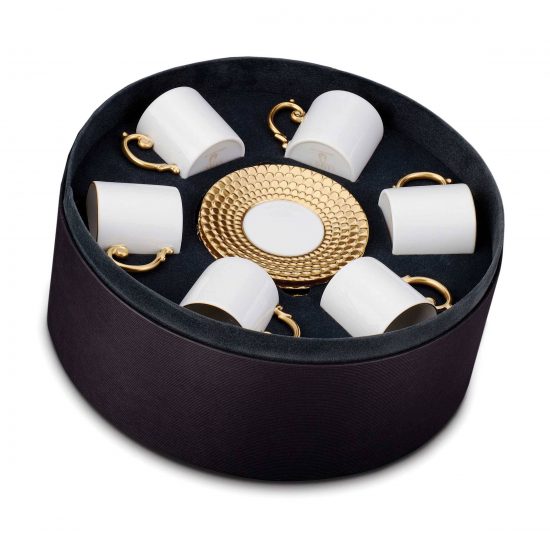
We loved how L’Objet’s Aegean gold espresso cup and saucer brightened up the “Great Finds” section of the Flea Market Decor March/April 2018 issue:
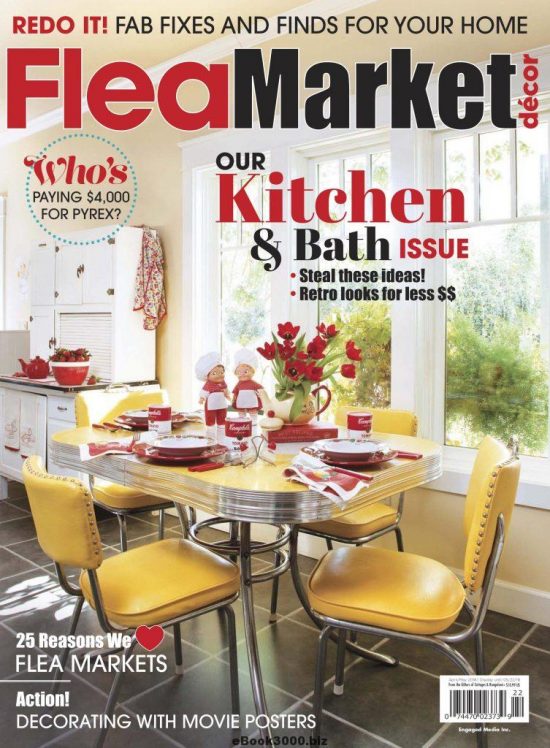
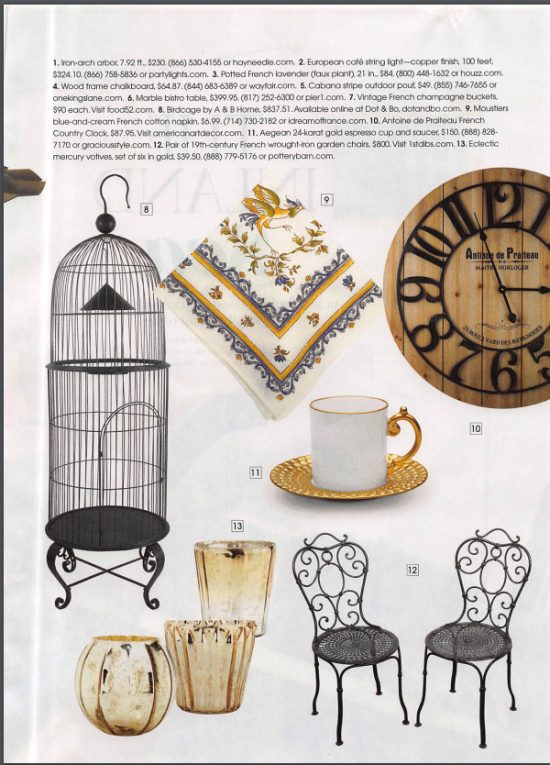
Reminiscent of the Greek islands, these espresso cup and saucer sets are available individually …
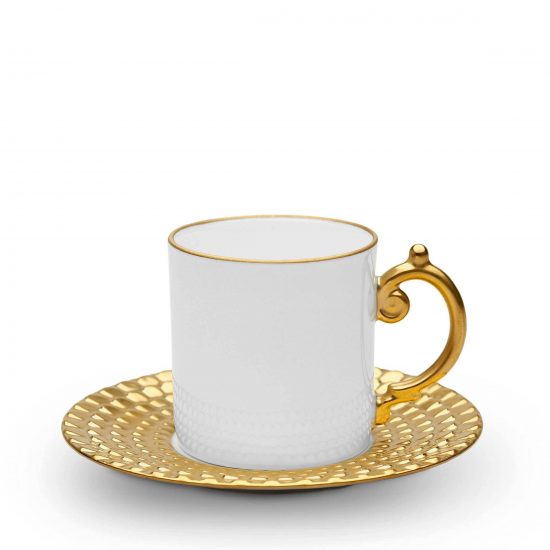
… or in a set of six – perfect for gift giving!
Herend Handpainted Porcelain: Perfect for Every Celebration
Although it’s best known for having been both Queen Victoria’s and Princess Diana’s favorites, Herend is prized for the playfulness of its designs. Today, this hand-painted porcelain continues to delight adult and children around the world.
Here are a few ways to use it in your own celebrations. Which one’s your favorite?
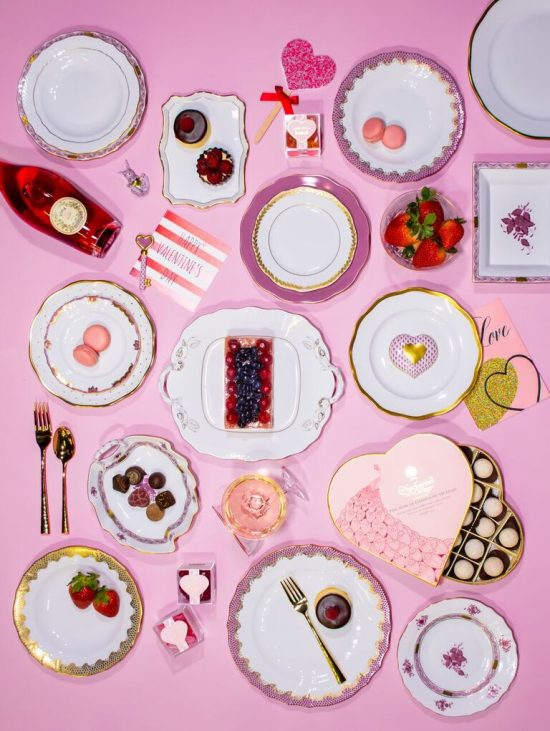
Shown above: Chinese Bouquet Garland Raspberry Dinnerware, Golden Edge Dinnerware, Key to My Heart Raspberry Figurine, Fish Scale Pink Dinnerware, Silk Ribbon Raspberry Dinnerware, Golden Laurel Dinnerware, Gwendolyn Dinnerware, Connect the Dots Dinnerware, Heart of Gold Raspberry Figurine, Princess Victoria Pink Dinnerware, Fish Scale Gold Dinnerware, Chinese Bouquet Raspberry Dinnerware.
MARDI GRAS
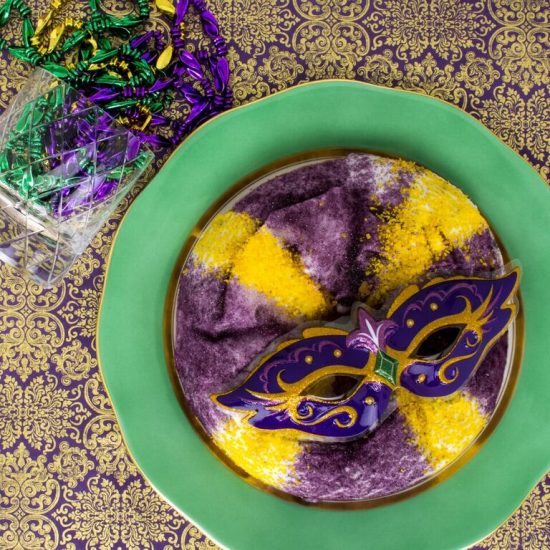
Shown above: Silk Ribbon Mint Dinnerware, Bonbon Barware.
BABY’S BIRTHDAY
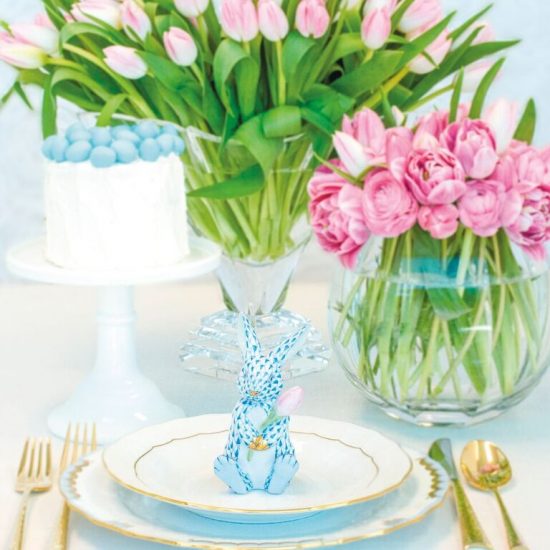
Shown above: Golden Edge Dinnerware, Princess Victoria Light Blue Dinnerware, Blossom Bunny Blue Figurine.
SAINT PATRICK’S DAY (Luck o’ the Irish)
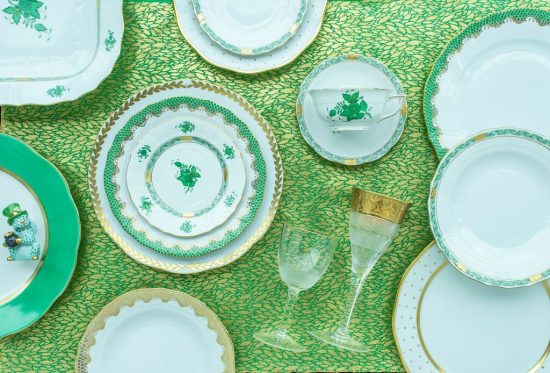
Shown above: Chinese Bouquet Green Dinnerware, Connect the Dots Dinnerware, Chinese Bouquet Garland Green Dinnerware, Golden Laurel Dinnerware, Fish Scale Jade Dinnerware, Leprechaun Bunny Figurine, Splendid Gilded Stemware, Royal Stemware.
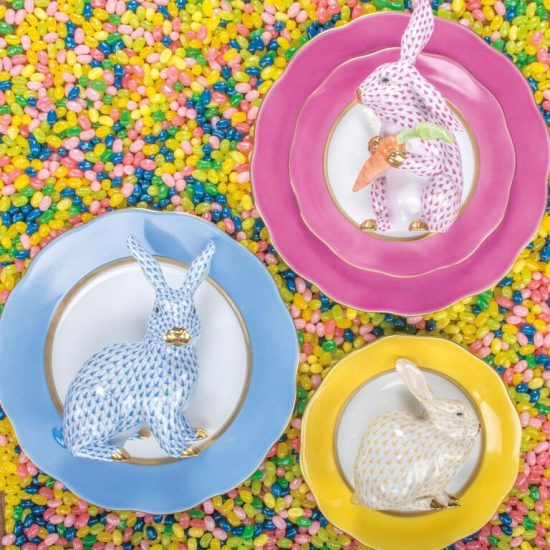
Shown above: Silk Ribbon Cornflower Dinnerware, Large Sitting Bunny Figurine, Silk Ribbon Lemon Dinnerware, Bunny Sitting Figurine, Silk Ribbon Raspberry Dinnerware, Large Bunny with Carrot Figurine.
MOTHER’S DAY
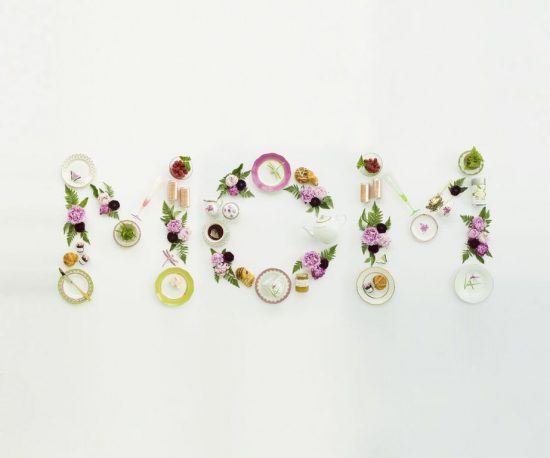
Shown above: Babos Gold Dinnerware, Fish Scale Evergreen Dinnerware, Silk Ribbon Olive Dinnerware, Silk Ribbon Raspberry Dinnerware, Fish Scale Pink Dinnerware, Connect the Dots Dinnerware, Chinese Bouquet Garland Raspberry Dinnerware, Dragonfly Dinnerware.
WEDDING ANNIVERSARY
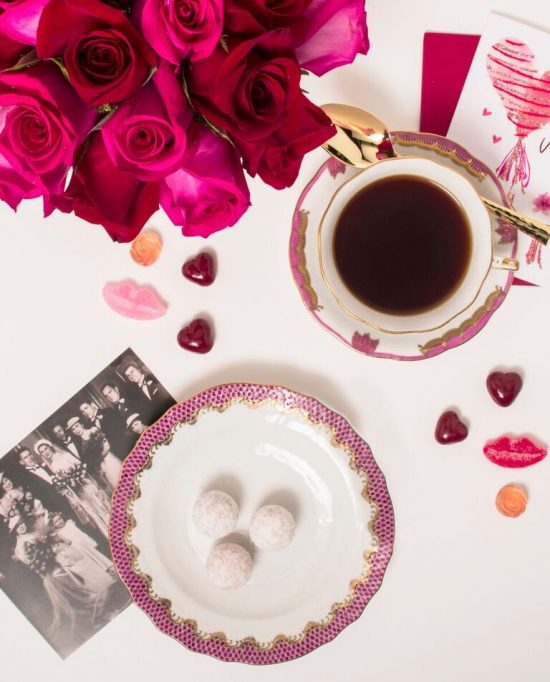
Shown above: Fish Scale Pink Dinnerware, Chinese Bouquet Garland Raspberry Dinnerware.
YOUR BEST FRIEND’S BIRTHDAY
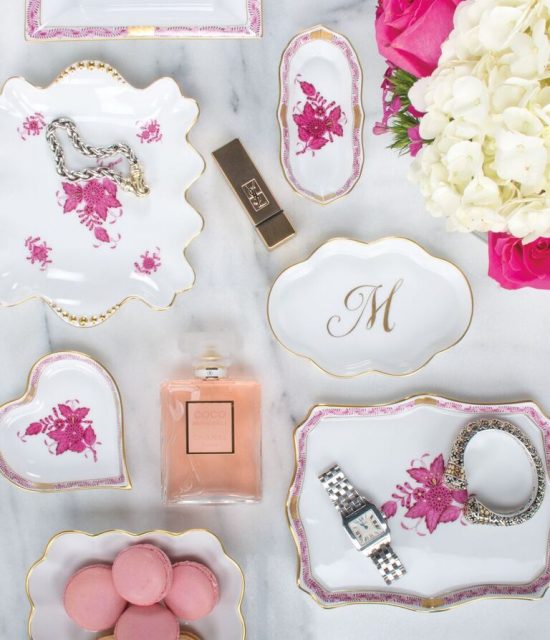
Shown above: Chinese Bouquet Raspberry Dinnerware, Chinese Bouquet Garland Raspberry Dinnerware, Golden Edge Dinnerware.
DONUT DAY (D’oh!)
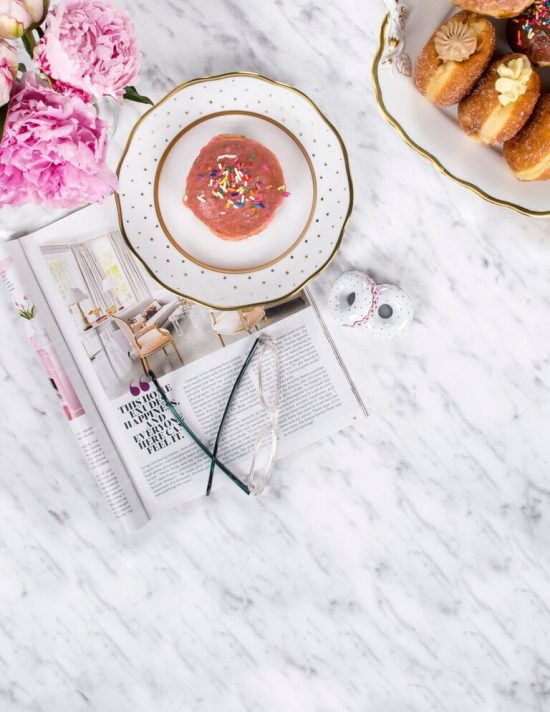
Shown above: Connect the Dots Dinnerware, Donut Figurine, Gwendolyn Dinnerware.
WE ALL SCREAM FOR ICE CREAM DAY
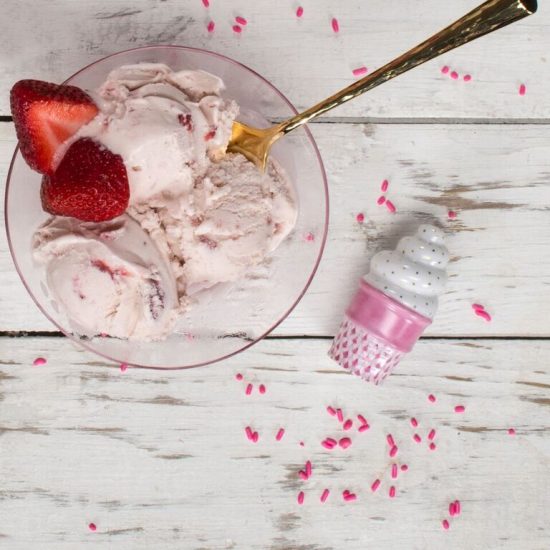
Shown above: Ice Cream Cone Figurine.
4th OF JULY
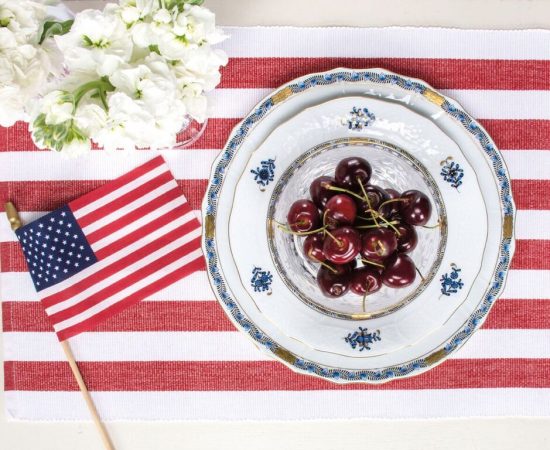
Shown above: Chinese Bouquet Black Sapphire Dinnerware, Chinese Bouquet Garland Black Sapphire Dinnerware.
RISKY BUSINESS DAY

Shown above: Sunglasses Figurines.
WE’RE OFF TO THE BEACH DAY
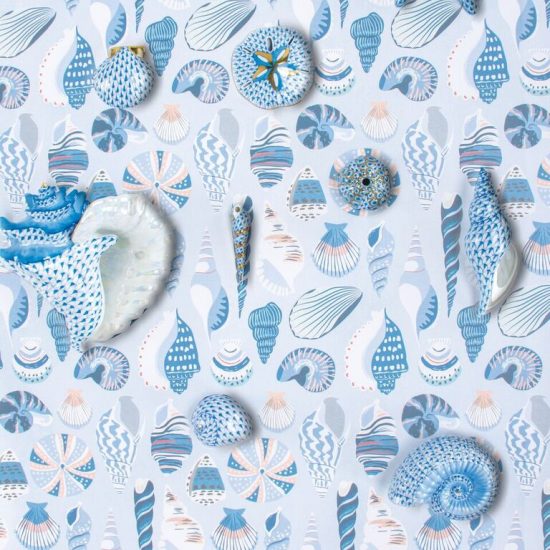
Shown above: Miniature Scallop Figurine, Sand Dollar Figurine, Turritella Shell Figurine, Sea Urchin Figurine, Tulip Shell Figurine, Shark Eye Shell Figurine, Ammonite Figurine.
TOOTH FAIRY DAY
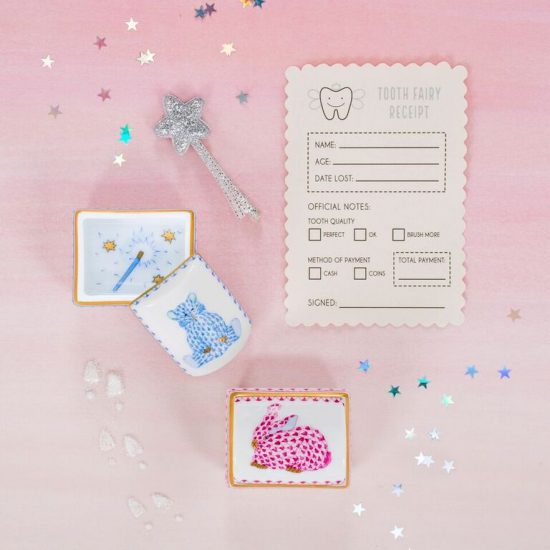
Shown above: Raspberry Tooth Fairy Box, Blue Tooth Fairy Box.
AN INDIAN SUMMER
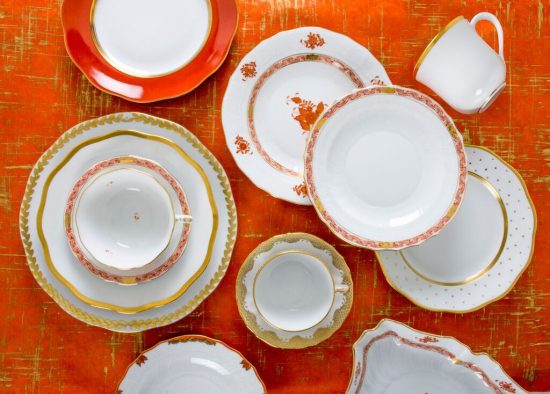
Shown above: Silk Ribbon Pumpkin Dinnerware, Chinese Bouquet Rust Dinnerware, Chinese Bouquet Garland Rust Dinnerware, Golden Laurel Dinnerware, Gwendolyn Dinnerware, Fish Scale Gold Dinnerware, Princess Victoria Rust Dinnerware, Connect the Dots Dinnerware,
HALLOWEEN
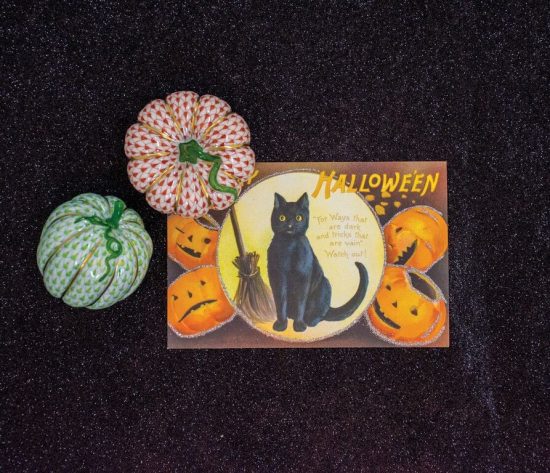
Shown above: Pumpkin Chocolate Figurine, Pumpkin Green Figurine.
THANKSGIVING
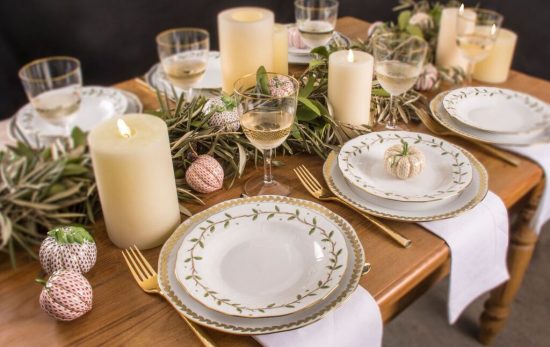
Shown above: Golden Laurel Dinnerware, Rothschild Garden Dinnerware, Royal Stemware, Pumpkin Chocolate Figurine, Cinderella Pumpkin Rust Figurine.
GINGERBREAD HOUSE DAY

Shown above: Gingerbread House Figurines.
MERRY CHRISTMAS
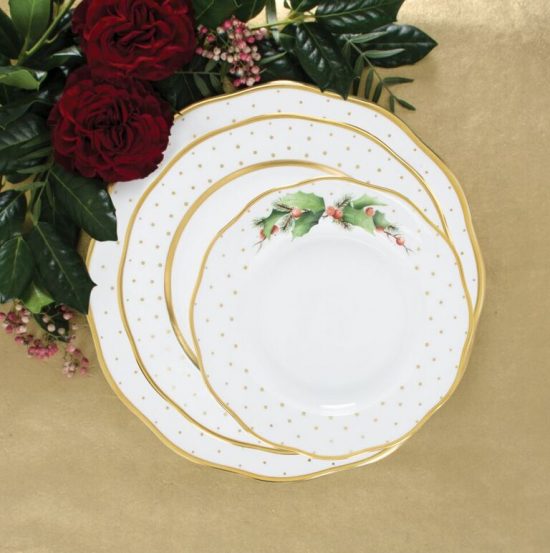
Shown above: Winter Shimmer Dinnerware.
NEW YEAR’S EVE
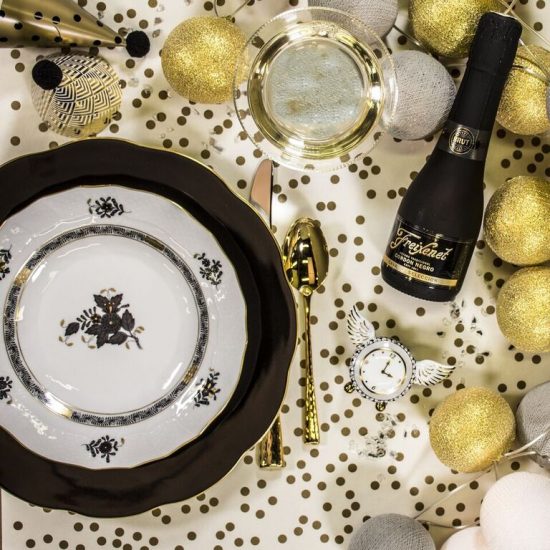
Shown above: Silk Ribbon Black Dinnerware, Chinese Bouquet Black Dinnerware.
[Video] Spilling red wine, ketchup, and more on Garnier-Thiebaut’s Coated Tablecloth
Previously we looked at how Garnier-Thiebaut’s Green Sweet tablecloths can keep off stains like red wine. In time for the Summer, we got one of their coated tablecloths as well and put mayonnaise, ketchup, BBQ sauce, and red wine on it. Here’s what happened:
You saw it right — the stains literally just wiped right off. It’s even easier to clean than the Green Sweet tablecloths.
What’s the difference? Whereas “Green Sweet” is a patented nanoparticle treatment, the coated tablecloths and placemats have 3 layers of environmentally friendly, PVC acrylic coating woven into the cotton fabric itself to make them even more stain and liquid repellant. While they are a little stiffer than Green Sweet, the coated tablecloths and placemats still feel like real fabric and don’t have that shiny, plastic acrylic top.
The one you see in the video is the Mille Tingari Austral:
So now that you’ve seen both, why not try it yourself?
Shop Green Sweet and Coated Table Linens
Check out the Kardashians’ Insane Gold Egg
The Kardashians are known for their crazy, over the top lives, but wouldn’t you love to be invited to one of Kris Jenner’s epic Christmas parties? Yes, we’d go too.
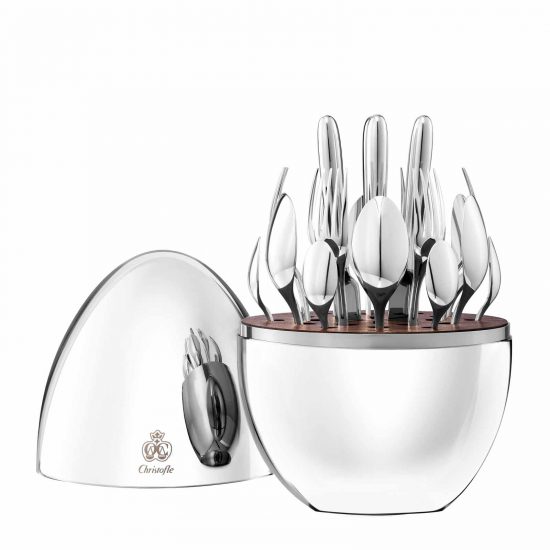
Kris loves her Christofle silver; here she is showing off her Mood flatware set, which comes in its own gilded 24 kt gold egg. It’s so stunning it practically needs its own security team:

Prefer a different color? It also comes in rose gold:
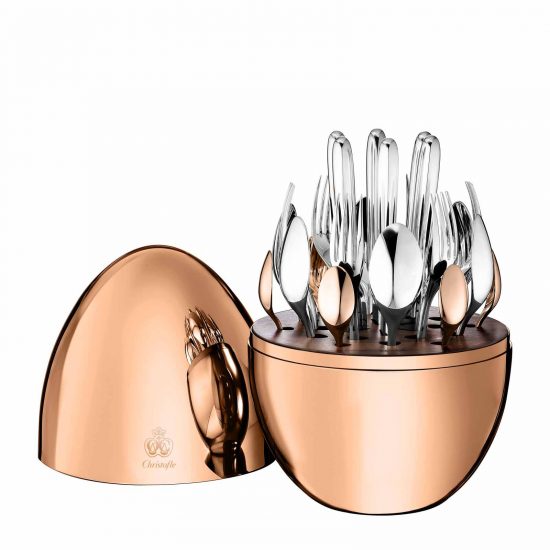
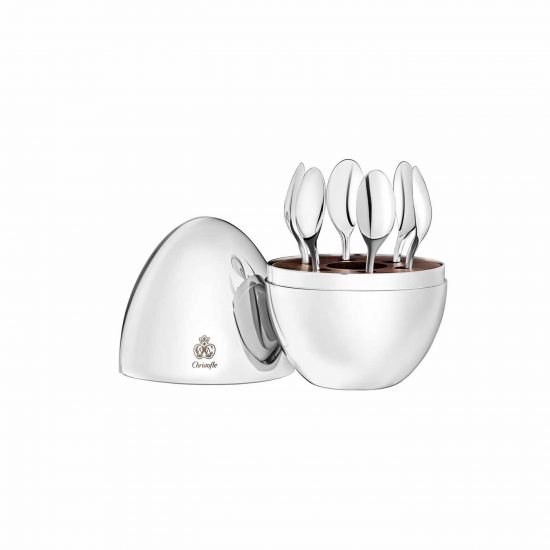
In silverplate:
And if you’re looking for something smaller, in sets of espresso spoons:
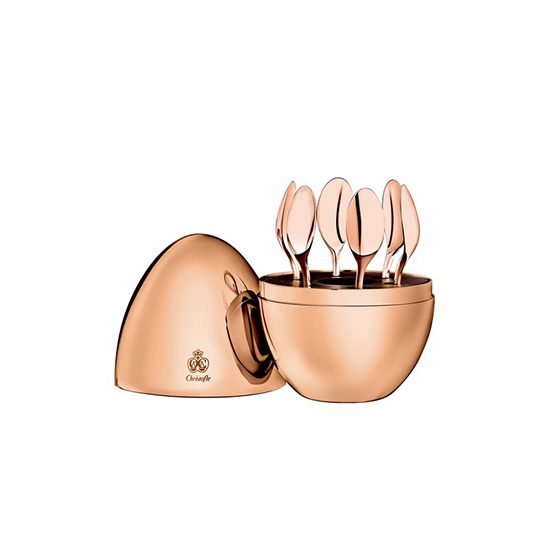
These make perfect gifts for any coffee-loving friend.
Say hi to Khloe, seen her playing with her mom’s set.

Meet the Maker: Stunning Portuguese Flatware from Cutipol
Last year, we traveled to Portugal, and the trip was a revelation. The country, which for years was ruled by the Estado Novo dictatorship, is now in the midst of a spectacular design renaissance. Everywhere you see the contrast between traditional Portuguese buildings festooned with centuries-old tiles and clean, modern design. There’s also a move to bring the country into the future, but there are strong traces of a Portuguese point of view.
Here’s an example. At the Six Senses in Douro Valley, one of the hotels where we stayed, they carefully renovated an existing manor house from the 19th century to minimize the impact on the hills and the surrounding villages.
So while the exterior looks like this …

… the interiors are much more streamlined. Even then, the dichotomy prevails. While the guest rooms are outfitted with floor-to-ceiling windows to maximize the views of the wine country …

… the more intimate reception areas (like the dining rooms, the wine library, and the spa) are all authentically furnished with distressed woods, copper cookware, and local artisan craft.
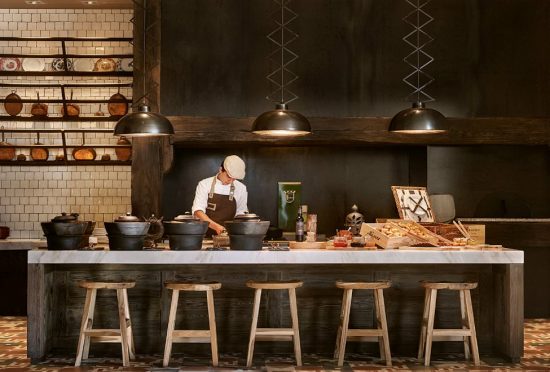
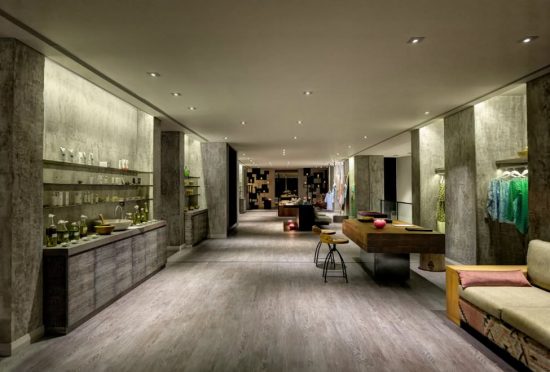
In Lisbon, we experienced something similar. While the city is more cosmopolitan, the bars, the restaurants, and the new buildings all share a confident Portuguese streak: one that is more streamlined, but retains influences from the past and includes nods to former Portuguese possessions like Brazil, Mozambique, Goa, and Macau.
One of our many finds on this trip was Cutipol flatware. Made by a family-owned company in the village of Sao Martinho de Sande, these sleek pieces are (very affordable) jewelry for the table. The slender handles are so refined, they’re almost sculptural. And the clear Asian bent (almost every collection sports flatware sets) means it’s at home anywhere in the world.
So much so, they were prominently featured at the 2017 Met Gala, honoring Japanese designer Rei Kawakubo/Comme des Garcons:
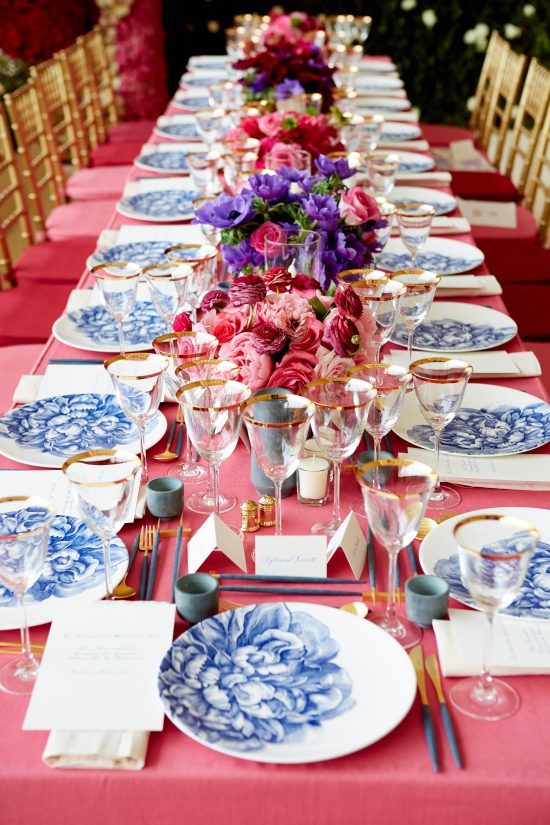
By combining sleek design with hand crafting, Cutipol is perfect for today’s world: a seamless merging of new and old across all four corners of the world. We’re really proud to be introducing it at Gracious Style!
Here’s what you need to know about Cutipol.
1. The collections are designed in-house by Jose Joaquim Ribeiro, a member of the Cutipol family.
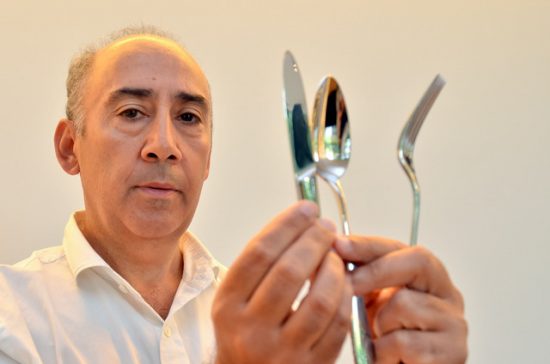
More than forty years ago, he was asked by his father for help in guiding the company into the future; his love for architecture is evident in his designs.
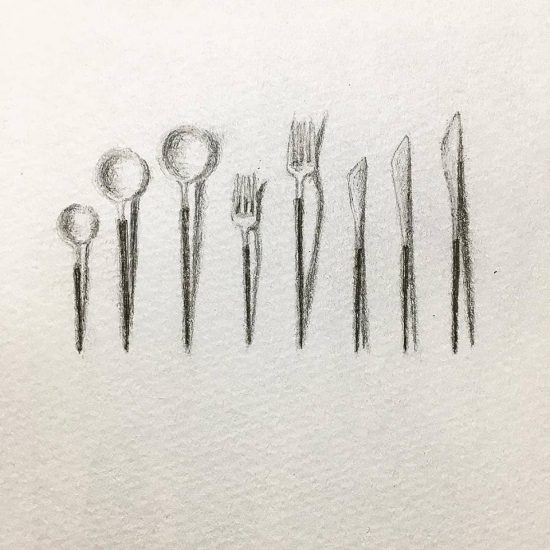
2. Cutipol’s signature Goa collection is available in impossibly gorgeous colors including black, blue, brown, grey, pink, red, and white.
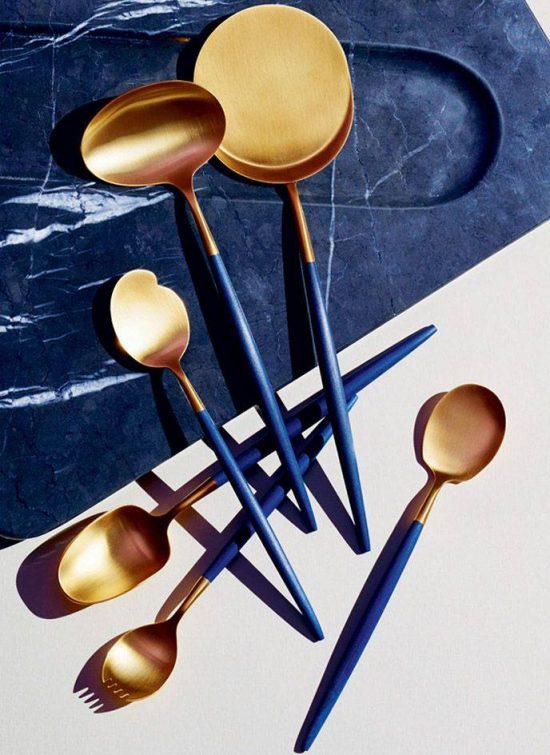
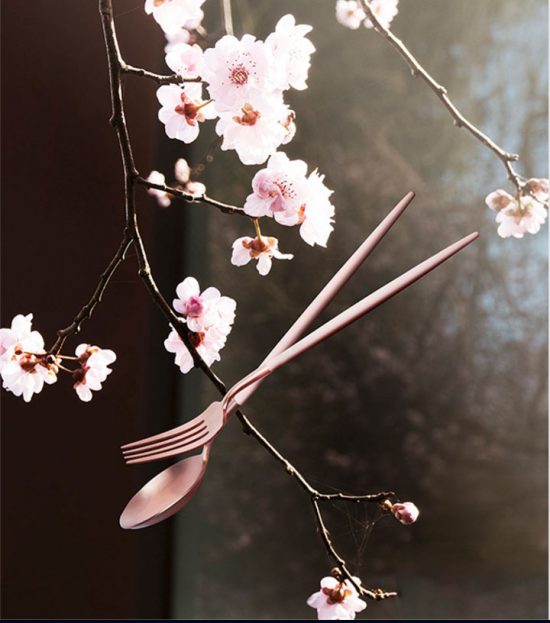
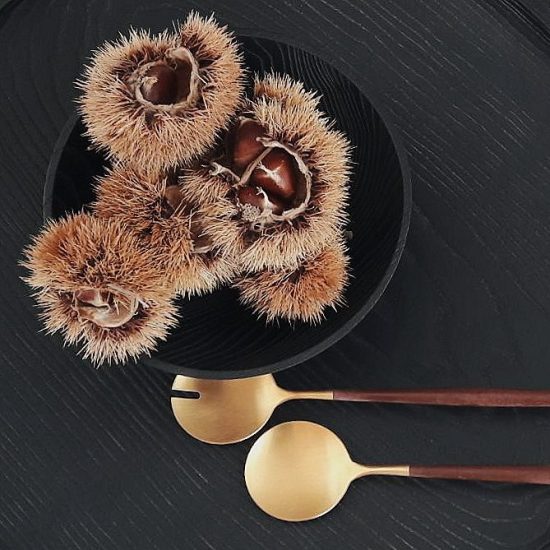
3. This is the kind of flatware you want to use to show off your molecular cooking. Here it is being used by chef Aitor Zabala at Somni, his new restaurant with Jose Andres inside the SLS Beverly Hills:
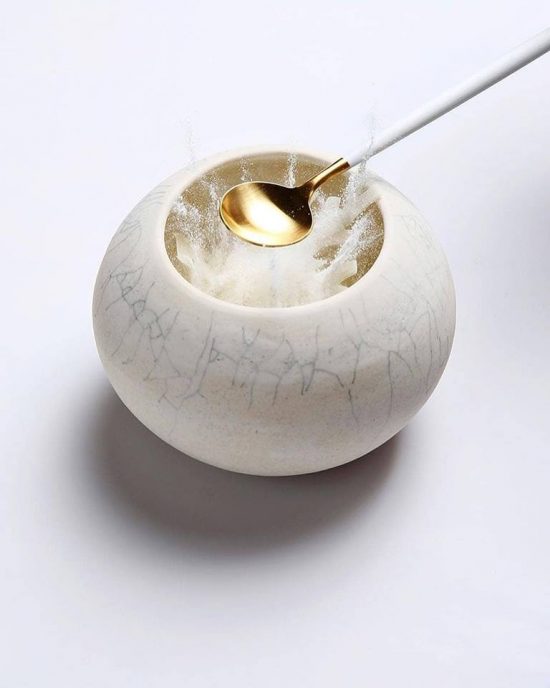
4. The collections are grounded in traditional design, so they work well on traditional tables.
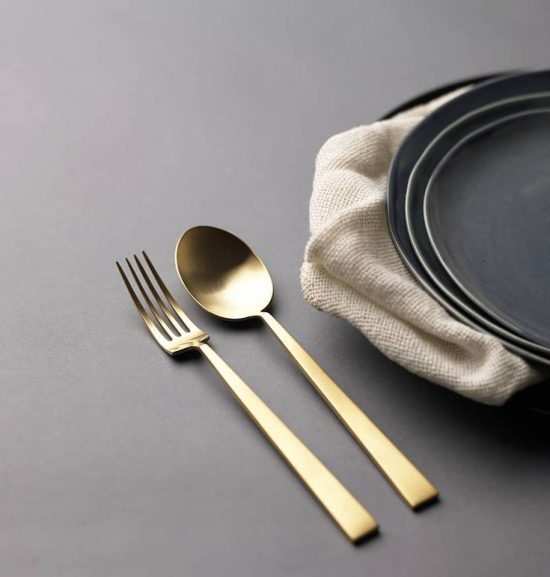
5. Asian pieces are available in almost every collection.
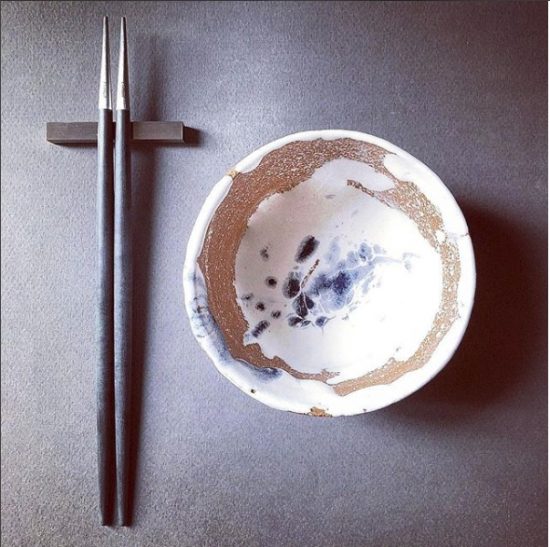
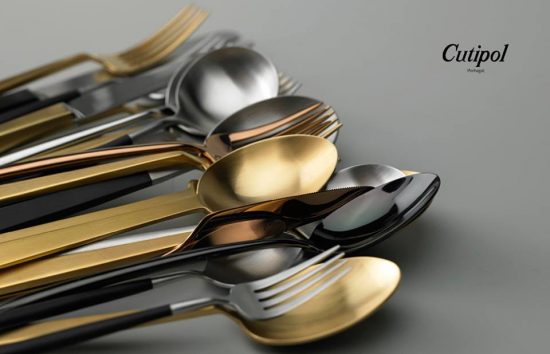
6. Cutipol flatware is available in different finishes (including stainless steel, black, copper, gold, and rose gold), all of which are dishwasher safe.
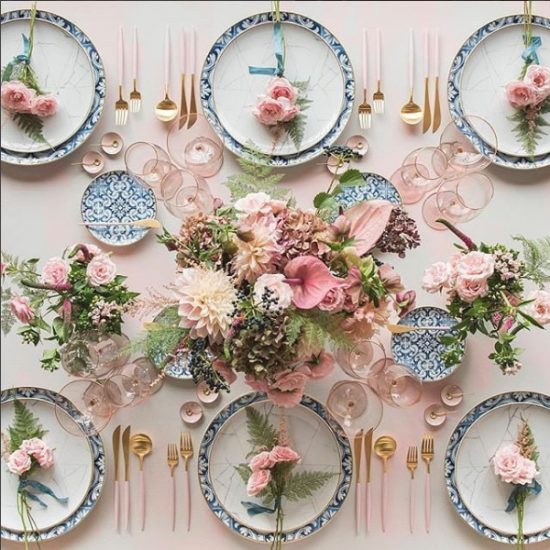
7. Cutipol flatware is spectacular for weddings, birthday parties, anniversary celebrations. Here’s a shot of an event by Casa de Perrin, a fabulous rental company in Los Angeles:
8. You’ll probably be the only person you know who’s ever heard of Cutipol. Unless, of course, you’re friends with someone who went to the Met Gala …
9. All our Cutipol flatware comes from Portugal, so it’ll take about four weeks to get it in. But we promise the wait is absolutely worth it!
Here are some of our most popular Cutipol flatware collections:
Shop all Cutipol
How to Make Takeout Look Like a Million Bucks
Summer’s here, and although we can’t all be sailing with Beyonce and Jay Z around the Mediterranean, you can definitely live la dolce vita at home.
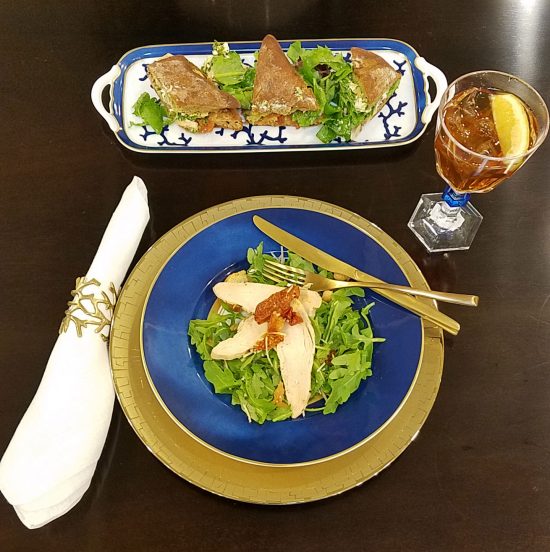
Here’s how you do it.
Start with takeout salad and sandwiches from your local deli.

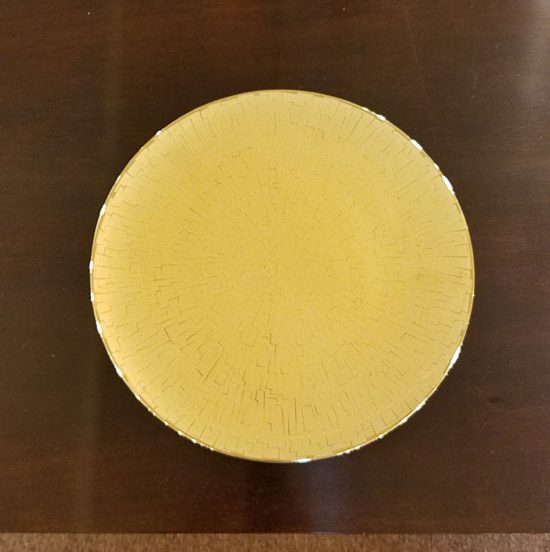
Set out a gold charger, to bring in some sun.
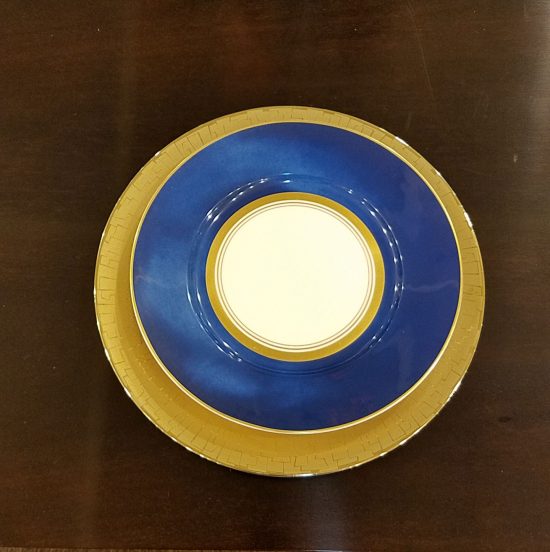
Add a marine blue dinner plate. Notice how the gold detailing along the center rim picks up the glow from the charger.
Now, a napkin. Which looks good, but a little flat.
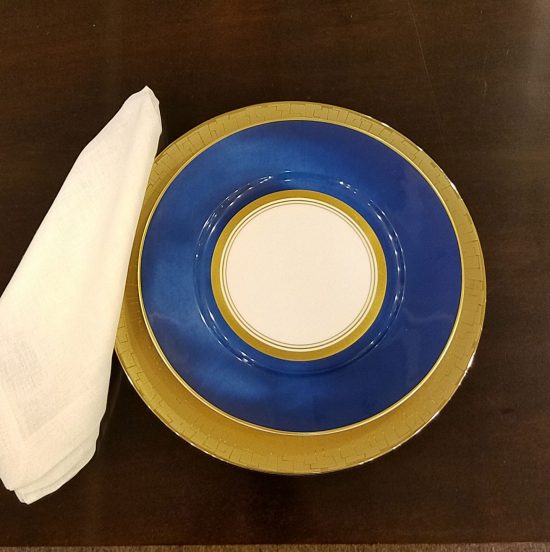
So quickly add a napkin ring … gold coral looks good here.
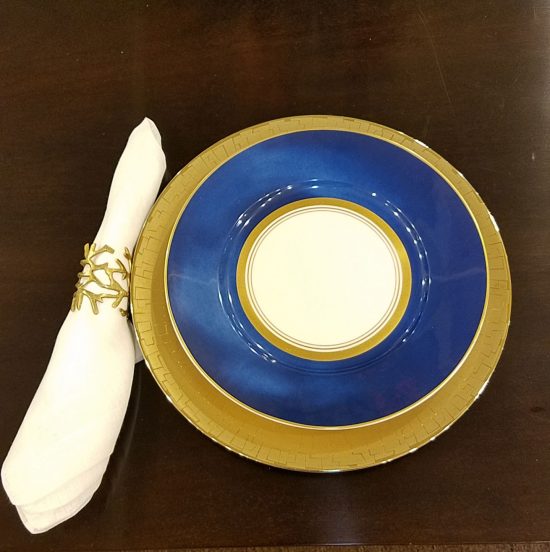
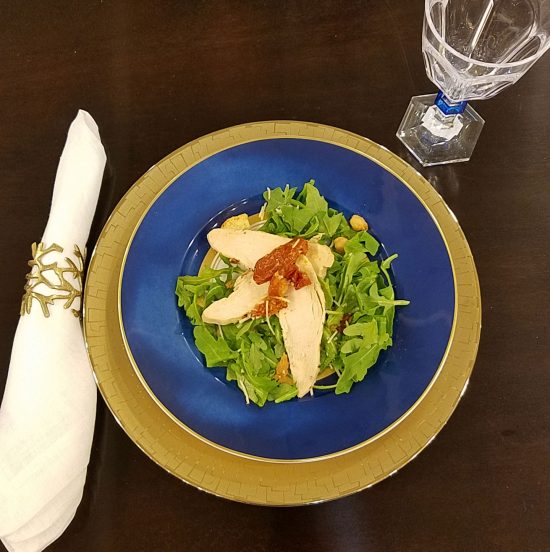
Plate your salad and add a glass. This one’s acrylic (and super popular onboard megayachts), but feels just like the real thing.
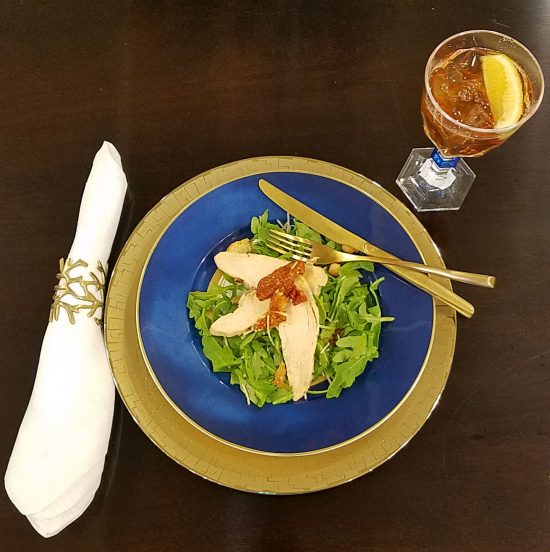
Need flatware? The plastic forks and knives from the deli definitely won’t do. So bring out this chic gold flatware set from Herdmar, and pour your ice tea out. Don’t forget the lemon; it’s what the crew would do for you.
And finally, set out your sandwiches on an gorgeous blue coral tray.
Play some music, and you’re done! Like what you saw? Take a look at our “Do Takeout Like the .01%” collection. Because really, you don’t have to cook to eat well at home.
To see all our Dining Makeover Videos, click here.
See What A-Listers Are Using at Yacht Parties This Summer!
Since almost everyone goes barefoot on yachts, experienced crews work hard to minimize the presence of breakables onboard. But how do you stay safe while making sure that your uberprivileged guests feel pampered?
The secret, for countless A-listers like Steven Spielberg, Valentino, Roberto Cavalli, and Prince Albert II and Charlene of Monaco, is a new kind of acrylic glassware that looks and feels like crystal, but doesn’t break.
Developed by Italian designer Mario Luca Giusti, it’s so stunning that even seasoned yacht-setters are often surprised when they hear it’s not crystal. And paired with the latest in unbreakable dinnerware, they make an irresistibly smart combination.
Valentino and Giancarlo Giammetti admiring the pieces at Mario Luca Giusti in St Tropez:
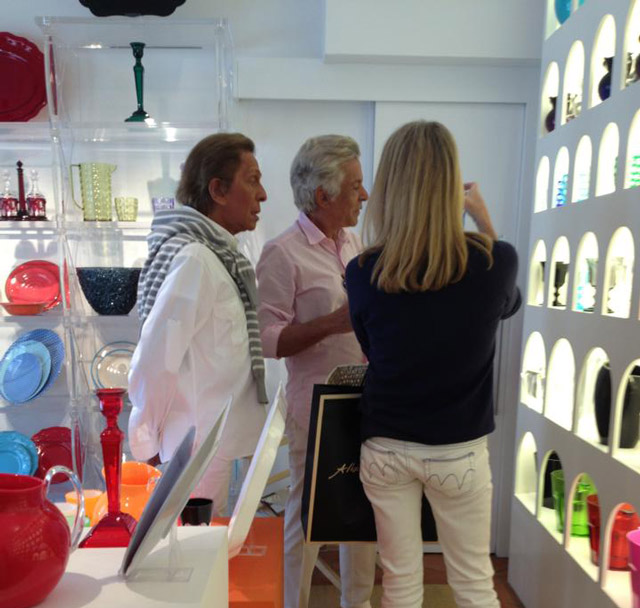
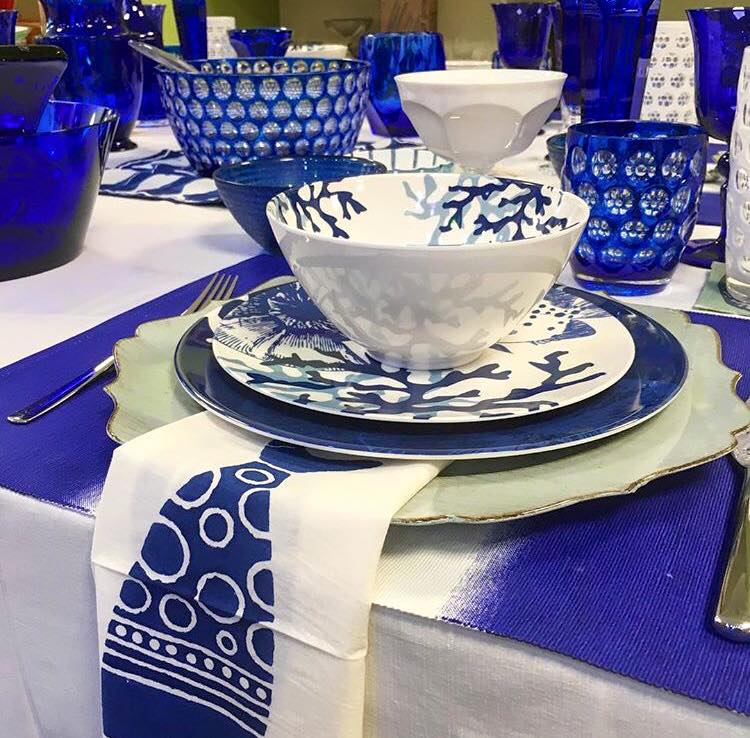
A lunch table set with Corallo blue melamine dinnerware, Lente acrylic blue barware,and Dolce Vita acrylic white stemware.
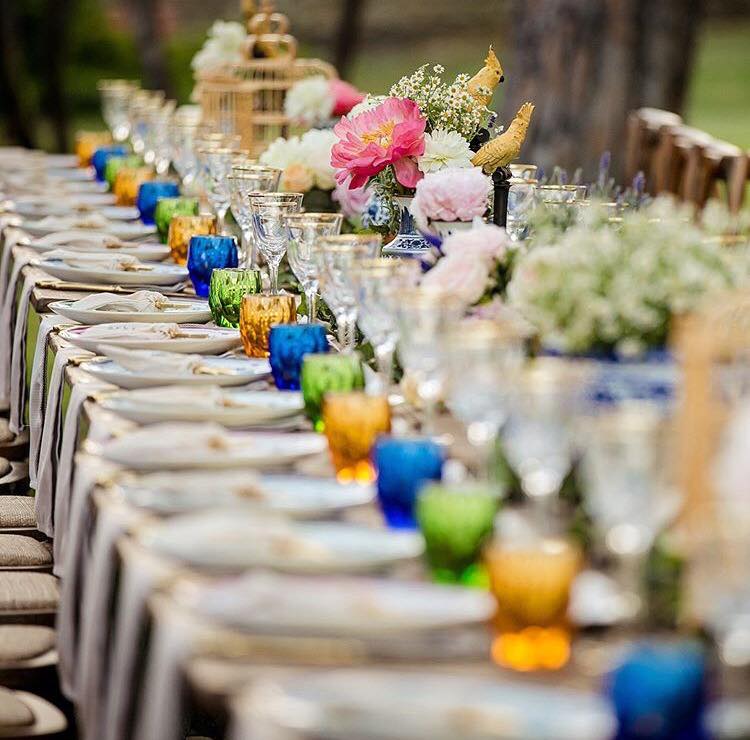
Entertaining outdoors with Milly acrylic barware in amber, green, and blue. Perfect for including the little ones, who won’t have to worry about breaking any glasses.
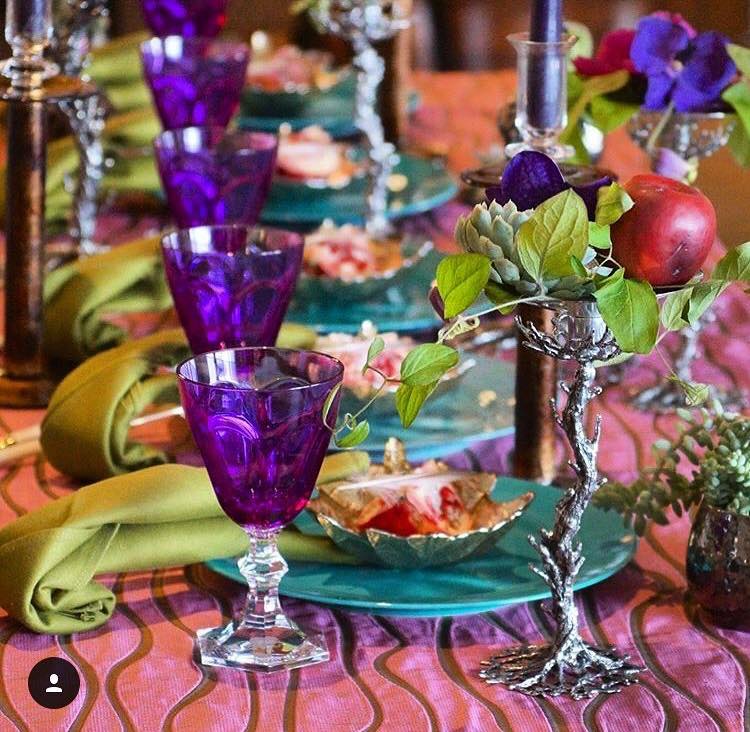
Recreating a garden setting with Dolce Vita acrylic stemware in violet:
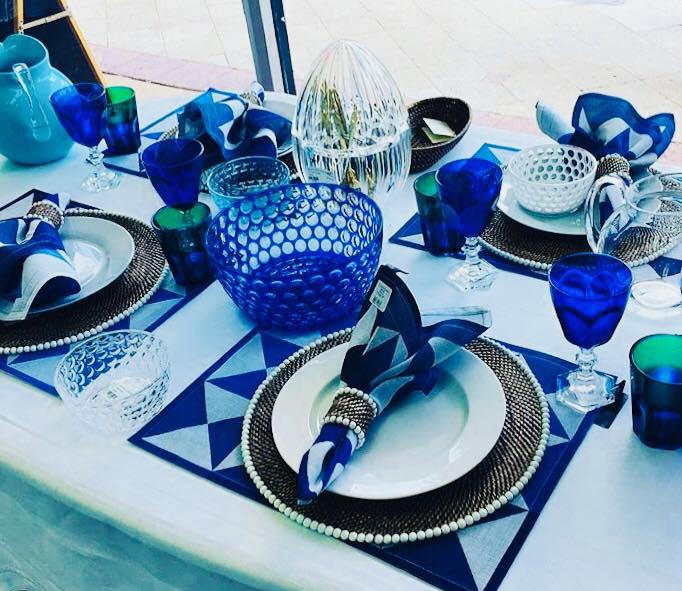
Lunch poolside with Lente acrylic salad bowls in blue and white, Dolce Vita acrylic stemware in blue, Double Face acrylic tumbler in blue/green, and a stunning Mafalda clear flatware holder.
Oh, and in case you thought acrylic and melamine were just for daytime, you’ll be surprised at how good these pieces really are. Here’s a shot Mario’s pieces being used at the Italian Embassy in Paris:
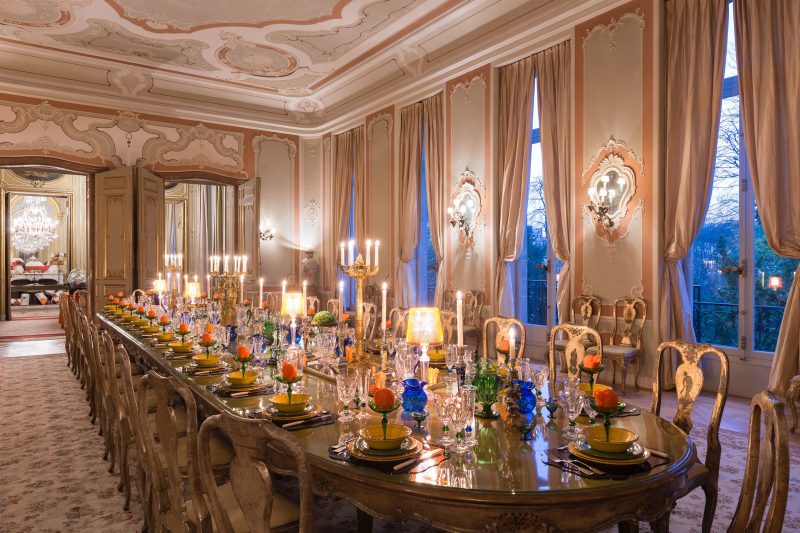
© 2015 Guglielmo de’ Micheli
Time for a dip. Cheers (Lente acrylic tumbler in white)!

Entertaining outdoors? We have brand new collections of stunning accessories perfect for use outdoors. Click here to see more.
Gracious Time: 1 Minute to Connect with Your Loved Ones on Any Day
Has this ever happened to you?
You come home busy from a day at work. You don’t have time to cook one of those amazing meals you’ve seen on the cover of a magazine or on Pinterest. The “Easy Weeknight Dinner” that requires eight or ten different ingredients, 30 minutes of prep time, and 30 minutes of cooking time is an hour you don’t have.
No, the best you can do tonight is takeout, uberEats, or a frozen entree from the Whole Foods.
Oh well, tonight won’t be a special night.
Anyway, you got some emails to catch up on while you eat. You got a text to answer. Take a break by checking Facebook. Oh, what a cute puppy on Instagram.
Unfortunately, once you start doing that, everybody else around you starts doing that too. Pretty soon you’re so used to being on your phone, it doesn’t matter if you’re dining at home, at a restaurant, or at a resort by the beach.
But it really doesn’t have to be that way. It only takes a minute to set things up and connect with your loved ones, even if you don’t cook. It’s time for “Gracious Time”:
Why We Need Gracious Time
Are you happier now than you were ten years ago?
Has the sheer volume of notifications flooding from your phone made you feel closer to people?
Probably Not. In fact, psychologists have noticed that social media has made us lonelier, more easily frustrated, and less happy. Hence all the trolling.
Don’t get us wrong: We love technology! But we also know that as human beings, we’re naturally wired for strong, lasting bonds with small groups of loved ones. Our ancestors spent long nights around campfires with their families and tribes. They weren’t following thousands of strangers and liking their posts on a phone every night. And when we don’t take the time to connect with each other and build strong relationships, we’ve lost a vital part of our emotional health.
That’s why we all need some time each day to really connect with one another, to bond and then reinforce those bonds. We call it “Gracious Time” because at the heart of it, being gracious means being there for each other, understanding each other, and giving each other the most valuable thing we have — our time.
The One Minute Hack to Connecting Again
Fortunately, it’s pretty easy to break out of our high-tech, fast-paced lives and connect with our loved ones again. Our minds quickly tune out of repetitive events, but by changing things just a little bit, we become aware again. Altogether, it takes about a minute on any day to break your regular routine and connect with the special people in your life. Just follow these three simple steps:
- Put the phone away.
- Set out a nice table.
- Talk. To. Each. Other.
That’s it. I’ve timed myself, and it takes less than a minute to do #1 and #2. And then you can take as long as you’d like with #3.
The best part is, you don’t have to even cook — this works just as well with take out and frozen entrees. For example, this is for serving up frozen pizza:
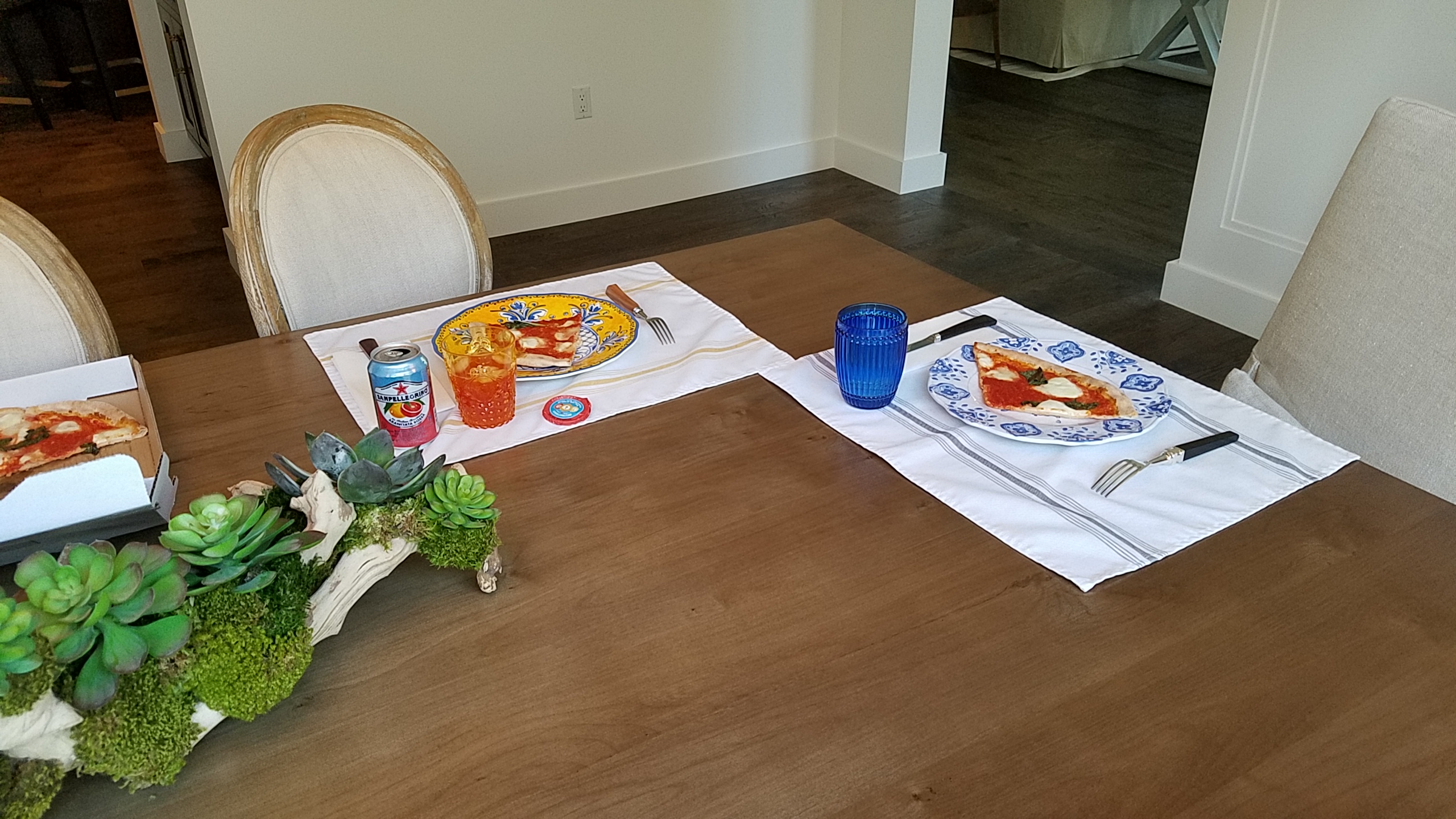
So why aren’t you doing it? Is it one of these reasons?
But I’m Really Important and Busy . . .
Yes, we all are.
That’s why we worked a full day, non stop, battling our way through emails, texts, calls, memos, briefs, what have you.
And we’re certainly not telling you to leave the Emergency Room for a five-course dinner.
But most of us can — and need — a time to reconnect with people. If your work is overwhelming, then talk about your work during dinner. Go over it again with someone who’s not as involved, who can give you a neutral, detached point of view or a second opinion. It’ll probably help you see things in a new light.
Otherwise, just talk with each other. Even someone you’ve known for years could still surprise and delight you.
But I Don’t Know How to Set a Nice Table
You know more than you probably realize. Just start by removing all the distractions and set out something to make it feel special and happy. If you have anything in the cupboards that are being saved for “special occasions,” bring them out!
The key is to break your regular routine and use the table setting to create a conversation point. Love flowers and gardening? You probably have some plates or napkins with flowers. Set them out. Let them become the unconscious cues that remind you of something happy.
But I Don’t Have Anyone to Dine With
In that case, just dine alone without the usual distractions. Become mindful of the food you’re eating. Concentrate on its color, texture, and taste like you’ve never had a pizza or sandwich before. It’s actually very relaxing to have a little quiet “Me Time” this way.
Or, put the phone up in a stand in front of yourself, dial up someone on Skype or Facetime, and dine remotely together. (See, we’re not against technology.) Focus and talk with each other, instead of breaking off to check your emails/texts/facebook/instagram on some other phone.
But Nobody in My Family Will Go For This
That’s probably because they don’t feel up for a big, formal affair. So don’t make it a big production. Take baby steps. Try it just one night a week. Don’t use anything that would make people feel uncomfortable. Just put away the distractions and ask everyone to talk. And listen.
Ok, any more reasons why you can’t do this? If so, please leave them a comment and let’s talk about it.
And Now It’s Up To You
Otherwise, please try it! Leave a comment and let us know how it went. Share a photo of it with us on instagram with #GraciousTime (not during dinner!) And check back in or subscribe for more ideas and photos on Gracious Time.
How Gucci and Alessandro Michele Are Making Richard Ginori Great Again
Founded in 1735 by a Florentine aristocrat, Richard Ginori is one of the oldest porcelain manufacturers in Europe. It is easily the most distinguished manifattura of fine porcelain tableware in Italy, meaning that all production takes place under one roof, so quality is very consistent.
For nearly 300 years, it’s been very closely associated with Italy and its history. Its pieces have graced museums, luxury liners, restaurants, luxury hotels, and fine tables around the world. It has made collections for the Vatican and has featured designs by top Italian architects like Gio Ponti and Paola Novane.
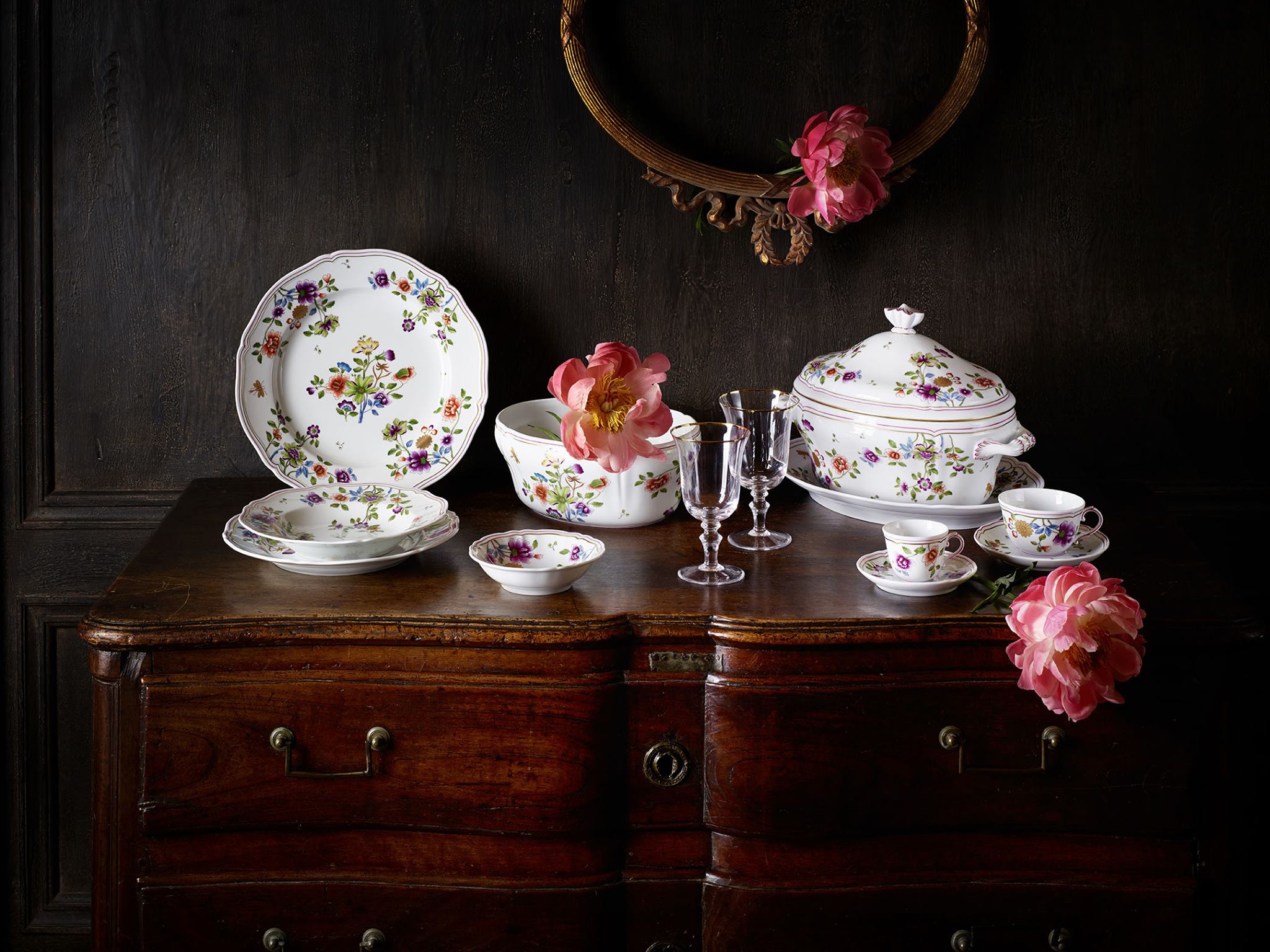
Unfortunately, difficult economic conditions and changing times caused this storied company to file for bankruptcy in 2013. But in June of the same year, Gucci acquired Richard Ginori, and the company’s artisans breathed a collective sigh of relief. Richard Ginori has now joined the global luxury company that includes Gucci, Yves Saint Laurent, Bottega Veneta, Balenciaga, Stella McCartney, Alexander McQueen, and Brioni.
Gucci’s strategy with Richard Ginori is the same as with its other brands — focus on luxury and bring in fresh, new designs. Today, Richard Ginori’s creative director is none other than Alessandro Michele, the superhot designer responsible for Gucci’s huge growth in recent years.

Having trained with Tom Ford, Alessandro is well known for his idiosyncratic take on chic geek vintage. His impact at Gucci has been nothing short of spectacular. The house – which had in recent years languished on the tasteful and straightforward – has now been reinvigorated with a playful sense of style, making it a huge hit with millenials.
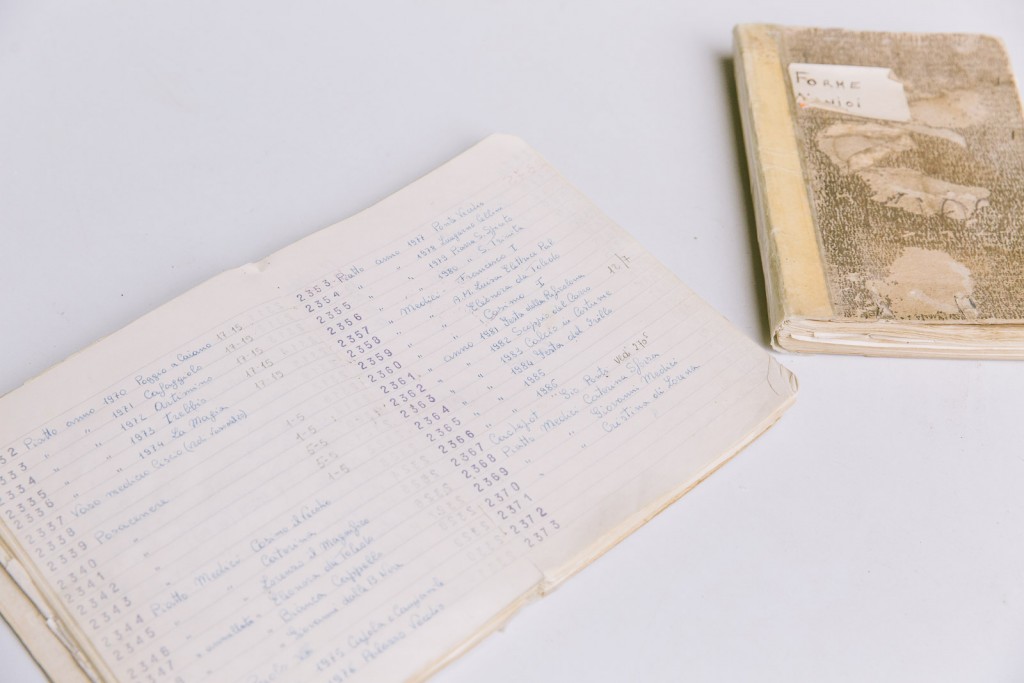
At Richard Ginori, Alessandro started by going through Ginori’s historical patterns, all of which are kept in this archival book (some patterns date back almost 280 years) …
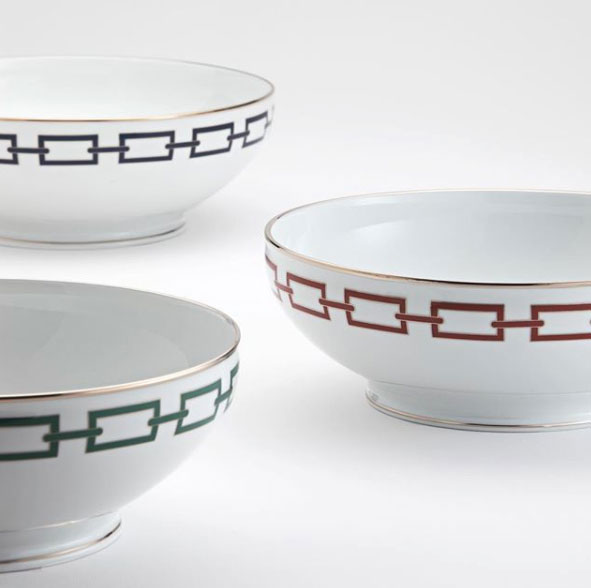
… and reissued several Gio Ponti collections. Here’s Catene, created by the iconic Italian architect almost 100 years ago in 1926:
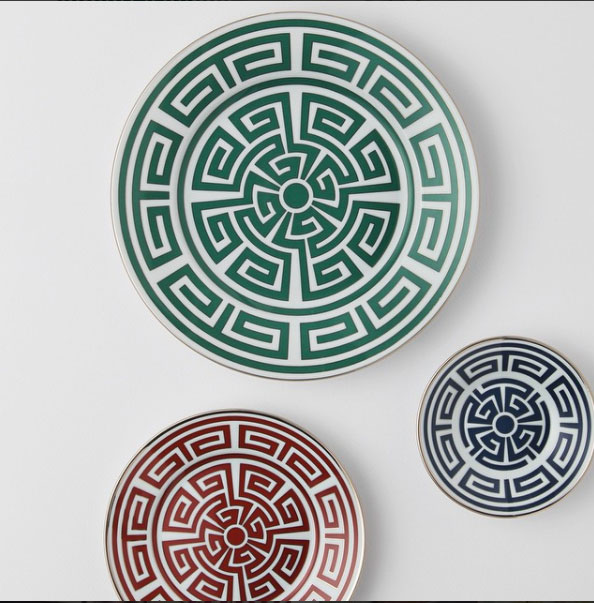
Labirinto, also created in 1926:
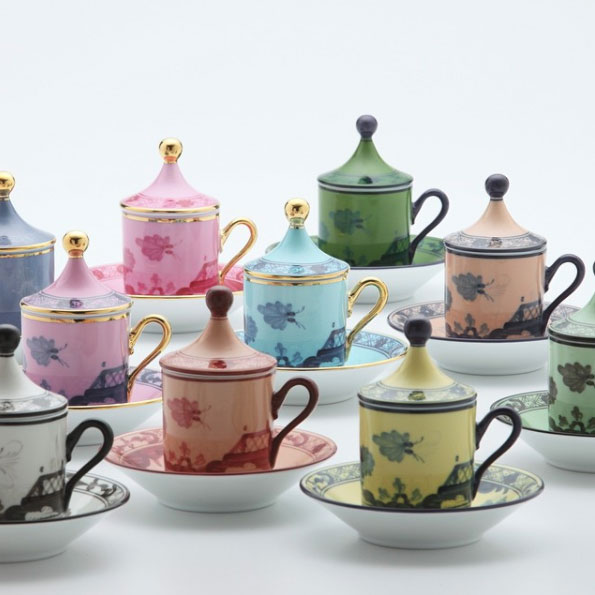
And the beloved chinoiserie pattern Oriente Italiano, now available in whimsical new shapes and colors:
Then he started to have some fun with Ginori’s traditional themes. In one collection, he was inspired by how traditional craftsmen would cover imperfections on porcelain pieces by painting insects. So he supersized the insects and painted Ginori’s best-loved patterns like Galli Rossi and Oriente Italiano on them:
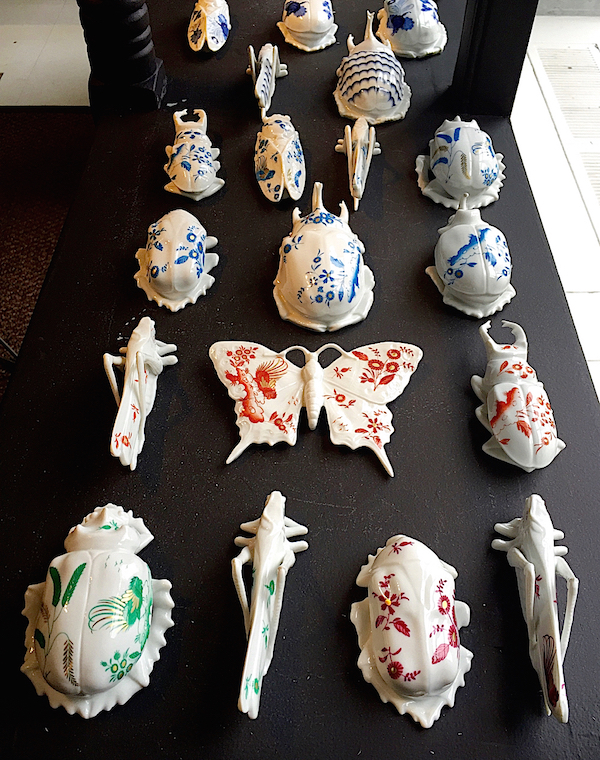
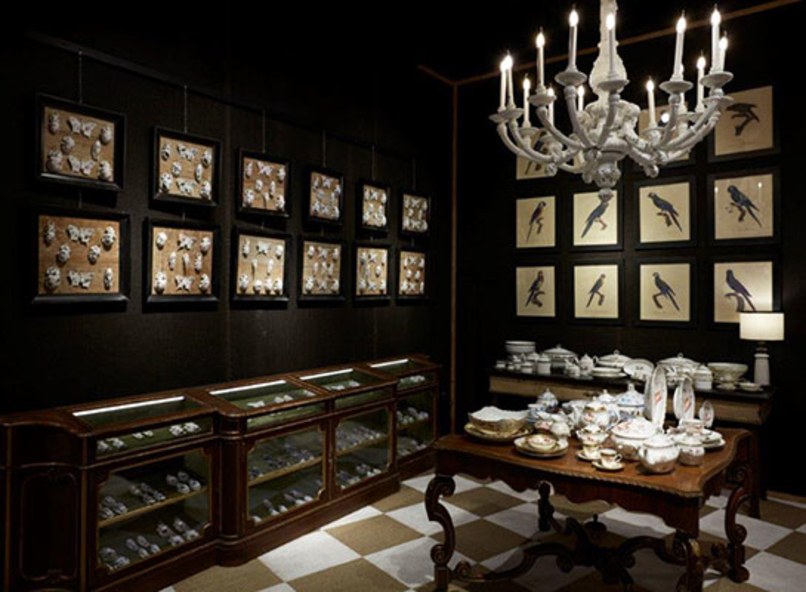
This new collection is called the Insetti. Instead of an often-overlooked detail, the insects are now the main attraction, honoring the traditional patterns on their backs. Look closely, and you’ll see that the collection is shown inside shadow boxes at the new Ginori flagship store in Milan:
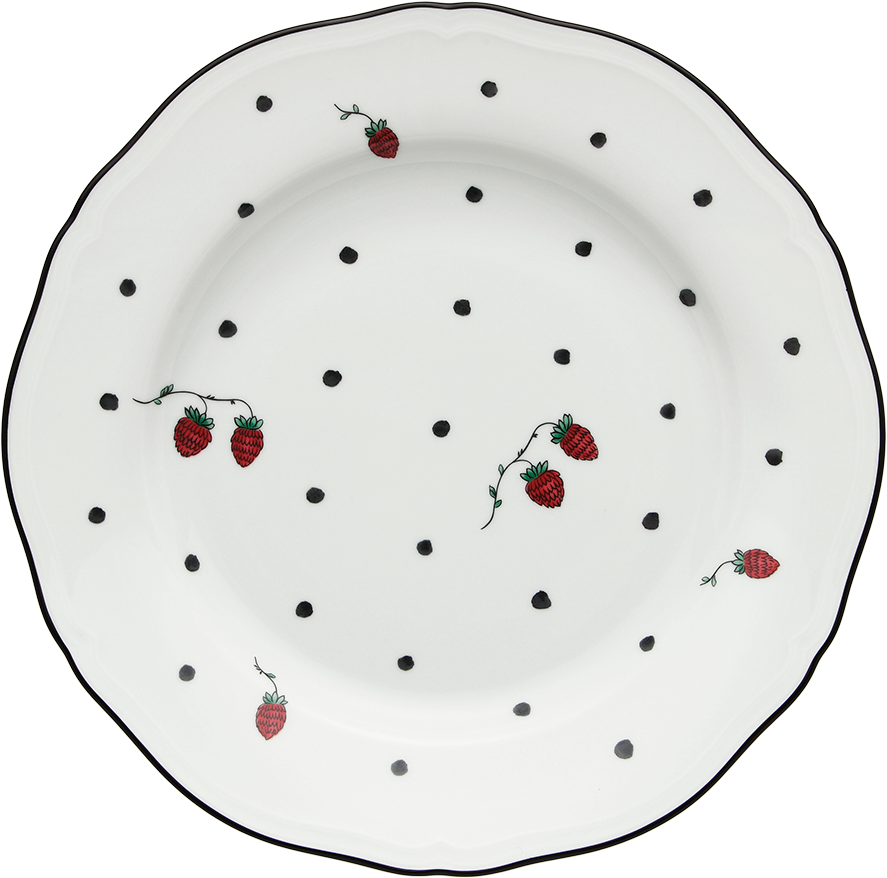
He then took the daintily romantic Italian Pois, reminiscent of a country pattern, and made it chic in black with handpainted polka dots:
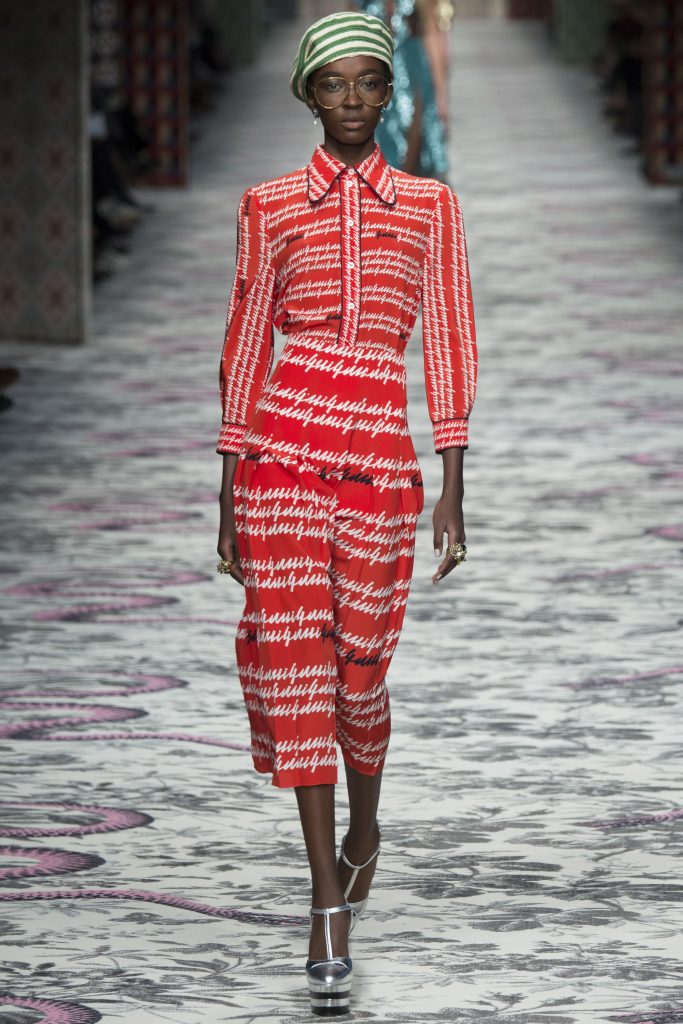
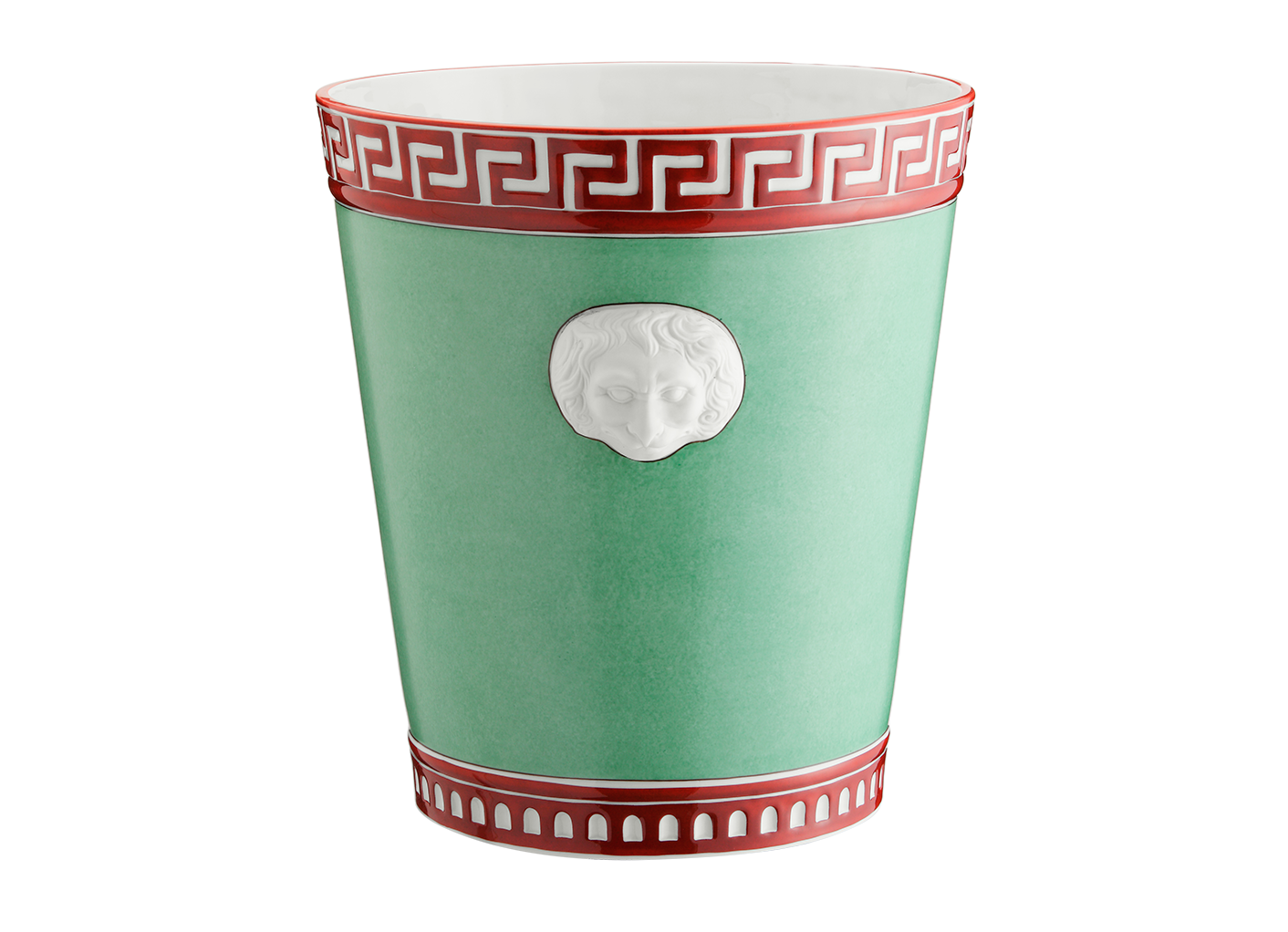
Some of Alessandro’s new designs are mirroring his fashion statements for Gucci and his love of color. For example, his Giardino dei Simplici dinnerware, which draws from Gio Ponti’s Labirinto but with richer, lusher colors:
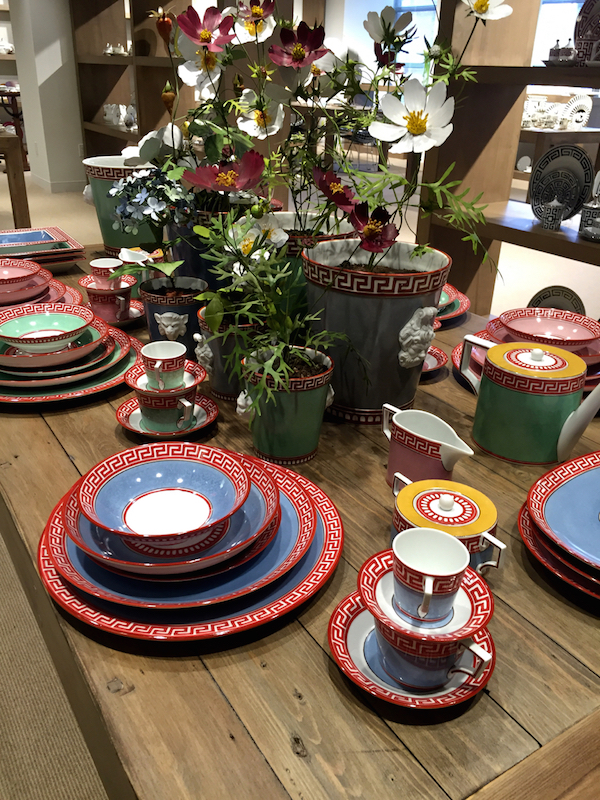
Can you see the similarities in this look from Gucci’s Spring 2016 Ready to Wear?
And as for this lion on the Giardino dei Semplici vase?
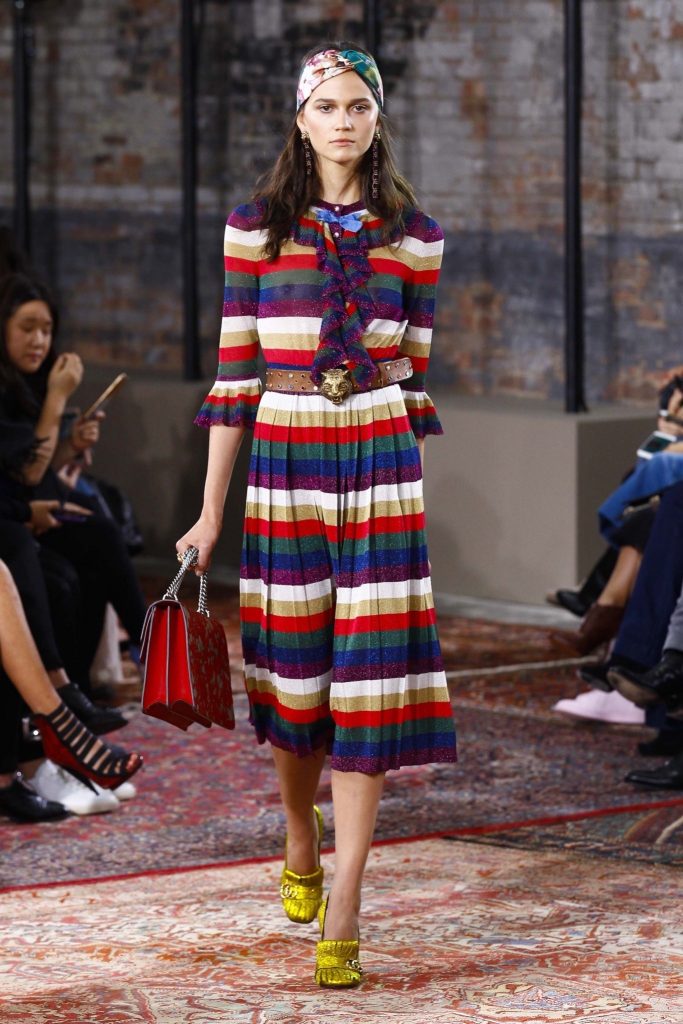
Here it is, as a belt buckle, at Gucci:
Cartiglio Citrino, in citrine and magenta:
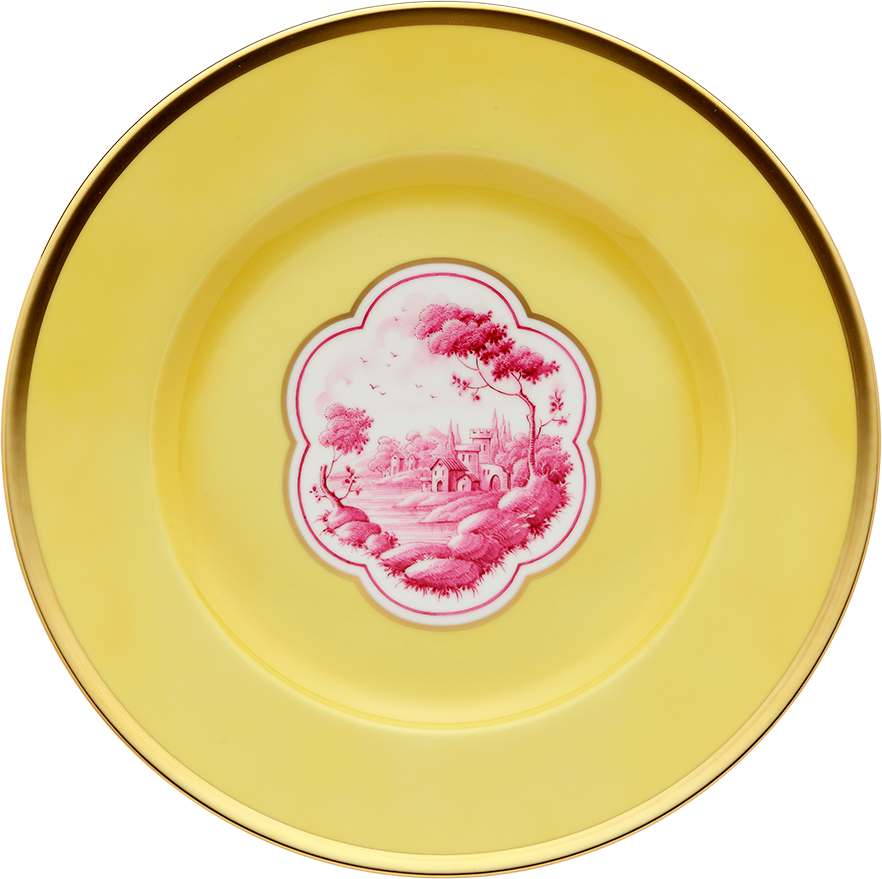
Seems right at home with this look from Gucci Fall 2017 Ready to Wear:

And finally, our favorite of Alessandro’s new collections is Voliere. Featuring a selection of twelve different birds, it’s at once traditional and fresh. Handpainted on white porcelain, it includes a palette of over fifty shades and is detailed with gold edging.
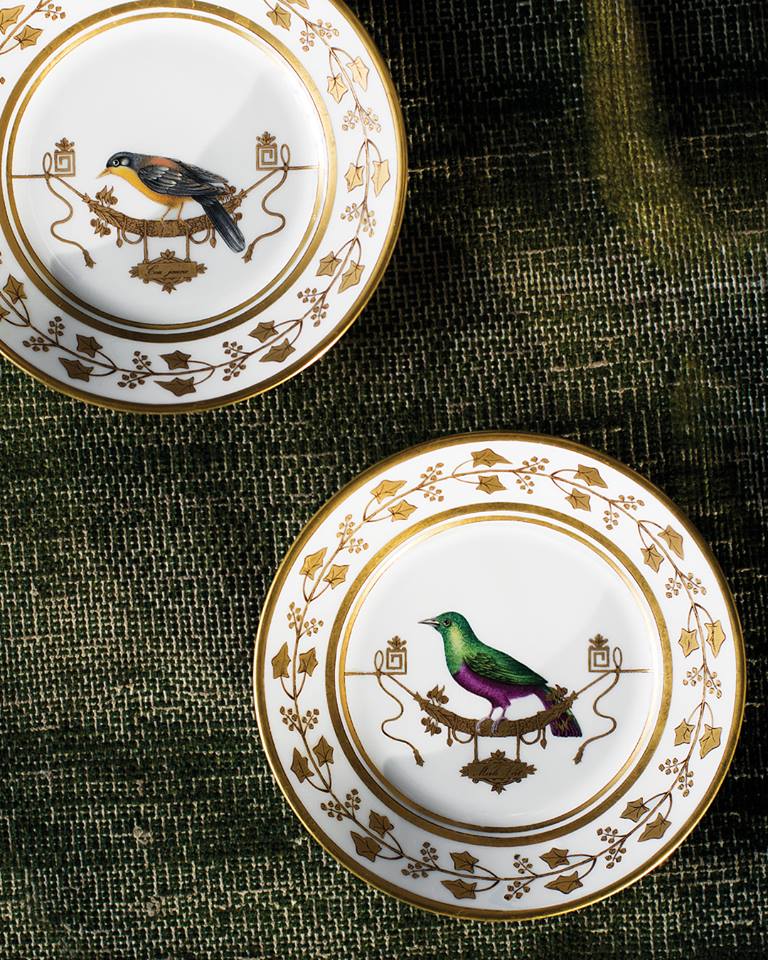
Look closely below; here are the details being worked out, in preparation for painting:
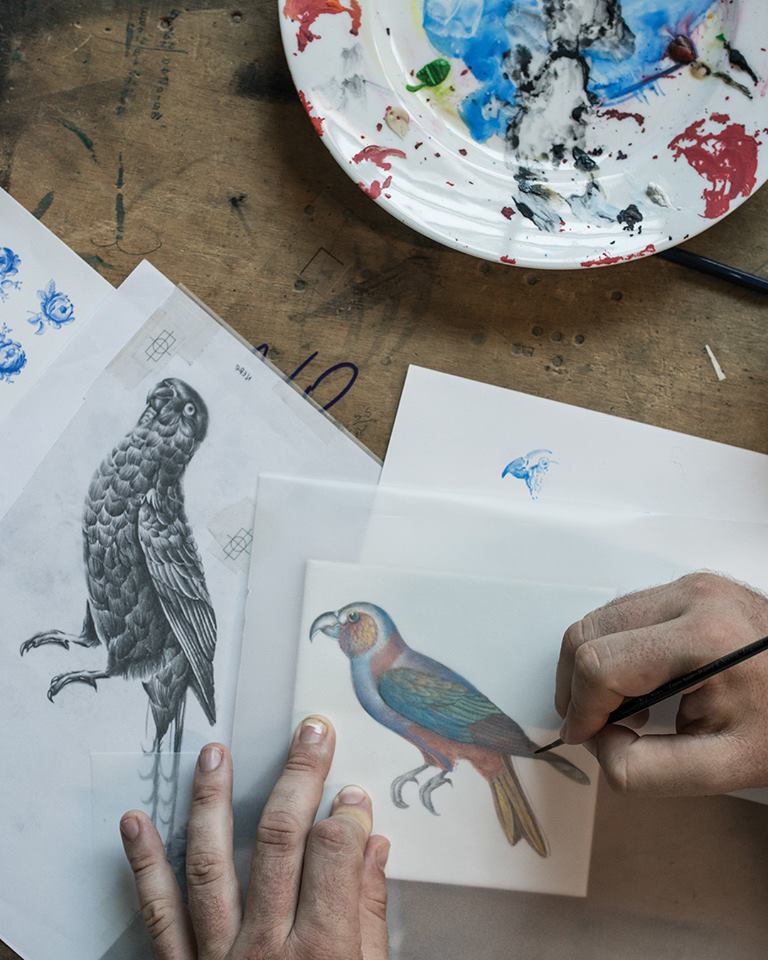
And so begins a new chapter in the storied history of Richard Ginori. This time, we’ll see Gucci’s magic of cutting-edge design and global luxury take it to new heights.
Shop Richard Ginori
[Video] Can Garnier-Thiebaut Green Sweet Tablecloths Repel Ketchup and BBQ Sauce Stains?
After my last video, I started to get more curious: How good is Green Sweet’s stain repelling technology? Sure, it worked on Orangina, coffee, and red wine. But would it work on tough stains like ketchup and barbecue sauce?
So there I was, squirting Heinz ketchup and Kansas City barbecue sauce right on my Garnier-Thiebaut Green Sweet tablecloth. Then I put it in my washer, washed with hot water and Tide, and then dried it for seven minutes. The result — both stains were gone!
The Green Sweet tablecloth kept off both ketchup and barbecue sauce. You can see it all in this video:
Ready to entertain in style without stains? Here are our most popular Garnier-Thiebaut Green Sweet table linens:
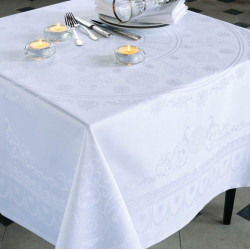
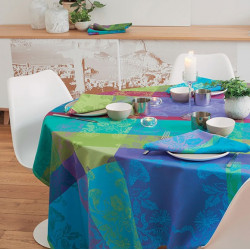
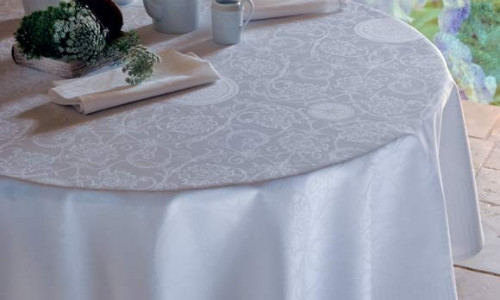
Shop Green Sweet
Where Can I Get the Dinnerware Used at The French Laundry and Per Se?
You’d be surprised how often we are asked this question. And we are happy to say that you can get Thomas Keller’s dinnerware here at Gracious Style.
Eating at one of Thomas Keller’s fine restaurants – like The French Laundry in Napa or per se in New York – is truly a magnificent experience. People have flown half way across the world just for that experience. But he has created a set of dinnerware that lets you re-create the experience at home — if you’ll do the cooking.
Well known for being a perfectionist in the kitchen (his book features some of the most exacting recipes I’ve ever read), Chef Keller is equally serious about the service and presentation of his cuisine. Like many high-end chefs, Keller wanted dinnerware that are perfectly suited to his style of cooking. So being the perfectionist that he is, he designed a very refined, all-white collection that lets the cooking speak for itself. The pieces have an architectural elegance and a pure white color that is only possible with Limoges porcelain, so both lines – the Hommage and the Checks – are made by Raynaud in France. The Hommage is plain white, while the Checks has a subtle checked pattern.


Here is chef Keller’s dinnerware, waiting to be used in the kitchen of per se Restaurant in New York (from the New York Times). We love that the dinnerware was designed to withstand the rigors of restaurant use day after day, so the entire line is extremely durable.

There are so many great pieces available. There are plates with round, oval, and square centers …

… oval trays with quenelle indentations …

… risotto plates and covers …

… coffee, tea, and espresso cups and saucers …

… quenelle dishes …

… and many, many others.
And as an added surprise, every piece is stamped with the logo of The French Laundry on the back … an old-fashioned clothespin:

If you want to learn more, click here to view the whole collection. It is very reasonably priced (starting at just $15) and extremely well made, so you’ll get years of enjoyment.
This is an incredible gift for yourself and the epicure in your life. We hope it’ll help you become an inspired cook!
Gracious Style is an online retailer of sophisticated, high-quality products for every room in the house. We love helping others create warm and welcoming rooms for themselves. To read more, visit our blog.
9 Reasons Why Top Restaurants Love Chilewich Placemats
What do Le Bernardin, Fred at Barney’s, and the Mandarin Oriental Miami have in common? They’re all uber stylish, and they all use Chilewich placemats in their dining rooms.
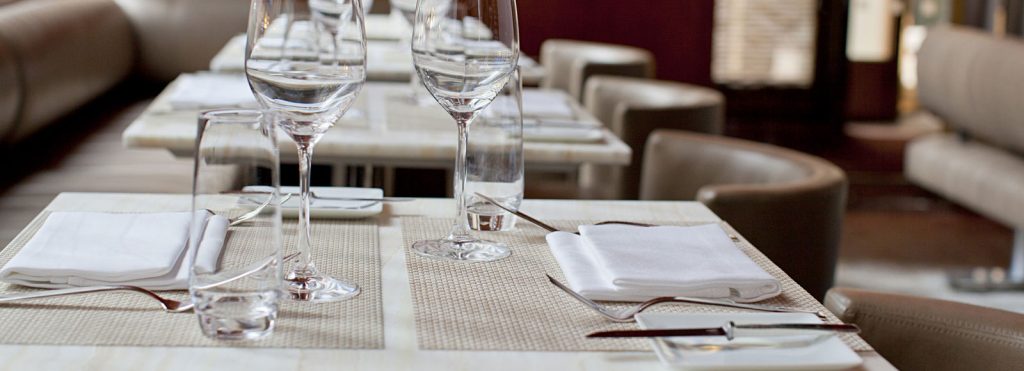
All three shops run thousands of covers a year, which means that their tableware has to be both beautiful and practical. And because mealtimes are so busy, they all need easy ways to keep tables clean and ready. Which, when you think about it, is exactly what every home needs. We love having guests over, but instead of cringing every time little Joey and Amanda spill ketchup on the table, we’ve learned to be smart and use the same Chilewich woven vinyl placemats these beautiful restaurants use.
Here’s why they’re so well loved.
1) They are very durable. With over 2,500 restaurants around the world using Chilewich (including Colicchio & Sons in New York) every single day, they’ve been heavily tested in the hospitality world and clearly made a product that has stood the test of time. At home, with regular use, they can last 10-15 years.
2) They require little or no care. To clean, just wipe with soap, water, and sponge and air dry. No ironing or machine washing is ever needed.
3) They’re designed for indoor and outdoor use. Which means that they can be used year-round, at breakfast, by the pool, and on the yacht. What could be easier?
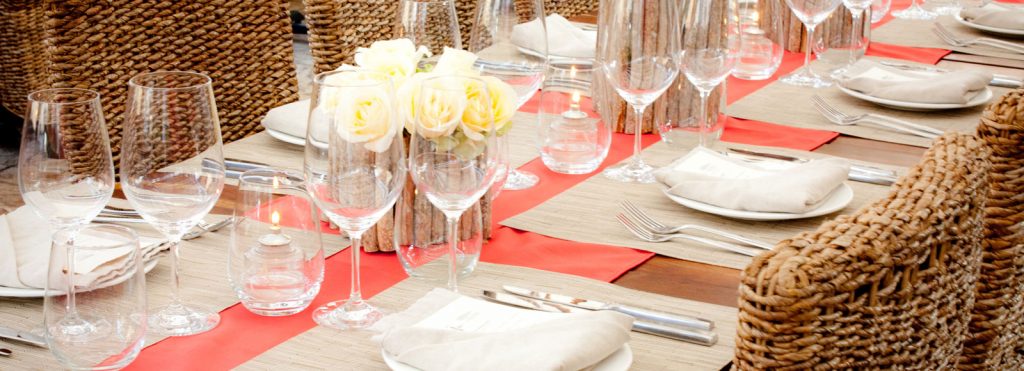
4) They’re well priced. With most placemats priced at under $20 each, these are a breeze to own. From dorm rooms to White House state dinners, we’ve seen them used elsewhere (don’t forget about Fido’s pet bowl!).
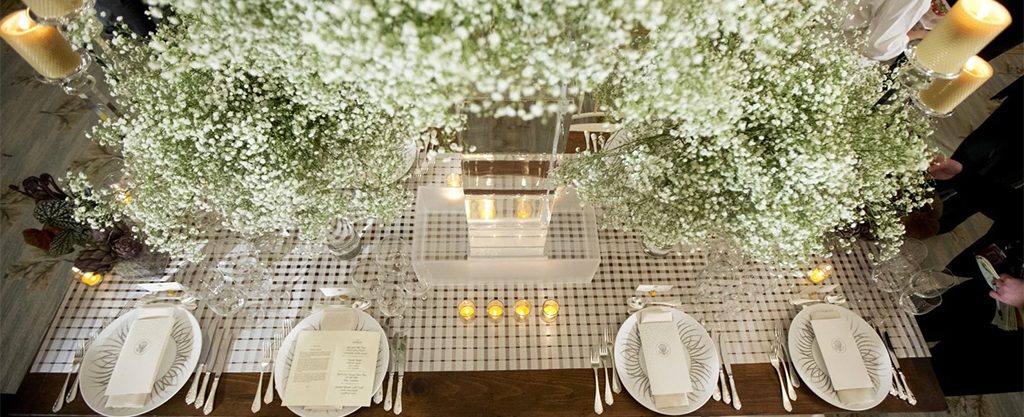
5) They come in multiple chic textures. Sandy Chilewich’s original style, Basketweave, is still a big seller. But Fringe, which features delicately edged borders, and Mosaic (reminiscent of worn tile surfaces) are perfect for a slightly more boho look. Want something more artsy? Take a look at Blocks, reminiscent of a Mondrian painting.

6) They’re available in every color imaginable. Whether you’re looking for a neutral, a dark color, or a fun plaid, you’ll find what you need. And in many pieces, you’ll see that the color changes constantly: that’s because the custom vinyl yarn used to make these pieces has subtle gradations throughout.
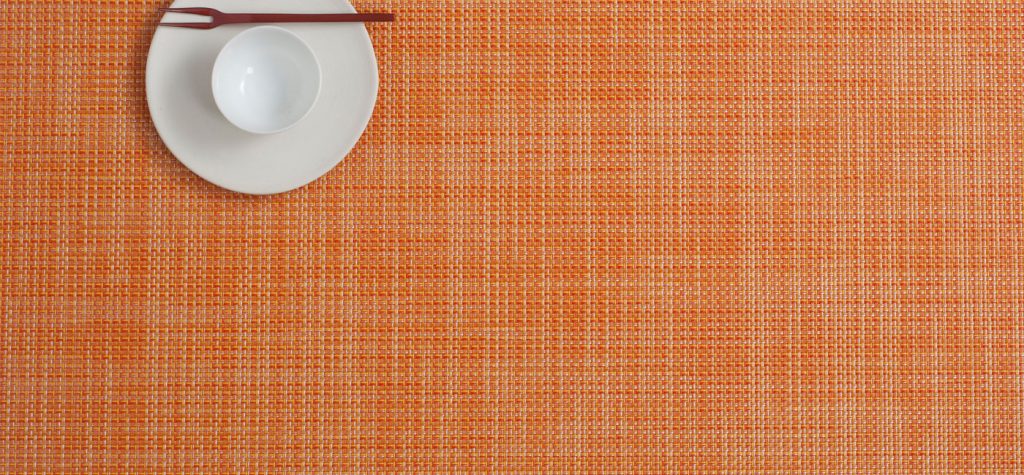
7) They’re antimicrobial. All Chilewich woven vinyl products contain Microban® antimicrobial protection, which works to inhibit the growth of stain- and odor-causing bacteria, mold and mildew. Who wouldn’t want this peace of mind?
8) They’re environmentally friendly. Compared to conventional woven vinyls, which are made using petroleum-based compounds, Chilewich uses an innovative yarn called TerraStrand which contains 25% renewable vegetable content. So they’re better for the environment.
9) They’re made in the U.S. About 90% of all Chilewich products are made in Alabama and Georgia, which allows Sandy Chilewich (“I don’t want to deal with long lead times,” she says) loads of design freedom. Plus, turnarounds on custom pieces (available in every color and almost every design) is very quick … usually less than four weeks.
So now you’re in on one of the service industry’s biggest secrets.
Moser Cubism Double Old Fashioned Feature in HGTV Magazine
Ready for some fun decorating? HGTV Magazine sure looks like it is…

And featured in this colorful issue is our Moser Cubism Double Old Fashioned glass:
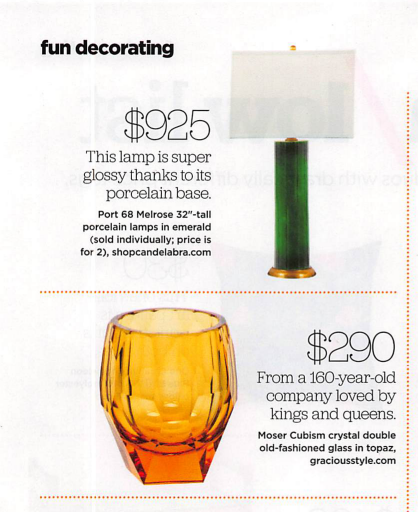
It’s available in eight colors, so take a look for yourself and see how you could have some real fun decorating.
A Parisian Find: Hand-Embroidered Linens from Renaissance Paris
In the 8th arrondissement in Paris near the elegant Musee Nissim de Camondo, there’s a small shop devoted to hand-embroidered linens, like the ones the fashionable Camondos would have enjoyed during their heyday. And even though the space is small, you’ll quickly see why the Palais de l’Elysee (the official residence of the President of France), the Ritz Paris, and designer Jacques Garcia all turn to Celine Perrin-Davy’s Renaissance Paris for their custom embroidered linens.
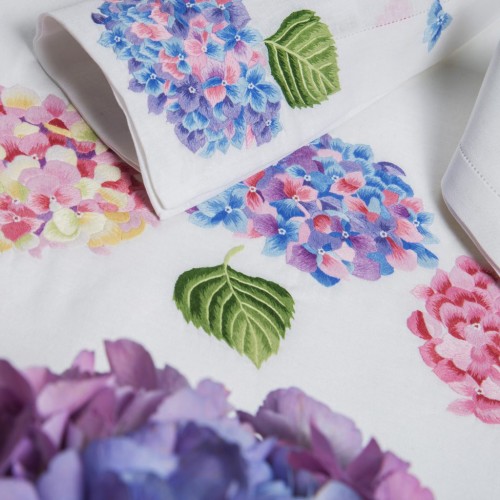
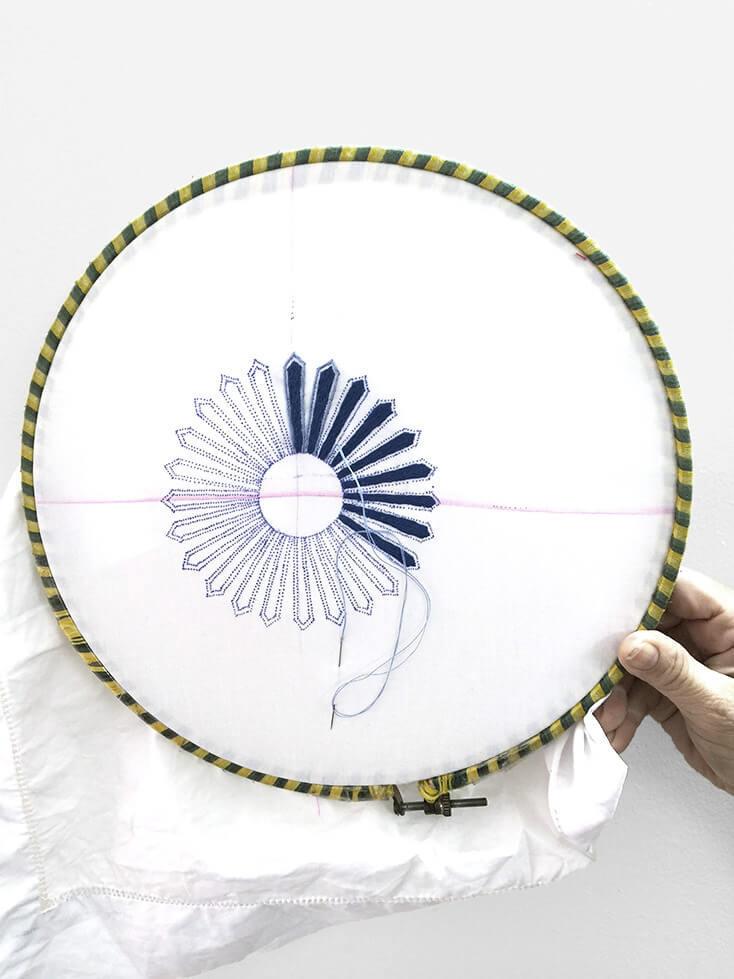
Ms. Perrin-Davy’s designs are a study in sophistication: examine each piece carefully, and you’ll see a multitude of techniques employed, each used to bring out the artistry in each collection.
To start, they have more than thirty hemstitch techniques to choose from.
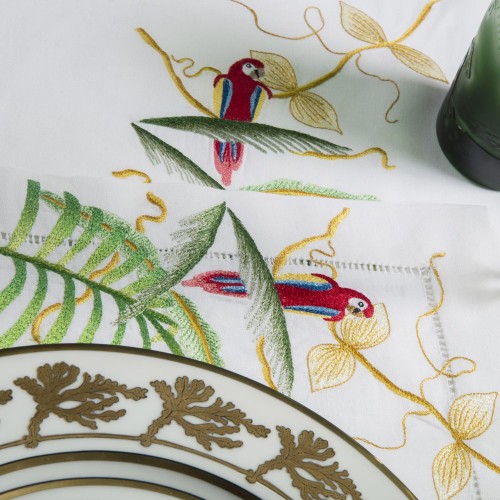
To that, you can add any design you’d like. For example, Jungle brings a tropical rain forest alive; this style is particularly popular aboard private yachts.
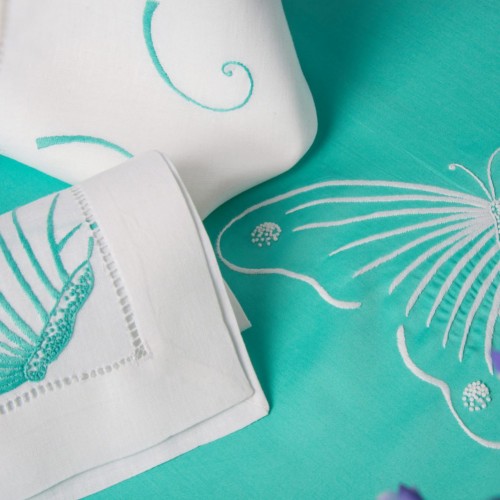
If you prefer something more colorful, choose from a variety of colorful backgrounds in a range of fabrics including Egyptian cotton percale, cotton voile, linen, silk, and organdy. Here’s Butterflies in white and aqua:
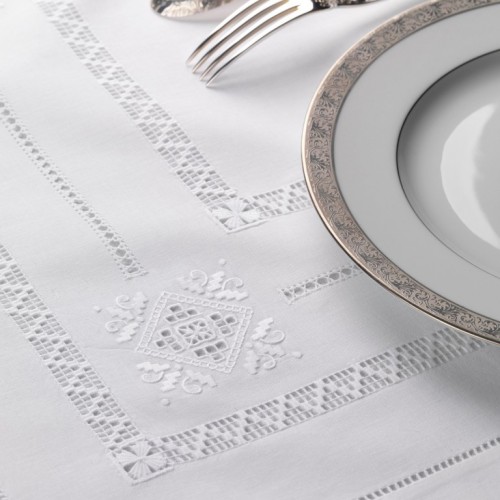
For something more traditional, Elegance sports the points de perle three-dimensional technique.
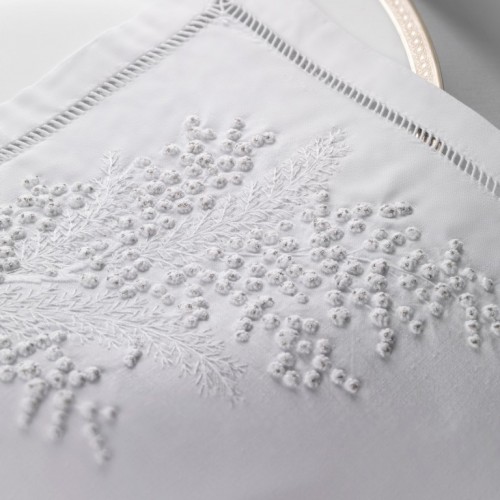
At Gracious Style, we’ve selected a range of Renaissance Paris designs, all of which are hand-embroidered to order and available in 4-6 weeks. But if your heart is set on a truly bespoke piece, we’ll work with Ms. Perrin-Davy to create a piece just for you.

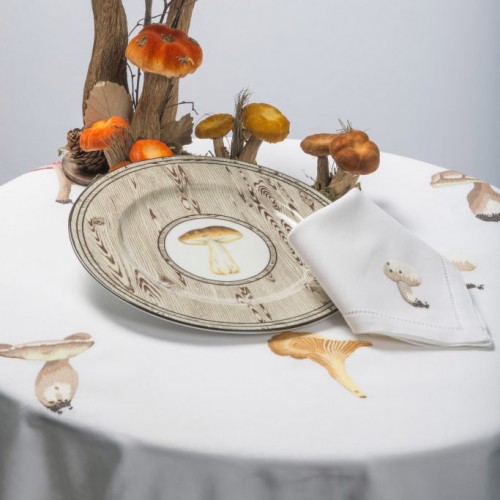
For example, here’s a collection she designed around Alberto Pinto’s Champignons dinnerware:
If you’ve always wanted to own truly bespoke bed, table, or bath linens to match your wallpaper, rug, or anything else, let us know and we’ll be happy to help you.
To see more Renaissance Paris collections, click here.
Returning to Laguiole … the Birthplace of the Classic French Pocket Knife
Thirty years ago, a group of knife-lovers in southern France were worried that the skills for making their traditional knives were going to be lost. After all, who still cared about bone-handled hunting knives once used by traveling shepherds in Spain? Apparently, Philippe Starck did. As did the French government, which recognized that these were irreplaceable treasures. So with their help, this little group of artisans started a thriving business making these knives.
In an era of mass-market production, this seemed like an impossible dream, but through the efforts of those folks, today this company – Forge de Laguiole – makes the highest-quality Laguiole implements in the world. And every piece is completely made, from beginning to end, in the place where it all started: the original village of Laguiole.

If you’re ever in southern France (perhaps to visit Michel Bras’s three-Michelin starred restaurant), schedule a tour of Forge de Laguiole’s headquarters. Once there, you’ll come face to face with master knife makers, breathe in the scent of the raw materials used to make these pieces, and hear the sound of sandpaper as it’s passed back on forth on each piece.
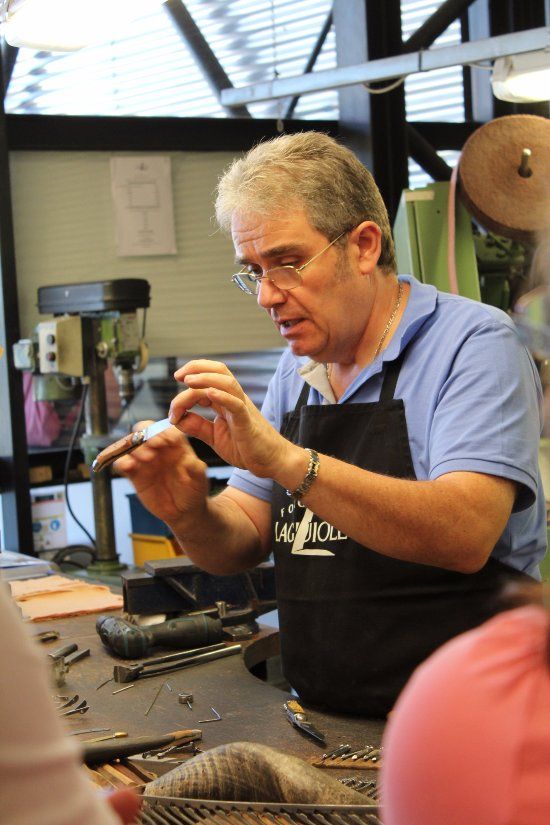
The building, by uberdesigner Philippe Starck, is unlike any other in the whole region. Tasked with creating a space which reflected the founders’ goals of combining tradition with innovation, Mr. Starck designed a building which uses glass and aluminum and features a 60-ft tall blade soaring into the sky.

There, you’ll be met by folks just like these; folks who’ve spent a lifetime making knives.
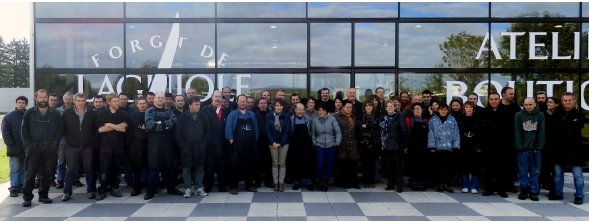
But not just any knives: these are the cult-favorite Laguiole knives, synonymous with French art de vivre and gastronomy.
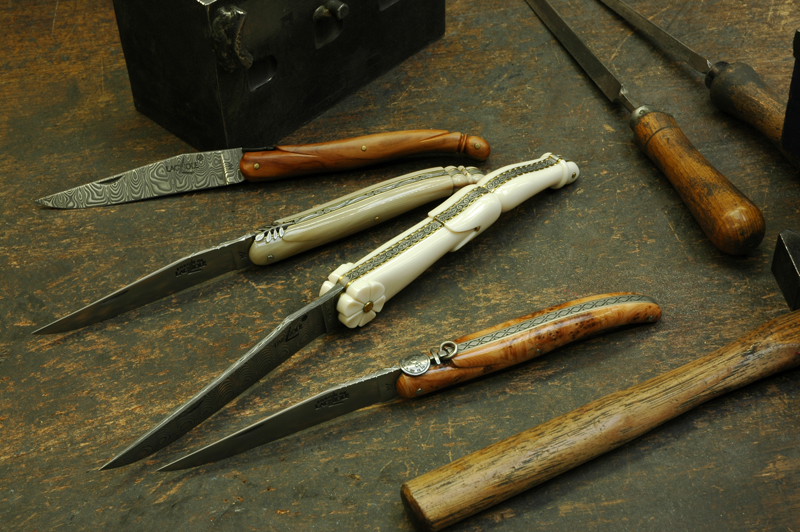
Inside, you’ll learn that Laguiole is not a brand or even a trademark; rather, laguiole refers to a classic style of knife featuring a slim, sinuous shape common to this area. Each laguiole knife is about 5 inches long when closed, with a narrow, tapered blade, a steel backspring, and high-quality construction.
Laguiole knives originated from the “navajas” used in Andalusian Spain, which were brought over by shepherds and cattle herders moving between Spain and southern France. In Spain, these navajas appeared around the late 1600’s, when there were increased restrictions on the wearing of bladed weapons by persons outside the Spanish nobility. So the intrepid locals designed something that could be used both as a utility and a fighting knife.

Over time, the design of the navajas merged with those of local French folding knives, resulting in the classic laguiole. Later, some models began featuring corkscrews, in response to the introduction of bottled wines and the needs of bar owners to work quickly during mealtimes.
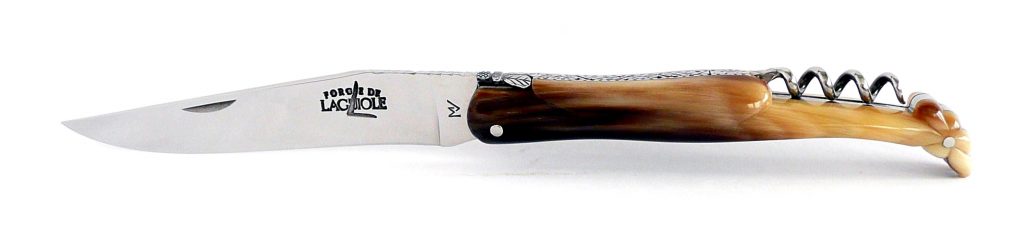
In France, laguiole production is centered around the town of Thiers and the village of Laguiole, both located around 100 miles apart in southern France. Together, this region accounts for 70% of the cutting tool production in France, so it is deeply steeped in the tradition of French knife manufacturing.
Traditionally, Laguiole handles were made from cattle horn, but now many other precious materials are used, including exotic woods, horn, pearl, and fossilized ivories. Here’s a elegant version featuring a rosewood handle.

In 1988, French designer Philippe Starck designed a knife for Forge de Laguiole with a polished aluminum handle and a corrosion-resistant steel blade which made waves around the world. Today, this knife is part of the permanent collection of the Museum of Modern Art in New York.
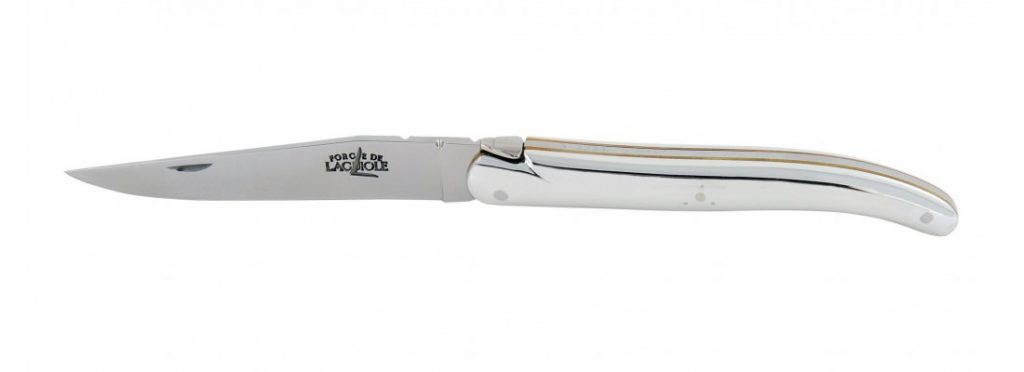
Quality Laguiole knives are very time-consuming to make. There are approximately 109 production steps required to make a one-piece laguiole (single blade), about 166 for a two-piece one (blade and one other tool), and about 216 for a three-piece model (blade and two tools).
French manufacturers stamp a trademark or signature into the steel of their knives. In addition, they are often decorated with a variety of motifs. In 1909, the village of Laguiole agreed that the bee would be their sign. As the legend goes, the bee was a sign of honor, given to soldiers for their bravery.
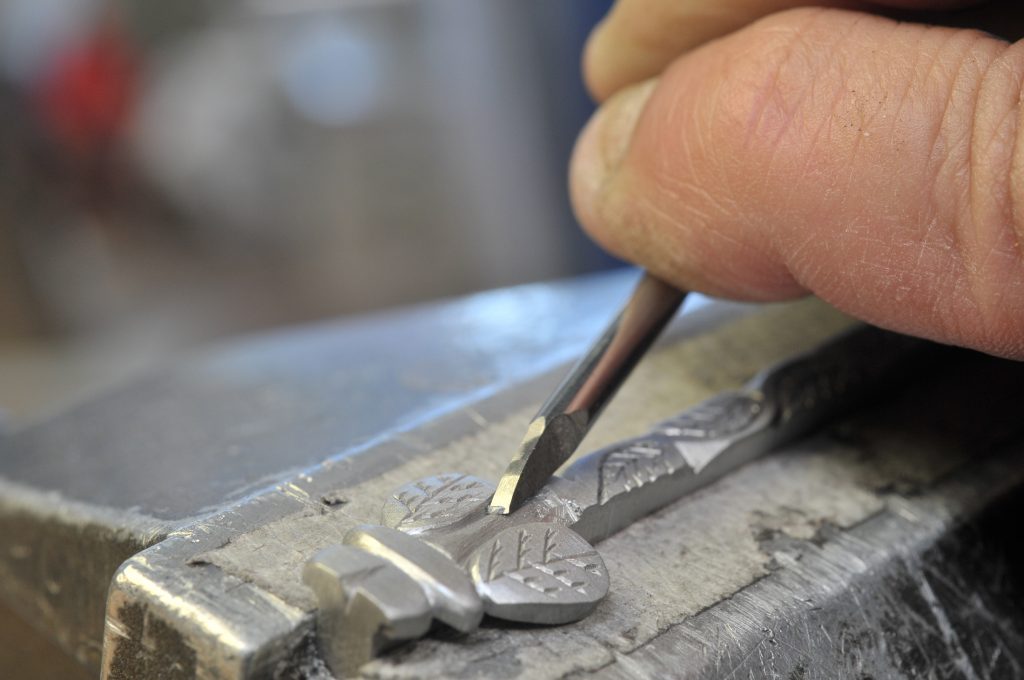
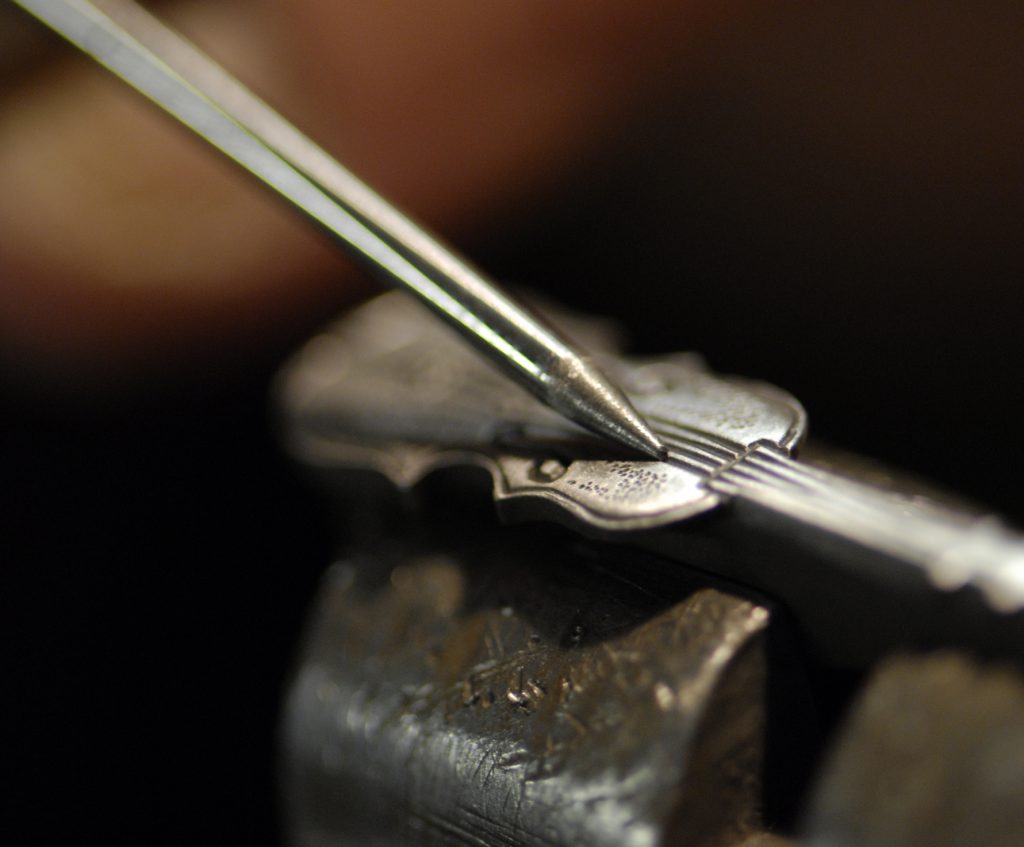
For special commissions, other motifs can be carved, like this custom violin.
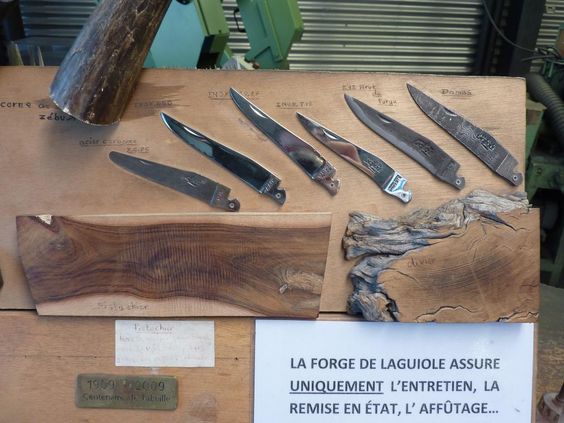
Laguiole knives are more than just knives: they are handcrafted expressions of a way of life.
When you’re done, get back in your car and head to the nearest bar. Where, if the service is slow, you’ll be able to open your own bottle of wine!
Video: The Lotus Layered Napkin Fold
Kim Seybert’s table settings are so gorgeous that you practically don’t even need food to have a party. Part of her secret is knowing how to add volume to her napkins.
For the lotus layered napkin fold below, all you need are:
1) One organza napkin
2) One regular napkin
3) One napkin ring
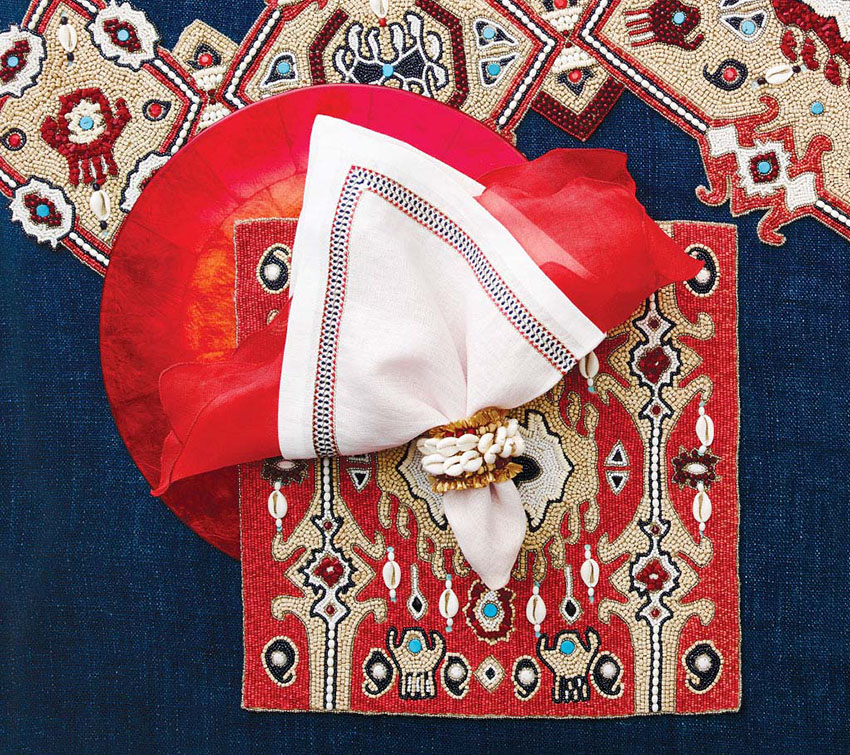
And to learn how to put them together, just follow the instructions in the video below. We promise you everyone will be impressed.
The Definitive Guide to Christofle Flatware
Founded in 1830, Christofle is the most renowned name in French flatware. Whether contemporary or classic, whether its contours are rounded or architectural, Christofle flatware is manufactured to exacting standards: Every piece of Christofle flatware must pass through 52 people, an impressive process known as “100 hands.” Amazingly, they’re also easy to use — every piece of Christofle flatware is designed to be dishwasher safe.
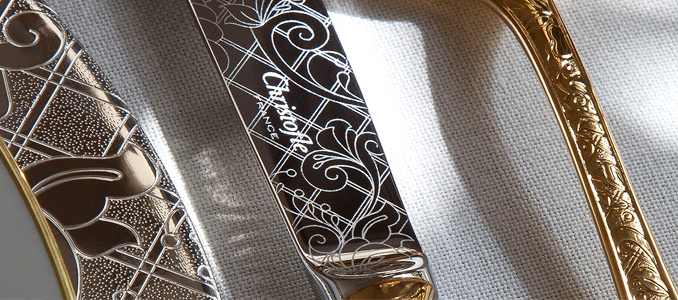
Each Christofle pattern has a fascinating story behind its design and creation. Here, we’d like to share the stories behind all of Christofle’s current flatware collections with you.
ALBI
Year: 1968
Style: Louis-Philippe
Named after the French city of Albi, this collection was inspired by the straight, pure lines of Albi’s cathedral, which is renowned for its remarkable architecture and single nave. The perfect all-purpose model, it includes the most complete range and goes with every style of dinnerware.
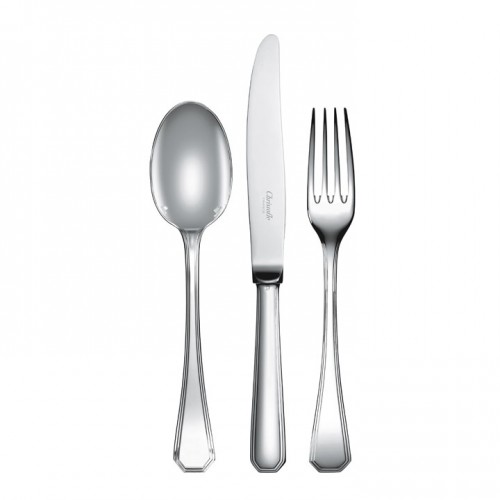
AMERICA
Year: 1933
Style: Art Deco
In the years following World War I, America was the country that through its music, literature and lifestyle, best symbolized freedom and victory for the French. As a tribute, Christofle named this collection “America.” This architectural model, with cut-off corners, is characteristic of the Art Deco style and was presented at the International Exposition of Arts & Techniques in 1937. Harmonizes beautifully with all dinnerware patterns, but goes particularly well with plates with broad rims, modern ornamentation, and geometric designs.
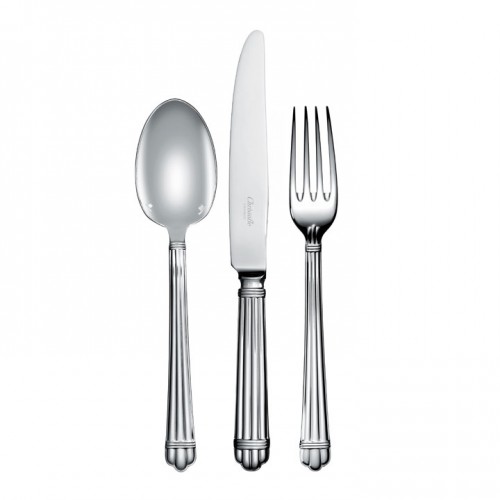
ARIA
Year: 1985
Style: Postmodern
Christofle revolutionized flatware styles with this model. Often imitated, Aria is characterized by its elegance, its fine fluting on the stem, and wide transversal rings. Taking its cue from antique columns and the draping of Roman togas, it goes with all dinnerware styles.
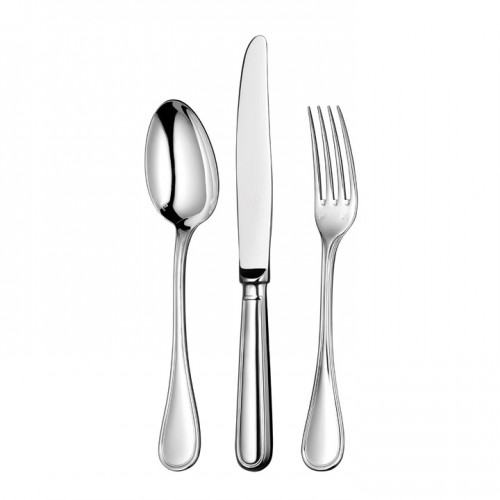
BY
Year: 2005
Style: Contemporary
Designed by Bernard Yot (whose initials are featured in the name of the collection), BY features pure lines accentuating the play of contemporary volumes. The unexpected twist in the knife creates a beautiful new balance.
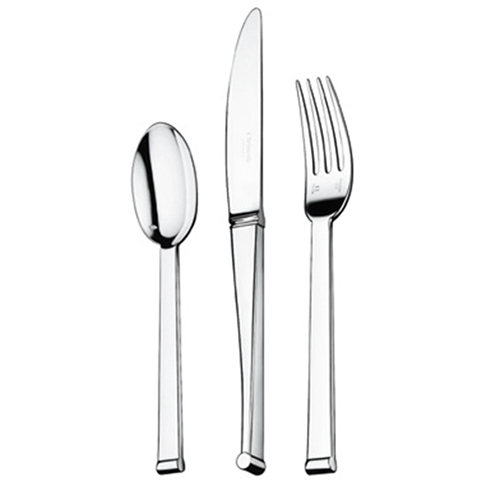
CHINON
Year: 1862
Style: Louis-Philippe
This model features “shoulders” on the handle and very sober ridges. It marries well with all classic dinnerware styles. Chinon was previously known as “Filet” or “Vieux Paris.”
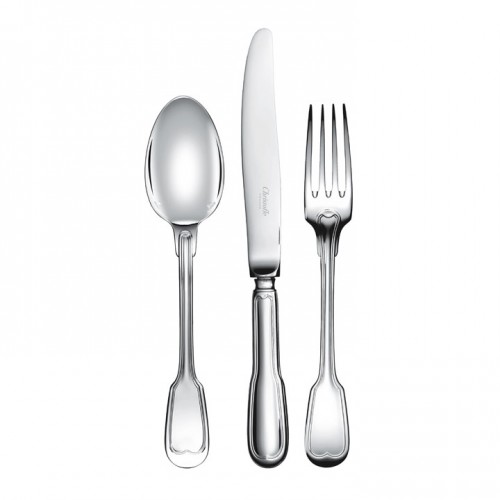
CLUNY
Year: 1964
Style: Louis XIII
A very discreet and timeless collection, ideal for engraving initials or coats of arms. Cluny dates back to Christofle‘s first catalog in 1862 when it was known as “Uni,” stressing the absence of any decorative elements. It still maintains an overall Louis XIII feel and goes particularly well with dinnerware decorated with colored stripes and stylized floral patterns.
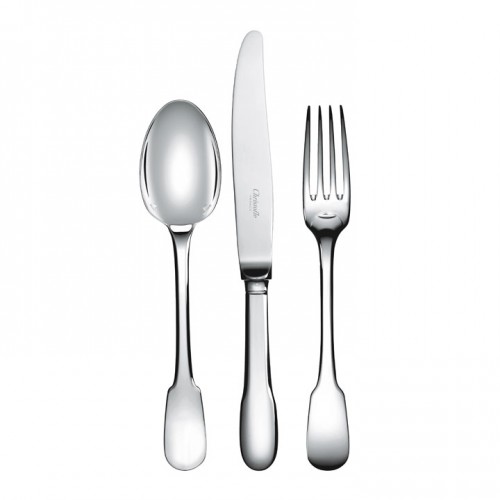
COMMODORE
Year: 1951
Style: Art Deco
Christofle presented this pattern at the Milan Triennial in 1951. This model is typical of the aesthetic revival of the first half of the century and can be considered Art Deco. Its sobriety and the purity of its lines are heightened by a decoration of center links at the base of the bowl of the spoon, the tines of the fork and the knife blade. The same ornamentation, in a smaller version, is found at the base of the flatware’s handles, balancing the composition.
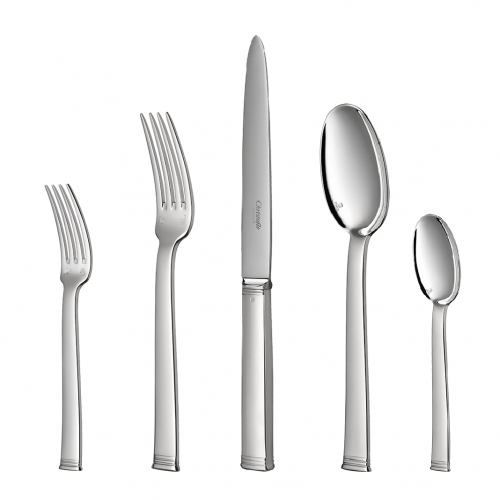
FIDELIO
Year: 1992
Style: Pure, simple lines
Named after a Beethoven opera that expresses the tenderness between a young couple, Fidelio symbolizes refined simplicity and sensuality. Decorated with a central rib in relief. Harmonizes with floral motifs and dinnerware with colored stripes and rims.
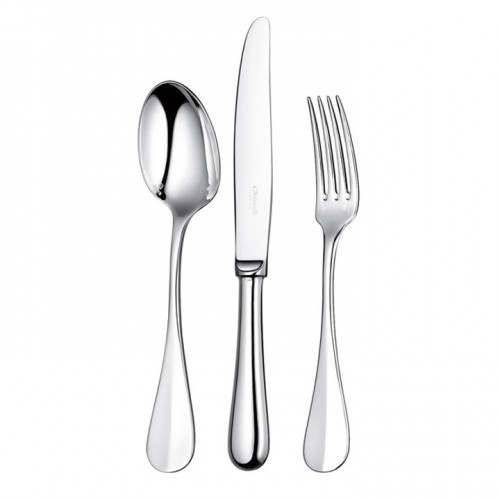
GALEA
Year: 2000
Style: Naturalist classic
A reinterpretation inspired by an ornamental motif created by Nicolas Cornu in 1775, the double interlacing creates harmony in movement. Elegant, modern and luxurious. Goes well with all styles of dinnerware.
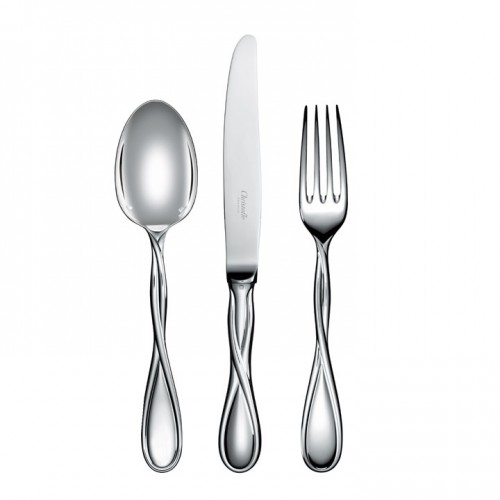
HUDSON
Year: 2010
Style: Art Deco
An Art Deco collection with elaborated lines.
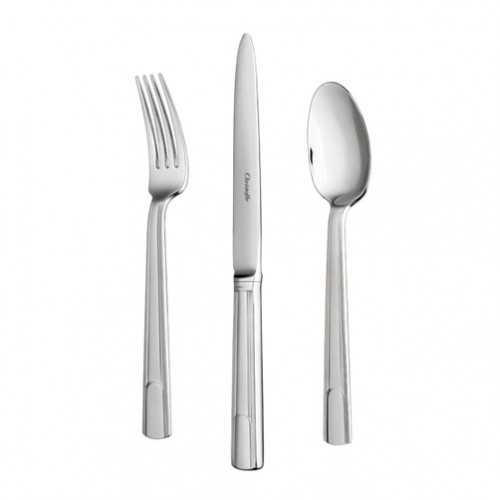
JARDIN D’EDEN
Year: 2010
Style: Baroque
Designed by Marcel Wanders, Jardin d’Eden is an intricate pattern characterized by interlacing vines, plants and flowers and named after the most famous garden in history. Handles and backs are decorated with a single engraving, like a ballerina’s leg garbed in embroidered hosiery. Fine striping outlines the contour of each item.
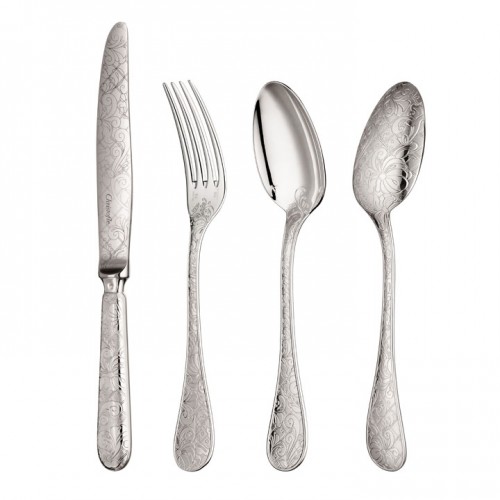
L’AME DE CHRISTOFLE
Year: 2014
Style: Contemporary
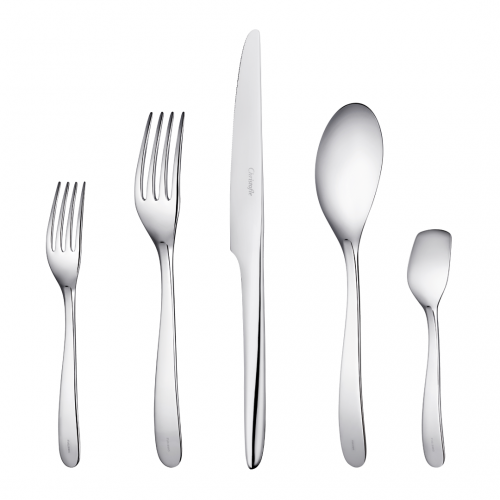
Designed by Spanish designer Eugeni Quitllet, L’Ame de Christofle features tapered handles, voluptuous curves and polished sheen, but these pieces also reflect a nod to the artist’s love for coffee on Barcelona patios, tapas gatherings and sweet post-siesta treats. L’Ame introduces three new pieces to Christofle‘s flatware portfolio: a “palillo” (cocktail pick), an espresso stirrer, and an ice cream spoon.
MALMAISON
Year: 1967
Style: Empire
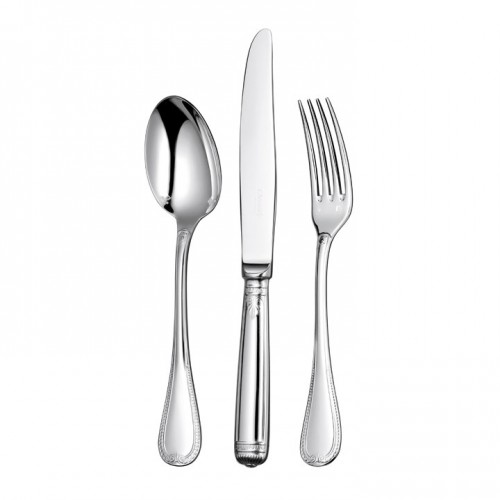
One of Christofle’s most historic patterns, Malmaison typifies the Empire style, with its frieze of delicate palm and lotus leaves and symmetrical design. The name is a nod to the Malmaison château, the favorite residence of Napoleon Bonaparte and Empress Josephine. Harmonizes with dinnerware sporting thin bands and relatively sober patterns.
MARLY
Year: 1897
Style: Louis XV
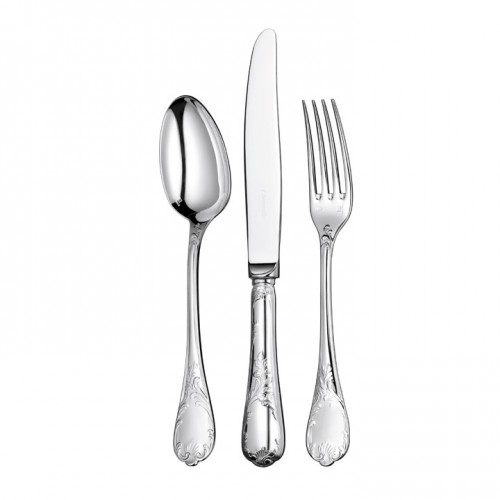
Named after a palace built by Louis XIV outside Paris, Marly has been one of the most detailed and ornate patterns in Christofle’s catalog since it was created in 1897. The fine chasing is an exquisite example of Rocaille with its asymmetrical plant and shell motifs. This pattern expresses the lavish refinement of the French table and is characteristic of the Louis XV style. Harmonizes with floral motifs, Louis XV-style plates and dinnerware decorated with thin stripes.
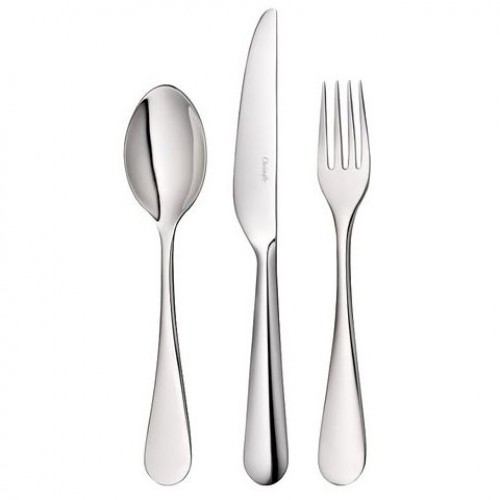
MOOD
Year: 2015
Style: Pure, simple lines
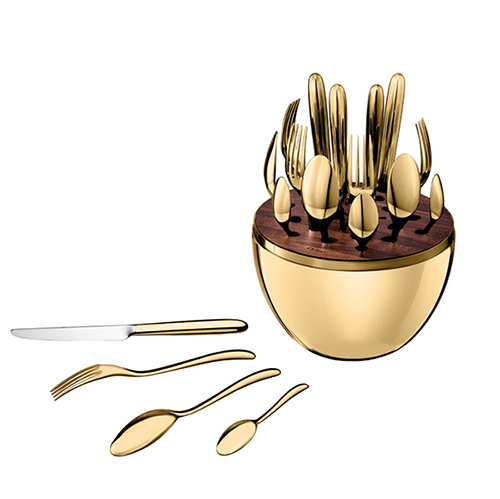
Encased in decorative objects, MOOD is perfect for a more relaxed lifestyle. Curved, completely smooth and polished, each piece is very comfortable to hold.
ORIGINE & ORIGINE MAT
Year: 2009
Style: Modern
Origine was created for those who find beauty in simplicity and shun more ornate designs. Instead of etchings, gilding or embellishments, it relies on clean lines, matte and mirror finishes, short flared blades and generously rounded handles.
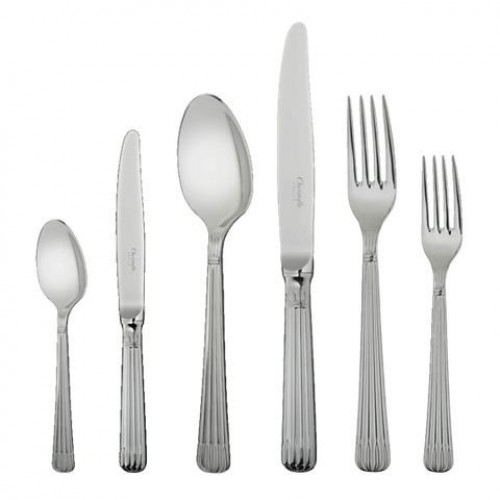
OSIRIS
Grooved reeds held by a double center link spreading out into a harmonious fan. All roundness and softness, the refined details of its discreet ornamentation give this design its serene beauty. Osiris is a hymn to nature, evoking the aquatic and plant worlds. Its timeless elegance makes it ideal for all beautiful tables.
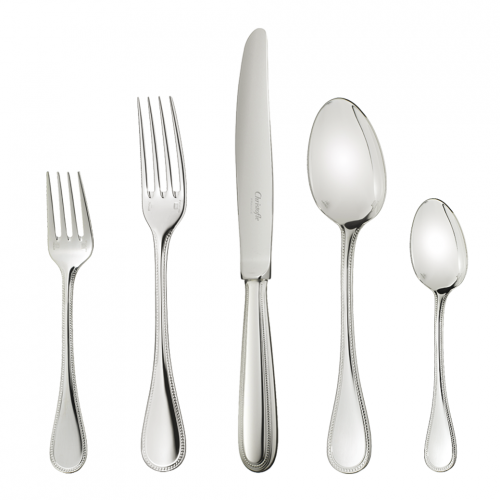
PERLES
Year: 1876
Style: Louis XVI
Inspired by the beaded ornamentation so typical of the Louis XVI style, the beads are arranged so that – like a classic pearl necklace – they grow smaller toward the top of the handle. Harmonizes with dinnerware with narrow stripes, wide flowered or solid color bands and Louis XVI-style floral motifs.
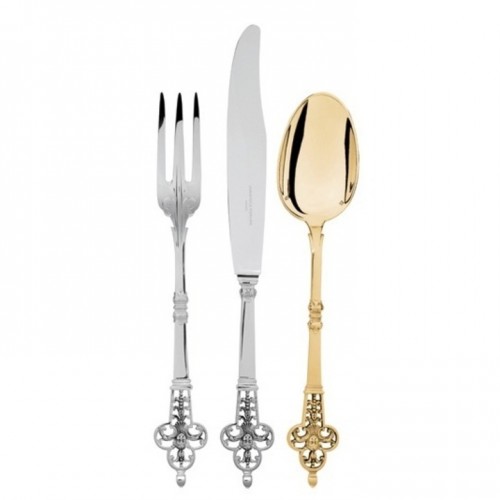
RENAISSANCE (Available by special order)
Year: 1960
Style: Renaissance
Based on the 16th-century Renaissance style, this model is Christofle’s most finely worked. The manufacture of this flatware requires the use of several silversmith techniques: stamping, casting, assembly and chasing. No other silversmith in the world offers a comparable model.
RUBANS
Year: 1907
Style: Louis XVI
Characteristic of the Louis XVI style, crossed ribbons along the edge of the flatware end in a bow. Complements dinnerware featuring narrow colored stripe or passementerie decorations.
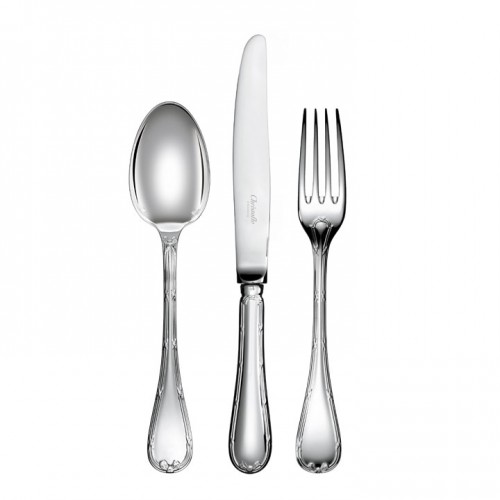
SPATOURS
Year: 1862
Style: Louis XV
Spatours is a word invented by Christofle which combines “spatula,” the term for the end of a piece of flatware, and “contour,” which can describe a sinuous or curved line, like that of this model. The slender ridge and curve were common decorative elements in the eighteenth and nineteenth centuries. Harmonizes with dinnerware decorated with a narrow stripe or floral motifs.
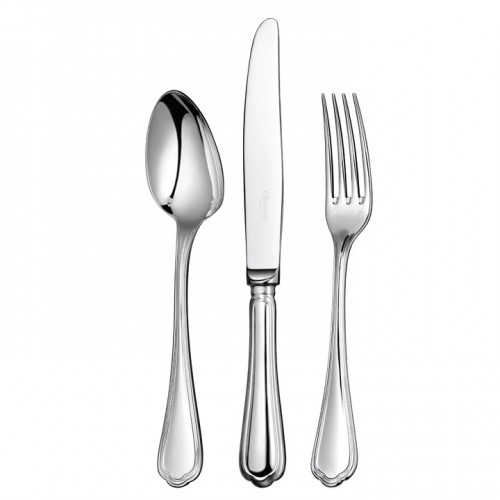
To view all of Christofle’s flatware collections, click here.
Alain Saint-Joanis: The Poshest Flatware Maker You’ve Never Heard Of
Wolfgang Puck knows his forks and knives. Same with three-star Michelin chef Pierre Gagnaire. As does, of course, the King of Morocco. And when each of these opened celebrated restaurants in the last few years, they all turned to Alain Saint-Joanis for custom flatware. This small, family-owned company has been making cutlery in La Monnerie-le-Montel in the center of France since 1876. And although they’re not a household name, they are – for a certain group of folks – the only go-to when you want custom handmade flatware.
Whether you prefer lacquered (for your city dining room), olivewood (for the beach house in Martinique), resin (for your annual 4th of July bash), or a custom color to match your yacht, they can make it for you. We sat down with Alain Saint-Joanis President Alain Poujol for a few questions.
– What makes Alain Saint-Joanis unique?
The huge variety of looks … people come to Alan Saint-Joanis for quality and design. We have collections inspired by Art Deco, Celtic, Greek, nature … it goes on and on.
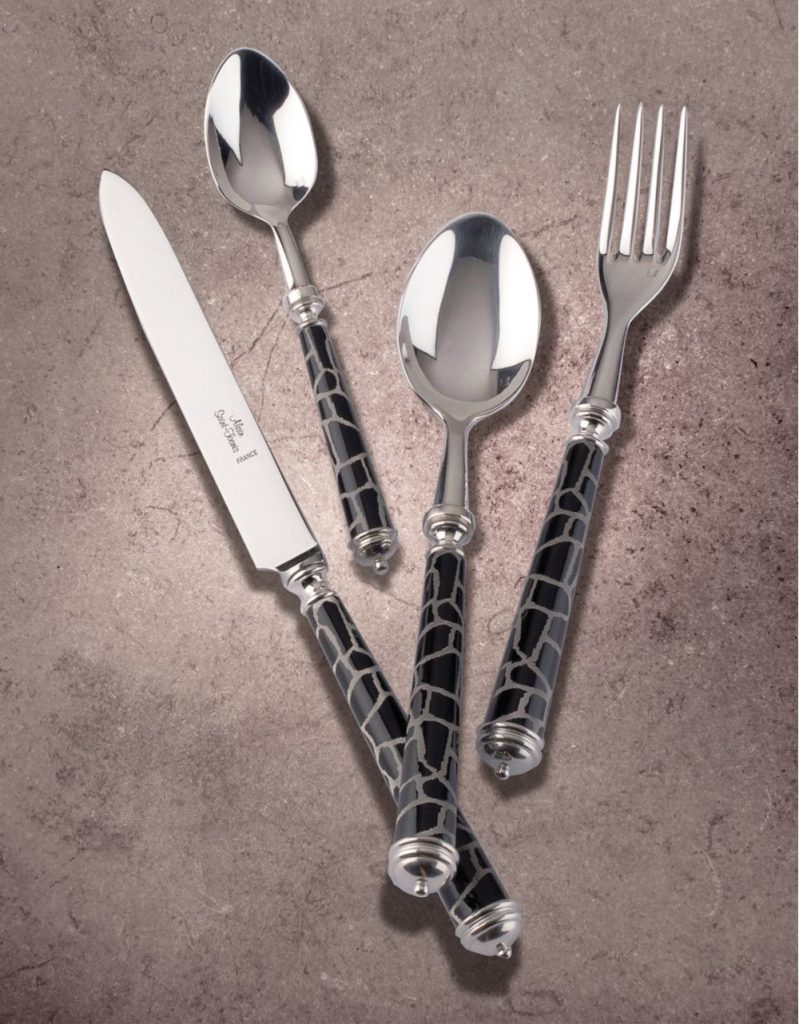
– What’s driving your new introductions?
We work with designers such as Thomas Bastide (head of design for Baccarat) for some styles, but most of the designs are developed in-house. That’s the privilege of being an old house…we have archives. For example, our Bamboo pattern is a re-edition from the 1950’s; this is rare nowadays, but the handles are made using real bamboo.
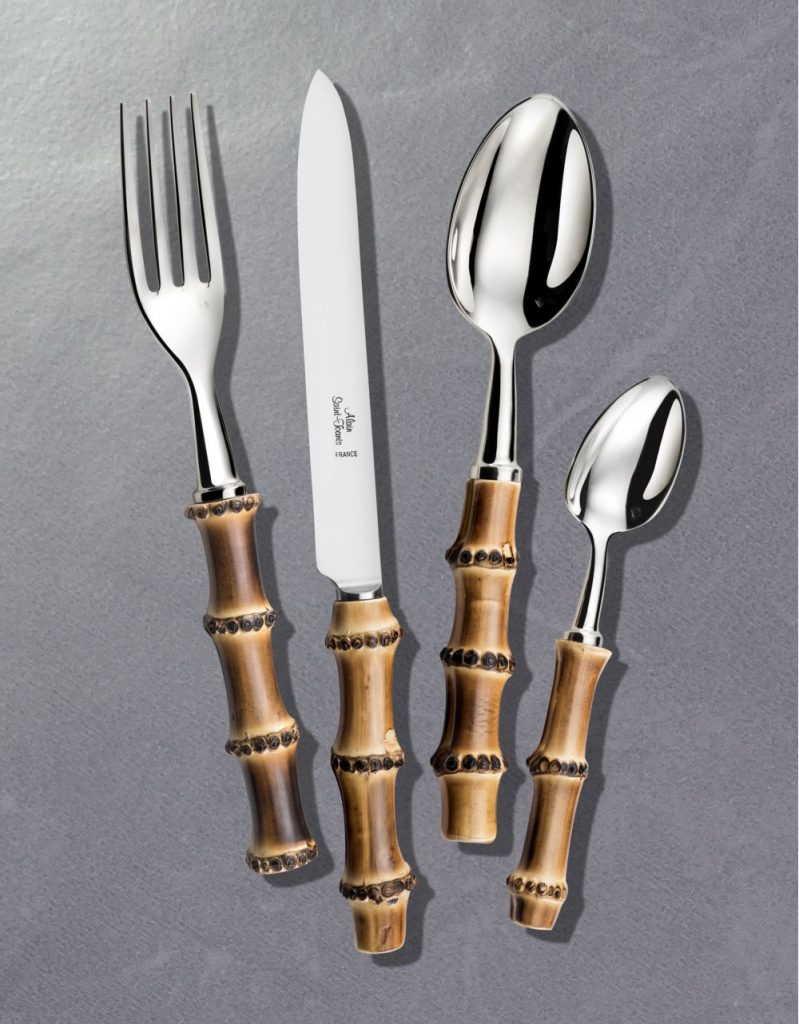
– How did this collaboration with Thomas Bastide come about?
Thomas Bastide is a longtime friend and a fellow motobiker. We share that passion. So we got together, talked about some of his ideas for new collections and developed them.
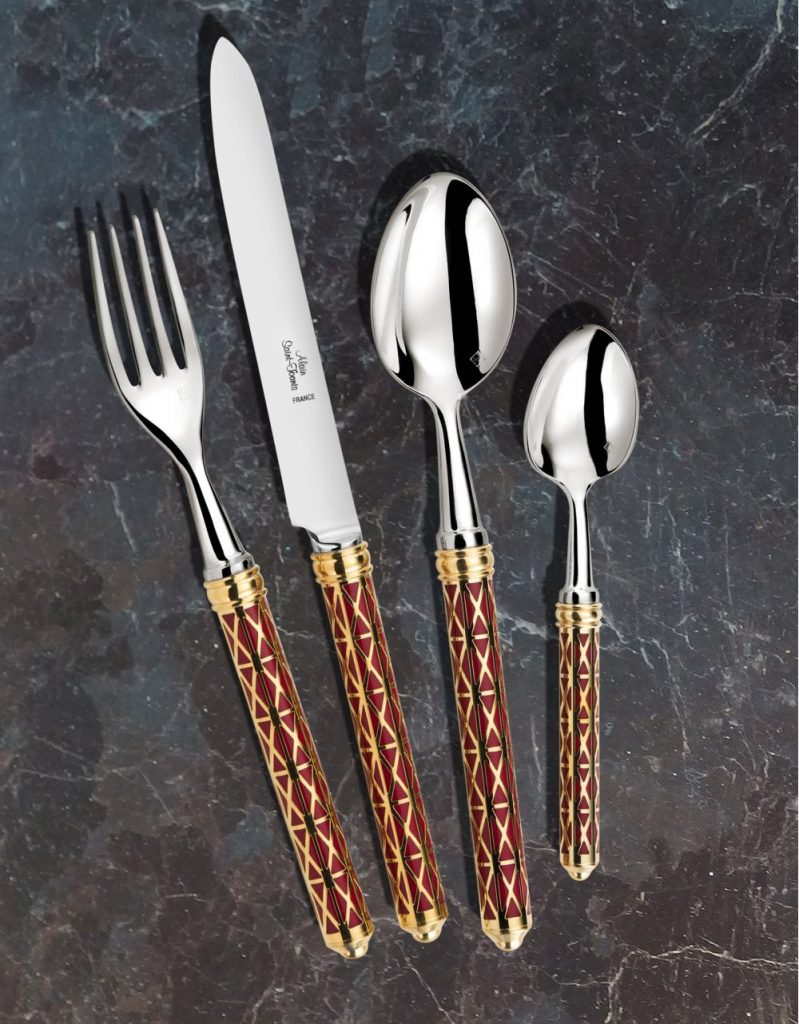
– Can you tell us about a project that stands in your mind?
Over the years we have developed so many great projects … for a wealthy New Yorker, we created a pattern with the handles looking like the Empire State building. You won’t see any pieces or pictures unless you get invited to his dining room. Part of the deal was to break the molds after the order was completed.
– Why are clients choosing your line? What are you known for?
Clients come to us for our designs, but they stay with us because of our quality. Right now wood is very popular because it’s natural. For U.S. customers, wood is protected by the Lacey Act – an Import Declaration – so it’s harder to come by. Our olivewood comes from trees that were used for their olive oil; we buy the wood afterward.
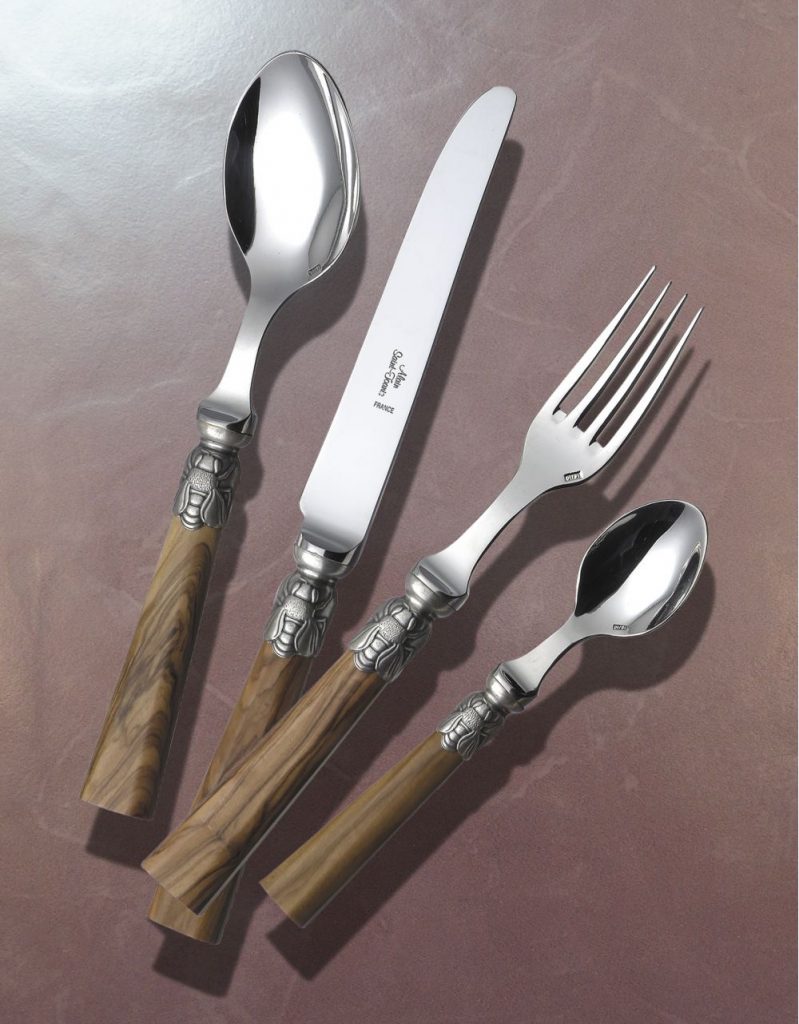
Also, we we are not overdistributed, and that means a lot to our clientele. Our work on metal is exquisite; one customer called our work “jewelry for the table,” and we really appreciated that.
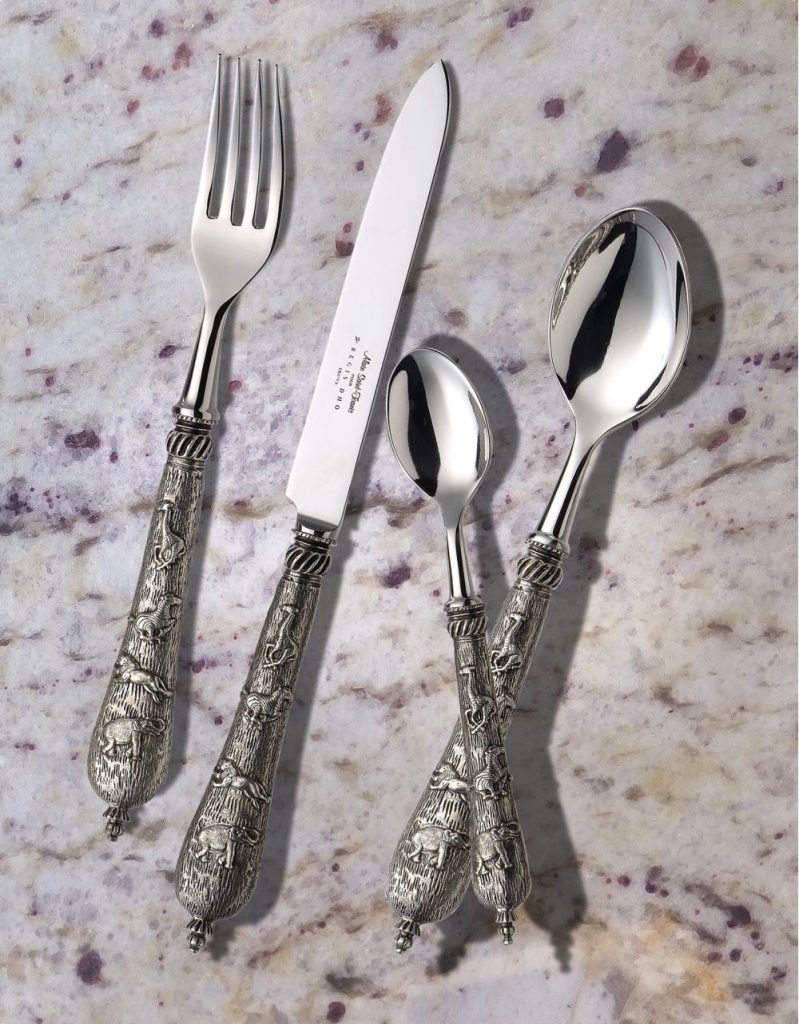
– Who’s buying these? Is it being used in any restaurants or hotels?
Our main business is retail. Over the years we have been providing our silverware to a number of celebrities, but we never communicate on the names. We do sell to high-end restaurants. Recently we worked with the Crillon hotel in Paris for their reopening, we’ve also done Pierre Gagnaire’s restaurants worldwide, the Royal Mansour in Marrakech, and Wolfgang Puck’s restaurant at the Bel-Air in Los Angeles.
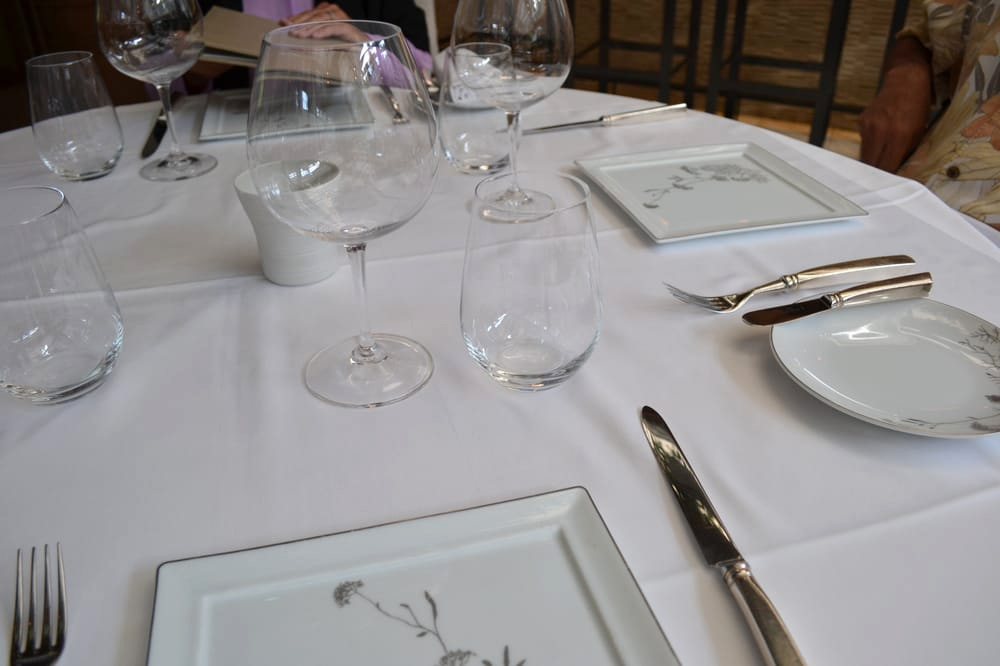
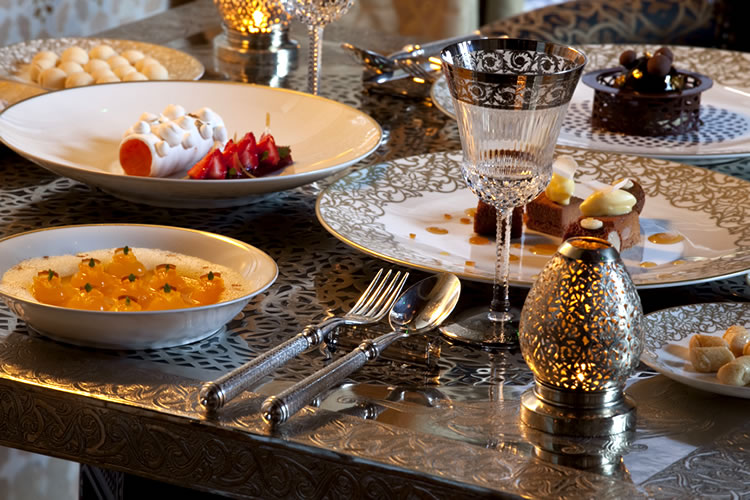
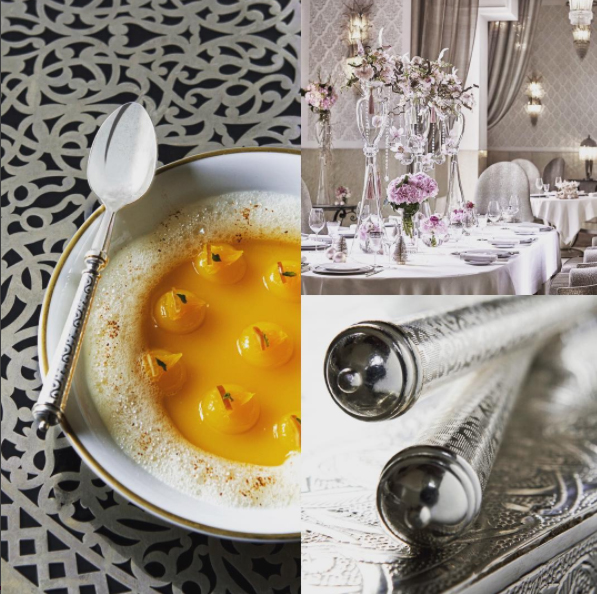
– You seem to do a lot of work with yacht owners. How did this get started? Can you share some of your more interesting projects?
Yachts and aircraft fittings, yes. Especially yachts manufactured in the Lurssen shipyard in Bremen (Germany). That’s where all the luxury megayachts come from. They started in business in 1875 and Alain Saint-Joanis in 1876, so we go way back.
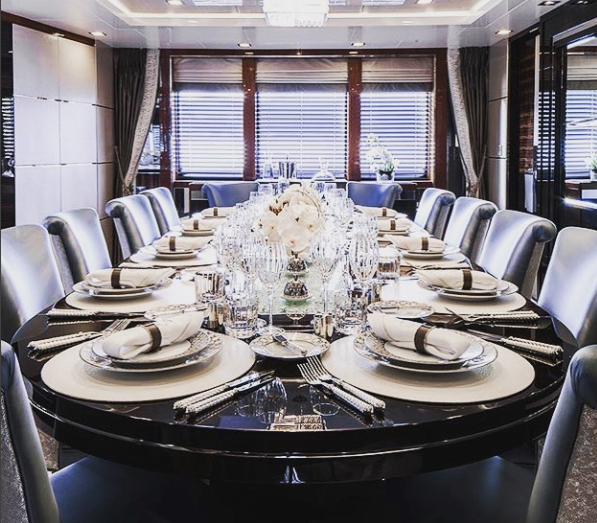
– What’s next for Alain Saint-Joanis? We saw something about Basel on Instagram; can you share any details?
Art Basel is a great source of inspiration. Our Cable pattern, for example, is derived from the body of a writing instrument. Also Basel is worth visiting just for the fabulous Lackerli (local cookies). Editor’s note: if this has gotten you thinking, here’s a recipe for lackerli from Pierre Herme.
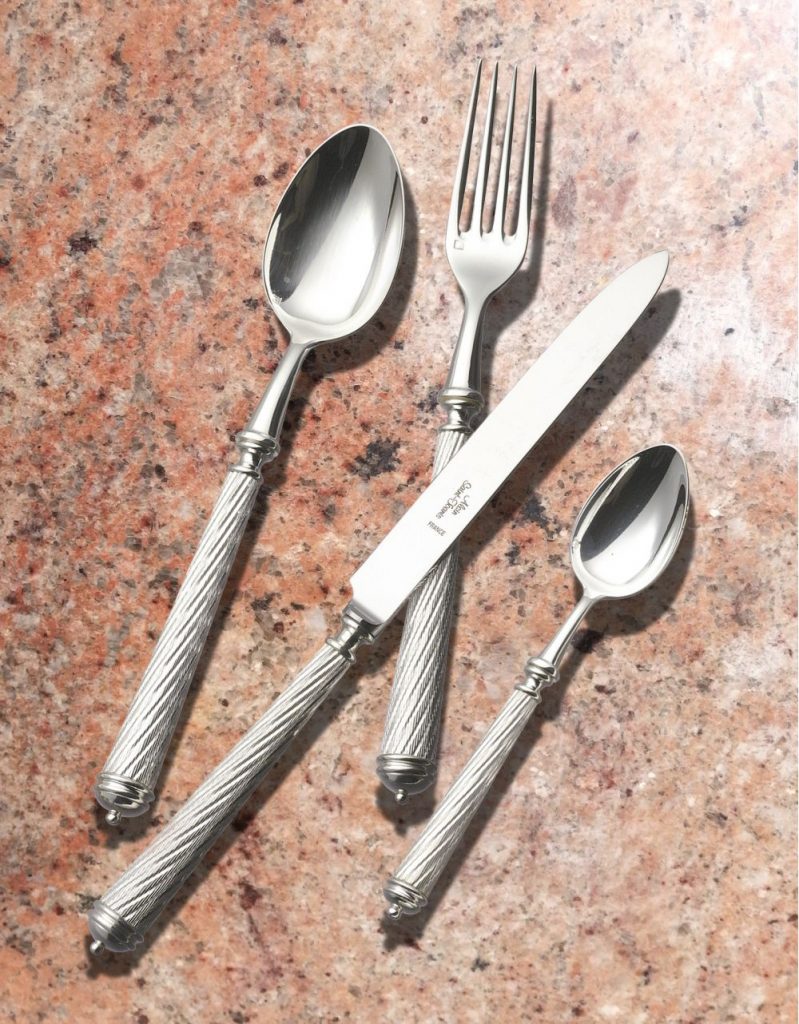
– Are all your pieces entirely made by hand?
No. The designs on the wood and metal are made in small runs, but they are automated. The assembling and the polishing is all done by hand. Also, the polishing and sharpening on knife blades is all done by hand.
– We notice you use a lot of wood in your collections. How did this come about?
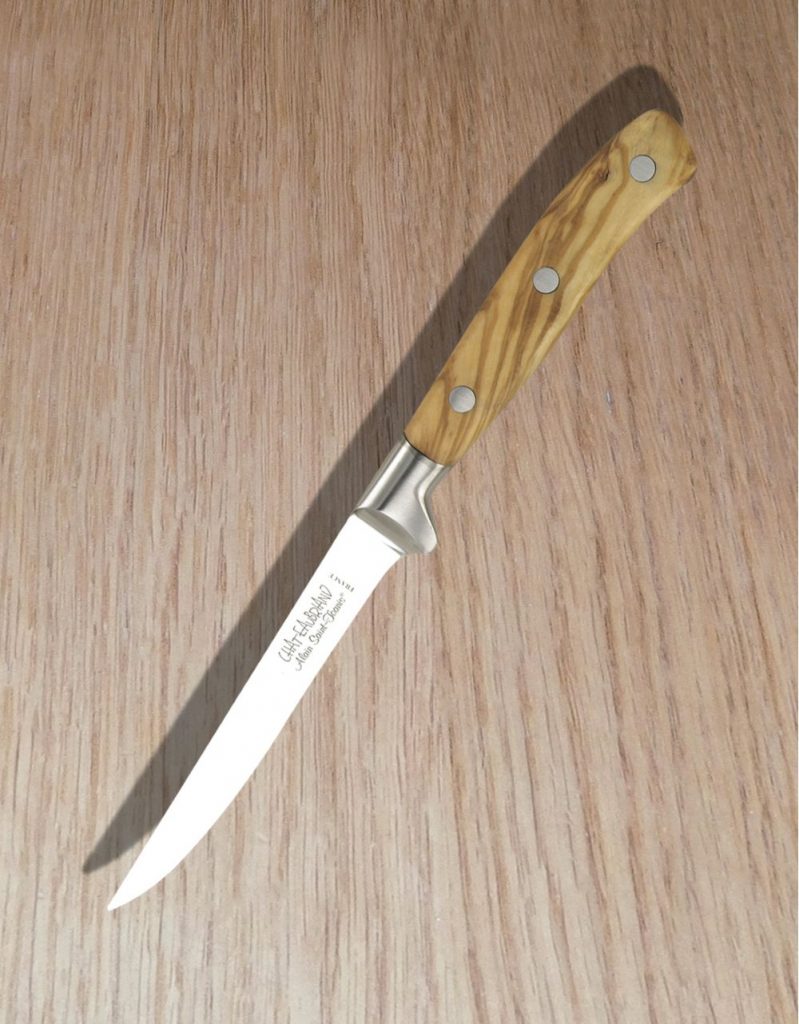
We’ve been working with wood forever. In the old French tradition, forks and spoons would come in sterling silver, and the knives would come with a metal blade and either a wooden handle or a bone handle. At that time it was mainly ebony wood; now we’re using a lot of olive wood. We liked the way that looked.
– How long does it take to make your pieces?
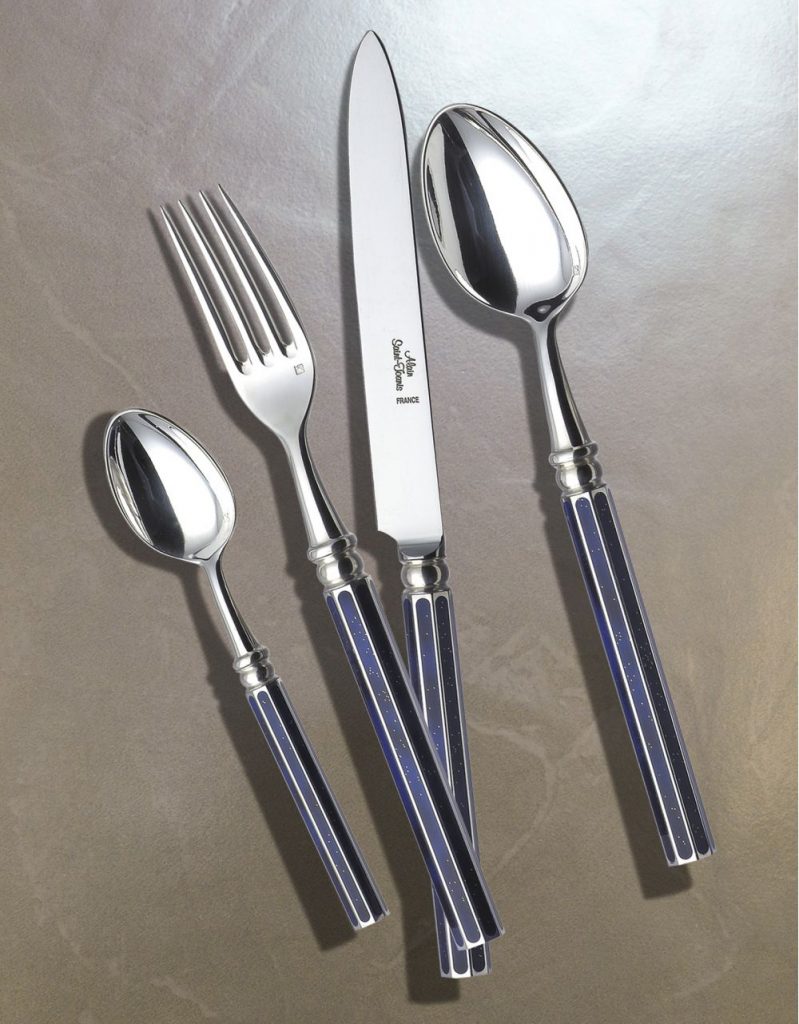
One of our most complicated is the pattern named Royal with enamel handles. There is a dark blue finish with gold dust. it’s very beautiful. The complete process is 8 to 10 weeks. However, some very simple patterns such as Oslo are just incredible. They don’t take as long to make because there is nothing to add, nothing to remove … just perfect simplicity.
– How long have your artisans been with the company?
Most of the workers have been with us for a long time … the youngest over 10 years. It takes several years to train a good polisher. And then you want to keep him in the family.
– How do you define luxury?
Luxury is beyond materials. You can use the best materials and end up with a “bad” product. Making cutlery has been in our DNA for several generations, and we have turned this heritage into a passion. We are a maker, a manufacturer … everything we make is made with the final customer in mind, so we are very attached to what we produce. It has to make life more enjoyable, more beautiful.
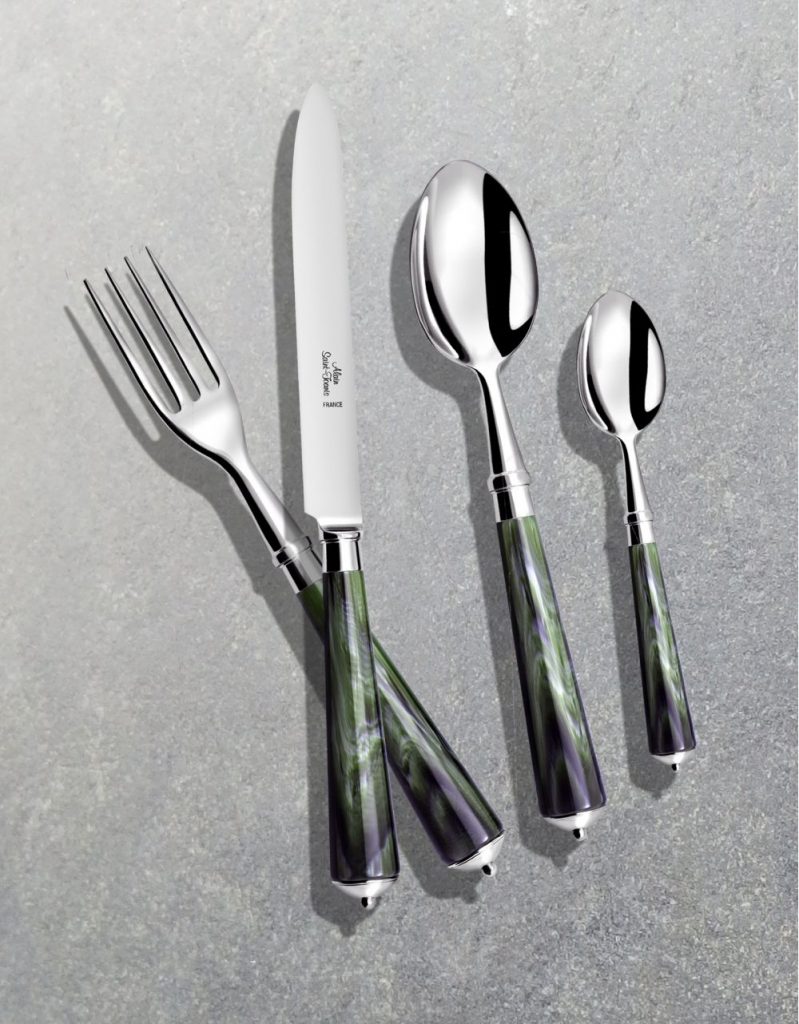
To see more collections from Alain Saint-Joanis, click here.
For Coffee Lovers: The Most Elegant Espresso Spoons Ever
If you own a Nespresso or a De’Longhi or a Breville, you can now up your coffee game with these new espresso spoons from Christofle, which come artfully encased in a drop-dead gorgeous presentation egg case.
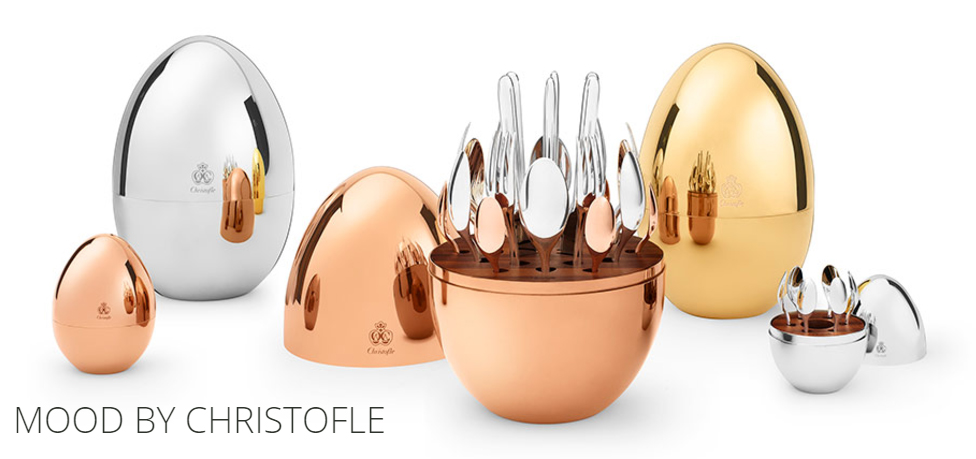
The silver option ($360) includes six silverplated espresso spoons, a polished stainless steel chest, and a dark walnut wood insert.
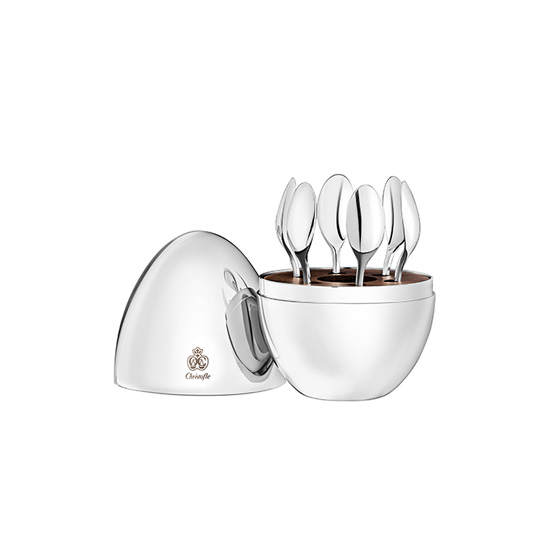
And for those who prefer a warmer look, the rose gold option ($650) includes six espresso spoons gilded with 18kt rose gold, a chest in polished stainless steel (copper color), and a dark walnut wood insert.
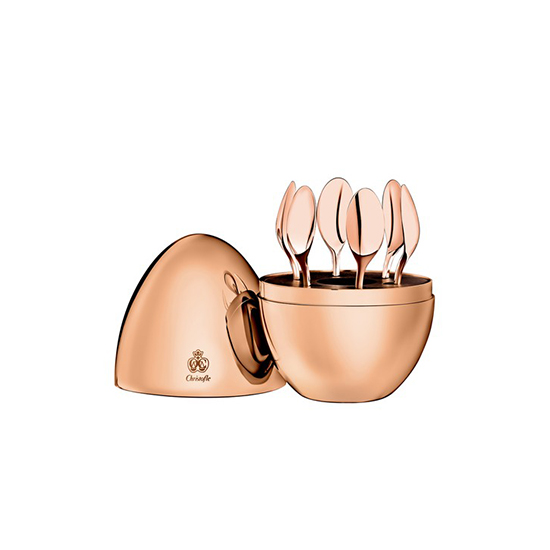
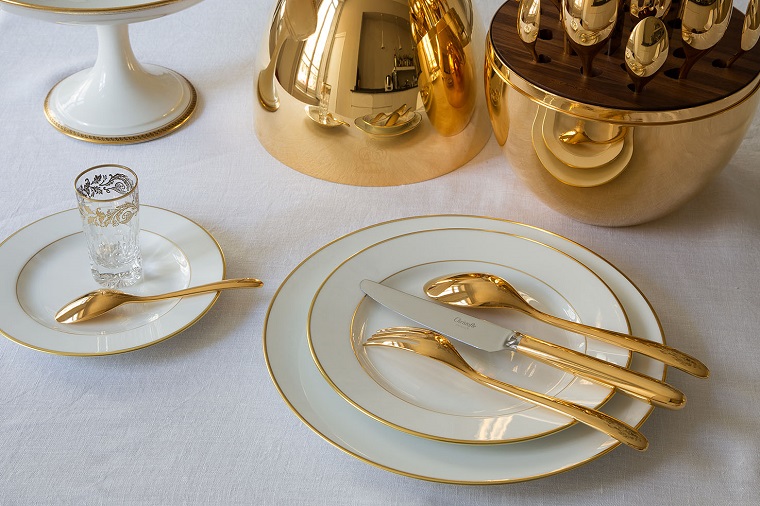
Love the look? Christofle has also introduced larger sets which include 24 pieces of flatware for six people in 24kt gold gilded metal, pink gold, and silverplate. Unlike most chests, these look as elegant in storage as they do on display:
Alberto Pinto: Dinnerware to Match His Interiors
First there was the red-eye to London. The customs and immigration line snaked around the terminal like a coiled serpent, lethargically moving in the early morning. Then there was the bumpy, stop-and-go rush hour ride into central London.
But the moment you walk into The Lanesborough hotel, your jaw dropped. The dull, harried modern world outside melted away. You were in a magical place filled with gilded carvings, cream and black marble, and shimmering silks and damasks.
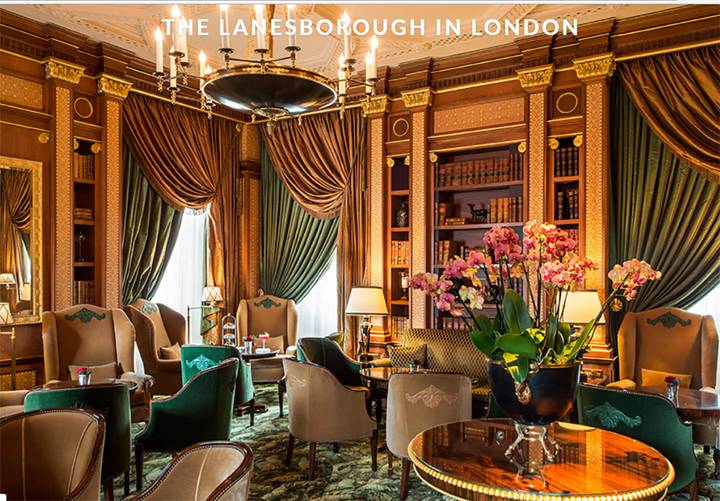
Did you just go back in time to the glorious days when Britannia ruled the world? And were you about to be received by Her Majesty the Queen?
No … in fact, you had just walked into my first Alberto Pinto hotel.
Of course, once you’re in the room, you’d feel like taking it all home. But at some point, security would probably want to inquire why you’re trying to stuff the curtains and chairs into my carry-ons.
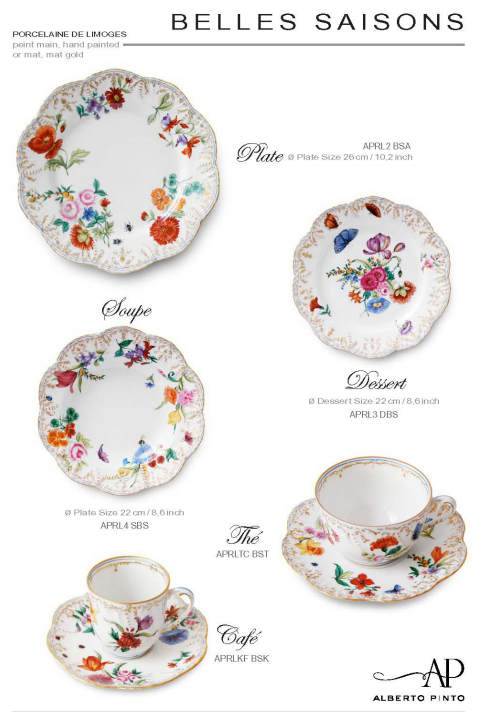
There’s got to be a better way to take a bit of Alberto Pinto’s amazingly over-the-top creations home … and luckily, there is. Through his collaboration with Raynaud prior to his death in 2012, Alberto Pinto designed a line of handpainted dinnerware that is very evocative of his interiors. In each instance, his celebrated love of travel, color, and pattern all come through.
The Lanesborough hotel in London – it’s grand, cozy, and filled with flowers everywhere …
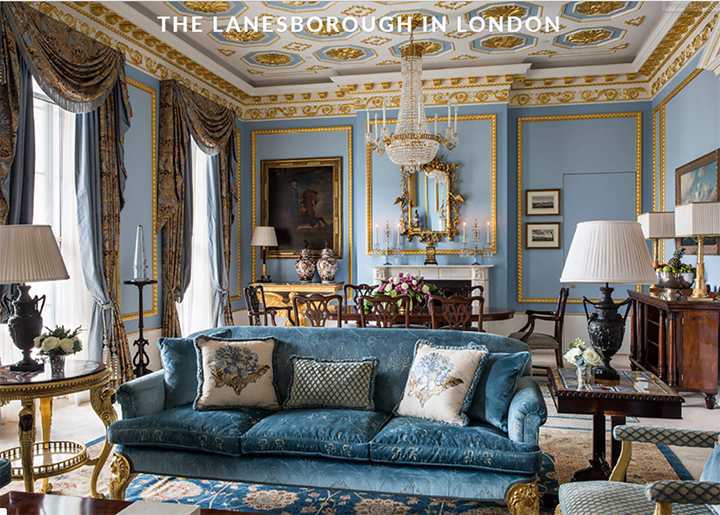
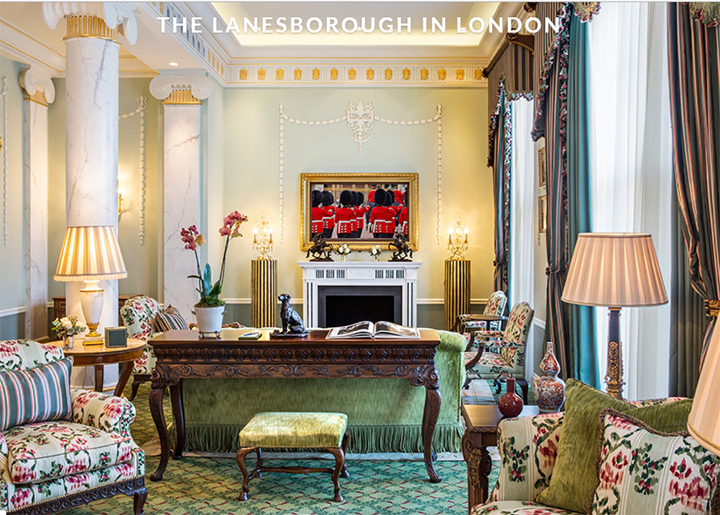
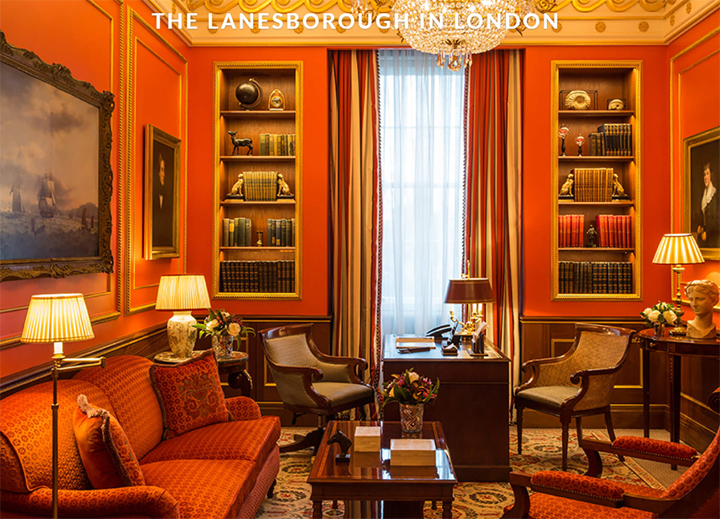
Belles Saisons would be perfect for afternoon tea at the hotel.
In Monaco, he enveloped a duplex with white walls and neutral wood accents, and then filled it with art:
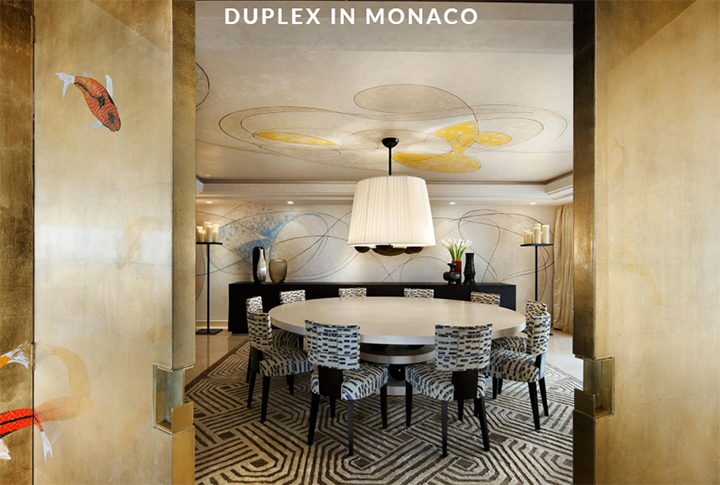
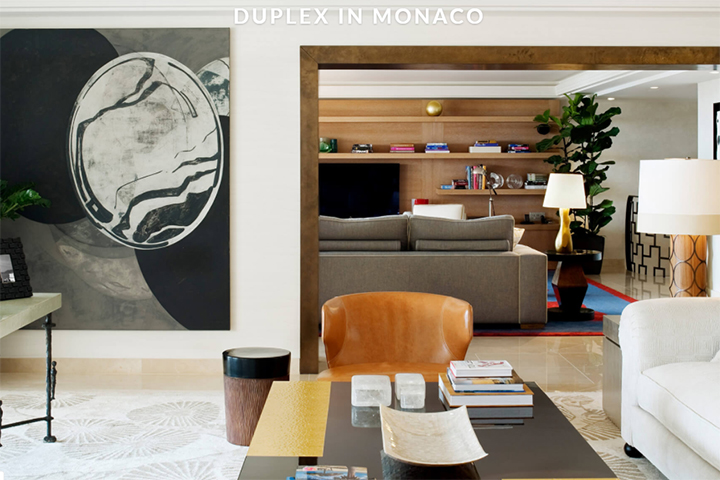
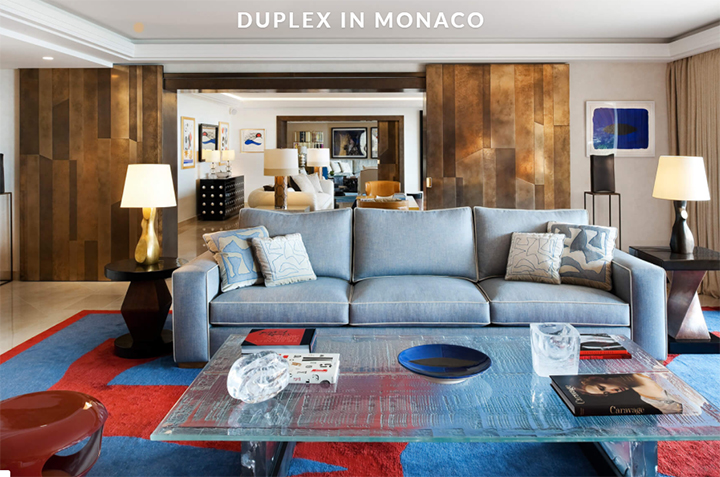
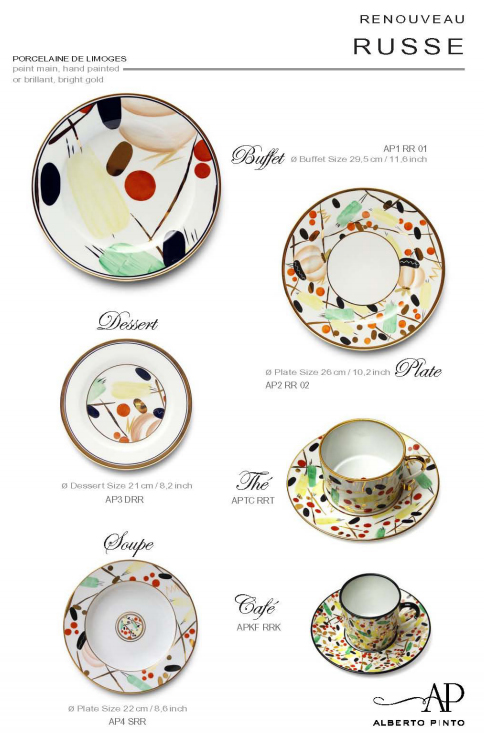
Can you see Renouveau Russe there? It’s so beautiful, you could hang it on the wall.
In Switzerland, something a little more refined …
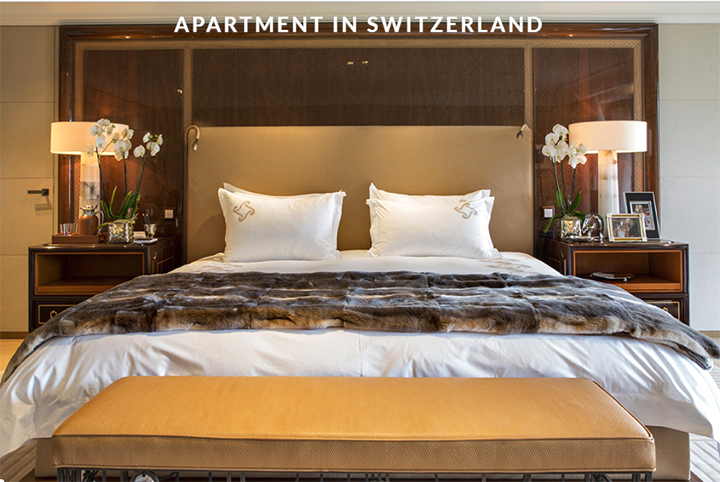
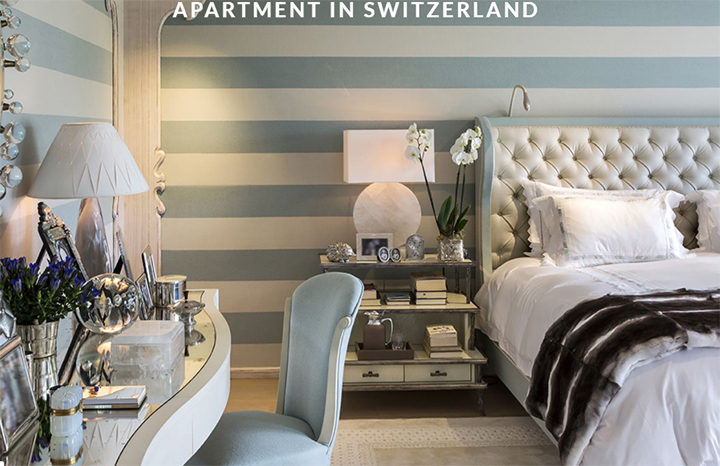
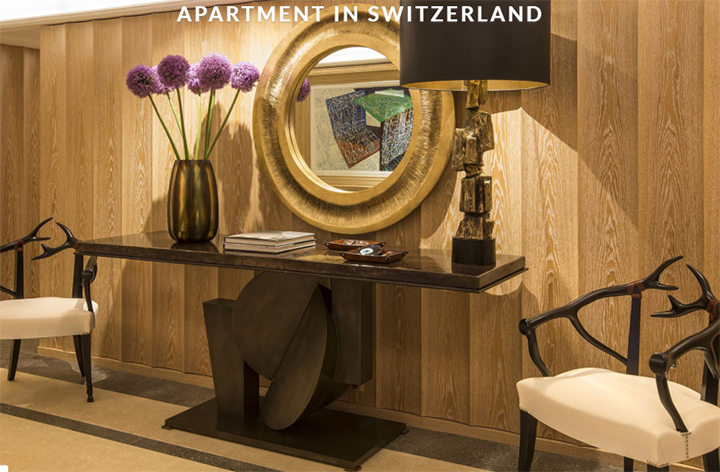
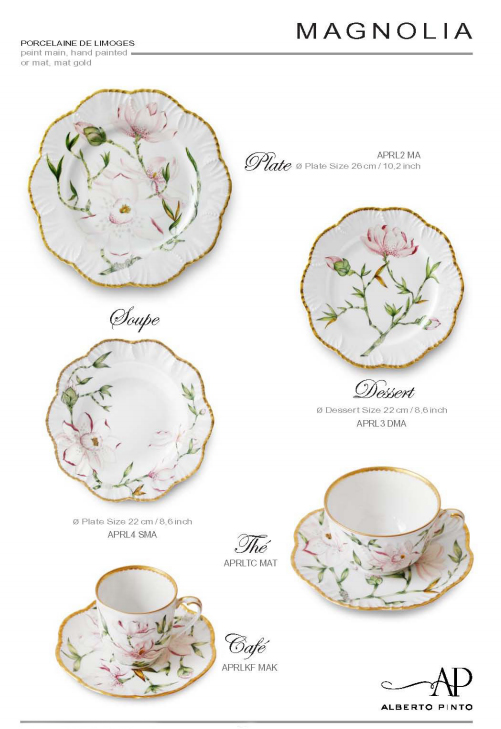
So we pair it with the exquisite Magnolia collection:
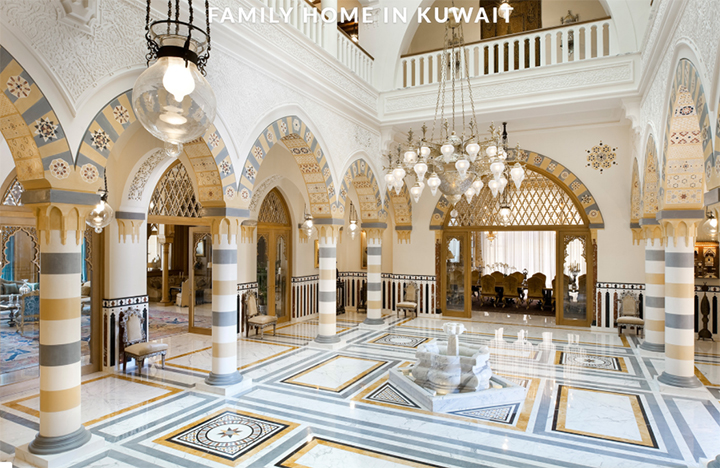
For a breathtaking home in Kuwait:
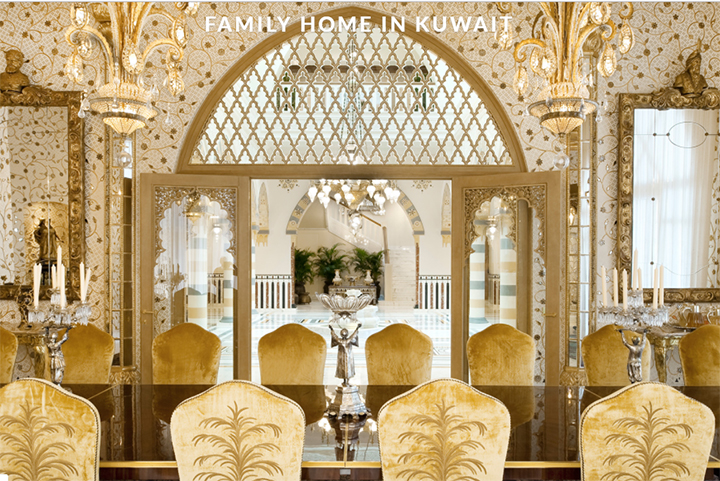
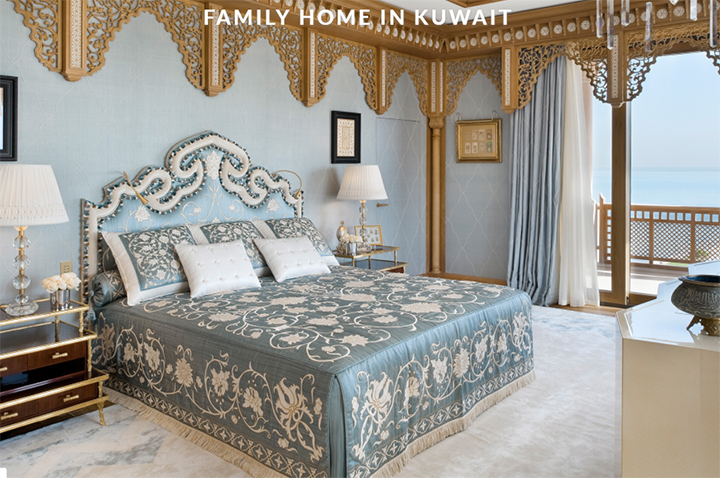
For this, you need something exquisitely detailed, like Or des Airs:
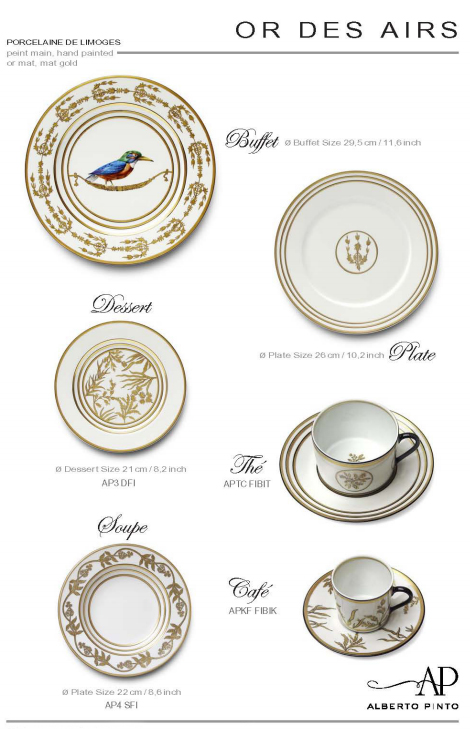
And for an apartment that’s done up in neutral creams and beiges:
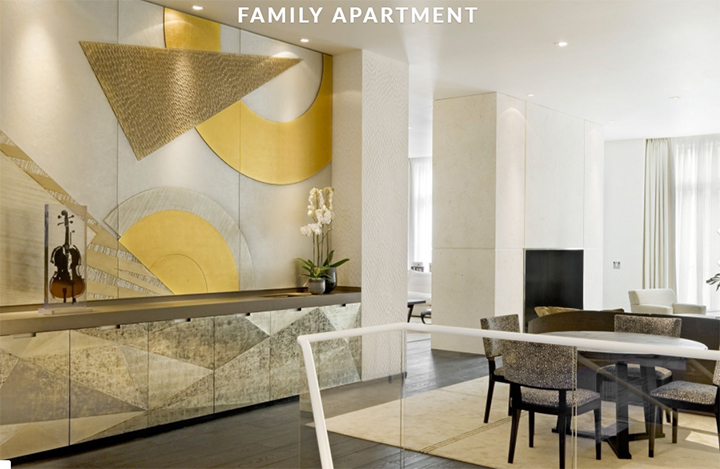

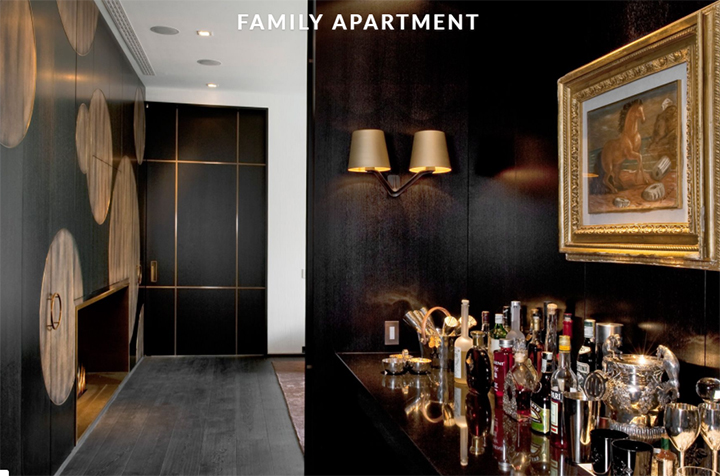
Champignons is both sophisticated and masculine.
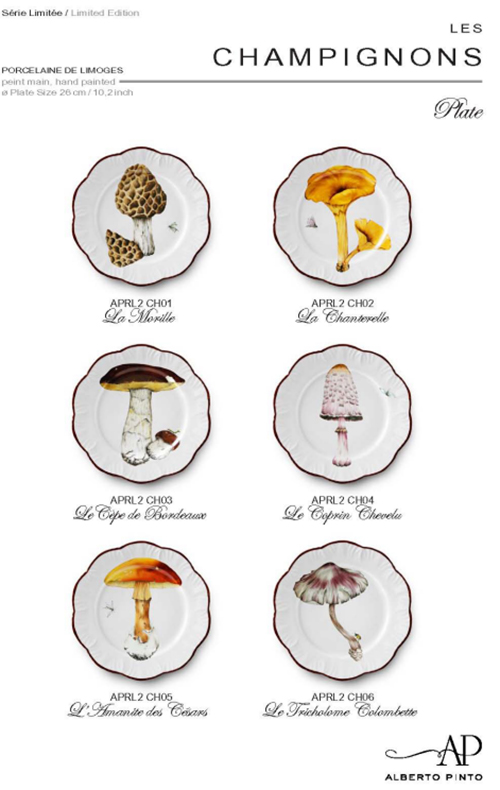
Like these? There is a series of good books about Alberto Pinto and his work, such as
- Alberto Pinto: Signature Interiors
- Alberto Pinto: Moderns
- Alberto Pinto: Classics
- Alberto Pinto Today
- Alberto Pinto: Table Settings
- Alberto Pinto: Bedrooms
- Alberto Pinto Orientalism
- Alberto Pinto: World Interiors
- Alberto Pinto Corporate: Contemporary Offices


You can also see our entire Alberto Pinto handpainted dinnerware collection here. Each piece is made to order (so there will be a long wait), but it’s worth it.
How to Create the Amazing $30,000 Met Gala Table Setting
What’s THE party of the year?
Probably the Met Gala, held the first Monday in May at the Metropolitan Museum of Art in New York to raise money for their Costume Institute. It’s like the Oscars, but with more panache, since it’s all about fashion.
Each year the event has a theme. Guests are encouraged to dress accordingly, so stars and their stylists go into overdrive planning their looks. For many celebs, being photographed at the Met Gala is almost as important as appearing in Vogue. That’s why stars like Gisele and Tom, Beyonce, and Rihanna really, really dress up:
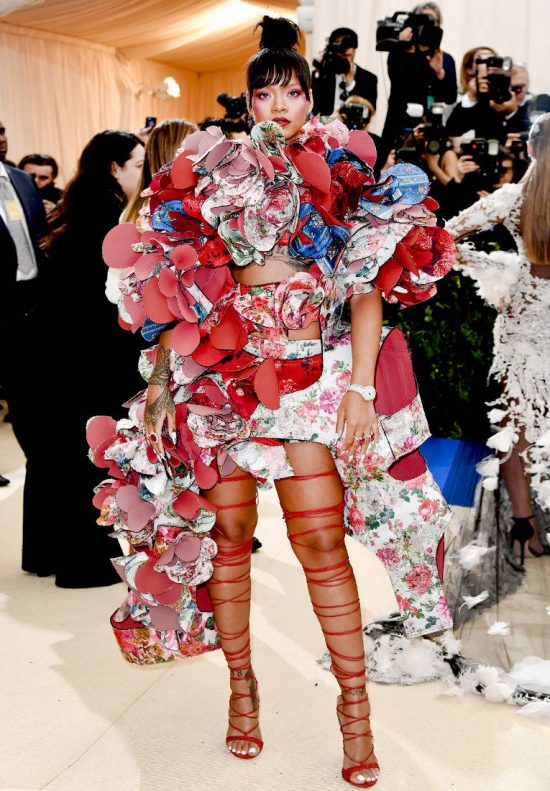



This is also THE most exclusive social event in New York City. Tickets to the black-tie affair are $30,000 each (yes, you read that right), and a table goes for $275,000 — more than the average American house. But even if you had your platinum card ready, you have to get invited first. Attendance is strictly by invitation only, with the guest list personally vetted by Anna Wintour and Vogue. Only 550 guests were invited in 2017, so consider yourself very lucky if you were one of them!
For the 2017 Met Gala, which honored Rei Kawakubo/Commes des Garcons, event designer Raul Avila drew inspiration from the appliqued violets in one of her Fall 2007 looks:

If you were on the guest list, this is what you would’ve been treated to once you walked in:
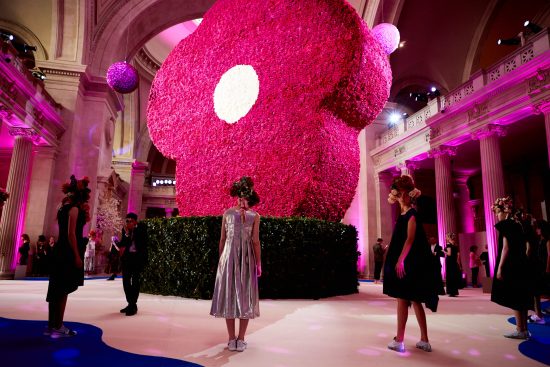

After cocktails and the exhibit, you would have gone on to the formal dinner:
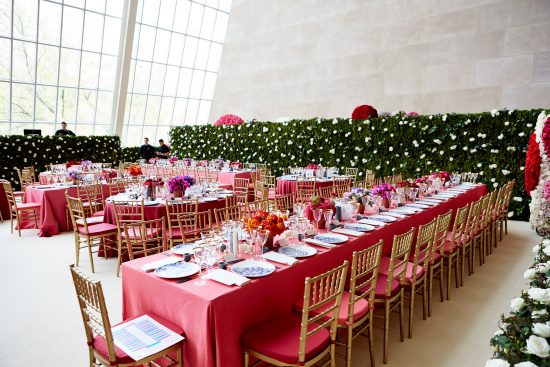
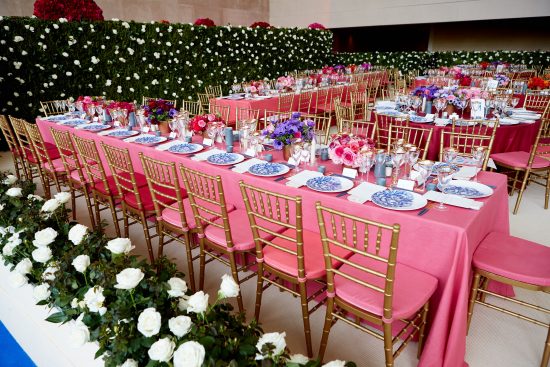
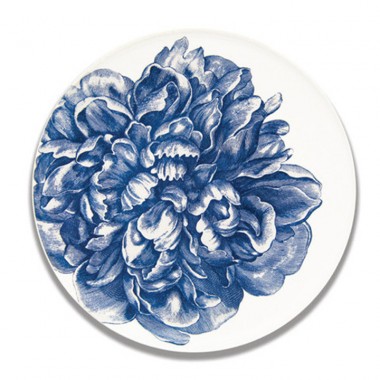
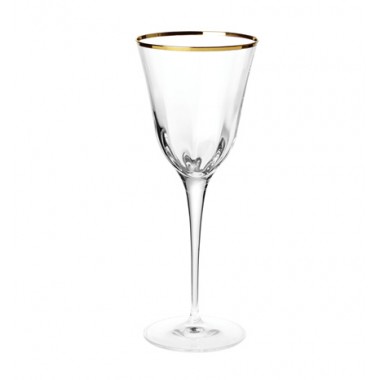
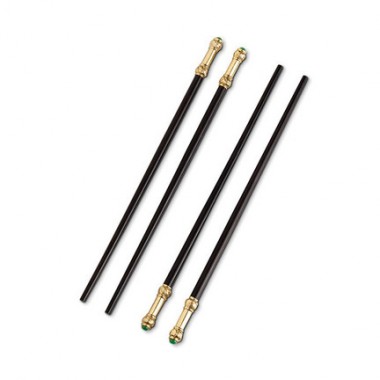
Playing off Raul’s whimsical floral theme, the gala featured gorgeous table settings by Eaddy Kiernan, who used pink and red linen tablecloths, Caskata peony blue-and-white china, Cutipol Goa gold and black flatware, and Vietri’s optical gold wine glasses. And in a nod to Ms. Kawakubo’s Japanese heritage, each guest was presented with a sake cup and a pair of chopsticks.
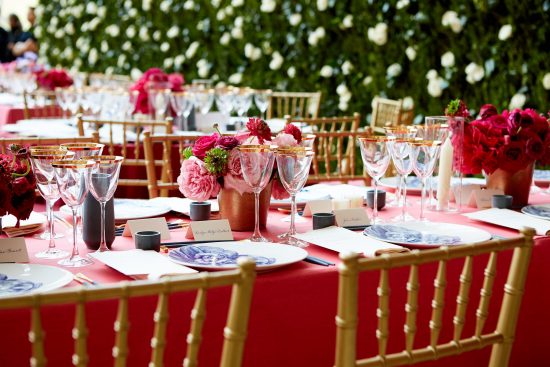
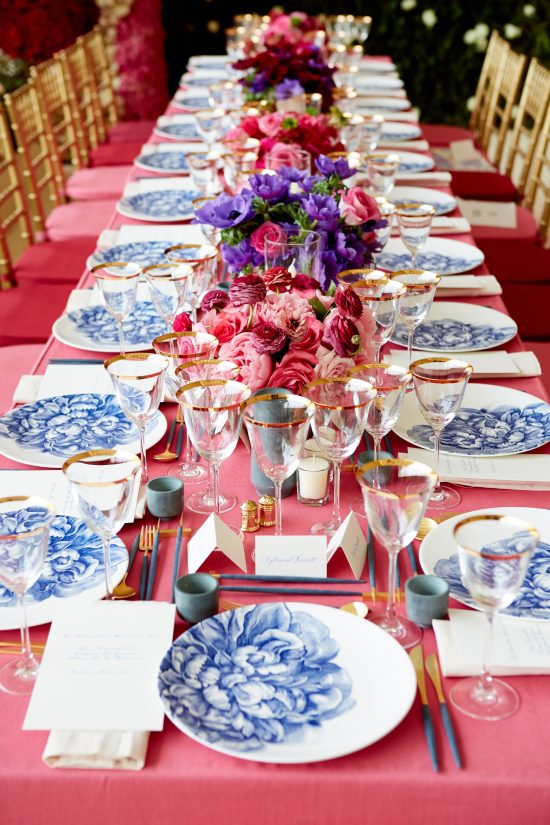
Here’s a close-up of your table setting when you sat down. You can see that every detail is perfectly thought out:
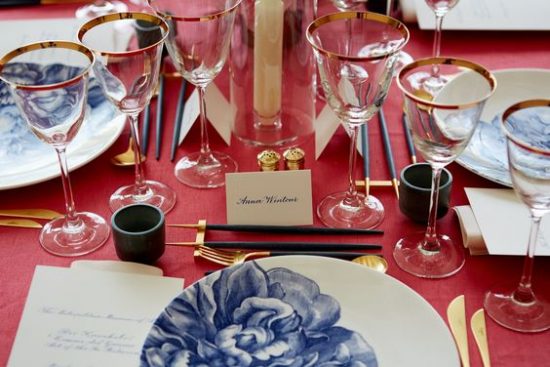
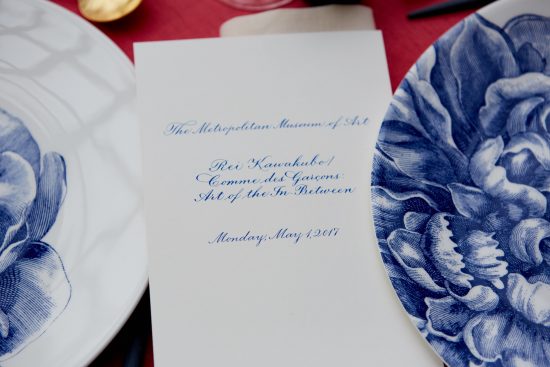
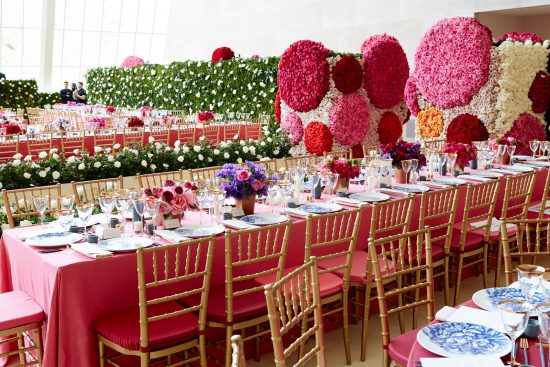
For the rest of us who, eh, couldn’t make it that night, it’s not hard to put together a party like this at home.
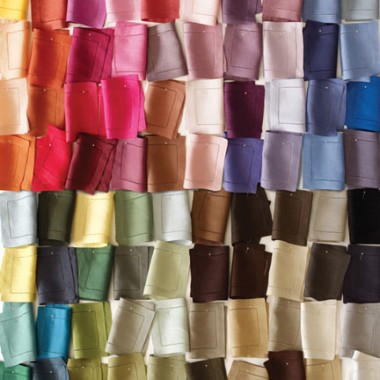
Just start with a couple of gorgeously colored tablecloths (and remember to think like a stylist, and pick colors that photograph well) …
Add in dinnerware with graphic, oversized flowers (this is fashion, don’t be subtle) …
And then layer in your gold and black accents. For stemware, stick with something classic and elegant …
And then introduce something a bit edgier for your flatware. Cutipol’s Goa gold matte/blue collection is perfect:
And finally, bring in a touch of the exotic. Easy, with chopsticks …
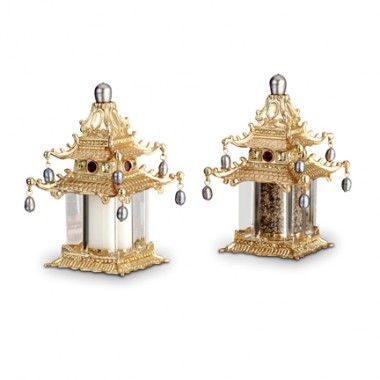
… paired with Pagoda shakers detailed with pearls …
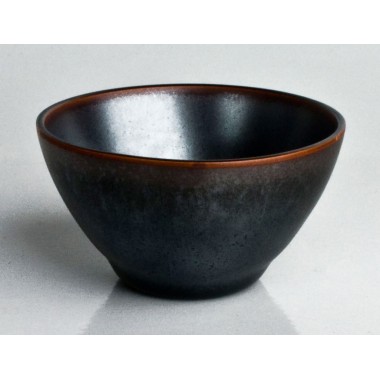
And sake cups!
Toasts all around! What a gorgeous table you’ve created!
All About Anna Weatherley and her Handpainted Porcelain Dinnerware
Who is Anna Weatherley?
Although she’s probably best known for her line of handpainted dinnerware, Anna Weatherley has had many careers: from arms dealer (yes, really!) to famous couturiere to setting up handpainting studios in Hungary. Eventually, she was even commissioned by First Lady Laura Bush to design a collection of china for the White House.
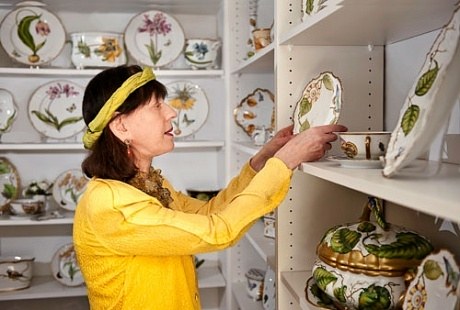
How did this happen? When she was young, Anna moved from her native Hungary to Australia. There, she studied art and design and soon became intrigued with Afghanistan, so she started a business importing furniture and textiles from Kabul to Sydney.
Eventually, she settled in Washington D.C., but her passion for design continued, so she returned to the bazaars of Afghanistan, where she found intricate guns for customers back in Australia. “I’d buy and ship these great 19th-century guns that the British left behind, beautiful guns with ivory and mother-of-pearl,” she says. “I wasn’t an expert, but I knew these guns were beautiful and decorative.”
When the supply of decorative firearms dwindled, Anna turned to fashion. During the 1970’s and 1980’s, she created a successful couture business, producing custom dresses using handpainted and hand-embroidered silk. Her customers included Elizabeth Taylor, Lady Bird Johnson, Jane Fonda, and upscale stores like Henri Bendel and Saks.
When did Anna Weatherley start producing handpainted porcelain?
But after the stock market crash of 1987, demand for her pricey dresses started to fall, so Anna looked to return home to Hungary. She was curious to see what almost fifty years of government control had done to the artistic community. But when she saw what passed for “art” in the formerly glorious Imperial capital of Budapest, she found little to celebrate.
“They were making this ghastly stuff, but I thought they were diamonds in the rough.”
So in the early 1990’s, she established a studio in Budapest and worked with her painters to create a collection of hand-painted porcelain based on botanical art.
“I always liked hand-painting because my fabrics were painted and embroidered,” she says.
Where does Anna Weatherley get inspiration for her designs?
Anna’s designs reflect her appreciation for the artistry of sixteenth, seventeenth, and eighteenth-century botanical artists, which she studied during trips to the Victoria and Albert Museum in London. Initially, she took botanical books to Budapest to show her artists.
“It took a long time to reeducate them. I was losing money, but I wanted to nurture them, and I didn’t want to lose them.”
Anna’s first collection, released in 1993, was named “Redoute Gardens” after the renowned French botanical artist Pierre-Joseph Redoute. Her goal was to honor the spirit of the artist without replicating it exactly.
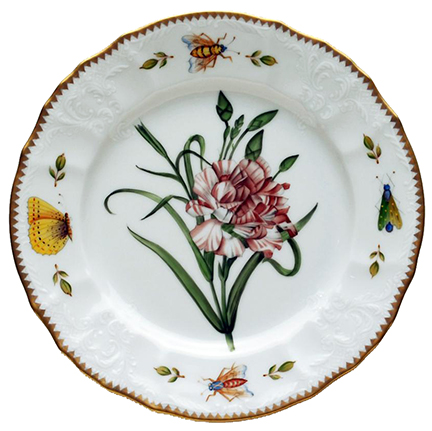
Next came “Hooker Fruit,” a collection of plates and serving pieces based on Joseph Hooker’s 1890s drawings.
“What I loved about his fruit was that they were a bit damaged or a little bit rusty looking,” Weatherley recalls. “After that every leaf I designed had to be torn or have a little hole in to make it look like a bug had been having lunch on it.”
Next came the tulips of Alexander Marshall – an experiment in color exploration. “Tulips are very gusty flowers,” says the designer, “and the colors are absolutely amazing.”
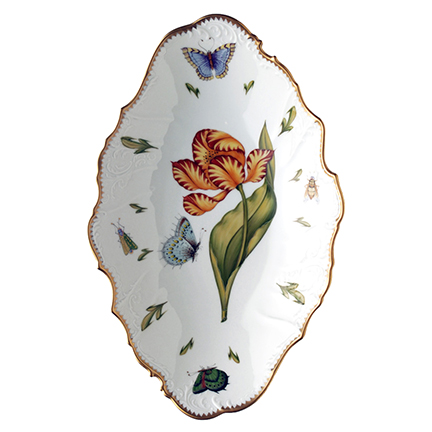
She then turned her attention to the pioneering work of Maria Sibylla Merian, a scientific illustrator renowned for her portrayal of the flora and fauna (and bugs!) she found on a trip to South America. “I faithfully painted her bugs, and nobody wanted to buy them.”
But bugs would play a key role in Weatherley’s masterful renderings.
“One day I got a call from Budapest saying that the painters had just finished one of my collections and they found a large black spot on all the porcelain.” Undaunted, Weatherley followed the example of one of the world’s greatest porcelain manufacturers – Meissen. “At the Smithsonian I learned that in the early days when Meissen had problems with production, bugs were sometimes painted over them.”
A new design direction was born. “Bugs became my best seller with the introduction of ‘Budapest Spring'” a delicate arrangement, mostly dominated by butterflies.
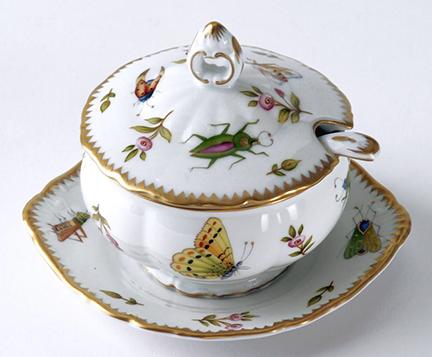
More garden series followed. “Pannonian Garden” was introduced in 1998 and pays homage to the bounty of florals that thrive around Hungary’s countryside dwellings.
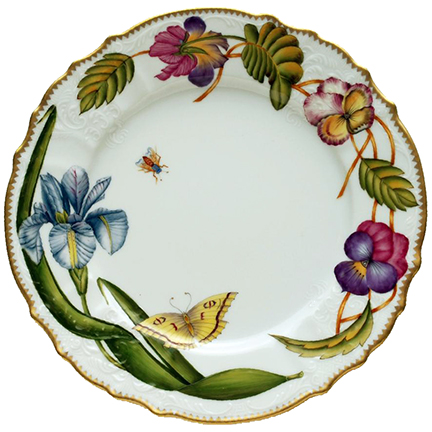
Then came “Treasure Garden,” which was inspired by German painter Georg Ehret.
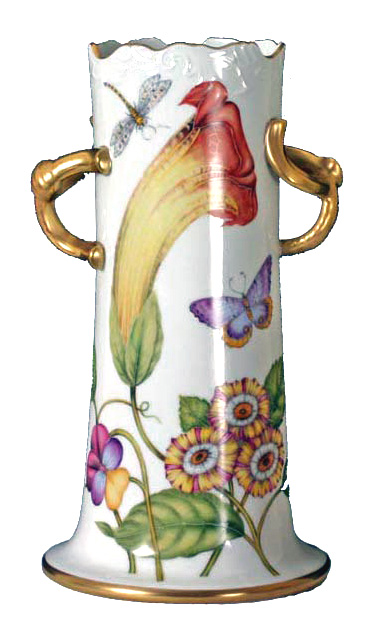
“Vegetable Garden” was inspired by seventeenth-century Florentine painter Giovanna Garzoni and French painter Jacques le Moyne de Morgues, who painted vegetables and fruits he found in Florida in 1564.
Since much time was spent in Budapest and at tabletop shows throughout America, Anna had little time to create her own garden in Arlington; but no matter how long she was away, she always found weeds standing when she returned. Her testament to those weeds is “Green Leaf.”
“Leaves have the most intricate texture and are more difficult to paint than a lush flower.”
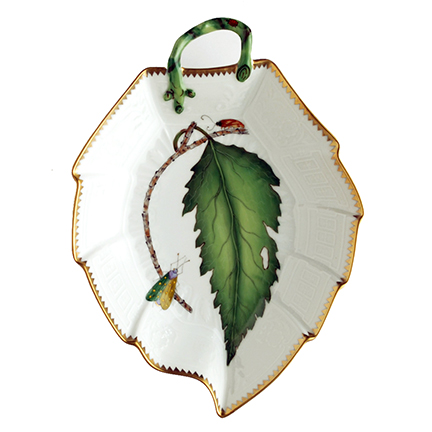
In the Spring of 2001, she introduced “Morning Glory”, a common flower throughout Hungary. “This is one that God and I designed together, because it has an innocent charm and is fresh and young and not contrived. I wanted to have more free-form, which I like because a painter can exercise a little more personality.”
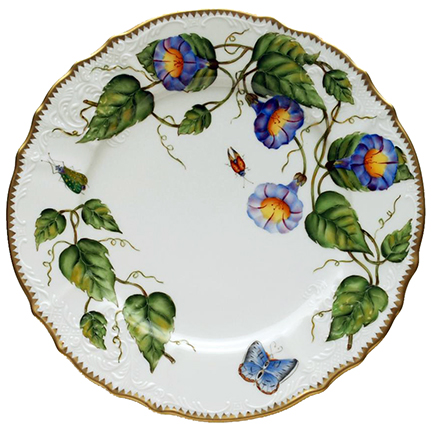
How is Anna Weatherley dinnerware created?
Starting with an illustration, Anna’s painters carefully apply paint using very fine brushes onto lustrous white porcelain, which is then fired several times at high temperatures to set the designs and harden the pieces. Each plate takes two days to paint, while a large dinner set might take as long as three months.
Who paints Anna Weatherley porcelain dinnerware?
Anna employs 60 master painters in Hungary to execute her designs. While each painter has a distinct technique and his own secret way of mixing colors to create their designs, the flowers and fruits are painted mostly by men. By contrast, women tend to specialize in painting the charming bugs and butterflies with miniature detailed wings and legs and gold-dipped eyes. Grasshoppers are a favorite of the team and each one is given a different personality. To finish the pieces, borders are softly brushed onto the edges by a single painter with mastery in this special technique.
Which celebrities own Anna Weatherley dinnerware?
When Princess Diana visited Washington D.C. in the 1990’s, Washington Post publisher Katharine Graham held a luncheon in her honor and presented her guests with Anna Weatherley porcelain gifts. This same visit prompted Anna Wintour to place an order for a present for Princess Diana. For this commission, Weatherley produced a pair of cachepots decorated with pears, cherries, and gooseberries based on British botanical art.
For First Lady Laura Bush, Anna created 75 seven-piece place settings of the Magnolia Residence China Service, featuring magnolia blossoms, butterflies, and insects in a design inspired by the flora and fauna found on the White House grounds. According to Weatherley, Mrs. Bush had seen her work on several friends’ dinner tables.
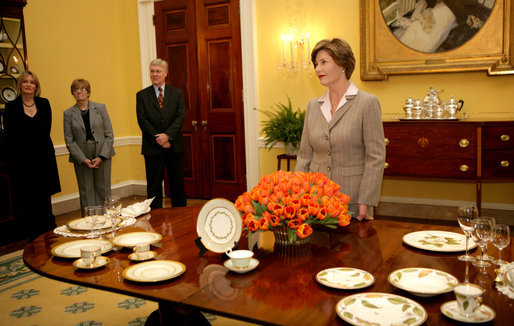
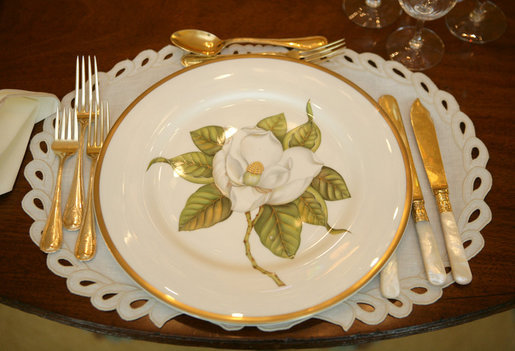
And for The Blair House, the official guest house of the White House for visiting heads of tastes, Anna created and donated a charming breakfast tea set.
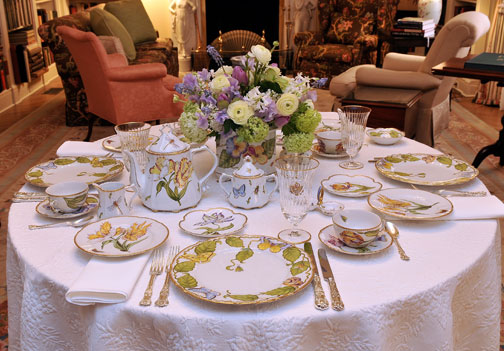
What’s next for Anna Weatherley? Learn more about Anna Weatherley lamps.
Anna’s latest introductions include a line of exquisite handpainted lamps.
Throughout the years, Anna’s handpainted porcelain pieces have been featured in Architectural Digest, Veranda, Vanity Fair, Southern Accents, Elle Decor, Washington Post, Traditional Home, House and Garden, and Town & Country. If you own any Anna Weatherley pieces, we’d love to see them.
Love this collection? See more by clicking here.
Special thanks to Anna Weatherley, Devine, Vanity Fair, The Washington Post, The White House, and The Blair House.
How to Dine Like Royalty from Queen Victoria to Lady Diana
Were some people really born with a silver spoon in their mouth? When it came time to dining, and entertaining, royals didn’t just grab a quick bite to go. Every meal had to be worthy of a king, right down to the choice of the plates. But the favorite dinnerware of Europe’s royals and aristocrats might surprise you.
Catherine the Great of Russia
She started out as an impoverished German princess and ended up as the absolute ruler of the world’s largest empire. She expanded Russia west into Poland, south to the Black Sea and Crimea, and east to Alaska. She was also a famous patron of the arts and brought the European Enlightenment to Russia. To her contemporaries, she was as awe-inspiring as a Roman goddess:

Catherine the Great is often associated with Royal Copenhagen’s Flora Danica dinnerware, an over the top, no holds barred collection of over 1800 hand-painted, gold gilded pieces commissioned especially for her:
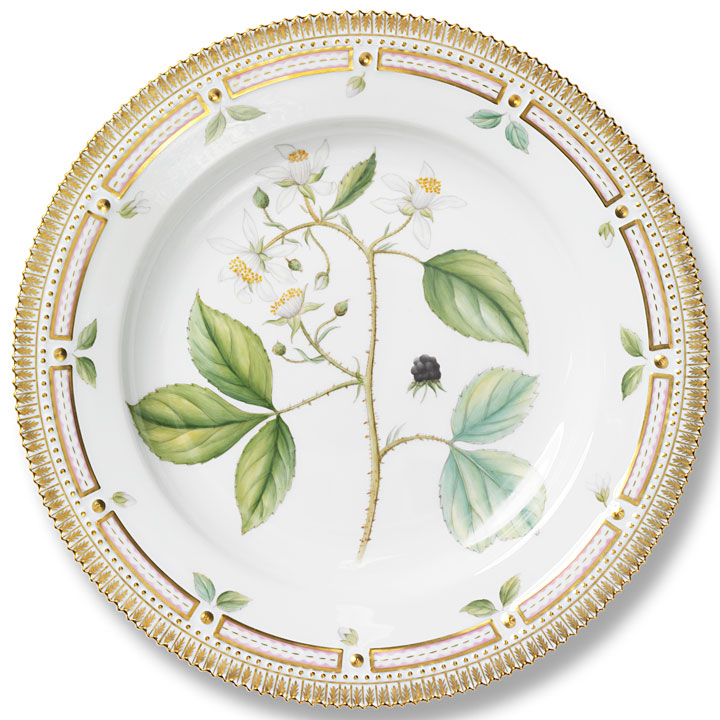
Sadly, though, she did not live to see its completion. See our story of Catherine the Great and Flora Danica that’s full of royal-worthy intrigue for more details.
Lord Nelson
England’s hero during the Napoleonic Wars, Lord Horatio Nelson time and again thwarted the powerful French in naval battles from the Nile delta to the frigid Baltic sea. He gave his life in the decisive victory at Trafalgar that finally saved England from invasion. For that, the grateful English nation placed him high up in a column in Trafalgar Square in the heart of London. (The French hadn’t forgotten him either: They protested when the Eurostar train from Paris to London ended in Trafalgar station and got it switched to St. Pancras instead.)

But Lord Nelson is no crusty crude sailor. After winning the naval Battle of Copenhagen in 1801, he came ashore and bought Royal Copenhagen dinnerware — probably a pattern very much like the traditional Blue Fluted — for his beloved Lady Hamilton back in England:
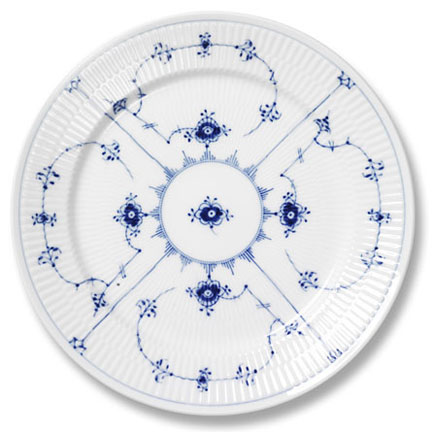
Empress Eugenie of France
Famous for her beauty, Eugenie de Montijo caught the eye of Louis Napoleon at a ball when he had just become President of France. “What is the road to your heart?” asked the dashing (and serial womanizing) President. “Through the chapel, Sire,” she responded. And when he aspired for an office even higher than President, she became Empress. During her reign, Paris became the beautiful city that we know today, with limestone mansions lining wide boulevards, elegant couples promenading, and ever grander balls and fetes.

Haviland created a special dinner service for Empress Eugenie and Emperor Napoleon III, which is now displayed at the Haviland Museum in Limoges, Frances. Closely based on this dinner service is the Haviland Imperatrice Eugenie pattern:
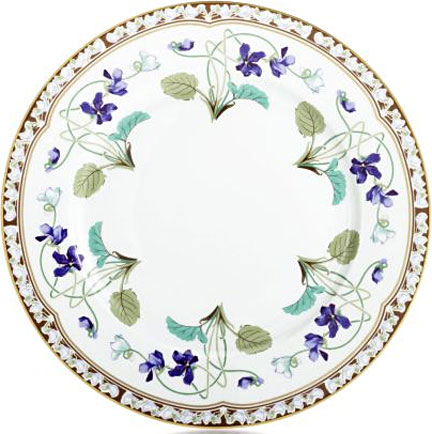
Funnily enough, President Jacques Chirac of France was also a fan of the Imperatrice Eugenie pattern, while his successor Nicholas Sarkozy preferred the more modern Haviland Claire de Lune pattern.
Queen Victoria of England
Victoria became Queen shortly after turning 18 and went on to rule for over 63 years. England reached the zenith of its glory during her reign, with industrialization, new technologies, and economic growth that lifted the country into the modern age. Abroad, the British dominions spanned every corner of the globe, until the sun never set on the British Empire. Personally, she was the personification of prudence and virtue of her time:
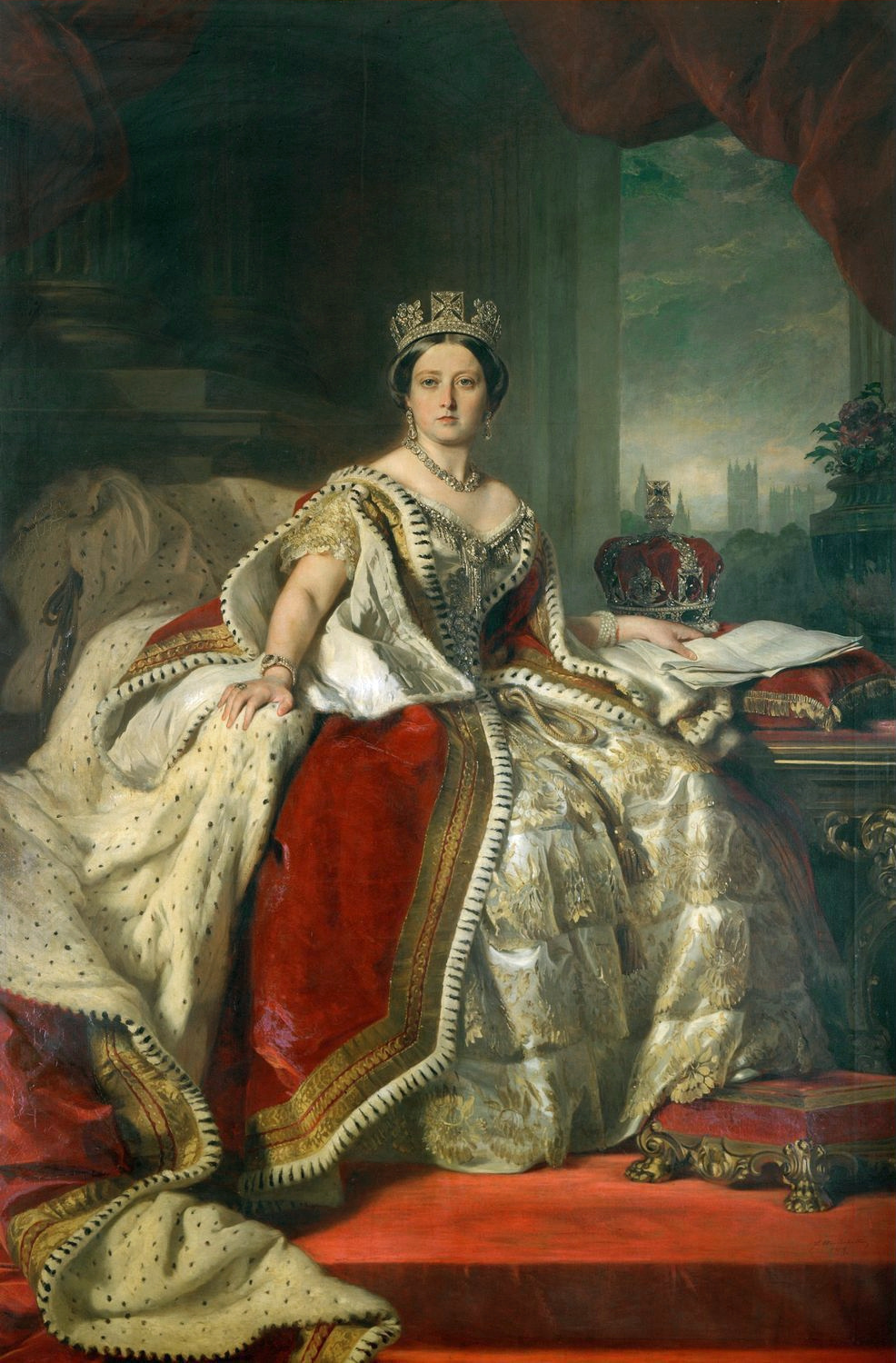
In 1851, the first World’s Fair, with its famous Crystal Palace, was organized in London to show off the wealth and progress of the British Empire. During the Fair, Queen Victoria did a little shopping and bought a large dinner set for the Windsor Castle. She chose a “Far-Eastern” pattern by the Hungarian manufacturer Herend that depicts colorful butterflies and peonies. With this pattern Herend won the Grand Prix award, and the Herend Queen Victoria Dinnerware has been produced ever since:
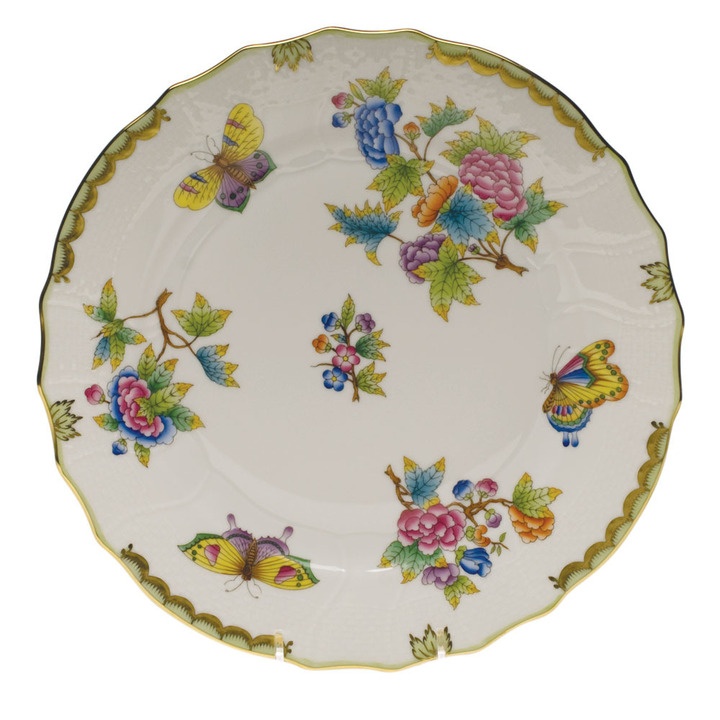
Baron Rothschild
Prominent since the 1740’s, the Rothschild banking family had the largest private fortune in the world in the 19th century, and some believe it may indeed be the largest fortune in modern history. They were one of the first international banks, with branches in London, Paris, Vienna, Naples, and Frankfurt all controlled by family members. They financed the English war effort during the Napoleon Wars, the newly independent country of Brazil, the industrialization of England, and at one point owned most of Mayfair in London. In 1847 Anthony de Rothschild of the London branch was made a Baronet in England, in addition to being a baron of the Hapsburg Austro-Hungarian Empire by birth:
Twelve different motifs portray a 19th century tale about Baroness Rothschild, who lost her pearl necklace in the garden of her Vienna residence. Several days later it was found by her gardener, who saw birds playing with it in a tree.
One day in the 1850’s, Baroness Rothschild lost her pearl necklace in the garden of her Vienna home. A few days later it was found by her gardener, who saw birds playing with it in a tree. Since then, Baron Rothschild and his family developed a special love for birds, which symbolized love and relationships. He ordered a bird-patterned Herend porcelain dinnerware collection for himself and became important patrons of Herend in the years to come, so the Herend Rothschild Bird Dinnerware is named in the honor of him and his family:
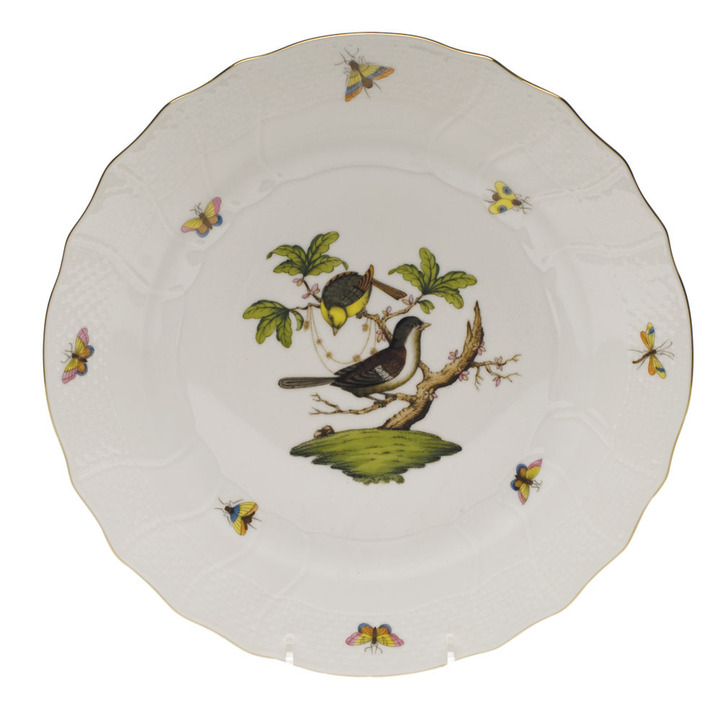
Franz Joseph I of Austria
Like Queen Victoria, Franz Joseph I also became the ruler of a large empire at age 18. He ruled over the Austro-Hungarian Empire of central and eastern Europe as the one of the last descendants of the ancient Hapsburg family. He was intensely religious and dedicated his life to doing the best for his subjects. I have personally seen the small desk in the Schonbrunn Palace of Vienna where he put in 12-, 14-, even 16-hour days reviewing court appeals, city lighting proposals, and all the minute details of his vast country. For his efforts the diverse peoples of his realm revered him as their father…then grandfather figure:

Even though he could’ve had every extravagance, the Emperor loved the simple yet regal Herend Laurel Garland Dinnerware, which was used by him personally in the Buda Castle of Budapest, Hungary:
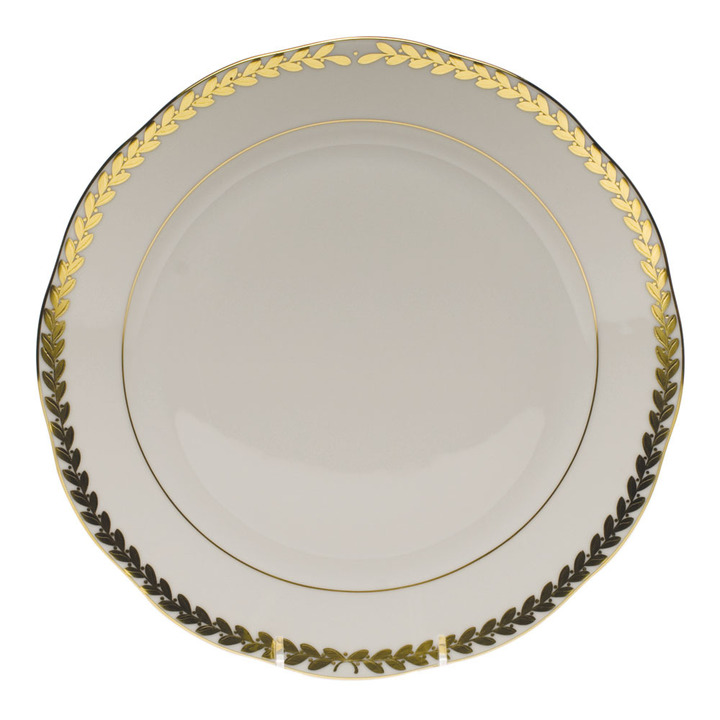
Empress Elisabeth of Austria
The wife of Emperor Franz Joseph I, Empress Elisabeth of Austria was exceptionally tall and fit, and she adhered to a regimen of diets and exercises that we would be familiar with. She felt stifled by the rigors of court life and rituals, not to mention a controlling mother-in-law, so she spent most of her time in Budapest instead of Vienna, where she enjoyed equestrian sports.
When she was married to Franz Joseph I, their Hungarian subjects gave them the Gödöllő Castle near Budapest. She would spend most of her time there. More of a romantic at heart than her husband, she chose a chinoiserie dinnerware pattern named Siang Rouge Décor by Herend. This pattern, later was named Gödöllő Pattern after the city, is unfortunately not available for sale in the United States. Here’s what it looks like:
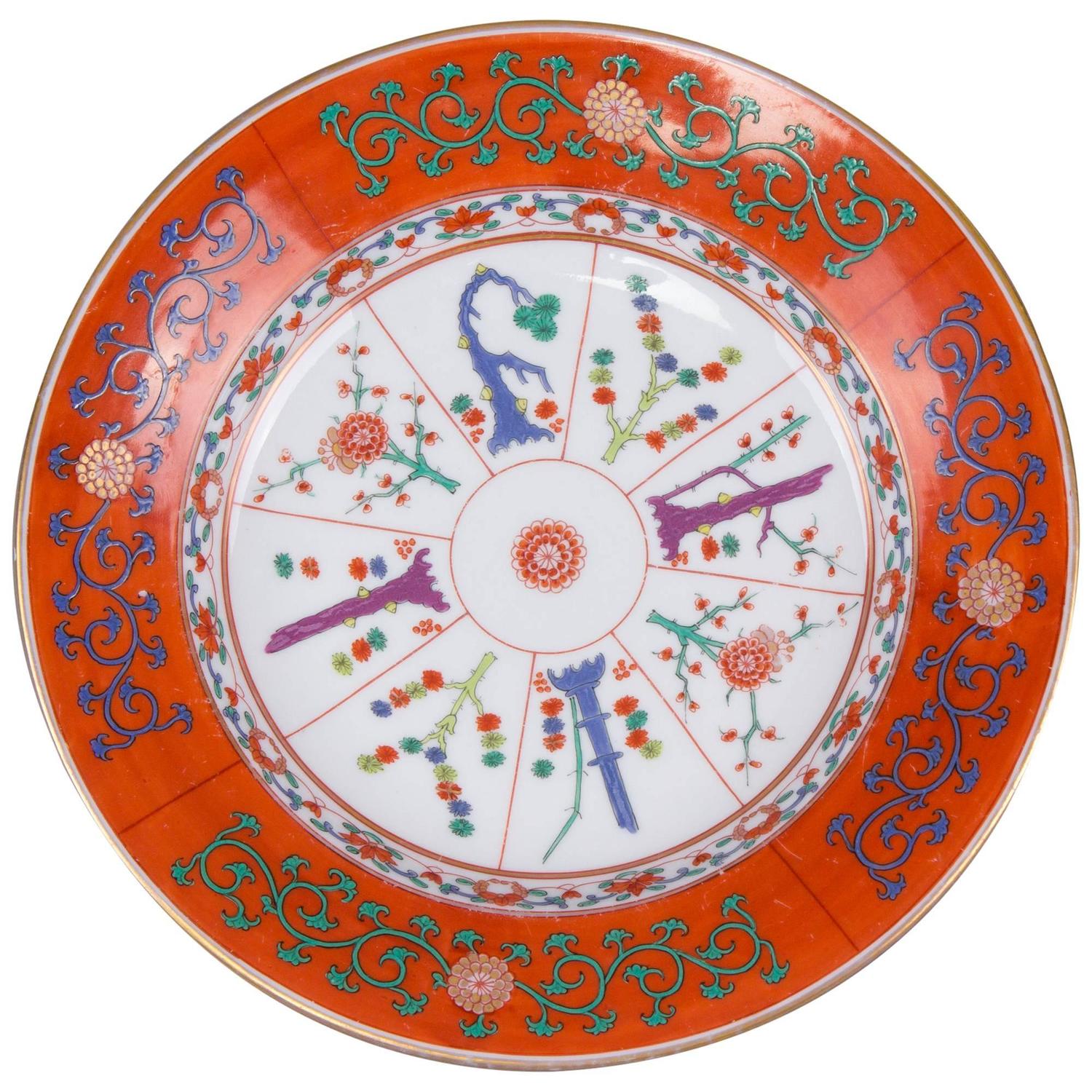
Lady Diana
What more could I tell you about Lady Diana that you don’t already know?

Maybe you didn’t know that the future Princess of Wales chose a set of the Herend Rothschild Bird Dinnerware for her wedding:
She was also a collector of the Herend Blue Garland Dinnerware:
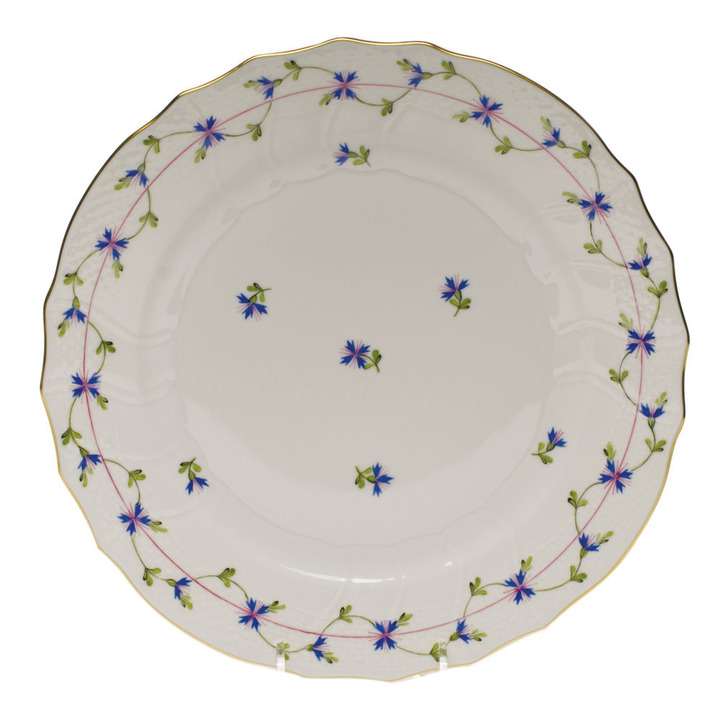
Prince William and Kate Middleton
Most likely, you’ve read more about Will and Kate than I have:

On the eve of their wedding, the Republic of Hungary presented 45 pieces of the new pattern based on Queen Victoria – called Herend Royal Garden Dinnerware — to the couple’s official representative, Lord-Lieutenant of Greater London Sir David William Brewer, who declared that Prince William, like his mother and Queen Victoria, holds Herend in high regard:
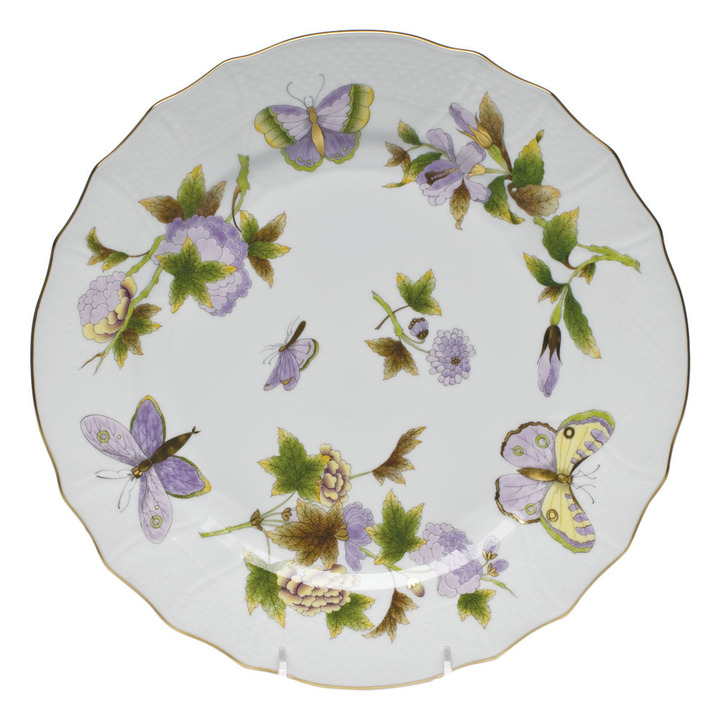
So perhaps, in the end, the royals aren’t so different from us after all: They have a love for beauty and tradition that we all do.
Well, maybe they’re just a little fancier.
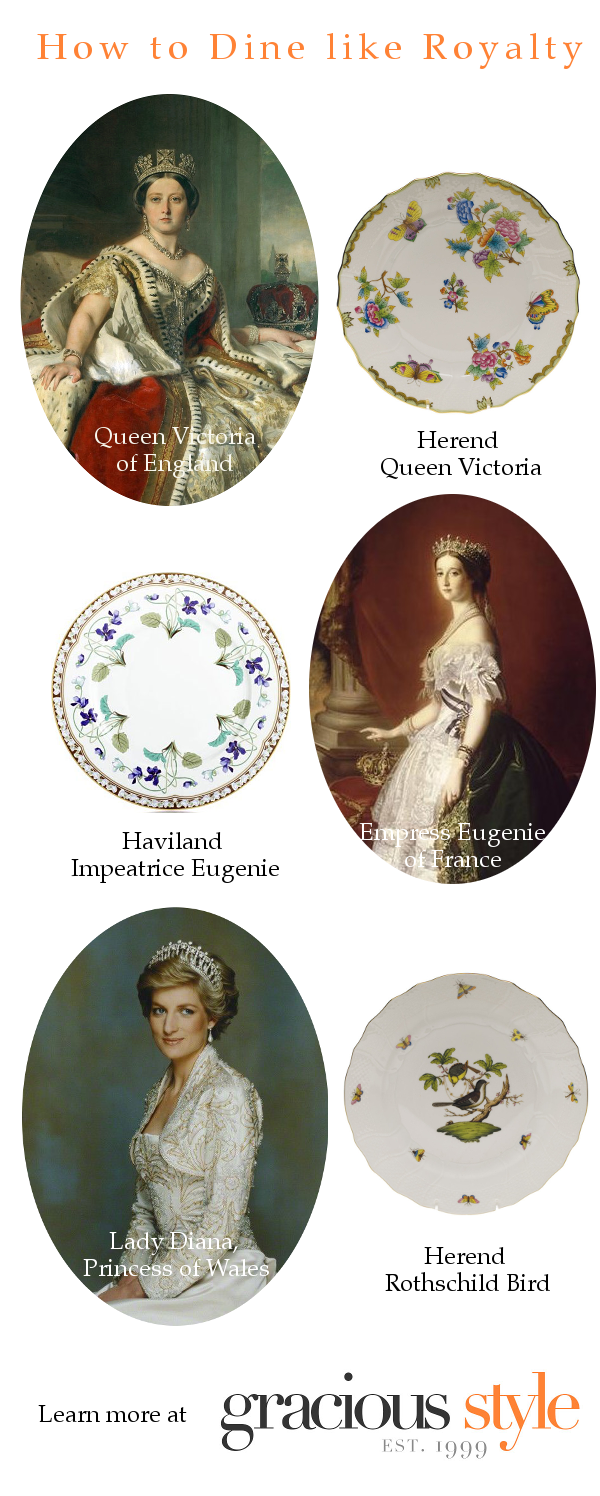
Claire Teal Pitcher Featured in Imbibe Magazine!
If you want to up your drinks game, we highly recommend checking out Imbibe magazine, which is devoted to all things liquid. In every issue and online, they feature great drink recipes, reviews, and stories about the people, places, flavors, and culture of drinks around the world.
We’re so thrilled to have been included in Imbibe’s May/June 2017 issue:
Their guide to stylish pitchers included our Blue Pheasant Claire Teal Hand Blown Pitcher:
A modern update on a vintage classic, the Claire’s cylindrical shape and oval-shaped beads evoke the serveware of years past. Cheers!
Summer Drinks Cocktail Napkins featured in Flea Market Decor Magazine!
We’re thrilled to be part of Flea Market Decor magazine‘s fun and eclectic September/October 2017 issue:

Can’t you see our Summer Drinks cocktail napkins as part of your backyard paradise?
Then again, maybe I’ll take those drinks…
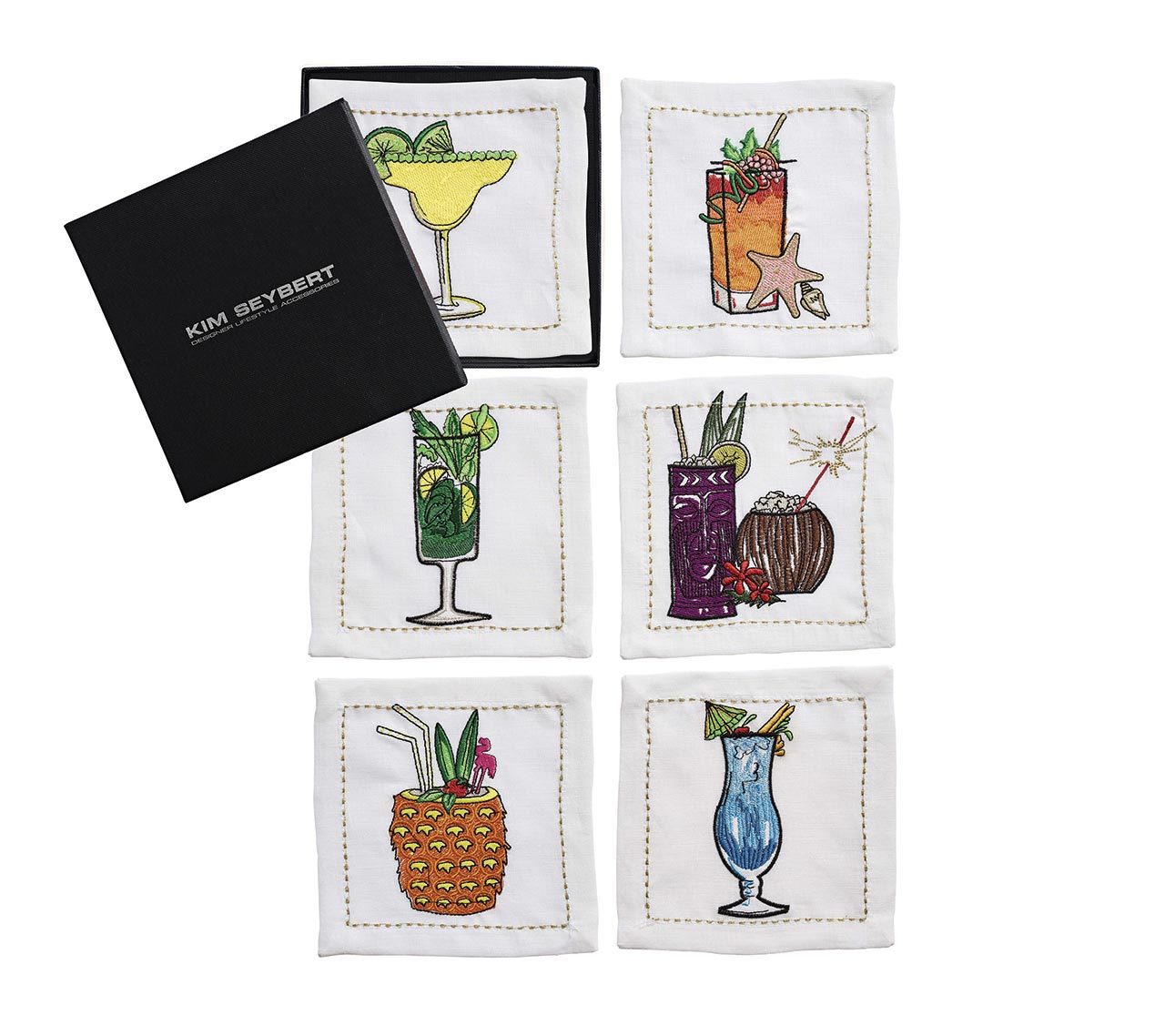
At Last: Supple, Beautiful, Stain-Resistant Cotton Tablecloths
Have you ever worried about serving your favorite wines with dinner because they could stain your tablecloths? Or inviting your best friends’ children over for a sit-down meal because Joey is (ahem) a little messy?
Well, believe it or not, some genius scientists in Switzerland were listening, and they came up with a solution that did not involve vinyl. And not a moment too soon. Finally, we’ll have driverless cars on the road, so it’s high time we found a way to entertain well without worrying about stains.
What’s the big idea? These scientists went outdoors, studied why certain plants are naturally water-repellent, and developed an invisible treatment that when applied to fabrics, made them stain-resistant but still kept them feeling exactly the same.

This is a game-changer. Because now it means that you can have friends over for lunch, family over for dinner, and all you’ll have to do is call uberEats twice.
Initially, this technology was applied to outdoor fabrics. Then, in 2010, Garnier-Thiebaut, one of the best-known manufacturers of French linens (they supply Four Seasons, Mandarin Oriental, and Alain Ducasse with linens), became the first company to apply the treatment (which they call Green Sweet) to home linens, and now they offer the most extensive collection available.
If you’d like to learn more about Green Sweet, here are the ten most frequently asked questions:
1) Can you feel the difference between Garnier-Thiebaut’s regular linens and their Green Sweet tablecloths?
No, you can’t tell the difference. The Green Sweet treatment does not affect either the look or the feel of the cloths.
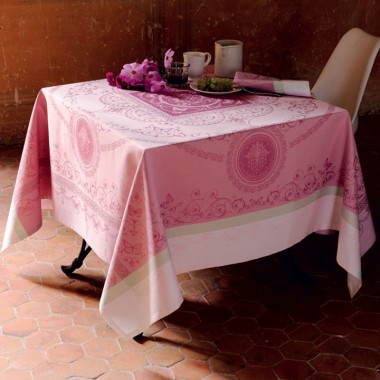
2) What does Green Sweet mean?
In developing the treatment, Swiss scientists looked to nature to replicate the way some plants always stay clean by ingeniously repelling water and dirt. Once they were able to come up with a solution, they called it “Green” as it was derived from their studies of these plants.
“Sweet” is an acronym that refers to several important benefits of this treatment:
- S – Simple to clean
- W – Waterproof
- E – Economic: stain-free cloths mean fewer washes, so the cloths last longer
- E – Environmentally friendly: less frequent washing means you’ll consume less water, energy, and detergent to keep the cloths clean
- T – Textile Touch: the treatment does not affect the look and feel of the cloths, so they stay supple and breathable
3) How does Green Sweet work?
When water is applied to fabric, it generally penetrates the surface very quickly. But scientists had noticed that there were plants whose leaves repelled water, so they replicated a treatment that did the same thing.
Water-repellent leaves may look smooth, but they are actually composed of numerous minute rough surfaces. These keep water from breaking down into smaller drops and penetrating the surface.
Similarly, during the finishing process, fibers are coated with nanoparticles of the Green Sweet treatment which creates a hilly surface that prevents liquids and soils from penetrating the surface. Instead, they remain on top, so they can be easily wiped off.
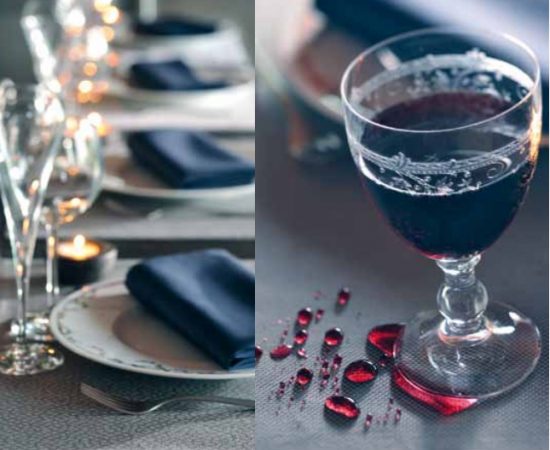
4) Can you show me what happens when there are spills?
Take a look at how these linens react to jam, fruit juice, water, and even red wine!
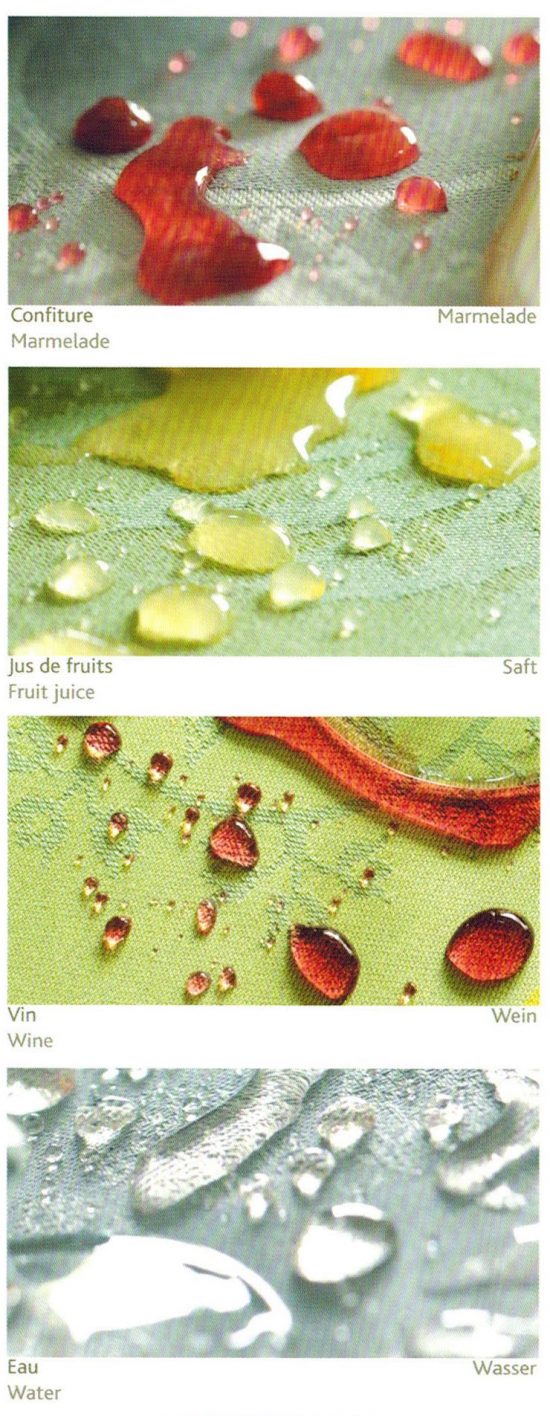
5) How is the Green Sweet treatment applied?
Each cotton fiber is individually coated with the Green Sweet treatment, so it is deeply embedded into the cloth. The Green Sweet treatment is applied by Garnier-Thiebaut at their production facilities in Les Vosges, France. This allows the company to tightly control the quality of the treatment and the finished cloths.
6) How do I clean spills on Green Sweet cloths?
After removing any solid particles on your cloths, simply wipe them with a damp sponge. The rest of your cloth should remain clean and dry.
7) How do I wash Green Sweet linens?
Green Sweet linens can be laundered as usual in the washing machine, and they will maintain their protective qualities even after numerous washes. Avoid using fabric softeners, dryer sheets, or abrasive sponges.
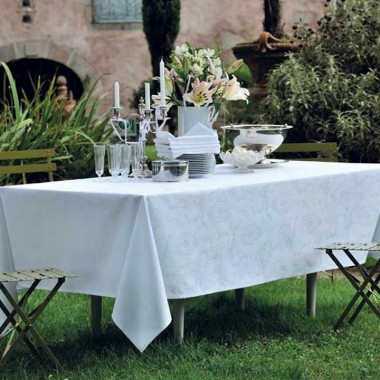
8) Can I iron Green Sweet linens?
Yes! Although you normally would not need to, you can certainly iron Green Sweet linens. One benefit of ironing cloths is that ironing reactivates the functionality of the treatment.
9) Why don’t you offer Green Sweet napkins?
We want your napkins to be absorbent, so Garnier-Thiebaut only applies the Green Sweet treatment to their cloths, runners, and placemats.
10) Who invented Green Sweet?
The nanotechnology was developed by Clariant, one of world’s leading specialty chemical companies. This technology had already been in use by manufacturers of outdoor products; Garnier-Thiebaut was the first manufacturer to use it on linens for the home. Every Garnier-Thiebaut collection that is treated with Green Sweet has been tested and certified by Clariant and is packaged with a Green Sweet label.
So happy that in between all these modern-day technological advances, something came along that truly made life easier for us. To see all of Garnier-Thiebaut’s Green Sweet stain-resistant collections, click here.
Flora Danica: The Amazing Story of the World’s Most Expensive Dinnerware
War. Diplomacy. Royal backstabbing. A Russian Empress who loved art and beauty. All that went into the making of the world’s most expensive dinnerware, Flora Danica by Royal Copenhagen.
Our story begins with Catherine the Great of Russia. In 1788, she was at the height of her power and prestige, having come to power 26 years earlier by deposing her husband in a coup. The formerly impoverished German princess was now the absolute ruler of the largest empire in the world, and she followed up one stunning achievement with another: Expanded Russia into the Black Sea and Crimea. Made Russia a major European power. Annexed Alaska. Reformed the government. Ushered in the Enlightenment. Check, check, check.
Catherine awed her contemporaries. Voltaire compared her to the Biblical Queen Semiramis of Babylon. Madame Vigée Le Brun, former court painter to Queen Marie Antoinette and no stranger to royalty, wrote that “…with her head held high, her eagle-like stare and a countenance accustomed to command, all this gave her such an air of majesty that to me she might have been Queen of the World…”
She was also the ideal Enlightenment ruler: Patron of the arts. Friend of the leading philosophers and thinkers. Champion of knowledge and learning, for women as well as men. The magnificent collections of St. Petersburg’s Hermitage Museum, a must see on any tour of Russia, actually began as her personal art collection.
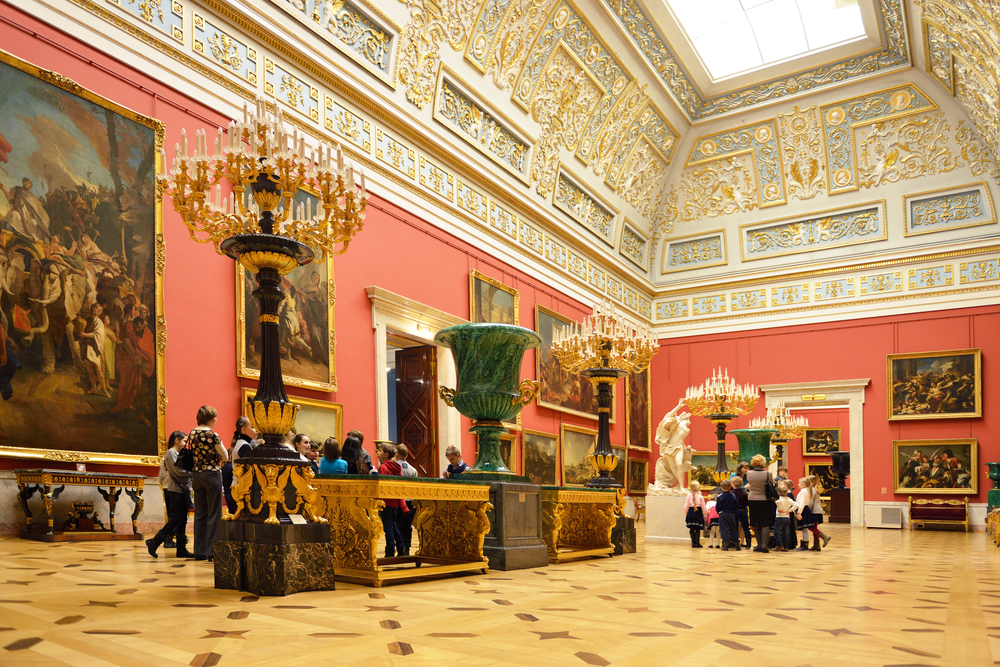
In 1788, Catherine the Great was at war with the Ottoman Turks a second time. Her cousin, King Gustav III of Sweden, decided to take advantage of the situation and attack Russia in the back. To deter him, Russia had signed a treaty with Denmark 15 years earlier. But when the war started, the Danes didn’t move. They had problems of their own: their King Christian VII was insane, his wife Queen Caroline Matilda had an affair, her lover Doctor Johann Friedrich Streunsee fathered one of her children, the King’s mother ordered him executed and the Queen banished, then had herself and the King’s elder son rule as regent. But we digress.
The Russians demanded that the Danes honor their obligations. When the Danes finally showed up, they came up with a smaller force than originally promised. A few months later, when the war ended, the Danes felt mightily embarrassed. It was also not a good idea to get Catherine the Great and Russia on your bad side. But how do you make amends with the absolute ruler of the world’s greatest empire?
They must’ve thought long and hard about this one and figured out three things:
First, Catherine was a well-known lover of the arts. She bought thousands of paintings from all the major European artists of the day. She also commissioned porcelain, metalwork, glasswork, and books, and she even wrote comedies, fiction, and memoirs herself.
Second, she was also a known patron of the French Encyclopedists, a group of philosophers including Voltaire, Diderot, and d’Alembert who set out to gather all the world’s knowledge into one grand Encyclopedie so that it could be available universally.
Finally, and this was key: They knew that the Russians had been after fine porcelain for over 70 years. True hard paste porcelain was very precious in 18th century Europe. Much whiter and stronger than stoneware, it was exclusively used by the royalty and aristocracy, and all the major royal families of Europe had set up their own porcelain factories in towns like Sevres, Limoges, and Meissen. Catherine the Great loved porcelain so much, she turned the Russian porcelain factory in St. Petersburg into the “Imperial Porcelain Manufactory” and placed massive orders for her and her family’s private use.
And so the Danes came up with an idea: Let’s create the world’s finest collection of porcelain which is also an encyclopedia of art. But it had to be so amazing that Catherine the Great would (hopefully) forgive their failure to help Russia during the war. They trusted the task to the Danish royal porcelain factory, Royal Copenhagen, and its chief artist Johann Christoph Bayer:
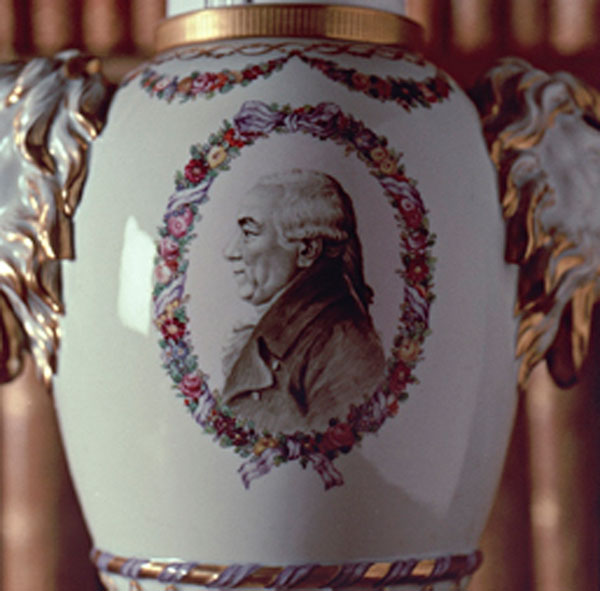
They commissioned a dinnerware collection of 1,802 pieces. They used the finest porcelain they could manufacture and then rimmed them in gold in a lace-like detail — just to be sure it was nice enough. Other pieces featured delicate flower buds that were carved out by hand:
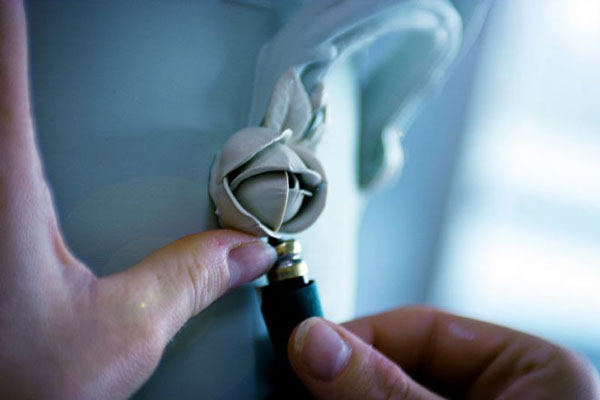
Then, 3,000 flora and fauna from the Flora Danica botanical encyclopedia of 1761 would be individually hand-painted on the dinnerware pieces:
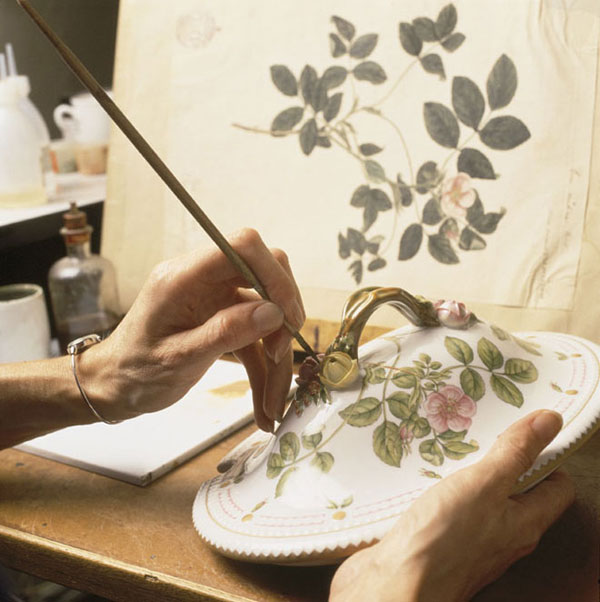
With this much decoration, the porcelain pieces are “overglazed,” which means they are decorated after being glaze-fired in the brightening kiln to produce the wide range of colors and the richness of detail. Then they are fired once more at about 850°C or 1,562 °F after they are painted, to allow the paints to melt and fuse with the fired glaze. Immediately after firing the gold decorations look matte and dull. Their characteristic gold sheen appears only after vigorous polishing with glass brushes or sand:
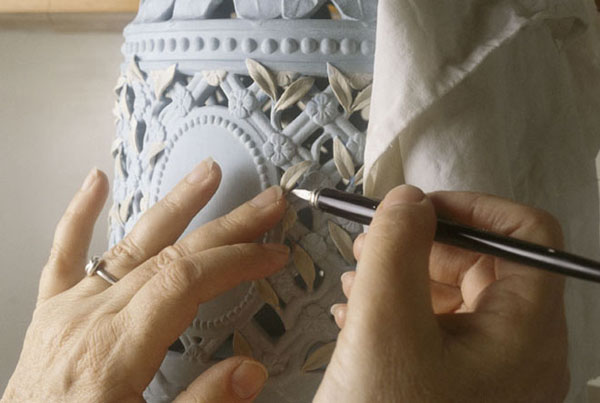
The result was something so magnificent, they could be used for state banquets or just displayed as works of art in Catherine’s great palace in St. Petersburg:
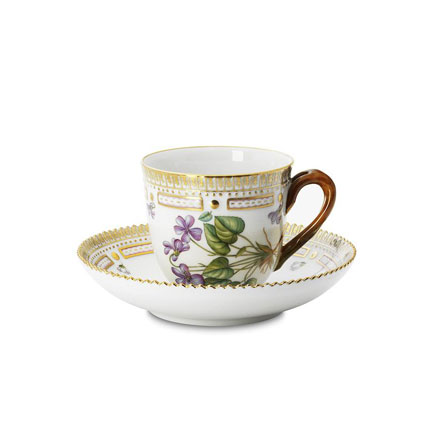
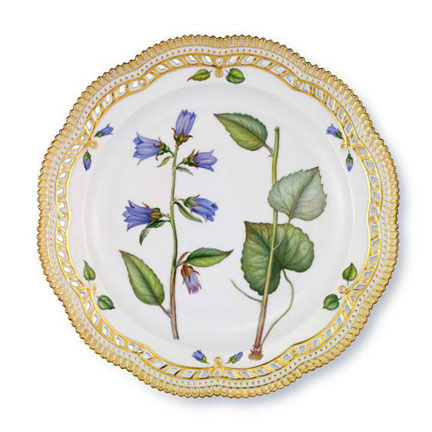
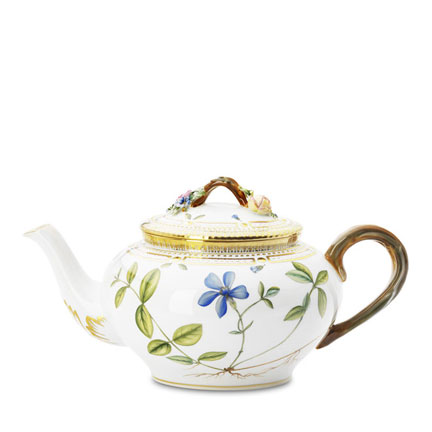
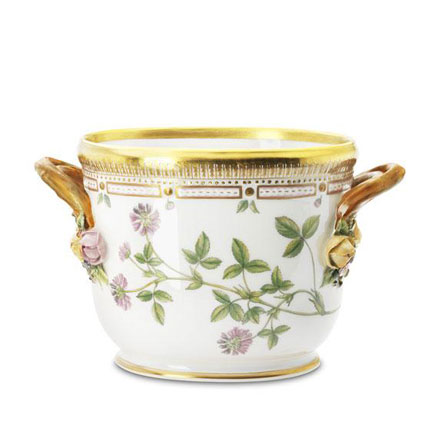
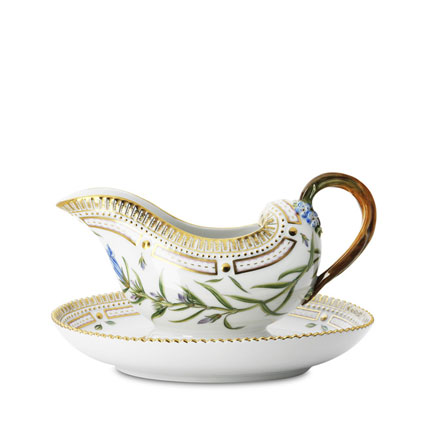
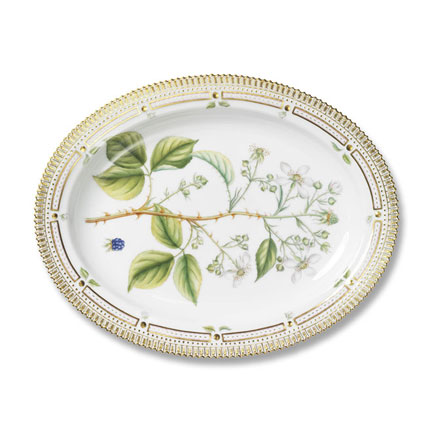
This multi-year project was probably intended as a gift for the 40th anniversary of Catherine the Great’s reign in 1802. But in 1796, Catherine suddenly died of a stroke. Her death caused chaos in Europe. Her son and successor, Paul, hated her and wanted to undo everything she started. He even dug up the remains of her dead husband, Peter III, for an elaborate state funeral before burying him with her — condemning her to spend eternity with the man she deposed and killed.
The Danes got the hint. They weren’t giving Paul the fine porcelain intended for his mother — he might’ve just smashed it to spite her! But they must’ve been so pleased with how this collection was coming along, their regent Prince Frederick VI, ruling Denmark in his father’s name, continued its production and even ordered some more, expanding it to 100 place settings.
In 1802, the production was finally finished. By now Paul was also gone: the Russians finally decided he was too crazy and poisoned him, replacing him with his 24-year-old son Alexander I (of War and Peace fame.) But the Danes weren’t giving him their prized porcelain. The first Flora Danica dinnerware service was delivered to the Danish Royal Palace, where Frederick VI used it to celebrate the birthday of his father King Christian VII in 1803, probably at their splendid Rococo-style Amalienborg Palace in Copenhagen:
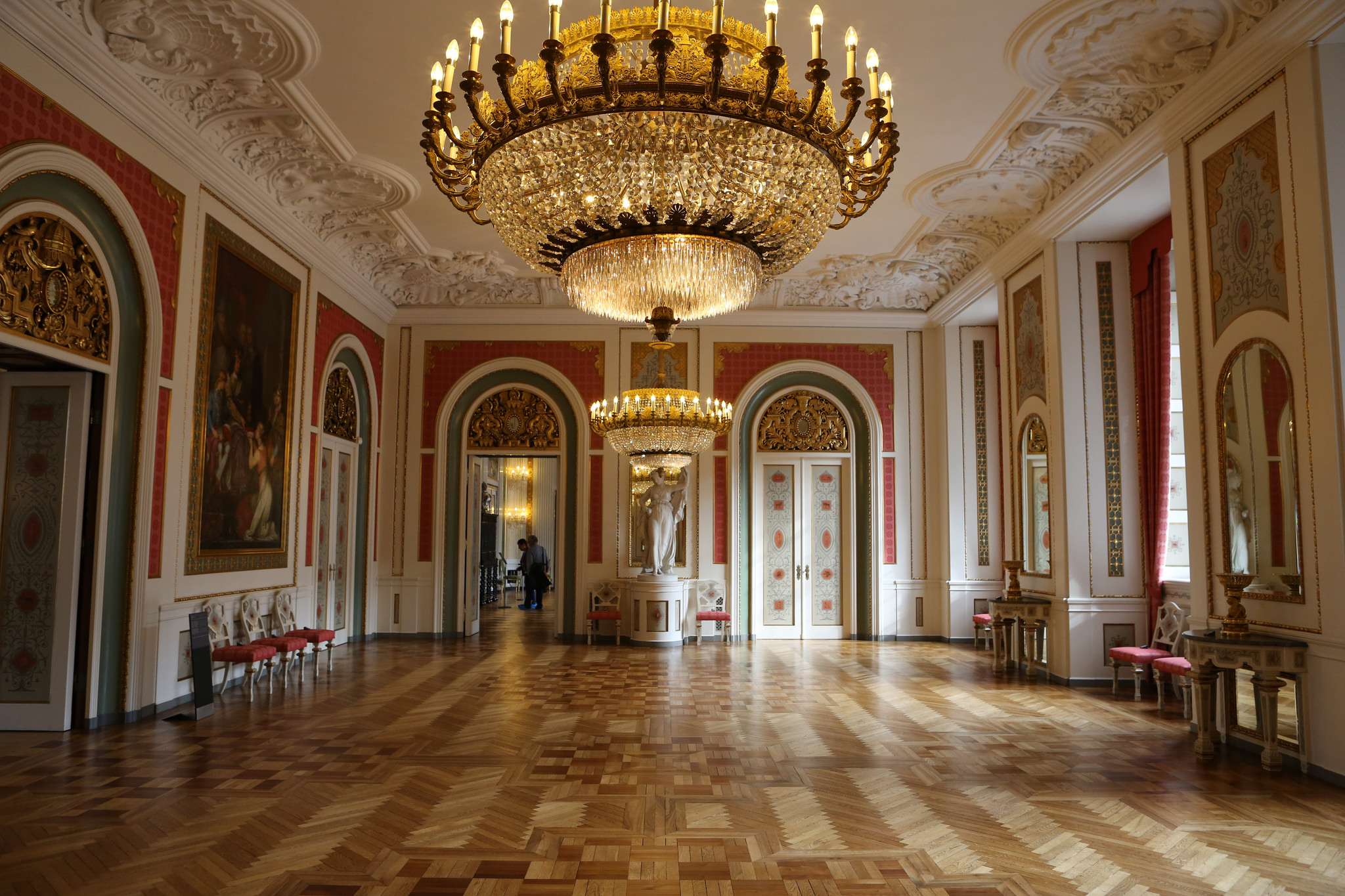
It must’ve been a very nice thing to do for his father, who suffered schizophrenia, was forced by his mother to divorce his tragically adulterous Queen, and had been sidelined for over 30 years already. And Flora Danica continues to be used by the Danish Royal Family for special occasions to this day.
Today, Flora Danica is regarded as one of the most original and inspired examples of from the golden age of porcelain. It has also been collected by today’s royalty: Oprah, Princess Marie-Chantal of Greece, and various members of the Kennedy family. Royal Copenhagen continues to make it by special order from its factory in Denmark — the last porcelain dinnerware made in Denmark, and you can order or register for Flora Danica here.
[VIDEO] How 3 Parisian Star Chefs Show Off Their Amazing Dishes
In France, life is lived as art, and every moment must be lived beautifully. Nowhere is this more true than the Michelin starred restaurants, where culinary skill and presentation play equal parts to create unforgettable dining experiences. But how do they do it? In this video, you can see how three Michelin starred Parisians chefs, Guillaume Delage, Thierry Marx, and Toshitaka Omiya, show off their amazing creations with our Raynaud Essential dinnerware. Check it out:
6 Ways to Make the Gracious Lifestyle More Rewarding
You know that the gracious lifestyle is its own reward: a beautiful home, good times with friends and family, and the satisfaction of living life to its best.
And we want to be part of it! So we set up a unique new program, Gracious Style Rewards to celebrate those special times with you.
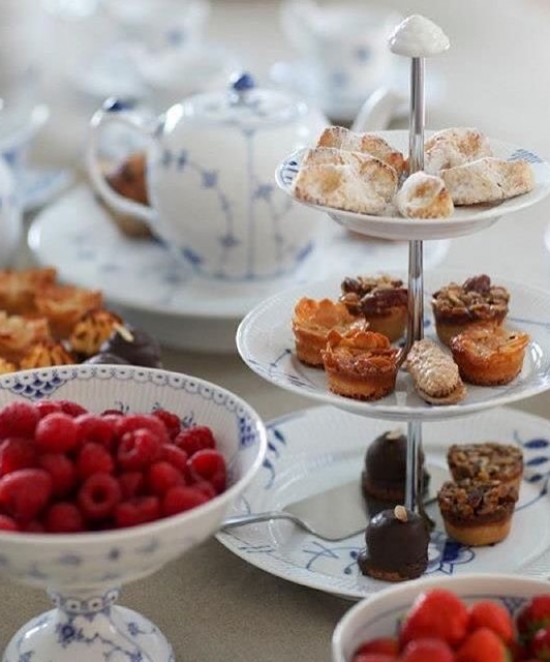
So here’s how we’ll make decorating and entertaining even more rewarding — and fun! Just sign up for our rewards program, and you’ll start getting points. You’ll earn points not only when you shop with us, but also when you:
- Create a wedding or gift registry
- Share your celebrations with us, either via instagram or twitter or directly by email
- Order your social stationery or wedding invitations through one of our partners
- Get a nice bottle of wine and some Wagyu steaks for dinner
- Or gourmet meals or snacks (for the rest of us who don’t cook.)
And what could you do with those points? You could choose from one of our curated rewards, from whimsical gifts to precious sterling silver centerpieces. Or you could always get a gift certificate, good towards anything we sell. Finally, you could always get a “Thank you” cup of coffee from us at your local Starbucks.
If you love design, love to decorate and entertain, or just love giving beautiful to gifts, we hope you’ll love our rewards program as well. Let us know how you like it!
Save 20% on Garnier-Thiebaut Linens during the Virtual Trunk Show
Ever wanted to be in France, but just couldn’t get away? Fortunately, Garnier-Thiebaut’s French linens could bring a bit of France to your home — without the redeye:
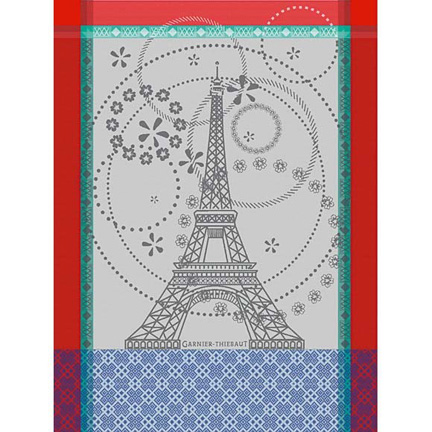
Their quintessential French table linens bring vibrant colors and whimsical styles to make you feel like you’re summering in Provence:
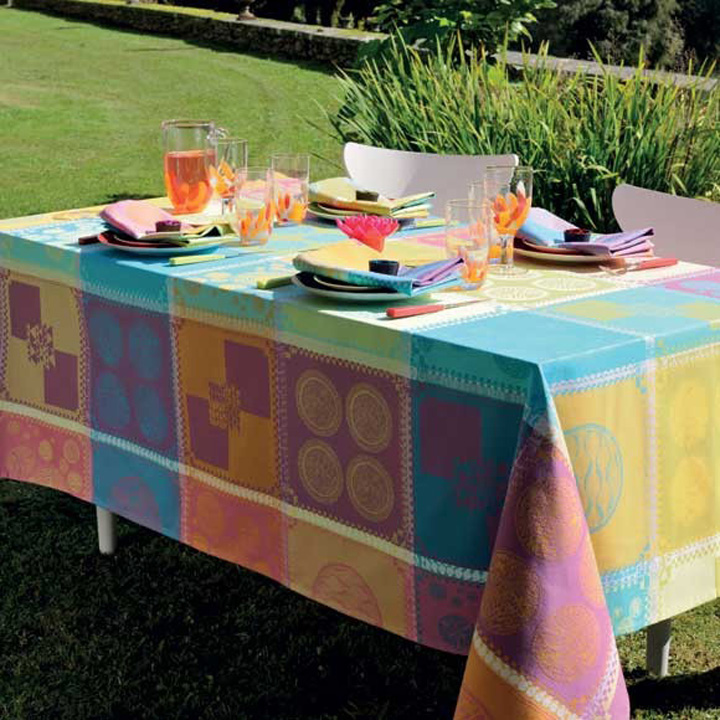
Or dining candlelit in a Loire chateau:
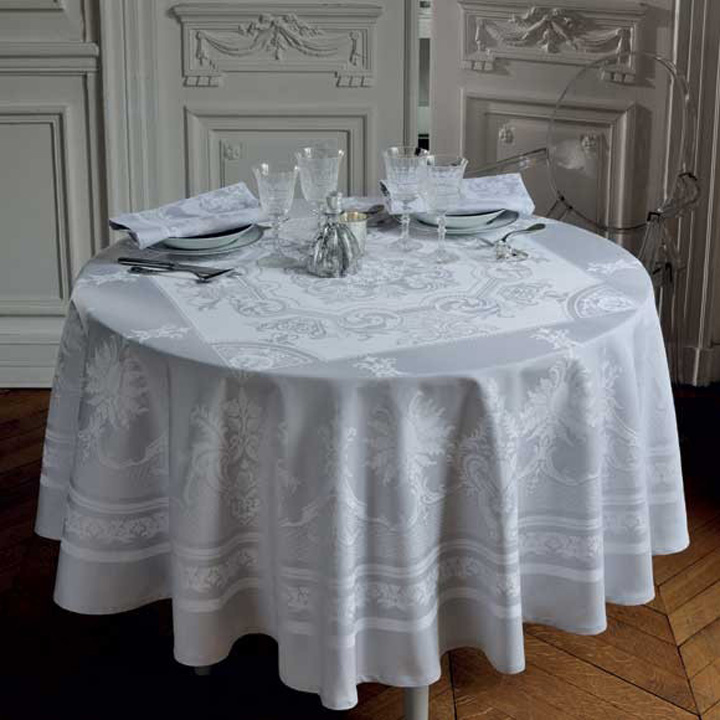
Or enjoying yourself at your pied-a-terre in Paris:
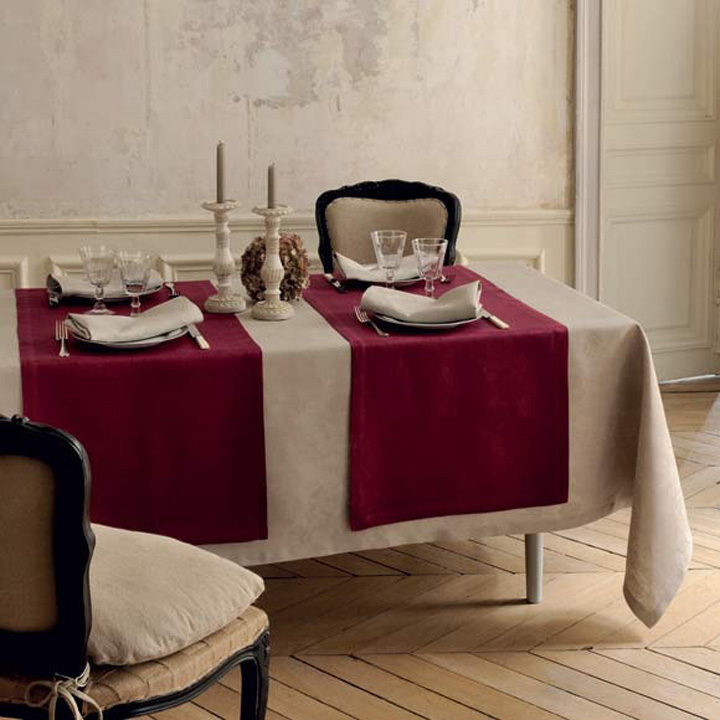
But these linens are not just pretty to look at. They also have an advanced Green Sweet technology that helps repel spills and stains. This combination of their distinctively French style and ease of care is probably what has made Garnier-Thiebaut the choice of the Four Seasons George V Paris, Mandarin Oriental Geneva, Ritz-Carlton Manama in Bahrain, Four Seasons New York, and Thomas Keller’s world-famous French Laundry up in Yountville, CA.
To help showcase this uniquely French product, we’re doing a “virtual trunk show” for Garnier-Thiebaut this June. You can save 20% off any Garnier-Thiebaut table linen or kitchen towel with code GT20JN6.
Bringing a bit of France home might just be the next best thing to hopping on that flight…
Punk, Studs, and Color: Waterford’s New Rebel Collection
Every once in a while, a collection comes along that just knocks it out of the park. Jo Sampson, the British designer responsible for developing some of the most iconic interiors in the world (for Hermes, Fairmont hotels, and Four Seasons hotels), was recently tapped by Waterford to create a fresh new line of barware and home accessories. And the results are stunning!

Appropriately named the Rebel collection, Jo contrasted the idea of a punk stud (which she chose for its tough, streetwise feel) with the refined craftsmanship for which Waterford is known. And then, she combined golden metals with crystal in shades of plum, amber, blush, pink and purple for an edge, cool, nonconformist look that expertly mixes the rough with the smooth.
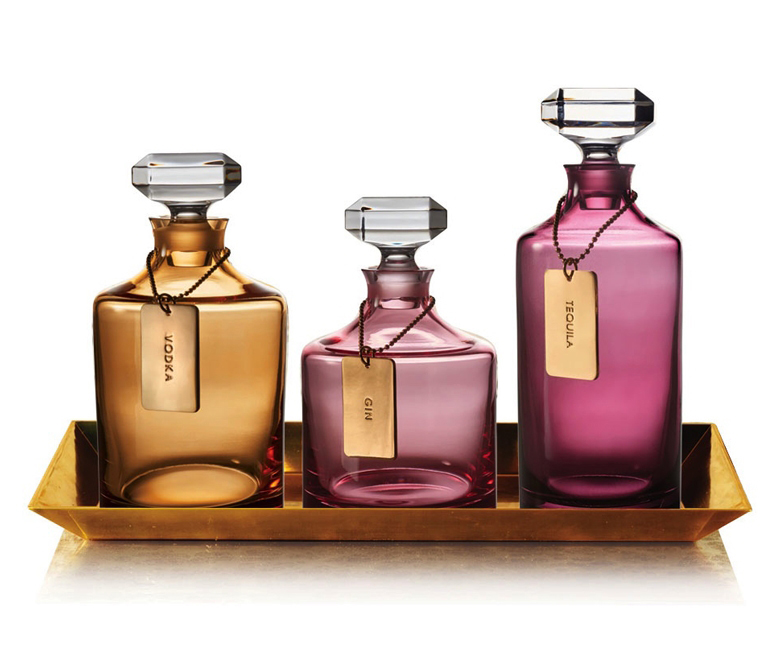
The finished capsule collection rocks! And if you love how the Brits are so good at creating interiors that feel familiar, yet hip, this is what you need in your home.
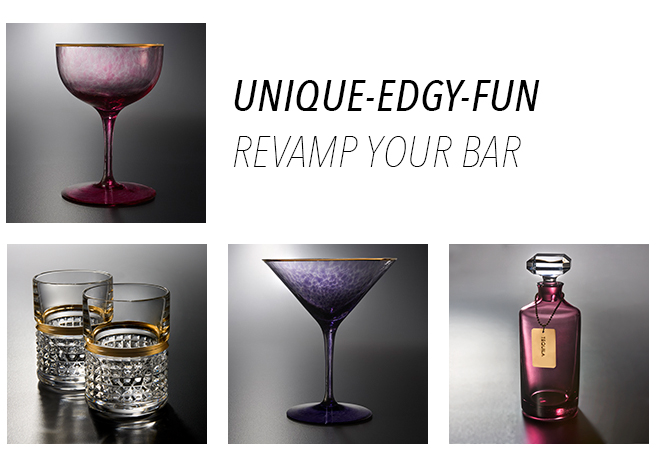

Are you in love? Hear Jo talk about Rebel in this video:
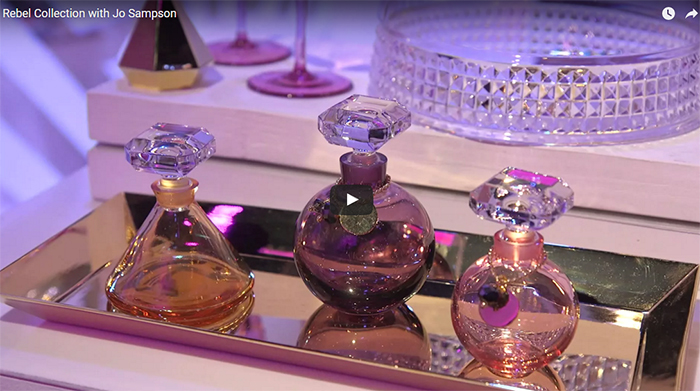
To see the entire Jo Sampson for Wateford Rebel line, click here. Which one’s your favorite?
By the Water: Coastal Living’s Newly Minted Holiday Table
Does the holiday season have to be snow, snow, snow?
Not for us — we live in LA. But no matter where you live, Coastal Living‘s holiday issue should bring a dose of beach, sun, and lime:

And their holiday table is also a seaside escape:
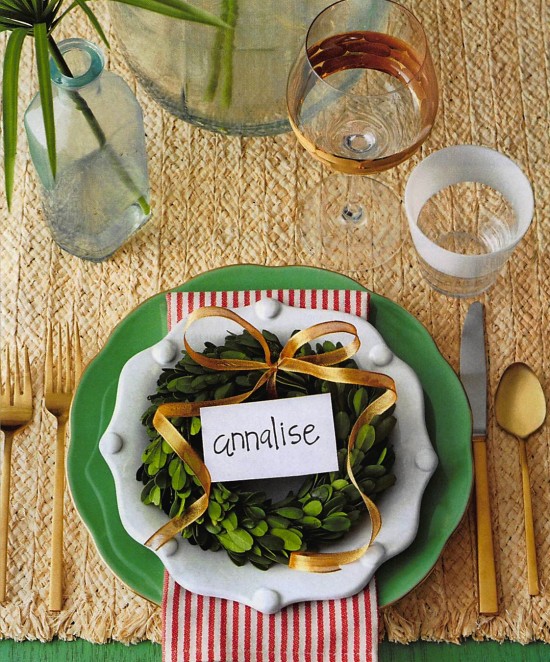
Featuring Herend’s CV12 Mint service plate, Vietri’s Incanto salad plate, Michael Wainwright’s Truro Gold wine glass, and Vietri’s red stripe napkin, this is a gorgeous, laid-back version of the traditional red and green.
Click here to see how you can create a seaside holiday table, or see our inspiration gallery for other table settings ideas.
A warm thank you to Coastal Living, and happy entertaining!
A True Thanksgiving: How Our Client Recreated Babette’s Feast
In the remote, dreary Jutland coasts of 19th-century Denmark, a pair of spinster sisters took in a Parisian woman named Babette as their housekeeper, even though they could not afford to pay her. For the next fourteen years, Babette cooked the bland meals demanded by the sisters’ late father, whose strict religious beliefs they still followed.
Then, one day, Babette won the lottery. But instead of going back to Paris, she spent it all making the most lavish feast the sisters and their fellow believers had ever seen. Course after course of the most exotic delicacies were served on the most beautiful china. As the feast progressed, its sensual pleasures overwhelmed even the most hardened souls, as the diners reconnected with each other, forgave old sins, and re-kindled long lost loves.
Finally Babette reveals that she was once the head chef of the famed Cafe Anglais in Paris. The sisters were horrified! Babette had spent her last cent on them and could not go back to her glamorous life again. They sob that she would be poor for the rest of her life. But Babette tells them, “an artist is never poor.”
This novel by Karen Blixen, of Out of Africa fame, was made into a movie in 1987 and became an instant classic. It won an Oscar for Best Foreign Language film, a Cannes Film Festival award, and a Belgian Grand Prix. Even Pope Francis mentioned it as his favorite film in a New York Times interview.
Recently, one of our clients from Brazil recreated this very film after some serious research and shared her photos with us. Her table is spectacular:
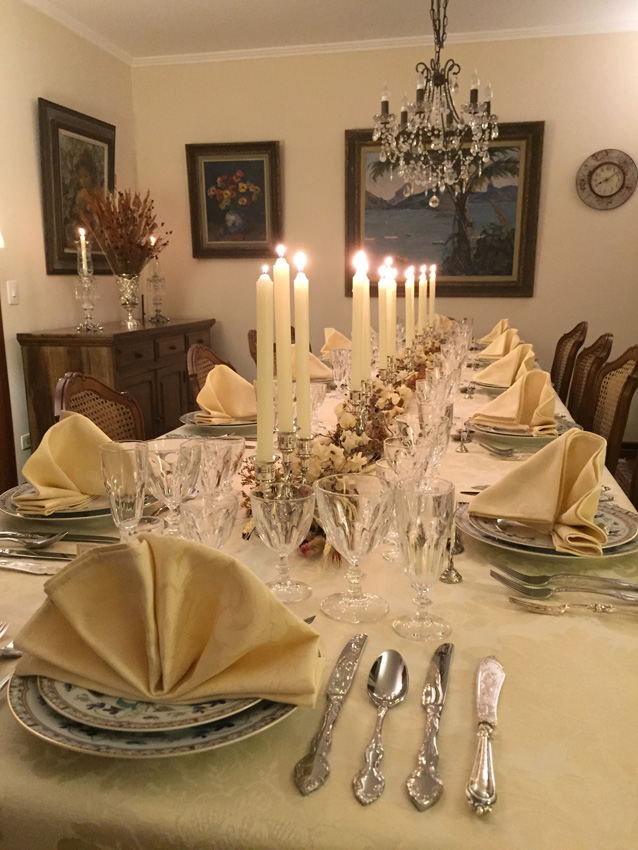
The first course, blinis demidoff:
Followed by a salad:
A potage a la tortue:
The main course, cailles en sarcophage:
And of course, dessert! The savarin au rhum:
And to make it a really special occasion, beautifully dressed guests at the party!
Did you recognize Haviland’s Imperatrice Eugenie dinnerware on the table? This is the same pattern Babette ordered from France for her feast and is especially appropriate to the story, since the Cafe Anglais was one of the greatest restaurants during the Second Empire, when Empress Eugenie and Emperor Napoleon III were at the height of their power.
For more photos and tips on how to create your own Babette’s Feast, please see our inspiration gallery.
We hope this will help you celebrate your Thanksgiving. Remember to be grateful for the kindness of others and enjoy the pleasures of good food, good friends, and loved ones. Don’t forget to share your special celebration with us — just write us or instagram us with #graciousstyle.
And thank you, Renata, for having shared these stunning images with us.
It’s All in the Gravy: Vista Alegre’s Venezia Gravy Boat in Bon Appetit!
What’s the perfect gravy boat for your Thanksgiving feast? Naturally, a question for Bon Appetit’s big November 2015 issue:

And one of the answers is the Vista Alegre Venezia Gravy Boat:
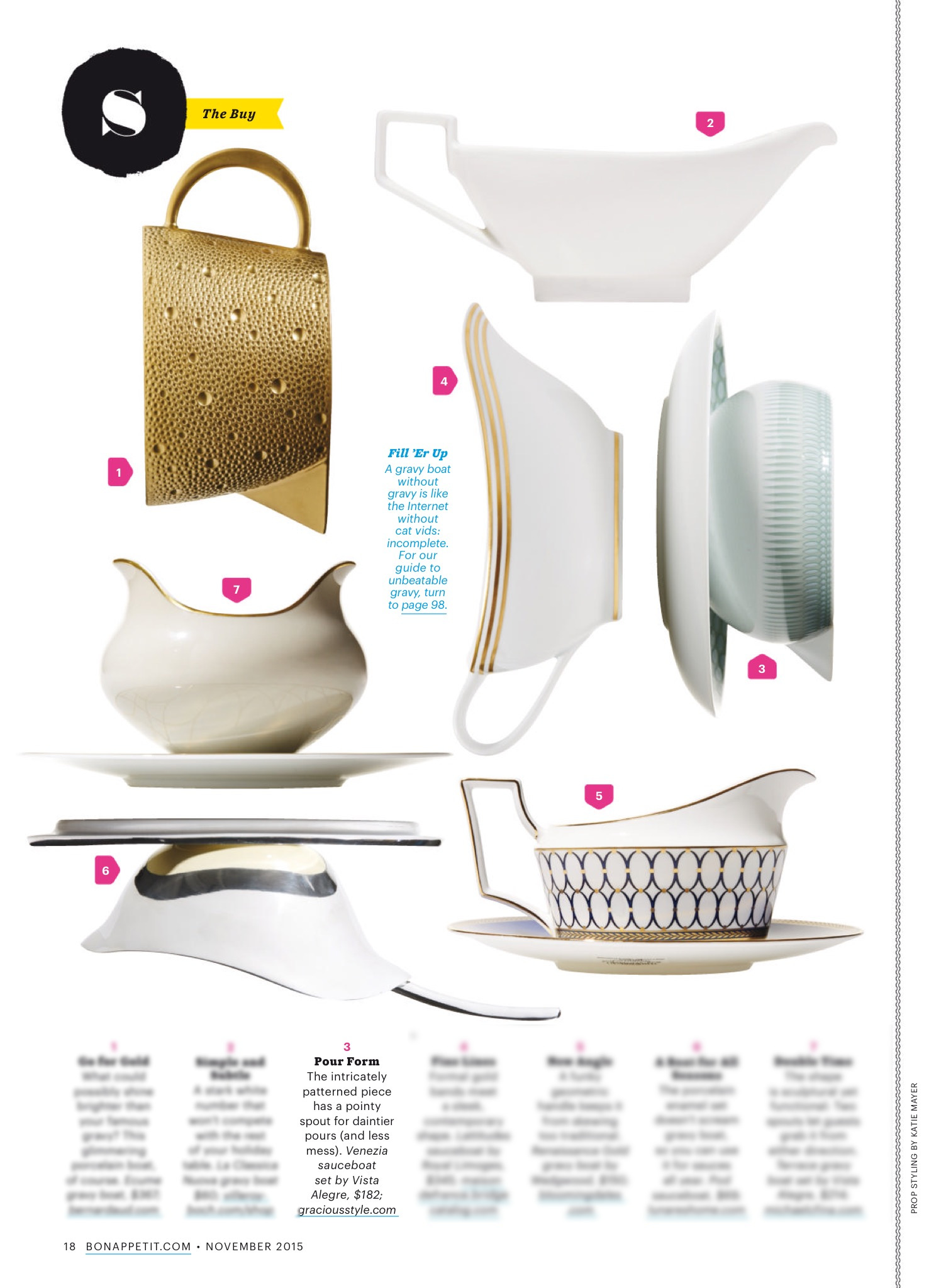
According to the editors, “The intricately patterned piece has a pointy spout for daintier pours (and less mess).” See if you agree:
Click here to see the rest of the Venezia dinnerware and other Vista Alegre collections.
Celebrating Halloween in Los Angeles
In L.A., where we are surrounded by so many people in the (movie) industry, Halloween is serious business.
For the past several years, local artist/photographer/baker Christine McConnell has taken over her parents’ house and made it over for Halloween. Last year, her design was inspired by Tim Burton’s “The Nightmare Before Christmas:”

This year, she created an even more over-the-top version, inspired by “Monster House:”

Over in Beverly Hills, local real estate agent Michael Libow’s Spadena House (better known as “The Witch’s House”), is perfect for trick-or-treating. Designed by Hollywood art director Harry Oliver in 1920, it’s been carefully renovated and a must-visit on Halloween.

And of course, don’t forget the West Hollywood Carnaval, the world’s largest Halloween street party:

But what if you love to party and you’re short on time? Halloween’s easy, because you can take things you already own and just add accessories. Here are a few ideas.
See how just one Witch Hat napkin ring transforms this black and gold setting.

One black skull is all you need on your console table:
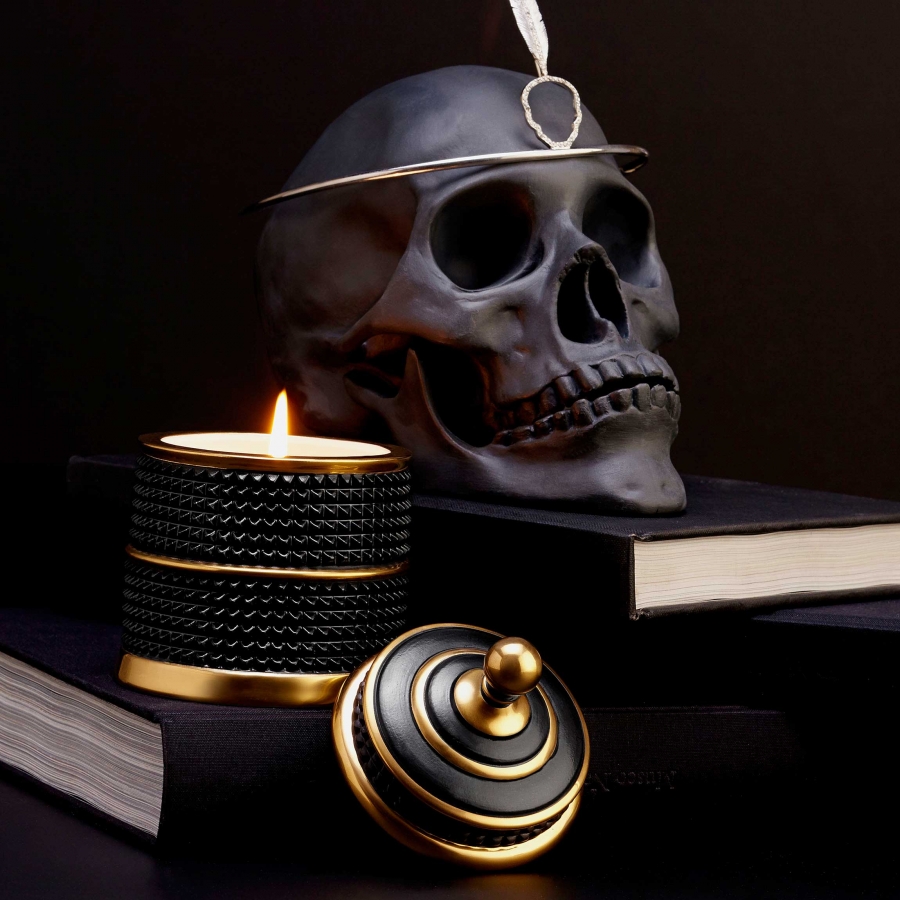
Same idea on your dinner table with one white skull:

If you’ve got a few glass jars in the kitchen, fill them with candy and label them (get your candy here and free printable label here) to create a Halloween Party “Specimen Table”:

And for the little ones, keep it simple with Hershey’s Kisses:

Happy trick-or-treating! Click here for more Halloween party ideas.
One Week Only – Mauviel French Cookware 40% Off
For one week only, we have selected Mauviel French cookware pieces at 40% off. Plus, you get free shipping on all orders over $75.
Originally created for professional chefs, Mauviel has long been a standard bearer in the world of high-end cookware. Sought by professionals since 1830 for its exceptional heat control and elegant designs, Mauviel cookware is both easy to use and sure to look beautiful in your kitchen. All Mauviel products are made in France and include a manufacturer’s lifetime warranty.
Here are a few of our favorite collections:
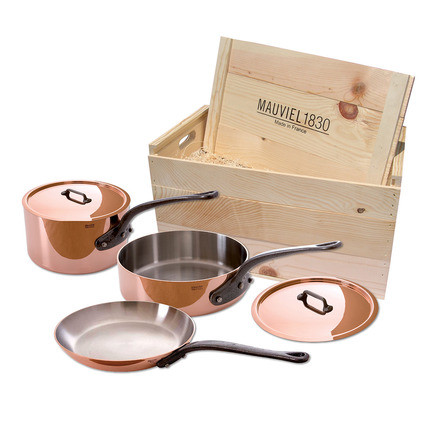
|
|
|
|
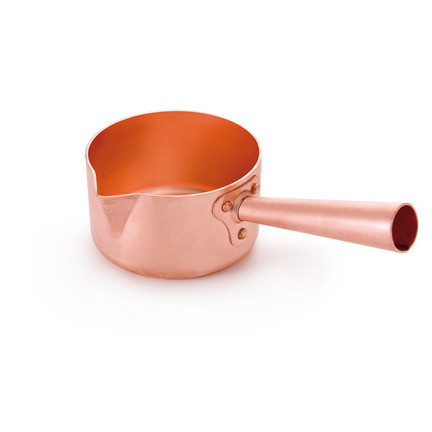
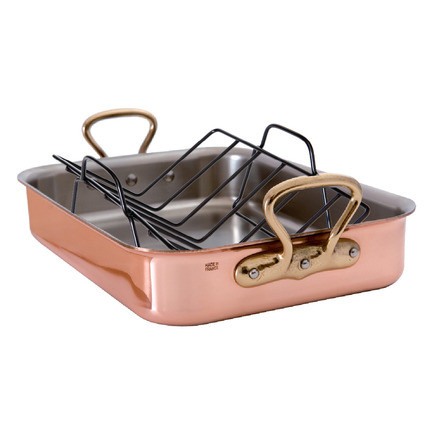
The Perfect Glasses for Outdoor Entertaining
Want stylish glassware that’s perfect for outdoor and the pool this summer?
Mario Luca Giusti’s acrylic glassware looks just like crystal and the colors are resistant to sunlight (acrylic will not yellow), so they’re a must-have for all your parties outdoors. And because they are not glass, they’re great near small children or on yachts year-round.
Their yummy Lente red tumbler was recently featured in House Beautiful
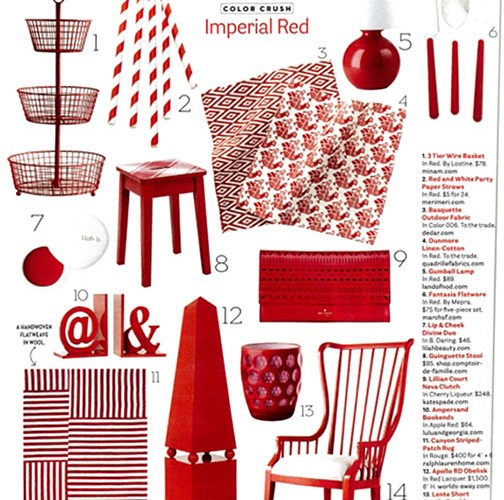
And look at this gorgeous spread in Architectural Digest:
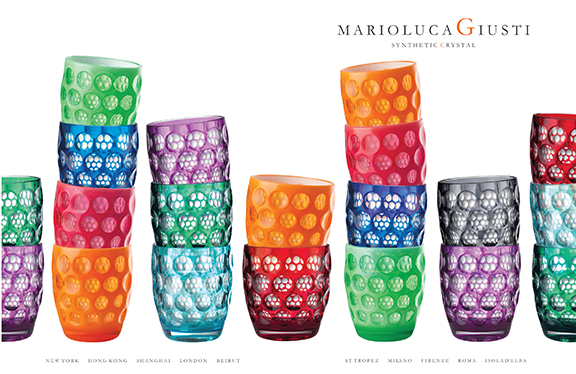
For those who want just a bit of color in their glasses, their brand new collections this year include the Rolling Stones – a collection of wine, water, and flutes in green, turquoise, blue, and red:
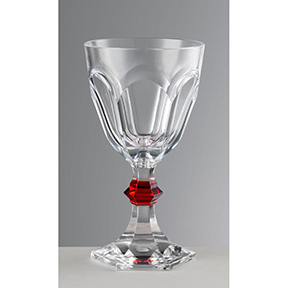
Which is your favorite color? Click here to view all our Mario Luca Giusti collections. And for a limited time, get free shipping on any order over $75.
All Garnier-Thiebaut French Linens on Sale 20% Off!
Great news! From now until the end of June, all Garnier-Thiebaut table linens and kitchen towels are on sale for 20% off. Plus, you get free shipping on all orders over $75.
The linens from this well-known French company have been used by the Four Seasons George V in Paris, the Mandarin Oriental Hotel in Geneva, Le Meridien Bora Bora, and The French Laundry restaurant in Yountville. Their designs range from classic neutral tablecloths to vividly bright jacquard table runners and wonderful kitchen towels.
Plus, their easy care collection is stain-repellant, so you can wipe away all spills for easy summer entertaining. To read more about the company’s Green Sweet easy care collection, click here.
Here are a few of our favorite collections:
|
|
|
|
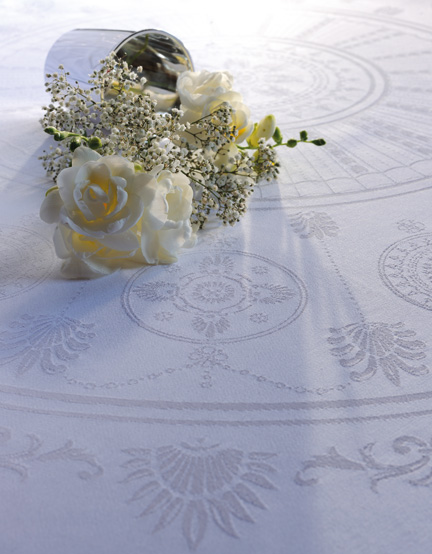
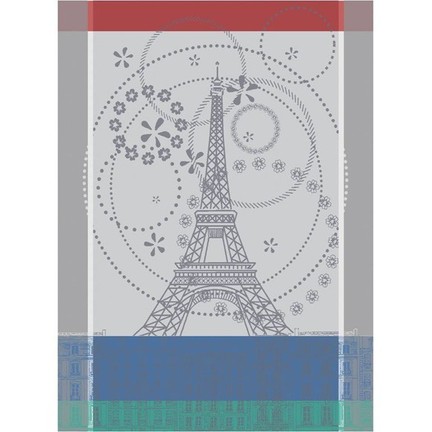
To view our full Garnier Thiebaut section, click here!
Wally’s Vinoteca: The Hottest New Wine Bar in Los Angeles
The new house we are building will have a wine room in the basement, so I’ve spent a good amount of time looking at pictures of wine rooms online. Many of them are very old school, the kinds of rooms you would find if you were living in a castle in France. But since we’re in L.A., I wanted something a little hipper (and friendlier). I wanted a mix: a room with glass doors and wood elements so that it would be both inviting and timeless.
My architect mentioned that he’d worked with the owners of Wally’s, a well-loved wine store in west Los Angeles, several years ago to design their private wine room. So he put me in touch with their cellar expert, who shared that he’d recently finished working on Wally’s Vinoteca, a wine bar in Beverly Hills.
I went twice last week, and I was blown away.
Opened in December 2014, Wally’s Vinoteca was the brainchild of Christian Navarro, a kid from Palm Springs who twenty years ago started working with Wally’s founder Steve Wallace. Fast forward to 2013, when Guess? founders Maurice, Paul, and Armand Marciano bought into Wally’s and brought with them a whole different attitude: yes, deeper pockets, but also a sense that the city was ready for something more exciting. Christian, for his part, had always dreamed of a place that was more convivial – sort of like the Harrods Food Hall in London – where you could drink something, get a bite to eat, and linger.
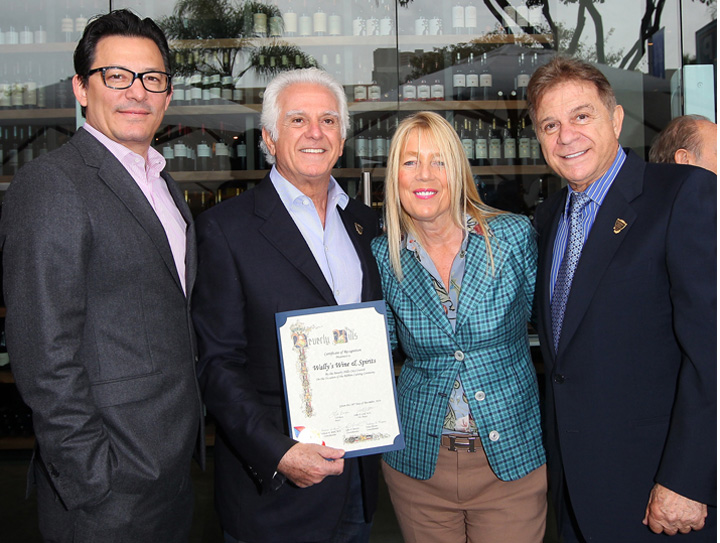
The Marciano brothers let Christian run with his idea, and they’ve created a super exciting food destination in Beverly Hills. The vinoteca stocks 150 wines by the glass, but you can also order a bottle (from their 2,500+ bottle selection) and enjoy it on site. All the seating in the restaurant is communal, and – this I love – it’s available at different heights. So if you feel like lingering at a regular table, you can, but if you prefer to swing from a bar chair and face the room, you can do that too.
As you’d expect, the place is serious about wine, with floor-to-ceiling, handcrafted solid wood shelves.
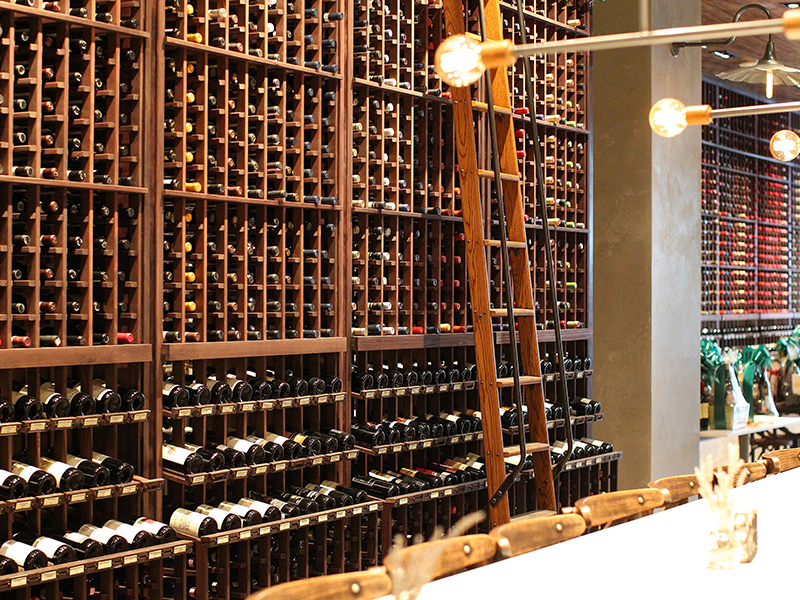
But it’s also very inviting. The lighting is terrific (love the Edison lightbulbs) and they’ve used lots of natural materials: four-inch Carrara marble counters, reclaimed lumber ceilings, and distressed seating.

The food – a mix of cheeses, charcuterie, and small plates, is served in white bowls or olivewood boards. All very simple.
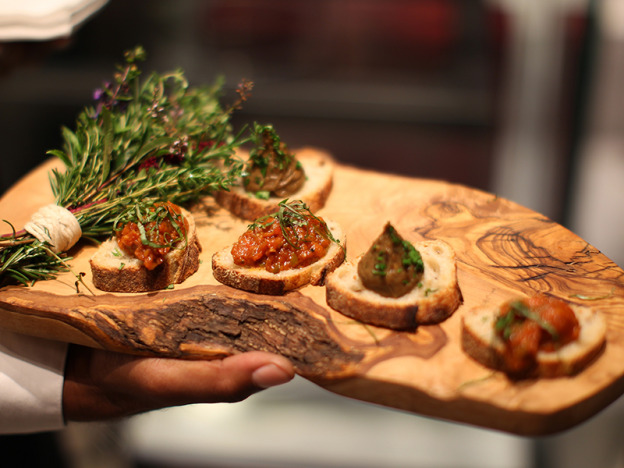
Halfway through the vinoteca is their cheese counter. They also stock breads, chocolates, and jams.
Behind it, there is a game mosaic inspired by the one at Harrods.
And to top it off, we got a private tour of their back room, which included wines from 1901!
Finally, I’ve found a wine room that I can understand: one that does what you need it to do (store wine), but also gets that it’s ultimately about creating a place where you can enjoy yourself and have a good time with friends.
So glad Wally’s is in our neighborhood … you should visit next time you’re in town!
Note: All images courtesy Wally’s Vinoteca.
Like the look? Here are a few ideas to get you started:
|
|
|
|
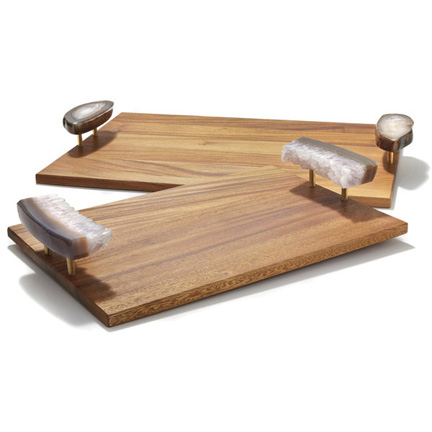

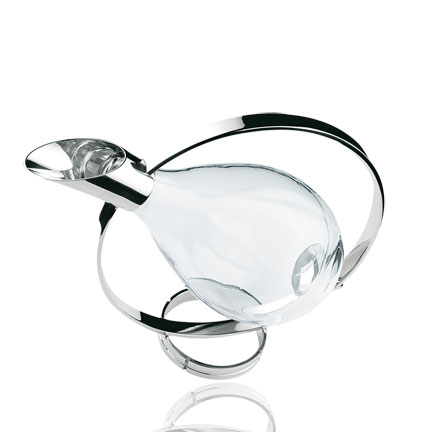
Colin Cowie’s 5 Favorite Napkin Folds
We love Colin Cowie’s and Carolyne Roehm’s over-the-top gorgeous parties, which are all about layering flowers, color, and heights. But you’d be surprised to know: they both keep their napkin folds surprisingly simple.
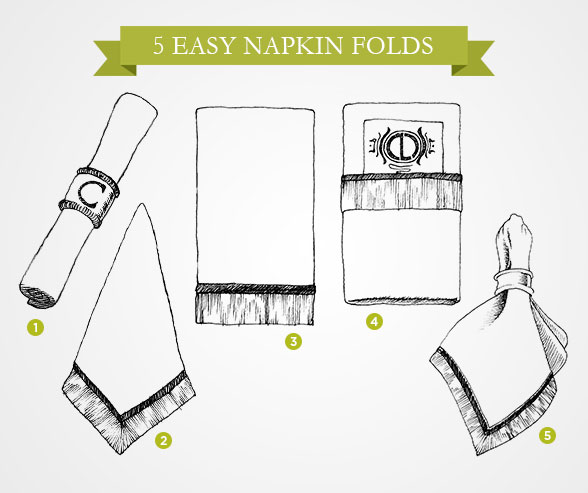
1) Roll the napkin and thread it through a napkin ring.
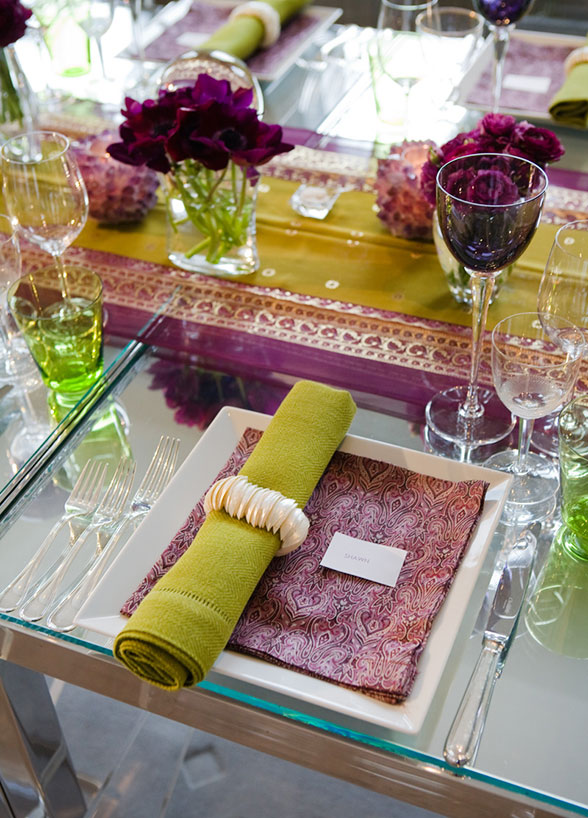
2) Fold the napkin with a point at the bottom.
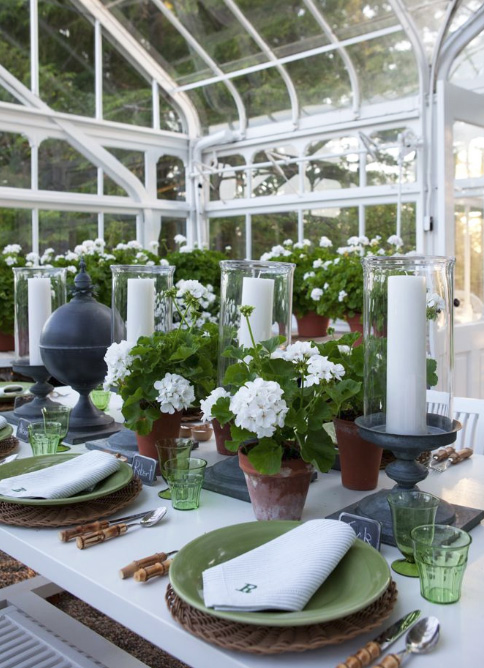
3) Fold the napkin into a rectangle.
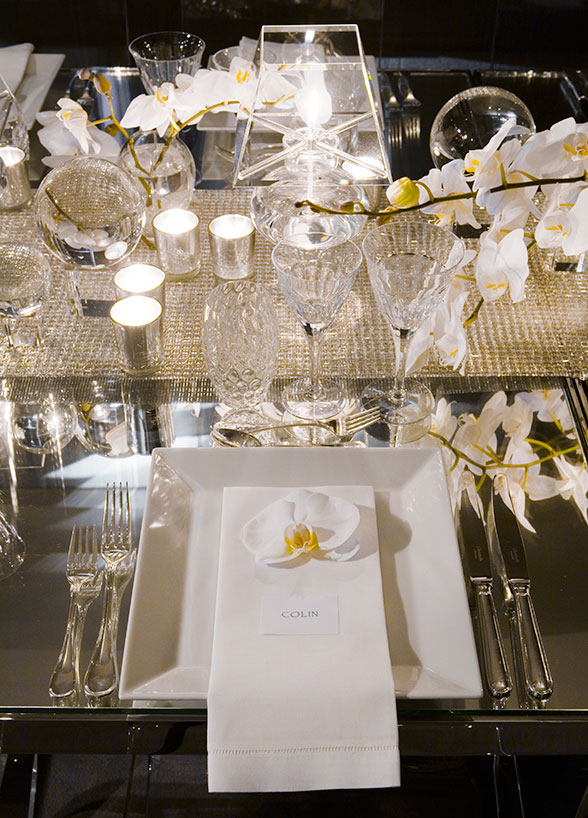
4) Fold the napkin into a rectangle, but leave a fold out so you can tuck in a gift or a menu.
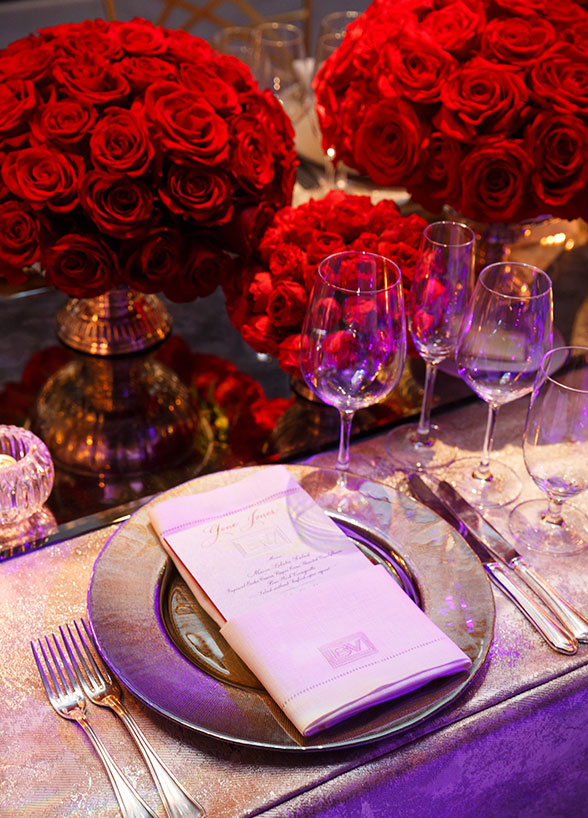
5) Pull the middle of a napkin through a napkin ring.
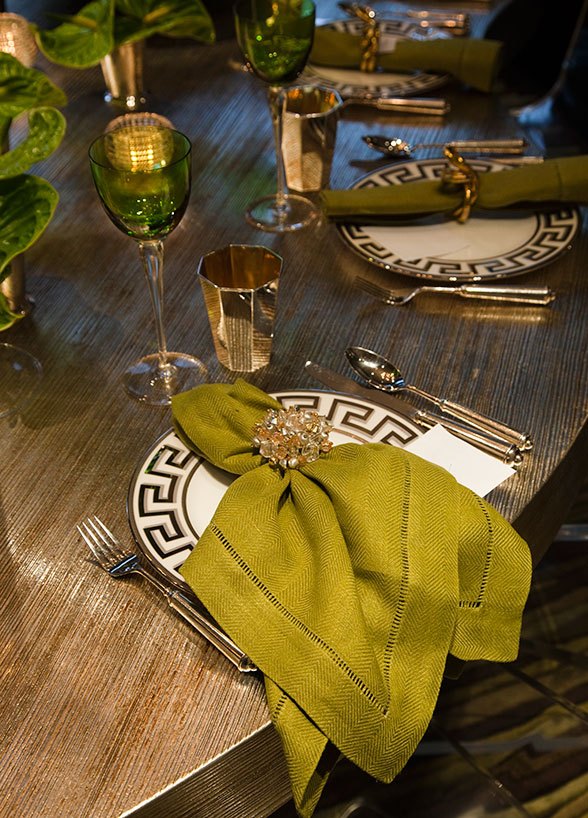
Inspired? We’d love to see pictures of your tables. And if you’ve got a party coming up, click here to see our napkins and napkin rings.
No More Broken Glasses!
I’m always thrilled when my boyfriend volunteers to do the dishes… until I hear the chilling sound of another glass shattering in the sink! Between him and his brother, those 4 hands have broken a good 20 or 30 glasses over the past year. My solution? Mario Luca Giusti‘s durable, beautiful, boyfriend-proof drinkware.
In so many colors and styles, these glass-like acrylic pieces were just what our kitchen needed. Now, when I hear something tumble into the sink, I keep my feet up and remote in hand, knowing he’ll never break another glass.

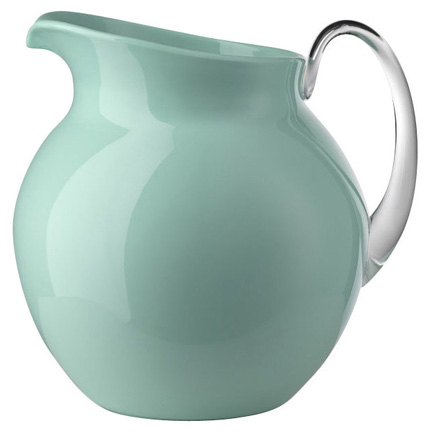
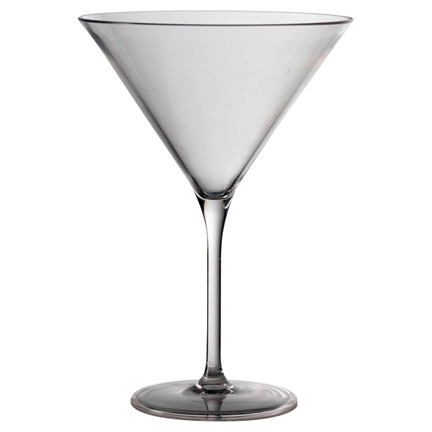
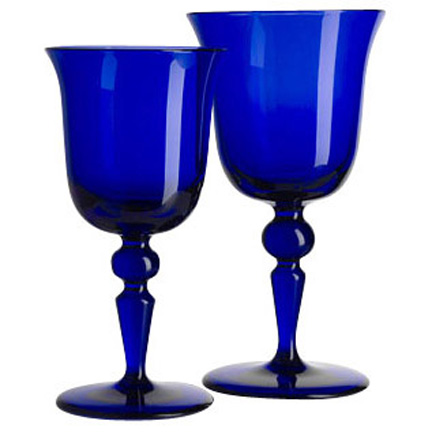
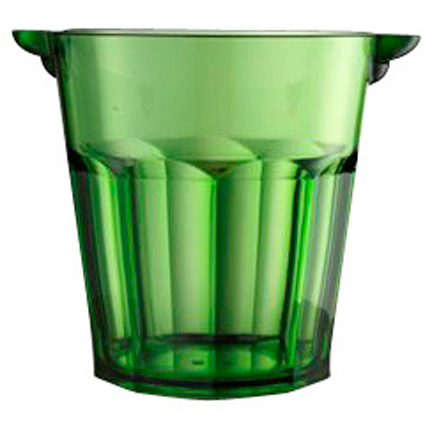
For more fun and easy styles by Mario Luca Giusti, click here!
Vietri’s Old St. Nick Holiday Collection is Back!
Vietri’s beloved Old St Nick Holiday collection is back, with many brand new additions! Catch a glimpse of Old St. Nick bustling around this holiday season … you’ll find him baking treats, delivering toys, and pulling sleds.
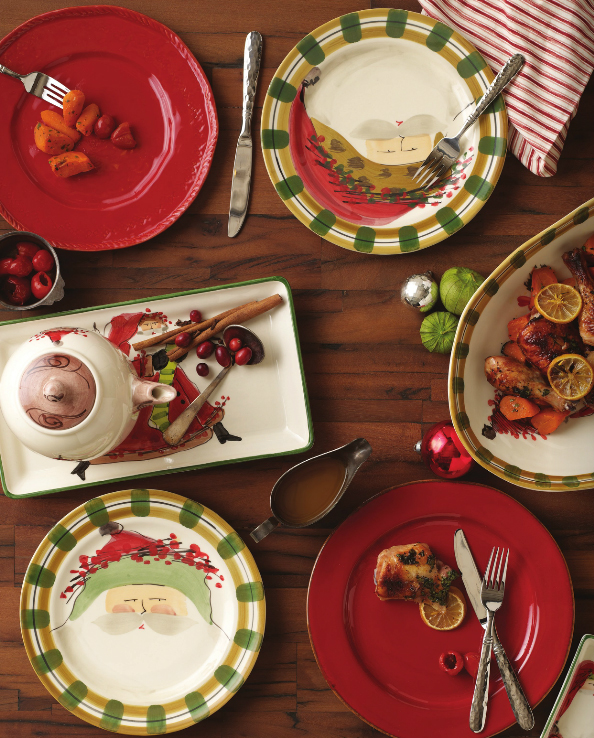
|
|
|
|
|
|
|
|
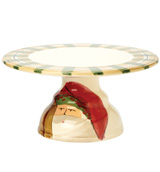
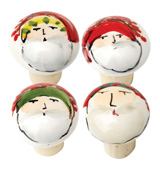
Every piece in this collection is handpainted in Tuscany and dishwasher safe.
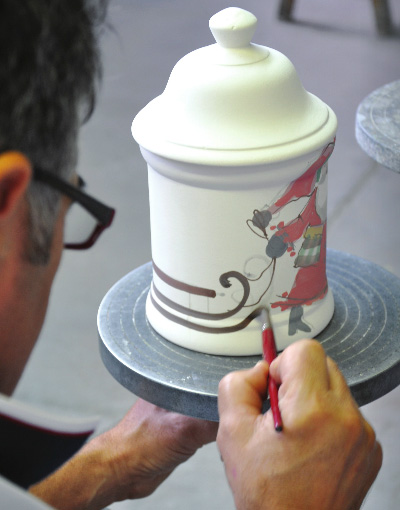
Tell us: which is your favorite Old St. Nick piece?
Philippe Deshoulieres Osmose Holiday Promotion – Save Up To 60%
Just in time for holiday entertaining, save up to 60% off the white Osmose dinnerware collection from Philippe Deshoulieres. Filled with geometric shapes and curves, this Art Deco pattern is perfect for mixing and matching. All pieces made in France.
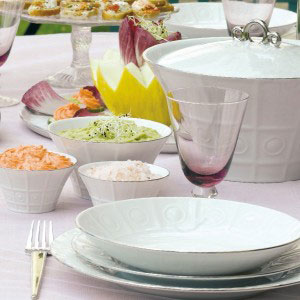
|
|
|
|
|
|
|
|
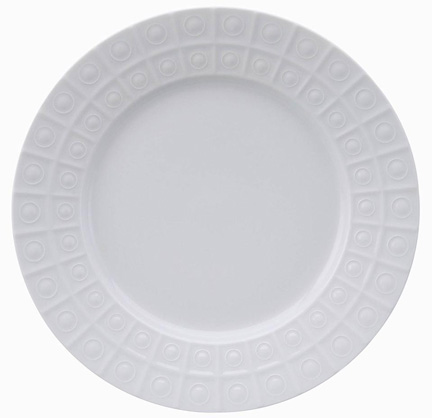
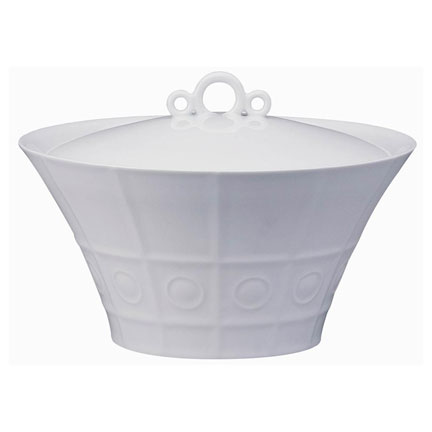
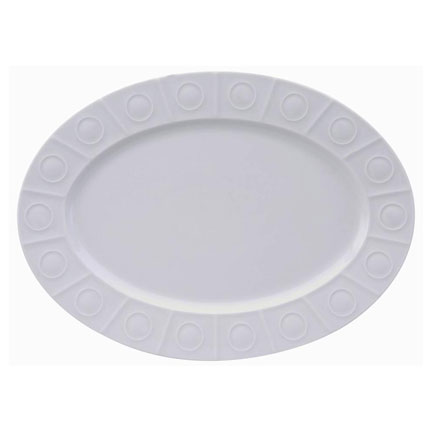
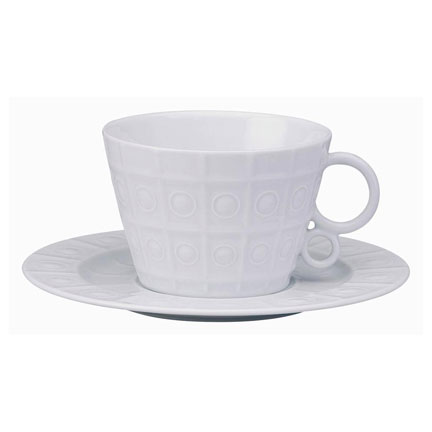
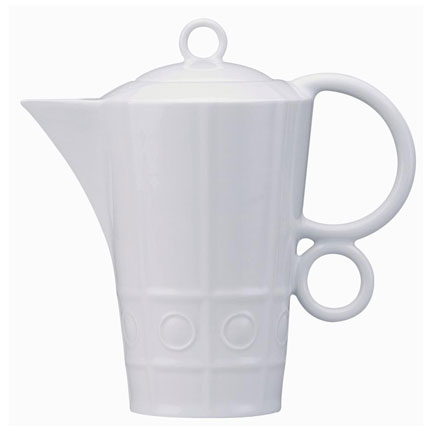
To view the entire Osmose collection, click here. To shop all our sale items, click here.
Holiday Party Tips: Your Five Serving Essentials
The table is set, the candles are lit, and your roast is cooking away. But while that delicious dinner might smell spectacular in your kitchen, do you have the right tools to bring it to the table? Don’t overlook these five essential host-helpers:
Flatware: From cake knives to salad sets, the right utensils get all your delicacies safely from platter to plate. Make sure each dish has at least one large serving piece, or use several if the dish is messy or contains small morsels. Have plenty of spoons and ladles for any sauces and liquids, and sharpen your carving knives for clean and easy slicing.

Bowls and Platters: You can never have too many serving dishes, especially if any guests intend to bring their favorite treats to share. If you are serving your meal family style, many dinnerware collections offer options for matching your serveware to your place settings. For a more collected look, mix and match a variety of styles, and don’t forget different sizes: your pumpkin pie and turkey gravy won’t need the same type of dish!

Pitchers: Be sure to have several options to choose from, especially if you’re serving wine or spirits. Have water easily accessible for guests to help themselves, and consider a fun option like sparkling apple cider in a colorful carafe if you have little ones at your table.
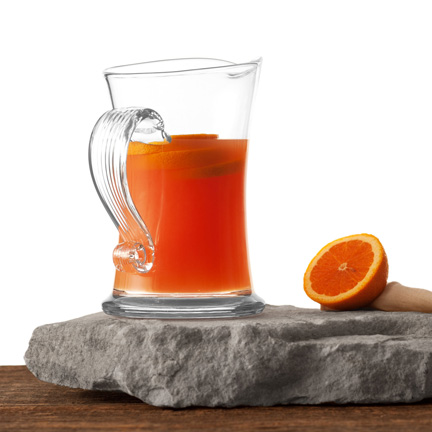
Dessert: No party would be complete without a bevy of treats to satisfy your sweet tooth! From pie pans to cake stands, there are a variety of ways to present your desserts. To be sure that each slice is cut to perfection, have cake knives and servers ready for any cakes, torts, or pies. For a lasting impression, display smaller desserts such as cookies or candies on a dramatic two- or three-tiered server, like these glamorous ones from L’Objet:
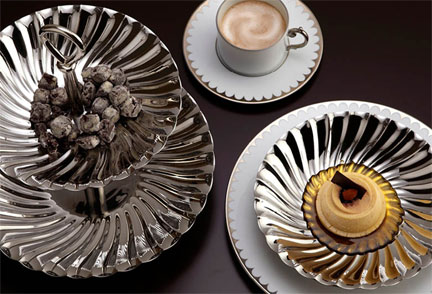
Coffee and Tea: At the end of a grand meal, there’s nothing like the warmth and rich aroma of a hot nightcap. Whether you serve coffee or prefer tea, both are often accompanied by sugar and cream, and don’t forget those darling spoons for stirring! If you’re using a matching set of cups and saucers, consider using some slightly larger plates in the same style to serve biscuits or cookies to munch or dunk!
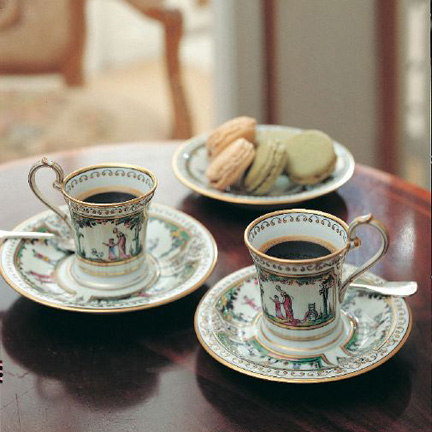
For more Holiday inspiration, click here.
Thursday Sale: Last Minute Touches
The holidays are here! When prepping for this season’s big plans and parties, every detail counts. Do you have your serveware ready? How about enough towels for your guests? Shop our Sale section for all those last minute must-haves.
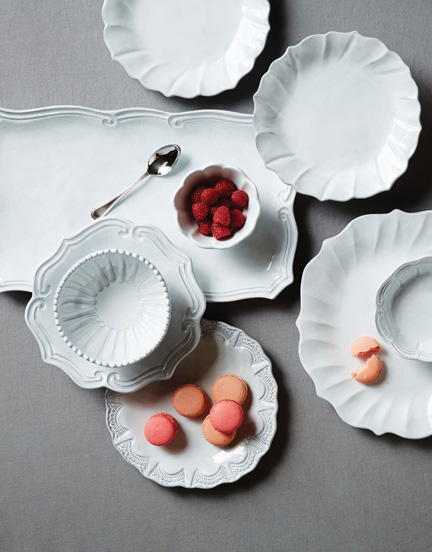
|
|
|
|
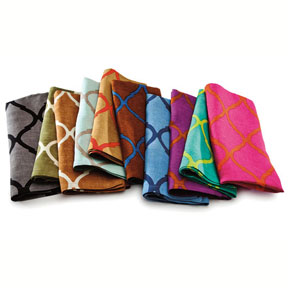
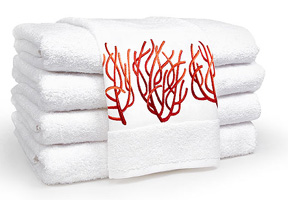
To view our full sale section, click here!
Inspiration: A Mexican Fiesta from Mother Magazine
Taking a turn from tradition, the folks at Mothermag.com put their heads together to create a tabletop that is super fun and colorful. Using our delightfully versatile Jars Tourron Jade Dinner Plates, a bright Modern Fiesta scene came to life. Here, we share some of stylist Natalie Bowen’s tips on creating this fun and festive look in your own home…
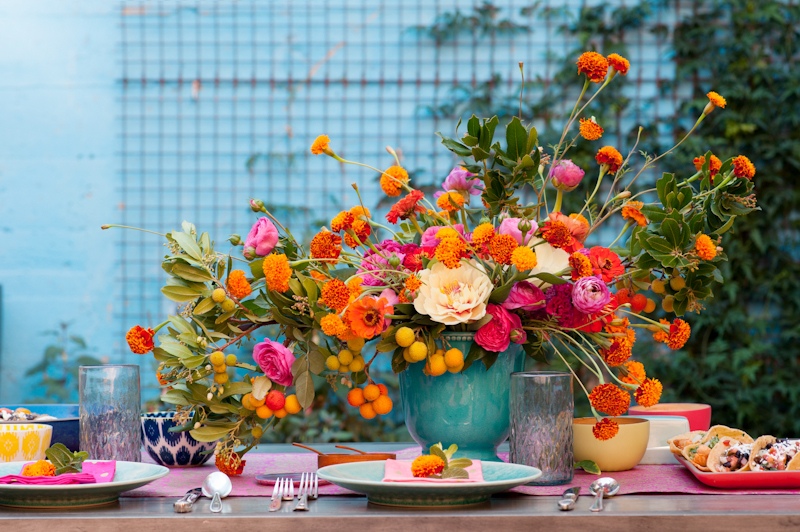
“If your napkins don’t match, don’t worry. Mixing bright hues and prints in the napkins—and all over the table—adds to the colorful, fiesta feel, perfect for birthday parties, baby showers, and the like.”
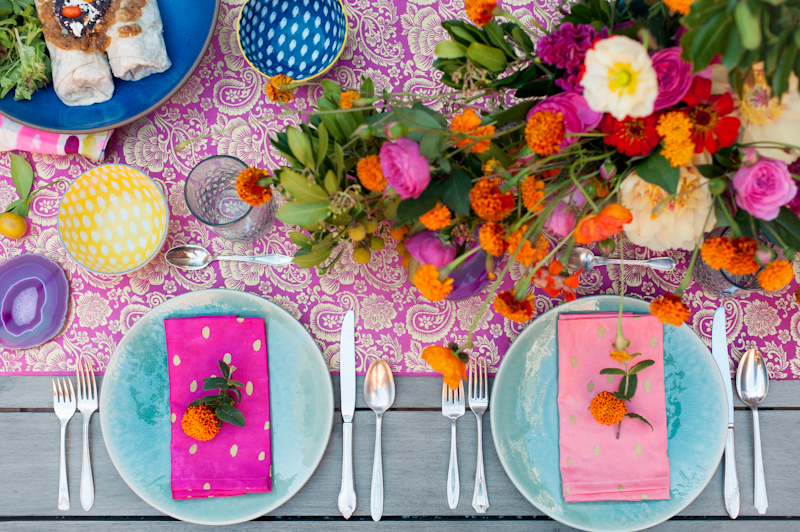
“Using a statement coaster adds a nice finishing touch, as does an assortment of vintage, mis-matched silverware.”

“Use fresh mint or herbs from the grocery store or your own garden as part of the floral decor topping the plates.”
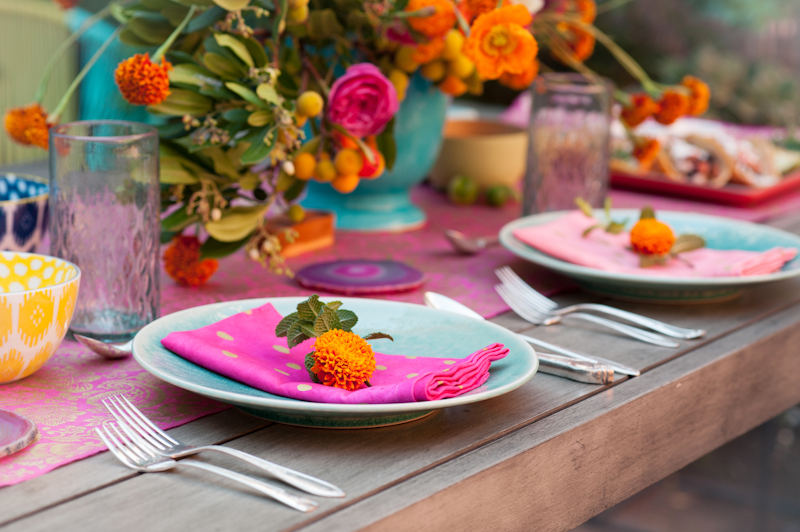
“We love the “fiesta” theme, because almost anything goes when it comes to the color palette. This is a real opportunity to use several of your favorite flowers for an awe-inspiring centerpiece or smaller arrangements.”
A special thanks to Mothermag.com for these stunning images!
For more from our Jars Tourron Jade Collection, click here.
Five Tips To Make Holiday Hosting Simple
The holidays are a time for family and friends to come together. To maximize your time spent with loved ones, keep things simple! If you are hosting, use these five quick tips to ensure you and your guests have a meaningful and memorable season.
1. Keep things simple. Set the table with stain-resistant or easy care linens. This will allow for less mess, and quicker clean up, especially if you are hosting several meals in a short time.
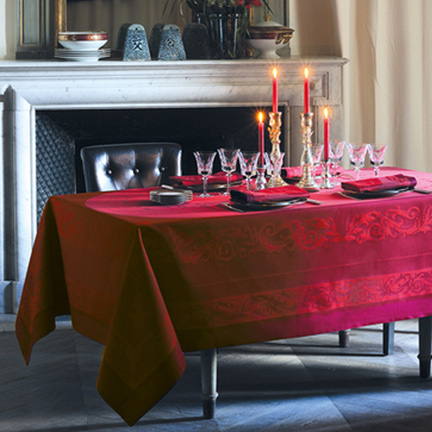
2. Let guests help themselves. When you have visitors from out of town, keep snacks easily available. Put a bowl of fresh apples on your table, or add a candy dish to your counter for those with a sweet tooth.
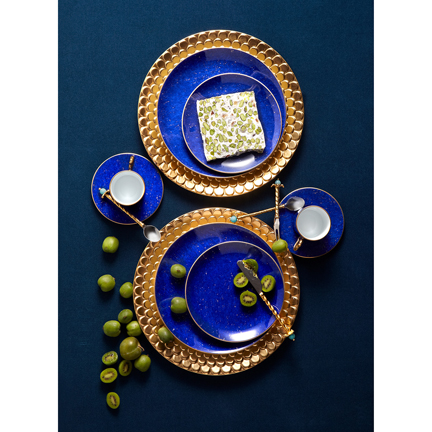
3. Cater to the kids. If you are expecting little ones to join in the festivities, have some durable tableware handy that won’t require constant supervision. Try glamorous silhouettes and jewel tones to make drinkware feel all grown up.
4. Add a soft scent. Keep closets and drawers in the guest room fresh for visitors with a light, natural scent. From inviting rose to woodsy cedar, sachets will ensure a low-maintenance source of fragrance that will last all season.
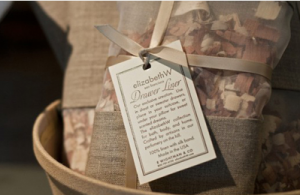
5. Stay toasty. Make sure your guests feel a warm welcome by having throws ready in every room.
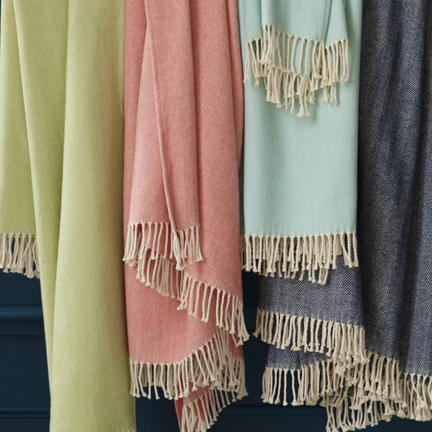
For more Holiday inspiration, click here!
Keep it Clean: How to Clean Indoor/Outdoor Rugs
We love indoor/outdoor rugs because they won’t fade and they really add warmth underfoot.
But did you know they’re also super easy to clean? We’re really grateful for this video our friends at Dash & Albert prepared to show us how to clean our indoor/outdoor rugs. It will just take minutes and make your house feel fresh all over.
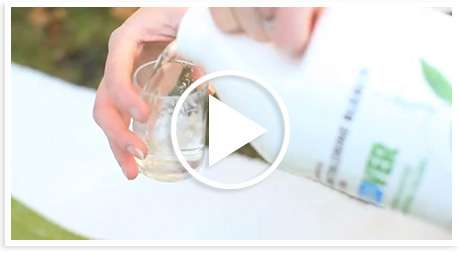
Don’t have your own? Click here to view our selection of indoor/outdoor rugs.
Thursday Sale: Spruce Up Your Home for the Holidays
With guests arriving from out of town and the holiday fervor in full swing, there’s no better time to add that little extra something to your home decor. Snag one of these great sale items and start sending those invites!
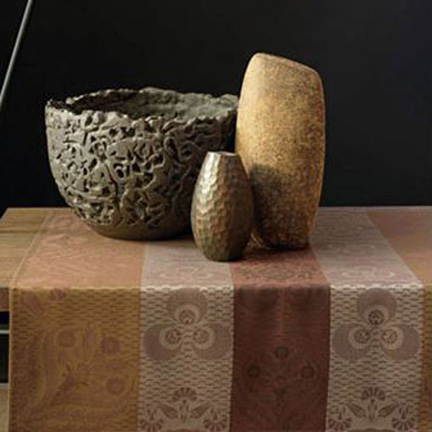
|
|
|
|
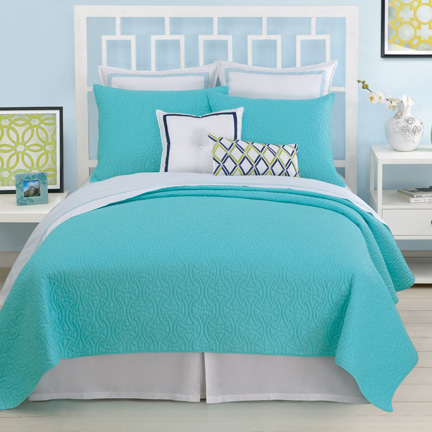
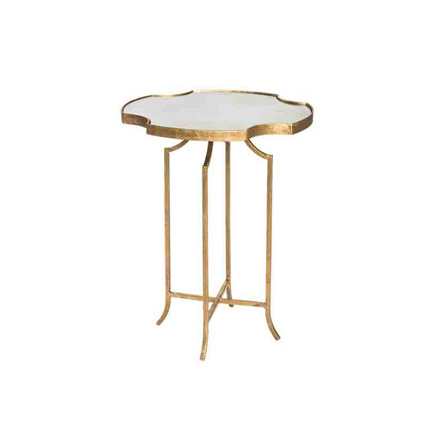
To view our full sale section, click here!
Le Jacquard Francais Napkin Sale!
When setting your table, the details are just as important as the main course! That’s why, for a limited time, we’re putting all our Le Jacquard Francais Dinner Napkins on sale for 30% off! Whether you match them to a tablecloth in the same collection, or use them to spice up classic solid linens, grab them by December 14 to take advantage of this amazing Holiday offer.
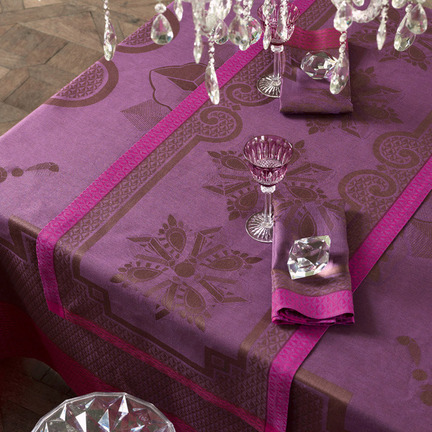
|
|
|
|
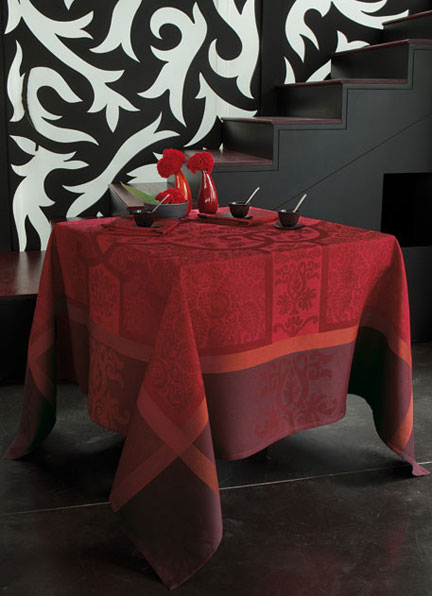
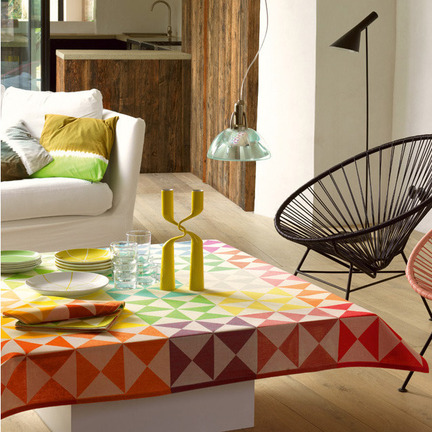
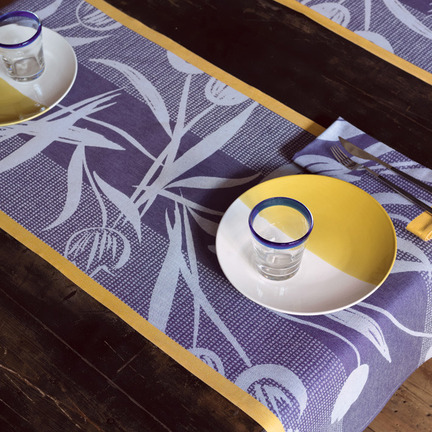
To view all our Le Jacquard Francais collections, click here!
Thursday Steal: Entertaining Essentials on SALE!
With the biggest entertaining season underway, we have added many new tabletop essentials to our sale section! Quantities are limited, so don’t wait!
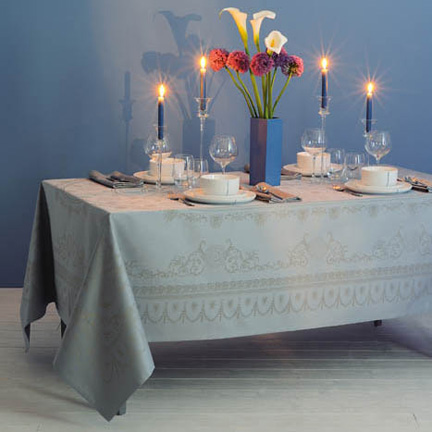
|
|
|
|
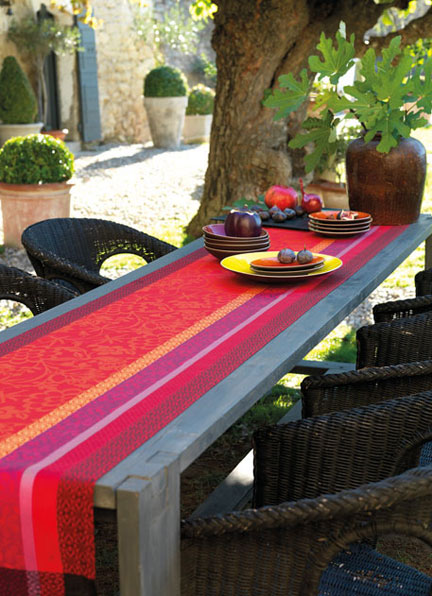
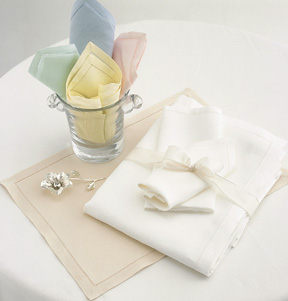
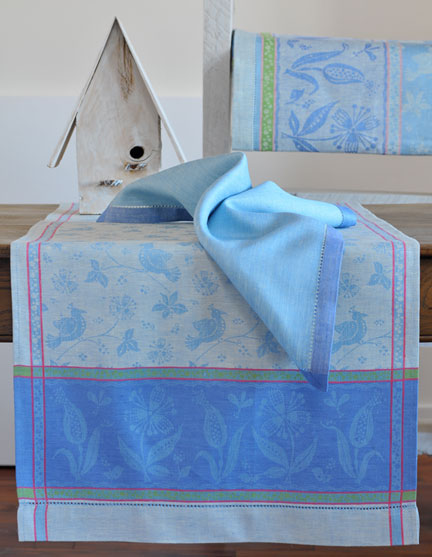
View our complete sale section at GraciousStyle.com
Holiday Entertaining: Choosing Your Table Linens
Holiday season is just beginning, and picking the right table linens is an essential step for all hosts. To help you make the perfect choice, we’ve broken down the five basic questions to ask before making your decision:
1. What material should I choose?
Because they are strong and absorbent, we recommend natural materials like cotton and linen. But if you are short on time, there are great easy-care table linen collections available which are either stain-resistant or wrinkle resistant.
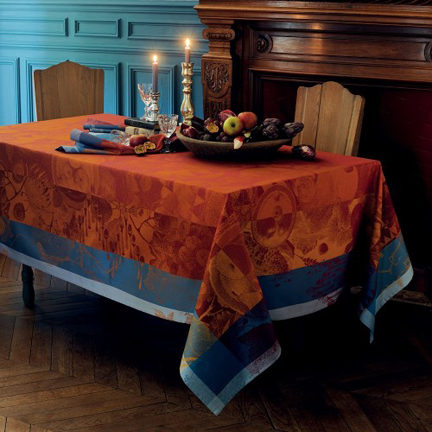
2. What size tablecloth should I buy?
For formal settings, we recommend that tablecloths should hang down 10″ to 12″ evenly around the table. In contrast, casual events call for cloths that have 6″ – 8″ drops.
To calculate the size of tablecloth you need, measure the length and width of your table and add twice the desired drop to each dimension. For example, if your table measures 48″ wide and 84″ long, and you would like a 12″ drop on each side, your tablecloth should be:
48″ + 12″ + 12″ = 72″ wide
84″ + 12″ + 12″ = 92″ long
For round tables, measure the diameter of your table and add twice the desired drop. Following the example above, 48″ round tables would require 70″ round tablecloths.
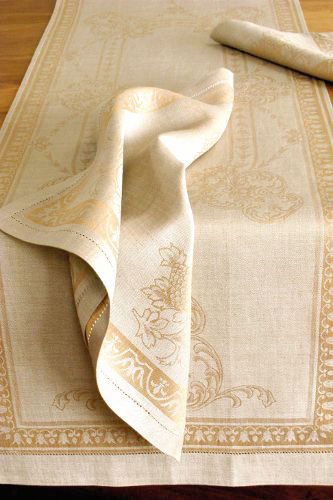
3. What shape should my tablecloth be?
On square and rectangular tables, we suggest using the same shape tablecloth. On round tables, either rounds or squares may be used, while on oval tables, either oval or rectangular tablecloths may be used. If you have several tables that you use often and your budget is limited, a nice alternative is to use placemats and napkins, which will work in any situation.
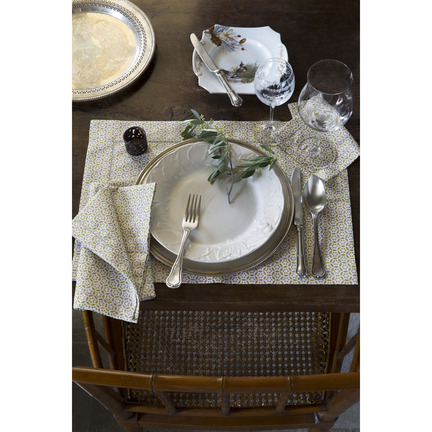
4. What should I consider in choosing linens for a special event?
There are several important factors to take into account when choosing table linens for a special event:
– Location: Choose colors to complement the existing décor of your dining room. For outdoor events, let the setting be your guide. Generally, bright colors look better in sunny locations, while pastels are wonderful in garden settings.
– Season: Spring and summer colors tend to be lighter, while bolder colors are more appropriate during the colder fall and winter months.
– Theme: Colorful linens are one of the most effective ways to set the mood you want to create. Vibrant colors add drama, while soft colors evoke a more refined atmosphere.
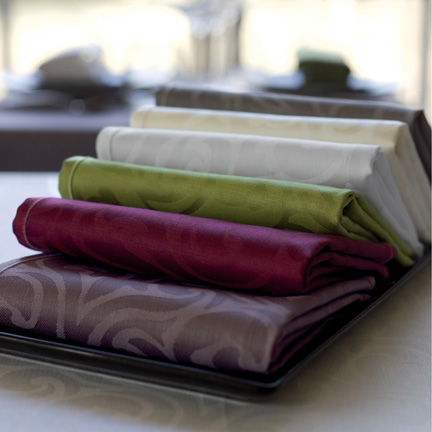
5. Do I need a table liner?
Although designed to last a lifetime, fine table surfaces are often exposed to excessive wear and tear. To help protect your tables, thick felt table liners are designed to reduce noise and protect your tabletop against heat and scratches. Unlike ordinary liners, these are plush and generously sized (approximately 5″ larger than your table) to extend over the edge of your table in order to create a softer drape underneath your fine linens. To read more, see Protecting Your Table with Felt Liners.
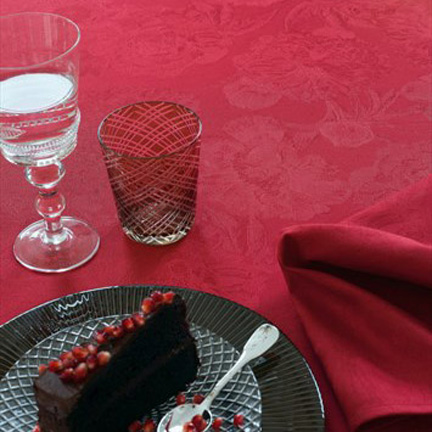
For more information on Choosing Table Linens, click here!
Space Spooks: Decorating for Halloween
When preparing for Halloween, most people think to costumes first. But don’t forget about your decor! Whether you’re hosting a spooky soiree, or just getting in the spirit of the holiday, adding a few tricks and treats to your home is as much fun as dressing up.
Nothing says Halloween like a classic skull. Choose one with crystals for a glamorous touch that will still be a conversation piece long after the season has ended.

For small children, keep things creepy but cute with Herend’s delicate tarantula figurines.

Mix and match real pumpkins with elegant glass ones to create a unique, textured look.

Enchant your guests with hauntingly beautiful barware in shades of smoke, midnight and jet black.
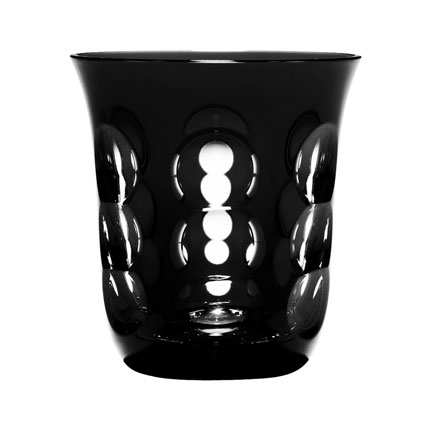
Add a punch of orange to your bed or bath to keep yourself in the spirit of the season.
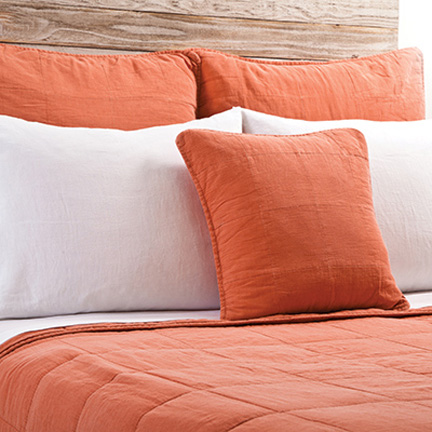
Occasions Magazine Parties in Sunflower Yellow and Scarlet Red
Marrying the magic of summer with the anticipation of Holiday merriment, Fall is the perfect time for a truly enchanting wedding. And who better to keep us on trend than Occasions Magazine? Here, we give a peek at their Fall 2014 issue, where they feature our Vietri Fantasia Dinnerware and Waterford Lismore Crimson Champagne Flutes in their delightful Sunflower and Scarlet motifs.
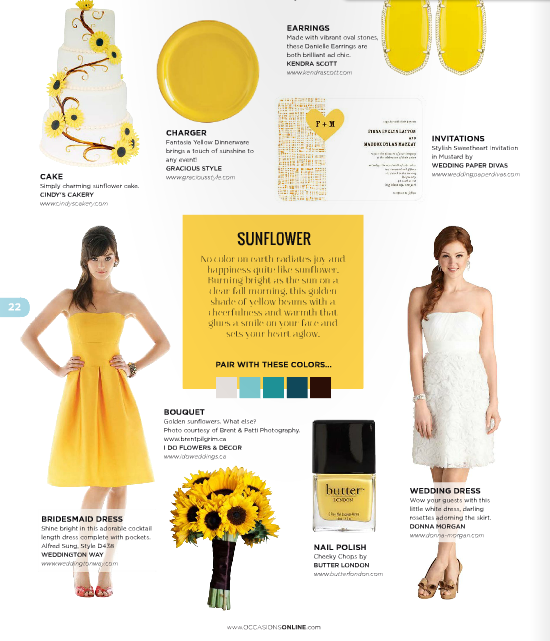 |
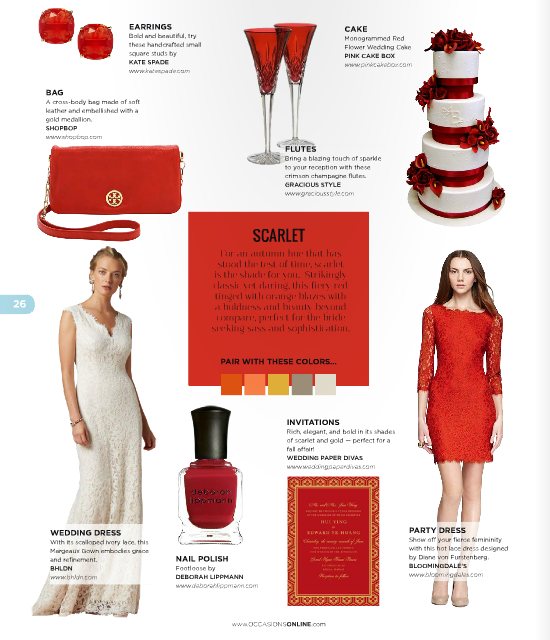 |
These harvest hues can instantly bring the charm of the season to your festivities and your home. Take a look at some of our favorite ways to use them every day:
Try a ruby red runner for a splash of spice that lets your tabletop shine through underneath.
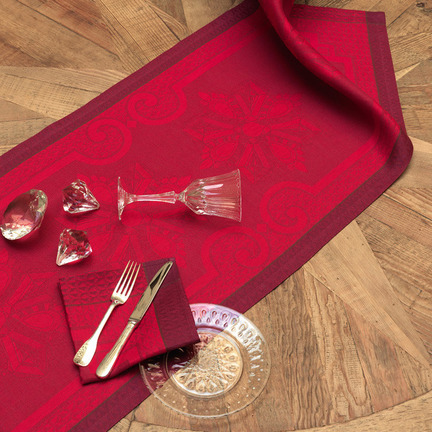
Give your boudoir some spunk with a cheery gold quilt and shams.
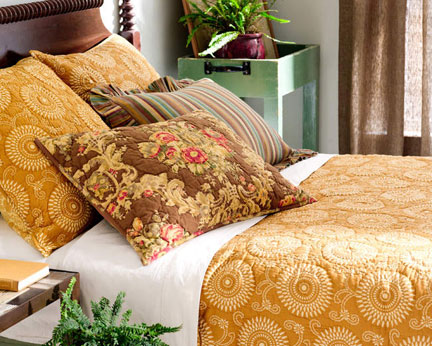
Ground any space with a bold stripe crimson rug.
Show your kitchen some sunshine with festive kitchen towels.
Add instant elegance to your desk or credenza with a lustrous deep red accessories box.
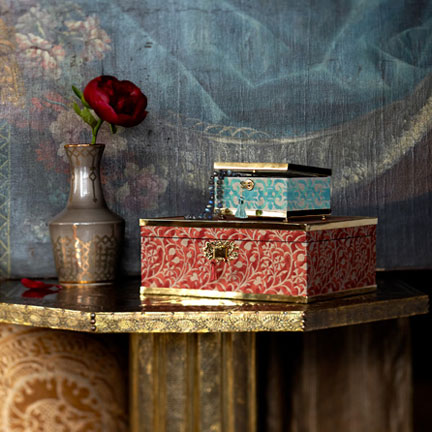
Party Ideas: For Him
Whether throwing him a huge birthday party, or just looking for a reason to show him you care, there are so many ways to celebrate the guy in your life. From glasses and decanters right down to the napkin rings, we have all the details that will make your get-together one to remember.
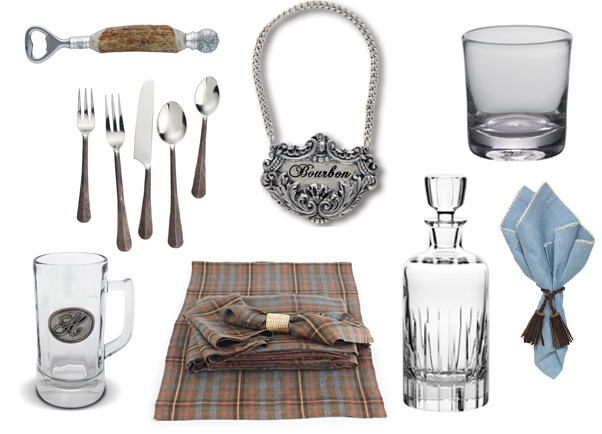
To create a table with sophisticated masculinity, try using a plaid or striped tablecloths. We love Libeco Home‘s refined rustic style.
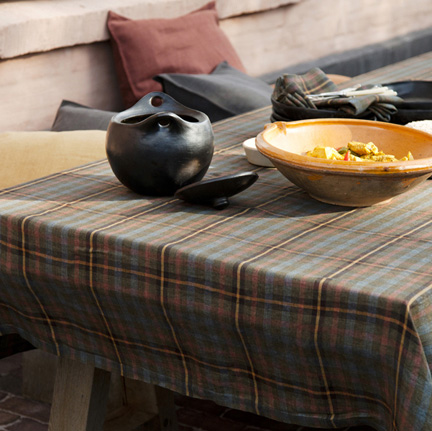
For a rugged, eclectic feel, try mixing a variety of textures and materials for a look that feels special and unique. Use antler accents and leather finishes to off set fine cut glass and glistening metallics.
|
|
|
|
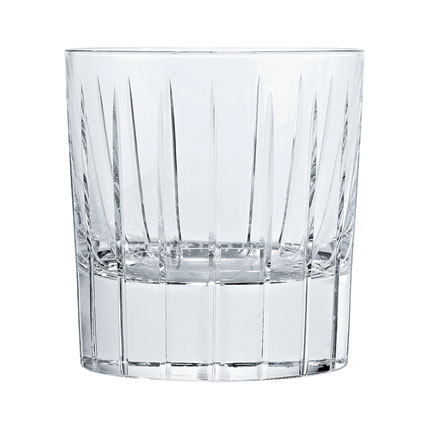
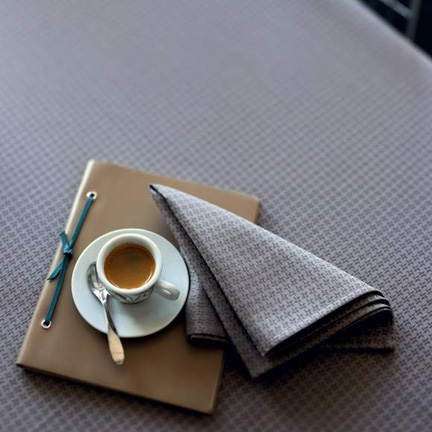
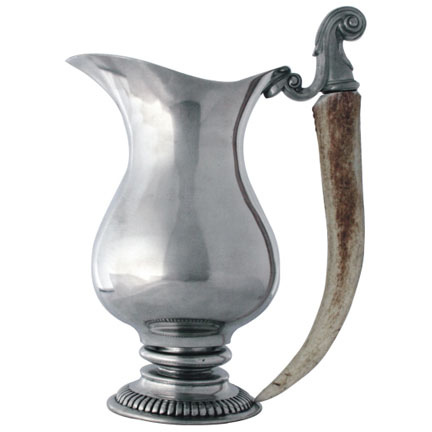
Like what you see? Check out more party ideas here.
Plan Ahead: Order Custom Holiday Linens Now!
Hosting for the holidays? Now’s the time to start planning those parties. And because all custom table linens are made to order, it can take up to 10-12 weeks to complete production, so get out your measuring tape! As these orders cannot be changed or cancelled after they are placed, here are six helpful tips to ensure you order the perfect table linens:
1. Count your expected guests. You may need to add additional leaves to your table for these special occasions, so be sure to measure the fullest length you need. Ordering additional napkins can be a great way to ensure you’re prepared for anything.
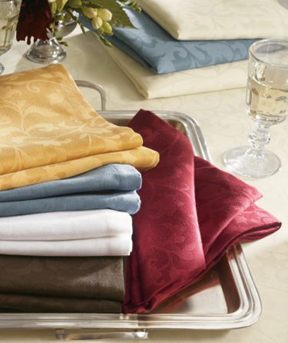
2. Consider shape. If you have an oval table, both an oval or rectangular cloth will work. Take a look at Sferra’s Classico, which has elegant long corners draping from an oval table shape:
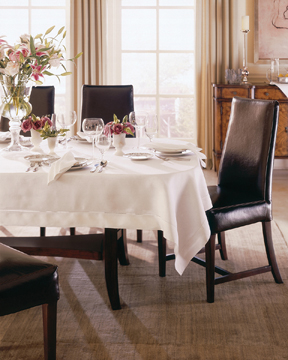
3. Calculate your desired drop. We recommend a 10-15 inch drop on all sides, so be sure to add 20-30 inches to both the length and width of your table. Casual settings typically require a shorter drop, while some formal linens may reach all the way to the floor.
Not sure how long your drop should be? Place one of your dining chairs at your table and measure the gap between the bottom of the table and the top of the seat, and use this as your guide.

4. Choose your material. While linen shows classic elegance and tradition, you may also consider an easy-care option if you need to use these cloths frequently in a short period of time. Options like Egyptian Cotton allow for a texture with a beautiful, subtle sheen, while a synthetic option may be the right choice for those who need to quickly wash and dry to prepare for the next event. Easy care materials require little to no ironing, but if you opt for linen, try ironing your cloth while it’s still damp, which makes wrinkles much easier to erase.
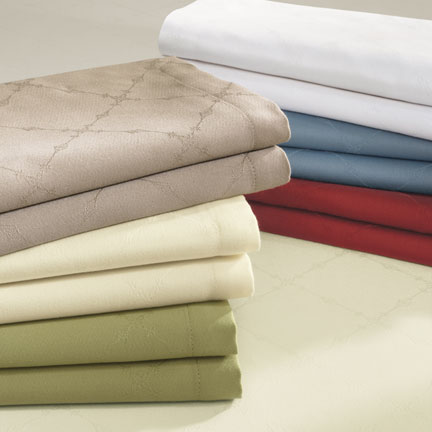
5. Remember, these may shrink! All of our custom tablecloths are made slightly larger to compensate for shrinkage. If you would prefer to have the cloth cut exactly to your specific dimensions, without any additional fabric, please feel free to indicate this in Special Instructions at Checkout.
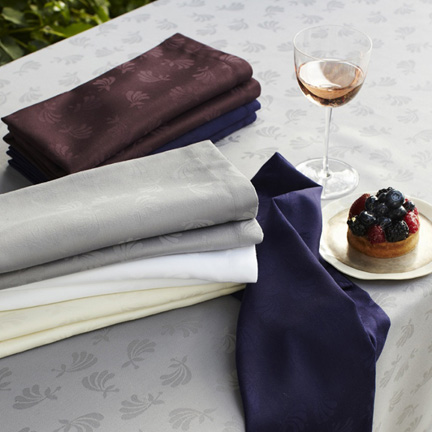
6. Have fun! Don’t forget the reason for the occasion: the celebrate with the ones you love! If you want to bring life to a white or ecru tablecloth, try colorful dinnerware or vibrant seasonal flowers on your table. If you love bright linens, choose from over 100 colors in the aptly named Festival Collection. Please note that the Festival fabric cannot be cut in an oval shape, but looks beautiful in round or rectangle.
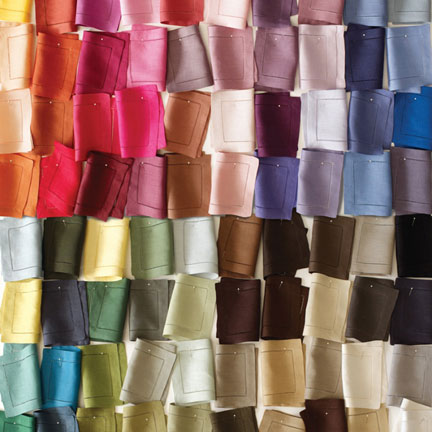
For all of our custom table linens, click here.
How will you make this Holiday Season shine?
Party Ideas: Spa Day
Need a little pampering? Chances are, your girlfriends do, too! Catch up with friends while enjoying some downtime with a relaxing and rejuvenating spa party.
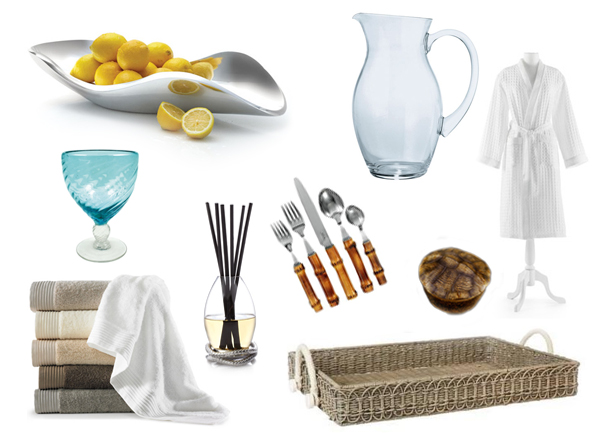
Indulge in comfort and luxury with soft bath robes. We love how Yves Delorme combines the silkiest materials with floral, feminine designs, perfect for girl time.
The Best Specialty Finishing Salts
We have a kitchen shelf full of condiments, but the one I reach for most often is salt. Now, if you’re ready to move beyond regular table salt for baking and kosher salt for cooking, here are the best finishing salts you need to own. And remember, since they’re only used on finished food, a little goes a long way.
Maldon Flake Salt – loved by chefs around the world, Maldon flakes have a clean, fresh taste with no bitter flavors. Amazing on cooked eggs and sprinkled on brownie batter, it brings an explosion of flavor to the mouth.
Fleur de Sel de Guerande – hand-harvested from pristine salt marshes in Brittany, France, this salt is unprocessed, so it’s moist and retains a complex flavor of the sea. Use it on leafy green salads, grilled fish, fruit, and caramel sauce.
Himalayan Pink Salt – hand-mined salt found deep within the Himalayan mountains, these beautiful salts are best appreciated on lighter-colored foods like fish or chicken.
Truffle salt – sprinkled on fresh pasta with butter, roasted potatoes, and buttered popcorn, this packs a fragrant punch. The truffle aroma is super addictive.
Salts this beautiful should be served in the right container. For casual meals I love this olivewood container from Williams-Sonoma …
… but for evening there’s nothing more stunning than silver next to candlelight:
Looking for one? Click here to view all our condiment servers and butter dishes, and here to view more salt & pepper shakers.
Le Bresil Dinnerware: A Collaboration with Zuber Wallpapers
Created in collaboration with Zuber & Cie, Haviland’s Le Bresil Dinnerware is as much a work of art as Zuber’s famous Les Vues du Bresil scenic mural wallpaper collection. Originally introduced in 1829 and printed in 247 colors from 1693 blocks, Bresil is one of Zuber’s most complex productions.

Each Zuber panel contains large expanses of color and incredibly ornate details, many of which are recreated in the dinnerware.

With tropical trees and exotic birds, the elaborate imagery of the dessert plate captures the imaginative spirit of Zuber’s colorful scenes.

By balancing the delicacy of the bird in the foreground with the intricacy of the trees behind, Haviland’s artisans used dimension to perfect Zuber’s meticulous style in this stunning tray.

If you love this as much as we do, next time you’re in Switzerland, be sure to stop by the Musee du Papier Peint, which has a mural of the wallpaper in their Salon Bresilien:
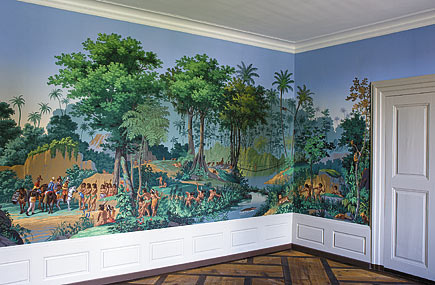
Salon Bresilien in the Musee du Papier Peint (courtesy museum)
For more pieces from this exquisite collection, click here.
10 Tips for Hosting Fun Parties
It never rains in L.A. in August … except a couple of Sundays ago. Which could have been a disaster, since we had planned a post-wedding garden brunch for 45 relatives. At the last minute, we cleared the living and dining rooms to set up the party indoors, and the party turned out to be a big hit. The smaller, more intimate space got people closer, the guests talked a lot more with each other, and everybody had a great time. What could’ve been a two hour brunch lasted five hours until the final guest ambled out.
We spent the next few days thinking and talking about our guests and the party, what we learned and what we’d do differently, and here are some tips and lessons from our experience:
Put the Early Guests to Work
Somebody always shows up early. Relax — they’re usually your best friends (or at least think they are), so put them to work setting out food and drinks or finishing up the decorations. They’ll feel useful, and you’ll get some help.
Smaller Spaces Make It More Fun
Putting people a little closer makes it easier to talk, so use smaller tables and put some food in the kitchen to encourage mingling. If someone can’t chat easily with the person across the table, then the table is too large.
Make the Food Easy
The food has to be easy to serve, easy to keep, and easy to understand. Everybody got the grilled vegetables and seafood paella, but the chilled peanut noodles (our personal favorite) was left behind. The leafy salads also got soggy by the end of the party, so we’ll have to rethink that one for next time. Avoid foods that require pan searing, deep frying, or chilling — they won’t look or taste so good after a while.
Have Different Food and Drink Stations
Keep people moving around with food and drinks in different places. It’ll give everyone more chance to walk around, graze, and mingle with each other.
Plan for a Longer Party
A good party keeps itself going, so think about how everything would look if the party went on for longer. Plan for more drinkware (people ended up using on average two glasses each, even after marking their glasses.) Have more forks than the other flatware pieces available. Use paper lanterns instead of balloons. They can be set up a few days before and will last through the whole day.
Spontaneity Instead of Speeches
Ever sat through a speech or slideshow wondering when it’ll end? It’s better when people are just having a good time chatting with each other. Try to move your guests around if the conversation starts to flag.
Get Some Games Started
Checkers, chess, Scrabble, Monopoly, Pictionary. Set them out, then start a game with a few guests. If they’re in the mood for fun, they’ll pick up all on their own. Unusual games (Chinese chess in our case) are especially good conversation starters.
Serve Some Sinful Desserts
When people are having fun, they break their diets, so make sure you have a few desserts they wouldn’t normally eat. The tres leches cake, which we thought few people would touch, was gone before halftime. Our guests then went on to polish off a full box of macaroons and half a box of tea cakes. The fruit salad, on the other hand, was still plentiful at the end.
Have Lots of Trash Bins
Not glamorous but very useful. Set one near every table.
Old Habits Die Hard
Since it was a brunch in the middle of summer, we’d only planned to serve cold drinks. But old habits die hard, and guests asked for tea to go with their Chinese food. Luckily, this was super fast to fix, but next time we’ll be sure to have both tea and coffee ready to go.
Do you have any party planning tips of your own? We’d love to hear them!
For Opera Lovers: Dinnerware Inspired by Mozart’s The Magic Flute
Written in the late 18th Century, Mozart’s Die Zauberflöte, or The Magic Flute, is one of the best-loved operas in history. With this as his inspiration, whimsical Danish artist Bjørn Wiinblad created the Sarastro dinnerware collection for Rosenthal.

Each piece in the line features a different scene from the opera depicted in relief, so they all sport exceptionally wide rims.
|
|
|
|
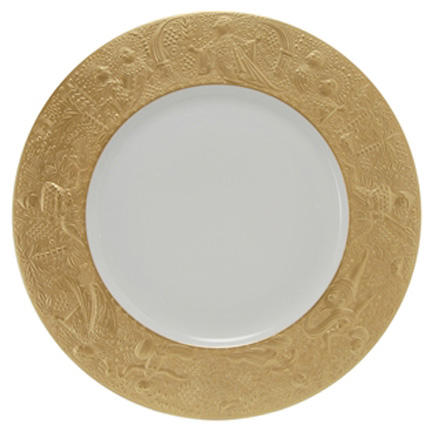


The genius is in the details. Here are a few of the ones we’ve discovered:
Fowl Play: The symbol of the bird is used throughout this opera. For example, one of the central characters, Papageno the bird catcher, sings playful tunes intended to mimic the sound of chirping birds. Look closely at pieces from Wiinblad’s dinnerware collection, and you’ll see that the theme of the bird is shown in beautiful relief throughout.
Up to No Good: With elaborate costumes and heavenly melodies, Mozart created many of his characters to be deceptively beautiful. The Queen, who initially appears to be harmless, later reveals her malicious intent to destroy Sarastro. In Wiinblad’s depictions of these characters, they are intentionally shown in an aura of ambiguous elegance.

Hidden Secrets: There are beautiful secrets and surprises hidden throughout the opera. For his part, Wiinblad surprises his audience by using his own handwriting to paint the names of the arias and scenes depicted on each piece. But they’re not obvious … he’s hidden them in the crevices and underneath each piece.
|
|

It is a collection that looks as good on the table as it does on the shelf. Available in gold or plain white, each piece is delightful.

To view all pieces from this extraordinary collection, click here.
Kim Seybert Holiday Collections – Get Them Before They’re Gone!
Every year, there’s a mad rush for Kim Seybert’s holiday collections, and she always runs out. So this year we wisened up and asked for a sneak preview in July. Take a look at what’s new, and get it now before it’s gone. Happy early holidays!
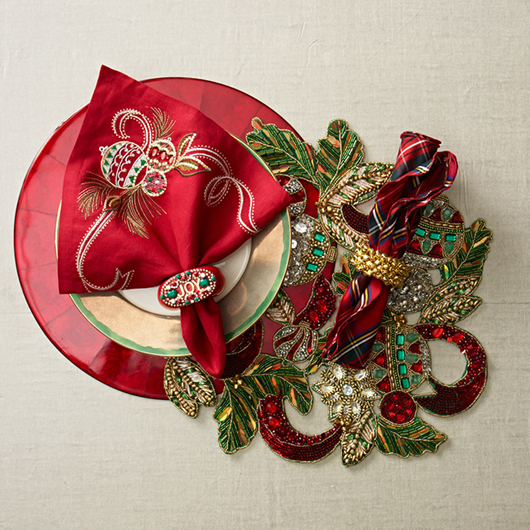
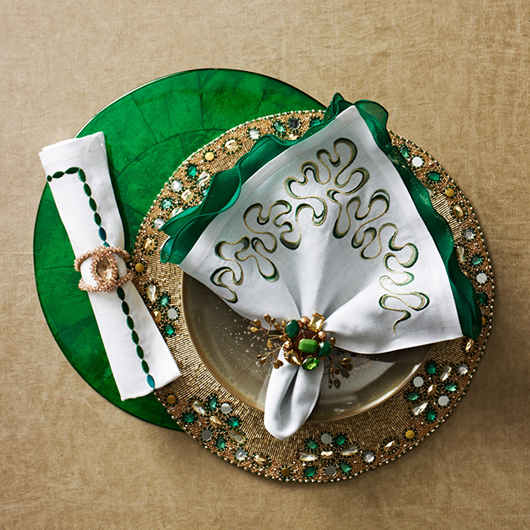
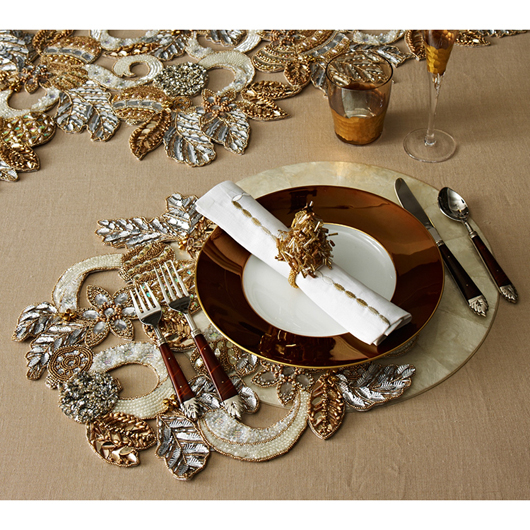
In the spirit? Click to view all our Holiday 2014 collections here!
Party Ideas: Pool Party
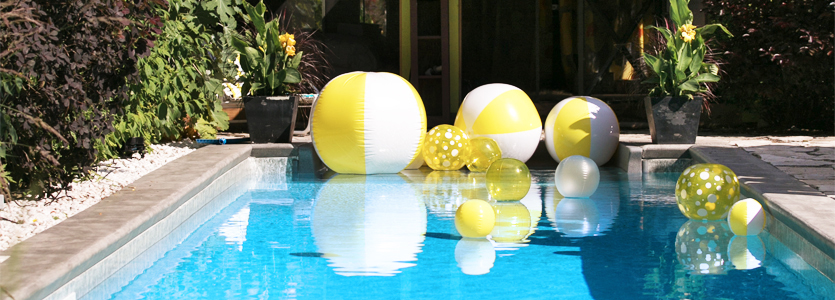
Welcome to the first installment of our series on party ideas. We’re starting with a classic summer essential: The Pool Party! With durable acrylic glassware from Mario Luca Giusti and a fabulous Octopus candle centerpiece from Vagabond House, you’ll feel be be making a splash in no time flat.
Pool Party Essentials
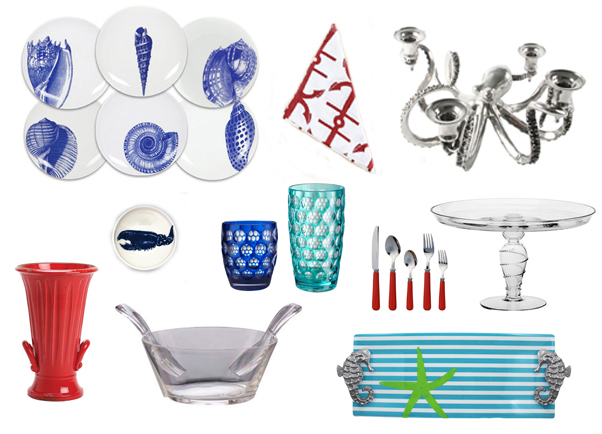
And let’s not forget the most important pool party accessory: the beach towel. Doesn’t this make you want to call your friends, pour a margarita and slather on some sunblock?
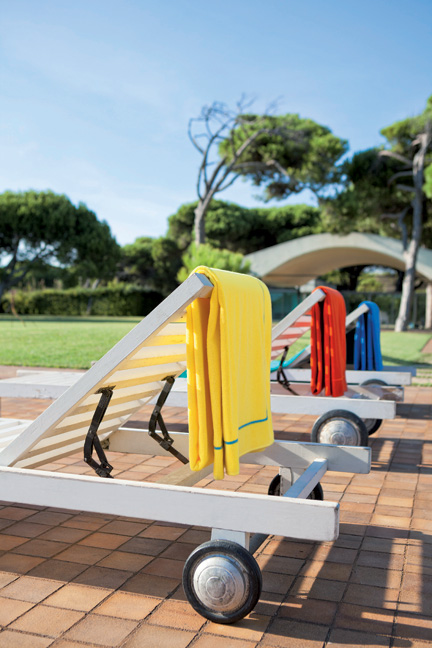
Hope you found some inspiration from our curated items. Feel free to mix and match new items with your currently existing collection. As long as you’re bringing fun into the mix- your party will be a success!
Not throwing a pool party? Check out our other Party Ideas here!
Guide to Choosing Flatware
There are so many exciting choices in flatware, you are probably asking yourself, “Where do I start? Which material should I select, and how many pieces will I need?” We break down the basics for you, so your table will look fabulous in no time flat.
Understanding Flatware Materials
What are the different types of materials used to make dinnerware?
Sterling: Sterling silver flatware collections are true heirlooms. Sterling is made of at least 92.5% pure silver and an alloy (usually copper for added strength). Any piece of flatware that meets these guidelines is stamped with the word “sterling” to ensure its authenticity. Sterling silver is very expensive, but it makes the most elegant and formal flatware. Compared to stainless, sterling has a warmer glow and may require occasional polishing. When not in use for prolonged periods, we advise keeping sterling in felt pouches to prevent scratches or tarnish.
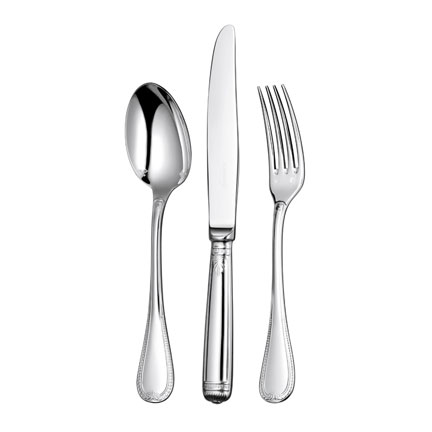
Silverplate: Silverplate is a dishwasher-safe, less-expensive alternative to sterling that can last nearly as long. A layer of 100% silver coats another metal, usually nickel or brass. Nickel is best, because it’s harder than brass and silver adheres to it well. The thicker the silver layer, the better the quality.
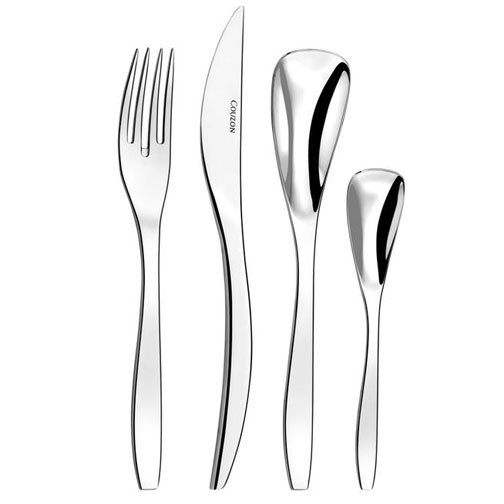
Stainless Steel: Most everyday flatware is stainless steel, which doesn’t rust, tarnish, chip, or wear out. Stainless steel is commonly defined as a metal alloy that contains a minimum of 10.5% chromium. To make stainless steel flatware, chromium is added to steel for strength as well as rust and stain resistance. Nickel, another metal alloy, is also added to the steel for its brilliance and lasting finish. The grades (18/10, 18/8, and 18/0) refer to the amount of nickel, which prevents corrosion. The best grade is 18/10, because it is the longest lasting.
Why is stainless steel “stainless”?
Compared to other metals, stainless steel is particularly resistant to rust and discoloration because the oxide film in the metal absorbs common forms of discoloration. Keep in mind, however, that while stainless steel certainly stains less, it is not completely stain proof.
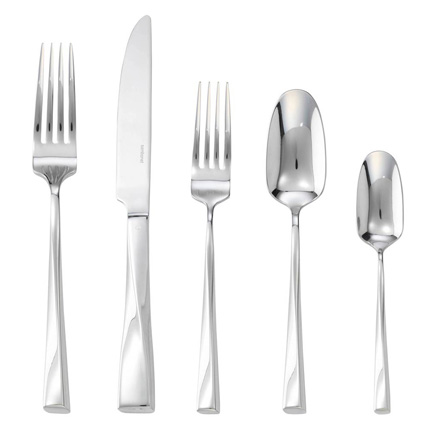
Pewter: In colonial America, pewter was prized for its strength and durability. Today, pewter products are sought after by collectors for their rustic feel and beautiful patina. Pewter does not require polishing.
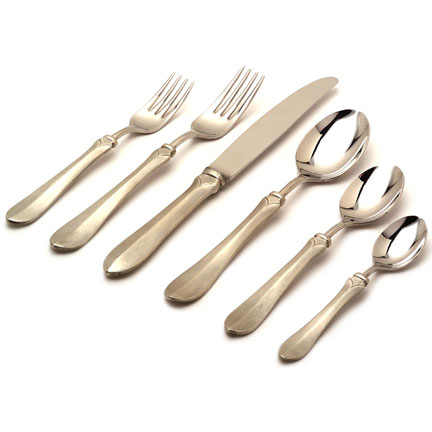
PVD: Is a thin ceramic coating deposited on stainless steel pieces, resulting in colored implements. It is very hard and resists abrasion well.
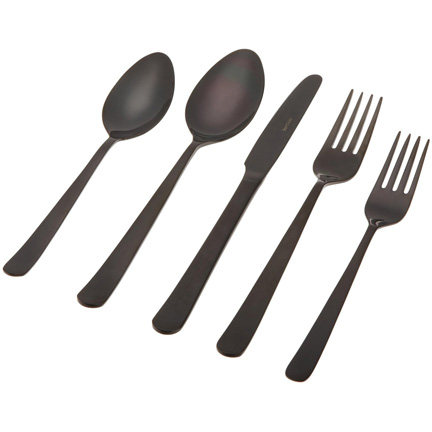
Acrylic: Acrylic flatware with colored and patterned handles is sold in a rainbow of styles. Fashionable enough for formal events, it’s also great for everyday use. Q Squared’s London Chic collection, and Vietri’s best-selling Aladdin collection, are perfect for adding personality to your table setting.
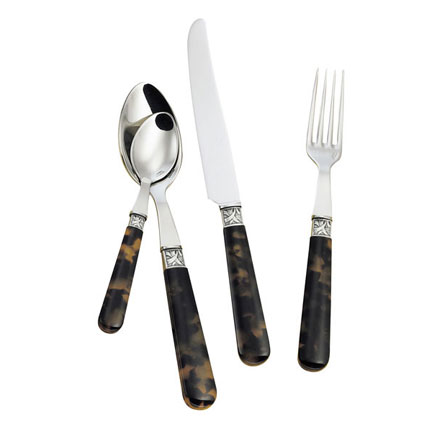
Suggested quantities
What is included in a five-piece setting?
Five-piece place settings consist of the following: dinner knife, dinner fork, salad fork, tablespoon and teaspoon.
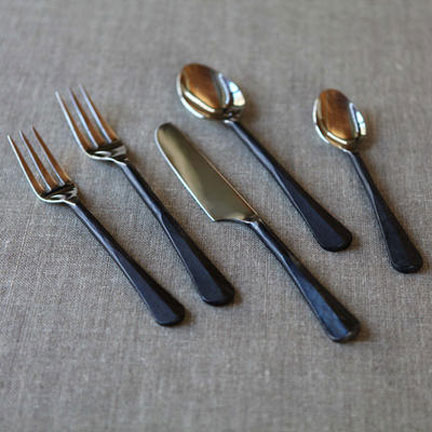
Can I order additional flatware pieces?
Yes. In addition to five-piece settings, additional pieces such as butter spreaders, fish forks and knives, demitasse spoons, salad servers, cake servers and gravy ladles are standard items in many collections. Please write us at service@graciousstyle.com for further information on any of our collections.
How many flatware collections do I need?
Generally, most people have at least one casual collection for everyday use (usually stainless steel) and one formal collection for selected occasions (usually sterling or silverplated).
|
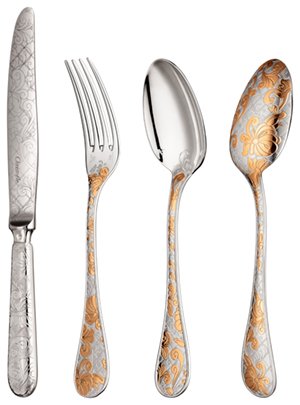
What serving pieces do I need?
– Twelve five-piece settings
– One serving set (serving knife and serving fork)
– One salad serving set
– One carving set
– One set of steak knives
– One cake server
Caring for Flatware
How do I care for stainless steel flatware?
Stainless steel flatware is dishwasher safe; it can also can be washed by hand.
How do I care for silverplated or sterling flatware?
The best way to keep sterling and silverplated lustrous is to use it regularly. For optimal care, wash silver flatware in hot water with mild soap and dry immediately afterward with a soft cloth. Do not wash sterling and stainless together, as the steel will scratch the silver. Use a small amount of detergent, and one with no lemon or citrus additives.
To clean individual pieces of silver, you can use a high-quality silver polish or foam (such as Christofle Cream Cleaner with Sponge). To view all our metal cleaning products and storage cases, click here.
However, to clean many pieces simultaneously, we suggest the following quick-clean method:
1) Boil a pot of medium pot of water.
2) Line a pan with aluminum foil.
3) Place your flatware pieces inside the pan, one next to each other.
4) Pour boiling water over the flatware.
5) Add a few tablespoons of baking soda to your pan. While the solution bubbles up, watch the tarnish disappear from your flatware and onto the aluminum foil. Try this, it really works!
How do I store my flatware?
We recommend that you enjoy your flatware as much as possible. However, when not in use, flatware can be stored in a kitchen drawer (designated for this use) or kept inside felt bags. Do not wrap in plastic or paper, and do not crowd pieces to avoid scratching.

Miscellaneous
What is the difference between standard and continental sizes?
Standard refers the sizes of flatware commonly used with American table settings. However, for a more formal look, there are “continental” flatware sizes (also referred to as “dinner” sizes) that are larger and heavier than the standard. These are usually found in European flatware collections.
What is the proper placement of flatware on the table?
A basic five-piece setting is laid out on the table in order of use, in an even line, one inch from the edge of the table. The knife is placed to the right of the plate with the sharp edge pointed in towards the plate. The spoons are placed to the right of the knife. Forks are placed to the left of the plate. In France the fork is placed with the prongs facing down towards the table (the spoons are also placed facing downward); in the United Kingdom and the United States they face upwards.
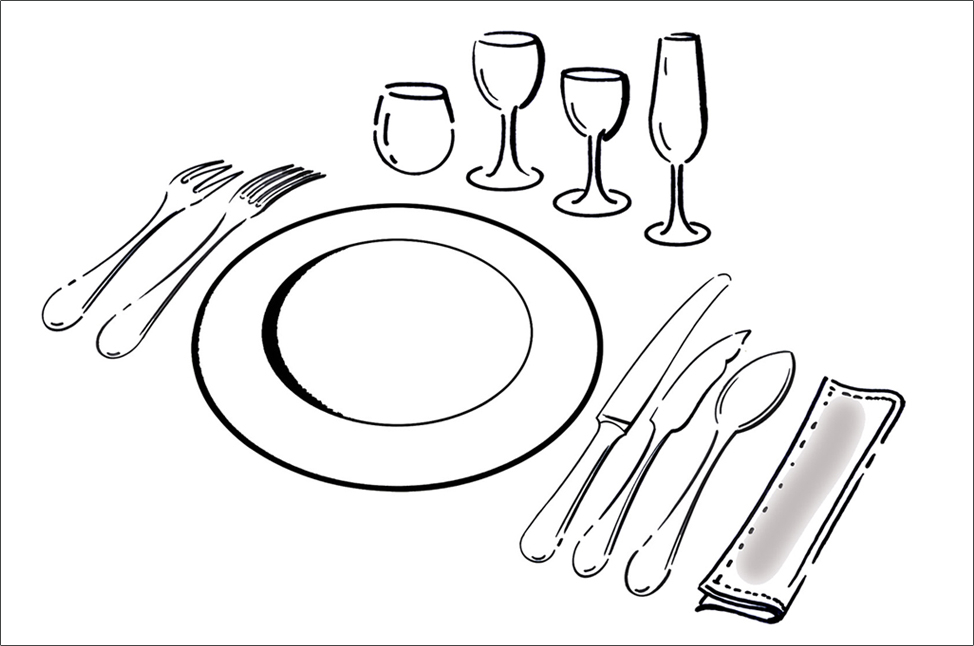
To view all our collections of flatware, click here.
Party Ideas: Garden Party
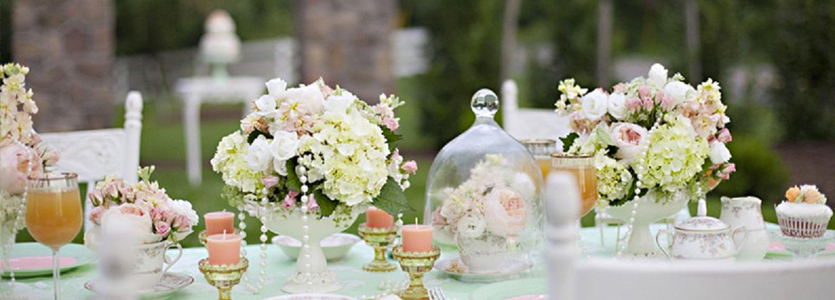
Hats, dresses, finger sandwiches, champagne and flowers. What more could one ask for? Before you invite your friends over and start preparing your menu, consider the details you want to focus on for your celebration. Flowers, candles and tea cups are quick way to set up the ambiance. If you want more inspiration, accent pieces like Rosenthal’s Butterfly Garden series (and the smell of roses) will help you be your way to a successful garden party in no time!
Garden Party Musts
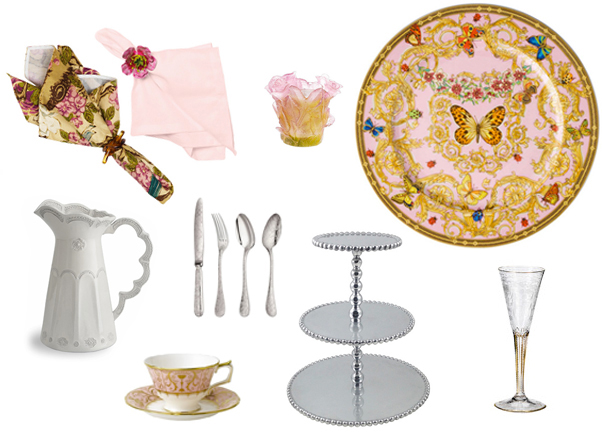
Table linens can change the entire look of any occasion. Consider the overall feel you want to achieve before selecting your table linen. Whites are a classic choice but any neutral, solid or patterned table cloth could take your party to the next level.
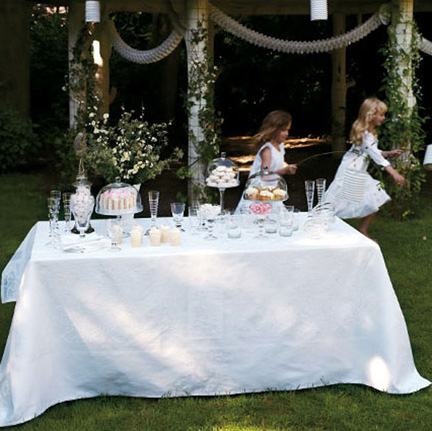
For more great Party Ideas click here!
Guide to Choosing Glassware
Setting the table with the right drinkware is like choosing the right jewelry for an outfit. The glasses will express your personal style, but they’ll also establish the tone and mood of your event.
Glassware Styles
What kinds of glassware are there?
Stemware refers to drinking glasses with a long stem between the bowl and the base. Common pieces include wine glasses and champagne flutes.
Barware includes glasses with solid, flat bases, like highballs and whiskey glasses.
In either case, the shape of each glass is designed to enhance the beverage it holds.
|
|
|
|

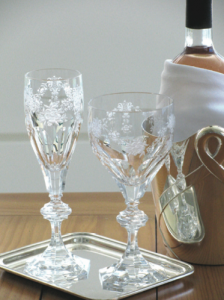
Which glasses should I select for everyday use?
Your everyday glassware should feel comfortable in your hand and be durable, dishwasher-safe, and easy to store. Simon Pearce makes wonderful everyday glasses.
Understanding Glassware Materials
Should I buy glass or lead crystal formal stemware?
It depends on the look you want. Glass is more affordable, but less brilliant. Lead crystal, which is produced by adding 24% red lead oxide to glass, is heavier, more clear, and more brilliant. The addition of the oxide also softens the raw material, so lead crystal can take on more intricate cutwork and designs. High-end stemware is usually made from lead crystal.
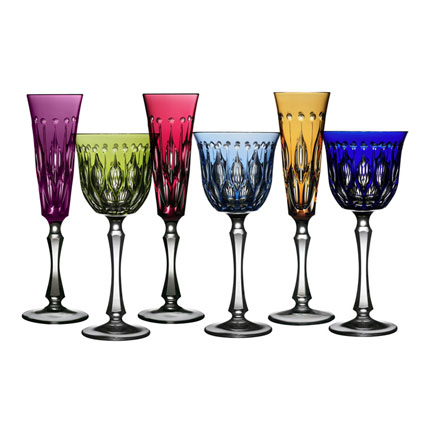
Suggested Quantities
What shapes and quantities should I buy?
At a minimum, we recommend the following:
12 everyday water or juice glasses
12 formal water glasses
12 formal white wine glasses
12 formal red wine glasses
12 champagne flutes
One pitcher
One wine bucket
One wine opener
One ice bucket
What other complimentary pieces do I need?
Other popular options include beer mugs, rocks glasses (like double old fashioned), cocktail glasses (like martini glasses), shot glasses, and brandy snifters. For cocktail parties, additional pitchers, carafes, and decanters are elegant serving items to stock in your bar.
|
|
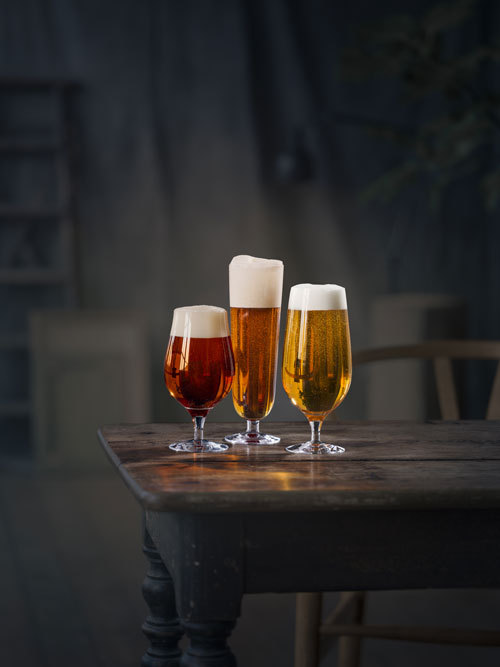
Caring for Glassware
How do I care for my stemware?
Fine stemware should be washed by hand and dried with a lint-free cloth. Never use steel wool or abrasives on your stemware. We do not recommend using the dishwasher for any crystal stemware.
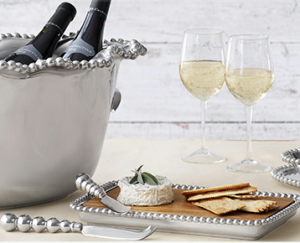
How do I store my stemware?
Stemware should be stored right side up to protect the rims of the glasses from breakage. We recommend placing fine stemware near the backs of your shelves to protect them from accidental handling.

Completing Your Set
How do I lay out my dinnerware and stemware?
Place the presentation plate directly in front of each guest’s chair. Next, set the dinner plate directly on top of the presentation plate. The bread & butter plate should be placed at a 10:00 angle to the dinner plate. The water glass should be at the 1:00 angle from the dinner plate and just above the knives. The wine glass is then placed directly the right and below the water glass, and the champagne flute then further to the right and above the wine glass (thus forming a small triangle).
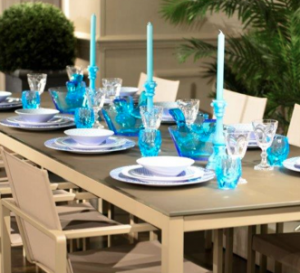
To view more bar and glassware collections, click here.
Guide to Choosing Dinnerware
Selecting a dinnerware collection is an exciting task! With a myriad of options to choose, we at Gracious Style are here to help narrow your search, and find the style that is perfect for you. Whether you are looking for formal china, or fun, everyday essentials, we break down the basics and answer any questions that may arise.
|
|
|
|
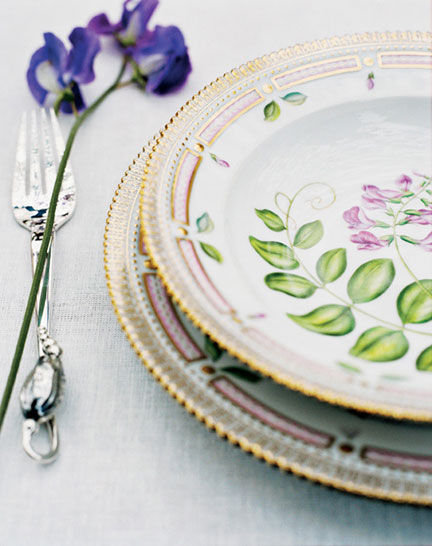
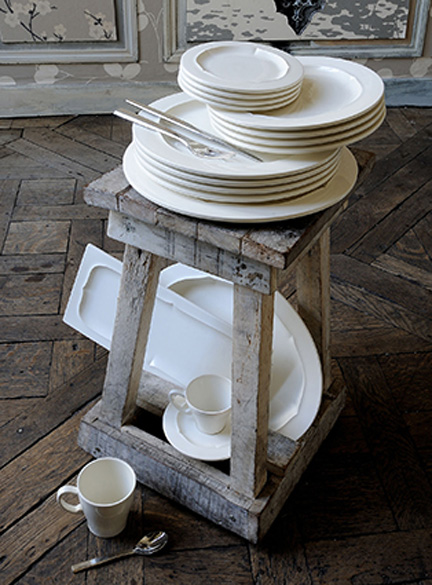
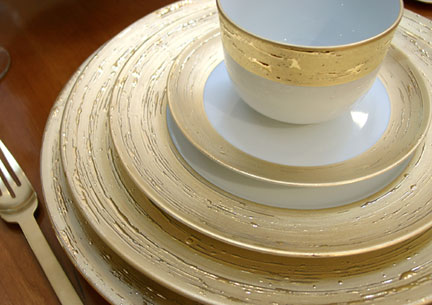
Understanding Dinnerware Materials
What are the different types of materials used to make dinnerware?
Luxury dinnerware is usually made of either porcelain or bone china. Casual dinnerware is made from earthenware or stoneware because these are usually more durable, easier to care for, and lower in price.
– Porcelain: The key ingredient, kaolin, is what makes porcelain so extraordinary. Fired at a the highest temperatures, porcelain combines a stark white appearance with incredible durability to make timeless pieces that will last in beauty and reliability for years to come. Well-known names to consider include Raynaud, Haviland, and Philippe Deshoulieres. And if you appreciate hand-painted porcelain, Herend and Anna Weatherley make beautiful pieces.
Care: Most porcelain items are dishwasher and microwave safe. We recommend hand washing for larger pieces, handpainted collections, or items with gold or platinum decoration. Items with metallic decoration should not be microwaved.
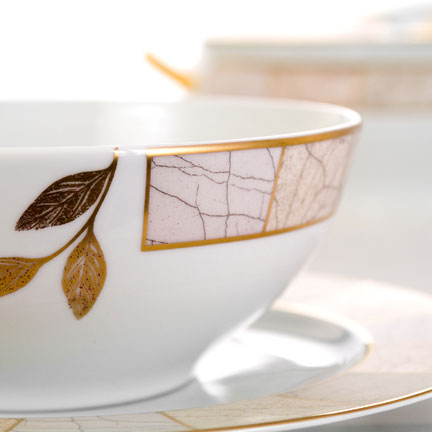
– Bone China: This is a very fine, soft-paste clay that is made from several key ingredients, including bone ash. The result is a beautiful, high translucency white with warm, ivory tones. Considered by many to be the finest quality of china, it has great strength and very high chip-resistance. Brands we suggest: Pickard, Royal Crown Derby.
Care: Most bone china items are dishwasher and microwave safe. We recommend hand washing for larger pieces or items with gold or platinum decoration. Items with metallic decoration should not be microwaved.
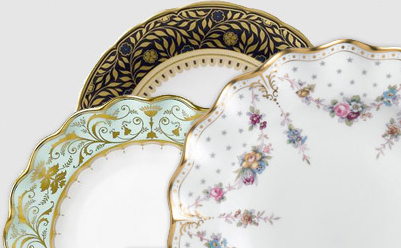
– Stoneware: Ideal for casual dining, stoneware is fired at very high temperatures to produce pieces which are durable and quite chip-resistant. Available in a numerous range of colors, some pieces also have beautiful crackled surfaces. Brands we suggest: Gien, Jars, Juliska, Vietri.
Care: Dishwasher, microwave, oven, and freezer safe.
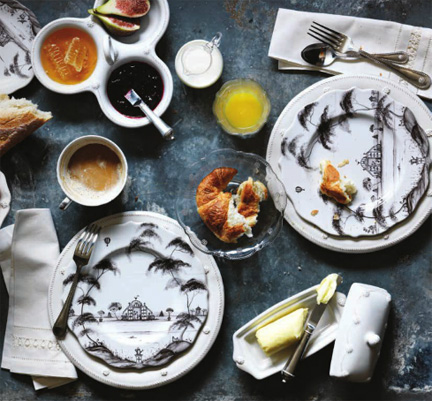
– Earthenware: as it is fired at relatively low temperatures, this type of pottery is more porous and less translucent than either porcelain or bone china. These pieces are relatively thick and heavy, and their natural colors range from from buff to red, depending on the clay used. A much-beloved characteristic of earthenware is that it is likely to crackle as the clay expands and contracts, but this does not affect the use of the piece. Brands we suggest: Vietri.
Care: Dishwasher safe; most are microwave safe on low to medium settings. We recommend avoiding sudden temperature changes.
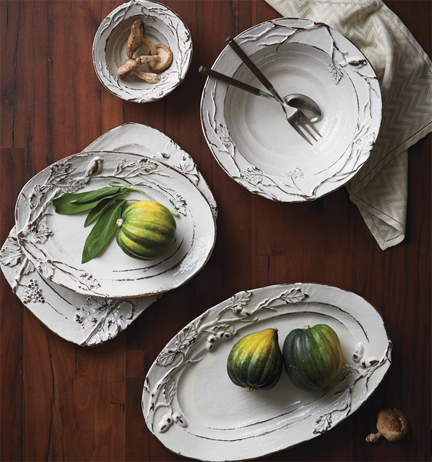
What is Limoges porcelain?
Limoges refers to a region in France where some of the earliest porcelain pieces were produced as far back as 1765. For centuries, the name Limoges has represented the finest quality and craftsmanship in porcelain throughout the world. Limoges porcelain is very white; most of the best-known producers of French porcelain are based in Limoges.
What are some simple ways to determine quality in dinnerware?
You can determine the quality of porcelain and fine china with a few simple tests:
– Hold the piece up to the light and you should be able to see the shadow of your hand behind the porcelain.
– Flick the plate with your fingers and listen for a resonant ring.
– Examine the color and make sure the glaze is even; the finish should be smooth and lustrous.
|
|
|
|
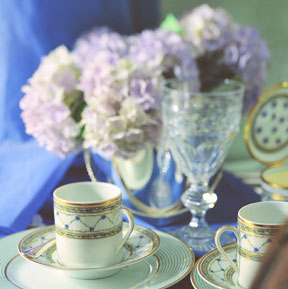
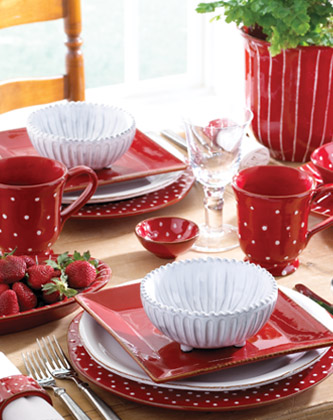
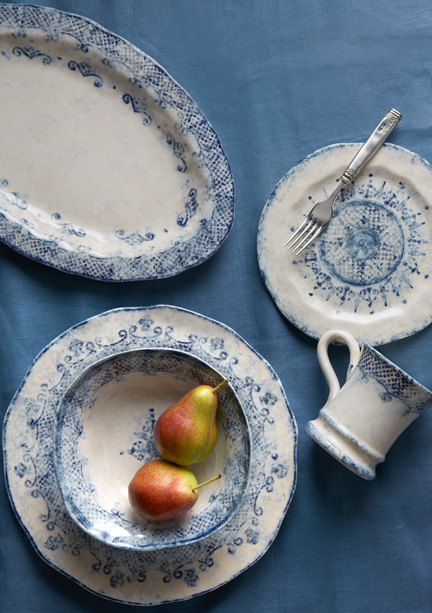
Dinnerware Styles
What dinnerware styles are available?
Generally, dinnerware is broken down into casual and formal collections. From there, you can choose between four major styles: solid (meaning one color throughout, with no pattern), banded, patterned, and handpainted.
If you’re looking for something with a monogram or in a specific color, take a look at our custom dinnerware collections.
And for outdoor entertaining, there are also outdoor dinnerware collections available.
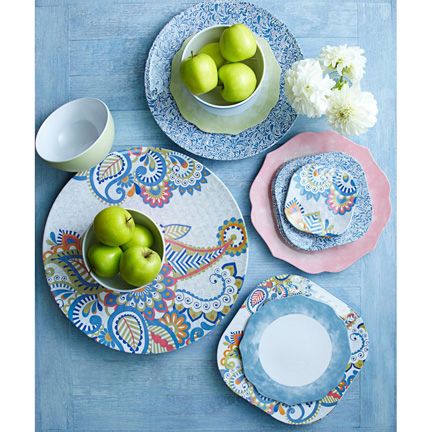
Suggested Quantities
How many dinnerware collections do I need?
In making this decision, we suggest considering the size of your family, the type of entertaining you are most likely to do (formal seated dinners or buffet brunches), and the complexity of your menus. Many people choose to have at least one casual collection for everyday use and one formal collection for selected occasions (usually porcelain).
How many settings do I need?
We recommend registering for twelve five-piece place settings, as these will see you through most dinner parties. These five-piece settings typically include a dinner plate, salad or dessert plate, bread and butter plate, tea cup, and tea saucer. On more casual collections, you will sometimes see four-piece settings available. These normally include a dinner plate, salad plate, bowl, and mug. While you may not always be entertaining for twelve, having additional pieces will guarantee that you have spares when items break or unexpected guests show up. From time to time, collections or specific pieces do get discontinued, so if you love a piece, buy it while you can.
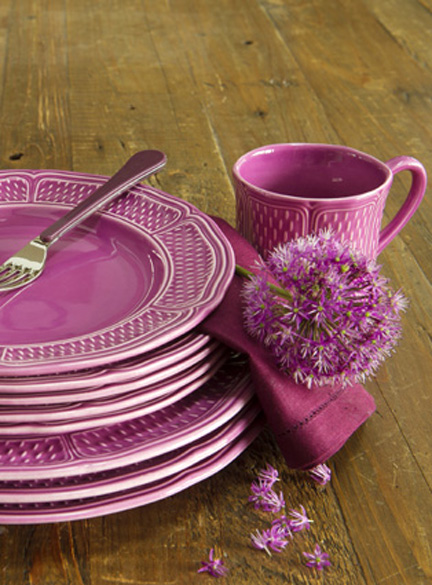
What is included in a five-piece place setting?
A five-piece formal setting consists of a dinner plate, salad plate, bread/butter plate, teacup, and saucer.
What is included in a four-piece place setting?
On more casual collections, you will sometimes see four-piece settings available. These normally include a dinner plate, salad plate, bowl, and mug.
|
|
|
|
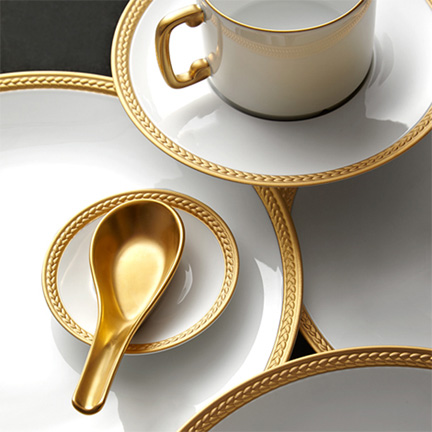
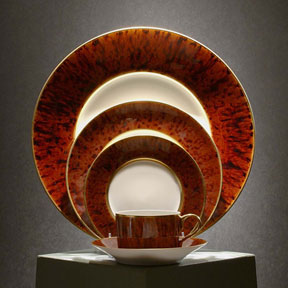
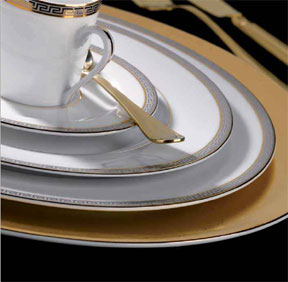
What are standard dinnerware sizes?
Sizes sometimes vary slightly among different collections, but they are generally as follows:
| Presentation Plate | 12″ diameter |
| Dinner Plate | 10.5″ diameter |
| Dessert Plate | 8.5″ diameter |
| Salad Plate | 7.5″ diameter |
| Bread/Butter Plate | 6.75″ diameter |
What is a presentation plate?
Also known as chargers or buffet plates, presentation plates are oversized plates (12″ diameter) designed to add color and style to your table setting. These are usually removed before the main course is served, although they are also frequently used as buffet dinner plates since they can hold larger quantities of food.
What kinds of serving pieces do I need?
When registering for dinnerware, it is easy to overlook serving pieces. However, these items are not only great for unifying your collection, they are necessities that will be essential for cooking, entertaining, and everyday dining. We recommend the following as a starting point:
– Two to three serving dishes
– Two serving bowls or salad bowls
– One covered casserole dish
– One cake platter (or better yet, a cake stand for a better presentation)
– One tea and/or coffee service (this should include the teapot or coffee pot, creamer, and sugar bowl)
Caring for Dinnerware
How do I care for my dinnerware?
Most dinnerware items are microwave and dishwasher safe, unless they are decorated with gold or silver. We recommend hand washing for larger pieces, handpainted collections, or items with gold or platinum decoration. Items with metallic decoration should not be microwaved.
|
|
|
|
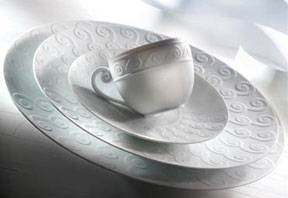
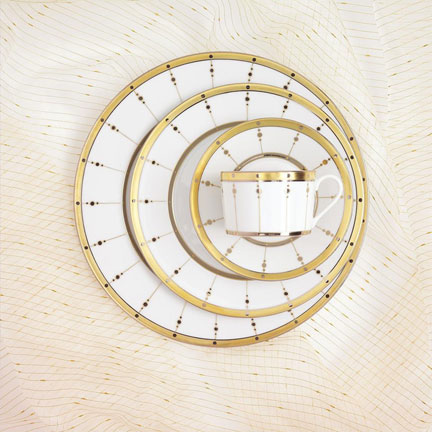
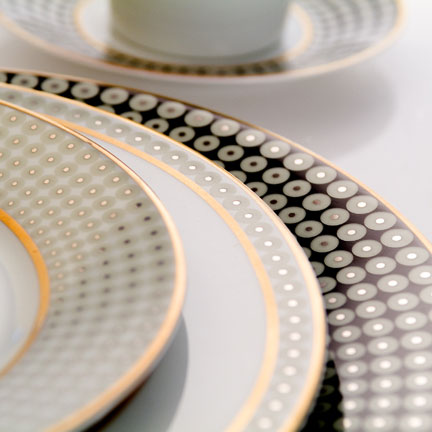
Monogramming
How should I monogram my dinnerware?
If you choose to have your dinnerware monogrammed, consider several different options. Single-letter monograms usually feature the first initial of the last name. On three-letter monograms, most individuals choose to have their first, middle, and last or first, last, and middle initials embroidered. For married couples, a popular choice is the initials of the couple’s first names on either side of their married last name.
|
|
|
|

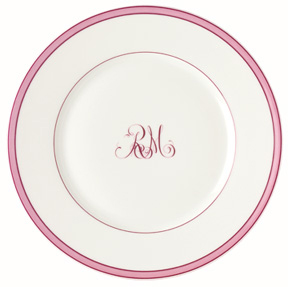
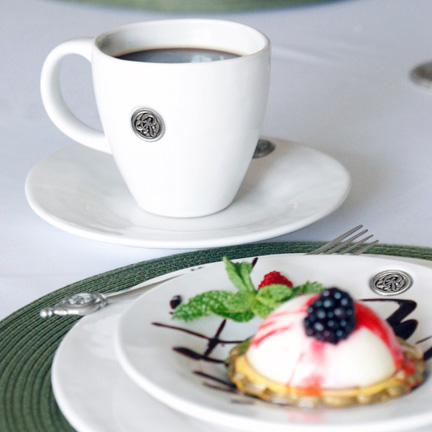
Would you like to see more styles? Click here to view all our dinnerware collections.
Royal Inspiration: A Herend Wedding Cake!
Herend‘s beautiful dinnerware and precious figurines have been inspiration for tables, displays and gifts for centuries. For South Carolina couple Mary Mungo and Ross Dubisky, their love of the Queen Victoria Dinnerware resulted in this spectacular wedding cake:
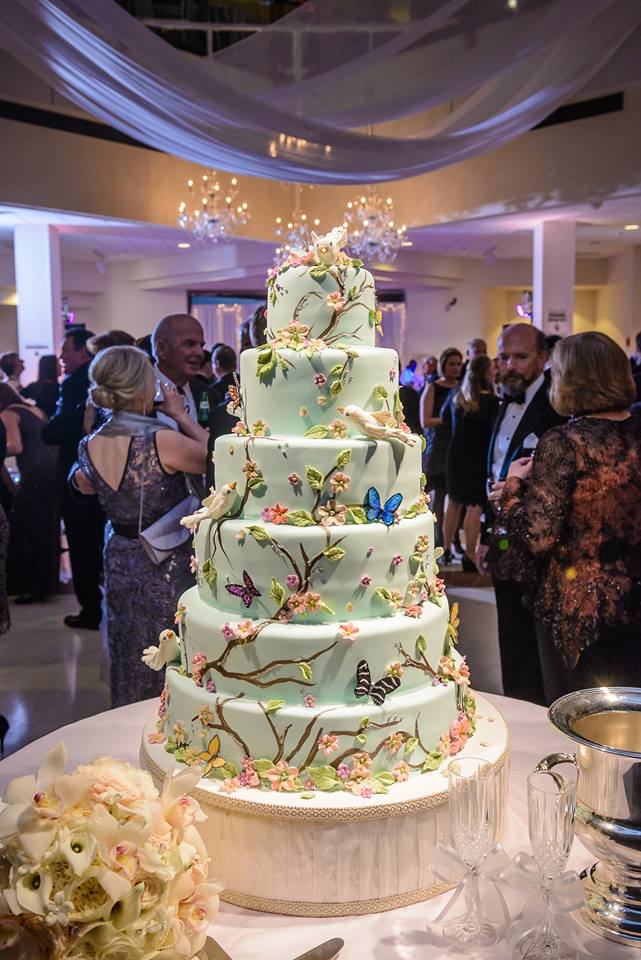
Adorned in delicate flowers and darling birds and butterflies, this cake is a work of art! Our warm congratulations and special thanks to the newlyweds for sharing this with us. Take a look at some of the pieces that spurred their imagination:
|
|
|
|
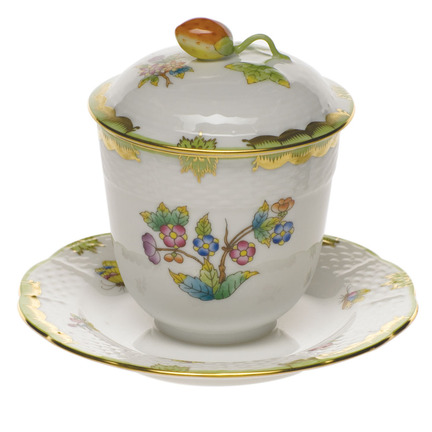
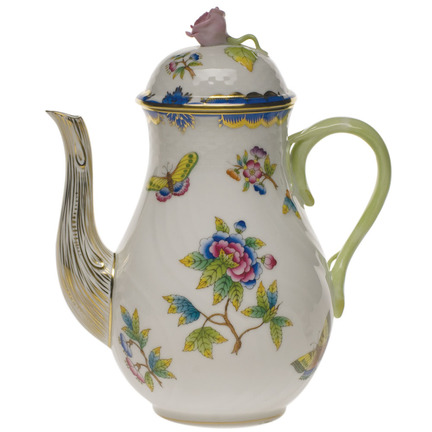
For more stunning collections, visit our Herend Shop!
Raynaud’s Tresor Dinnerware
Inspired by a vintage cup designed in the Raynaud archives, Mariela Schwarz Montiel’s Tresor collection is a modern line with a fluid and feminine spirit. Plates are flat and rimless, while shaped pieces like tea pots and tureens are sleek and generously sized. Mariela, a French-based footwear and accessories designer, chose colors that reminded her of her travels to India.
With three different patterns, each in four colors (Tresor Beige, Tresor Brown, Tresor Orange and Tresor Turquoise,), the possibilities for mixing and matching are endless.
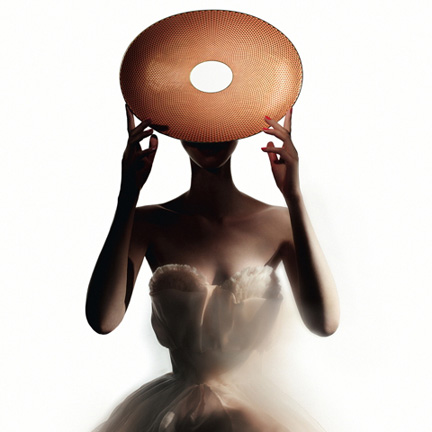
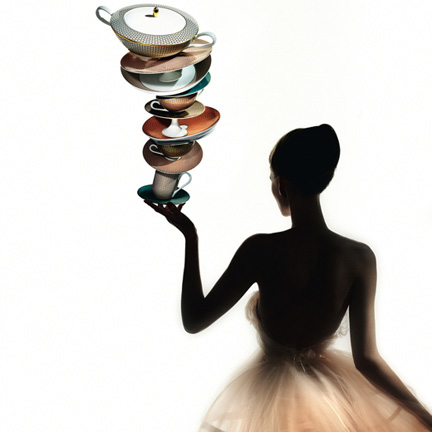
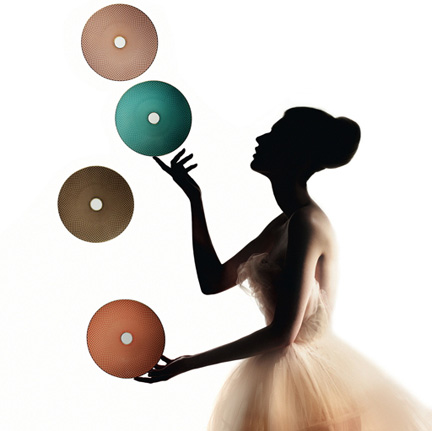
Chic, n’est-ce pas?
As Seen In Occasions Weddings Magazine
When it comes to weddings, Occasions Magazine is a great resource. From balancing your budget to coordinating your color scheme, you will find all the tools and tips you need for smooth sailing to your big day. So when they asked to feature our Christofle Kawali Blue Champagne Flutes and Anna Weatherley Celery Green Chargers for their Summer 2014 color guides, we were thrilled to take part!

Featuring two daring yet sophisticated color stories, Occasions showcases these two extraordinary items in their Cobalt and Celery spreads, showing the versatility of these must-have summer hues.
“Used throughout the centuries in ceramics and jewelry, this deep, electric blue exudes a royal flair beyond the reach of other colors, putting it in a class all its own”
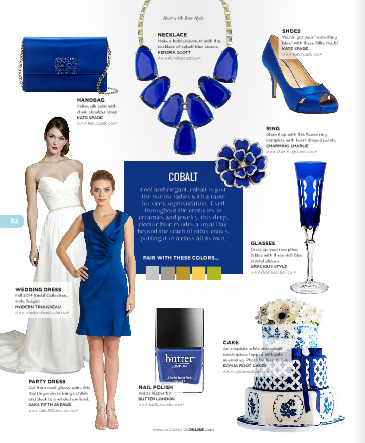 |
|
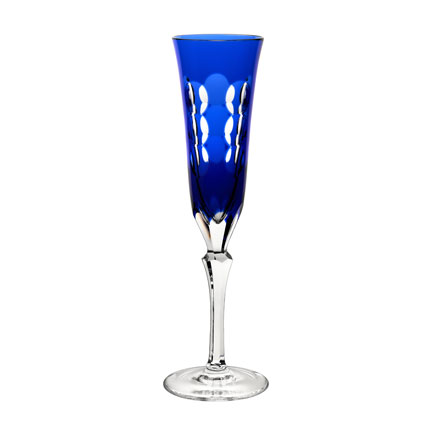
“Possessing the vibrance of yellow but with a splash of chic, this zesty shade of green screams fresh, funky and modern, making it the must-have color of the season”
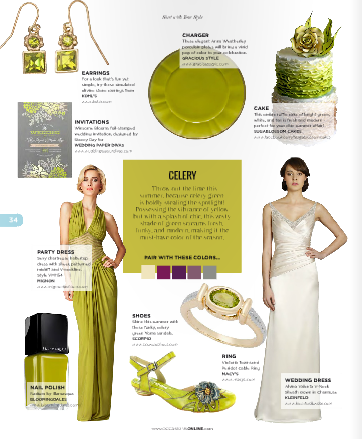 |
|
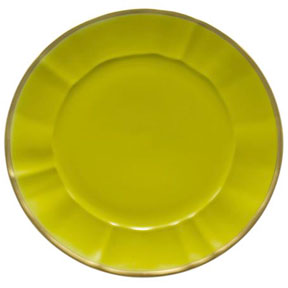
Looking for more great ways to use cobalt and celery? Here are some of our favorites:
|
|
|
|
|
|
|
|
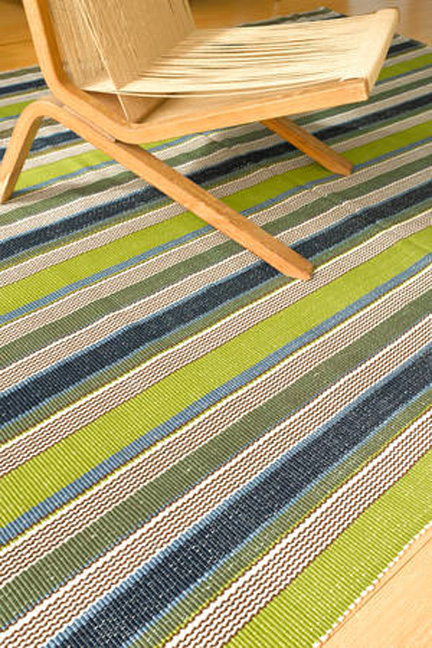
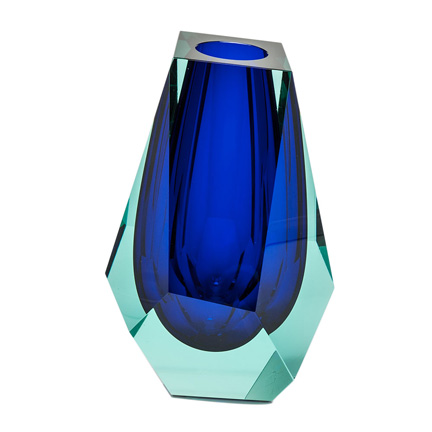
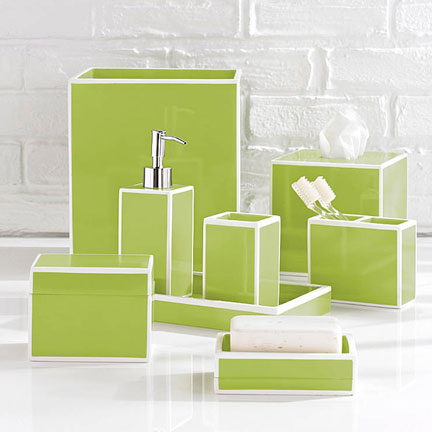

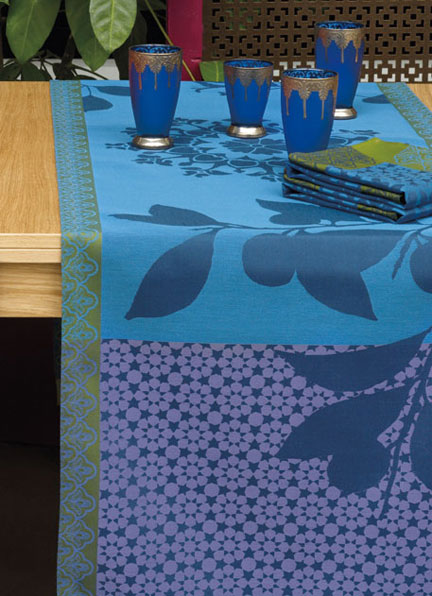
Fresh-Squeezed, Summer Style: Decorating with Citrus Hues
Summer is on the horizon, and we’re captivated by the citrus palettes making a splash on the design scene! From tangerine to grapefruit, pops of punchy colors are perfect for adding a tangy twist to traditional interiors. Combine two or more extroverted hues, like lemon with lime, for a juicy, ‘Happy Chic’ look, a la Jonathan Adler or Trina Turk.
Here are some of our favorite picks this season:
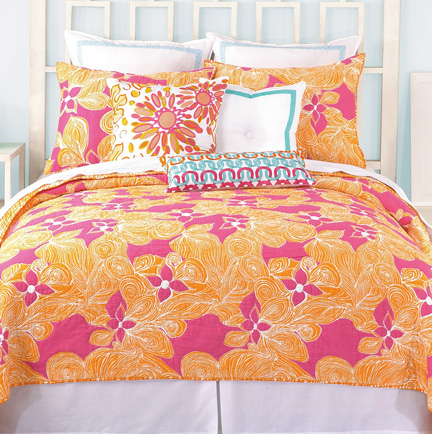
For al fresco dining, nothing beats the chic but practical acrylic drinkware from Mario Luca Giusti. We love how artistic the Palla Fluo pitchers look en masse …
… and how easily they can brighten anything up – even an ancient Italian cobblestone courtyard!

Sprinkle your interiors with these citrus accents for a bright, modern, and peppy aesthetic.
|
|
|
|
|
|
|
|
|
|
|
|
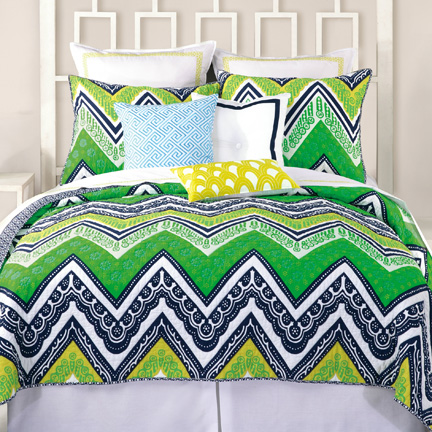
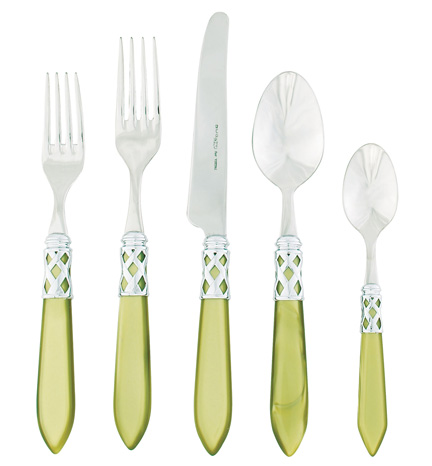
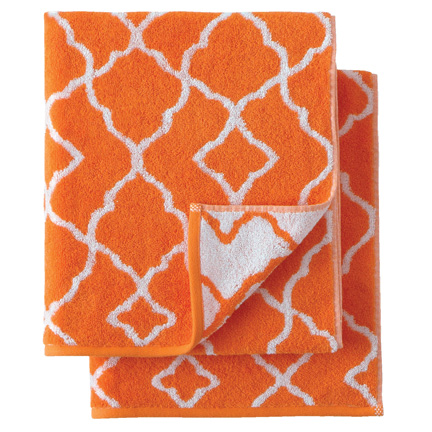
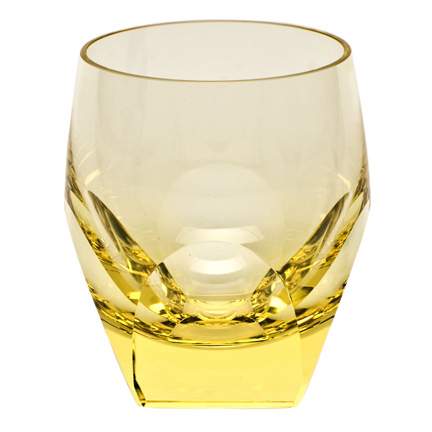
We’re in a happy mood just looking at this trend!
An Introduction to Aristocracy: Herend’s Debut at the First World’s Fair
While it is clear that Herend‘s Queen Victoria Dinnerware pays homage to this famous monarch, it was actually her husband Albert who first introduced her to this once-small Hungarian company.
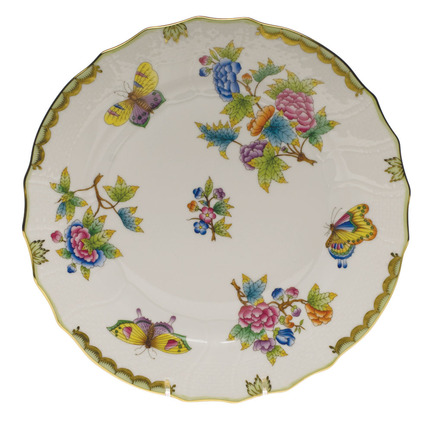
In Herend‘s Fall 2012 Insider, they recount this historical time…
Albert was born as a prince in Germany. But because his family was neither wealthy nor powerful, he was looked down upon as an interloper in British society. Yet the harsh public assessment didn’t curtail his devotion to helping his wife serve as monarch and advising her on political and diplomatic affairs. Prince Albert became viewed as a progressive voice at a crucial time, and he earned respect for his intellect and interest in helping society improve.

Thanks to his penchant for technology and his astute sensibilities on moving Britain forward, he was the pivotal force behind a venue that happened to propel a little-known Hungarian product line named Herend to the fore. That venue was the first World’s Fair.

As history goes, it was at this Great Exhibition that Prince Albert’s wife discovered a porcelain pattern she adored and wanted for her own. Queen Victoria’s large purchase of the set led Herend to name the pattern after her. Thus began Herend’s foray into the high ranks of the aristocracy, setting the stage for more of the same worldwide.
Later, at the Paris Exposition of 1867 – recognized as the third World’s Fair – Herend’s Indian Flower Basket pattern was selected for the table settings at an exclusive reception in the Elysee Palace to honor Emperor Franz Joseph. An invited guest, Hungarian Count Albert Apponyi was struck by the pattern and imagined it with the dominant peony motif enlarged and basket removed to create a simpler yet equally elegant design.
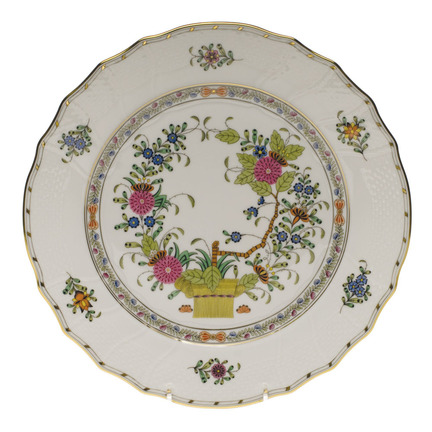
His order of a custom set per his vision resulted in a design that Herend named Apponyi in the Count’s honor. Known in the U.S. as Chinese Bouquet, the pattern remains one of Herend’s most successful collections year after year. Many iterations of the pattern have been successfully introduced since then, the most recent being Chinese Bouquet Garland (introduced in 2013).
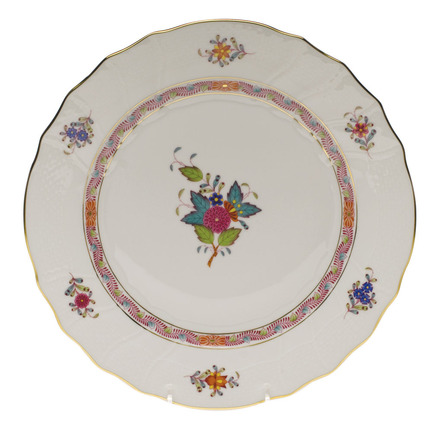
While Prince Albert’s contributions to Britain and the world are numerous and well documented, his provision of a key forum for Herend to shine isn’t mentioned among them. As far as Herend is concerned, though, it is high time for a hats off to “the great man behind the great woman”.
For more beautiful dinnerware patterns, visit our Herend Dinnerware Shop.
Introducing Mariposa: Entertaining Pieces Made from Recycled Materials
Mariposa began 1984, when founder Livia Cowan found herself driving through Mexico with her sister in this camper.

There, they delighted in visiting different artists and learning about their craft. In particular, they loved how local artisans recycled materials to create beautiful new products.
At the end of the trip, Livia returned to her home in Massachusetts with her camper full of recycled glassware and set up shop in her parents’ garage.
In the thirty years since then, Mariposa (Spanish for “butterfly”) has become a world of stunning pieces for gifting and entertaining. And, just as they were in the early days, the majority of their products are still handcrafted from 100% recycled aluminum and glass soft drink bottles.
It’s a collection that’s right for today and tomorrow.
Here are a few of our favorites: String of Pearls (designed by sculptor Michael Updike, who incidentally is author John Updike’s son) …
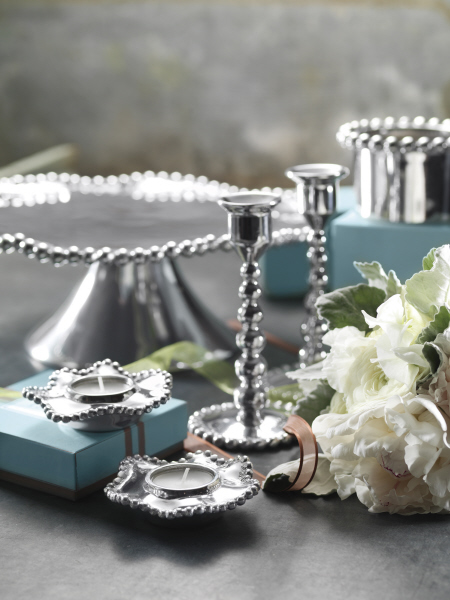
… their engraved trays (perfect for weddings and anniversaries) …
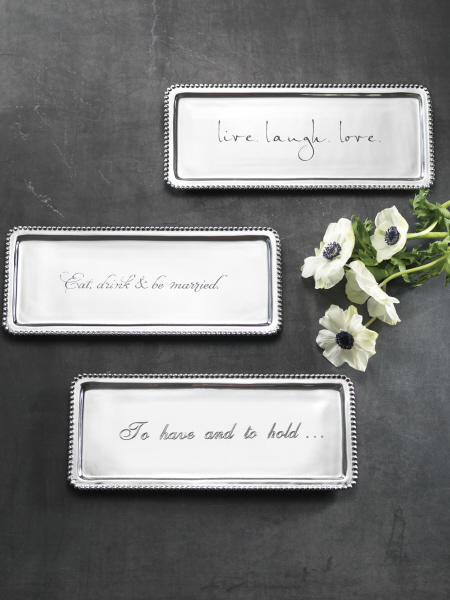
… Bellini drinkware (for when you need something nice, but not too precious) …
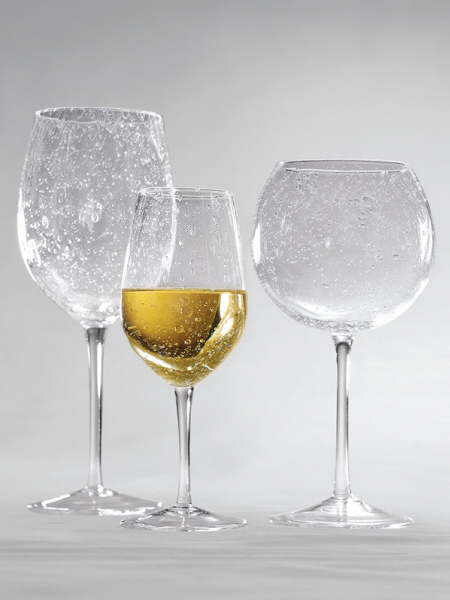
… anything nautical …
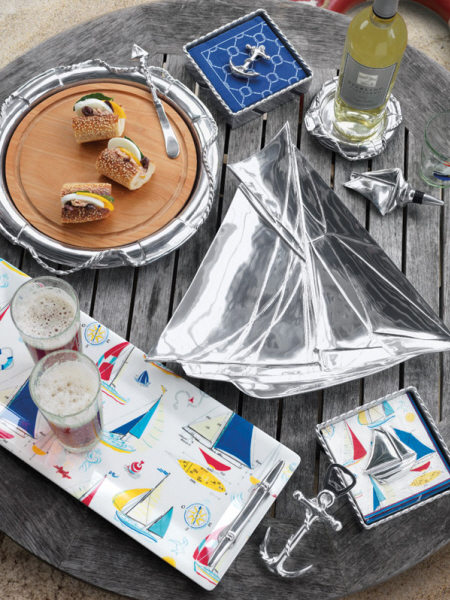
… and their adorable Bunny Porringer set!
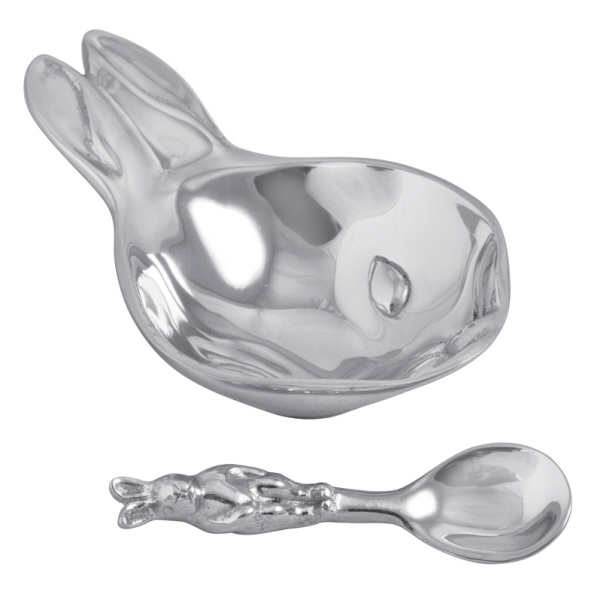
Stylish Summer Soirees Made Easy
Summer. La dolce vita. A party by the pool. Sailing on the water. Or just a nice lawn barbecue. Naturally, friends and family will come in droves. So how do you entertain them in style, without setting up for the high holidays? Here are our little secrets (shhh….)
– Acrylic stemware from Mario Luca Giusti: From his studio in Florence, Mario has re-created classic Italian stemware in acrylic and polycarbonate. The result? As cool as a Vespa on the cobblestoned streets of Florence. No wonder it’s become a darling of the European yachting crowd — look for it on Roberto Cavalli’s yacht or in the hands Albert II of Monaco, Valentino, the Missonis, the Ferragamos, and Steven Spielberg.
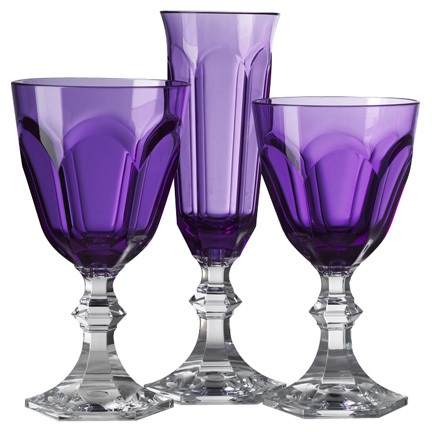
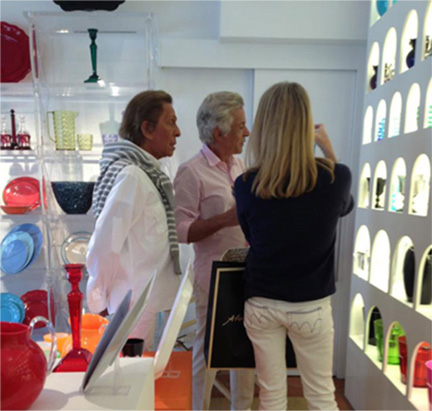
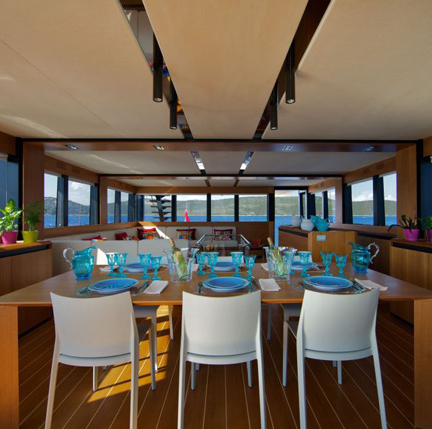
– Melamine dinnerware from Q Squared NYC Dinnerware: They’re chic, they’re classic, and they’re dishwasher safe! These pieces, created by Nancy (former Glamour editor) and Alaina (color aficionado with an art history background), recreate the ornate designs of antique porcelain on heavyweight melamine, and they’re made to be mixed and matched.
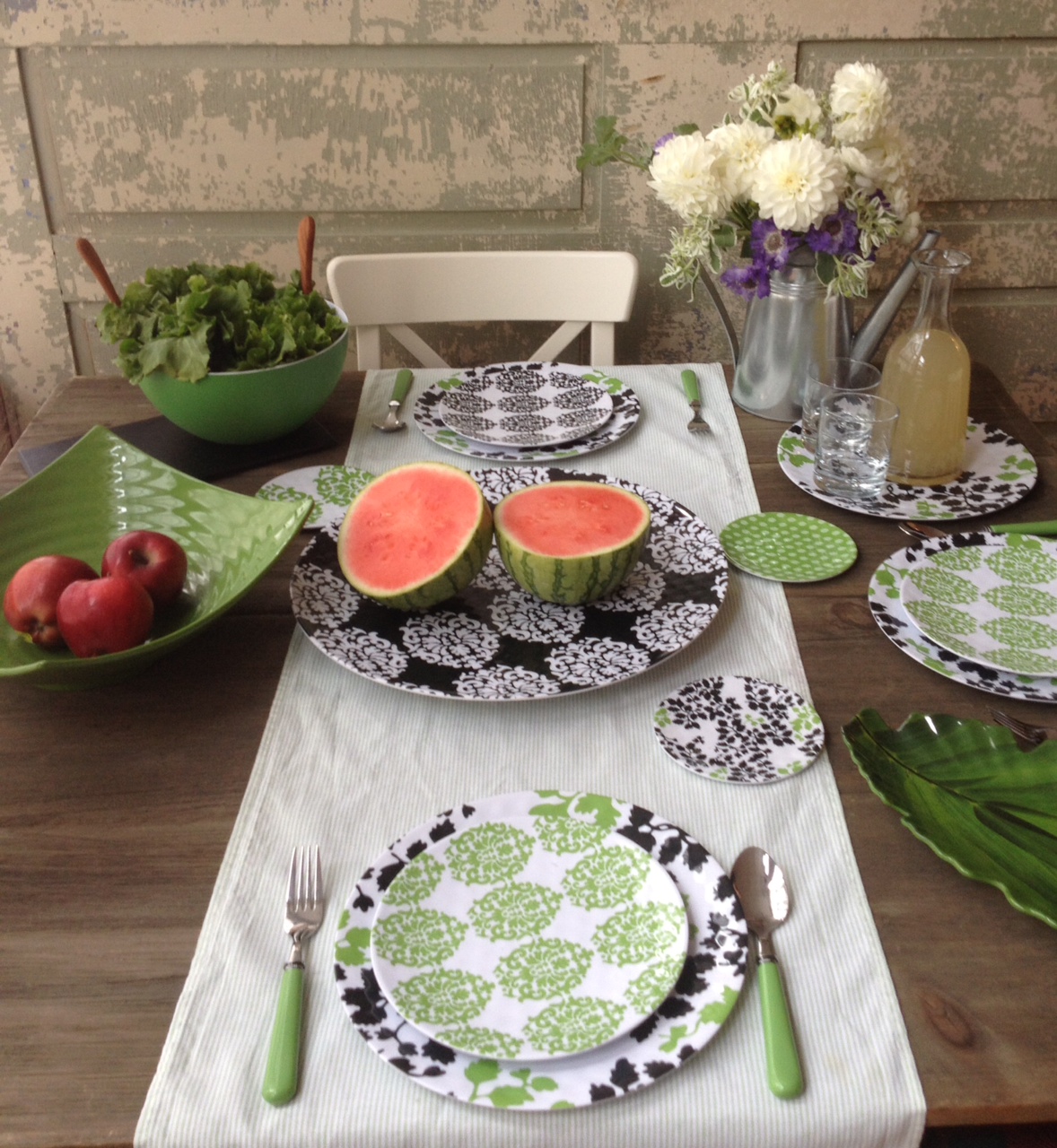
– Easy-care tablecloths fromGarnier Thiebaut and Le Jacquard Francais: Many of our classic French table linens, favorites of everyone from the George V in Paris to the French Laundry, now come coated with an invisible treatment to protect your linens from liquids and stains, while keeping them soft and supple.
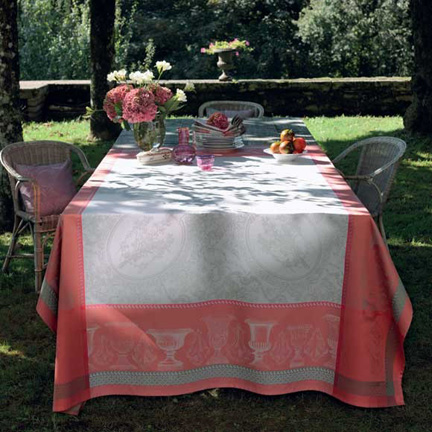
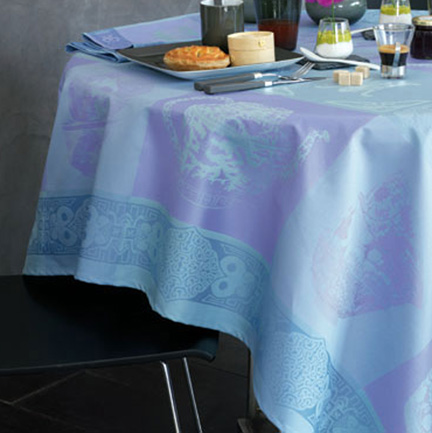
Now there’s no reason not to entertain this summer. Let us know how it went — tweet a picture of your party to @GraciousStyle! Need more ideas? Click here to see our Outdoor Entertaining section.
Green Sweet: An Easy Care Solution for Stain Repellant Linens
For nearly two hundred years, Garnier-Thiebaut has been creating exquisite linens for the home. But it is Green Sweet, their recent innovation in fabric technology, that is most exciting to the busy, modern family.
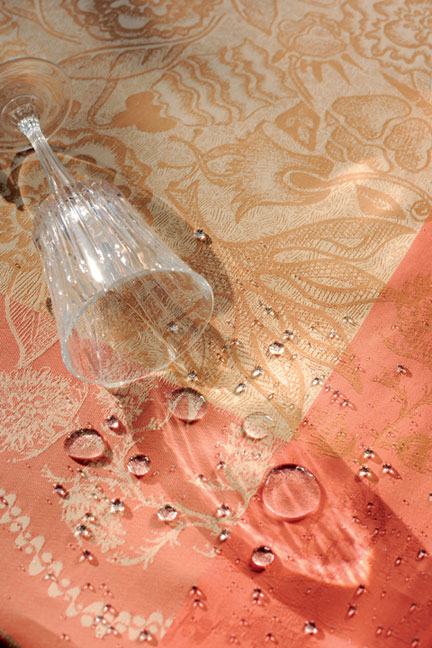
What is Green Sweet?
Green Sweet is a revolutionary treatment which makes linens stain resistant.
Does Green Sweet affect the way my linens feel?
No. Green Sweet does not affect the look and feel of linens, so textiles stay equally soft and breathable.
What happens when liquids spill on my Green Sweet linens?
Liquids will puddle on the surface, so you can simply wipe them off.
How is Green Sweet applied to fabrics?
Each fiber is coated in the stain-resistant treatment before it is woven into fabric to ensure the entire cloth is fully saturated.
Can I wash my Green Sweet linens?
Absolutely! They can be washed the same way as regular linens, but you won’t need to launder them as often since they will remain clean for longer.
Can I iron my Green Sweet linens?
Yes. The heat of the iron reactivates the Green Sweet treatment, so it is good for Green Sweet linens to be ironed.
Can you show me what happens when there are spills?
Take a look at how these linens react to jam, fruit juice, water, and even red wine!
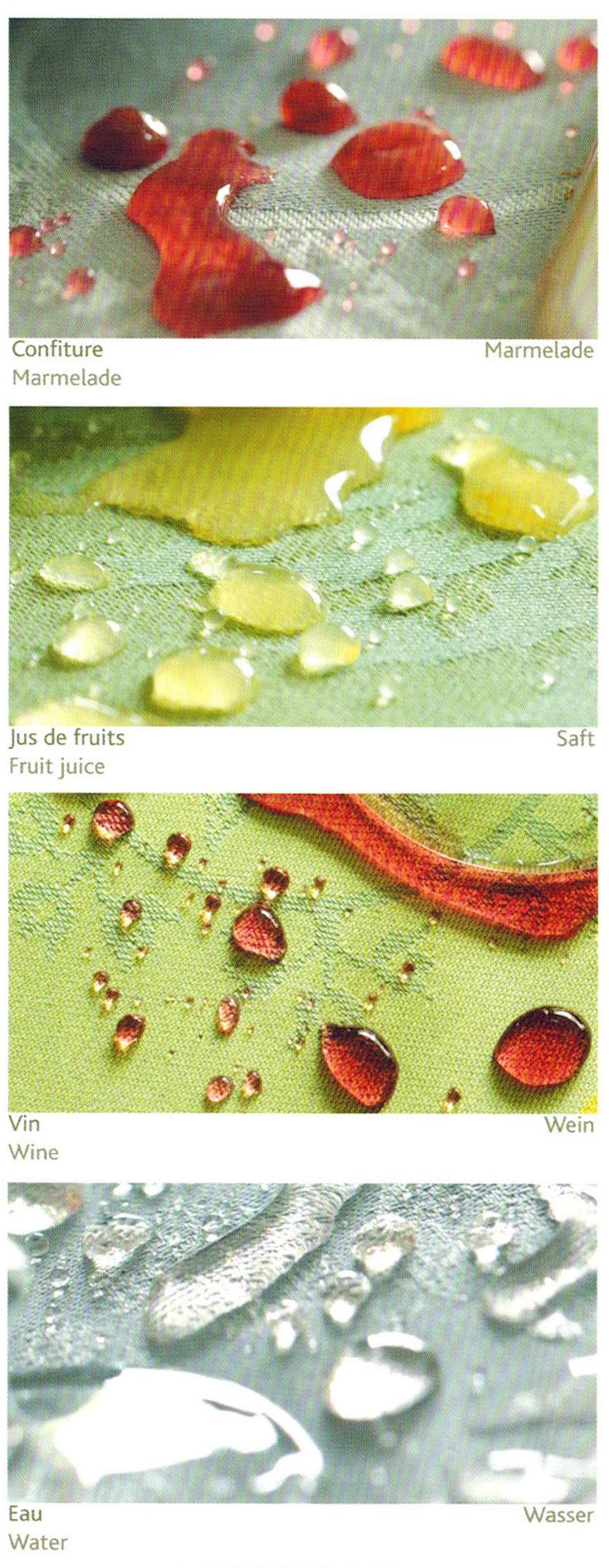
Want to see more? Click on the video below for a demonstration:
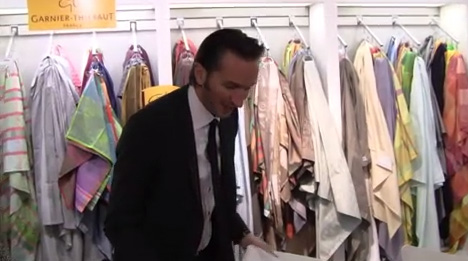
Why is it called Green Sweet?
Green refers to the non-stick and self-cleaning process of certain plants. Sweet stands for Simple to clean, Waterproof, Economic maintenance, Environmentally friendly, and Textile touch.
Now, it’s time to try one for yourself! Here are a few of our favorites:
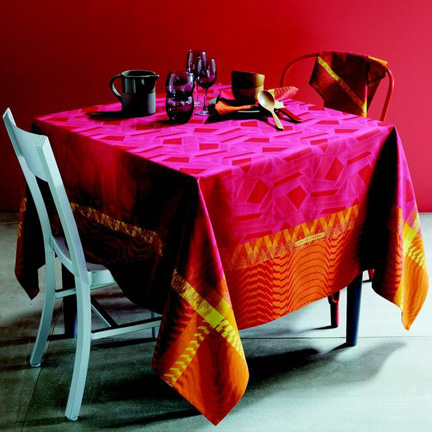
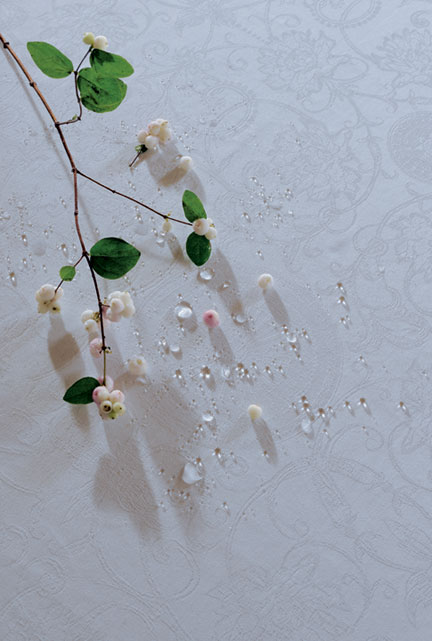
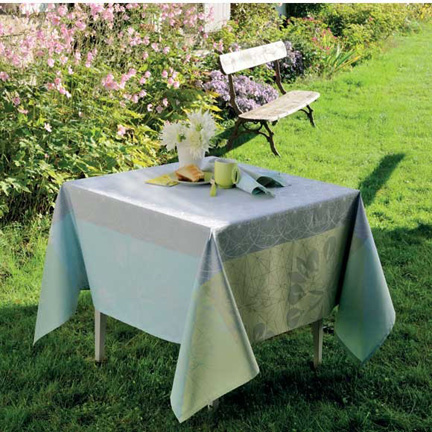
Have you tried Garnier-Thiebaut‘s incredible Green Sweet linens yet?
Rachel Zoe’s Dinner Party Must-Have: Christofle Vertigo Serving Tray
If there’s one thing Rachel Zoe knows, it’s style. The designer, author, and distinguished fashion icon is recognized for her glamorous aesthetic and high-profile clientele. When she’s not busy running the Zoe empire, the self-described perfectionist enjoys hosting dinner parties at her chic California abode. In an interview with Domaine Home, Zoe shares which entertaining essentials make an at-home meal feel like an A-list affair.

At the top of her list? The Vertigo collection from luxury silverware company Christofle. Like Chanel and Christian Dior, Christofle is a symbol of elegance and prestige. And Vertigo, designed by renowned French interior and product designer Andree Putman, is Rachel’s favorite. Its unique element – a slightly twisted ring – brings life and even a sense of humor to the otherwise immaculate silver objets. For her picture-perfect party, she relies on exquisite pieces like the Christofle Vertigo Three-Part Serving Tray for flawless food presentation.
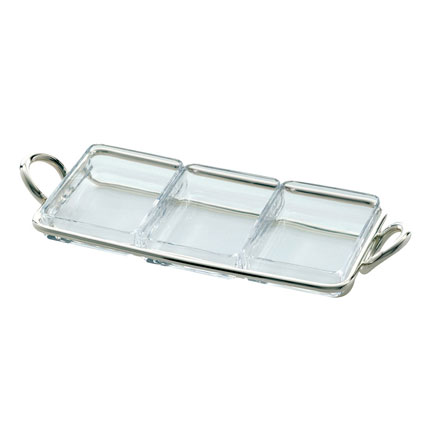
Made of glass with silver-plated handles, the Vertigo rectangular tray is sectioned into three parts, so guests can sample a variety of hors d’oeuvres. Just as jewelry completes an outfit, Zoe knows that beautiful dinnerware puts the finishing touches on a well-dressed dining table. She advises, “Take the time to fill glass pitchers with sparkling and flat water, put condiments in charming crystal jars, and place food that comes to the table on chic serving trays.” Follow Zoe’s lead, and your friends will be itching for invites to your next soiree.
|
|
|
|
|
|
|
|
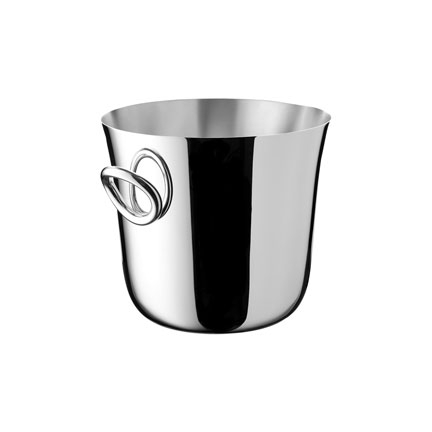
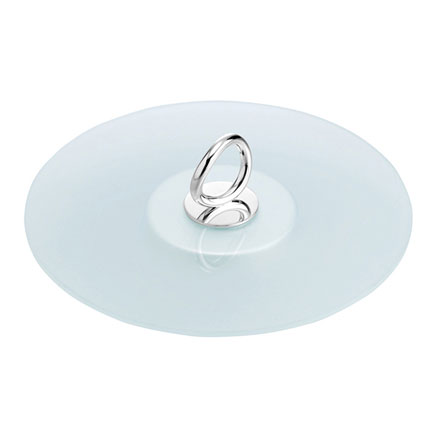
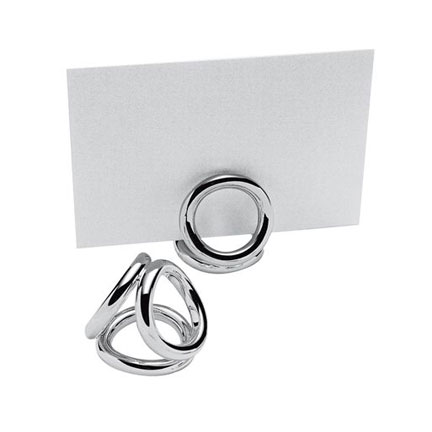
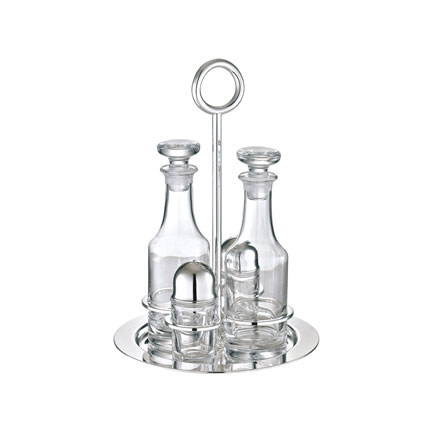
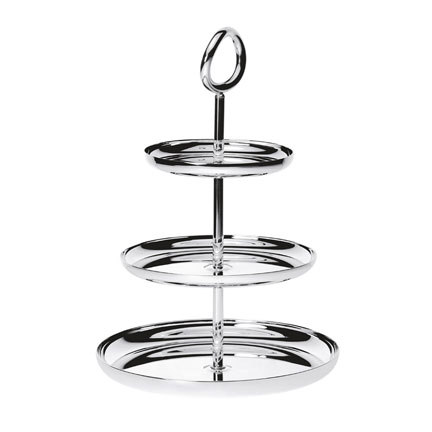
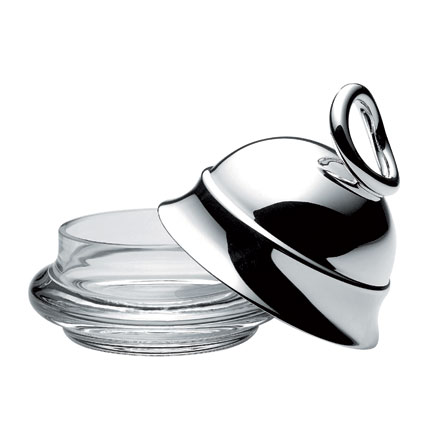
To see the complete collection of Christofle at Gracious Style, please click here.
Book Review: Soiree by Danielle Rollins
Ever wonder what it would be like to host a party for Oscar de la Renta, Rachel Roy, Emily Giffin, Miles Redd, or Gil Schafer? You don’t have to any longer, thanks to the book Soiree: Entertaining with Style by Danielle Rollins:
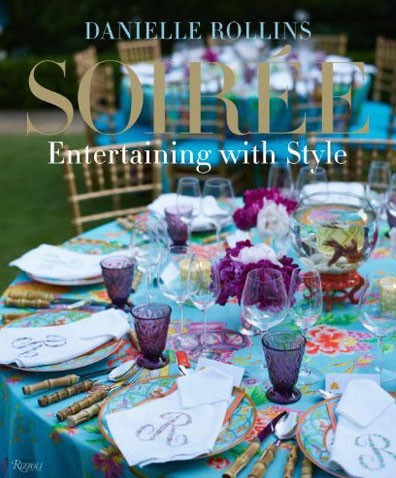
In this book, the first by the Atlanta hostess, philanthropist, and writer, you’ll find intimate gatherings like this one in Miles’s bathroom in Manhattan …
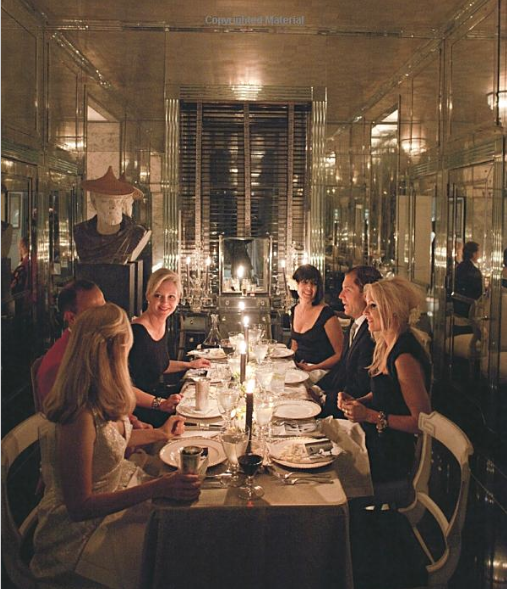
… to grand garden parties like this one in the backyard of her fabulous mansion Boxwood:
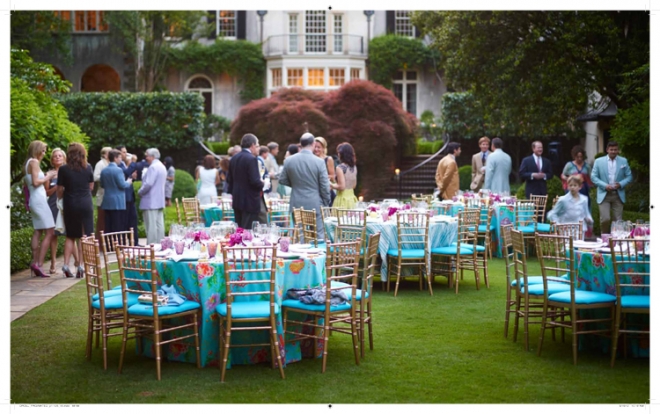
As we have worked with Ms. Rollins in the past, we were thrilled to find ourselves listed as one of her dinnerware sources. Here’s a sneak preview of the fabulous settings featured in the book:
|
|
|
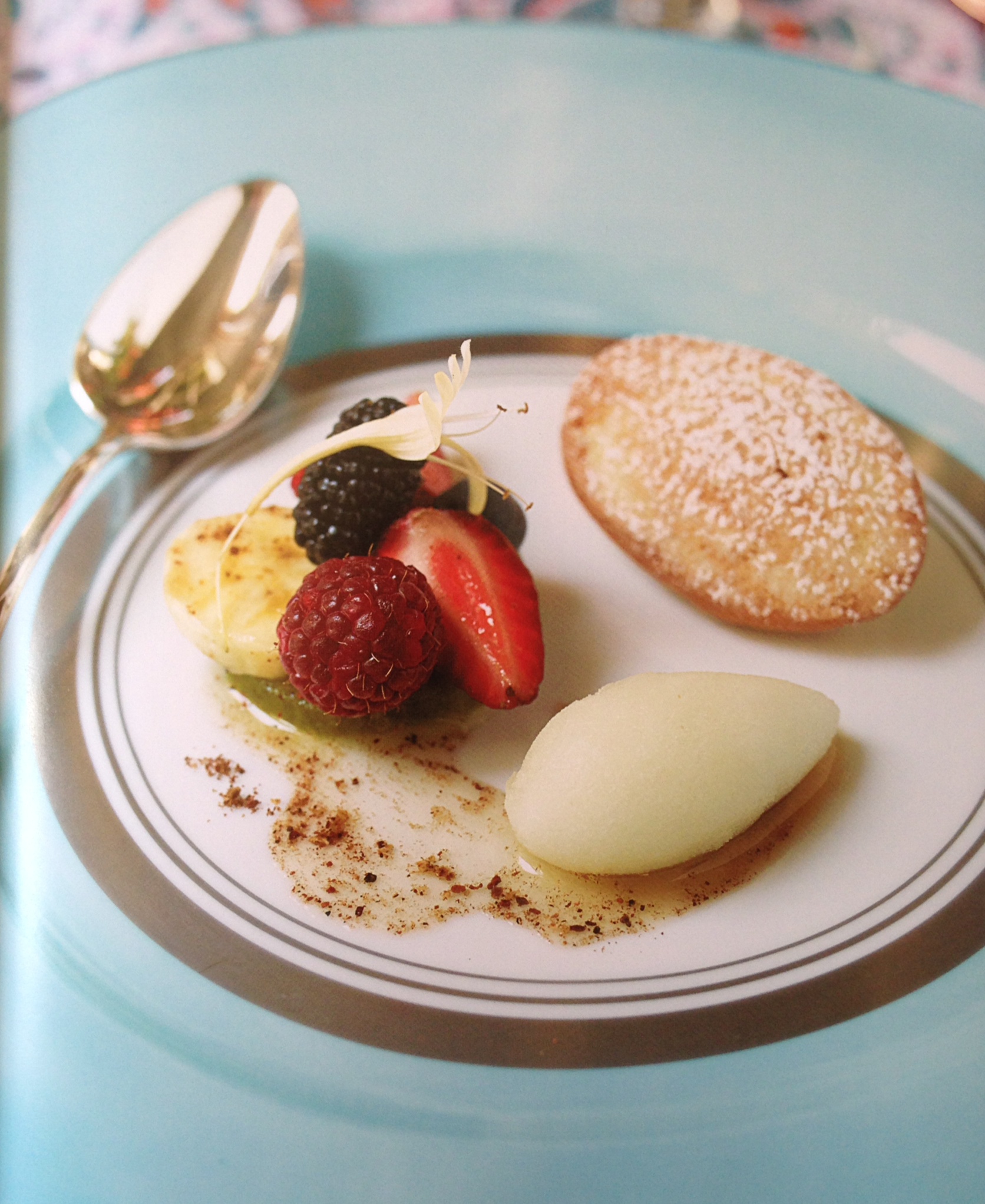

Do you love her style? Then head over to Danielle’s site. We also really enjoyed her interview with Ronda Carman in All the Best.
Ronda: “Who would you most like to meet and how would you spend the day?”
Danielle: “Can I squeeze more than one into a day?? In my ultimate dream day, I’d meet with Miles Redd in the morning to work on the finishing touches of a Gil Schaefer designed home. Next, I’d head to a fitting of the perfect dress with Oscar de la Renta in his showroom. Then, I’d spend the afternoon in the garden alongside Bunny Mellon (if she were still alive today), cook dinner with Thomas Keller, and for a finale finish, co-host a party with the fabulous Carolyn Roehm.”
Is that fabulous, or what?
Thank you, Ms. Rollins, for including Gracious Style in your beautiful book!
L’Objet Napkin Rings Featured in A Purple Wedding from David Tutera
Renowned wedding planner and designer David Tutera knows how to make anyone’s special day unforgettable. So when he asked to feature our L’Objet Antique Bow Tie and Lorel Napkin Rings in an upcoming wedding, we were thrilled to participate! With a regal purple, cobalt, and gold color palette, these beautiful table accents have never looked more lovely. All images courtesy of Yodsukars Photography.

L’Objet‘s Antique Bowtie Gold Napkin Rings add drama to these velvety plum napkins.

These gold Lorel Napkin Rings emphasize the eternal bond of this beautiful union.

These gorgeous napkin rings contributed to the perfect tabletop for this elegant ceremony.

A special thanks to everyone at David Tutera for including us in your beautiful photoshoot!
For more dazzling napkin rings, visit our full collection here.
Jardin d’Eden: Exquisitely Engraved Flatware
Every now and then, a collection comes along that is so exquisite, it’s impossible not to fall in love at first sight. A spring daydream comes alive in Christofle’s newest additions to their fine flatware collection, Jardin d’Eden. A collaboration with Marcel Wanders, one of the world’s most distinguished designers, delicately engraved floral swirls span the entirety of each piece, turning this collection into sumptuous poetry made real.
Dubbed one of Business Week’s “25 Leaders of Change in Europe,” and “the Lady Gaga of Design” by The New York Times, designer Marcel Wanders is renowned for replacing the coldness of industrial design with beauty, romance and fantasy. The Jardin d’Eden (or Garden of Eden) collection is the perfect expression of this vision.

Precision craftsmanship reigns supreme in these finely engraved lines, inspired by the interlaced leaves, flowers and curls of lush garden greenery.

The Jardin d’Eden collection is available in both sterling silver and silverplated settings.


Fine accessories and gifts are also included in this stunning collection. Notice the apple in the center of the charger (see below):
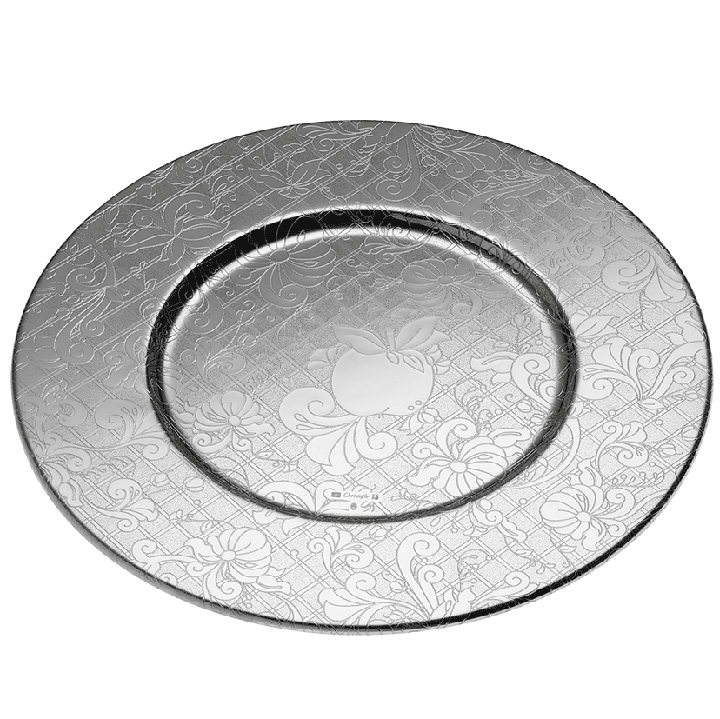
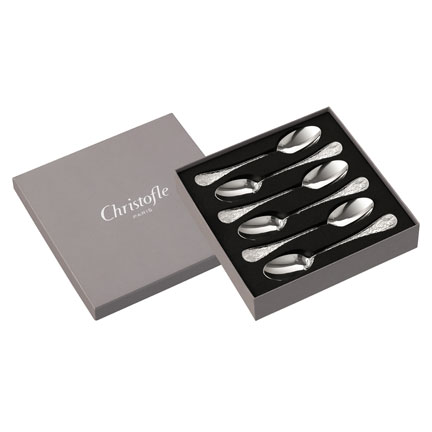
Let us know if you’re as inspired as we are by Christofle’s incredible creations by sharing your comments below.
To see the entire Jardin d’Eden collection, please click here.
To view our entire selection of Christofle items, please click here.
How Do I Care for Christofle Silver?
Purchasing fine silverware is an important investment you want to protect, perhaps for generations to come. Since its founding in Normandy, France in 1830, Christofle’s silver creations have been prized for well over a century by serious connoisseurs, gracing the tables of maharajas, presidents, luxurious resorts, and the finest restaurants in the world. With proper care, Christofle silver will stay looking as sublime on your table as it has in royal palaces throughout the ages.
We’ve compiled an easy guide on how to care for your Christofle silver and silverplated items, to keep them pristine and exquisite throughout years of enjoyment.
Cleaning Your Christofle Silver
Wash immediately after every use.
If you are unable to wash immediately, wipe off any remaining food, and rinse in hot water. This will prevent prolonged contact with acidic substances, which can damage silver.
Hand Washing
Gently remove debris using a soft sponge and soapy water made with gentle liquid dish detergent. Never use a corrosive or abrasive product, and never let your silverware come into contact with bleach. Promptly dry with a soft cloth.
Dishwasher Safe
All Christofle flatware – including sterling silver – can be safely washed in a dishwasher, provided the following rules are observed:
- Use chlorine-free powders or tablets only. Do not use liquid or gel products, which often contain chlorine.
- If you use a water softening product in the dishwasher, avoid washing your silverware during the first cycle. Follow dishwasher instructions concerning the hardness of the water. Water with a high mineral content can be corrosive.
- Knives manufactured before 1968 must be washed by hand only.
Care for Frames
All Christofle picture frames are specially varnished with a protective coating, and do not require any special care. Do not use Christofle or household cleaning products, which could damage the finish. A soft, dry cloth is all that is needed to remove dust from varnished products.
Tarnish Removal and Polishing
Christofle has created a variety of specially-formulated polishing and storage products to ensure the longevity of your silver. After using each of these products, rinse in clean water and wash as usual.
For daily care of all your silver items, use the Silversmith Anti-Tarnish Polishing Gloves. Infused with Christofle’s signature shine product, these gloves polish silver quickly and effortlessly, while keeping your hands clean. Never wash the Silversmith gloves.
For more detailed anti-tarnish jobs, Christofle recommends using their Cream Cleaner with Sponge, which not only removes tarnish but protects from future oxidation. Follow with the Chamoisine Polishing Cloth for a lustrous shine.
Storage
Proper storage is critical to preventing silver from tarnishing. Christofle’s Anti-Tarnish Cloth Bags are made with a highly effective anti-tarnishing fabric designed to prevent oxidation and maintain shine. These brilliant storage solutions come in a variety of sizes to protect all your precious silver, from a single serving spoon to a large tray.
Have a favorite Christofle piece or collection? Let us know by leaving a comment below.
To see our complete collection of Christofle flatware, holloware, and gifts, please click here.
To view all Christofle silver care and storage solutions, please click here.
We’re Obsessed: Moser’s Alexandrite Crystal
For over 150 years, Moser has been mastering works of art in their stunning lead-free crystal. In an array of dazzling colors, Moser‘s collections for bar and table strike a perfect chord in the chillingly beautiful hue of Alexandrite.
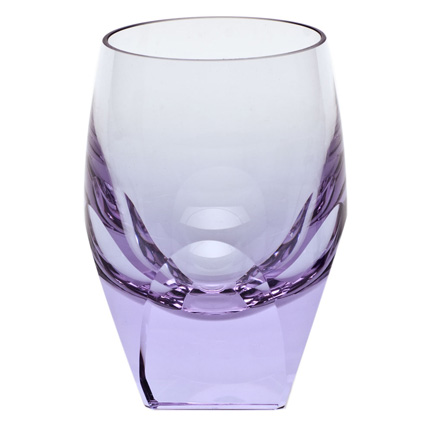
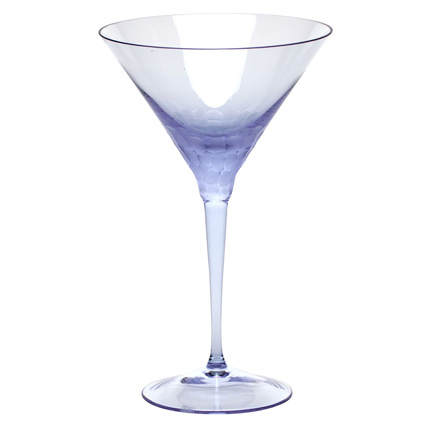
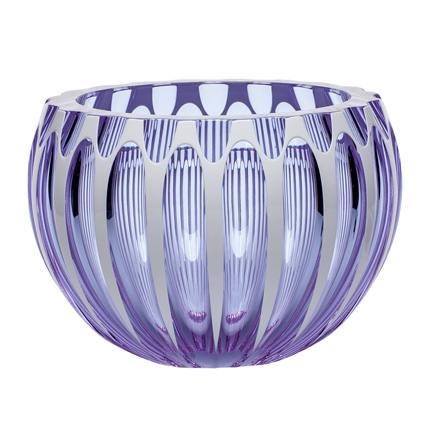
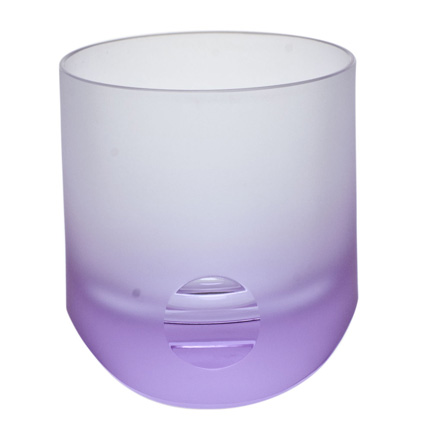
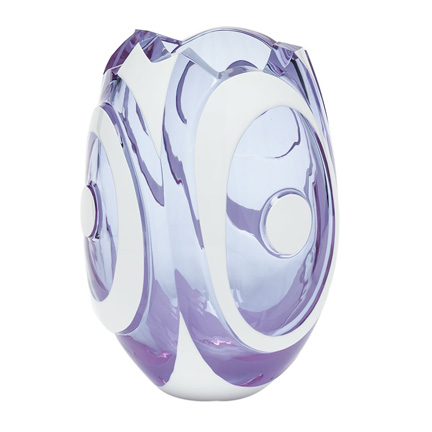
Valentine’s Day: Entertaining from the Heart
Want to make this Valentine’s Day one to remember? Whether it’s a romantic dinner for two, or a luncheon with your closest friends, hosting for Valentine’s Day is the perfect way to celebrate!
Bold linens scream celebration. We love Yves Delorme‘s festive Face a Face Collection.
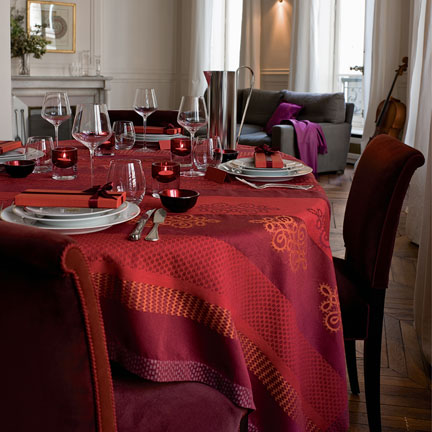
Warm your foyer or table with Simon Pearce‘s Highgate Heart Tealights.
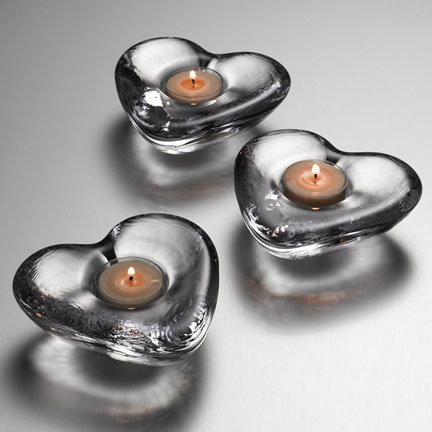
Spark some romance with toasting flutes like Waterford‘s Love and Romance Red Flute Pair.
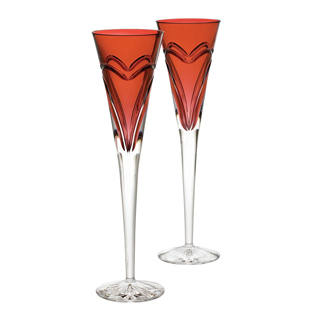
Accent your mantle with whimsical figurines. We love how romantic Herend‘s Kissing Swans are.
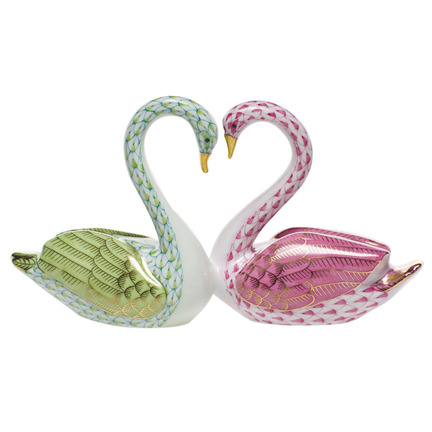
Make a statement with Vietri‘s glamorous Laurel Glass Red Serveware.

Details are everything! We love that extra punch of color with Alain Saint Joanis‘ Anglais Claret Flatware.

For more great Valentine’s Day ideas, click here.
Instant Makeover: a Classic yet Modern Table
There’s an amazing house in the December 2013 issue of Veranda magazine:
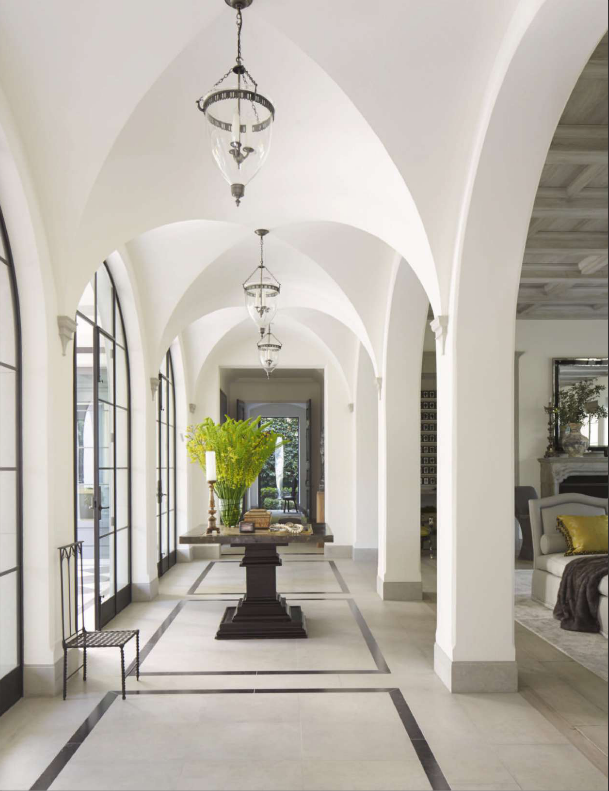
The owners have achieved an almost perfect balance of traditional yet modern design. The columns, cornices, and arches remind us of the Spanish Revival style which are synonymous with California, but the doors, outdoor sculpture, and general brightness of the space make it perfect for today as well.
The dining room of the house strikes the same traditional yet modern balance:
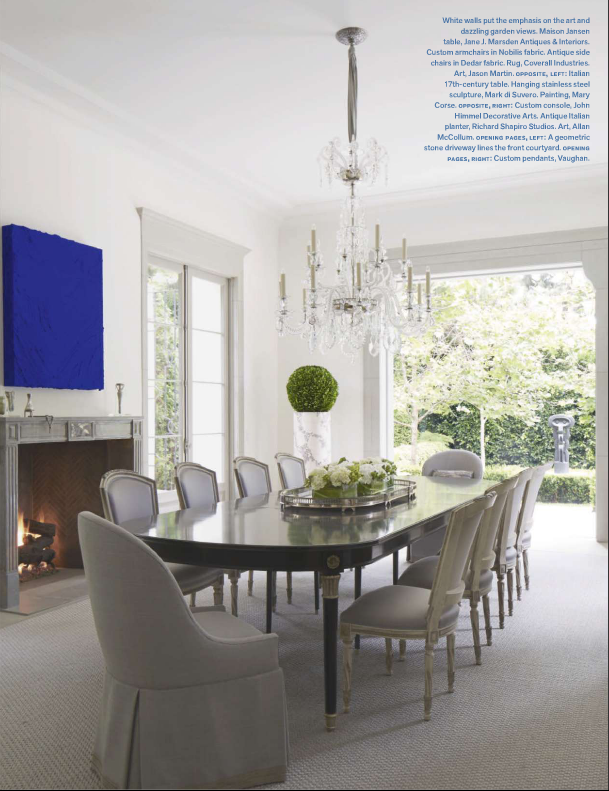
So naturally we ask: How do you set this table so that is equally traditional yet modern, in keeping with the rest of the house?
We propose the Anna Weatherley Indigo Blue dinnerware. Like the house itself, its traditional shape is unadorned in its modern simplicity, and it has an intense indigo blue to match the art:
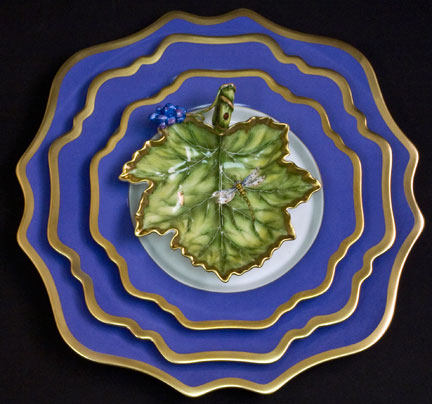
Match it with Alain Saint Joanis’s Arabesque silver-plated flatware, whose Moroccan-inspired handles pay homage to the house’s Spanish Revival roots:
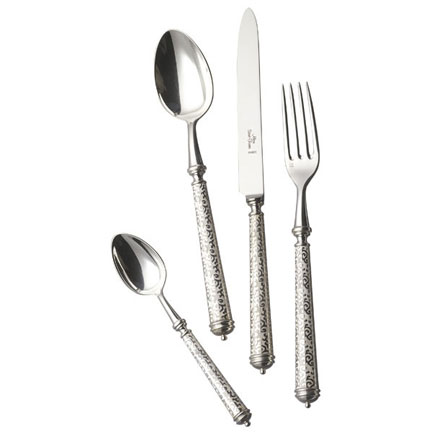
Finally, Varga’s Nouveau Simplicity stemware completes the traditional yet streamlined look, with carved petals inside the cups which echo the arches of the house:
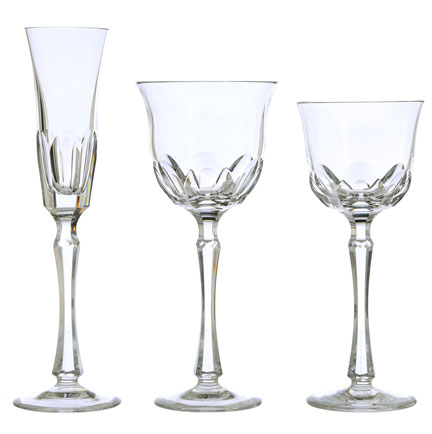
To submit a room for our Instant Makeover, simply post a comment here or tweet us @GraciousStyle